} Crítica Retrô: Mary Pickford

Tradutor / Translator / Traductor / Übersetzer / Traduttore / Traducteur / 翻訳者 / переводчик

Showing posts with label Mary Pickford. Show all posts

Saturday, November 19, 2022

Phil-for-Short (1919) e outros adolescentes do cinema mudo


Phil-for-Short (1919) and other silent film teenagers

Era uma vez uma garota chamada Damophilia – ou Phil, seu apelido. Ela foi batizada em homenagem a um poema de Safo, uma vez que seu pai era um grande conhecedor de cultura e literatura gregas. Phil era uma garota muito ativa, trabalhando na fazenda usando roupas de menino, sem se preocupar com a opinião dos outros. Quando seu amado pai falece, o mundo de Phil vira de cabeça para baixo. Uma garota no final da adolescência, Phil é interpretada, no filme de 1919, por uma atriz de 31 anos, Evelyn Greeley – e essa está longe de ser a única personagem adolescente interpretada por adultos na era o cinema mudo.

Once upon a time, there was a girl named Damophilia – or Phil, for short. She was named after a poem by Sappho because her father was a connoisseur of the Greek culture and literature. Phil was a very active girl, working on the farm wearing boy’s clothes and not caring for other people’s opinions. When her devoted father passes away, Phil’s word goes upside down. A girl in the late teens, Phil is played, in the 1919 movie, by a 31-year-old actress, Evelyn Greeley – and this was not the only teen character to be played by an adult in the silent movie era.

Antes de explorar “Phil-for-Short” e outros adolescentes do cinema mudo, precisamos sabem quem exatamente pode ser chamado de adolescente. A Organização Mundial da Saúde diz que a adolescência vai dos 10 aos 19 anos. Na maioria das sociedades, a adolescência é um período ambíguo entre a infância e a idade adulta, com os adolescentes navegando mares de mudanças e aprendendo com as experiências. Mas não foi sempre assim: podemos até mesmo dizer que “adolescente” e “adolescência” foram invenções do século passado.

Before we dig into “Phil-for-Short” and other silent screen teens, we need to know who exactly can be called a teenager. The World Health Organization says that adolescence happens between ages 10 and 19. In most societies, adolescence is an ambiguous period between childhood and the adult age, with teens navigating lots of changes and learning along the process. But it wasn’t always like that: we can even say that “teenager” and “adolescence” were invented in the last century.

De acordo com um artigo do Saturday Evening Post, a palavra “adolescente” existia desde o começo do século XX, mas raramente era usada. Cinquenta anos antes, pessoas jovens, e até mesmo crianças, eram empregadas em fábricas, algo que foi depois considerado inapropriado e a educação se tornou obrigatória. Escolas de ensino médio apareceram e se desenvolveram como um lugar em que adolescentes poderiam se organizar e, até certo ponto, viver sem muita supervisão dos adultos. Dito isto, podemos afirmar que “juventude” é um termo melhor para descrever uma categoria que englobava adolescentes e jovens na era do cinema mudo. Agora vejamos como a juventude era retratada nas telas.

According to an article from the Saturday Evening Post, the world “teen-ager” existed since the beginning of the 20th century, but it was hardly ever used. Fifty years before, young people, and even children, were sent to work in factories, something that was later deemed inappropriate and education became mandatory. High schools appeared and developed as a place where teenagers could organize and, to an extent, live without much adult supervision. That being said, we can affirm that “youth” is a better term to describe a category that encompassed teenagers and young adults in the silent film era. Now let’s see how “youth” was portrayed on screen.

Em filmes como “American Aristocracy” (1916), jovens eram o foco, mas eram jovens adultos e não adolescentes. Neste filme em particular, como ele fez antes e faria depois, Douglas Fairbanks – com 33 anos quando o filme foi lançado – interpreta um jovem que é o modelo da aristocracia norte-americana: ousado, vistoso e bonito. Seu carro é um objeto importante na história, assim como os carros foram importantes para os adolescentes ganharem independência.

In films like “American Aristocracy” (1916), young people were the focus, but these were young adults and not teens. In this particular movie, as he did before and would do after, Douglas Fairbanks – 33 when the movie was released – plays a young fellow who is the role model of American aristocracy: bold, dashing and handsome. His car is an important asset in the story, as cars were important to give young people independence.

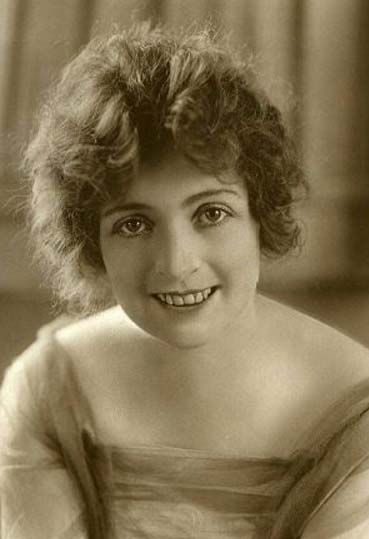
Agora que mencionamos Fairbanks, precisamos também mencionar Mary Pickford, a atriz mais popular da década de 1910. Quando adolescente, antes de entrar na indústria do cinema, Mary Pickford era uma atriz de teatro na Broadway. No cinema, Mary teve muito sucesso interpretando crianças perspicazes – mesmo tendo vinte e tantos anos na época – mas ela também interpretou adolescentes ousadas em filmes como “The Little American” e “A Romance of the Redwoods”, ambos de 1917.

Now that we mentioned Fairbanks, we must also mention Mary Pickford, the most popular female film star of the 1910s. As a teenager, before she entered the movie business, Mary Pickford was a stage actress appearing on Broadway. On film, Mary had a lot of success playing resourceful kids – despite being in her late 20s at the time – but she also played bold teens in movies such as “The Little American” and “A Romance of the Redwoods”, both from 1917.

Depois de falar de Mary, podemos voltar a “Phil-for-Short” e falar da protagonista Evelyn Greeley. O nome pode não significar nada para você, mas Greeley foi uma atriz de sucesso na era muda. Nascida na Áustria em 1888, ela migrou para Chicago com a família aos nove anos e, em 1914, aos 26, entrou para o cinema com pequenos papéis para os estúdios Essanay. Entre 1915 e 1922, ela fez 30 filmes, muitos deles para a World Film Corporation, incluindo “Phil-for-Short”.

After talking about Mary, we can go back to “Phil-for-Short” and talk about the lead Evelyn Greeley. The name may not mean anything to you, but Greeley was a prominent silent film actress. Born in Austria in 1888, she migrated in Chicago with her family when she was nine and in 1914, aged 26, entered the movie business working in small roles for Essanay. From 1915 to 1922, she appeared in 30 films, many of them for the World Film Corporation, including “Phil-for-Short”.

Depois que o pai de Damophilia morre em “Phil-for-Short”, todas as pessoas resolvem dar palpite na vida da garota: ela precisa parar de ser tão moleca e deve se casar! Infeliz com sua nova vida, Phil foge e, vestida de homem, decide fingir ser professora assistente para fazer com que um professor universitário, conhecido misógino que sabe tudo sobre a Grécia, mude de ideia em relação às mulheres. O que acontece a seguir é bem previsível.

After Damophilia’s father dies in “Phil-for-Short”, people everywhere believe they have a say in the girl’s life: she must stop being such a tomboy and she must marry! Unhappy with her new life, Phil runs away and, fully dressed as a boy, decides to pose as an assistant professor in order to make a college professor, a well-known misogynist who knows all about Greece, change his mind about women. What happens next is pretty predictable.

Não havia uma categoria de “cinema adolescente” na era do cinema mudo. Havia ou estrelas mirins – como Jackie Coogan, Baby Peggy e, até certo ponto, Mary Pickford – ou estrelas que agradavam aos jovens – como Fairbanks no começo de sua carreira. Com exemplos como “Phil-for-Short”, podemos dizer que definitivamente havia filmes sendo feitos com foco no público jovem – um público que moldou o cinema e cresceu com a nova arte.

There wasn’t a “teenager movie” category in the silent movie era. There were either child stars – such as Jackie Coogan, Baby Peggy and, to an extent, Mary Pickford – or stars who appealed to the young folks – such as Fairbanks in the beginning of his career. With examples such as “Phil-for-Short”, we can say that there were definitely movies made targeting the young audience – an audience that shaped cinema as it grew with the new art.


This is my contribution to the Fake Teenager Festivus, hosted by Rebecca at Taking Up Room.


Wednesday, October 28, 2020

39ª Giornate del Cinema Muto – 39th Pordenone Silent Film Festival


Por muito tempo, eu tinha como desejo ir um dia ao paraíso dos amantes de cinema mudo, a Giornate del Cinema Muto em Pordenone, Itália. Neste ano, por causa da pandemia, o evento foi realizado virtualmente... e eu não apenas tive a oportunidade de assistir aos filmes, mas também tive a imensa honra de participar do Collegium, uma experiência quase indescritível que reuniu 12 jovens de várias partes do mundo para discutir sobre os filmes e ouvir especialistas falando sobre restauração de filmes. Foi uma experiência enriquecedora – muito melhor do que eu poderia ter imaginado – que me fez aproveitar ainda mais este festival que, pude perceber, foi construído com contrastes este ano.

For a long time, I had in my bucket list the dream of one day attending the silent film nerd heaven aka the Giornate del Cinema Muto in Pordenone, Italy. This year, because of the pandemic, the event had to go online... and I had the opportunity not only to watch the films but also the amazing honor of being part of the Collegium, a nearly undescribable experience that reunited 12 young people from around the world to discuss the films and listen to experts on topics about film restoration. It was an enriching experience – much better than I could ever have imagined – that made me enjoy even more this festival that, I came to realize, was built with contrasts this year.

O primeiro contraste é bastante óbvio: estamos assistindo a filmes mudos, muitos deles feitos há mais de 100 anos, em telas de computadores, smartphones e Smart TVs. As pessoas que fizeram estes filmes jamais imaginaram este tipo de tecnologia que hoje estamos usando para vê-los de qualquer lugar do mundo e para nos conectar com outros fãs de cinema mudo.

The first contrast is pretty obvious: we're watching silent movies, many of them released over 100 years ago, on computer screens, smartphones and Smart TVs. The people who made these movies could never imagine this kind of technology we're now using to see them from anywhere in the world and to connect to other silent film fans.

Lady the dog in "Toodles, Tom and Trouble" (1916) 

Começamos com um sentimento compartilhado: a vontade de viajar, explorada numa série de nove travelogues, ou filmes de viagens. Os filmes datam de 1911 a 1939, indo de um giro por Nova York até um verão em Trieste com gente feliz aproveitando o tempo livre, sem saber que uma guerra terrível estava para começar. Nós, os espectadores, temos o benefício do tempo e sabemos o que estava por vir. Neste ponto do catálogo, o diretor artístico do festival, Jay Weissberg, destaca algo que eu sempre procuro ter em mente quando vejo e pesquiso sobre filmes antigos: os perigos da nostalgia quando destacada da memória histórica. Se queremos ter uma visão completa do mundo, a história é a nossa arma.

We started with a shared feeling: the urge to travel, explored in a series of nine travelogues. The travelogues date from 1911 to 1939, going from a tour around New York to a summer in Trieste with happy people enjoying their time off, not knowing that a terrible war was about to start. We, the viewers, have the benefit of time and know what was about to happen. At this point in the catalogue, the festival's artistic director, Jay Weissberg, highlights something I always have in mind while watching and researching old films: the dangers of nostalgia when unaccompanied by historical memory. If we want a complete view of the world, history is our best weapon. 

O magnífico travelogue / desfile de moda em Pathécolor “Un Voyage au Caire” (“Uma Viagem ao Cairo”), de 1928, é outro curta-metragem de contrastes: na viagem ao Cairo, dois artistas da Comédie-Française se hospedam em um hotel chique que hoje é a residência presidencial e um símbolo da terrível ditadura de Mubarack. No deserto, eles descem de um carro moderno e a mulher mostra um talento natural para andar de camelo, mesmo estando com roupas bem inadequadas para a aventura.

The magnificent travelogue / fashion show in Pathécolor “A Trip to Cairo”, from 1928, is another little film of contrasts: in their trip to Cairo, two French performers from the Comédie-Française stay at a fancy hotel that now is the presidential residence and a symbol of Mubarack's terrible dicatorship. In the desert, they get off their modern car and the woman shows her natural talent to ride a camel, even though her clothes couldn’t be more inadequate for the adventure.

O filme “As Aventuras de Chiquinho / Penrod and Sam”, de William Beaudine, traz três pré-adolescentes bem diferentes: o protagonista Penrod, o garoto nerd George que deve passar por uma humilhante “iniciação” para entrar no clube de Penrod, e o rico e mimado Roddy, cujo pai compra o lote de terra em que Penrod e seus amigos brincam. Um contraste que poderíamos esperar considerando a época, felizmente, não existe: os dois meninos negros não são tratados de um jeito diferente pelos outros meninos e nem são usados para piadas estúpidas baseadas em estereótipos.

William Beaudine's “Penrod and Sam” brings three very different pre-teen boys: the lead Penrod, the nerd boy George who must go through a humiliating “initiation” to enter Penrod’s club, and the rich and spoiled boy Roddy, whose father buys the lot where Penrod and his friends play. A contrast we could expect from the time period, luckily, is not there: the two African-American boys are not treated differently by the other boys and are not used for cheap, stereotype-based laughs.

O contraste entre Oriente e Ocidente é central para dois filmes: a produção de Hollywood de 1921, “Onde as Luzes são Baixas / Where Lights are Low”, e o filme chinês de 1935 “Costumes Nacionais / Guofeng”. Obviamente, a maneira como as diferenças são exploradas são únicas em cada filme.

The contrast between East and West is central in two films: the 1921 Hollywood production “Where Lights are Low” and the 1935 Chinese film “National Customs”. Obviously, the way the differences are explored are unique in each one.

Em “Onde as Luzes são Baixas”, o príncipe chinês Tsu Wong, interpretado pela então superestrela internacional Sessue Hayakawa, já havia adotado alguns valores ocidentais quando entra em conflito com o tio ao falarem sobre casamento: enquanto Wong quer se casar com alguém que ele ama, o tio quer que ele se case com alguém escolhido pela família. Depois deste conflito, Wong deixa a China para ir para a faculdade nos EUA. O protagonista nos é simpático, assim como era para o público dos anos 1920, por causa de sua adoção de valores ocidentais desde o começo do filme.

In “Where Lights are Low”, Chinese prince Tsu Wong, played by then international superstar Sessue Hayakawa, had already adopted some Western values when he clashes with his uncle about marriage issues: while Wong wants to marry someone he loves, the uncle wants him to marry someone appointed by the family. After this clash, Wong leaves China to attend university in the United States. The lead is sympathetic to us, as he was for early 1920s audiences, because of this adoption of Western values since the beginning.

Quatro anos depois, já formado, vemos Wong novamente, completamente americanizado: de terno e cartola, ele está jogando dados com os amigos quando seu tio chega. O tio já está horrorizado após entrar na festa de graduação e alucinar com a banda de jazz, imaginando-os como músicos chineses vestindo roupas tradicionais e tocando canções modernas. Mesmo depois de ficar pobre e começar a trabalhar em Chinatown, Wong não se veste com roupas chinesas: estas são exclusivas do vilão, que é apenas americanizado no chapéu Fedora que usa.

Four years later, already graduated, we see Wong again, completely Americanized: in a suit and top hat, he's playing dice with his friends when his uncle arrives. The uncle is already horrified after entering the graduation party and hallucinating with the jazz band, imagining them as Chinese musicians dressed in traditional clothes and blasting modern tunes. Even after becoming poor and starting working in Chinatown, Wong doesn't dress in Chinese clothes: those are worn by the villain, Americanized only in his Fedoras.

O elenco do filme também tem grandes contrastes, com atores em sua maioria japoneses interpretando personagens chineses, e uma atriz claramente branca interpretando a namorada do protagonista. Na época, miscigenação era tão mal vista na tela quanto na vida real, mas Hollywood não viu problema em colocar uma atriz branca fazendo “yellowface” para viver uma donzela raptada.

The casting of the film also has high contrasts, with mostly Japanese actors playing Chinese characters, and a clearly white actress playing the Chinese love interest. At the time, miscigenation was frowned upon as much on screen as it was in real life, but Hollywood saw no problem in putting a white actress in yellowface to be a kidnapped damsel in distress.

“Costumes Nacionais” apresenta, obviamente, um ponto de vista diferente. As irmãs Lan (Ruan Lingyu) e Tao (Li Lili) são, na maior parte do filme, completos opostos: Lan é responsável, simples e sempre busca a verdade, enquanto Tao é despreocupada, mesquinha e, de acordo com a irmã, segue o caminho da destruição. Lan representa a China rural, a China “real”, e Tao representa a China cosmopolita, influenciada por valores ocidentais. A crítica à modernização fica clara na sequência com os pais do personagem Xu Boyang. Como alívio cômico do filme, eles satirizam o povo chinês seguindo modas ocidentais, mudando sua maneira de vestir e as mulheres usando maquiagem e aparelhos para criar novos penteados.

“National Customs” presents, obviously, a different point of view. Sisters Lan (Ruan Lingyu) and Tao (Li Lili) are, for most of the picture, complete opposites: Lan is responsible, frugal and always seeks the truth, while Tao is carefree, greedy and, according to her sister, on the path of destruction. Lan represents rural China, the “real” China, and Tao represents cosmopolitan China, influenced by Western values. The criticism of modernization is clear in a sequence with Xu Boyang's parents. As the comic relief in the film, they satirize Chinese people adopting Western fashions, changing their way of dressing and, for women, using make-up and bobbing their hair with ironing curls.

Make-up as futility in "National Customs" (1935)

Ser infeliz quando se tem tudo parece algo contrastante, não? Mas é exatamente isso que acontece com o protagonista de “Tempestade em um Crânio”, uma deliciosa comédia italiana de 1922. Renato De-Ortis, interpretado pelo diretor do filme, Carlo Campogalliani, acredita que enlouquecerá, tal como seus ancestrais. Para provar que ele está errado, seus amigos e sua namorada Liana (Letizia Quaranta) criam uma complexa sequência de sonho, que servirá também como psicoterapia.

Being unhappy when you have everything sounds contrasting, doesn't it? But this is exactly what happens to the lead of “La Tempesta in un Cranio”, a delightful 1922 Italian comedy. Renato De-Ortis, played by the director of the film, Carlo Campogalliani, believes he'll become mad like his ancestors. To prove him wrong, his friends and his girlfriend Liana (Letizia Quaranta) stage an ellaborate dream sequence that will also serve as psychotherapy.

Nenhum dos filmes havia apresentado o contraste entre classes sociais – até o quinto dia, quando a restauração do filme grego “Os Apaches de Atenas” foi exibida. O filme começa com cenas da vida diária em um bairro pobre de Atenas, cenas que poderiam ter sido filmadas por qualquer mestre do Neorrealismo Italiano. Nas ruas, frequentadores de cafés – os Apaches do título – lutam para sobreviver mas ainda encontram tempo para amar e se divertir. Enquanto a diversão deles é jogar pedras uns nos outros com estilingues, os – novos – ricos da cidade andam a cavalo e compram livros apenas para decorar as estantes, pois não têm interesse na leitura. O contraste é mais palpável quando um dos ricos contrata os três amigos pobres para pregar uma peça. O dinheiro que o homem rico gasta sem pensar duas vezes é usado pelos homens pobres para uma atividade de luxo: um passeio de táxi por Atenas.

None of the films had presented the contrast between social classes – until the fifth day, when the restoration of the Greek film “The Apaches of Athens” was presented. The film starts with scenes from daily life in a poor neighborhood in Athens that could have been filmed by any master of Italian Neorrealism. On these streets, café-goers – the Apaches from the title – struggle to make ends meet but still find time for love and fun. While their fun is throwing stones at each other with slingshots, the – newly – rich people in the city ride horses for fun and buy books only to decorate their houses, as they are not interested in reading. The contrast is more palpable as one of the rich people contracts the three poor friends for an ellaborate prank. The money the rich man spends without second thought is used by the poor men to afford a luxury: a taxi ride through Athens.

De Atenas nós vamos para Berlim em “Crise” de G.W. Pabst, de 1928, um filme sobre um casamento em crise. Uma pessoa que ajuda a criar esta crise é Liane (a maravilhosa e subestimada Hertha von Walther), amiga da protagonista, Irene (Brigitte Helm), que o marido de Irene considera ser uma má influência para a esposa. Liane é despreocupada e leva Irene para uma noite revolucionária num clube, onde Liane usa um ousado vestido sem costas, dois anos antes de Jean Harlow usar uma peça semelhante em “Anjos do Inferno”.

From Athens we go to Berlin in G.W. Pabst's “A Devious Path / Abwege”, from 1928, a film about a marriage in crisis. One person helping this crisis is Liane (the wonderful and underrated Hertha von Walther), a friend of the lead, Irene (Brigitte Helm), and someone Irene's husband considers to be a bad influence for his wife. Liane is carefree and takes Irene to a life-changing night on a nightclub, where Liane wears a risky backless dress, two years before a similar piece was worn by blonde bombshell Jean Harlow in “Hell's Angels”.

Hertha von Walther

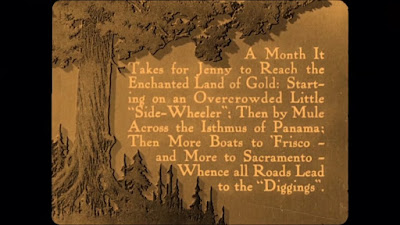
De volta a Hollywood para “Romance of the Redwoods” (1917) de Cecil B. DeMille, no qual Mary Pickford e Elliott Dexter se apaixonam em circunstâncias estranhas. A cena deles na mesa, tomando café da manhã, tem uma forte marca de “A Bela e a Fera”, com a garota ficando horrorizada com a falta de etiqueta do homem que a tem como hóspede / refém.

Back to Hollywood for Cecil B. DeMille’s “Romance of the Redwoods” (1917), in which Mary Pickford and Elliott Dexter fall in love under weird circumstances. Their scene on the table, having breakfast, has a strong “Beauty and the Beast” feeling, with the girl becoming horrified by the lack of manners of the man who has her as a guest / hostage.
Mary Pickford had to travel a whole month!

O filme dinamarquês de 1913 “Filha do Balé / Ballettens Datter” me apresentou Rita Sacchetto, a protagonista do filme e uma das maiores bailarinas do mundo na época. Rita interpreta Odette, uma mulher dividida entre o casamento e sua profissão de bailarina, pois seu marido, um conde, exigiu que ela parasse de dançar quando eles se casaram, mas ela sente muita falta dos palcos. É possível ver, numa sequência em particular, quão triste ela está, e como ela fica feliz ao visitar sua antiga companhia de balé.

The 1913 Danish film “Unjustly Accused / Ballettens Datter” introduced me to Rita Sacchetto, the film's lead and one of the biggest dancers of the world at the time. Rita plays Odette, a woman torn between marriage and her profession as a dancer, as her husband, a count, demanded her to stop dancing when they got married, but she really misses the stage. You can see, in a particular sequence, how sad she is, and how happy she becomes once she visits her old ballet company.

E do que são feitas boas duplas cômicas se não de contraste? Quando pensamos em duplas visualmente contrastantes no cinema, logo nos lembramos de Stan Laurel e Oliver Hardy. Eles não eram apenas um cara magro e um homem gordo – Stan e Ollie eram opostos e complementares de muitas formas. Laurel aprendeu seu ofício nos palcos ingleses. Hardy era gerente de um cinema e se tornou ator. Laurel fez muitas paródias e também interpretou personagens ingênuos. Hardy foi, de início, escalado como vilão. Laurel era o cérebro, em geral escrevendo e dirigindo os filmes da dupla. Hardy era o coração. Juntos, eles foram icônicos, mas o festival escolheu focar nos dois individualmente, em curtas que eles fizeram antes de se tornarem parceiros – e esta seleção foi incrível, com destaque para o segundo rolo da hilária paródia “When Knights Were Old”.

And what are good comedy duos made of if not contrast? When we think about visually contrasting onscreen duos, we quickly remember Stan Laurel and Oliver Hardy. They were not only a thin man and a chubby guy – Stan and Ollie were opposites and complimentary in many ways. Laurel's background was music hall. Hardy was a theater manager turned screen actor. Laurel did many parodies and also played naïve characters. Hardy was at first cast as a heavy. Laurel was the brain, often writing and directing the films of the duo. Hardy was the heart. Together, they were iconic, but the festival chose to highlight the two individually, in shorts they made before being paired – and this selection was amazing, with the highlight being the second reel of the hilarious parody “When Knights Were Old”.

Mas nem tudo foi contrastante. De volta ao segundo dia da jornada, encontramos “The Brilliant Biograph”, uma compilação de 46 curtas gravados em 68mm e feitos entre 1897 e 1902 por toda a Europa. Vamos dar uma olhada na última parte desta compilação, chamada de “Corpo em Movimento”. Pense na família de malabaristas de 1898 ou nos boxeadores de ponta-cabeça de 1899: eles ainda são divertidos, não? Se eles tivessem sido filmados hoje, o vídeo não viralizaria? O público moderno não fica intrigado e maravilhado com muitas das mesmas coisas que intrigavam e maravilhavam o público da Era Vitoriana? No final, como o festival mostrou, só os séculos mudaram: nós, o público, somos o mesmo. Somos um só.

But not everything was contrasting. Going back to the second day of the journey, we find “The Brilliant Biograph”, a compilation of 46 68-mm short films made between 1897 and 1902 all around Europe. Let's take a look in the last sessionof this compilation, called “Body in Movement”. Think about the Agoust family of jugglers from 1898, or the upside-down boxers from 1899: aren't they still amusing? If they were filmed today, wouldn't the video go viral? Aren't modern audiences intrigued and marvelled by many of the same things Victoran-era audiences were? In the end, as the festival showed, only the centuries have changed: we, the public, are one and the same.


Tuesday, October 15, 2019

Pandemia Cinematográfica: a gripe espanhola e o cinema


Cinematic Pandemic: the Spanish flu and the movies

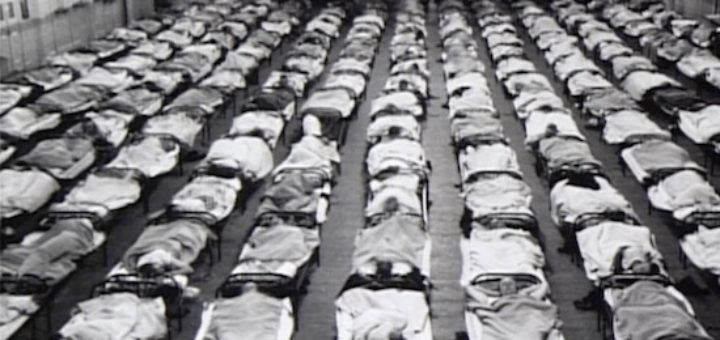
A Primeira Guerra Mundial terminou deixando 17 milhões de mortos, mas a sombra da morte não iria desaparecer com o Armistício em 11 de novembro de 1918. Desde o começo de 1918, uma mutação do vírus influenza estava se espalhando rapidamente pelo mundo – e era incrivelmente mortal. A segunda década do século XX veria ainda mais mortos, pois em 1919 houve o auge da pior pandemia desde a Peste Negra.

The first World War ended leaving 17 million people dead, but the shadow of death wasn’t going to disappear with the Armistice on November 11th, 1918. Since the beginning of 1918, a mutation of the influenza virus was spreading quickly throughout the world – and it was incredibly deadly. The second decade of the 20th century would see even more dead people, as 1919 was the climax of the worst pandemic since the Black Death.


A gripe espanhola ganhou esse nome porque a Espanha era um país neutro durante a guerra, e por isso sua imprensa não sofria censura. Assim, os jornais espanhóis podiam publicar informações sobre a nova pandemia – os demais países não publicavam sobre a doença para não afetar o moral das tropas. Foi dessa maneira que, embora não tenha se originado na Espanha, a pandemia ficou conhecida como gripe espanhola.

The Spanish flu got its name because Spain was a neutral country during the war, so its press wasn’t censored. That’s why Spanish newspapers were able to publish info about the new pandemic – the other countries couldn’t publish about the disease because it would affect the troops.  That’s how, although it did not appear first in Spain, the pandemic became known as Spanish flu.


As estimativas variam, mas ao redor do mundo, mais de 50 milhões de pessoas foram mortas pela gripe espanhola – alguns pesquisadores dizem que o número de vítimas pode ser de 100 milhões. Nos EUA, a doença deixou mais mortos do que a guerra – 675 mil norte-americanos sucumbiram. A doença foi espalhada pelos soldados voltando para casa do front, e a falta de higiene na época também não ajudou a parar a pandemia.

Estimations vary, but all over the world, more than 50 million people were killed by the Spanish flu – some researchers say that the amount of victims may be 100 million. In the US, the disease left five times more dead than the war – 675,000 Americans perished. The disease was easily spread by soldiers coming home from the front, and the lack of hygiene at the time also didn’t help stopping the pandemic.


Algumas das vítimas foram estrelas de cinema. Além disso, em 1918 o mundo do cinema havia acabado de passar por sua primeira grande revolução – o surgimento do longa-metragem – e a pandemia da gripe espanhola mostrou-se como a primeira grande ameaça externa à indústria do cinema.

Some of the victims were famous movie stars. Besides that, in 1918 the movie world had just passed through its first big revolution – the rise of feature film – and the Spanish flu pandemic posed the first big outside threat to the film industry.


Vítimas no cinema

Film casualties

Uma das primeiras “estrelas de cinema” foi também uma das primeiras pessoas a morrer de gripe espanhola. Andrée Lumière, filha de Auguste Lumière, tinha um ano de idade quando apareceu em dois filmes exibidos na primeiríssima sessão do cinematógrafo em 28 de dezembro de 1895. Andrée é a estrela do conhecido “Café da manhã do bebê (Le Repas de bébé)” e do nem tão celebrado “Le pêche aux poissons rouge”. Andrée contraiu a gripe mortal e faleceu em 1918, aos 24 anos.

One of the first “film stars” was also one of the earliest people to die from the Spanish flu. Andrée Lumière, Auguste Lumière’s daughter, was one year old when she appeared in two films presented in the very first movie exhibition on December 28th, 1895. Andrée is the star of both the well-known “Baby’s Breakfast (LeRepas de bébé)” and the not so celebrated “Le pêche aux poissons rouge”. Andrée caught the deadly flu and passed away in 1918, at age 24.

Andrèe Lumière, 1909
Myrtle Gonzalez já havia deixado Hollywood quando a gripe espanhola tirou sua vida. A atriz norte-americana de descendência mexicana trabalhou de 1913 a 1917, tanto em papéis pequenos quanto como protagonista – as mocinhas que ela interpretava em geral viviam em meio à natureza e superavam várias dificuldades. Myrtle Gonzalez deixou Holywood em 1917, quando se casou. Ela faleceu em 1918 com apenas 27 anos.

Myrtle Gonzalez had already left Hollywood when the Spanish flu took her life. The American actress of Mexican descent worked from 1913 to 1917, in both small parts and lead roles – the leading ladies she played often lived among nature and overcame several difficulties. Myrtle Gonzalez left Hollywood in 1917, when she got married. She died in 1918 at only 27.


A estrela de Harold Lockwood estava em ascensão quando sua vida foi interrompida pela gripe espanhola. Lockwood estava entre as 10 estrelas de cinema favoritas listadas pela revista Motion Picture em dezembro de 1918 – embora ele tivesse morrido em outubro aos 30 anos. Harold trabalhava no cinema desde 1911, e já havia passado pelos estúdios Nestor, Selig e Famous Players. Entre 1915 e 1917 ele fez 22 longas-metragens com a atriz May Allison, dos quais apenas um está disponível hoje. Acredita-se que Harold Lockwood tenha contraído o vírus da influenza enquanto vendia bônus de guerra.

Harold Lockwood’s star was on the rise when his life was cut short by the Spanish flu. Lockwood was among the 10 favorite film stars listed by the Motion Picture magazine in December 1918 – although he had died in October at age 30. Harold had been working on film since 1911, and had worked in studios like Nestor, Selig and Famous Players. Between 1915 and 1917 he made 22 features with actress May Allison, of which only one is readily available today. It’s believed that Harold Lockwood caught the influenza virus while selling war bonds.


A partida prematura de Vera Kholodnaya chocou a União Soviética. Considerada a primeira estrela de cinema russa, ela fez mais de cinquenta filmes, embora apenas cinco sobrevivam, sendo o mais conhecido filme dela, na verdade, a filmagem de seu funeral. Tendo Asta Nielsen como inspiração, Vera em geral trabalhava em melodramas baseados em canções populares e usava figurinos extravagantes. Por causa de sua popularidade, quando ela morreu surgiu um rumor dizendo que ela havia sido envenenada por seu amante francês porque ela era uma espiã bolchevique. Considerando que, em 1924, os bolcheviques mandaram destruir a maioria dos filmes dela, este rumor parece ser bem improvável.  
 
The early demise of Vera Kholodnaya shocked the Soviet Union. Considered to be the first Russian film star, she made over fifty films, although only five survive, being the most well known film of hers the actual footage of her funeral. Having Asta Nielsen as her main inspiration, Vera often worked in melodramas based on popular songs and wore extravagant costumes. Due to her popularity, at the time of her death a rumor appeared, saying that she had been poisoned by her French lover because she was a Bolshevik spy. Considering that, in 1924, the Bolsheviks ordered most of her films to be destroyed, this rumor sounds very unlikely.


Além destes, muitos outros trabalhadores do cinema pereceram. Devemos mencionar também o ator e diretor Joseph Kaufman, o ator e escritor indígena Dark Cloud, a atriz norte-americana Betty Gray, o ator britânico Julien L’Estrange e a atriz alemã Gilda Langer.

Besides those, many other film workers perished. We should also mention actor and director Joseph Kaufman, Indian actor and author Dark Cloud, American actress Betty Gray, English actor Julien L’Estrange and German actress Gilda Langer.

Gilda Langer

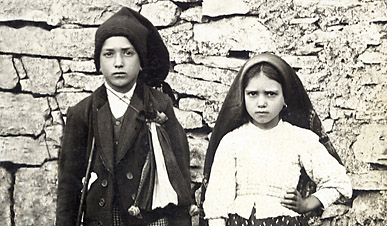
Algumas pessoas cujas vidas seriam retratadas em filmes também morreram de gripe espanhola: por exemplo, Jacinta e Francisco, duas das três crianças que viram a Virgem Maria em Portugal em 1917, morreram durante a pandemia. A história deles foi contada no filme de 1952 “A Virgem de Fátima”.

Some people whose lives would be told in movies later also died from the Spanish flu: for instance, Jacinta and Francisco, two of the three kids who saw the Virgin Mary in Portugal in 1917, passed away during the epidemic. Their story was later told in the 1952 Hollywood production “The Miracle of Our Lady of Fatima”.

Francisco and Jacinta

Estrelas de cinema que contraíram a gripe espanhola

Film stars who caught the Spanish flu

Como foi possível ver através das pobres vítimas na indústria do cinema, a gripe espanhola era mais mortal para pessoas entre 20 e 40 anos. Mulheres grávidas que contraíram a doença tiveram o pior prognóstico: mais de 20% delas não sobreviveram, e em algumas regiões 70% das grávidas infectadas morreram. Na população em geral, 20% dos contaminados morreriam.

As we could see with these unfortunate victims in the film industry, the Spanish flu was deadlier for people between 20 and 40 years of age. Pregnant women who caught the disease had the worst outcome: more than 20% of them didn’t survive, and in some regions 70% of all infected pregnant women died. In the general population, 20% of those contaminated would die.


Isso significa que o baque para a indústria do cinema poderia ter sido muito maior. Algumas das maiores estrelas da época contraíram a doença, mas se recuperaram. Mary Pickford pegou a gripe mas melhorou rapidamente, enquanto Lillian Gish teve febre alta, mas se recuperou com a ajuda de um médico e duas enfermeiras que cuidavam dela dia e noite.

This means that the blow for the film industry could have been much bigger. Some of the biggest stars of the time contracted the disease, but recovered. Mary Pickford caught the flu but recovered quickly, while Lillian Gish had a high bout of fever, but recovered with the help of a doctor and two nurses who took care of her 24/7.


Ainda um adolescente, Walt Disney contraiu a gripe espanhola – e isso pode ter salvado sua vida. Disney deveria ir para o campo de batalha como motorista de ambulância, mas ficou doente e, quando se recuperou, a guerra havia acabado.

Still a teenager, Walt Disney contracted the Spanish flu – and it may have saved his life. Disney was supposed to leave to the war front as an ambulance driver, but he got sick and, when he recovered, the war was over.
A young Walt Disney

Margaret Dumont havia se aposentado dos palcos em 1910 para se casar com um milionário, mas a gripe espanhola colocou um fim na união quando ambos contraíram a doença, e ele faleceu. Recuperada e viúva, Margaret retornou aos palcos e começou a fazer comédias. Nos filmes, ela ficou conhecida por seu trabalho ao lado dos irmãos Marx.

Margaret Dumont had retired from the stage in 1910 to marry a millionaire, but the Spanish flu put an ending to the union as both contracted the disease, and he died. Recovered and widowed, Margaret returned to the stages and started appearing in comedies. In the movies, she became known for her work alongside the Marx brothers.

A young Margaret Dumont

Em 1920, Greta Garbo, então com 14 anos, perdeu o pai, vítima de gripe espanhola. Muitas fontes dizem que ela também contraiu a doença e, felizmente, sobreviveu.

In 1920, Greta Garbo, then only 14, lost her father to the Spanish flu. Many sources claim that she also contracted the disease and, fortunately, survived.
A teen-age Greta Garbo

Embora ele não tenha a ver com o cinema, o presidente norte-americano Woodrow Wilson também contraiu a gripe espanhola, e sua doença pode ter mudado o rumo da história: como ele não pôde participar de todas as reuniões antes do Tratado de Versalhes ser assinado, o presidente francês Georges Clemenceau se tornou interinamente o líder do grupo dos vencedores da guerra – e exigiu que os alemães pagassem um preço alto pela derrota, uma exigência que certamente foi importante para a ascensão do nazismo e do desejo de revanche entre os alemães.

Although he had nothing to do with film, US president Woodrow Wilson also caught the Spanish flu, and his illness may have changed history: because he couldn’t attend all meetings before the Treaty of Versailles was signed, French president Georges Clemenceau became for a while the leader of the group of war winners – and he demanded the Germans to pay a high price for losing the war, a demand that certainly was important for the rise of Nazism and of the German wish for a rematch.


O cinema durante a gripe espanhola

The movies during the Spanish flu

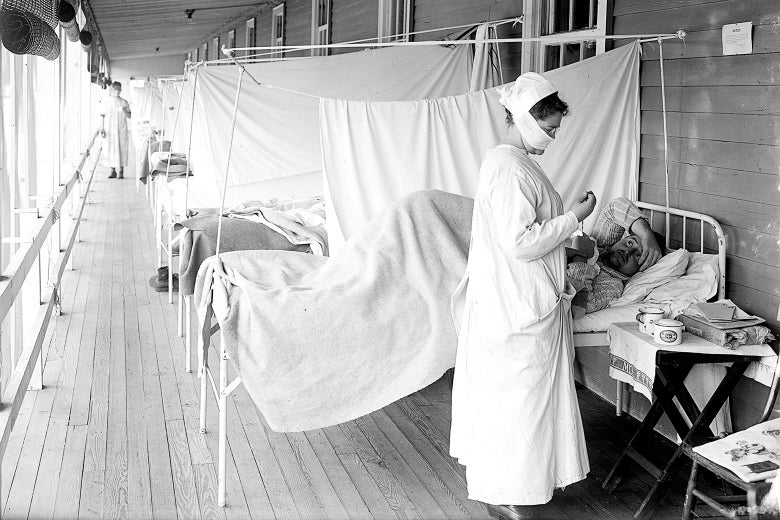
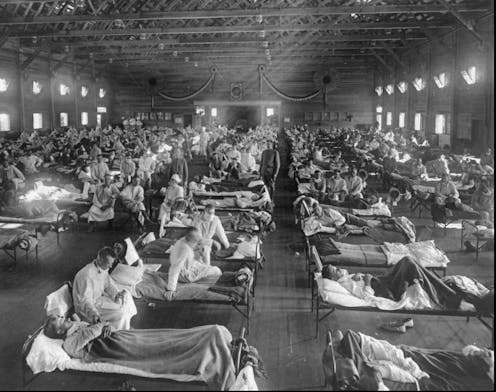
Com muitas de suas estrelas contraindo a doença, a indústria do cinema sofreu um duro golpe com a gripe espanhola. Em muitos locais, toda a indústria do cinema foi deixada de sobreaviso, com cinemas interditados – porque eles eram locais fechados, onde o risco de contágio era alto.

With many of its stars contracting the disease, the movie industry suffered a hard blow with the Spanish flu. In many places, the whole film industry was left in standstill, with movie theaters interdicted – because they are closed places, where the risk of inoculation was high.

New York Times, October 10th, 1918
De acordo com Ben Strassfeld, autor do artigo “Infectious Media: Debating the Role of Movie Theaters in Detroit during the Spanish Influenza of 1918”, 60% de todos os estúdios de cinema na Califórnia pararam todas as suas atividades enquanto a pandemia se espalhava. Os distribuidores pararam suas atividades por um mês. A revista Photoplay estimou que 80% dos cinemas fecharam por pelo menos uma semana. Muitas pessoas pensaram que era o fim daquela indústria recém-nascida.

According to Ben Strassfeld, author of the article “Infectious Media: Debating the Role of Movie Theaters in Detroit during the Spanish Influenza of 1918”, 60% of all movie studios in California ceased their production completely while the pandemic was on the rise. Distributors stopped their activities for a month. Photoplay magazine estimated that 80% of all movie theaters closed for at least a week. Many people thought it was the end of the newborn movie industry.

Detroit Free Press, October 18th, 1918

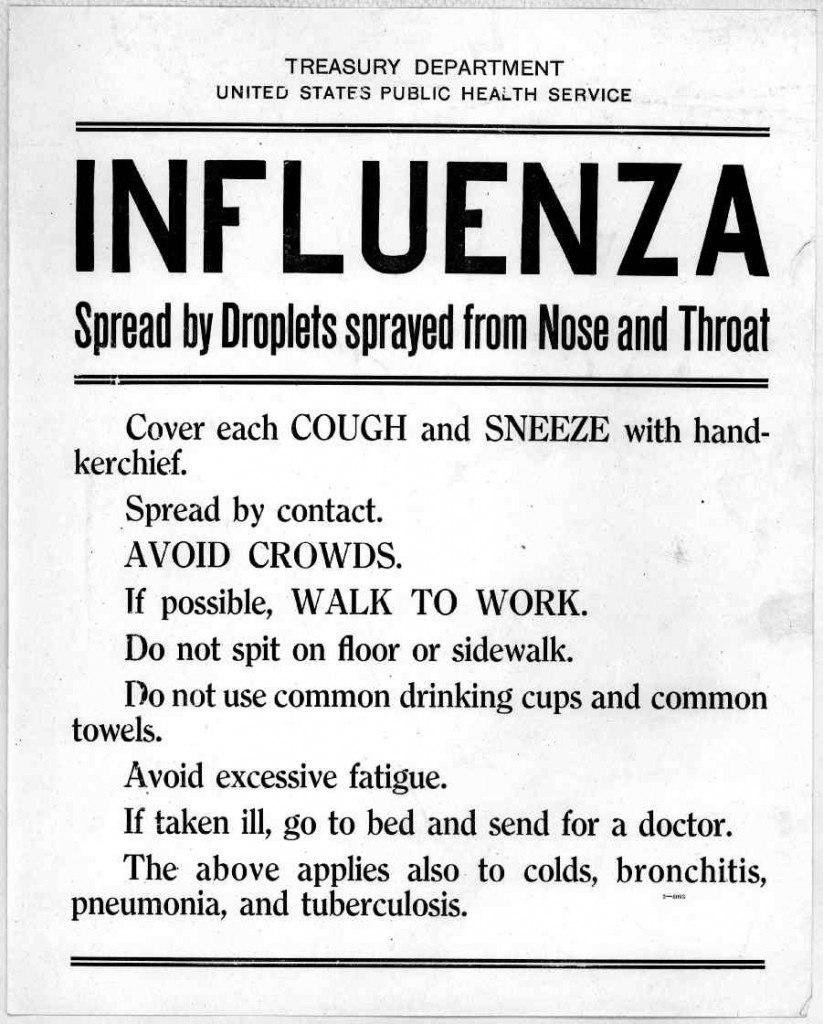
Isso não significava que não havia filmes sendo exibidos. Os nickelodeons ressurgiram por um tempo, e havia pessoas que acreditavam piamente que os cinemas não deveriam ser fechados durante a pandemia: eles poderiam ser usados para fins educativos, ensinando o público sobre a nova doença.

This doesn’t mean that there were no movies being shown. The nickelodeons resurfaced for a little while, and there were people who strongly believed that movie theaters shouldn’t be closed down during the pandemic: they could be used for educational purposes, teaching the public about the new disease.

Chicago, 1918

Como narra Strassfeld, os cinemas em Detroit exibiam slides educativos antes do filme e também exibiam filmes educativos. Detroit era então a capital dos filmes educativos, e um deles, “Spreading Spanish Influenza”, usava técnicas de contação de histórias para passar a mensagem – algo a que o público e os estudiosos não estavam acostumados, porque acreditavam que filmes fúteis precisavam contar uma história, enquanto filmes educativos sérios não precisavam disso.

As Strassfeld chronicles, movie theaters in Detroit exhibited educational slides before the movie and also showed educational movies. Detroit was then the capital of educational films, and one of them, “Spreading Spanish Influenza”, used storytelling techniques to spread the message – something that the public and the scholars weren’t used to, because they believed that frivolous movies needed storytelling, while serious educational films didn’t.


Em Detroit e outras cidades, os donos de cinemas não gostaram de ter de fechar seus negócios. Por isso eles concordaram em usar os cinemas para exibir filmes educativos – era a única maneira que eles tinham para manter os negócios abertos. Quando os piores dias da gripe passaram, os cinemas voltaram à programação normal, exibindo filmes para entretenimento – mas agora eles sabiam como conquistar a respeitabilidade que o cinema sempre havia buscado. A gripe espanhola mostrou que os filmes podiam tanto entreter quanto informar.

In Detroit and other cities, movie theater owners didn’t like the mandatory closing of their businesses. That’s why they agreed to repurpose the movie theaters to show educational pictures – it was the only way they could keep their businesses open. As the worst days of the flu went by, movie theaters went back to their normal schedule of entertainment pictures – but now they knew how to gain the respectability the film business had always been looking for. The Spanish flu showed that films could both entertain and inform.


A gripe espanhola no cinema

The Spanish flu at the movies

Surpreendentemente, mesmo tendo sido devastadora, a gripe espanhola não é muito usada em roteiros, ao contrário da guerra mundial que lhe foi contemporânea. No IMDb há apenas 19 filmes, documentários ou episódios de séries listados na TAG “gripe espanhola”, e há 1939 produções com a TAG “Primeira Guerra Mundial”.

Surprisingly, as much as it was devastating, the Spanish flu is not often used as a plot device, unlike the contemporary first World War. IMDb has only 19 movies, documentaries or TV show episodes listed with the tag “Spanish flu”, while it also has 1939 productions labeled with the “World War One” tag.


Um dos filmes sobre a pandemia é o filme para TV britânico “Spanish Flu: the Forgotten Fallen”, de 2009. O filme usa esse título porque a pandemia foi, mesmo durante o século XX, quase esquecida. É, de fato, mais nobre morrer defendendo sua pátria do que morrer por causa da gripe – por isso os mortos durante a pandemia não foram celebrados como mártires.

One of the films about the pandemic is the 2009 English TV movie “Spanish Flu: the Forgotten Fallen”. The film takes its title from the fact that the pandemic was, even during the 20th century, nearly forgotten. It is, indeed, more noble to die defending your homeland than to die because of the flu – so the ones killed during the pandemic were not celebrated as martyrs.

"Spanish Flu: the Forgotten Fallen", 2009

Além disso, como escreve o autor Mark Honigsbaum, foi só a partir dos anos 70 que o mundo percebeu quão mortal foi a pandemia – quando, pela primeira vez, pesquisadores disseram que mais de 50 milhões morreram de gripe espanhola. Hoje, estima-se que a gripe espanhola matou entre 50 e 100 milhões – a Peste Negra da Idade Média matou entre 40 e 70 milhões de pessoas. Mesmo se um dia calcularmos as mortes com precisão e descobrirmos que a gripe espanhola não foi a pandemia mais mortal de todos os tempos, não podemos ignorar como ela abalou o mundo e a nascente indústria do cinema.

Besides that, as author Mark Honigsbaum writes, it wasn’t until the 1970s that the world actually realized how deadly the pandemic was – for the first time the researchers talked about more than 50 million dead due to the Spanish flu. Now, it is estimated that the Spanish flu killed between 50 and 100 million – the Black Death in the Middle Ages killed between 40 and 70 million people. Even if some day we calculate the casualties with precision and find out that the Spanish flu wasn’t the deadliest pandemic of all time, we can’t ignore how it shook the world and the nascent film industry.


References:

Ben Strassfeld (2017): Infectious Media: Debating the Role of Movie Theaters in Detroit during the Spanish Influenza of 1918, Historical Journal of Film, Radio and Television, DOI: 10.1080/01439685.2017.1300002

Benjamin, Kathy. 14 Famous People Who Survived the 1918 Flu Pandemic. At Mental Floss: https://mentalfloss.com/article/58376/14-famous-people-who-survived-1918-flu-pandemic

Honigsbaum, Mark. Why historians ignored the Spanish flu. At The Conversation: https://theconversation.com/why-historians-ignored-the-spanish-flu-101950

Influenza Encyclopedia: http://www.influenzaarchive.org


Lovett, David A. Tem Famous People Who Survived the 1918 Flu. At Smithsonian Magazine: https://www.smithsonianmag.com/history/ten-famous-people-who-survived-1918-flu-180965336/

This is my contribution to The Anniversary blogathon, hosted by the Classic Movie Blog Association, celebrating 10 years!


Related Posts Plugin for WordPress, Blogger...