} Crítica Retrô: Jean Simmons

Tradutor / Translator / Traductor / Übersetzer / Traduttore / Traducteur / 翻訳者 / переводчик

Showing posts with label Jean Simmons. Show all posts

Wednesday, May 15, 2024

Entre Deus e o Pecado (1960) / Elmer Gantry (1960)

 Quando um filme garante um Oscar a um ator, nós cinéfilos rapidamente ficamos interessados neste filme. Quando o ator que ganhou o Oscar tem uma carreira tão prolífica e interessante quanto a de Burt Lancaster, só podemos imaginar que sua performance em tal filme foi incrível. “Entre Deus e o Pecado” deu a Lancaster seu único Oscar de Melhor Ator, e também deu a Shirley Jones o Oscar de Melhor Atriz Coadjuvante.


When a film gives an actor the Oscar, we cinephiles quickly become interested in this film. When the actor who won the Oscar has such a prolific and interesting career as Burt Lancaster’s, we can only imagine that his performance in said film was nothing but superb. “Elmer Gantry” (1960) gave Lancaster his only Best Actor Oscar, and also gave Shirley Jones a Best Supporting Actress Oscar. 

Elmer Gantry (Lancaster) é um bêbado, praticamente um mendigo, que passa a véspera de Natal com uma prostituta e pela manhã mente para sua mãe, dizendo que havia ido à igreja. Mas ele demonstra conhecer hinos de louvor quando participa de um culto com pessoas negras adorando ao Senhor. A sua alma ainda pode ser salva, no final das contas!


Elmer Gantry (Lancaster) is a drunkard, practically a hobo, who spends Christmas Eve with a prostitute and in the morning lies to his mother that he has gone to church. But he proves to know church hymns when he attends a gathering of black people worshipping the Lord. His soul can be saved, after all!
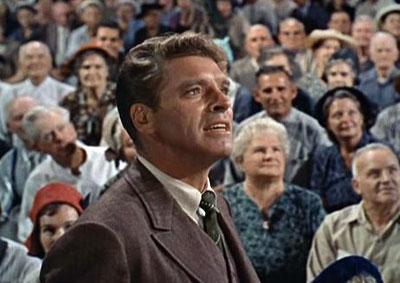
Na verdade, Elmer é um caixeiro viajante e, numa cidade, ele decide participar de um culto comandado pela Irmã Sharon Falconer (Jean Simmons). Ele não quer rezar, mas sim se juntar à Irmã Sharon contando sua “história de salvação”. Eles logo se tornam parceiros e amantes.


In reality, Elmer is a travelling salesman and, in one town, he decides to attend a religious gathering commanded by Sister Sharon Falconer (Jean Simmons). He doesn’t want to pray, but to join Sister Sharon telling his “salvation story”. They soon become partners and lovers.

Acompanhando Elmer e a Irmã Sharon na “peregrinação” temos Jim Lefferts (Arthur Kennedy), um jornalista que acaba escrevendo um artigo chamado “Santos ou Patifes” sobre a dupla. O artigo é lido por Lulu Bains (Shirley Jones), antiga amante de Elmer que agora é prostituta, que decide que quer vê-lo novamente.


Accompanying Elmer and Sister Sharon in their “pilgrimage” there is Jim Lefferts (Arthur Kennedy), a journalist who ends up writing an article called “Saints or Scoundrels” about the duo. The article is read by Lulu Bains (Shirley Jones), Elmer’s former lover and now a prostitute, who then decides she wants to see him again.

Os paramentos da Irmã Sharon me lembraram de outras figuras religiosas dos anos 1920 e 1930. A primeira é uma figura real: a Irmã Aimée Semple McPherson, que inspirou a Irmã Florence Fallon de Barbara Stanwyck em “A Mulher Miraculosa” (1931), e Irmã Alice de Tatiana Maslany no novo “Perry Mason” e foi retratada no cinema no excelente indie “A Mulher Milagrosa” (2019).


Sister Sharon’s vestments reminded me of other religious figures from the 1920s and 1930s. The first is a real-life figure: Sister Aimée Semple McPherson, who inspired Barbara Stanwyck’s Sister Florence Fallon in “The Miracle Woman” (1931), Tatiana Maslany’s Sister Alice in the new “Perry Mason” and was portrayed in movies in the excellent indie “Sister Aimée” (2019).

Ambos os protagonistas tiveram papéis semelhantes antes e depois de “Entre Deus e o Pecado”. Jean Simmons interpretou uma missionária no musical “Eles e Elas” (1955), enquanto Burt Lancaster esteve em outro filme que lida com religião e consumo de álcool em “Nas Trilhas da Aventura” (1965).


Both leads had similar roles before and after “Elmer Gantry”. Jean Simmons played a missionary in the musical “Guys and Dolls” (1955), while Burt Lancaster was in another film that deals with religion and alcohol consumption in “The Hallelujah Trail” (1965).

Burt Lancaster interpreta Elmer Gantry num tom histriônico, com zero sutileza, como o papel pedia. Ele deve ser um palhaço de circo e sabe desta demanda. Curiosamente, anos após a estreia do filme, Lancaster recebeu uma carta de um amigo de infância contando-lhe que sua performance no filme é o mais perto que ele chegou da maneira como ele se comportava na infância.


Burt Lancaster plays Elmer Gantry in a histrionic tone, with zero subtlety, as the role demanded. He must be a circus clown and he is aware of that. Curiously, years after the film premiered, Lancaster received a letter from a childhood friend telling him his performance in the movie is the closest to the way he behaved as a kid.

A trilha sonora inspirada é de André Previn. Nascido na Alemanha em 1929, ele e a família migraram para os EUA em 1938. Sua carreira em Hollywood começou quando ainda estava no Ensino Médio, em 1946. Ele ganharia quatro Oscars – dois antes de “Entre Deus e o Pecado”, dois depois – e é mais conhecido por ter sido o segundo marido de Mia Farrow, com quem ela ficou por nove anos, teve três filhos e adotou mais três. Previn faleceu aos 89 anos em 2019.


The inspired soundtrack is from André Previn. Born in Germany in 1929, he and his family flew to the US in 1938. His career in Hollywood began while he was still in high school, in 1946. He would go on to win four Oscars – two before “Elmer Gantry”, two after – and may be best known as Mia Farrow’s second husband, with whom she stayed for nine years, had three children and adopted three more. Previn passed away aged 89 in 2019.
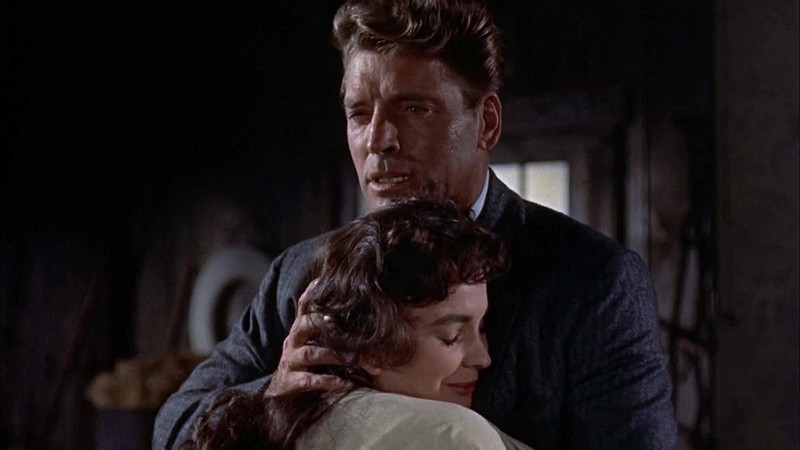
A Irmã Sharon é uma Revivalista, algo que Jim não consegue definir, mas cujo poder consegue sentir. As questões religiosas discutidas em “Entre Deus e o Pecado” são mais atuais do que nunca. Antes do filme começar, uma nota explicativa diz que “Liberdade Religiosa não é licença para abusar da fé das pessoas!”. E depois Lulu pergunta a Elmer “como pode que certas pessoas só encontram ódio na Bíblia?”.


Sister Sharon is a Revivalist, something Jim can’t quite define, but feels its power. The religious issues discussed in “Elmer Gantry” are more current than ever. Before the film starts, an awareness note says that “Freedom of Religion is not license to abuse the faith of the people!”. And then Lulu asks Elmer “how is that some people can only find hate in the Bible?”.

“Entre Deus e o Pecado” foi um destes filmes que comecei a assistir sem saber nada sobre e simplesmente não vi o tempo passar. É envolvente, emocionante, com ótimas performances de todo o elenco. É também catalisador para reflexões, pois muito mudou e ao mesmo tempo nada mudou nos últimos cema anos.


“Elmer Gantry” was one of those movies I started watching without knowing anything about and simply didn’t see time pass. It’s compelling, thrilling, with lots of great performances by the whole cast. It’s food for thought, because so much has changed and yet nothing has changed in the last 100 years.


This is my contribution to the It’s in the Name of the Title blogathon, hosted by Rebecca and Gill at Taking Up Room and Realweegiemidget Reviews.

Thursday, January 31, 2019

Idílio Proibido (1956) / Hilda Crane (1956)


Nos anos 50, a sociedade norte-americana estava prestes a passar por grandes mudanças, mas ainda era muito conservadora. Mesmo assim, o divórcio começava a se tornar mais comum, em especial após a Segunda Guerra Mundial - como você pode ver AQUI. O embate entre a nova liberdade de escolher ficar ou não casada e as expectativas que a sociedade e a família colocavam sobre as mulheres é o tema principal de “Idílio Proibido” (1956), um filme interessante e obscuro.

In the 1950s, the American society was about to undergo big changes, it is still was very conservative. Yet, divorce was starting to become more common, in special after World War II - as you can see HERE. The clashes between a newfound freedom to choose to remain married or not and the expectations society and family put upon women are the main themes in “Hilda Crane” (1956), an interesting obscure movie.


Hilda Crane (Jean Simmons) volta para casa depois de terminar um relacionamento e ser demitida. De repente, a mulher forte e independente se vê vivendo novamente com a mãe. Mais do que isso: Hilda já se divorciou duas vezes, e a sociedade a julga por isso.

Hilda Crane (Jean Simmons) has just returned home after ending a relationship and being fired from her latest job. All of a sudden a strong, independent woman sees herself living once again with her mother. More than that: Hilda has been married and divorced twice, and society judges her for that.


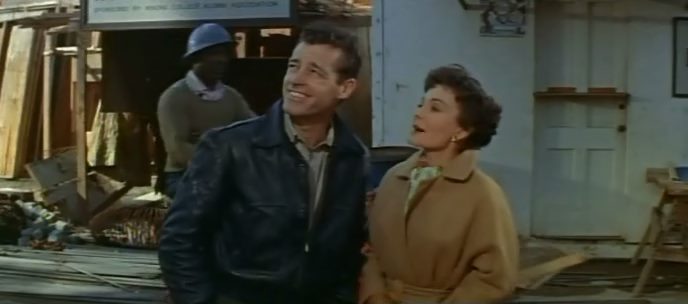
Demora pouco para que Hilda receba um pedido de casamento de Russell Burns (Guy Madison) - e é um pedido feito por carta! A mãe de Russell, a senhora Burns (Evelyn Varden) não gostou da ideia do filho. De maneira mal-educada, ela pergunta a Hilda e à mãe dela sobre os bens da família e os interesses que elas podem ter pelo casamento com Russell.

Soon Hilda receives a wedding proposal from Russell Burns (Guy Madison) - and the proposal comes through a letter! Russell’s mother, Mrs Burns (Evelyn Varden) is less than thrilled with her son’s move. In an impolite way, she asks Hilda and her mother about their possessions and their interests on Russell.


Ainda sem se decidir sobre Russell, Hilda aceita sair com o velho amigo de escola Jacques (Jean-Pierre Aumont). Ele ainda está ressentido porque o breve caso que eles tiveram não deu em nada e, mais do que isso, ele acredita que, por ela ser divorciada duas vezes, ela é agora uma mulher mais promíscua.

Still unsure about Russell, Hilda accepts to go out with a school friend and old flame, Jacques (Jean-Pierre Aumont). He is still bitter because the brief affair they had five years prior didn’t end well, and, moreover, he believes that, because she is twice divorced, she is more promiscuous.


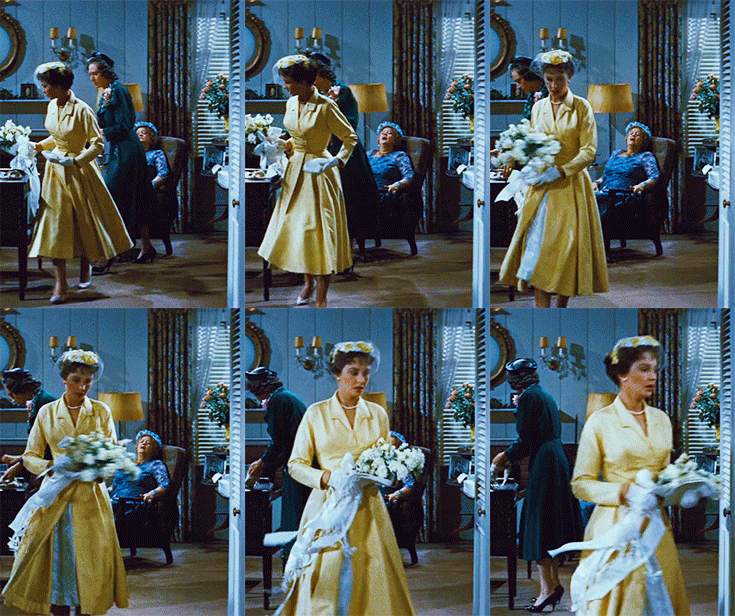
Frustrado com seu encontro com Jacques, Hilda aceita o pedido de Russell. Obviamente, ela enfrentará muitos desafios: primeiro, ela não o ama, segundo, a mãe dele é uma forte candidata ao título de pior sogra do cinema, terceiro, Jacques ainda mexe com os sentimentos dela. Hilda está tão desanimada com o casamento que deixa que a mãe, Stella (Judith Evelyn), cuide de todos os preparativos.

Frustrated after her date with Jacques, Hilda accepts Russell’s proposal. Of course, she will face many challenges: first, she doesn’t love him, second, his mother is a strong contender for the title of worst mother-in-law of all movies, third, Jacques still confuses her feelings. Hilda is so not invested in the wedding planning that she lets her mother, Stella (Judith Evelyn), decide everything.


Hilda diz a Jacques que ela quer felicidade, filhos, e envelhecer ao lado de um marido que a ame. E ela quer tudo isso. Ela não se contenta só com uma dessas coisas. Ela não aceitará viver em um casamento infeliz com alguém que ela não ama só para ter filhos - como muitas mulheres faziam e ainda fazem. Ela não aceitará infelicidade para manter as aparências. Ela quer o pacote completo.

As Hilda tells Jacques, she wants happiness, children, and growing old with a husband that loves her. And she wants all that. She won’t settle for only one of those things. She won’t accept to live an unhappy marriage with someone she doesn’t love just in order to have children - like so many women did and still do. She won’t accept unhappiness to keep up appearances. She wants the whole package.


Este não conformismo peculiar mostra que Hilda é uma mulher moderna. Ela pode ter sonhos antiquados, mas não está disposta a sacrificar sua felicidade para consegui-los. Ela também diz que, na faculdade, queria viver a vida como um homem. Bem, já foi provado que a maioria dos pedidos de divórcio é feita pelos homens, e esse foi provavelmente o caso de Hilda.

This weird way of non-conformity shows that Hilda is a modern woman. She may have old-fashioned dreams, but she won’t sacrifice her own happiness to achieve them. She also says that, in college, she wanted to live life like a man. Well, it’s been proved that women file for divorce more often, and it was probably the case with Hilda.


Não é somente a sogra de Hilda que a vê com maus olhos - a mãe dela também tem vergonha do passado da filha e faz de tudo para manter as aparências, incluindo mentir e manipular. Hipocrisia também é um tema importante no filme.

Not only her mother-in-law sees Hilda through bad lenses - her mother is also ashamed of her daughter’s past and does anything to keep up appearances, including lying and manipulating her own daughter. Hypocrisy is another important theme in the film.


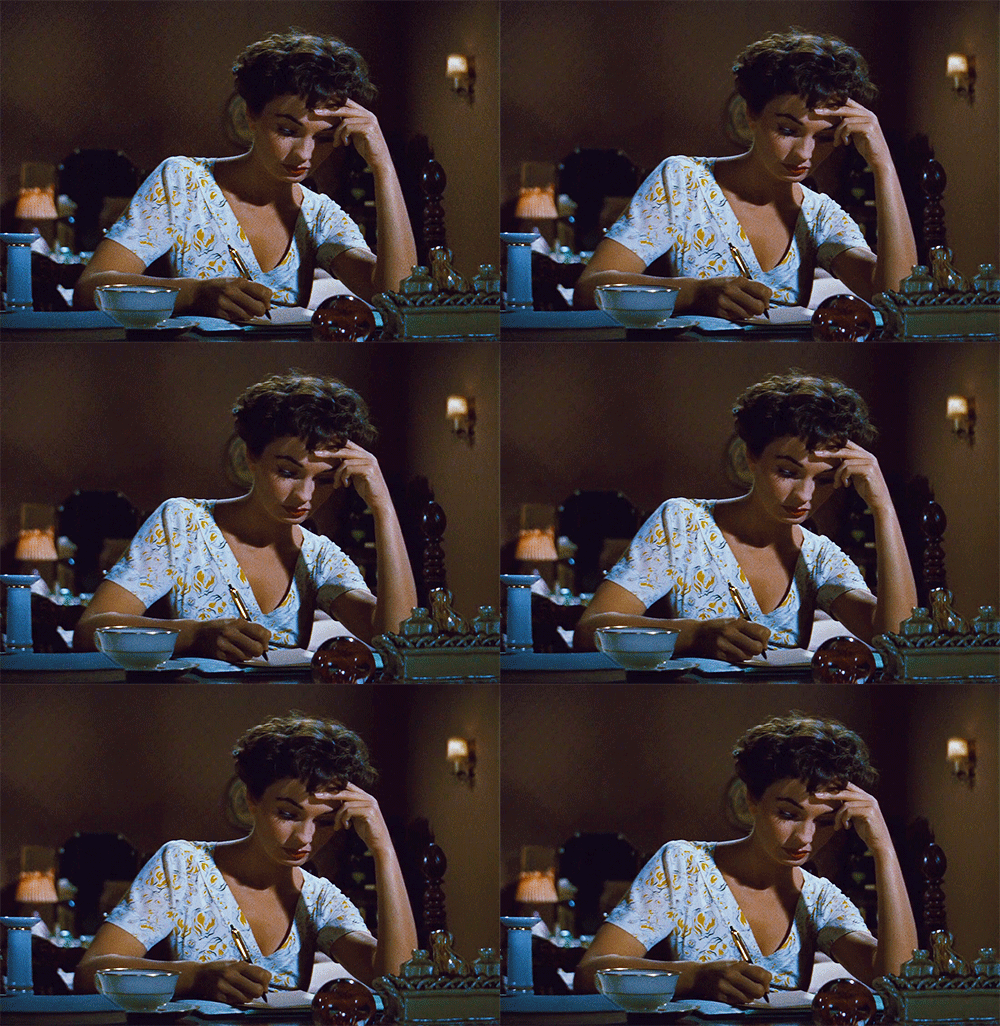
Jean Simmons é uma atriz pouco lembrada hoje, mas não deveria ser assim. Ela era linda e muito talentosa. Em “Idílio Proibido”, ela apresenta um corte de cabelo simples mas fabuloso, usa belas roupas e mostra seus grandes olhos brilhantes. Seus momentos de rebeldia são épicos, e é excitante quando ela desafia a mãe e a sogra. Jean Simmons merece mais reconhecimento não apenas por seus esforços em “Idílio Proibido”, mas também por ótimas atuações em filmes como “Hamlet” (1948) e “Spartacus” (1960).

Jean Simmons is often an overlooked actress, but she shouldn’t be. She was gorgeous and immensely talented. In “Hilda Crane”, she has a fabulous yet simple hairstyle, beautiful outfits and her eyes simply sparkle. Her rebellious bouts are epic, and it’s exciting whenever she confronts her mother or her mother-in-law. Jean Simmons deserves more recognition not only for her efforts in “Hilda Crane”, but also for the great performances she delivered in films like “Hamlet” (1948) and “Spartacus” (1960).

Jean Simmons as Varinia in "Spartacus"
O imenso peso de manter as aparências em geral cai apenas nos ombros das mulheres. A reputação de um homem é praticamente indestrutível, porém um passo em falso ou mesmo um boato são capazes de destruir a reputação de uma mulher e fazer com que os outros a chamem de vadia. E, para manter as aparências, algumas mulheres fazem de tudo, inclusive ferir os sentimentos das pessoas que amam. Esta é a lição de “Idílio Proibido” por que insistir para as mulheres manterem as aparências se o preço a pagar por “ser respeitável” é tão alto?

The huge weight of keeping up appearances falls usually only in the women’s backs. Men’s reputations are almost indestructible, while a misstep or even a gossip can destroy a woman’s reputation and make others see her as a tramp. And, in order to keep up appearances, some women can do anything, even hurting the ones they love. This is the lesson in “Hilda Crane”: why to insist that women keep up appearances when the price to pay for respectability is so high?

This is my contribution to the 90 Years of Jean Simmons blogathon, hosted by Virginie and Laura at The Wonderful World of Cinema and Phyllis Loves Classic Movies.


Monday, September 12, 2016

Give Us the Moon (1944)

Quem gosta de cinema sempre fica ansioso com as novas estreias, as premiações e as novidades que surgem todos os dias dentro e fora de Hollywood. Pra quem gosta de cinema clássico, isso é um pouco diferente, já que nossos ídolos encerraram a carreira há décadas e nunca teremos a emoção de ver a estreia um novo filme com nossos artistas favoritos. Mas isso não impede que estejamos descobrindo novos filmes e estrelas o tempo todo.

Anyone who likes movies is constantly anxious about the new films hitting the theaters, the awards ceremonies and the news that arise everyday inside and outside Hollywood. But if you like classic film, this relationship is a bit different, because our idols stopped working decades ago and we’ll never feel the emotion of going to the opening night of a film starring our favorite stars. However, this doesn’t prevent us from discovering new movies and stars all the time.
E é através de blogs que eu descubro a maioria dos meus novos ídolos. Foi a Virginie do blog The Wonderful World of Cinema que me indicou este filme. Ou melhor, foi ela que me fez prestar mais atenção na atriz Margaret Lockwood, paquistanesa de nascimento, cidadã britânica, mais conhecida por protagonizar “A Dama Oculta”, filme de Hitchcock de 1938, mas também uma estrela que merece muito mais destaque.

It is through blogging that I dircover most of my new idols. It was Virginie from the blog The Wonderful World of Cinema who recommended me this movie. And more: she was the one who made me pay more attention to Margaret Lockwood. Margaret was born in (now Pakistan), is best known for starring in “The Lady Vanishes”, a Hitchcock film from 1938, but she is a performer who deserves more recognition.
Se comédia nonsense lhe faz lembrar os irmãos Marx, é porque você não conhece “Give Us the Moon”. A trama soa estranha quando recontada: Peter (Peter Graves) não quer trabalhar duro como o pai, dono do Hotel Eisenhower. Peter é também mulherengo, e recebe um bilhete marcando um encontro no restaurante Silver Samovar, assinado por uma moça chamada Nina.

If nonsense comedy reminds you of the Marx brothers, it's because you haven't watched “Give Us the Moon”. The plot is strange when recounted: Peter (Peter Graves) doesn't want ot work as hard as his father, the owner of the Hotel Eisenhower. Peter is also a womanizer, and he receives a note setting a date at the Silver Samovar restaurant. The note is signed by a lady called Nina.
Lá ele encontra orquestra, Ochi Chernye e vários imigrantes russos, entre eles  Nina (Margaret Lockwood), uma moça excêntrica que faz parte de uma sociedade secreta chamada Elefantes Brancos. Os Elefantes Brancos têm apenas um propósito na vida: contemplar o mundo, fazer planos e jamais executá-los. A maior desonra para um Elefante Branco é conseguir um emprego. É o grupo perfeito para Peter, obviamente.

There he finds an orchestra, listens to Ochi Chernye and meets several Russian imigrants. Among them is Nina (Margaret Lockwood), an eccentric woman who is part of a secret society called “The White Elephants”. The White Elephants have one purpose in life: contemplate the world, make plans and never execute them. The greatest dishonor for a White Elephant is to get a job. It is, obviously, the perfect group for Peter.
Um dia, para forçar o filho a amadurecer, o pai de Peter sai em viagem e o deixa tomando conta do hotel. E é assim que o Hotel Eisenhower parece entrar em uma fase de prosperidade, mas que é só aparente: os novos hóspedes que lotam o hotel nada mais são que os desocupados (e sem dinheiro) Elefantes Brancos.

One day, in order to make his son grow up, Peter's father goes on a long trip and leaves him to take care of the hotel. And then the Hotel Eisenhower starts a phase of apparent prosperity: the hotel is full of guests, but they are the jobless (and pennyless) White Elephants.

É uma comédia frenética, amalucada, uma screwball inglesa. Os diálogos são ainda mais rápidos que em “Jejum de Amor” (1940), e tenho certeza de que é preciso ver o filme muitas e muitas vezes até conseguir pegar todas as piadas.

It is a zany comedy, a screwball made in England. The dialogs are fired more quickly than in “His Girl Friday” (1940), and I'm sure that I'll need to watch the film several times in order to catch all the jokes.
O elenco é ótimo. Margaret, adorável, e Peter Graves falam absurdamente rápido e formam um belo casal, não importa se estão no restaurante ou deitados no feno. A simpática e precoce irmã de Nina, Heidi, lhe parece familiar? Pois deveria: ele é interpretada por Jean Simmons, em seu segundo filme. Outro destaque é Sascha (Vic Oliver), um inventivo e exagerado membro dos Elefantes Brancos, que sempre faz drama perguntando: “me, a Pudushikin?” quando ele precisa fazer algo contra a sua vontade.

The cast is superb. Margaret, lovely, and Peter Graves both talk sooooo quickly and form a beutiful couple, wheter in the restaurant or lying on the haystack. Does the charming and precocius Heidi, Nina's little sister, look familiar to you? Well, she should?: she is played by Jean Simmons, in her secnd film. Another important player is Sascha (Vic Oliver), an inventive and exaggerated member of the White Elephants who is also a drama king when he asks “me, a Pudushikin?” whenever he has to do something against his will.
Divertidíssimo e maluco, “Give Us the Moon” é uma pérola escondida do cinema, que merece ser mais conhecida e apreciada. É um dos meus novos filmes favoritos, e aquele que me ensinou uma importante frase de efeito: “All elephants are my brothers!”

Very funny and crazy, “Give Us the Moon” is a hidden pearl in film history, and one that deserves to be known and enjoyed. Itis one of my new favorite movies, and the one that has taught me an important punchline: “All elephants are my brothers!”

This is my contribution to the Margaret Lockwood Centennial Blogathon, hosted by Terence at A Shroud of Thoughts.

Friday, December 11, 2015

Eles e Elas (1955) / Guys and Dolls (1955)

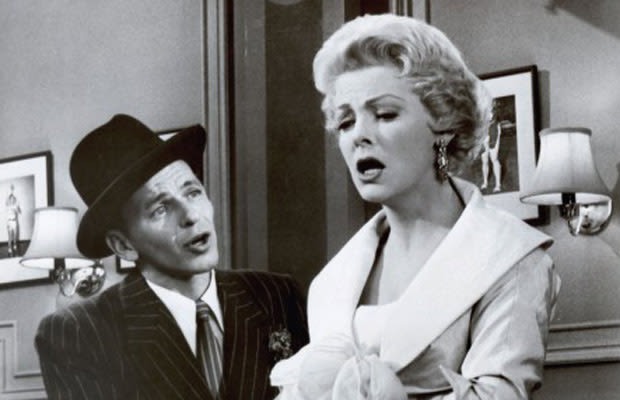
Com mil dólares, Nathan Detroit (Frank Sinatra) pode resolver todos os seus problemas, que envolvem dívidas, jogos ilegais e um noivado que já dura 14 anos. Ele vê sua grande oportunidade de conseguir o dinheiro na figura de Sky Masterson (Marlon Brando), um homem que adora fazer apostas. Maliciosamente, Nathan induz Sky a uma nova aposta: se Sky conseguir levar a missionária Sarah (Jean Simmons) para um jantar em Havana, Nathan lhe dará mil dólares. Caso contrário, Sky deverá mil dólares a Nathan.

With a thousand dollars, Nathan Detroit (Frank Sinatra) can solve all his problems, including debts, illegal games and an engagement that has been going on for 14 years. He sees his big opportunity to get the money in the figure of Sky Masterson (Marlon Brando), a man who loves to place bets. With malice, Nathan offers a new kind of bet to Sky: if he manages to take missionary Sarah (Jean Simmons) to have dinner in Havana, Nathan will give him a thousand dollars. If he fails, Sky will give the money to Nathan. 

Nathan acredita que Sky tem uma missão impossível pela frente, e portanto a aposta já está ganha. Mas Sky não desistirá com facilidade, apesar de Sarah se mostrar pouco interessada. É a possibilidade de salvar a “alma alcoólatra” de Sky que atrai Sarah: para ela Sky representa apenas negócios missionários. Para Sky, Sarah representa apenas mais uma aposta. Mas por quanto tempo eles se verão desta forma?

Nathan believes that Sky has na impossible mission, and that’s why the money is a sure thing. But Sky won’t give up easily, even though Sarah seems less than interested. It’s the possibility to save Sky’s “alcoholic soul” that attracts Sarah: for her he means only missionary business. For him, she means only another bet. But for how long they will see each other this way?

O nome de Sinatra é apenas o terceiro a aparecer nos créditos, depois de Brando e Simmons. Frank queria o papel principal, de Sky Masterson, e ficou muito chateado com a escolha de Marlon Brando, com quem nunca se deu bem durante as gravações. Contra a popularidade não se podia lutar: Sinatra era uma estrela mas Brando era uma super-estrela. O auge de Sinatra parecia já ter acabado, apesar de seu ressurgimento com “A Um Passo da Eternidade / From Here com Eternity”(1953), que lhe rendeu um Oscar.

Sinatra’s name goes thrid in the credits, after Brando and Simmons. Frank wanted the main role, Sky Materson, and was very upset because Marlon Brando was chosen instead – they didn’t get along during the shooting. Against popularity there is no fighting: Sinatra was a star but Brando was a superstar. Sinatra’s climax seemed to be over, even though he had rosen again with “From Here to Eternity” (1953), that gave him an Oscar.  

Amigos? / Friends?

O papel de Sky era para ser de Gene Kelly, mas a MGM não aceitou “emprestar” o ator-cantor-dançarino para o produtor Samuel Goldwyn. Outros atores considerados para interpretar Sky foram Kirk Douglas, Robert Mitchum, Burt Lancaster, Bing Crosby e Clark Gable (que queria muito o papel, caso a Paramount comprasse os direitos da peça, o que não aconteceu). Robert Alda originou o papel na Broadway, e ganhou um Tony por sua performance.

The role of Sky should have gone to Gene Kelly, but MGM didn’t lend the actor/dancer to Samuel Goldwyn. Other actors considered to play Sky were Kirk Douglas, Robert Mitchum, Burt Lancaster, Bing Crosby and Clark Gable (who wanted the job so much, if Paramount bought the rights for the play, something that didn’t happen). Robert Alda originated the role on Broadway, and won a Tony for his performance.

Para a noiva de Nathan, Adelaide, o diretor Joseph L. Mankiewicz vetou Marilyn Monroe. Goldwyn recusou Betty Grable. Judy Holiday foi cogitada, mas a ideia foi abandonada. A solução foi voltar às origens e chamar a atriz que interpretava Adelaide nos palcos, Vivian Blaine. O papel da missionária Sarah foi recusado por Grace Kelly e Deborah Kerr, e Jean Simmons foi a escolhida.

For Nathan’s fiancée, Adelaide, diretor Joseph L. Mankiewicz vetoed Marilyn Monroe. Goldwyn refused Betty Grable. Judy Holiday was considered, but then refused. The solution was to go back to the stage to invite the actress who played Adelaide on Broadway, Vivian Blaine. The role of missionary Sarah was refused by Grace Kelly and Deborah Kerr, and Jean Simmons was chosen.

As canções não favorecem a voz de Sinatra. Perfeito para as big bands, o cantor de olhos azuis tem músicas pouco memoráveis no filme (a melhor delas é “The Oldest Established Permanent Floating Crap Game in New York”). Enquanto isso, somos obrigados a ouvir Marlon Brando cantando “Luck Be a Lady”, canção que se tornou icônica ao ser regravada por... Frank Sinatra. Compare as duas versões:

The songs weren’t made for Frank Sinatra’s voice. Perfect for the big bands, Blue Eyes has songs in the move that aren’t memorable (the best of them is “The Oldest Established Permanent Crap Game in New York”). Meanwhile, we have to listen to Marlon Brando singing “Lucky Be a Lady”, a song that became iconic when it was recorded by… Frank Sinatra. Compare the two versions:

Eles e Elas” teve sua origem na Broadway, e infelizmente não se adaptou bem ao cinema. A própria sequência de dança inicial funcionaria apenas no palco, e fica esquisita na tela, até por ser coreografada pelo teatral Michael Kidd. A duração do filme também o compromete: duas horas e meia de projeção, com uma história muito simples e previsível a ser contada.

“Guys and Dolls” originated on Broadway, and unfortunately didn’t adapt well to cinema. The initial dance sequence, for instance, would work only on stage, and becomes weird on the screen, maybe because of it choreographed by th theatrical Michael Kidd. The duration of the film also compromises: two and a half hours, with a story that’s too simple and predictable. 


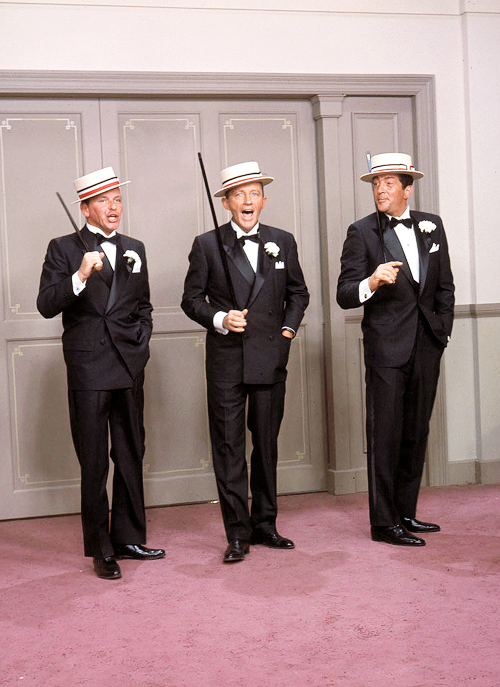
Eles e Elas” lembra muito outro musical longo sobre religião e ilegalidade protagonizado por Frank Sinatra: “Robin Hood de Chicago / Robin and the Seven Hoods” (1964) que, apesar de menos conhecido, é bem melhor que “Eles e Elas”. Agora no papel principal, Frank interpreta Robbo, um gângster envolvido em várias atividades ilegais, incluindo o jogo de dados e a venda de bebidas alcoólicas. Em uma cena divertidíssima, Robbo e sua gangue transformam o cassino/bar em um local de pregação e oração para despistar os policiais, e Bing Crosby canta em seu testemunho sobre os perigos do “Mr Booze”. Sim, Bing Crosby, porque o Rat Pack todo está no filme: Peter Lawford, Sammy Davis Jr e Dean Martin (que, entre nós, seria um Sky Masterson bem mais convincente que Brando).

“Guys and Dolls” reminded me of another long musical about religion and Prohibition with Frank Sinatra: “Robin and the 7 Hoods” (1964), one that may be little known, but it’s better than “Guys and Dolls”. Now as the lead, Frank plays Robbo, a gangster involved in several illegal businesses, like crap games and the selling of booze. In a very amusing scene, Robbo and his gang transform their casino/bar in a place of worshipping, and Bing Crosby sings as his testimonial about the dangers of “Mr Booze”. Yes, Bing Crosby, because the whole Rat Pack is in the movie: Peter Lawford, Sammy Davis Jr and Dean Martin (who, we believe, would make a better Sky Masterson than Marlon Brando).
 
Bem melhor / Much better

Eles e Elas” não chega a ser um filme ruim. É leve, despretensioso, descompromissado, como um sonho. Deve funcionar melhor na tela grande, e melhor ainda nos palcos. Veja “Eles e Elas” sem esperar muito. E depois corra e aprecie “Robin Hood de Chicago”.

“Guys and Dolls” isn’t a bad movie. It’s light, unpretentious, suave, like a dream. It may work better in the big screen, and better yet on stage. See “Guys and Dolls” without high expectations. And then run and enjoy “Robin and the 7 Hoods”. 

This is my contribution to the Sinatra Centennial Blogathon, hosted by Movie Classics and The Vintage Cameo.
Related Posts Plugin for WordPress, Blogger...