} Crítica Retrô: Shirley Jones

Tradutor / Translator / Traductor / Übersetzer / Traduttore / Traducteur / 翻訳者 / переводчик

Showing posts with label Shirley Jones. Show all posts

Wednesday, May 15, 2024

Entre Deus e o Pecado (1960) / Elmer Gantry (1960)

 Quando um filme garante um Oscar a um ator, nós cinéfilos rapidamente ficamos interessados neste filme. Quando o ator que ganhou o Oscar tem uma carreira tão prolífica e interessante quanto a de Burt Lancaster, só podemos imaginar que sua performance em tal filme foi incrível. “Entre Deus e o Pecado” deu a Lancaster seu único Oscar de Melhor Ator, e também deu a Shirley Jones o Oscar de Melhor Atriz Coadjuvante.


When a film gives an actor the Oscar, we cinephiles quickly become interested in this film. When the actor who won the Oscar has such a prolific and interesting career as Burt Lancaster’s, we can only imagine that his performance in said film was nothing but superb. “Elmer Gantry” (1960) gave Lancaster his only Best Actor Oscar, and also gave Shirley Jones a Best Supporting Actress Oscar. 

Elmer Gantry (Lancaster) é um bêbado, praticamente um mendigo, que passa a véspera de Natal com uma prostituta e pela manhã mente para sua mãe, dizendo que havia ido à igreja. Mas ele demonstra conhecer hinos de louvor quando participa de um culto com pessoas negras adorando ao Senhor. A sua alma ainda pode ser salva, no final das contas!


Elmer Gantry (Lancaster) is a drunkard, practically a hobo, who spends Christmas Eve with a prostitute and in the morning lies to his mother that he has gone to church. But he proves to know church hymns when he attends a gathering of black people worshipping the Lord. His soul can be saved, after all!
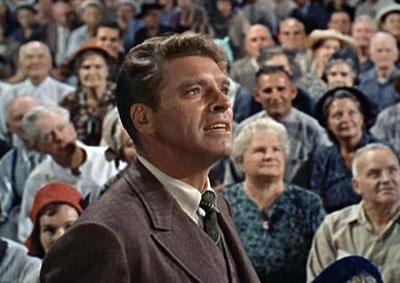
Na verdade, Elmer é um caixeiro viajante e, numa cidade, ele decide participar de um culto comandado pela Irmã Sharon Falconer (Jean Simmons). Ele não quer rezar, mas sim se juntar à Irmã Sharon contando sua “história de salvação”. Eles logo se tornam parceiros e amantes.


In reality, Elmer is a travelling salesman and, in one town, he decides to attend a religious gathering commanded by Sister Sharon Falconer (Jean Simmons). He doesn’t want to pray, but to join Sister Sharon telling his “salvation story”. They soon become partners and lovers.

Acompanhando Elmer e a Irmã Sharon na “peregrinação” temos Jim Lefferts (Arthur Kennedy), um jornalista que acaba escrevendo um artigo chamado “Santos ou Patifes” sobre a dupla. O artigo é lido por Lulu Bains (Shirley Jones), antiga amante de Elmer que agora é prostituta, que decide que quer vê-lo novamente.


Accompanying Elmer and Sister Sharon in their “pilgrimage” there is Jim Lefferts (Arthur Kennedy), a journalist who ends up writing an article called “Saints or Scoundrels” about the duo. The article is read by Lulu Bains (Shirley Jones), Elmer’s former lover and now a prostitute, who then decides she wants to see him again.

Os paramentos da Irmã Sharon me lembraram de outras figuras religiosas dos anos 1920 e 1930. A primeira é uma figura real: a Irmã Aimée Semple McPherson, que inspirou a Irmã Florence Fallon de Barbara Stanwyck em “A Mulher Miraculosa” (1931), e Irmã Alice de Tatiana Maslany no novo “Perry Mason” e foi retratada no cinema no excelente indie “A Mulher Milagrosa” (2019).


Sister Sharon’s vestments reminded me of other religious figures from the 1920s and 1930s. The first is a real-life figure: Sister Aimée Semple McPherson, who inspired Barbara Stanwyck’s Sister Florence Fallon in “The Miracle Woman” (1931), Tatiana Maslany’s Sister Alice in the new “Perry Mason” and was portrayed in movies in the excellent indie “Sister Aimée” (2019).

Ambos os protagonistas tiveram papéis semelhantes antes e depois de “Entre Deus e o Pecado”. Jean Simmons interpretou uma missionária no musical “Eles e Elas” (1955), enquanto Burt Lancaster esteve em outro filme que lida com religião e consumo de álcool em “Nas Trilhas da Aventura” (1965).


Both leads had similar roles before and after “Elmer Gantry”. Jean Simmons played a missionary in the musical “Guys and Dolls” (1955), while Burt Lancaster was in another film that deals with religion and alcohol consumption in “The Hallelujah Trail” (1965).

Burt Lancaster interpreta Elmer Gantry num tom histriônico, com zero sutileza, como o papel pedia. Ele deve ser um palhaço de circo e sabe desta demanda. Curiosamente, anos após a estreia do filme, Lancaster recebeu uma carta de um amigo de infância contando-lhe que sua performance no filme é o mais perto que ele chegou da maneira como ele se comportava na infância.


Burt Lancaster plays Elmer Gantry in a histrionic tone, with zero subtlety, as the role demanded. He must be a circus clown and he is aware of that. Curiously, years after the film premiered, Lancaster received a letter from a childhood friend telling him his performance in the movie is the closest to the way he behaved as a kid.

A trilha sonora inspirada é de André Previn. Nascido na Alemanha em 1929, ele e a família migraram para os EUA em 1938. Sua carreira em Hollywood começou quando ainda estava no Ensino Médio, em 1946. Ele ganharia quatro Oscars – dois antes de “Entre Deus e o Pecado”, dois depois – e é mais conhecido por ter sido o segundo marido de Mia Farrow, com quem ela ficou por nove anos, teve três filhos e adotou mais três. Previn faleceu aos 89 anos em 2019.


The inspired soundtrack is from André Previn. Born in Germany in 1929, he and his family flew to the US in 1938. His career in Hollywood began while he was still in high school, in 1946. He would go on to win four Oscars – two before “Elmer Gantry”, two after – and may be best known as Mia Farrow’s second husband, with whom she stayed for nine years, had three children and adopted three more. Previn passed away aged 89 in 2019.
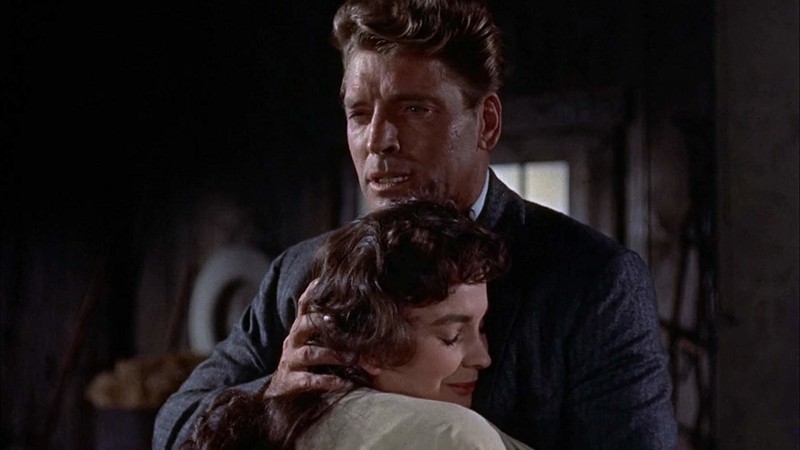
A Irmã Sharon é uma Revivalista, algo que Jim não consegue definir, mas cujo poder consegue sentir. As questões religiosas discutidas em “Entre Deus e o Pecado” são mais atuais do que nunca. Antes do filme começar, uma nota explicativa diz que “Liberdade Religiosa não é licença para abusar da fé das pessoas!”. E depois Lulu pergunta a Elmer “como pode que certas pessoas só encontram ódio na Bíblia?”.


Sister Sharon is a Revivalist, something Jim can’t quite define, but feels its power. The religious issues discussed in “Elmer Gantry” are more current than ever. Before the film starts, an awareness note says that “Freedom of Religion is not license to abuse the faith of the people!”. And then Lulu asks Elmer “how is that some people can only find hate in the Bible?”.
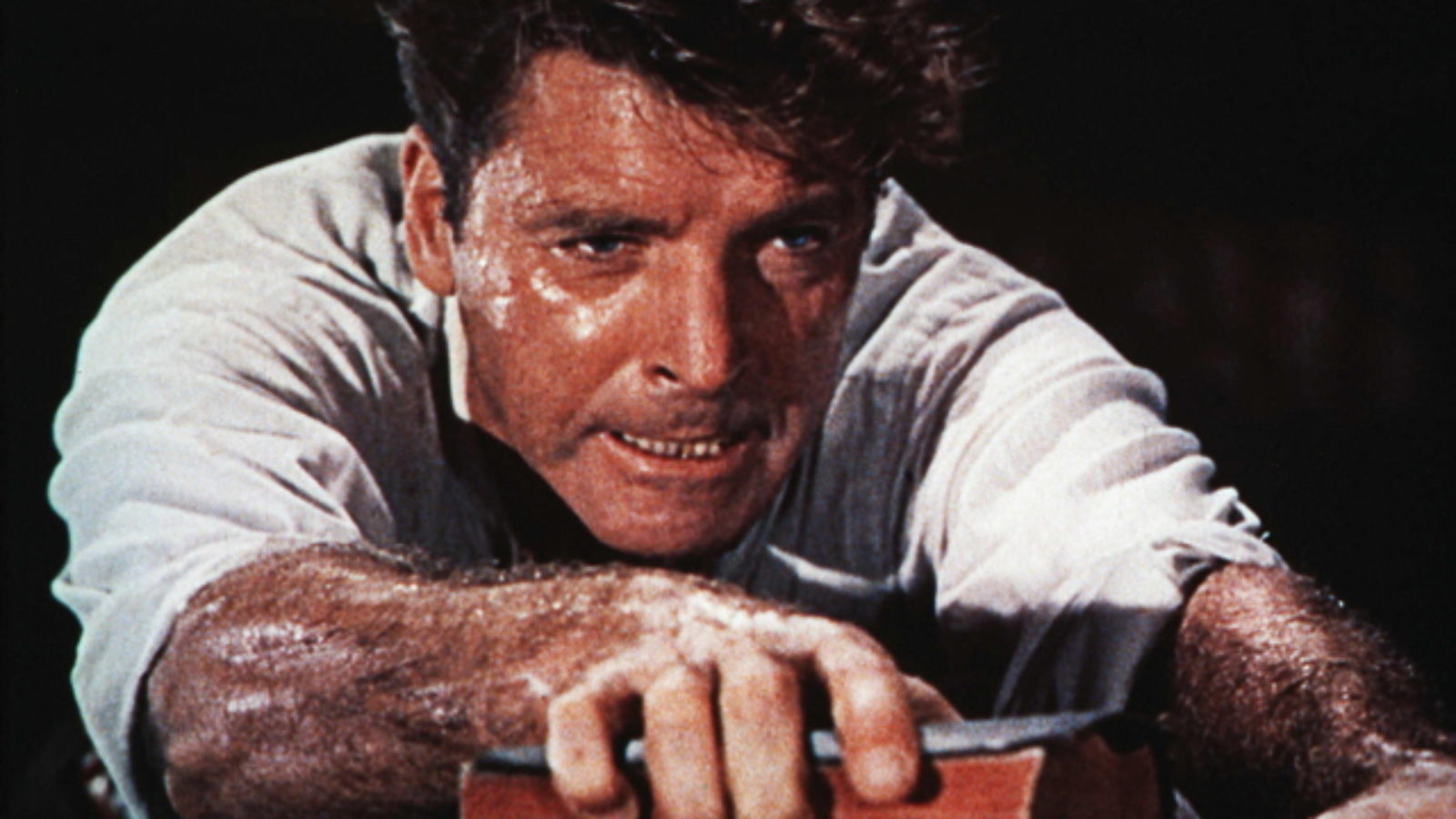
“Entre Deus e o Pecado” foi um destes filmes que comecei a assistir sem saber nada sobre e simplesmente não vi o tempo passar. É envolvente, emocionante, com ótimas performances de todo o elenco. É também catalisador para reflexões, pois muito mudou e ao mesmo tempo nada mudou nos últimos cema anos.


“Elmer Gantry” was one of those movies I started watching without knowing anything about and simply didn’t see time pass. It’s compelling, thrilling, with lots of great performances by the whole cast. It’s food for thought, because so much has changed and yet nothing has changed in the last 100 years.


This is my contribution to the It’s in the Name of the Title blogathon, hosted by Rebecca and Gill at Taking Up Room and Realweegiemidget Reviews.

Saturday, December 16, 2023

Vendedor de Ilusões (1962) / The Music Man (1962)


Alguns musicais são tão bem sucedidos que deixam uma marca na cultura pop. Isso significa que você acaba conhecendo as músicas sem ter que assistir ao musical. Isso aconteceu comigo mais recentemente quando assisti a “Vendedor de Ilusões” pela primeira vez: percebi que já conhecia tantas das músicas de antemão. Apesar disso, ou talvez por causa disso, me diverti muito.


Some musicals are so enormously successful that they leave a mark in pop culture. This means you get to know the songs without having to watch the musical. This happened to me most recently when I watched “The Music Man” (1962) for the first time: I realized I already knew so many songs in it beforehand. Nevertheless, or maybe because of this, I had a great time.

O Professor Harold Hill (Robert Preston) é um caixeiro viajante que chega a River City, Iowa. Ele vende instrumentos musicais para formar bandas de jovens. Ele soluciona o problema de a cidade não ter uma banda de jovens ao encontrar um inimigo que poderia ser combatido com a música: a nova mesa de bilhar em um saloon.


Professor Harold Hill (Robert Preston) is a travelling salesman who arrives in River City, Iowa. He sells musical instruments to form boys’ bands. He solves the problem of the city not having a boys’ band by finding an enemy that could be fought with music: the new pool table at a saloon.

A organização de uma banda de jovens é, obviamente, uma maneira do Professor Hill ganhar dinheiro fácil e sair da cidade. Quase todos no local pareciam animados com a ideia da banda. Quase todos, menos a bibliotecária local e também professora de piano, Marian Paroo (Shirley Jones). Mas é exatamente a atenção dela que o Professor Hill quer obter. Ele conseguirá sucesso em seu esquema e também conquistar a garota?


The organization of the boys’ band is, of course, a way for Professor Hill to earn easy money and leave the town. Almost everybody from River City seemed to get excited about the band. Almost, except the local librarian and also piano teacher Marian Paroo (Shirley Jones). But it’s exactly her attention Professor Hill wants to win. Will he manage to be successful with his scheme and also get the girl?

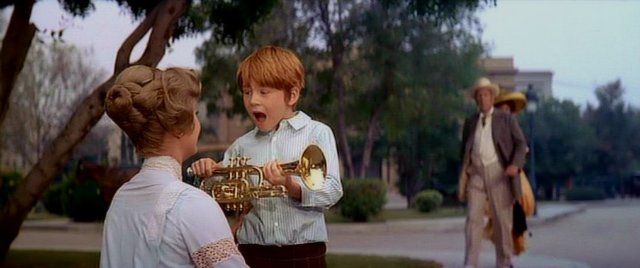
Creditado como “Ronny Howard”, lá está ele: o futuro megaprodutor Ron Howard, aos oito anos de idade, como Winthrop Paroo, irmão mais novo de Marian. Ele está muito bem no papel, e até consegue, de maneira convincente, fingir falar com a língua presa. De acordo com o IMDB, seu primeiro papel como ator foi em 1956 - quando ele tinha apenas dois anos de idade - e a partir daí Ronny fez diversos filmes e séries de TV.


Credited as “Ronny Howard”, there he is: future mega producer Ron Howard, aged eight, as Winthrop Paroo, Marian’s younger brother. He is very good in the role, and even manages to believably fake a lisp. According to IMDb, his first acting credit comes from 1956 - when he was just two years old - and from them on Ronny appeared steadily on film and TV.

Eu gostaria de destacar Pert Kelton, wue interpreta a mãe de Marian e Winthrop. Ela também esteve na produção da Broadway de “Vendedor de Ilusões”. Apesar de este ser seu mais conhecido papel no cinema, esta filha de artistas do vaudeville apareceu em 47 filmes e programas de TV, começando em 1929. Ela perdeu o papel de Alice Kramden na popular série de TV “The Honeymooners” porque seu marido, o também ator Ralph Bell, entrou para a lista negra durante a Ameaça Vermelha.


I’d like to highlight Pert Kelton, who plays Marian’s and Winthrop’s mother. She was also on the Broadway production of “The Music Man”. Although this is her best known movie, this daughter of vaudevillians appeared in 47 films and TV shows, starting in 1929. She lost the role of Alice Kramden on the popular TV show “The Honeymooners” because her husband, also actor Ralph Bell, was blacklisted during the Red Scare.

Também dignos de nota são os quatro membros do Conselho Escolar que se tornam um quarteto cantor - eles são todos muito talentosos! Eles são The Buffalo Bills e também estiveram na produção da Broadway. Eles foram os Medalhistas Internacionais de 1950 da Sociedade para Preservação e Encorajamento de Quartetos Cantores de Barbearia nas Américas. Tendo começado a carreira em 1947 na cidade de Buffalo - de onde vem o nome do quarteto - o grupo se manteve ativo até 1967 e seu concerto de despedida foi no famoso Hotel Waldorf-Astoria de Nova York.


Also worth noticing is the four School Board members who become a singing quartet – they’re all very talented! They are The Buffalo Bills and were also on the Broadway production. They were the 1950 International Champion Medalist Quartet of the S.P.E.B.S.Q.S.A., the Society for the Preservation and Encouragement of Barber Shop Quartet Singing in America. Having started in 1947 in the city of Buffalo - from where the group’s name came - they were active until 1967 and did their farewell concert at the famous Waldorf-Astoria Hotel in New York.

O cérebro por trás de “Vendedor de Ilusões” é Meredith Wilson. Ele criou River City tendo como inspiração sua cidade natal, Mason City, Iowa. Tendo sido flautista na banda de John Philip Sousa e na Orquestra Filarmônica de Nova York, Wilson já havia composto trilhas sonoras para filmes como “O Grande Ditador” (1940) e “Pérfida” (1941). Depois de uma década de trabalho no rádio, Wilson presenteou o mundo com “Vendedor de Ilusões”, tendo trabalhado no musical por oito anos e composto 40 músicas. A peça foi um sucesso com Robert Preston como o protagonista, um papel que a Warner Bros não queria que ele repetisse por não ser um nome conhecido. Meredith Wilson ameaçou cancelar a produção por completo se Preston não ficasse com o papel protagonista, o que aconteceu depois que nomes como Frank Sinatra, Bring Crosby e Cary Grant recusaram o papel.


The brain behind “The Music Man” is Meredith Wilson. He based River City on his hometown, Mason City, Iowa. A former flutist at both John Philip Sousa’s band and the New York Philharmonic Orchestra, Wilson had written scores for films such as “The Great Dictator” (1940) and “The Little Foxes” (1941). After a decade’s work on radio, Wilson gifted “The Music Man” to the world, after writing 40 songs in eight years of work. The play was a hit with Robert Preston as the lead, a role that Warner Bros was not willing to let him repeat on film, because Preston wasn’t a bankable star. Meredith Wilson threatened to cancel the production completely if Preston wasn’t cast as the lead, which happened after names like Frank Sinatra, Bing Crosby and Cary Grant refused the role.

“Vendedor de Ilusões”, a peça da Broadway, ganhou o prêmio Tony de Melhor Musical em 1957, vencendo “Amor, Sublime Amor” na disputa. Quando foram feitas as adaptações para o cinema, o jogo virou: em 1962 “Amor, Sublime Amor” ganhou 11 Oscars e um ano depois “Vendedor de Ilusões” venceu apenas um Oscar, Melhor Trilha Sonora Adaptada.


“The Music Man”, the Broadway production, won the Best Musical Tony Award in 1957, beating “West Side Story”. When they became movies, the game changed: in 1962 “West Side Story” won 11 Oscars and one year later “The Music Man” won only one, Best Music, Scoring of Music, Adaptation or Treatment.

O intervalo entre as músicas é mínimo e isto, junto com alguns truques de iluminação, ajudaram a criar uma aura teatral no filme. Quando a música para por um período maior, sequências icônicas acontecem, como aquela em que o Professor Hill fala com Marian sobre ela colecionar “ontens vazios” (“empty yesterdays”).


The interval between songs is minimal and this, together with some lighting tricks, help create a stagey aura in the film. When the music stops for a little longer, iconic sequences happen, such as the one where Professor Hill talks to Marian about her collecting “empty yesterdays”.

Os 151 minutos de duração do filme fluíram muito bem. “Vendedor de Ilusões” foi o terceiro maior sucesso de bilheteria de 1962, depois de “O Mais Longo dos Dias” e “Lawrence da Arábia”. Ele merece um lugar entre os mais divertidos musicais já feitos, e também um lugar entre os melhores filmes produzidos pela agora centenária Warner Bros.


The 151 minutes flew by. “The Music Man” was the third highest-grossing film of 1962, behind “The Longest Day” and “Lawrence of Arabia”. It deserves a spot among the most entertaining musicals ever made, and also among the best movies released by the now centenarian Warner Bros studio.


This is my contribution to the 100 Years of Warner Brothers blogathon, hosted by Constance and Diana at Silver Scenes.

Related Posts Plugin for WordPress, Blogger...