} Crítica Retrô: Samuel Goldwyn

Tradutor / Translator / Traductor / Übersetzer / Traduttore / Traducteur / 翻訳者 / переводчик

Showing posts with label Samuel Goldwyn. Show all posts

Friday, September 12, 2025

Porgy & Bess (1959)

 Antes de assistir a “Porgy & Bess” (1959), eu não conseguia imaginar Sidney Poitier num musical. Por outro lado, estava mais que familiarizada com os talentos musicais de Sammy Davis Jr - que esteve em um dos meus musicais favoritos e pouco vistos, “Robin Hood de Chicago” (1964) - e Dorothy Dandridge, que se tornou a primeira mulher negra indicada ao Oscar de Melhor Atriz com “Carmen Jones” (1954), dirigido pelo mesmo homem por trás de “Porgy & Bess”, Otto Preminger. E foi assim, com novidades no horizonte e alguns rostos conhecidos, que dei o play no filme. 

Before watching “Porgy and Bess” (1959), I couldn’t imagine Sidney Poitier in a musical. On the other hand, I was more than familiar with the musical talents of Sammy Davis Jr - who was in one of my favorite underrated musicals, “Robin and the 7 Hoods” (1964) - and Dorothy Dandridge, who became the first black woman to be nominated for the Best Actress Oscar with “Carmen Jones” (1954), directed by the same man behind “Porgy and Bess”, Otto Preminger. And it was like this, with novelties in the horizon and some familiar faces, that I went to watch the movie.


Bess (Dorothy Dandridge) bebe uísque como um homem e faz apostas em jogos de dados dominados também por homens. Entre os homens jogando podemos encontrar Porgy (Sidney Poitier), um homem com deficiência, e o namorado de Bess, Crowne (Brock Peters). Depois do jogo, Porgy vai para casa e Crowne tem uma briga com outro homem, acabando por matá-lo. Crowne foge e Bess encontra refúgio na casa de Porgy. 

Bess (Dorothy Dandridge) drinks whisky like a man and places bets in crap games also dominated by men. Among the men playing we can find Porgy (Sidney Poitier), a handicapped guy, and Bess’s beau Crowne (Brock Peters). After the game, Porgy goes to his house and Crowne has a heated argument with another man, and ends up killing him. Crowne escapes and Bess finds a refuge at Porgy’s house.

O tempo passa e Porgy e Bess formam um casal. Um dia, há um piquenique ao qual Bess vai enquanto Porgy fica em casa. Lá Crowne reaparece, querendo Bess de volta. Ele abusa dela - numa cena brutal de abuso, considerando quando o filme foi feito - e quando a febre dela, causada pelo trauma, arrefece, um furacão chega para trazer mais problemas para Porgy e Bess, que ainda está sendo perseguida não apenas por Crowne, mas também pelo traficante Sportin’ Life (Sammy Davis Jr). 

Time passes and Bess becomes Porgy’s girl - or Porgy is now Bess’s man, the order doesn’t matter. One day, there is a picnic that Bess attends while Porgy stays at home. There Crowne reappears, wanting Bess back. He assaults her - in a shockingly brutal assault scene considering the time the film was made - and when her fever caused by the trauma ceases, a hurricane arrives to bring more trouble to Porgy and Bess, who is being pursued not only by Crowne, but also by the drug dealer Sportin’ Life (Sammy Davis Jr).

É muito raro ver personagens com deficiência em filmes clássicos. Posso pensar em alguns em cadeiras de rodas, como em “Estrela Ditosa” (1929), na série do Dr Kildares e no vilão de “A Felicidade não se Compra” (1946). O outro personagem que anda apoiado nos joelhos pode ser encontrado no filme de Lon Chaney “The Penalty” (1920). Tudo isso prova que deficiências eram em geral características de vilões. 

It was very rare to see a character with disabilities in classic movies. I can think of a few men in wheelchairs, like in “Lucky Star” (1929), in the Dr Kildare series and the villain from “It’s a Wonderful Life” (1946). The other character walking on his knees can be found in the Lon Chaney vehicle “The Penalty” (1920). All this proves that disabilities were often linked to villains.


É surpreendente que as canções de “Porgy & Bess” não sejam tão conhecidas como as outras de Gershwin. Gostei muito de “I’ve got plenty of nothing” e “It ain’t necessarily so”. Há momentos em que a cantoria de Poitier e Dandridge (dublados respectivamente por Robert McFerrin e Adele Addison) se sobrepõe, e mesmo que seja difícil apreender as palavras da música, o efeito fica bacana.

I’m surprised because the songs from “Porgy and Bess” are not as well-known as other Gershwin songs. I liked a lot “I’ve got plenty of nothing” and “It ain’t necessarily so”. There are moments in which Poitier’s and Dandridge’s singing (dubbed respectively by Robert McFerrin and Adele Addison) overlap, and although it is difficult to apprehend the words of the songs, it’s a nice effect.

“Porgy & Bess” não é considerado um grande clássico porque, sendo controverso - por causa do uso de drogas de Bess -, quando estreou, foi exibido em algumas poucas cidades e a versão completa, com 138 minutos, basicamente desapareceu (eu só encontrei uma no YouTube com 115 minutos de duração). Foi também o último filme produzido por Samuel Goldwyn. O filme só recuperou metade do orçamento. Apesar de tudo isso, o filme foi adicionado à lista de preservação National Film Registry em 2011.  

“Porgy and Bess” isn’t considered a household classic because, being controversial - because of Bess’s drug use - when it was released, it was shown only in a few cities and the complete, 138-minute-long version, basically disappeared (I only found one on YouTube lasting for 115 minutes). It was also the last movie produced by Samuel Goldwyn. It’s recorded that the film only recovered half of its budget. Despite all that, the film was added to the National Film Registry in 2011.

A versão dos palcos de “Porgy & Bess”, lá em meados dos anos 1930, foi dirigida por Rouben Mamoulian, que foi contratado como diretor do filme mas logo dispensado quando a produção se recuperava de um incêndio que destruiu cenários e figurinos. Otto Preminger, o novo diretor, teve um romance com Dorothy Dandridge, mas que já havia acabado quando o filme foi rodado, e ele tratava mal Dorothy e Poitier.

The stage version of “Porgy and Bess”, back in the mid-1930s, was directed by Rouben Mamoulian, who was hired as director but soon fired as the production was recovering from a fire that destroyed costumes and sets. Otto Preminger, the new director, had a previous romance with Dorothy Dandridge, but it ended by the time the film was shot, and he mistreated her and Poitier on set. 


O coreógrafo foi o lendário Hermes Pan, que foi parceiro de Fred Astaire para coreografar seus famosos musicais dos anos 30, mas ao todo Pan trabalhou em 89 filmes. Além disso, a música do filme foi conduzida pelo maestro André Previn, que foi casado com Mia Farrow

The choreographer was the legendary Hermes Pan, who was Fred Astaire’s partner at choreographing his famous 1930s musicals, but overall Pan choreographed 89 movies. Besides that, the music was conducted by the maestro André Previn, who was once married to Mia Farrow.

O figurino foi feito por Irene Sharaff. Ganhadora de cinco Oscars e um Tony, Irene nasceu em 1910 em Boston e trabalhou como ilustradora antes de fazer figurinos tanto para teatro, incluindo balé, e cinema. Ela foi responsável pelos figurinos de mais de 30 filmes - o primeiro sendo “Agora Seremos Felizes” (1944) e o último “Mamãezinha Querida” (1981) - e faleceu em 1993.  

The costumes were made by Irene Sharaff. The winner of five Oscars and one Tony, Irene was born in 1910 in Boston and worked as an illustrator before making costumes to both theater, including ballets, and film. She was the dressmaker for over thirty movies - the first being “Meet Me in St Louis” (1944) and the last “Mommie Dearest” (1981) - and died in 1993. 

“Porgy & Bess” é um destes filmes que têm uma história interessante, mas uma história de bastidores ainda mais interessante. Você acredita que os anos 40 o executivo da Columbia Harry Cohn queria comprar os direitos da peça para fazer um filme com Al Jolson, Fred Astaire e Rita Hayworth, todos em blackface? Aff. “Porgy & Bess” tem seus defeitos, mas é bom lembrar que poderia ter sido muito pior…

“Porgy and Bess” is one of these films that had an interesting story, but a more interesting backstory. Do you believe that in the 1940s Columbia executive Harry Cohn wanted to buy the rights of the play to make a movie starring Al Jolson, Fred Astaire and Rita Hayworth, all in blackface? Ew. “Porgy and Bess” has its flaws, but we must remember that it could have been much worse…

Friday, December 11, 2015

Eles e Elas (1955) / Guys and Dolls (1955)

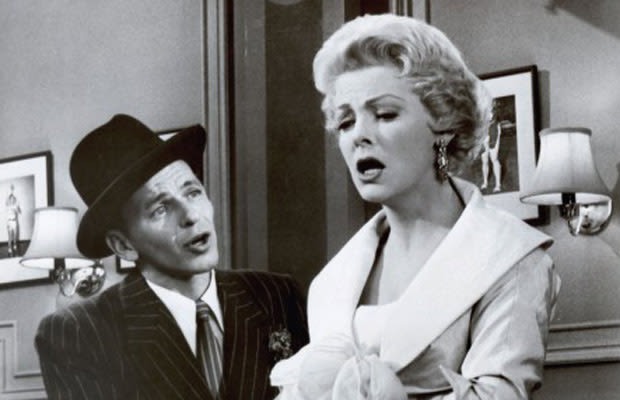
Com mil dólares, Nathan Detroit (Frank Sinatra) pode resolver todos os seus problemas, que envolvem dívidas, jogos ilegais e um noivado que já dura 14 anos. Ele vê sua grande oportunidade de conseguir o dinheiro na figura de Sky Masterson (Marlon Brando), um homem que adora fazer apostas. Maliciosamente, Nathan induz Sky a uma nova aposta: se Sky conseguir levar a missionária Sarah (Jean Simmons) para um jantar em Havana, Nathan lhe dará mil dólares. Caso contrário, Sky deverá mil dólares a Nathan.

With a thousand dollars, Nathan Detroit (Frank Sinatra) can solve all his problems, including debts, illegal games and an engagement that has been going on for 14 years. He sees his big opportunity to get the money in the figure of Sky Masterson (Marlon Brando), a man who loves to place bets. With malice, Nathan offers a new kind of bet to Sky: if he manages to take missionary Sarah (Jean Simmons) to have dinner in Havana, Nathan will give him a thousand dollars. If he fails, Sky will give the money to Nathan. 

Nathan acredita que Sky tem uma missão impossível pela frente, e portanto a aposta já está ganha. Mas Sky não desistirá com facilidade, apesar de Sarah se mostrar pouco interessada. É a possibilidade de salvar a “alma alcoólatra” de Sky que atrai Sarah: para ela Sky representa apenas negócios missionários. Para Sky, Sarah representa apenas mais uma aposta. Mas por quanto tempo eles se verão desta forma?

Nathan believes that Sky has na impossible mission, and that’s why the money is a sure thing. But Sky won’t give up easily, even though Sarah seems less than interested. It’s the possibility to save Sky’s “alcoholic soul” that attracts Sarah: for her he means only missionary business. For him, she means only another bet. But for how long they will see each other this way?

O nome de Sinatra é apenas o terceiro a aparecer nos créditos, depois de Brando e Simmons. Frank queria o papel principal, de Sky Masterson, e ficou muito chateado com a escolha de Marlon Brando, com quem nunca se deu bem durante as gravações. Contra a popularidade não se podia lutar: Sinatra era uma estrela mas Brando era uma super-estrela. O auge de Sinatra parecia já ter acabado, apesar de seu ressurgimento com “A Um Passo da Eternidade / From Here com Eternity”(1953), que lhe rendeu um Oscar.

Sinatra’s name goes thrid in the credits, after Brando and Simmons. Frank wanted the main role, Sky Materson, and was very upset because Marlon Brando was chosen instead – they didn’t get along during the shooting. Against popularity there is no fighting: Sinatra was a star but Brando was a superstar. Sinatra’s climax seemed to be over, even though he had rosen again with “From Here to Eternity” (1953), that gave him an Oscar.  

Amigos? / Friends?

O papel de Sky era para ser de Gene Kelly, mas a MGM não aceitou “emprestar” o ator-cantor-dançarino para o produtor Samuel Goldwyn. Outros atores considerados para interpretar Sky foram Kirk Douglas, Robert Mitchum, Burt Lancaster, Bing Crosby e Clark Gable (que queria muito o papel, caso a Paramount comprasse os direitos da peça, o que não aconteceu). Robert Alda originou o papel na Broadway, e ganhou um Tony por sua performance.

The role of Sky should have gone to Gene Kelly, but MGM didn’t lend the actor/dancer to Samuel Goldwyn. Other actors considered to play Sky were Kirk Douglas, Robert Mitchum, Burt Lancaster, Bing Crosby and Clark Gable (who wanted the job so much, if Paramount bought the rights for the play, something that didn’t happen). Robert Alda originated the role on Broadway, and won a Tony for his performance.

Para a noiva de Nathan, Adelaide, o diretor Joseph L. Mankiewicz vetou Marilyn Monroe. Goldwyn recusou Betty Grable. Judy Holiday foi cogitada, mas a ideia foi abandonada. A solução foi voltar às origens e chamar a atriz que interpretava Adelaide nos palcos, Vivian Blaine. O papel da missionária Sarah foi recusado por Grace Kelly e Deborah Kerr, e Jean Simmons foi a escolhida.

For Nathan’s fiancée, Adelaide, diretor Joseph L. Mankiewicz vetoed Marilyn Monroe. Goldwyn refused Betty Grable. Judy Holiday was considered, but then refused. The solution was to go back to the stage to invite the actress who played Adelaide on Broadway, Vivian Blaine. The role of missionary Sarah was refused by Grace Kelly and Deborah Kerr, and Jean Simmons was chosen.

As canções não favorecem a voz de Sinatra. Perfeito para as big bands, o cantor de olhos azuis tem músicas pouco memoráveis no filme (a melhor delas é “The Oldest Established Permanent Floating Crap Game in New York”). Enquanto isso, somos obrigados a ouvir Marlon Brando cantando “Luck Be a Lady”, canção que se tornou icônica ao ser regravada por... Frank Sinatra. Compare as duas versões:

The songs weren’t made for Frank Sinatra’s voice. Perfect for the big bands, Blue Eyes has songs in the move that aren’t memorable (the best of them is “The Oldest Established Permanent Crap Game in New York”). Meanwhile, we have to listen to Marlon Brando singing “Lucky Be a Lady”, a song that became iconic when it was recorded by… Frank Sinatra. Compare the two versions:

Eles e Elas” teve sua origem na Broadway, e infelizmente não se adaptou bem ao cinema. A própria sequência de dança inicial funcionaria apenas no palco, e fica esquisita na tela, até por ser coreografada pelo teatral Michael Kidd. A duração do filme também o compromete: duas horas e meia de projeção, com uma história muito simples e previsível a ser contada.

“Guys and Dolls” originated on Broadway, and unfortunately didn’t adapt well to cinema. The initial dance sequence, for instance, would work only on stage, and becomes weird on the screen, maybe because of it choreographed by th theatrical Michael Kidd. The duration of the film also compromises: two and a half hours, with a story that’s too simple and predictable. 


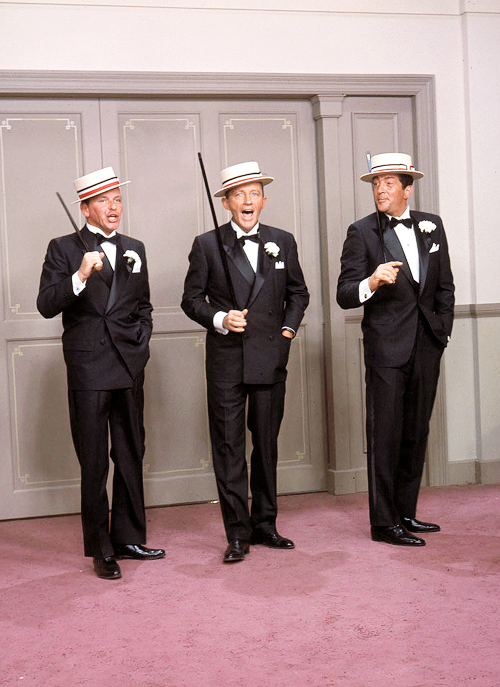
Eles e Elas” lembra muito outro musical longo sobre religião e ilegalidade protagonizado por Frank Sinatra: “Robin Hood de Chicago / Robin and the Seven Hoods” (1964) que, apesar de menos conhecido, é bem melhor que “Eles e Elas”. Agora no papel principal, Frank interpreta Robbo, um gângster envolvido em várias atividades ilegais, incluindo o jogo de dados e a venda de bebidas alcoólicas. Em uma cena divertidíssima, Robbo e sua gangue transformam o cassino/bar em um local de pregação e oração para despistar os policiais, e Bing Crosby canta em seu testemunho sobre os perigos do “Mr Booze”. Sim, Bing Crosby, porque o Rat Pack todo está no filme: Peter Lawford, Sammy Davis Jr e Dean Martin (que, entre nós, seria um Sky Masterson bem mais convincente que Brando).

“Guys and Dolls” reminded me of another long musical about religion and Prohibition with Frank Sinatra: “Robin and the 7 Hoods” (1964), one that may be little known, but it’s better than “Guys and Dolls”. Now as the lead, Frank plays Robbo, a gangster involved in several illegal businesses, like crap games and the selling of booze. In a very amusing scene, Robbo and his gang transform their casino/bar in a place of worshipping, and Bing Crosby sings as his testimonial about the dangers of “Mr Booze”. Yes, Bing Crosby, because the whole Rat Pack is in the movie: Peter Lawford, Sammy Davis Jr and Dean Martin (who, we believe, would make a better Sky Masterson than Marlon Brando).
 
Bem melhor / Much better

Eles e Elas” não chega a ser um filme ruim. É leve, despretensioso, descompromissado, como um sonho. Deve funcionar melhor na tela grande, e melhor ainda nos palcos. Veja “Eles e Elas” sem esperar muito. E depois corra e aprecie “Robin Hood de Chicago”.

“Guys and Dolls” isn’t a bad movie. It’s light, unpretentious, suave, like a dream. It may work better in the big screen, and better yet on stage. See “Guys and Dolls” without high expectations. And then run and enjoy “Robin and the 7 Hoods”. 

This is my contribution to the Sinatra Centennial Blogathon, hosted by Movie Classics and The Vintage Cameo.
Related Posts Plugin for WordPress, Blogger...