} Crítica Retrô: filme histórico

Tradutor / Translator / Traductor / Übersetzer / Traduttore / Traducteur / 翻訳者 / переводчик

Showing posts with label filme histórico. Show all posts

Wednesday, December 5, 2018

Becket, o favorito do rei (1964) / Becket (1964)


Se você não cresceu na Inglaterra, a coisa mais importante que você aprendeu sobre a história inglesa – isto é, se você prestou atenção às aulas de história – foi sobre Henrique VIII e como ele rompeu sua aliança com a Igreja Católica e se tornou incrivelmente poderoso ao estabelecer uma nova religião. Este episódio foi tema de muitos filmes, como “Ana dos Mil Dias” (1969) – outro filme com o grande Richard Burton.

If you are not from England, the most important thing you learned in English history – that is, if you paid attention to history classes – was about Henry VIII and how he broke his alliance with the Catholic Church and became an über-powerful king by establishing a new religion. This episode was in the center of many films, like “Ann of the Thousand Days” (1969) – another film with the great Richard Burton.


Mas há muitos outros episódios e personagens interessantes na história da Inglaterra. Dois destes personagens são o rei Henrique II e Tomas Becket, que viveram no século XII. A história deles é contada no filme “Becket – O favorito do rei”, adaptado de uma peça, e eles são interpretados respectivamente por Peter O’Toole e Richard Burton. O filme nos dá a rara chance de saber mais sobre um período anterior da história inglesa – e nos dá a chance ainda mais rara de ver estes dois atores incrivelmente talentosos usando leggings justas.

But there are many other interesting episodes and characters in the history of England. Two of these characters are King Henry II and Thomas Becket, who lived in the 12th century. Their story is told in the film “Becket”, adapted from a play, and they are played respectively by Peter O'Toole and Richard Burton. The film gives us the rare chance to know more about an earlier period in English history – and it gives us the even rarer chance to see these two incredibly talented actors in tight leggings.
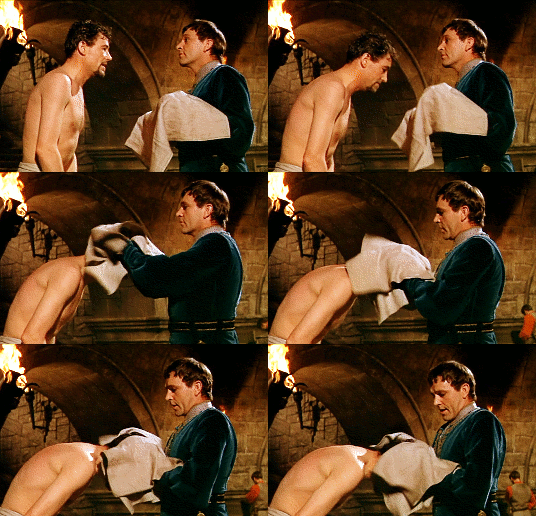

Thomas Becket (Burton) é o melhor amigo, confidente e conselheiro do egoísta, inconsequente e infantil rei Henrique II (O’Toole). Becket está sempre consertando os passos em falso dados por Henrique e evitando problemas – Becket faz coisas como impedir que dois homens se esfaqueiem durante uma guerra de comida em um banquete no palácio. É por isso que Henrique faz de seu amigo Becket um nobre, e então chanceler – e é por isso que eles conversam enquanto Henry está seminu na frente de uma tapeçaria com um leão que se parece com Groucho Marx.

Thomas Becket (Burton) is the best friend, confident and advisor to the egoist, inconsequent and childish king Henry II (O'Toole). Becket is always fixing the wrongs Henry makes and avoiding trouble – Becket does things like stopping men from stabbing each other during a food fight in a banquet at the palace. That's why Henry turns his friend Becket into a noble, then into a chancellor – and that's why they chat while Henry is half naked in front of a tapestry with a lion that looks like Groucho Marx.


Henrique está mais interessado em dormir com garotas bonitas do que se envolver em assuntos políticos. Mas às vezes ele tem de fazer isso, e Becket, que não pode dizer não ao amigo, obedece às suas ordens. É assim que Becket perde o amor de sua vida. E é assim também que Becket se torna Arcebispo de Canterbury da noite para o dia – Henrique II precisava de um aliado em Canterbury.

Henry is more interested in sleeping with hot girls than in political issues. But he sometimes has to deal with politics, and Becket, unable to say no to his friend, obeys his absurd orders. That's how Becket loses the love of his life. And that's also how Becket becomes the Archbishop of Canterbury overnight - Henry nominates him Archbishop because he needed an ally in Canterbury.
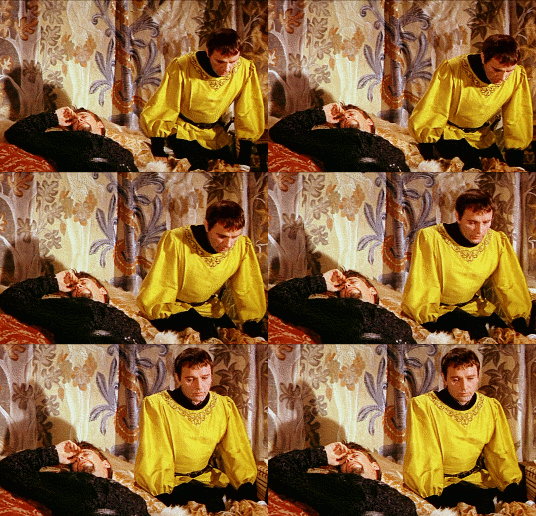

Becket é um homem dividio. Ele está dividido entre sua amizade com o rei e sua missão com a Igreja Católica, entre o prazer e a fé, entre sua origem saxônica e seu chefe normando. Quando ele precisa escolher de qual lado ficar, ele corre o risco de enfurecer o rei.

Becket is a divided man. He is divided between his friendship with the king and his duty to the Catholic Church, between pleasure and faith, between his Saxon origin and his Norman boss. When he has to choose which side he really supports, he risks infuriating the king.


Saber quem eram os saxões e os normandos é importante para compreender melhor o filme. Os saxões eram um povo germânico que migraram para várias partes da Europa com a queda do Império Romano do Ocidente no século V. No século XI, outras tribos invadiram a Inglaterra – ainda não unificada – lideradas pelo Duque William I da Normandia – William seria o bisavô de Henrique II. Isso significa que os melhores amigos Henrique e Becket eram de origens diferentes, inclusive rivais... mas só na peça e no filme: Becket era na verdade normando.    ¯\_(ツ)_/¯

Learning about who were the Saxons and the Normans is important to better understand the film. The Saxons were a Germanic people that migrated to various parts of Europe with the fall of the Western Roman Empire in the 5th century. In the 11th century, other tribes invaded Britain – not yet unified – led by Duke William I of Normandy – William would be Henry II’s great-grandfather. This means that BFFs Henry and Becket were from different – even rival – origins… but only in the play and movie: Becket was actually a Norman.   ¯\_(ツ)_/¯
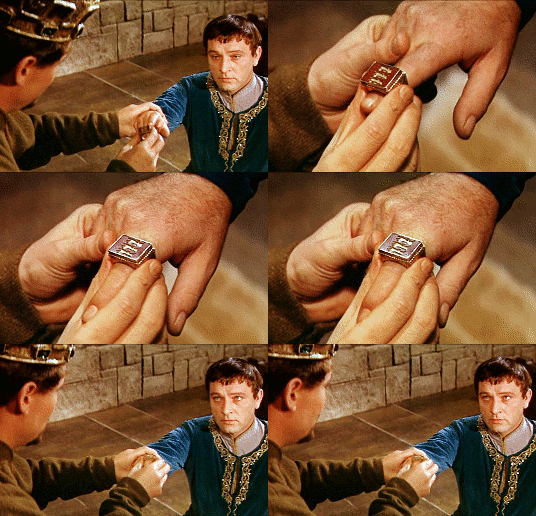

Tanto Peter O’Toole quanto Richard Burton estão fantásticos em seus papéis contrastantes. O Henrique II de O’Toole é histriônico e mimado – uma versão anterior perfeita para o mesmo Henrique II que ele interpretaria em “O Leão no Inverno” (1968). O Becket de Burton é verdadeiramente a única pessoa santa em uma Igreja Católica envolvida em corrupção e jogos de poderes. No pequeno papel de Gwendolen, uma mulher desejada por ambos, está Siân Phillips, uma atriz galesa e esposa de O’Toole.

Both Peter O’Toole and Richard Burton are outstanding in their contrasting roles. O’Toole’s Henry II is histrionic and spoiled – a perfect earlier version of the same Henry II he would play in the superb “Lion in Winter” (1968). Burton’s Becket is truly the only holy person in a Catholic church involved in corruption and games of power. In the minor role of Gwendolen, a woman fancied by both, is Siân Phillips, Welsh actress and O’Toole’s wife.


O filme foi baseado em uma peça que estreou em 1959 em Paris e em 1960 na Broadway com Anthony Quinn como Henrique II e Laurence Olivier como Becket – também uma dupla e tanto! O’Toole iria interpretar Henrique II na produção de Londres da peça, mas teve de recusar por causa das longas filmagens de “Lawrence da Arábia” (1962) – ele foi substituído por (surpresa!) Christopher Plummer.

The film was based on a play that opened in 1959 in Paris and in 1960 on Broadway with Anthony Quinn as Henry II and Laurence Olivier as Becket – quite a duo, too! O’Toole was set to star as Henry II in the London production, but had to decline because of the long shootings of “Lawrence of Arabia” (1962) – he was replaced by (surprise!) Christopher Plummer.
 
Elizabeth Taylor and Burton backstage
A fotografia é fabulosa, e “Becket – O favorito do rei” foi indicado ao Oscar e Melhor Fotografia e em outras 11 categorias, incluindo Ator Coadjuvante para John Gielgud como o rei da França e duas indicações a Melhor Ator para O’Toole e Burton. O filme ganhou apenas o prêmio de Melhor Roteiro.

The cinematography is fabulous, and “Becket” was nominated for Oscars for best Cinematography and other 11 categories, including Supporting Actor for John Gielgud as the King of France and dual Best Actor nominations for O’Toole and Burton. The film only won the Best Screenplay award.
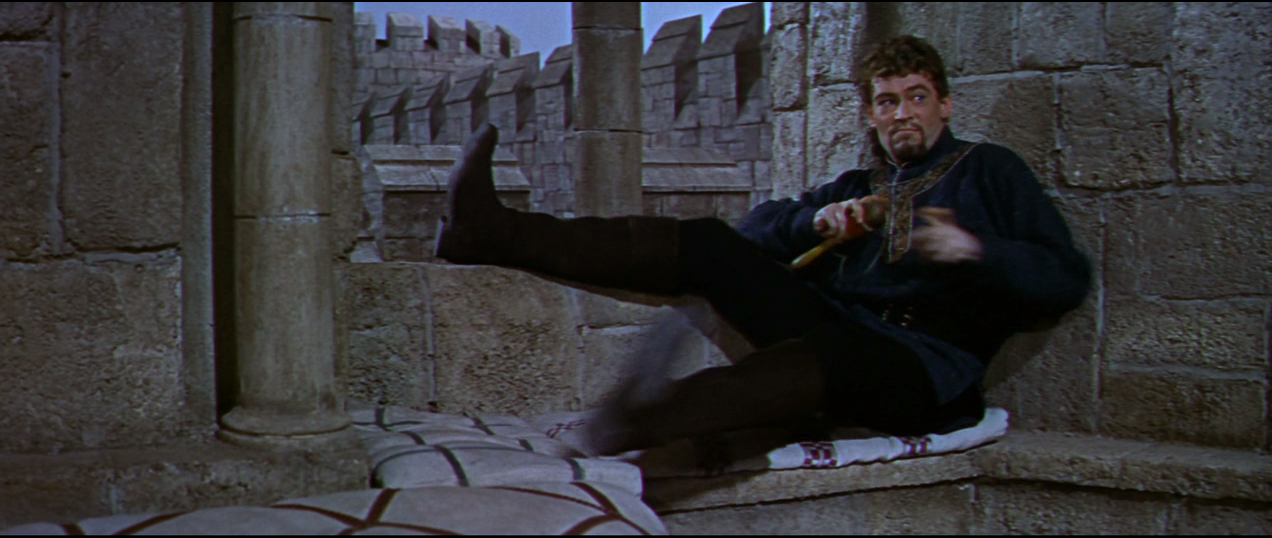

Com uma história contada em flashback, “Becket – O favorite do rei” é um filme fascinante, um deleite para os olhos – com cenas filmadas em locação e imensos cenários construídos em estúdio, como uma cópia da Catedral de Canterbury – e para o cérebro. Inteligente, provocador, emocionante, “Becket – O favorito do rei” é um filme sobre honra que não tem um único minuto de enrolação.

With a story told in flashback, “Becket” is a fascinating movie, a feast for the eyes – with both location sets and huge sets built in studio, like a copy of the Canterbury Cathedral – and for the brain. Smart, provocative, thrilling, “Becket” is a film about honor without one single boring minute.
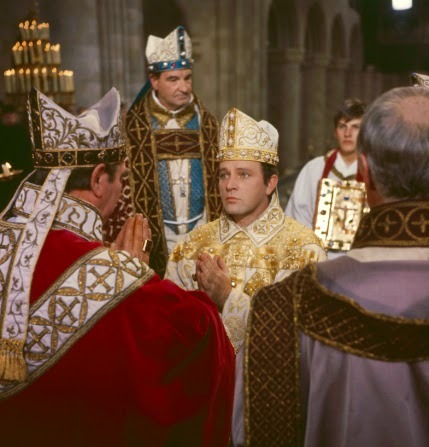
This is my contribution to the Regaling about Richard Burton blogathon, hosted by Gill and Realweegiemidget Reviews.


Wednesday, July 6, 2016

Helena de Troia / Helen of Troy (1956)

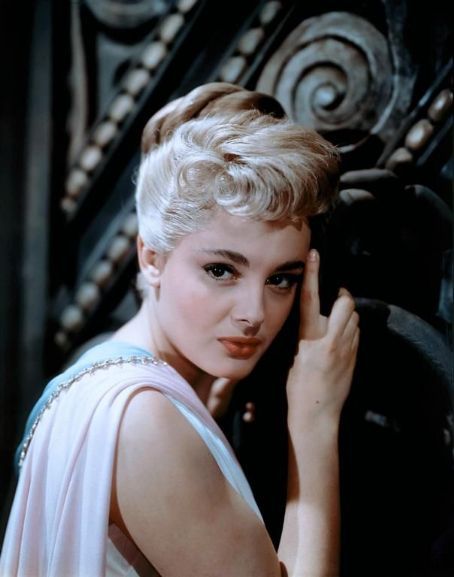
Páris (Jacques Sernas) é um sujeito orgulhoso. Ele tem a missão de fazer um acordo para que não haja exploração econômica entre Esparta e Troia. Além disso, ele diz não adorar nenhum deus (apenas “admira” Afrodite), mesmo vivendo dentro de uma cultura politeísta, e acredita que mulher alguma será capaz de interferir em seu destino. Só sua predileção por Afrodite mostra que Páris prefere o romance à razão, e logo todas as suas convicções serão destruídas.

Paris (Jacques Sernas) is a proud guy. He has the mission to make an economical agreement between Sparta and Troy. Besides that, he has the petulancy to not adore any god (he only “admires” Aphrodite), even though he lives in a polytheistic society, and he also believes that no woman can interfere in his destiny. His love of Aphrodite alone shows that Paris prefers heart to brains, and soon all his convictions will be destroyed.
Páris é atingido por um raio durante uma tempestade e, desacordado vai parar em uma praia. Lá ele é resgatado por Helena (Rossana Podestà), que ele logo associa à figura de Afrodite. Helena se apaixona à primeira vista, mas mente, dizendo que é uma escrava e não a rainha de Esparta. Ela aconselha Páris a voltar para Troia, mas ele está decidido a ir ao palácio.

Paris is struck by lightning during a thunderstorm and, unconscious, he goes on to wake up in an island. There he is greeted by Helen (Rossana Podestà), who he thinks not only resembles Aphrodite, but is the goddess herself. It’s love at first sight for Helen, but she lies saying she is a slave, and not the queen of Sparta. She tells Paris to go back to Troy, but he is affirmative about talking to the king at the palace.
Páris se torna prisioneiro no palácio, e consegue escapar com a ajuda de Helena e da escrava dela, Andraste (Brigitte Bardot).  Mas Páris não volta sozinho para Troia: apaixonada, Helena o acompanha. E o marido de Helena, o rei Menelau (Niall MacGinnis), se revolta ao saber que a esposa foi “levada” pelo troiano, e declara guerra à Troia.

Paris becomes prisoner at the palace, and manages to escape with the help of Helen and her slave, Andraste (Brigitte Bardot). But Paris doesn’t return alone to Troy: infatuated, Helen joins him. And Helen’s husband, king Menelaus (Niall MacGinnis), becomes mad when he finds out that his wife was “taken” by the Trojan, and then the war is declared.
É a história da guerra de Troia, que talvez você já conheça bem por ter estudado na escola ou, se for mais maluco (tipo eu), por ter lido a Ilíada. Mas o mais interessante é o foco nos perdedores, algo que quase nunca acontece nos filmes de guerra. Ora, a própria história normalmente se encarrega de apagar e menosprezar os perdedores das guerras, então por que um filme vai focar no ponto de vista deles?

It is the story of the Trojan War, one that you might already know well because you studied about it at school or, if you were a bit crazier (like me), because you read The Iliad. But the most interesting point is the focus on the losers, something that almost never happens in war movies. Well, history itself manages to erase and underestimate the ones who lose the war, so why would a movie focus on a loser point of view?
Simples: porque o filme é sobre Helena de Troia, a mulher que causou uma guerra apenas porque teve vontade própria e abandonou seu marido para fugir com Páris. Em momento algum perguntaram para Helena se ela foi raptada ou acompanhou Páris de livre e espontânea vontade. E, por acreditarem que uma mulher não deve ter vontade própria, milhares de vidas foram perdidas, incluindo a do herói Aquiles (Stanley Baker).

Simple: because the film is about Helen of Troy, the woman who caused a war just because she had her own will and left her husband to run away with Paris. Nobody asked Helen if she was kidnapped or if she went with Paris because she just wanted to. And, because it was believed that a woman couldn’t have desires or opinions, thousands of lives were lost, including the hero Achilles (Stanley Baker).
Sem o apelo de outros épicos, o filme ainda consegue ser interessante e tem breves, mas grandiosas, cenas de batalha. Ajudando Robert Wise na direção estavam Raoul Walsh e um jovem italiano chamado... Sergio Leone. Versátil, Wise já havia editado “Cidadão Kane” (1941) e ficaria mais conhecido por dirigir “Amor, Sublime Amor” (1961) e “A Noviça Rebelde” (1965).

Without the appeal of other epic movies, this one still can be interesting and has brief, yet huge, battle scenes. Helping Robert Wise direct were Raoul Walsh and a young Italian man called… Sergio Leone. The versatile Wise had already been the editor in “Citizen Kane” (1941), but would be better remembered for directing “West Side Story” (1961) and “The Sound of Music” (1965).
Hoje, é estranho imaginar que não seja a estonteante Brigitte Bardot a interpretar Helena de Troia. O diretor Robert Wise considerou diversas belas atrizes, incluindo Ava Gardner, mas escolheu a italiana Rossana Podestà, relativamente desconhecida em Hollywood. Rossana é linda e exibe belas tranças ao longo do filme. Brigitte, no mesmo ano, seria revelada para o mundo com o filme “E Deus Criou a Mulher”, também sobre uma moça cheia de vontade própria.

Today, it’s hard to believe that gorgeous Brigitte Bardot didn’t play the leading role. Director Robert Wise considered several beautiful actresses for the role, including Ava Gardner, but he at last chose the relatively unknown (at least in Hollywood) Italian actress Rossana Podestà. Rossana is gorgeous and has a strong braid game throughout the movie. In the same year, Brigitte would be revealed to the world with the movie “And God Created Woman”, also about a lady who has her own free will.
No começo do filme, a irmã sacerdotisa de Páris, Cassandra (Janette Scott), o aconselha a não fazer a viagem para Esparta. Ninguém acredita na visão dela, e ela é tomada como louca. Mais tarde no filme, ela aconselha os troianos a não aceitarem o grande cavalo de madeira deixado pelos espartanos. Eles novamente a ignoram – e você já sabe o que acontece. Se há uma coisa que aprendemos com “Helena de Troia”, é “nunca subestime as mulheres”.

At the beginning of the movie, Paris’s sister, Cassandra (Janette Scott), advises him not to travel to Sparta. Nobody believes that she had foreseen something bad, and she is considered crazy. Later in the movie, she advises the Trojans to not bring inside the city the huge wooden horse left by the Spartans. They once again ignore her – and you already know what happens. If there is one lesson we learn from “Helen of Troy”, it is “never underestimate women”.

This is my contribution to The Sword and Sandal blogathon, hosted by Debra at Moon in Gemini.

Monday, May 5, 2014

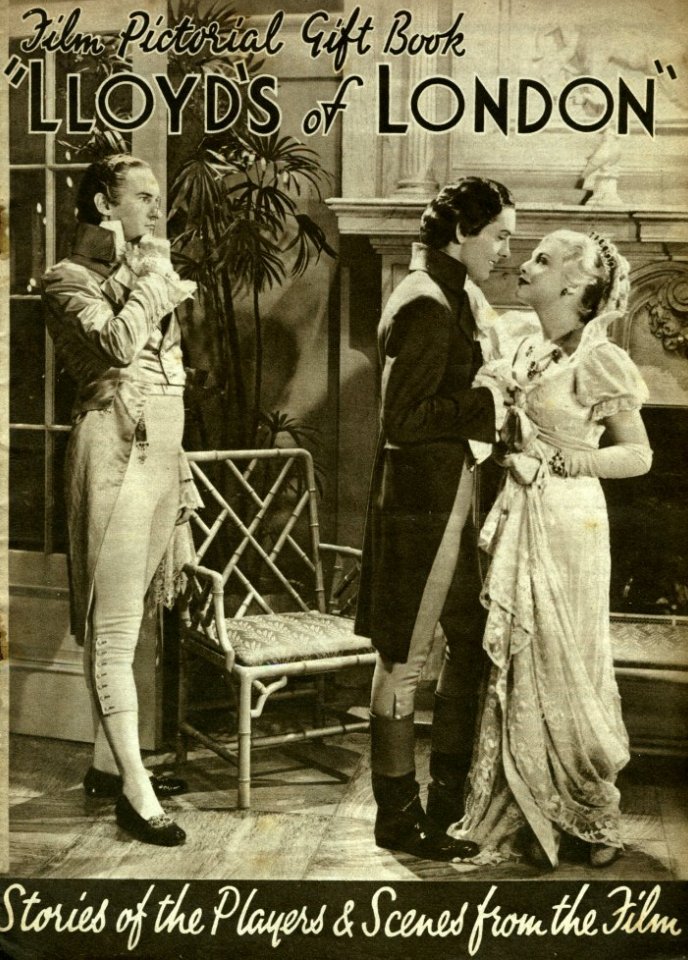
Lloyd’s de Londres / Lloyd’s of London (1936)

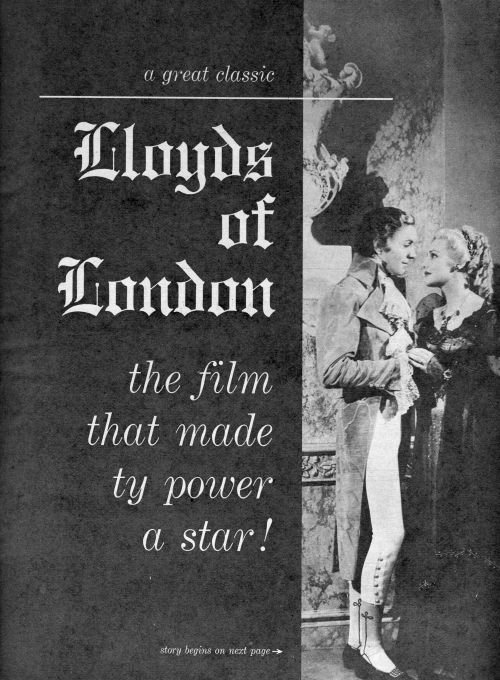
Na minha humilde opinião, Tyrone Power foi o homem mais bonito a aparecer numa tela de cinema. Esqueça Valentino,Gable, Paul Newman, George Clooney ou Johnny Depp. A beleza de Ty era perfeita. Alto, magro, moreno, olhos expressivos, nariz perfeito. Sua beleza estava no auge nos anos 30 (mais uma vez, esta é uma opinião pessoal), e ver Ty neste momento do auge da juventude e de maturação do talento não tem preço.

In my humble opinion, Tyrone Power was the most handsome man to ever appear in a movie screen. Forget Valentino, Gable, Paul Newman, George Clooney or Johnny Depp. Ty's beauty was perfect. Tall, slim, dark, expressive eyes, perfect nose. He was his most beautiful during the 1930s (again, my own personal opinion), and to see Ty at this moment, in the climax of his youth and maturing as an actor, is priceless.
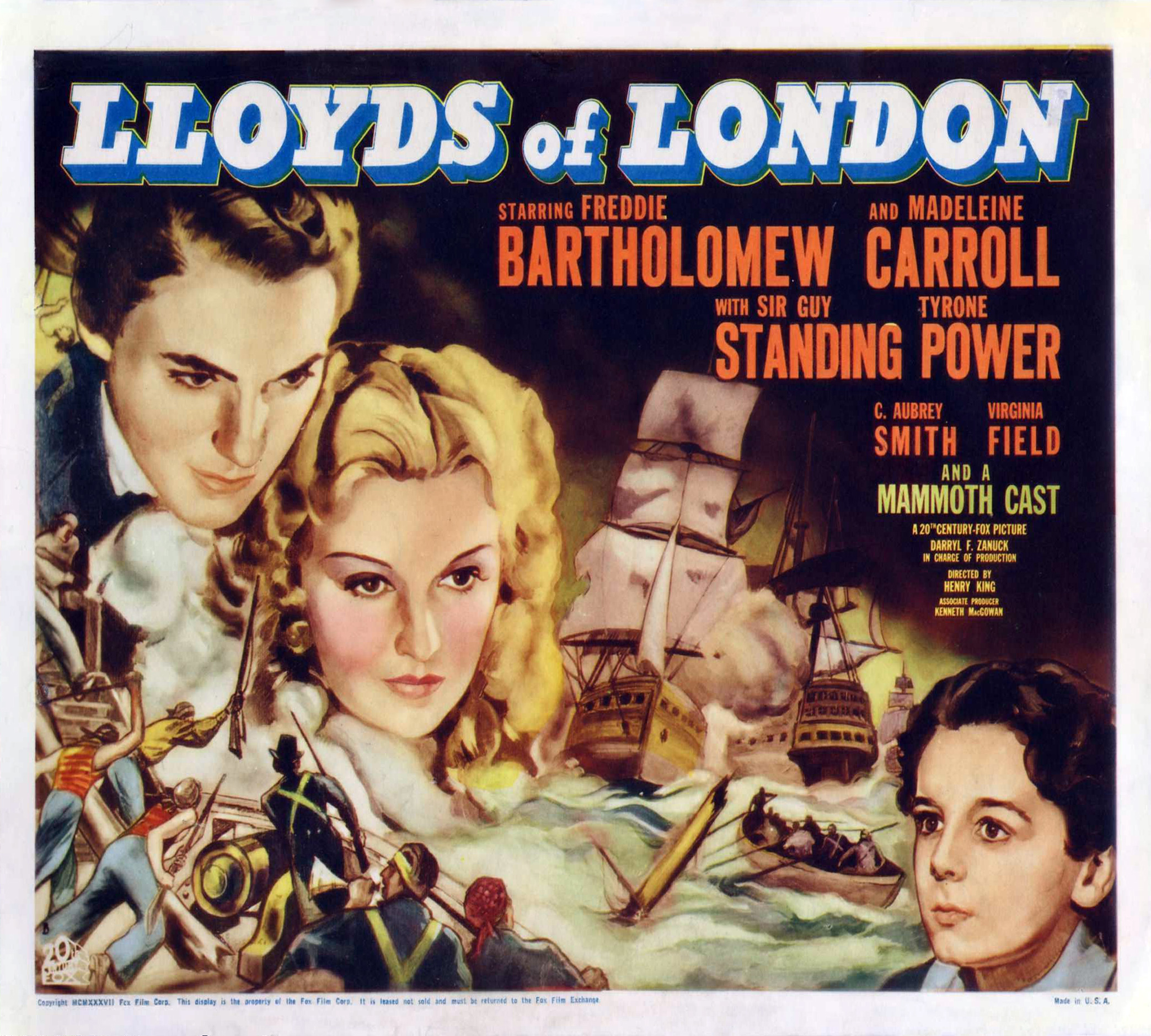
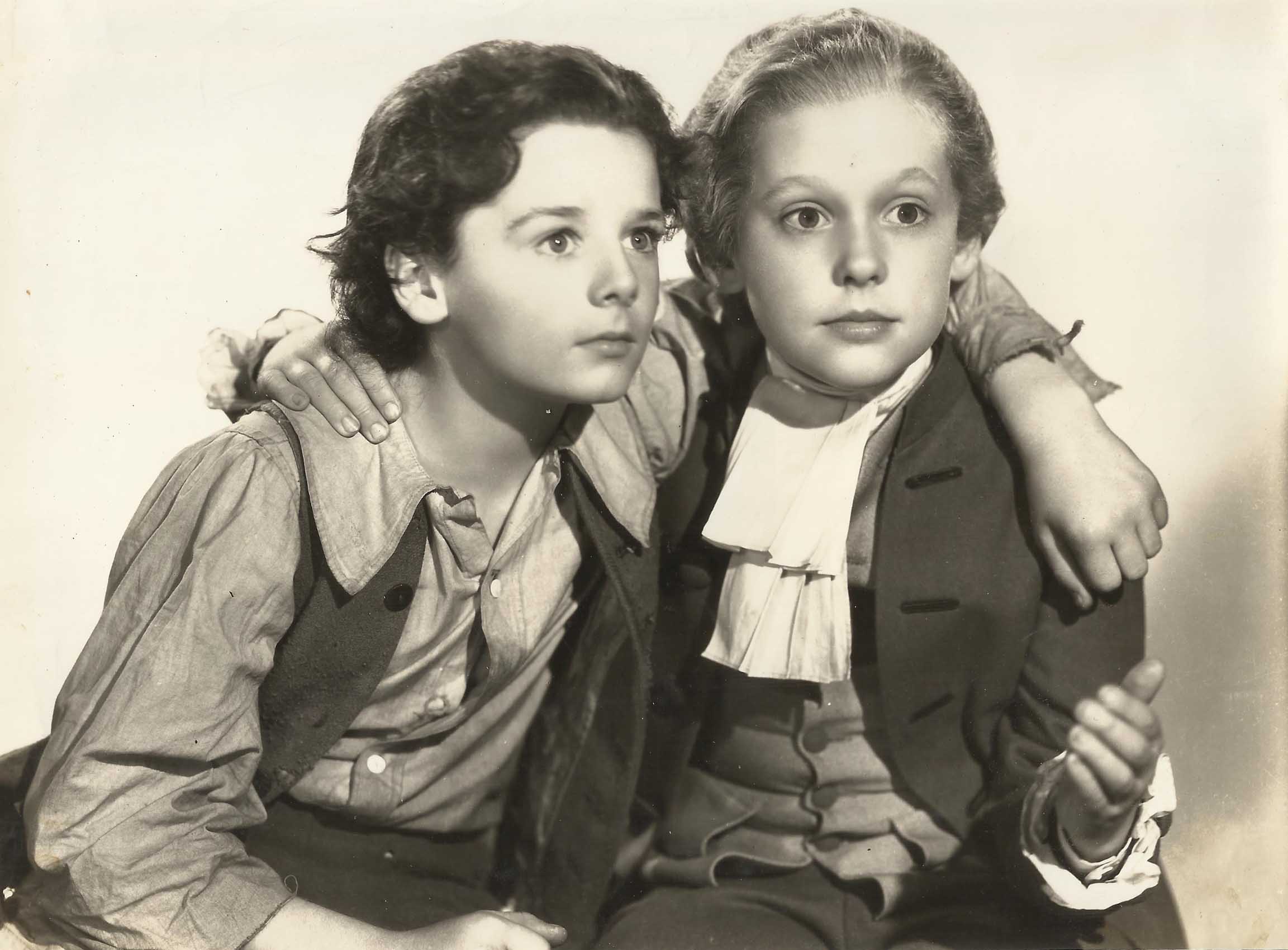
“Lloyd’s of London” é o primeiro filme em que ele é creditado apenas como Tyrone Power, e não Tyrone Power Jr. Seu pai havia sido um famoso ator de teatro que também fez filmes mudos (e se parecia um pouco com Francis X Bushman). Mas na primeira meia hora nem vemos sinal da nova estrela da 20th Century Fox. No começo do filme, o garoto destemido Jonathan Blake é vivido por Freddie Bartholomew, ator mirim de sucesso que recebe top billing (seu nome é o primeiro nos créditos). Jonathan deixa seu amigo rico Horatio Nelson no interior e vai até Londres a pé para avisar uma companhia de seguros sobre planos de um navio pirata.

“Lloyd's of London” is the first film in which he is credited only as Tyrone Power, and not as Tyrone Power Jr. His father was a famous theater actor who also appeared in silent films (and looked a lot like Francis X. Bushman). But in the first half hour we don't even see the new star of 20th  Century Fox. At the beginning of the movie, the boy Jonathan Blake is played by Freddie Bartholomew, the child star with the top billing. Jonathan leaves his rich friend Horatio Nelson on the countryside and goes on foot until London to warn an insurance company about plans from a pirate ship.
Quando a casa de seguros Lloyd’s percebe que o menino falou a verdade e que isso os livrou de um prejuízo milionário, Jonathan se torna o protegido do administrador do local, e cresce naquele ambiente. Seu amigo Horatio se alista na Marinha e alcança um alto cargo como comandante de um navio nas guerras contra Napoleão Bonaparte (o ano então é 1784).

When the insurance house Lloyd's realizes that the boy told the truth and that he prevented them from losing millions, Jonathan becomes the local head's protegée and grows up in that environment. His friend Horatio joins the Marines and achieves a high position as the commander of a ship during the wars against Napoleon Bonaparte (the year then is 1784).

E já que o cenário é França contra Inglaterra, Jonathan vai a Paris e resgata uma bela inglesa, Elizabeth (Madeleine Carroll), que está sendo hostilizada por um grupo francês. Jonathan se apaixona, mas Elizabeth prefere manter sua identidade oculta enquanto os dois dividem um barco de volta para casa.

And since the issue is France against England, Jonathan goes to Paris to rescue a beautiful English lady, Elizabeth (Madeleine Carroll), who is being hostilized by a French group. Jonathan falls in love, but Elizabeth prefers to keep her real identity a secret while the two share a boat back home.
Jonathan descobre, depois de um breve período de depressão, que Elizabeth é da nobreza e, pior, é casada. Para provar seu valor, ele passa a ascender socialmente com seu trabalho, arriscando cada vez mais os negócios da seguradora. E uma decisão da frota de Horatio será decisiva não apenas para salvar a Lloyd’s, mas também para recuperar o dinheiro que Elizabeth investiu na seguradora e até mesmo para que Jonathan continue vivo e fora da cadeia.

Jonathan finds out, after a short sad period, that Elizabeth is a noblewoman and, worse, is married. To prove his value, he ascends socially through his work, putting more and more the businesses of the insuracne house at risk. And a decision coming from Horatio's ships will be very important not only to save the Lloyd's, but also to recover the money Elizabeth invested in the insurance house and also to keep Jonathan alive and far from the jail.
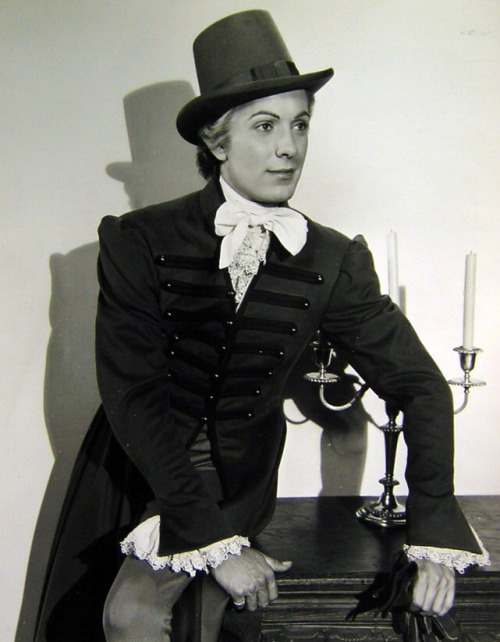
Este, entretanto, não é o filme em que Ty está mais bonito. Na minha opinião (estou opinando muito hoje), é em “Maria Antonieta” (1938) que sua beleza está mais acentuada. E olhem bem: ambos Maria Antonieta e Lloyd’s of London são filmes históricos, que se passam na mesma época, com uma década de diferença. Ty certamente se deu bem em filmes históricos, embora vez ou outra o figurino não ajudasse. Aqui, por exemplo, ele usa em uma cena uma roupa digna de gnomo na parada do St. Patrick’s Day!

This isn't, however, the film in which Ty looks his most handsome. In my opinion (I'm opinating a lot today), it is in “Marie Antoinette” (1938) that he looks his best. And pay attention: both Marie Antoinette and Lloyd's of London are historical films set in the same time period, with  a decade separating the settings. Ty certainly did well in historical pieces, even if the wardrobe didn't help him always. Here, for instance, his uses in one scene an outfit that could belong to a leprechaun at the St. Patrick's Day parade!
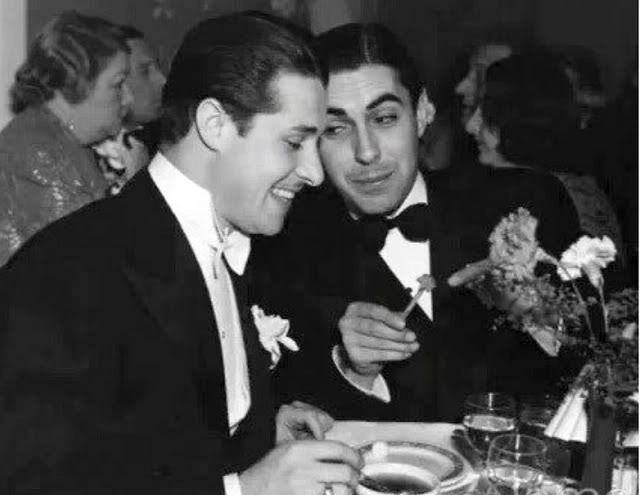
“Lloyds’ of London” está longe de ser uma obra-prima. Mas foi importante por ser o primeiro grande filme da carreira de Tyrone. No início, o papel de Jonathan era do grande amigo de Power, Don Ameche, mas Ty foi escalado no lugar e se tornou a estrela que Ameche nunca seria (apesar do relativo sucesso na época, hoje Power é mais conhecido e lembrado que Ameche).

“Lloyds' of London” is far from being a masterpiece. But it was important because it was the first film from Tyrone's career. Before production started, the role of Jonathan was going to Power's good friend, Don Ameche. But Ty was chosen instead and became the star Ameche never could be (although Ameche was a successful actor, nowadays Power is better known than him).
Ty viveu apenas 44 anos, mas deixou sua marca no mundo. Ator de cinema e teatro, combatente na Segunda Guerra Mundial, ídolo das multidões. Vê-lo aos 22 anos em “Lloyd’s of London” é a oportunidade única que temos de dizer: “assim nasce uma estrela”.

Ty lived for only 44 years, but left his mark in the world. A film and theater actor, he was also a combatent during World War II and the idol of the crowds. To see him at age 22 in “Lloyds' of London” is the opportunity we have to say: “this is how a star is born”.

This is my contribution to the Power- Mad blogathon, hosted by Patty at The Lady Eve and Patti at They Don't Make 'Em Like They Used To in honor of the 100th birthday of Tyrone Power, the Greek god of the 20th century.
Related Posts Plugin for WordPress, Blogger...