} Crítica Retrô: centenário

Tradutor / Translator / Traductor / Übersetzer / Traduttore / Traducteur / 翻訳者 / переводчик

Showing posts with label centenário. Show all posts

Saturday, September 12, 2020

Tutto Fellini


Assim como Scorsese, ele usou suas próprias memórias e problemas em muitas de suas obras. Assim como Almodóvar, ele tinha um alter-ego cinematográfico. Assim como muitos cineastas, sua esposa era sua musa. Mas diversas características são exclusivas dele, como sua inspiração circense onipresente e seus personagens estranhos. Não é à toa que haja um termo para descrever coisas como as que ele filmou: Felliniano. Federico Fellini teria completado 100 anos em 2020, mas faleceu em 1993, um dia após seu 50° aniversário de casamento com a atriz, musa e colaboradora costante Giulietta Masina. Para celebrar seu centenário e focar em tudo o que é Felliniano, uma recomendação: o livro, ricamente ilustrado, “Tutto Fellini”, organizado por Sam Stourdzé.

Like Scorsese, he used his own memories and issues in many of his films. Like Almodóvar, he had a cinematic alter-ego. Like so many filmmakers, he had a muse in his wife. But some characteristics are exclusive to him, like his circus inspiration all over the place and his oddball characters. No wonder there is a term to describe things just like those he filmed: Fellinesque. Federico Fellini would have turned 100 in 2020, but he passed away in 1993, one day after the 50th anniversary of his wedding to actress, muse and constant collaborator Giulietta Masina. To celebrate his centennial and to shine a light on all things Fellinesque, a recommendation: the richly illustrated book “Tutto Fellini”, organized by Sam Stourdzé.

Federico Fellini começou a carreira como caricaturista. Os tipos e arquétipos que ele costumava desenhar nesta primeira fase da carreira habitaram toda sua obra como cineasta. Gente de circo, excluídos, mulheres com curvas generosas - muito diferentes da mulher com quem ele se casaria - e gente comum, não o tipo de gente que se espera ver num filme.

Federico Fellini started his career as a caricaturist. The types and archetypes he used to draw in the beginning of his career went on to populate his whole body of work as a filmmaker. Circus people, misfits, women with generous curves - very different from the woman he went on to marry - and common people, not the kind of people one would expect to see in a movie.

Quando ele começava o casting dos seus filmes, Fellini publicava um anúncio num jornal simplesmente dizendo que estava disponível para conversar. No dia seguinte, centenas de pessoas iam vê-lo, e centenas de fotos chegavam pelo correio, fotos que ele guardava bem organizadas em livros. Quando ele escolhia estes desconhecidos para aparecer num filme, ele sempre deixava que estas pessoas falassem normalmente, como no dia a dia, em vez de memorizar falas do roteiro, para que a performance fosse mais natural. Mais tarde Fellini escolheria dubladores para dublar as falas que estavam no roteiro. Eu me pergunto se algum extra ficou chateado ao ver sua imagem na tela e ouvir a voz de outra pessoa.

When he started the casting for his films, Fellini would put an ad in a newspaper simply saying that he was available to talk. The following day, hundreds of people would come to see him, and hundreds of photos would arrive by mail, photos he’d keep well organized in scrapbooks. Whenever he cast those unknowns in a film, he always let those people talk as they did in real life rather than make then memorize a script, in order to have natural performances. Later Fellini would cast voice actors to dub the lines in the script. I wonder if any extra was ever disappointed to see his/her image on the screen but to hear someone else’s voice.

Muitos de seus filmes eram autobiográficos, em geral baseados em suas memórias - tanto reais quanto inventadas. Fellini tem muitos alter-egos em seus filmes, a maioria interpretada por Marcello Mastroianni, que era, visualmente, o oposto de Fellini. Embora ele mais tarde tenha dito que Mastroianni nunca foi um alter-ego, nos cadernos que usava para anotar e ilustrar seus sonhos, Fellini desenhava a si mesmo quase sempre visto de costas, magro e com cabelo grosso - é assim que ele se via nos sonhos. E esta era a aparência de Mastroianni.

Many of his films are autobiographical, often based in his memories - both real and invented memories. Fellini has many alter-egos in his films, usually played by Marcello Mastroianni, who was visually Fellini’s polar opposite. Although he’d later claim that Mastroianni was never an alter-ego, in the notebooks he used to annotate and illustrate his dreams, Fellini drew himself often seen from the back, slim, with thick hair - that’s how he saw himself in his dreams. That’s also how Mastroianni looked like.

Além de gente esquisita, o circo, as memórias e as mulheres, a religião católica é outro elemento constante nos filmes de Fellini. Numa entrevista, Fellini declara, sobre sua geração: “Nós nascemos com três imagens: o Rei, o Duce [Mussolini] e o Papa.” Fellini nasceu em 1920, mas quando ele estava fazendo filmes já não havia mais Rei nem Duce. Só restava o Papa. Nos anos 50, cineastas do Neorrealismo Italiano chamariam Fellini de “um cineasta católico”, pois ele estava contando histórias de redenção enquanto os outros estavam tentando compreender como seria a vida na Itália pós-guerra.

Besides weird people, the circus, the memories and the females, the Catholic religion is another constant element in Fellini’s films. In an interview, Fellini declared, about his generation: “We were born with three images: the King, the Duce [Mussolini] and the Pope”. Fellini was born in 1920, but when he was making his movies the King and the Duce were no more. The Pope was all that was left. In the 1950s, filmmakers from the Italian Neo-Realism would call Fellini “a Catholic filmmaker”, as he was filming stories of redemption while the others were trying to make sense of life in post-war Italy.

"La Dolce Vita" (1960)

De sua juventude, ele não tinha mais o Duce ou o Rei, mas ele tinha outra coisa: as prostitutas. Ele confessa que toda sua geração foi iniciada sexualmente por prostitutas, e elas estão presentes em toda a filmografia de Fellini: das figuras voluptuosas aqui e acolá à menos voluptuosa e mais angelical Cabiria de “Noites de Cabiria” (1957). Fellini acreditava que filmes e mulheres eram inseparáveis, e que o ato de se sentar no escuro em comunhão com imagens em movimento sendo projetadas é “quase uma situação placentária”, como ele disse em uma entrevista de 1988.

From his youth he didn’t have the Duce and the King anymore, but he had something else: the prostitutes. He confesses that his whole generation was sexually initiated by prostitutes, and they are everywhere in Fellini’s filmography: from the voluptuous figures here and there to the less voluptuous, more angelical Cabiria from “Nights of Cabiria” (1957). Fellini believed that films and females were inseparable, and that the act of sitting in the dark in communion with projected images is “an almost placentary situation”, as he said in a 1988 interview.

E das prostitutas vem Casanova, personagem sobre o qual Fellini fez um filme em 1976. Ao mesmo tempo, Fellini se identificava com e odiava Casanova. Ele declarou: “[...] Eu me identificava com ele... não no sentido de um amante, mas como um homem que não consegue amar as mulheres, porque ele ama uma ideia fantástica das mulheres” e também definiu Casanova como “o macho italiano na sua versão mais triste, um covarde, um fascista. Aliás, o que é o fascismo se não uma adolescência prolongada?”

And from the prostitutes comes Casanova, character whom Fellini made a film about in 1976. At the same time, Fellini identified with and loathed Casanova. He declared: “[...] I identify with him... not in the sense of a lover, but as a man who can’t love women, once he loves a fantastic idea of women” and also defined Casanova as “The Italian macho in his saddest version, a coward, a fascist. By the way, what is fascism if not a prolonged adolescence?”

Eu preciso confessar que me incomodo às vezes com Fellini. Tem a ver um pouco com a maneira como ele retratou as mulheres em seus filmes, em especial as já mencionadas prostitutas, mas é principalmente por causa de sua esposa por 50 anos e colaboradora por oito filmes. Giulietta Masina é uma de minhas atrizes favoritas e também uma atriz que poderia ter alcançado muito mais se tivesse saído da sombra de seu marido. Eu entendo, ela cresceu em um tempo diferente, aprendendo valores diferentes, mas ainda fico chateada porque ela colocou a carreira em pausa por anos para cuidar de Fellini quando ele adoeceu. Também me incomoda o fato de Fellini ter dito que Giulietta não conhecia seu potencial na comédia, como se ele fosse o único capaz de vê-lo e guiá-la para atingir este potencial. Sim, ela era brilhante tanto na comédia quanto no drama - e em especial quando ia da comédia ao drama em um minuto, como em “A Estrada da Vida” (1954). Mas talvez ela buscasse ser vista como uma atriz dramática porque isso era um tipo de reconhecimento mais sério? Nunca saberemos isso, nem o que Giulietta poderia ter sido se afastando de Fellini.

I must confess that I’ve been bothered sometimes by Fellini. It was a bit of the way he portrayed women in his films, in special those aforementioned prostitutes, but it was mainly because of his wife of 50 years and collaborator of eight films. Giulietta Masina is one of my favorite actresses and also one who could have accomplished so much more if she left her husband’s shadow. I understand, she grew up in different times learning different values, but it still upsets me that she paused her career for years to take care of Fellini when he was sick. It also bothered me that Fellini said that Giulietta didn’t know her potential as a comedienne, as if he was the only one who knew better and who could guide her. Yes, she was brilliant in both comedy and drama - and in special when going from comedy to drama in a minute, as in “La Strada” (1954). But maybe she sought to be seen as a dramatic actress because it was a more serious kind of recognition? We will never know that, not even what Giulietta could have been if she kept a bigger distance from Fellini.


Começando com “8 1/2” (1963), os filmes de Fellini se tornaram mais e mais pessoais. Sobre isso, o cineasta declarou: “Tenho a impressão de ter filmado sempre o mesmo filme: são imagens, meras imagens, que filmei empregando sempre o mesmo material - talvez movido a cada vez por pontos de vista diferentes”. Isso, obviamente, não foi feito sem esforço. Fellini construiu todos os cenários em estúdio, onde ele podia controlar todos os detalhes, incluindo a iluminação. No Estúdio 5 da Cinecittà, ele construiu uma réplica da famosa Via Veneto para “A Doce Vida” (1960) e um mar artificial para “E la Nave Va” (1983). Atenção ao detalhe, controle e inspirações autobiográficas: estes são os ingredientes principais da obra de Fellini.

Starting with “8 1/2” (1963), Fellini’s films became more and more personal. About this, the filmmaker said: “I have the impression I shot always the same film: these are images, simple images, that I shot using always the same material - maybe influenced each time by different points of view.” This, of course, was not made without an effort. Fellini built all his sets in studio, where he could control all the details, including the lighting. At the Studio 5 of Cinecittà, he built a replica of the famous Italian street Via Veneto for “La Dolce Vita” (1960) and an artificial sea for “E la Nave Va” (1983). Attention to detail, control and autobiographical inspirations: these are the main ingredients in Fellini’s oeuvre.

"E la Nave Va" (1983)

Este livro “Tutto Fellini” foi organizado por Sam Stourdzé. Outro livro, com o mesmo título, foi publicado na Itália em 2019 para abrir as celebrações do centenário de Fellini. Stourdzé foi curador de uma exposição sobre Fellini em 2012 no centro cultural Instituto Moreira Salles (IMS), e o livro serviu como um catálogo de luxo para acompanhar a exposição. Aparentemente, o livro não está disponível em inglês, apesar de ser uma análise completa de um dos diretores italianos mais influentes da história e de um observador sagaz do século XX.

This book “Tutto Fellini” was organized by Sam Stourdzé. Another book, with the same title, was published in Italy in 2019 to open the celebration of Fellini’s centennial. Stourdzé was a curator of an exposition about Fellini in 2012 in a Brazilian cultural center called Instituto Moreira Salles (IMS), and the book served as a lux catalogue to accompany the exposition. Apparently, the book is not available in English, even though it’s a complete analysis of one of the most influential Italian filmmakers of all time and a sharp observer of the 20th century.

This is my second contribution to the 2020 Summer Reading Challenge, hosted annually by Raquel at Out of the Past.

Friday, December 9, 2016

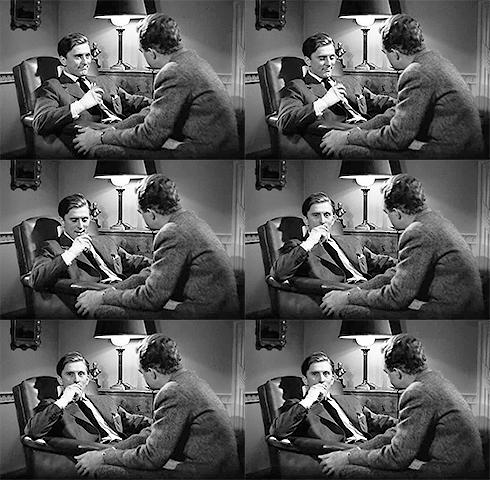
O Tempo Não Apaga (1946) / The Strange Love of Martha Ivers (1946)

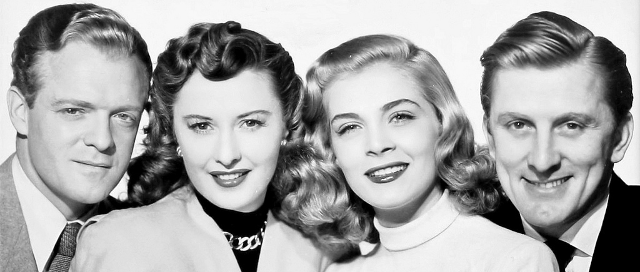
Barbara Stanwyck tinha faro para descobrir novos talentos. Em 1939, ela insistiu que o estúdio desse ao novato William Holden o papel principal em “Conflito de Almas”, e assim nasceu uma estrela. Em 1946 ela fez isso de novo. “O Tempo Não Apaga” apresentou ao mundo uma nova estrela, que ainda não se apagou: Kirk Douglas.

Barbara Stanwyck knew how to recognize a new star. In 1939, she insisted on casting newcomer William Holden in “Golden Boy”, and a star was born. She did it again in 1946. “The Strange Love of Martha Ivers” introduced to the world a new star, one who is still (and not strangely) loved: Kirk Douglas.


Em 1946, Issur Danielovitch, nascido em Nova York em uma família judia com raízes russas, já havia mudado legalmente seu nome para Kirk Douglas. Em 1946, Kirk já havia sido ferido na Segunda Guerra Mundial. Em 1946, Kirk já havia trabalhado no rádio e no teatro. Em 1946, Kirk já tinha um filho de dois anos de idade chamado Michael. E então, em 1946, a amiga Lauren Bacall disse ao produtor de Hollywood Hal Wallis para prestar atenção em Kirk. O que se seguiu foi seu primeiro papel no cinema.

By 1946 Issur Danielovitch, born in a Jewish family with Russian roots in New York city, had already changed his name legally to Kirk Douglas. By 1946, Kirk had been injured in World War II. By 1946, Kirk had made radio and stage work. By 1946, Kirk had a two-year-old son named Michael. And then, in 1946, his friend Lauren Bacall told Hollywood producer Hal Wallis to keep an eye on Kirk. His first film role was what followed.


A história de “O Tempo Não Apaga” começa em 1928, quando a jovem Martha está tentando fugir de sua tirania tia e tutora. O jovem e nerd Walter O’Neil conta onde Martha e o amigo Sam Masterson estão escondidos. Martha é trazida de volta para casa e, após uma briga, mata acidentalmente a tia (detalhe: a tia havia acabado de matar, não acidentalmente, o gatinho de Martha). Sam observa tudo.

The story of “The Strange Love of Martha Ivers” starts in 1928, when young Martha is trying to escape from her tyrannical aunt and tutor. Young and nerdy Walter O’Neill tells the aunt where Martha and her friend Sam Masterson are hiding. Martha is brought home and, after an argument, accidentally kills her aunt (note: her aunt has just killed, not accidentally, Martha’s pet kitten). Sam witnesses it.


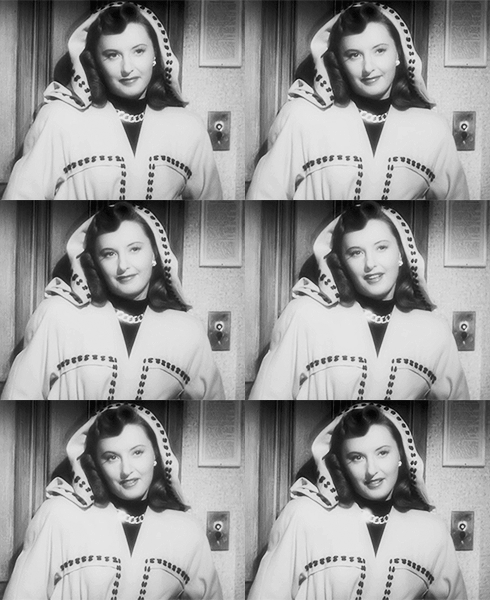
O ano agora é 1946. Sam Masterson (Van Heflin), que fugiu ainda criança, está de volta à cidade, mas contra sua vontade. Seu carro quebrou justamente na entrada de Iverstown, e ele precisa deixá-lo em uma oficina para consertar. Já que ele está na cidade, descobre que Martha (Barbara Stawnwyck) é agora uma mulher forte e rica, e casada com Walter (Kirk Douglas), um advogado.

The year is now 1946. Sam Masterson (Van Heflin), who ran away, is back in town, but against his will. His car just happened to break in Iverstown, and he must leave it to be fixed. Since he is in town anyway, he finds out that Martha (Barbara Stanwyck) is a strong, rich woman, now married to Walter (Kirk Douglas), a district attorney.


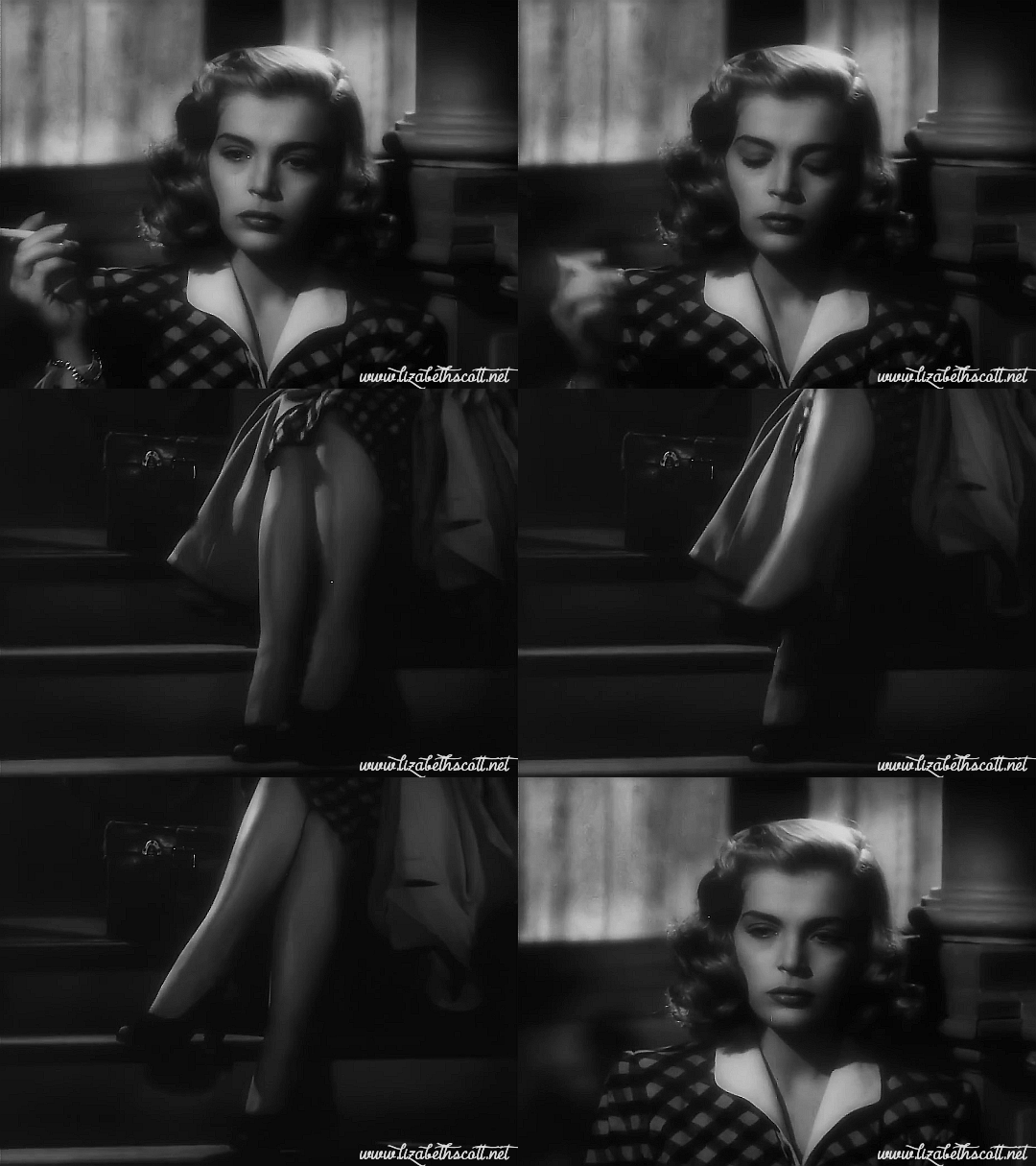
Sam não quer nem saber do casal disfuncional, mas Martha e Walter acreditam que ele voltou para chantageá-los, já que ele também estava presente na noite da morte da tia. E Sam acaba tendo de ir atrás do poderoso casal, para que eles ajudem uma moça que Sam acaba de conhecer, Toni Marachek (Lizabeth Scott), que acabou de sair da cadeia.

Sam wants nothing to do with their dysfunctional relationship, but Martha and Walter believe he’s back to blackmail them, because he saw everything that happened the night the old aunt was killed. And Sam indeed needs to talk to powerful Martha and Walter, but to save a sweet girl he meets, Toni Maracheck (Lizabeth Scott), who has just been released from jail.


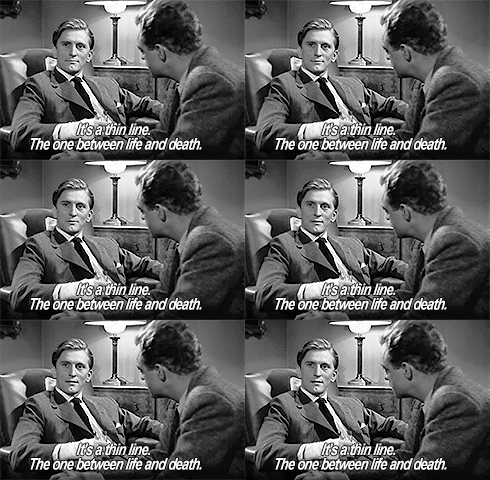
É óbvio que o Novato tinha talento. Barbara Stanwyck lhe disse isso, e eles se tornaram bons amigos. Kirk atuava seguindo um lema: “quando você está interpretando um personagem fraco, encontre um momento em que ele é forte, se você está interpretando um personagem forte, encontre um momento em que ele é fraco”. Walter O’Neil era um personagem fraco e alcoólatra, mas o primeiro no cinema para um ator que ficou conhecido por interpretar tipos fortes.

It’s crystal clear that the newcomer had talent. Barbara Stanwyck told him this, and they became good friends. He played his part following a motto: “when you’re playing a weak character, find a moment when he’s strong, if you’re playing a strong character, find a moment when he’s weak”. Walter O’Neill was a weak alcoholic character that originated a career for an actor who subsequently played stronger characters.


Este é um filme noir soberbo, com uma trilha sonora especialmente arrepiante. Ele merece ser visto simplesmente pela história e pelo desfecho inesquecível, mas para completar este foi também o primeiro passo em uma carreira de várias décadas (carreira que, eu acredito, deveria ter culminado em um Oscar em 1956 quando Kirk interpretou Van Gogh) de um verdadeiro ícone de Hollywood.

This is a superb film noir, with an especially striking soundtrack. It should be worth checking for its plot only and its haunting ending, but it also was the first step in a multi-decade career (that, I believe, should have culminated in an Oscar in 1956, when Kirk played Van Gogh) of a true Hollywood icon.

"The Strange Love of Martha Ivers" is on public domain and can be watched at YouTube and Internet Archive.

This is my contribution to the Kirk Douglas 100th Birthday blogathon, hosted by Karen at Shadows and Satin.

Friday, August 28, 2015

Joana D’Arc (1948) / Joan of Arc (1948)

O filme nem precisa começar para termos certeza de que estamos assistindo a uma obra do diretor Victor Fleming. É um filme longo (145 minutos!) e os atores nos são apresentados em uma lista muito semelhante à que aparece no início de “E o Vento Levou / Gone with the Wind” (1939). É um elenco enorme, um épico em Technicolor e sua protagonista é uma personagem feminina forte e inesquecível – mais até que Scarlett O’Hara.

The film hasn’t even started and we’re already sure that we’re watching a Victor Fleming production. It’s a long film (145 minutes!) and the actors are presented in the beginning in a list that looks a lot with the opening credits of “Gone with the Wind” (1939). It has a huge cast, it is an epic in Tehcnicolor and the lead is a strong and unforgettable female character – even more iconic than Scarlett O’Hara.


Você já deve conhecer um pouco da história: o ano é 1429. A Inglaterra e a França estão em guerra há quase 100 anos (o conflito começou em 1337). Uma jovem camponesa de 17 anos, Joana D'Arc (Ingrid Bergman) recebe um chamado de Deus, dizendo-lhe que ela deve procurar o Delfim Carlos (José Ferrer) e comandar um exército que levará a França à vitória. O Delfim será coroado rei, com o título de Carlos VII, seguindo a vontade de Deus. Claro que isso não é uma missão fácil. Joana encontra muitas dificuldades em seu caminho, seja com as autoridades ou com os capitães no campo de batalha. É difícil para eles seguir as ordens de uma moça, e nem de longe este machismo fica restrito ao século XV em que se passa o filme. Joana D’Arc é uma figura histórica e religiosa, mas os temas de seu drama não poderiam ser mais atuais. Além do machismo, há as lutas políticas e a corrupção.

You may already know the essentials about the story: the year is 1429. England and France have been at war for nearly 100 years (the war started in 1337). A 17 year-old peasant, Joan of Arc (Ingrid Bergman) receives a message from God saying that she must go to the Dauphin Charles (José Ferrer) and lead the army that will make France will the war. The Dauphin will be proclaimed King Charles VII, as God wishes. Of course this won’t be an easy task. Joan meets many obstacles in her way, both with authorities and with commanders in the battlefield. For them, it’s difficult to follow the orders of a young woman, and this sexist bias is not something that was left behind in the 15th century. Joan of Arc is a historical and religious figures, but the themes of her story couldn’t be more modern. Besides sexism, there are political disputes and corruption.

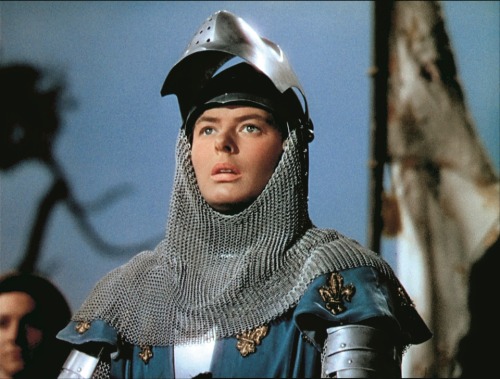
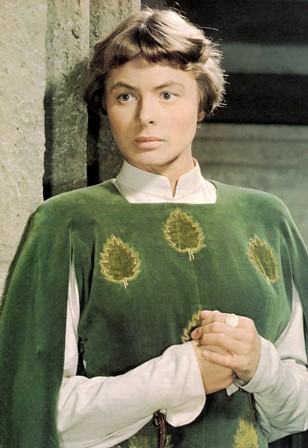
Como Joana D'Arc, Ingrid Bergman jamais aparenta ser uma adolescente (a estrela tinha 33 quando o filme foi feito), mas esta falha é perdoável. Ingrid imprime uma força sobrenatural ao papel, com sua voz grave nos momentos de dar ordem, e com doçura e inocência no olhar ao falar de Deus e das vozes dos santos que ouve. Gosto de pensar que a voz da maior intérprete de Joana D'Arc, Renée Falconetti (de “A Paixão de Joana D'Arc”, 1928) de alguma maneira se assemelharia à de Ingrid. Há convicção total na Joana D'Arc de Bergman, e ao mesmo tempo uma pureza descomunal.

As Joan of Arc, Ingrid Bergman never looks like a teenager (she was 33 when the film was made), but this is forgivable. Ingrid offers a supernatural strength to the role, with a deep voice when she's giving orders and with a sweet, innocent look when she talks about God and the voices of the saints she hears. I like to think that the voice of the actress who gave the best performance as Joan of Arc, Renée Falconetti (from “The Passion of Joan of Arc”, 1928) in some way sounded like Ingrid's voice. There is total conviction in Bergman's Joan of Arc, and at the same time a colossal purity.

Em 1946, Bergman protagonizou a peça “Joan of Lorraine”, que foi a base do filme. Entretanto, a peça é metalinguística, pois mostra como os atores de uma montagem de Joana D’Arc têm suas vidas mudadas pelos personagens que interpretam. Para os padrões de Hollywood, foi necessária uma história mais convencional, e sobrou apenas a trajetória da mártir no roteiro (imagine se o filme fosse feito na Inglaterra: Laurence Olivier perfeitamente obteria o efeito “teatro filmado”). Bergman queria muito fazer o filme, e por isso se juntou ao marido, o dentista Peter Lindstrom, ao diretor Fleming e ao produtor Walter Wanger para criar a Sierra Pictures – cujo primeiro e único projeto foi este épico impressionante.

In 1946 Ingrid starred in the play “Joan of Lorraine”, thar served as the basis for the film. The play, however, is metalinguistic, as it shows how the actors appearing in a play about Joan of Arc have their lives changed by the roles they play. In order to follow Hollywood patterns, the story became more conventional, focusing only in the martyr's trajetory (imagine if the film was made in England: Laurence Olivier could perfectly obtain the effect of “filmed theater”). Bergman really wanted to make the film, that's why she, her husband, the dentist Peter Lindstrom, the director Victor Fleming and the producer Walter Wanger got together and created Sierra Pictures – whose first and only project was this impressive epic film.

.
Victor Fleming e Ingrid Bergman

Talvez você também saiba qual foi o destino da película. Pouco após a estreia, Ingrid se envolveu com o diretor italiano Robert Rossellini e ganhou a antipatia dos americanos, que por sua vez se recusaram a ver uma adúltera interpretando uma santa no cinema. Victor Fleming faleceu poucos meses após o final das filmagens, e no auge do escândalo Bergman/Rossellini, o filme foi editado para uma versão de apenas 100 minutos, perdendo muito de suas características. Apenas em 1998 uma restauração foi feita e a versão completa ressurgiu.

Maybe you already know which was the fate of this film. A little after the premiere, Ingrid got involved with the Italian director Roberto Rossellini and became a pariah in the USA, as the public refused to see an adulterous woman playing the role of a saint onscreen. Victor Fleming passed away a few months after filming and, in the apex of the Bergman/Rossellini scandal, the film was edited into a 100-minute version, losing a lot of its characteristics. Only in 1998 a restoration was made and the complete version reappeared.


A versão de Joana D’Arc de 1948 é mais completa que o clássico silencioso de 1928? Provavelmente, pois conta tudo que se sabe sobre a santa, mesmo que ainda haja muitas dúvidas e lendas sobre ela. Mas jamais será mais emocionante. Mais bonita, sim, em fotografia Technicolor ganhadora do Oscar, mas a versão de 1928 tem em sua crueza o maior trunfo. Os algozes de Falconetti são mais dignos de ódio que os de Bergman. O julgamento da Joana D’Arc de Bergman é desonesto, o de Falconetti é desumano.

Is the 1948 version more complete than the silent classic from 1928? Probably, because it tells everything we know about the saint, even though there are still many doubts and legends about her. But it's not as emotive – and it'll never be. Prettier, yes, in an Oscar-winning Technicolor photography, but the 1928 has in its rawness its biggest triumph. Falconetti's accusers are more hateful than Bergman's. The judgement of Bergman's Joan of Arc is dishonest, the judgement of Falconetti's is inhuman.

Bergman mal sabia que seu relacionamento com Rossellini faria dela uma espécie de mártir da moral e dos bons costumes hipócritas da sociedade pós-Segunda Guerra Mundial. Em 1954 ela voltaria a interpretar Joana D’Arc, dirigida pelo novo marido em um filme estranhíssimo (afinal, é um musical!). Mas, apesar das críticas e do pouco caso com que é tratada, é a versão de 1948 que traz uma das melhores Joana D’Arc do cinema. É a força de Ingrid Bergman, atuando, como sempre, com perfeição.

Bergman barely knew that her relationship with Rossellini would make her some kind of martyr of morality and hypocritical good costumes in the post-WWII societey. In 1954 she would again play Joan of Arc, directed by her new husband in a very strange film (after all, it's a musical!). But, even with the critics and the near erasure it's the 1948 version that brings one of the best Joans of Arc in the history of film. It's Ingrid Bergman's strangth, who once again acts with perfection.


This is my contribution to The Wonderful Ingrid Bergman Blogathon, hosted by dear Virginie at The Wonderful World of Cinema. Happy 100th birthday, Ingrid!

Monday, May 5, 2014

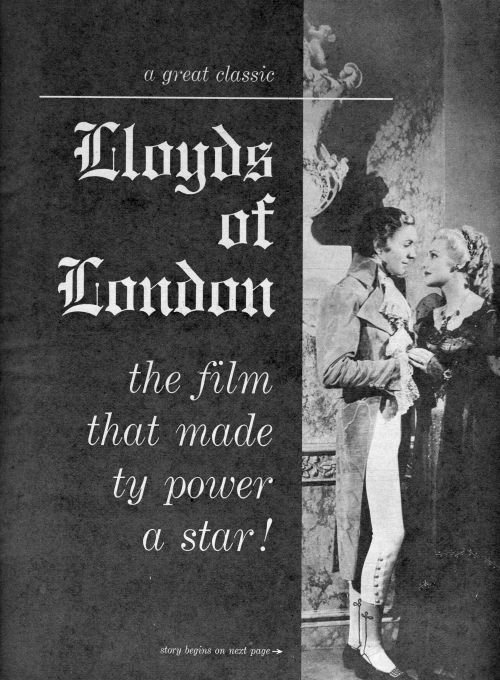
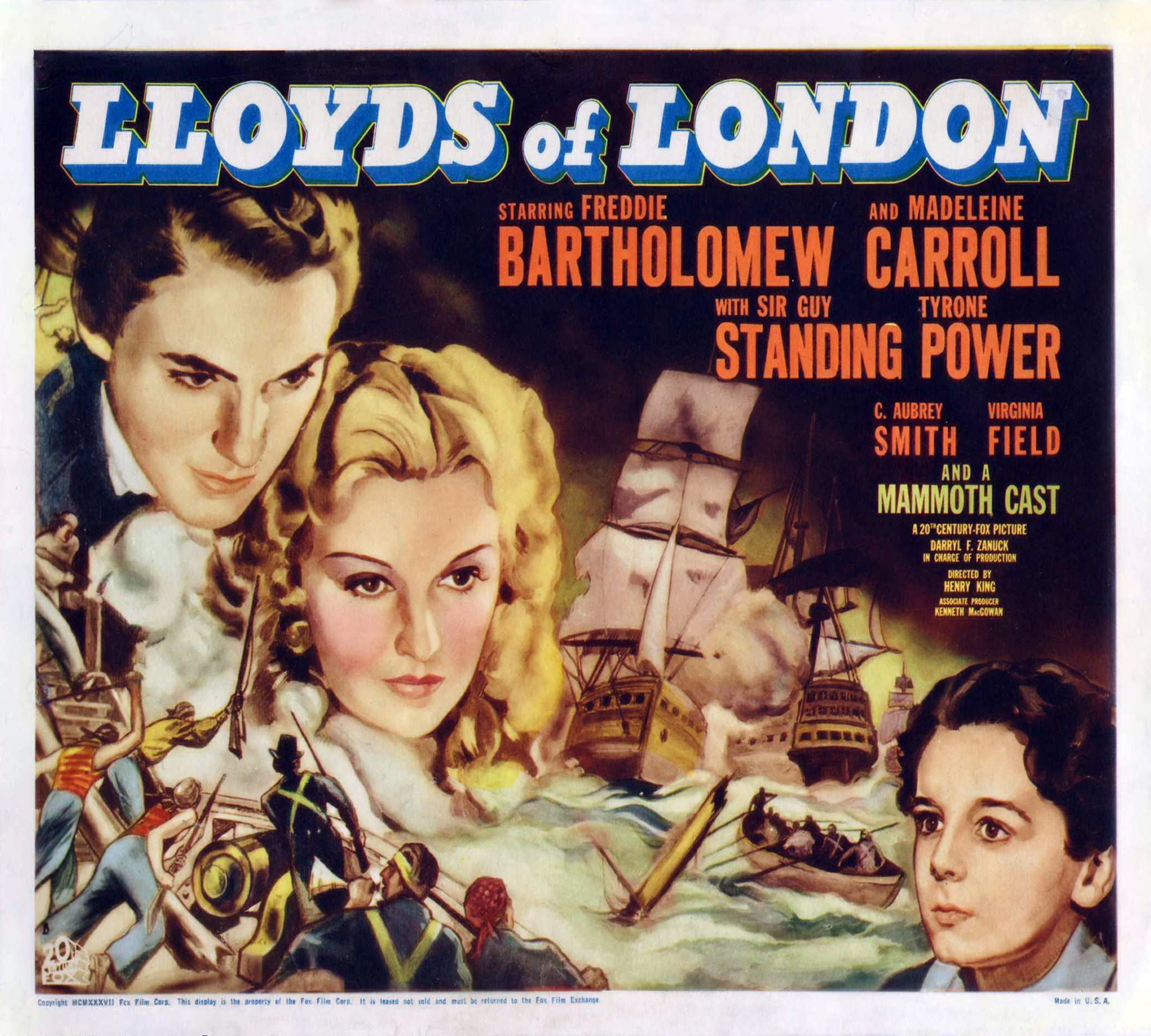
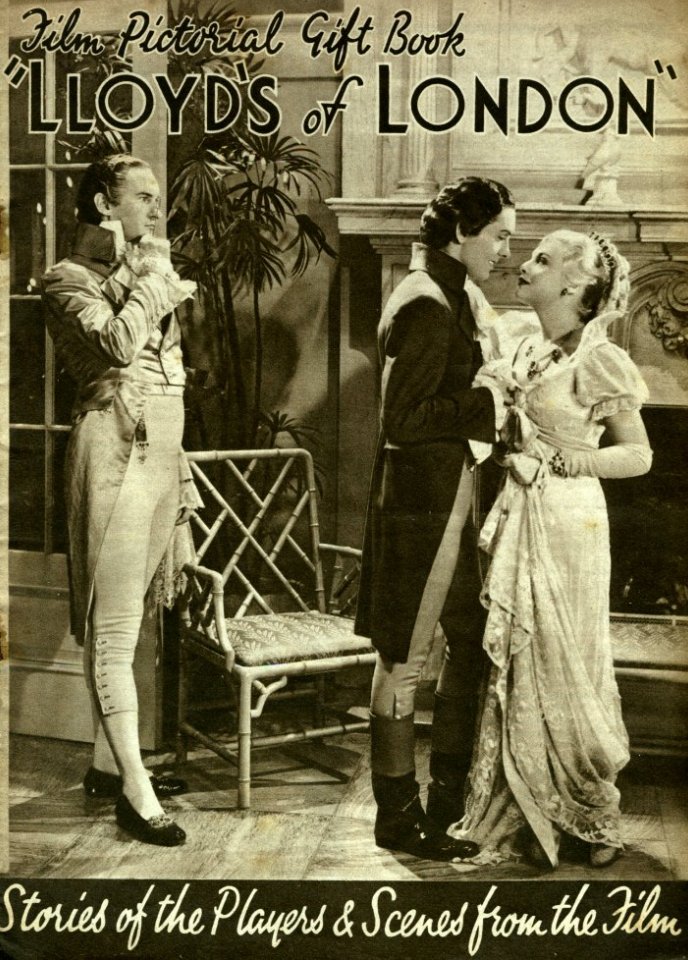
Lloyd’s de Londres / Lloyd’s of London (1936)

Na minha humilde opinião, Tyrone Power foi o homem mais bonito a aparecer numa tela de cinema. Esqueça Valentino,Gable, Paul Newman, George Clooney ou Johnny Depp. A beleza de Ty era perfeita. Alto, magro, moreno, olhos expressivos, nariz perfeito. Sua beleza estava no auge nos anos 30 (mais uma vez, esta é uma opinião pessoal), e ver Ty neste momento do auge da juventude e de maturação do talento não tem preço.

In my humble opinion, Tyrone Power was the most handsome man to ever appear in a movie screen. Forget Valentino, Gable, Paul Newman, George Clooney or Johnny Depp. Ty's beauty was perfect. Tall, slim, dark, expressive eyes, perfect nose. He was his most beautiful during the 1930s (again, my own personal opinion), and to see Ty at this moment, in the climax of his youth and maturing as an actor, is priceless.
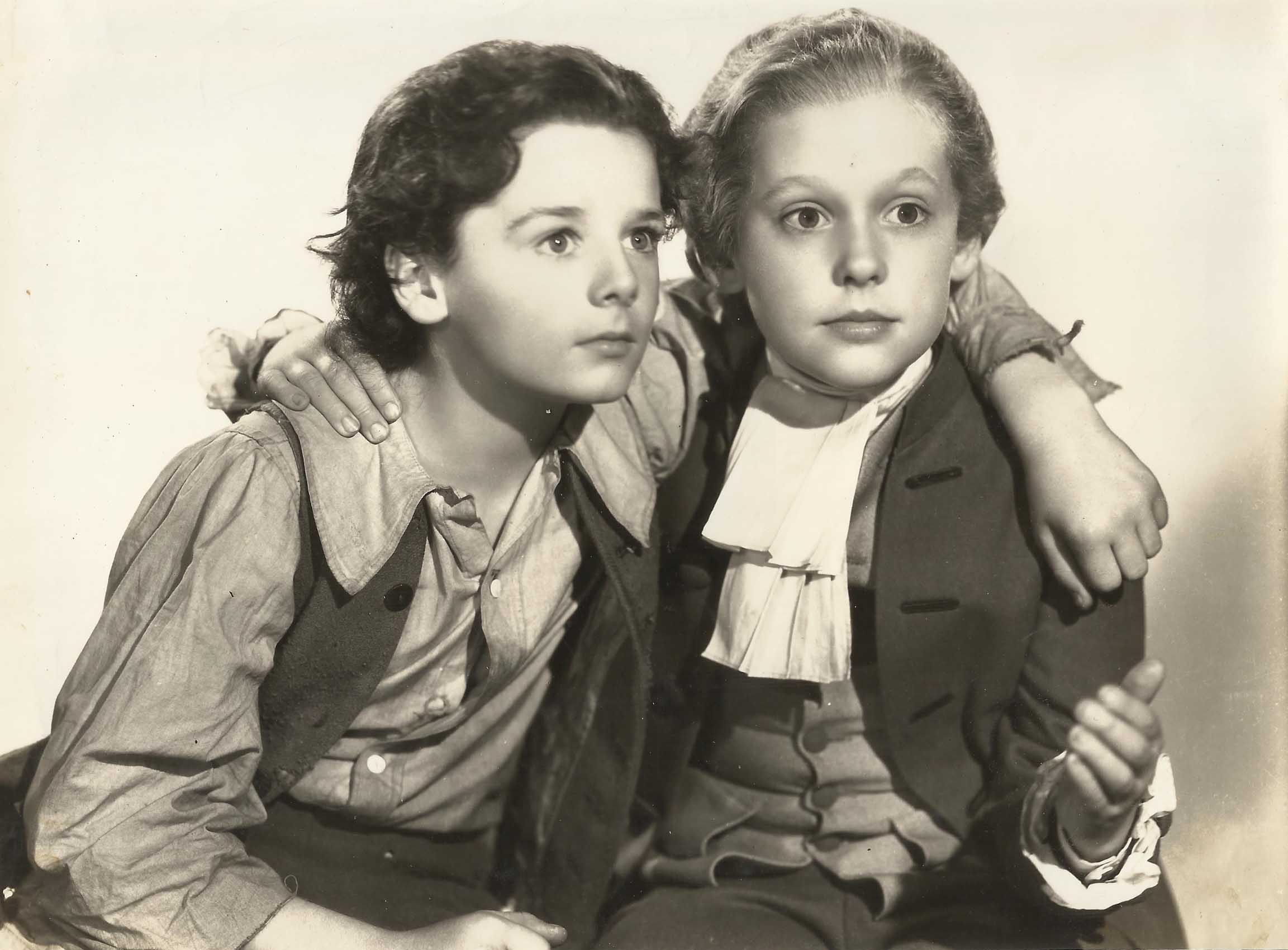
Lloyd’s of London” é o primeiro filme em que ele é creditado apenas como Tyrone Power, e não Tyrone Power Jr. Seu pai havia sido um famoso ator de teatro que também fez filmes mudos (e se parecia um pouco com Francis X Bushman). Mas na primeira meia hora nem vemos sinal da nova estrela da 20th Century Fox. No começo do filme, o garoto destemido Jonathan Blake é vivido por Freddie Bartholomew, ator mirim de sucesso que recebe top billing (seu nome é o primeiro nos créditos). Jonathan deixa seu amigo rico Horatio Nelson no interior e vai até Londres a pé para avisar uma companhia de seguros sobre planos de um navio pirata.

Lloyd's of London” is the first film in which he is credited only as Tyrone Power, and not as Tyrone Power Jr. His father was a famous theater actor who also appeared in silent films (and looked a lot like Francis X. Bushman). But in the first half hour we don't even see the new star of 20th  Century Fox. At the beginning of the movie, the boy Jonathan Blake is played by Freddie Bartholomew, the child star with the top billing. Jonathan leaves his rich friend Horatio Nelson on the countryside and goes on foot until London to warn an insurance company about plans from a pirate ship.
Quando a casa de seguros Lloyd’s percebe que o menino falou a verdade e que isso os livrou de um prejuízo milionário, Jonathan se torna o protegido do administrador do local, e cresce naquele ambiente. Seu amigo Horatio se alista na Marinha e alcança um alto cargo como comandante de um navio nas guerras contra Napoleão Bonaparte (o ano então é 1784).

When the insurance house Lloyd's realizes that the boy told the truth and that he prevented them from losing millions, Jonathan becomes the local head's protegée and grows up in that environment. His friend Horatio joins the Marines and achieves a high position as the commander of a ship during the wars against Napoleon Bonaparte (the year then is 1784).

E já que o cenário é França contra Inglaterra, Jonathan vai a Paris e resgata uma bela inglesa, Elizabeth (Madeleine Carroll), que está sendo hostilizada por um grupo francês. Jonathan se apaixona, mas Elizabeth prefere manter sua identidade oculta enquanto os dois dividem um barco de volta para casa.

And since the issue is France against England, Jonathan goes to Paris to rescue a beautiful English lady, Elizabeth (Madeleine Carroll), who is being hostilized by a French group. Jonathan falls in love, but Elizabeth prefers to keep her real identity a secret while the two share a boat back home.
Jonathan descobre, depois de um breve período de depressão, que Elizabeth é da nobreza e, pior, é casada. Para provar seu valor, ele passa a ascender socialmente com seu trabalho, arriscando cada vez mais os negócios da seguradora. E uma decisão da frota de Horatio será decisiva não apenas para salvar a Lloyd’s, mas também para recuperar o dinheiro que Elizabeth investiu na seguradora e até mesmo para que Jonathan continue vivo e fora da cadeia.

Jonathan finds out, after a short sad period, that Elizabeth is a noblewoman and, worse, is married. To prove his value, he ascends socially through his work, putting more and more the businesses of the insuracne house at risk. And a decision coming from Horatio's ships will be very important not only to save the Lloyd's, but also to recover the money Elizabeth invested in the insurance house and also to keep Jonathan alive and far from the jail.
Este, entretanto, não é o filme em que Ty está mais bonito. Na minha opinião (estou opinando muito hoje), é em “Maria Antonieta” (1938) que sua beleza está mais acentuada. E olhem bem: ambos Maria Antonieta e Lloyd’s of London são filmes históricos, que se passam na mesma época, com uma década de diferença. Ty certamente se deu bem em filmes históricos, embora vez ou outra o figurino não ajudasse. Aqui, por exemplo, ele usa em uma cena uma roupa digna de gnomo na parada do St. Patrick’s Day!

This isn't, however, the film in which Ty looks his most handsome. In my opinion (I'm opinating a lot today), it is in “Marie Antoinette” (1938) that he looks his best. And pay attention: both Marie Antoinette and Lloyd's of London are historical films set in the same time period, with  a decade separating the settings. Ty certainly did well in historical pieces, even if the wardrobe didn't help him always. Here, for instance, his uses in one scene an outfit that could belong to a leprechaun at the St. Patrick's Day parade!
Lloyds’ of London” está longe de ser uma obra-prima. Mas foi importante por ser o primeiro grande filme da carreira de Tyrone. No início, o papel de Jonathan era do grande amigo de Power, Don Ameche, mas Ty foi escalado no lugar e se tornou a estrela que Ameche nunca seria (apesar do relativo sucesso na época, hoje Power é mais conhecido e lembrado que Ameche).

Lloyds' of London” is far from being a masterpiece. But it was important because it was the first film from Tyrone's career. Before production started, the role of Jonathan was going to Power's good friend, Don Ameche. But Ty was chosen instead and became the star Ameche never could be (although Ameche was a successful actor, nowadays Power is better known than him).
Ty viveu apenas 44 anos, mas deixou sua marca no mundo. Ator de cinema e teatro, combatente na Segunda Guerra Mundial, ídolo das multidões. Vê-lo aos 22 anos em “Lloyd’s of London” é a oportunidade única que temos de dizer: “assim nasce uma estrela”.

Ty lived for only 44 years, but left his mark in the world. A film and theater actor, he was also a combatent during World War II and the idol of the crowds. To see him at age 22 in “Lloyds' of London” is the opportunity we have to say: “this is how a star is born”.

This is my contribution to the Power- Mad blogathon, hosted by Patty at The Lady Eve and Patti at They Don't Make 'Em Like They Used To in honor of the 100th birthday of Tyrone Power, the Greek god of the 20th century.

Wednesday, August 22, 2012

Centenário de Gene Kelly


Sim, caros amigos! Aquele dançarino risonho de corpo atlético e ar jovial, se estivesse vivo, completaria 100 anos! Como eu adoro histórias de bastidores, resolvi homenagear esse grande artista com curiosidades sobre seus filmes. Prontos? Então lá vamos nós sapatear no temporal:

No filme “Artistas e Modelos / Cover Girl” (1944), Gene teve liberdade para criar e executar suas ideias. Foi aí que ele removeu paredes para filmar uma dança de Rita Hayworth ao longo de uma rua em uma única tomada e também idealizou a inovadora dança com o alter-ego.
Em “Marujos do Amor / Anchors Aweigh” (1946), a ideia original era que Gene dançasse ao lado de Mickey Mouse, o que não foi permitido por Walt Disney. A solução foi substitui-lo pelo ratinho Jerry, da dupla com o gato Tom que, por sinal, nadou ao lado de Esther Williams em “Dangerous when Wet” (1953). Depois de pronta a sequência, os animadores tiveram de desenhar a sombra do roedor no chão, pois esta não aparecia.
“O Pirata” (1948) deveria ser estrelado por Cary Grant e Greer Garson. Com a mudança de planos, foi transformado em musical. No número “Voodoo”, Judy Garland e Gene fazem uma performance tão caliente que deixou Louis B. Mayer furioso.
Um dos policiais que persegue os três marinheiros nas ruas de NY em “Um dia em Nova York / On the Town” (1949) é interpretado pelo mesmo ator que fez o guarda que surge ao fim do número principal de “Cantando na Chuva”.
A inspiração para filmar “Sinfonia de Paris / An American in Paris” (1950) veio do filme inglês “Os Sapatinhos Vermelhos”, de 1948. Ironicamente, quando “Um Dia em Nova York” estreou, o produtor Arthur Freed mandou um bilhete a Gene Kelly e Stanley Donen dizendo que o trabalho dos diretores Michael Powell e Emeric Pressburger não se comparava ao novo sucesso da MGM.
Leslie Caron foi descoberta por Gene e escalada para o papel principal em “Sinfonia de Paris”. Por ter sofrido de subnutrição durante a Segunda Guerra Mundial, Leslie só gravava dia sim, dia não, pois o trabalho no set de filmagem lhe deixava estafada.
Depois de filmado o número “Make ‘em laugh” de “Cantando na Chuva” (1952), Donald O’Connor ficou uma semana no hospital porque fumava muito e perdeu o fôlego. No entanto, o rolo do filme foi estragado e Donald teve de refazer sua performance.
Ao fim da gravação de “Good Morning”, Debbie Reynolds tinha veias dos pés estouradas tamanho o esforço que fez. Mesmo assim, Gene Kelly não gostou do sapateado dela e decidiu gravar seu próprio sapateado em estúdio e inseri-lo na música. Ironicamente, no número principal seus passos na água foram “dublados” por duas dançarinas.
Na década de 1920 o pai de Gene trabalhou com o cantor Al Jolson, protagonista do filme que colocaria fim à era muda, “O Cantor de Jazz” (1927). A chegada do som ao cinema é assunto de “Cantando na Chuva” e os filmes falados foram exatamente a causa da demissão do pai de Gene.
Gene Kelly, formado em economia, ficou conhecido mundialmente como ator, dançarino, diretor, cantor e coreógrafo. Começou a dançar para impressionar as garotas. Participou de quatro shows da Broadway e coreografou mais um antes de ir para Hollywood. Fez 46 trabalhos como ator, 13 como diretor, 7 como produtor, 15 como coreógrafo e ajudou a escrever o roteiro de dois filmes. Seu talento e competência em todas essas funções fazem com que ele permaneça uma estrela sempre lembrada e homenageada. Parabéns, Gene! 

Aproveitem para ler minhas contribuições no site Gene Kelly Fans!

This post is part of the Summer Under the Stars blogathon, hosted by Sittin’ on a Backyard Fence and ScribeHard on Film. 
Related Posts Plugin for WordPress, Blogger...