} Crítica Retrô: José Ferrer

Tradutor / Translator / Traductor / Übersetzer / Traduttore / Traducteur / 翻訳者 / переводчик

Showing posts with label José Ferrer. Show all posts

Thursday, April 16, 2026

Fedora (1978)


Algumas parcerias não apenas começam bem, mas também terminam bem. William Holden fez quatro filmes com Billy Wilder, incluindo aquele que deu ao ator seu único Oscar, e o último desta parceria foi “Fedora”, de 1978. Pouco elogiado e pouco visto, “Fedora” de muitas maneiras ecoa uma das obras-primas de Wilder.

Some partnerships not only start well, but also end well. William Holden worked in four films with Billy Wilder, including the film that gave the actor his only Oscar, and the last one in this partnership is 1978’s “Fedora”. Underrated and underseen, “Fedora” in many ways echoes one of Wilder’s masterpieces.

Fedora (Marthe Keller), a atriz de origem polonesa, está morta. Ela caiu ou se jogou em frente a um trem. Ela tinha entre 60 e 70 anos, dependendo da fonte. Uma das centenas de pessoas em seu funeral é o produtor de cinema independente Barry Detweiler (William Holden), que começa a nos contar uma história.

Fedora (Marthe Keller), the Polish-born actress, is dead. She either fell or jumped in front of a train. She was either 60 or 70, depending on the source. One of the hundreds of people at her funeral is independent movie producer Barry Detweiler (William Holden), who starts telling us a story.

O flashback nos leva a apenas duas semanas antes, na Grécia. Barry está lá para fazer negócios com Fedora, que vive reclusa no Mediterrâneo. Ela não quer recebê-lo em sua Villa, então ele segue o carro dela até arranjar uma brecha para falar com ela. Ela não o reconhece, então mais tarde no hotel ele escreve uma carta para refrescar a memória da atriz.

The flashback brings us to only two weeks before, in Greece. Barry is there to talk business with Fedora, who is living as a recluse at the Mediterranean. She doesn’t want to receive him in her Villa, so he follows her car until he gets a chance to talk to her. She doesn’t recognize him, so later at his hotel he writes a letter to refresh her memory. 

Estamos agora num flashback dentro de um flashback. O ano é 1947, o ápice do Sistema de Estúdio. Fedora já é uma estrela, enquanto Barry (agora interpretado por Stephen Collins) é apenas diretor assistente. Mesmo assim, eles passam a noite juntos. O flashback acaba aqui, é breve. Mas haverão outros.  

It’s now a flashback within a flashback. We’re in 1947, the apex of the Studio System. Fedora is already a star, while Barry (now played by Stephen Collins) is just second assistant director. Nevertheless, they spend the night together. The flashback ends here, it’s a brief one. But there will be others.

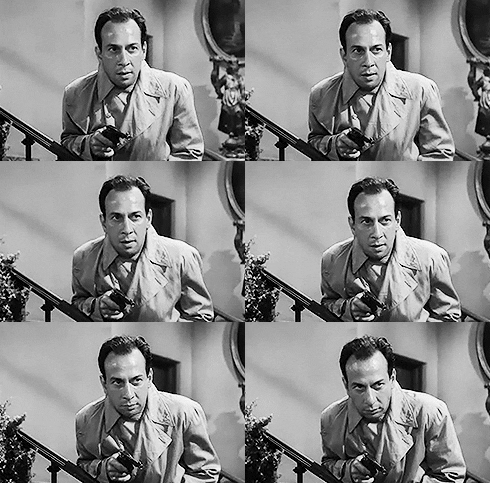
Fedora vive sob a influência da Condessa (Hildegard Knef), uma velha rica e excêntrica que abertamente condena a volta de Fedora às telas. Para ser mais precisa, a Condessa, uma empregada e o doutor Vando (José Ferrer) estão mantendo Fedora basicamente em cárcere privado.   

Fedora lives under the influence of The Countess (Hildegard Knef), a rich and eccentric old woman who openly disapproves when Fedora shows she’s eager for a comeback. To be more precise, the Countess, a maid and doctor Vando (José Ferrer) are keeping Fedora basically incarcerated.

O doutor afirma que o diagnóstico de Fedora é paranoia. Ela apareceu depois de um colapso nervoso, quando ela tentou se matar porque amava um ator muito mais jovem, Michael York, e não era correspondida. Não era bem assim. Mas isso não é motivo para manter uma mulher numa camisa-de-força.

The doctor says the diagnosis for Fedora is paranoia. It appeared after a nervous breakdown, when she attempted suicide for loving a much younger actor, Michael York, and not being loved back. It was not exactly like this. But this is no reason to keep a woman in a straight jacket.

Numa conversa entre Fedora e Barry, ele diz a ela que a MGM vendeu seus estúdios e leiloou todas as peças, incluindo móveis onde ela fez amor para as câmeras com Robert Taylor. A MGM vinha diminuindo em tamanho e importância  desde o início dos anos 70 e o último filme rodado no seu famoso set foi o documentário “Era uma Vez em Hollywood” de 1974. 

In a talk between Fedora and Barry, he tells her that MGM sold the backlot and auctioned everything, including some furniture where she made love for the cameras with Robert Taylor. MGM had been downsizing since the early 1970s and the last movie shot in the famous backlot was the documentary “That’s Entertainment!” from 1974.

A trilha sonora ficou a cargo de Miklos Rozsa, que fez músicas grandiosas para filmes épicos mas também trabalhou em projetos “menores”. Para “Fedora”, sua trilha injeta suspense e inclusive aumenta o drama no incrível plot twist.

The soundtrack was by Miklos Rozsa, who made grand music for epic films but also worked on “smaller” projects. For “Fedora”, his soundtrack adds suspense and even enhances the drama in the amazing plot twist.

Eu tenho certeza de que você está pensando nisso e é verdade: é impossível assistir a “Fedora” e não se lembrar de e comparar com “Crepúsculo dos Deuses” (1950): Podemos comparar Fedora com Norma Desmond e com a atriz que interpreta Norma, Gloria Swanson. Swanson soube envelhecer longe das telas, mantendo-se dinâmica, escrevendo sua autobiografia e advogando pela nutrição saudável. Neste sentido, a reclusa Fedora não se parece em nada com ela e se assemelha mais a Greta Garbo. Na verdade, Garbo é mencionada em “Fedora”, pela Condessa que diz que Garbo fez Anna Karenina duas vezes, e Fedora não estaria interessada em fazer o mesmo papel. Outras atrizes do cinema clássico são mencionadas, como Joan Crawford, Monroe e Harlow.  

I’m sure you’re thinking this and it’s true: it’s impossible to watch “Fedora” and not remember and compare it with “Sunset Boulevard” (1950). We can compare Fedora to Norma Desmond and the actress who plays Norma, Gloria Swanson. Swanson knew how to get older out of the screens, remaining a dynamic force, writing her biography and advocating for healthy nutrition. In this sense, the recluse Fedora is nothing like her and more like Greta Garbo. In fact, Garbo is mentioned in “Fedora”, by the Countess who says Garbo did Anna Karenina twice, so Fedora wouldn’t be interested in a new version. Other classic film actresses are also mentioned, such as Joan Crawford, Monroe and Harlow.

“Fedora” é muito mais que um filme que acompanha “Crepúsculo dos Deuses”. É uma produção surpreendente, um comentário sobre a queda do Sistema de Estúdio e a busca pela juventude eterna. Billy Wilder faria mais um filme, mas “Fedora” foi uma maneira perfeita, ainda que agridoce, de terminar sua bem-sucedida parceria com o grande William Holden.

“Fedora” is much more than a companion piece to “Sunset Boulevard”. It’s a surprising movie, a comment on the fall of the Studio System and the search for eternal youth. Billy Wilder would make one more film, but “Fedora” was a perfect, yet bittersweet, way to end his successful partnership with the great William Holden.

This is my contribution to the 7th Golden Boy blogathon - a William Holden celebration, hosted by Virginie and Emily at The Wonderful World of Cinema and The Flapper Dame.

Saturday, October 14, 2017

José Ferrer: o tesouro de Porto Rico / José Ferrer: the treasure of Puerto Rico

No primeiro episódio da série da Netflix “Um Dia de Cada Vez”, o público que assistia à gravação vai à loucura quando Rita Moreno aparece pela primeira vez, de trás de uma cortina. Eles tinham razão para ficarem animados: Rita é uma lenda, e foi a primeira latina a ganhar o EGOT – Emmy, Grammy, Oscar e Tony. Antes da grande conquista de Rita, outro porto-riquenho ganhou um Oscar e três Tonys, abrindo o difícil caminho até Hollywood e a Broadway para os latinos. Seu nome era José Ferrer.

In the first episode of the Netflix sitcom “One Day at a Time”, the live audience goes crazy when Rita Moreno makes her first appearance from behind a curtain. They have reason to be excited: Rita is a legend, being the first Latina to win an EGOT – Emmy, Grammy, Oscar, Tony. Before Rita’s great accomplishment, another Puerto Rican got his Oscar and three Tonys, paving the hard way to Hollywood and Broadway for Latinos. His name was José Ferrer.
José Ferrer nasceu em Porto Rico em 1912. Seu avô foi advogado e um dos defensores da independência de Porto Rico da Espanha. Uma de suas irmãs é minha xará – Letícia – e Ferrer também deu à sua primeira filha o nome de Letícia – o que é algo bem legal, diga-se de passagem.

José Ferrer was born in Puerto Rico in 1912. His grandfather was a lawyer and one of the advocates of Puerto Rico's independence from Spain. One of his sisters had the same name as me – Leticia – and Ferrer also named his first daughter Leticia – which is a very cool connection, may  I say.
Ferrer estudou na Universidade de Princeton, se formou em 1934, e em 1935 fez seu primeiro papel de coadjuvante na Broadway. A reputação de Ferrer na Broadway só cresceu a partir de 1940. Ele foi o vencedor do primeiro prêmio Tony de Melhor Ator da história, em 1947, pelo seu papel mais famoso: Cyrano de Bergerac – na verdade, houve empate na premiação, sendo o outro vencedor Fredric March. Em 1952, Ferrer ganhou novamente o prêmio de Melhor Ator, e também o de Melhor Diretor por três peças diferentes que ele dirigia ao mesmo tempo.

Ferrer attended Princeton University, graduating in 1934, and in 1935 he had his first supporting role on Broadway. Ferrer made a reputation for himself on Broadway starting in 1940. He was the winner of the first Tony for Best Actor ever awarded, in 1947, for the role that is more often associated with him: Cyrano de Bergerac – it was actually a tie, and the other awarded actor was Fredric March. In 1952, Ferrer won again the Best Actor prize, and also the Best Director one for directing three stage plays at the same time.
Ferrer and Rosemary Clooney, who he married... twice
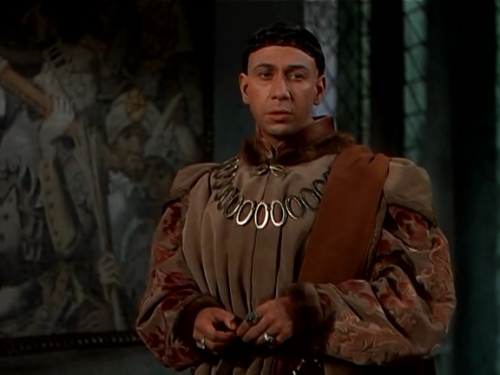
Billy Wilder queria que Ferrer fosse o protagonista de “Farrapo Humano” (1945), mas o estúdio se recusou a financiar o projeto com um protagonista quase desconhecido. Foi difícil encontrar um ator que aceitasse interpretar um alcoólatra, mas quando Ray Milland finalmente aceitou o papel, foi recompensado com um Oscar. Ferrer faria sua estreia no cinema três anos depois, quando ele interpretou o Delfim Carlos em “Joana D’Arc” (1948). Ferrer foi indicado ao Oscar como Ator Coadjuvante.

Billy Wilder intended to have Ferrer as the lead in “The Lost Weekend” (1945), but the studio refuse to finance the project without a bankable film star attached. It was hard to find an actor who would accept the role of an alcoholic, but when Ray Milland finally did it, he won an Oscar. Ferrer would make his film debut three years later, when he played the Delphin Charles in “Joan of Arc” (1948). Ferrer was nominated for the Best Supporting Actor Oscar for his performance.
Não foi surpresa alguma quando Ferrer foi escalado para o papel de Cyrano de Bergerac quando a história foi adaptada para o cinema. Cyrano é um homem sábio, culto, corajoso, porém inseguro. Ele se acha feio por causa de seu nariz grande, e por isso nunca disse à prima Roxane (Mala Powers) que a ama. E ele não quer desapontá-la, por isso promete proteger o homem que ela ama, e inclusive ajuda o concorrente a parecer mais inteligente e romântico.

It was no surprise that Ferrer got the part when Cyrano de Bergerac was adapted to the screen. Cyrano is a wise, cultured, brave, but insecure man. He is actually very self-conscious about his big nose, and this prevents him from telling his cousin Roxane (Mala Powers) that he loves her. And he doesn't want to disappoint her, that's why he promises to take care of the man she loves during battle, and even helps him look more intelligent and romantic.
Como o maior espadachim segurador de vela da história, Ferrer ganhou o Oscar, tornando-se o primeiro ator hispânico a receber o prêmio. E ele certamente mereceu a vitória: com uma voz poderosa e uma tonelada de carisma, Ferrer nos faz rir e chorar como Cyrano, e é a força motriz de um filme com poucos rostos familiares.

As the biggest third-wheel swashbuckler in history, Ferrer won the Oscar, becoming the first Hispanic actor to do so. And he certainly deserved the win: with a powerful voice and a ton of charisma, Ferrer makes us laugh and cry as Cyrano, and is the powerhouse in a movie with few familiar faces.
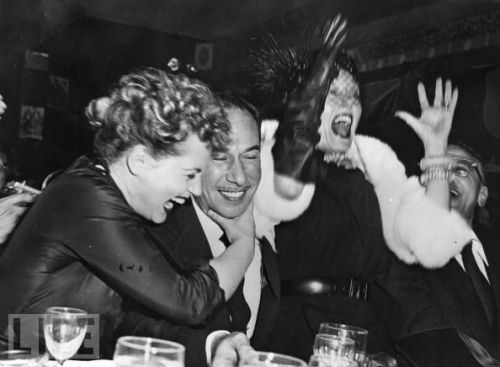
Judy Holliday and Gloria Swanson celebrate Ferrer's win at the Oscars
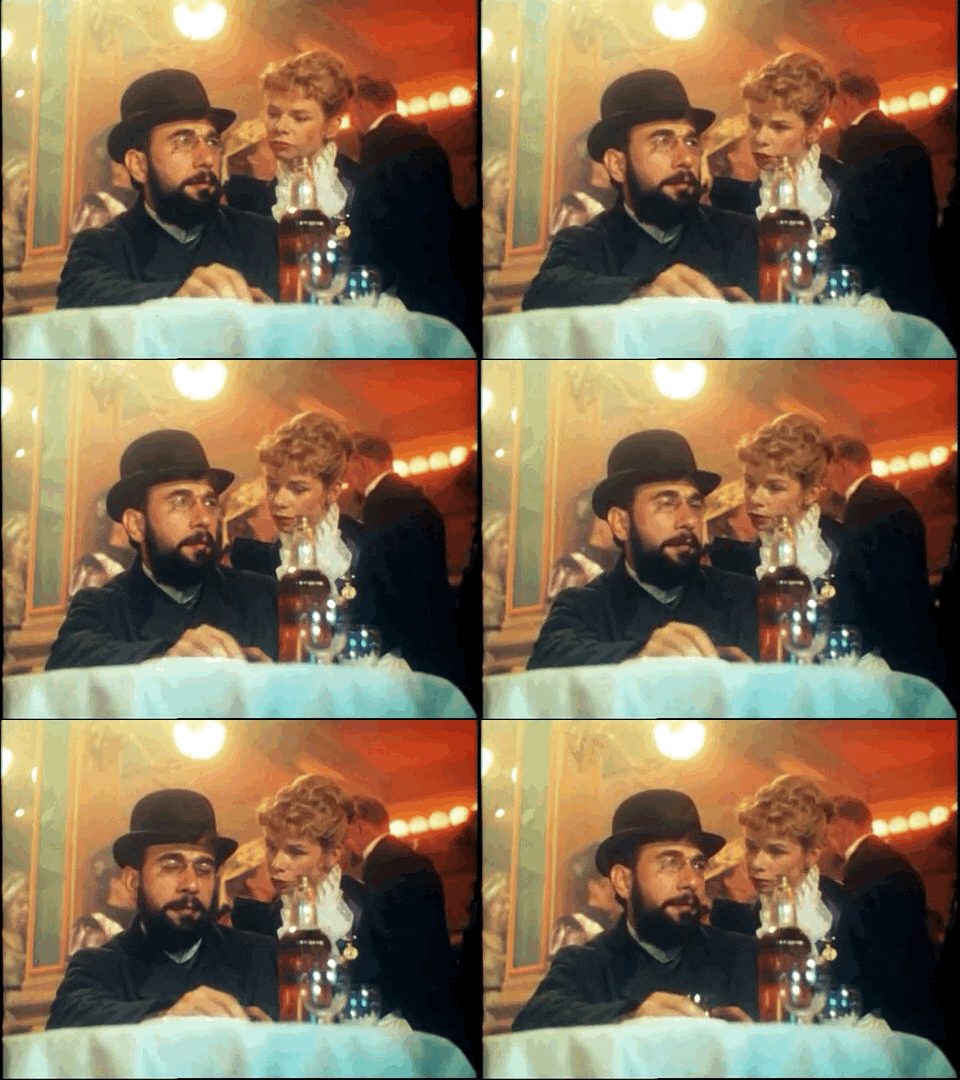
Assim como outro ator hispânico da era de ouro de Hollywood, Anthony Quinn, Ferrer também interpretou personagens de diversas nacionalidades diferentes. Em seus dois filmes mais famosos, ele interpretou personagens franceses – Cyrano, e o pintor Henri de Toulouse-Lautrec em “Moulin Rouge”, de 1952.  Ele foi um turco em “Lawrence da Arábia” (1962), do Oriente Médio em algumas ocasiões, russo, espanhol e até americano. Seu último filme foi feito em Hong Kong. Ele interpretou figuras históricas como o Rei Herodes e até mesmo Josef Stalin.

Like another Hispanic actor of the Classic Hollywood, Anthony Quinn, Ferrer also played characters from a plethora of nationalities. In his two most famous movies, he played Frenchmen – Cyrano and the painter Henri de Toulouse-Lautrec in 1952’s “Moulin Rouge”. He was Turkish in “Lawrence of Arabia” (1962), from the Middle East a few times, Russian, Spanish and even American. He did his last film in Hong Kong. He played historical figures like King Herodes and even Josef Stalin.
Ferrer fez muitos trabalhos no cinema, TV e nos palcos. Ele foi narrador de alguns filmes e séries, e até participou da Vila Sésamo. Ele dirigiu sete filmes entre 1955 e 1962. Ferrer era fluente em inglês e espanhol, e tinha conhecimentos de italiano e francês. Ele era também um bom pianista e cantor de ópera. Ele foi o primeiro ator da história a ganhar uma Medalha das Artes do presidente, em 1985. José Ferrer faleceu em 1992. Para homenageá-lo, em 2005 a Organização Hispânica de Atores Latinos deu ao seu famoso prêmio o nome de Prêmio Téspio José Ferrer. Não é de se espantar que ele seja o orgulho de Porto Rico.

Ferrer worked a lot in film, TV and on the stage. He did some narration for films and TV series, and even appeared on Sesame Street. He directed seven movies from 1955 to 1962. Ferrer spoke English and Spanish fluently, and had a good knowledge of Italian and French. He was also a fine pianist and opera singer. He was the first actor ever to be awarded a presidential Medal of the Arts in 1985. José Ferrer passed away in 1992. To honor him, in 2005 the Hispanic Organization of Latin Actors renamed its prestigious award as José Ferrer Tespis Award. No wonder why he is the pride of Puerto Rico!
Porto Rico é uma das três partes que não estão diretamente conectadas ao país, mas são território dos Estados Unidos – as outras duas são Alasca e Havaí. Nas últimas semanas, Porto Rico foi devastado pelo furacão Maria... e não recebeu ajuda do governo norte-americano. Então, para homenagear a terra de José Ferrer e tornar possível o surgimento de mais talentos ali, eu te convido a fazer uma doação para Porto Rico. ¡Gracias!

Puerto Rico is one of the three parts that are not connected directly to the country but are US territories – the other two being Alaska and Hawaii. In the last few weeks, Puerto Rico was strike by Hurricane Maria… and it received no help from Washington. So, in order to honor José Ferrer’s land and make it possible for more talents to blossom there, I invite you to make a donation for Puerto Rico. ¡Gracias!
Click to go to UNICEF's website


This is my contribution to the Hollywood’s Hispanic Heritage Blogathon 2017, hosted by Aurora at Citizen Screen. You can find more posts with the hashtag #DePelicula.

Friday, August 28, 2015

Joana D’Arc (1948) / Joan of Arc (1948)

O filme nem precisa começar para termos certeza de que estamos assistindo a uma obra do diretor Victor Fleming. É um filme longo (145 minutos!) e os atores nos são apresentados em uma lista muito semelhante à que aparece no início de “E o Vento Levou / Gone with the Wind” (1939). É um elenco enorme, um épico em Technicolor e sua protagonista é uma personagem feminina forte e inesquecível – mais até que Scarlett O’Hara.

The film hasn’t even started and we’re already sure that we’re watching a Victor Fleming production. It’s a long film (145 minutes!) and the actors are presented in the beginning in a list that looks a lot with the opening credits of “Gone with the Wind” (1939). It has a huge cast, it is an epic in Tehcnicolor and the lead is a strong and unforgettable female character – even more iconic than Scarlett O’Hara.


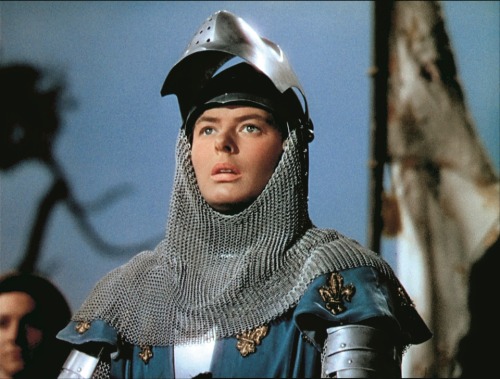
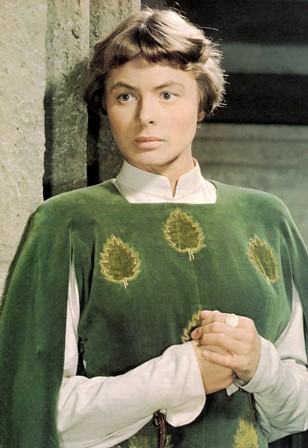
Você já deve conhecer um pouco da história: o ano é 1429. A Inglaterra e a França estão em guerra há quase 100 anos (o conflito começou em 1337). Uma jovem camponesa de 17 anos, Joana D'Arc (Ingrid Bergman) recebe um chamado de Deus, dizendo-lhe que ela deve procurar o Delfim Carlos (José Ferrer) e comandar um exército que levará a França à vitória. O Delfim será coroado rei, com o título de Carlos VII, seguindo a vontade de Deus. Claro que isso não é uma missão fácil. Joana encontra muitas dificuldades em seu caminho, seja com as autoridades ou com os capitães no campo de batalha. É difícil para eles seguir as ordens de uma moça, e nem de longe este machismo fica restrito ao século XV em que se passa o filme. Joana D’Arc é uma figura histórica e religiosa, mas os temas de seu drama não poderiam ser mais atuais. Além do machismo, há as lutas políticas e a corrupção.

You may already know the essentials about the story: the year is 1429. England and France have been at war for nearly 100 years (the war started in 1337). A 17 year-old peasant, Joan of Arc (Ingrid Bergman) receives a message from God saying that she must go to the Dauphin Charles (José Ferrer) and lead the army that will make France will the war. The Dauphin will be proclaimed King Charles VII, as God wishes. Of course this won’t be an easy task. Joan meets many obstacles in her way, both with authorities and with commanders in the battlefield. For them, it’s difficult to follow the orders of a young woman, and this sexist bias is not something that was left behind in the 15th century. Joan of Arc is a historical and religious figures, but the themes of her story couldn’t be more modern. Besides sexism, there are political disputes and corruption.

Como Joana D'Arc, Ingrid Bergman jamais aparenta ser uma adolescente (a estrela tinha 33 quando o filme foi feito), mas esta falha é perdoável. Ingrid imprime uma força sobrenatural ao papel, com sua voz grave nos momentos de dar ordem, e com doçura e inocência no olhar ao falar de Deus e das vozes dos santos que ouve. Gosto de pensar que a voz da maior intérprete de Joana D'Arc, Renée Falconetti (de “A Paixão de Joana D'Arc”, 1928) de alguma maneira se assemelharia à de Ingrid. Há convicção total na Joana D'Arc de Bergman, e ao mesmo tempo uma pureza descomunal.

As Joan of Arc, Ingrid Bergman never looks like a teenager (she was 33 when the film was made), but this is forgivable. Ingrid offers a supernatural strength to the role, with a deep voice when she's giving orders and with a sweet, innocent look when she talks about God and the voices of the saints she hears. I like to think that the voice of the actress who gave the best performance as Joan of Arc, Renée Falconetti (from “The Passion of Joan of Arc”, 1928) in some way sounded like Ingrid's voice. There is total conviction in Bergman's Joan of Arc, and at the same time a colossal purity.

Em 1946, Bergman protagonizou a peça “Joan of Lorraine”, que foi a base do filme. Entretanto, a peça é metalinguística, pois mostra como os atores de uma montagem de Joana D’Arc têm suas vidas mudadas pelos personagens que interpretam. Para os padrões de Hollywood, foi necessária uma história mais convencional, e sobrou apenas a trajetória da mártir no roteiro (imagine se o filme fosse feito na Inglaterra: Laurence Olivier perfeitamente obteria o efeito “teatro filmado”). Bergman queria muito fazer o filme, e por isso se juntou ao marido, o dentista Peter Lindstrom, ao diretor Fleming e ao produtor Walter Wanger para criar a Sierra Pictures – cujo primeiro e único projeto foi este épico impressionante.

In 1946 Ingrid starred in the play “Joan of Lorraine”, thar served as the basis for the film. The play, however, is metalinguistic, as it shows how the actors appearing in a play about Joan of Arc have their lives changed by the roles they play. In order to follow Hollywood patterns, the story became more conventional, focusing only in the martyr's trajetory (imagine if the film was made in England: Laurence Olivier could perfectly obtain the effect of “filmed theater”). Bergman really wanted to make the film, that's why she, her husband, the dentist Peter Lindstrom, the director Victor Fleming and the producer Walter Wanger got together and created Sierra Pictures – whose first and only project was this impressive epic film.

.
Victor Fleming e Ingrid Bergman

Talvez você também saiba qual foi o destino da película. Pouco após a estreia, Ingrid se envolveu com o diretor italiano Robert Rossellini e ganhou a antipatia dos americanos, que por sua vez se recusaram a ver uma adúltera interpretando uma santa no cinema. Victor Fleming faleceu poucos meses após o final das filmagens, e no auge do escândalo Bergman/Rossellini, o filme foi editado para uma versão de apenas 100 minutos, perdendo muito de suas características. Apenas em 1998 uma restauração foi feita e a versão completa ressurgiu.

Maybe you already know which was the fate of this film. A little after the premiere, Ingrid got involved with the Italian director Roberto Rossellini and became a pariah in the USA, as the public refused to see an adulterous woman playing the role of a saint onscreen. Victor Fleming passed away a few months after filming and, in the apex of the Bergman/Rossellini scandal, the film was edited into a 100-minute version, losing a lot of its characteristics. Only in 1998 a restoration was made and the complete version reappeared.


A versão de Joana D’Arc de 1948 é mais completa que o clássico silencioso de 1928? Provavelmente, pois conta tudo que se sabe sobre a santa, mesmo que ainda haja muitas dúvidas e lendas sobre ela. Mas jamais será mais emocionante. Mais bonita, sim, em fotografia Technicolor ganhadora do Oscar, mas a versão de 1928 tem em sua crueza o maior trunfo. Os algozes de Falconetti são mais dignos de ódio que os de Bergman. O julgamento da Joana D’Arc de Bergman é desonesto, o de Falconetti é desumano.

Is the 1948 version more complete than the silent classic from 1928? Probably, because it tells everything we know about the saint, even though there are still many doubts and legends about her. But it's not as emotive – and it'll never be. Prettier, yes, in an Oscar-winning Technicolor photography, but the 1928 has in its rawness its biggest triumph. Falconetti's accusers are more hateful than Bergman's. The judgement of Bergman's Joan of Arc is dishonest, the judgement of Falconetti's is inhuman.

Bergman mal sabia que seu relacionamento com Rossellini faria dela uma espécie de mártir da moral e dos bons costumes hipócritas da sociedade pós-Segunda Guerra Mundial. Em 1954 ela voltaria a interpretar Joana D’Arc, dirigida pelo novo marido em um filme estranhíssimo (afinal, é um musical!). Mas, apesar das críticas e do pouco caso com que é tratada, é a versão de 1948 que traz uma das melhores Joana D’Arc do cinema. É a força de Ingrid Bergman, atuando, como sempre, com perfeição.

Bergman barely knew that her relationship with Rossellini would make her some kind of martyr of morality and hypocritical good costumes in the post-WWII societey. In 1954 she would again play Joan of Arc, directed by her new husband in a very strange film (after all, it's a musical!). But, even with the critics and the near erasure it's the 1948 version that brings one of the best Joans of Arc in the history of film. It's Ingrid Bergman's strangth, who once again acts with perfection.


This is my contribution to The Wonderful Ingrid Bergman Blogathon, hosted by dear Virginie at The Wonderful World of Cinema. Happy 100th birthday, Ingrid!

Related Posts Plugin for WordPress, Blogger...