} Crítica Retrô: Sunset Boulevard

Tradutor / Translator / Traductor / Übersetzer / Traduttore / Traducteur / 翻訳者 / переводчик

Showing posts with label Sunset Boulevard. Show all posts

Thursday, April 16, 2026

Fedora (1978)


Algumas parcerias não apenas começam bem, mas também terminam bem. William Holden fez quatro filmes com Billy Wilder, incluindo aquele que deu ao ator seu único Oscar, e o último desta parceria foi “Fedora”, de 1978. Pouco elogiado e pouco visto, “Fedora” de muitas maneiras ecoa uma das obras-primas de Wilder.

Some partnerships not only start well, but also end well. William Holden worked in four films with Billy Wilder, including the film that gave the actor his only Oscar, and the last one in this partnership is 1978’s “Fedora”. Underrated and underseen, “Fedora” in many ways echoes one of Wilder’s masterpieces.

Fedora (Marthe Keller), a atriz de origem polonesa, está morta. Ela caiu ou se jogou em frente a um trem. Ela tinha entre 60 e 70 anos, dependendo da fonte. Uma das centenas de pessoas em seu funeral é o produtor de cinema independente Barry Detweiler (William Holden), que começa a nos contar uma história.

Fedora (Marthe Keller), the Polish-born actress, is dead. She either fell or jumped in front of a train. She was either 60 or 70, depending on the source. One of the hundreds of people at her funeral is independent movie producer Barry Detweiler (William Holden), who starts telling us a story.

O flashback nos leva a apenas duas semanas antes, na Grécia. Barry está lá para fazer negócios com Fedora, que vive reclusa no Mediterrâneo. Ela não quer recebê-lo em sua Villa, então ele segue o carro dela até arranjar uma brecha para falar com ela. Ela não o reconhece, então mais tarde no hotel ele escreve uma carta para refrescar a memória da atriz.

The flashback brings us to only two weeks before, in Greece. Barry is there to talk business with Fedora, who is living as a recluse at the Mediterranean. She doesn’t want to receive him in her Villa, so he follows her car until he gets a chance to talk to her. She doesn’t recognize him, so later at his hotel he writes a letter to refresh her memory. 

Estamos agora num flashback dentro de um flashback. O ano é 1947, o ápice do Sistema de Estúdio. Fedora já é uma estrela, enquanto Barry (agora interpretado por Stephen Collins) é apenas diretor assistente. Mesmo assim, eles passam a noite juntos. O flashback acaba aqui, é breve. Mas haverão outros.  

It’s now a flashback within a flashback. We’re in 1947, the apex of the Studio System. Fedora is already a star, while Barry (now played by Stephen Collins) is just second assistant director. Nevertheless, they spend the night together. The flashback ends here, it’s a brief one. But there will be others.

Fedora vive sob a influência da Condessa (Hildegard Knef), uma velha rica e excêntrica que abertamente condena a volta de Fedora às telas. Para ser mais precisa, a Condessa, uma empregada e o doutor Vando (José Ferrer) estão mantendo Fedora basicamente em cárcere privado.   

Fedora lives under the influence of The Countess (Hildegard Knef), a rich and eccentric old woman who openly disapproves when Fedora shows she’s eager for a comeback. To be more precise, the Countess, a maid and doctor Vando (José Ferrer) are keeping Fedora basically incarcerated.

O doutor afirma que o diagnóstico de Fedora é paranoia. Ela apareceu depois de um colapso nervoso, quando ela tentou se matar porque amava um ator muito mais jovem, Michael York, e não era correspondida. Não era bem assim. Mas isso não é motivo para manter uma mulher numa camisa-de-força.

The doctor says the diagnosis for Fedora is paranoia. It appeared after a nervous breakdown, when she attempted suicide for loving a much younger actor, Michael York, and not being loved back. It was not exactly like this. But this is no reason to keep a woman in a straight jacket.

Numa conversa entre Fedora e Barry, ele diz a ela que a MGM vendeu seus estúdios e leiloou todas as peças, incluindo móveis onde ela fez amor para as câmeras com Robert Taylor. A MGM vinha diminuindo em tamanho e importância  desde o início dos anos 70 e o último filme rodado no seu famoso set foi o documentário “Era uma Vez em Hollywood” de 1974. 

In a talk between Fedora and Barry, he tells her that MGM sold the backlot and auctioned everything, including some furniture where she made love for the cameras with Robert Taylor. MGM had been downsizing since the early 1970s and the last movie shot in the famous backlot was the documentary “That’s Entertainment!” from 1974.

A trilha sonora ficou a cargo de Miklos Rozsa, que fez músicas grandiosas para filmes épicos mas também trabalhou em projetos “menores”. Para “Fedora”, sua trilha injeta suspense e inclusive aumenta o drama no incrível plot twist.

The soundtrack was by Miklos Rozsa, who made grand music for epic films but also worked on “smaller” projects. For “Fedora”, his soundtrack adds suspense and even enhances the drama in the amazing plot twist.

Eu tenho certeza de que você está pensando nisso e é verdade: é impossível assistir a “Fedora” e não se lembrar de e comparar com “Crepúsculo dos Deuses” (1950): Podemos comparar Fedora com Norma Desmond e com a atriz que interpreta Norma, Gloria Swanson. Swanson soube envelhecer longe das telas, mantendo-se dinâmica, escrevendo sua autobiografia e advogando pela nutrição saudável. Neste sentido, a reclusa Fedora não se parece em nada com ela e se assemelha mais a Greta Garbo. Na verdade, Garbo é mencionada em “Fedora”, pela Condessa que diz que Garbo fez Anna Karenina duas vezes, e Fedora não estaria interessada em fazer o mesmo papel. Outras atrizes do cinema clássico são mencionadas, como Joan Crawford, Monroe e Harlow.  

I’m sure you’re thinking this and it’s true: it’s impossible to watch “Fedora” and not remember and compare it with “Sunset Boulevard” (1950). We can compare Fedora to Norma Desmond and the actress who plays Norma, Gloria Swanson. Swanson knew how to get older out of the screens, remaining a dynamic force, writing her biography and advocating for healthy nutrition. In this sense, the recluse Fedora is nothing like her and more like Greta Garbo. In fact, Garbo is mentioned in “Fedora”, by the Countess who says Garbo did Anna Karenina twice, so Fedora wouldn’t be interested in a new version. Other classic film actresses are also mentioned, such as Joan Crawford, Monroe and Harlow.

“Fedora” é muito mais que um filme que acompanha “Crepúsculo dos Deuses”. É uma produção surpreendente, um comentário sobre a queda do Sistema de Estúdio e a busca pela juventude eterna. Billy Wilder faria mais um filme, mas “Fedora” foi uma maneira perfeita, ainda que agridoce, de terminar sua bem-sucedida parceria com o grande William Holden.

“Fedora” is much more than a companion piece to “Sunset Boulevard”. It’s a surprising movie, a comment on the fall of the Studio System and the search for eternal youth. Billy Wilder would make one more film, but “Fedora” was a perfect, yet bittersweet, way to end his successful partnership with the great William Holden.

This is my contribution to the 7th Golden Boy blogathon - a William Holden celebration, hosted by Virginie and Emily at The Wonderful World of Cinema and The Flapper Dame.

Wednesday, May 15, 2019

TOP 5 - Meus filmes favoritos dos anos 1950


TOP 5 - My favorite films of the 1950s


Se você me perguntasse se eu queria viver na década de 1950, eu responderia “claro que NÃO” instantaneamente. Os anos 50 foram péssimos para a diversidade. O racismo e o sexismo eram escancarados, havia segregação racial, a “Ameaça Vermelha” e o McCarthismo. As mulheres podiam apenas ser esposas e mães - havia poucas mulheres trabalhando fora. E você tinha de se conformar com as convenções sociais e jamais se destacar, ou você seria considerado estranho e poderia inclusive ser perseguido. Bem, considerando a última parte, eu poderia dizer que os anos 50 foram exatamente como minha época no ensino médio.

If you asked me if I wanted to live in the 1950s, I’d answer “hell, NO” instantly. The 1950s were not a very diverse decade. Racism and sexism were blatant, there was racial segregation, the Red Scare and the McCarthism. Women could only be wives and mothers - there were few who worked outside of the home. And you had to conform to society norms and not stand out, or you would be considered weird and could even be persecuted. Well, thinking about that last part, I could say that the 1950s were exactly like my high school years.


Mas uma coisa é inegável: os filmes feitos nos anos 50 foram incríveis. Praticamente todos os gêneros estavam em seu auge, e no mundo todo excelentes filmes eram feitos. E Hollywood estava no ápice de sua Era de Ouro. É por isso que o Dia do Cinema Clássico de 2019 será celebrado por blogueiros que escolherão seus cinco filmes favoritos dos anos 50.

But one thing is undeniable: the films made in the 1950s were amazing. Basically all genres were at their peak, and all over the world great movies were being made. And Hollywood was in the height of its Golden Age. That’s why the 2019 Classic Movie Day Will be celebrated by classic film bloggers who will choose their top five films from the 1950s.


E, puxa, essa não é tarefa fácil. Milhares de filmes foram feitos naquela década, e algumas centenas deles são realmente ótimos, ou ao menos filmes bons que têm um lugar especial no coração dos cinéfilos. Para fazer minha lista, levei em consideração ambos: qualidade e valor emocional.

And, wow, this is not an easy task. Thousands of films were made in that decade, and a few hundred are very, very good ones, or at least nice films that have a special place in cinephiles’ hearts. To write my list, I considered both: quality and emotional value.


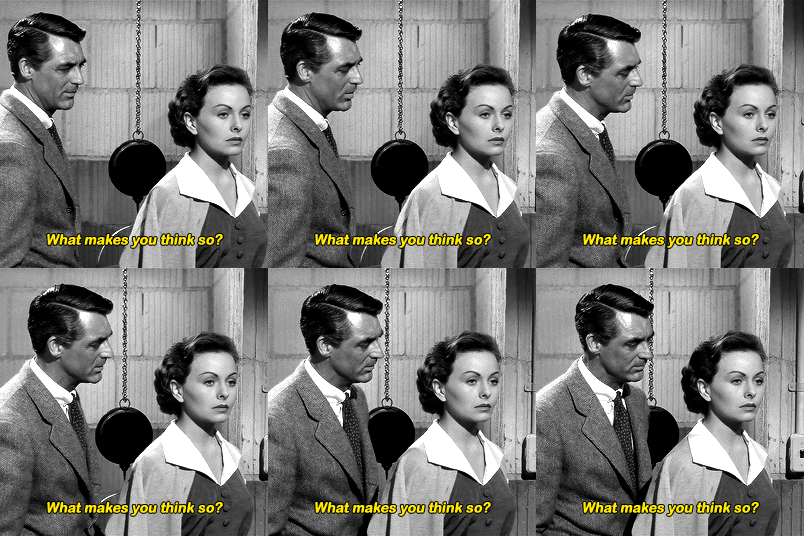
Primeiro, algumas menções honrosas: Dizem que é Pecado (1951), A Lenda dos Beijos Perdidos (1954), Um Corpo que Cai (1958).

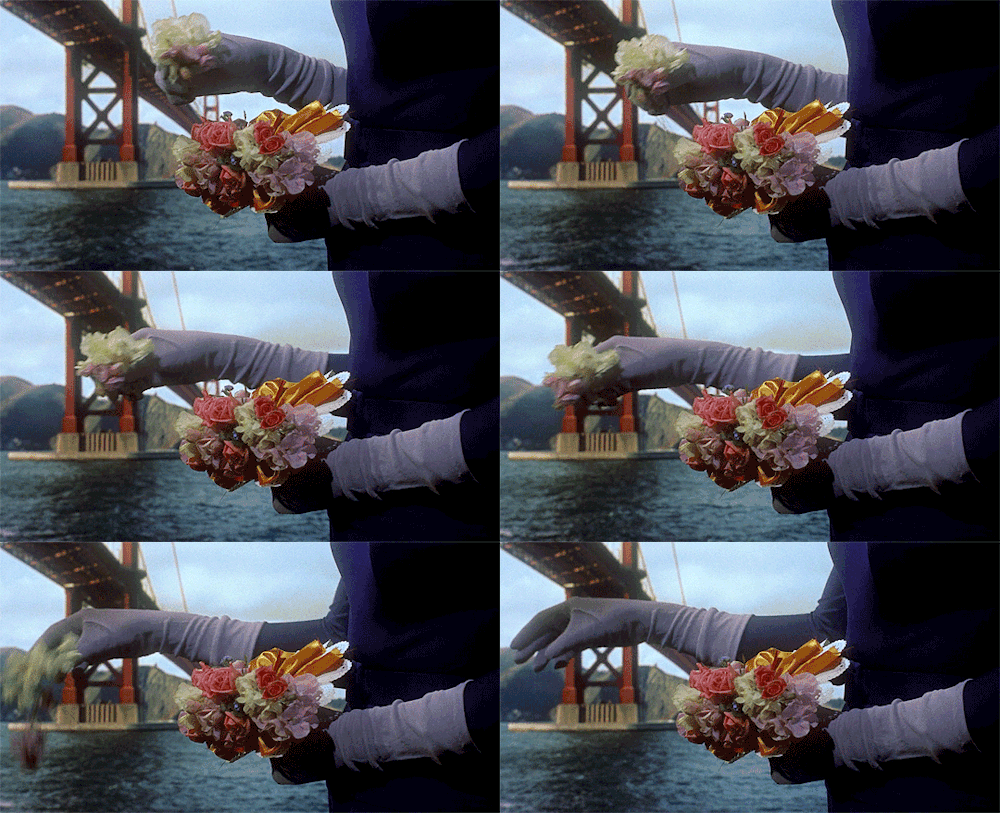
First, a few honorable mentions: People Will Talk (1951), Brigadoon (1954), Vertigo (1958).


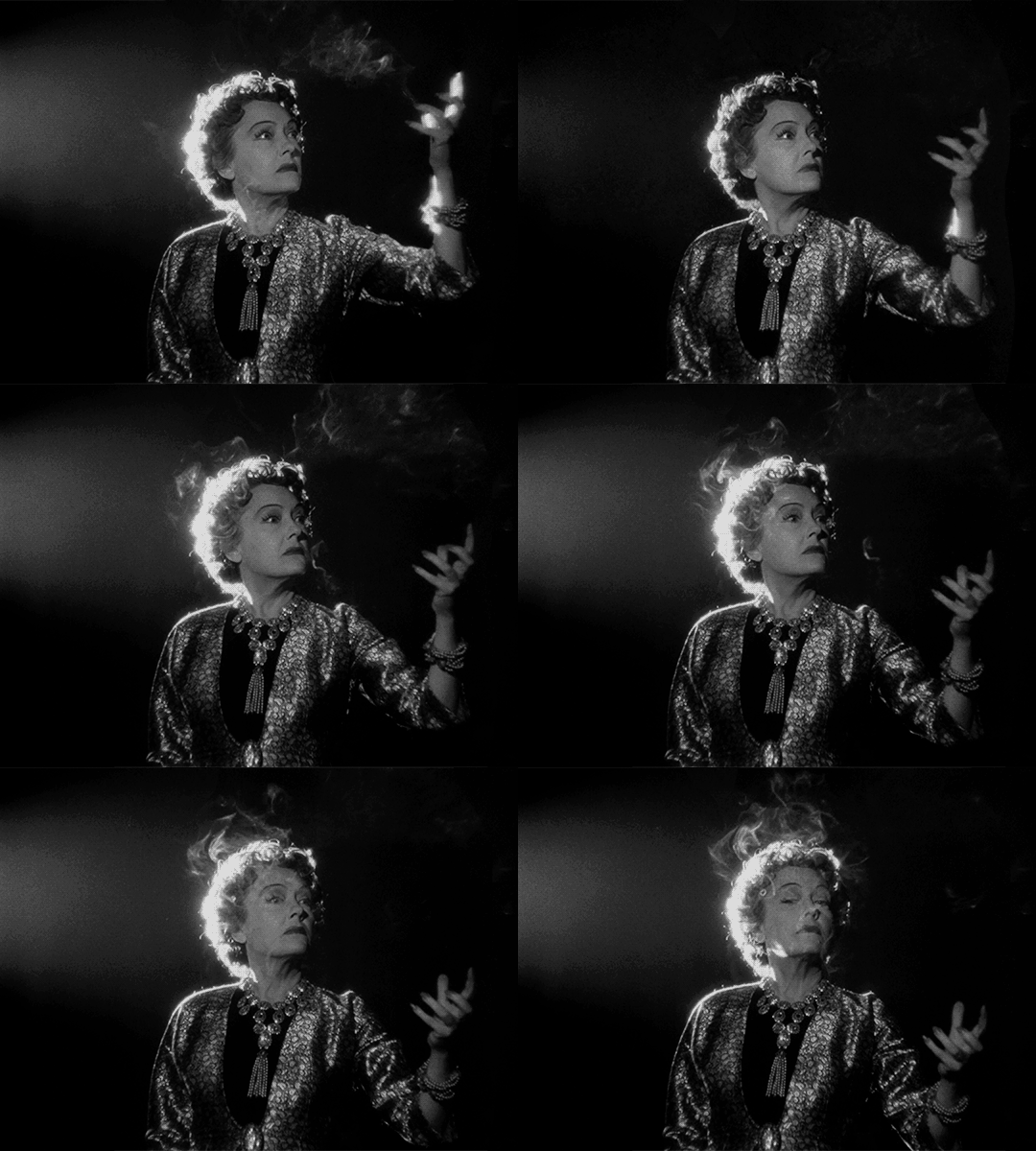
Crepúsculo dos Deuses (1950): Como uma pessoa muito racional, eu tenho um filme favorito e um filme que considero o melhor já feito. Meu filme favorito é “Nasce uma Estrela” (1937), enquanto o filme que eu considero o melhor é “Crepúsculo dos Deuses” - coincidentemente, ambos são filmes sobre filmes. Tudo em “Crepúsculo dos Deuses” é perfeito: o roteiro, as atuações (Gloria Swanson está brilhante), os cenários, a trilha sonora, as participações especiais. Há poucos filmes mais icônicos que “Crepúsculo dos Deuses”, e não há diretor tão versátil quanto Billy Wilder.

Sunset Boulevard (1950): As a very rational person, I have one favorite movie and one movie that I consider to be the best ever made. My favorite movie is “A Star is Born” (1937), while the film I consider the best is “Sunset Boulevard” - as a coincidence, both are movies about movies. Everything in “Sunset Boulevard” is perfect: the screenplay, the acting (Gloria Swanson is superb), the sets, the soundtrack, the cameos. There are few movies more iconic as “Sunset Boulevard”, and there is no director as versatile as Billy Wilder.


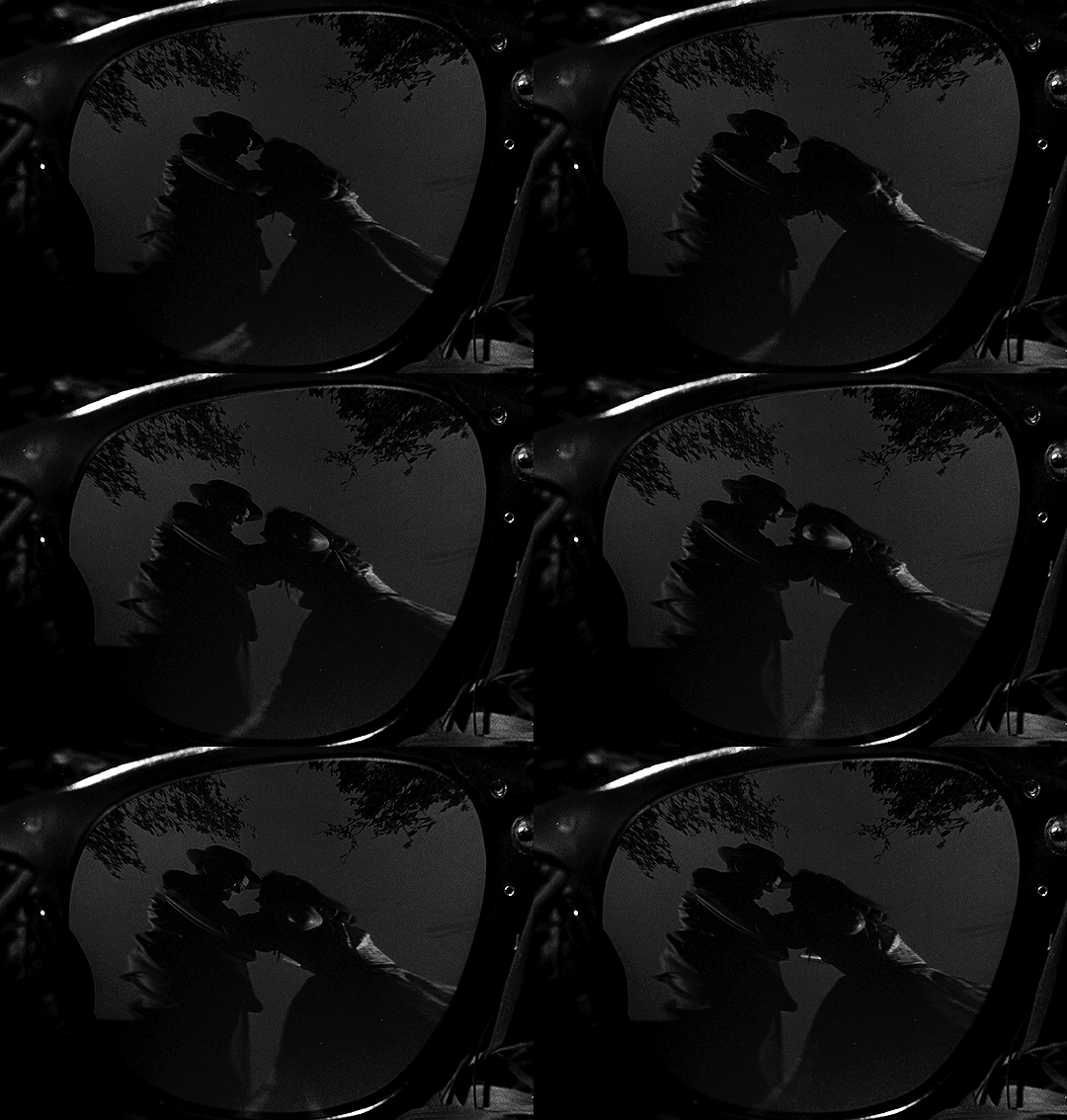
Pacto Sinistro (1950): Meu filme preferido de Hitchcock também é um filme perfeito. Começando com a maneira como os personagens principais se conhecem e terminando no clímax no carrossel, tudo é perfeito. Eu particularmente adoro duas sequências: uma em que um assassinato é refletido em um par de óculos, e a partida de tênis. Tudo neste filme é ótimo: a fotografia, o roteiro - baseado em um livro de Patricia Highsmith, o roteiro foi escrito por uma assistente de Ben Hecht chamada Czenzi Ormonde - e a performance eletrizante de Robert Walker.

Strangers on a Train (1951): My favorite Hitchcock film also happens to be a perfect film. From the way the two main characters meet until the climax in a merry-go-round, everything is perfect. I’m particularly fond of two sequences: the one in which a murder is seen reflected in a pair of glasses, and the tennis match. Everything in this film is great: the cinematography, the screenplay- based on a novel by Patricia Highsmith, the screenplay was written by Ben Hecht’s assistant, a woman named Czenzi Ormonde - and a chilling performance by Robert Walker.


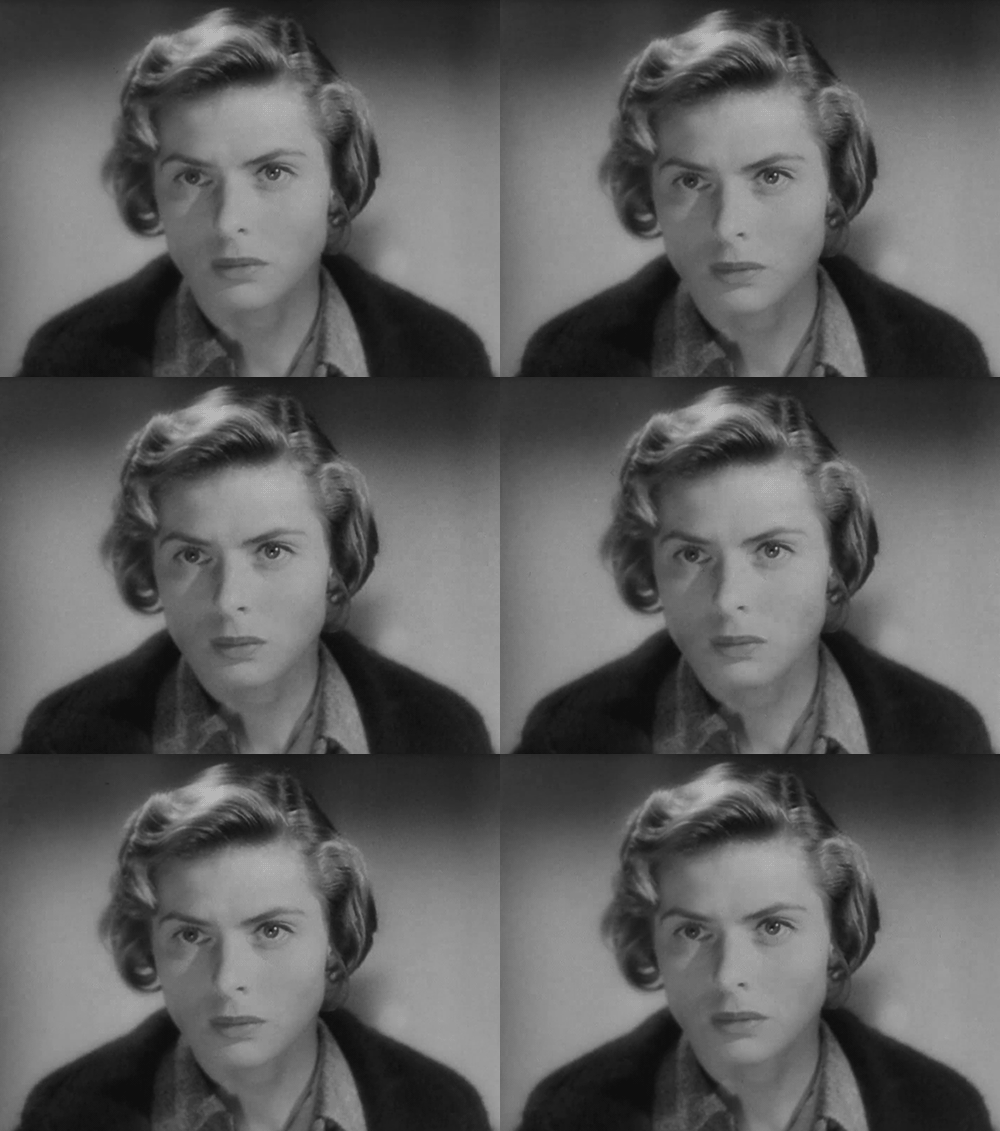
Europa ‘51 (1952): Dezenas de outros filmes italianos poderiam ser mencionados como melhores representantes do Neorrealismo Italiano, mas este foi o que mais me tocou - porque ele é tão atual. Ingrid Bergman protagoniza “Europa ‘51” como uma mulher que, ao perder seu filho, decide só fazer o bem, e é considerada louca pelos seus amigos da alta sociedade. Ela é alguém que começa a seguir os ensinamentos de Jesus - e, como acontece sempre, os cristãos decidem silenciá-la. Como alguém que estudou em um colégio de freitas, que vive em um país profundamente desigual e que tem um forte senso de justiça, eu fiquei muito mexida com este filme. Eu escrevi sobre “Europa ‘51” AQUI.

Europa ‘51 (1952): Dozens of other Italian films could be mentioned as more representative of the Italian Neorealism movement, but this was the one that spoke to me - because it is so timely. Ingrid Bergman stars in “Europa ‘51” as a woman who, after losing her son, decides only to do good, and is considered crazy by her high society friends. She is someone who starts to follow what Christ has taught us - and, as it always happens, Christians quickly decide to silence her. As a person who studied in a Catholic school as a child, who lives in a profoundly unequal country and who has a strong sense of justice, I was deeply moved by this film. I wrote about “Europa ‘51” HERE.


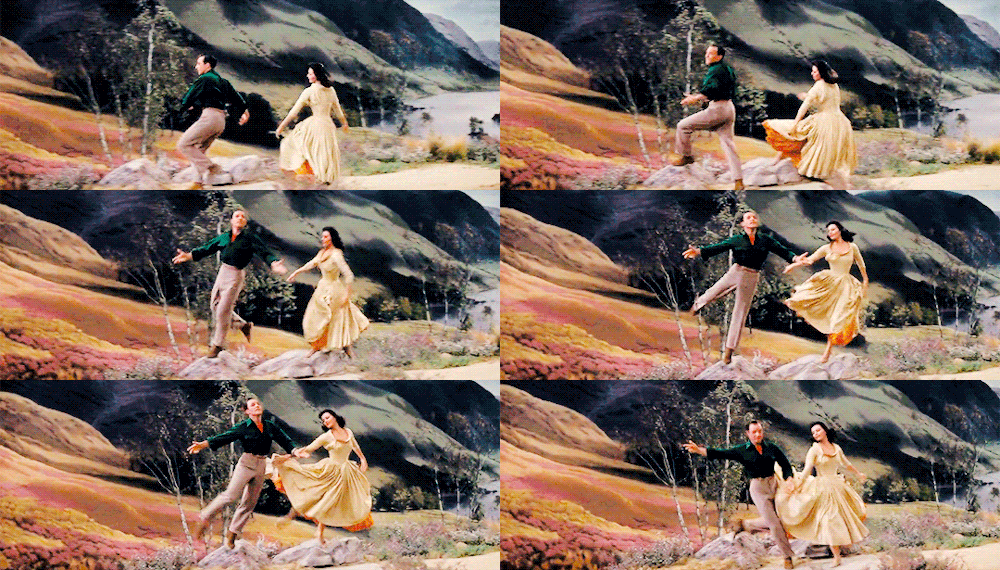
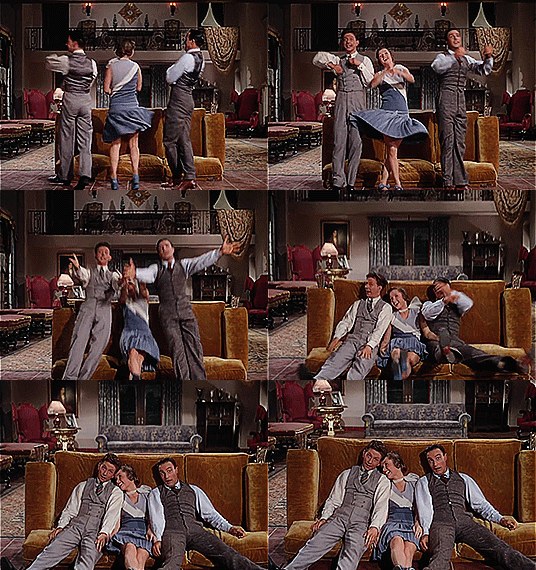
Cantando na Chuva (1952): Até eu começar a fazer esta lista, eu não havia percebido como 1952 foi um bom ano para o cinema - ou pelo menos para mim. Eu pensei em colocar “A Lenda dos Beijos Perdidos” (1954) como meu musical favorito na lista, mas eu estaria tentando enganar a mim mesma. “Cantando na Chuva” é um filme que me deixa feliz, e mais do que isso: ele é muito bem feito, com ótimas canções antigas, coreografias bacanas e até uma história coisa - algo que nem todos os musicais tinham. Eu já escrevi sobre meu amor por “Cantando na Chuva” AQUI.

Singin’ in the Rain (1952): Up until I started making this list, I hadn’t realized how 1952 was a good year for film - or at least for me. I thought about adding “Brigadoon” (1954) as my musical of choice to the list, but I’d be trying to deceive myself. “Singin’ in the Rain” is a film that makes me happy, and more than that: it’s beautifully done, with great vintage songs, nice choreography and even a smart storyline- something not all musicals had. I previously wrote about my love for “Singin’ in the Rain” HERE.


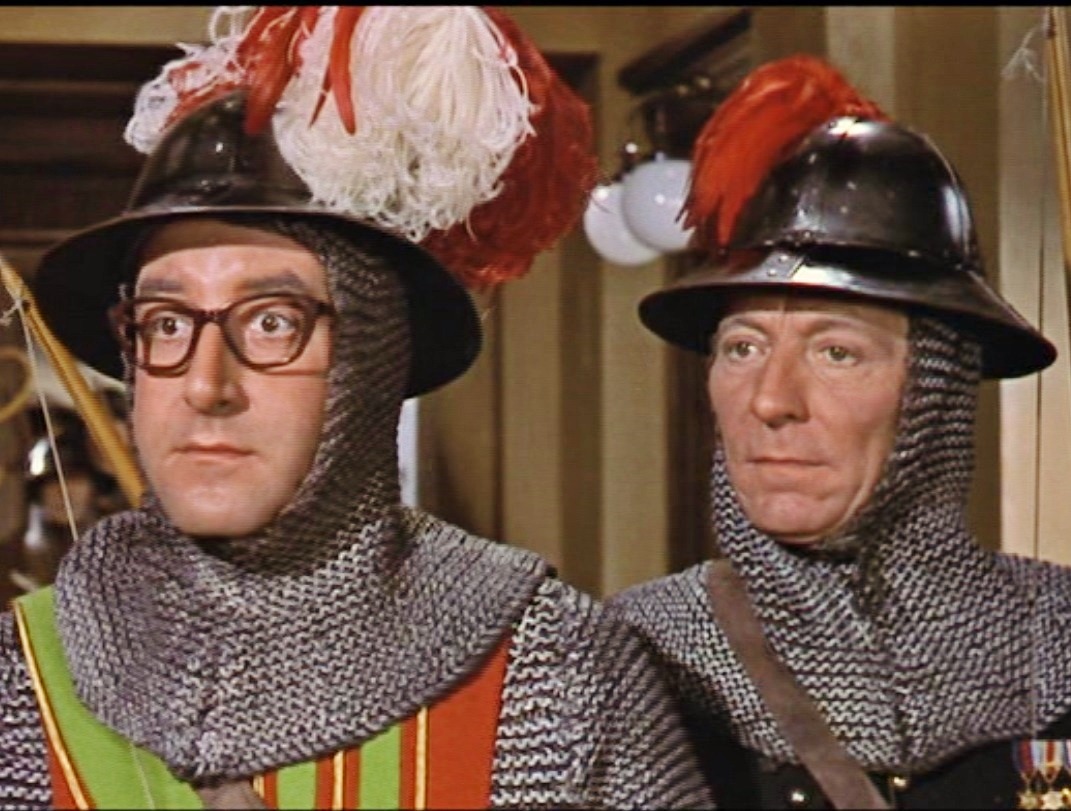
 O Rato que Ruge (1959): Quando tanto a cinéfila quanto a historiadora em mim apreciam um filme, você pode apostar que é uma película excelente. Esta comédia britânica lida com geopolítica ao contar a história de um pequeno país que decide invadir os EUA, declarar guerra, rapidamente perder a guerra e receber ajuda monetária. O problema é que eles ganham a guerra quando sequestram um cientista que possui uma bomba de hidrogênio. O melhor do filme é Peter Sellers interpretando três papéis: um soldado, um Primeiro-ministro... e uma Rainha.


The Mouse that Roared (1959): When both the movie nerd and the history nerd in me are pleased by a film, you can bet it is an outstanding production. This British comedy deals with geopolitics as it tells the story of a tiny country that decides to invade the US, declare war, quickly lose the war and then receive monetary help. The problem is that they win the war by kidnapping a scientist that has a hydrogen bomb. The best thing in this film is Peter Sellers playing three roles: a soldier, a Prime Minister... and a Queen.


This is my contribution to the “5 Favorite Films ofthe ‘50s” blogathon to celebrate National Classic Movie Day, hosted by Rick at Classic Film & TV Café.


Related Posts Plugin for WordPress, Blogger...