} Crítica Retrô: Billy Wilder

Tradutor / Translator / Traductor / Übersetzer / Traduttore / Traducteur / 翻訳者 / переводчик

Showing posts with label Billy Wilder. Show all posts

Thursday, April 16, 2026

Fedora (1978)


Algumas parcerias não apenas começam bem, mas também terminam bem. William Holden fez quatro filmes com Billy Wilder, incluindo aquele que deu ao ator seu único Oscar, e o último desta parceria foi “Fedora”, de 1978. Pouco elogiado e pouco visto, “Fedora” de muitas maneiras ecoa uma das obras-primas de Wilder.

Some partnerships not only start well, but also end well. William Holden worked in four films with Billy Wilder, including the film that gave the actor his only Oscar, and the last one in this partnership is 1978’s “Fedora”. Underrated and underseen, “Fedora” in many ways echoes one of Wilder’s masterpieces.

Fedora (Marthe Keller), a atriz de origem polonesa, está morta. Ela caiu ou se jogou em frente a um trem. Ela tinha entre 60 e 70 anos, dependendo da fonte. Uma das centenas de pessoas em seu funeral é o produtor de cinema independente Barry Detweiler (William Holden), que começa a nos contar uma história.

Fedora (Marthe Keller), the Polish-born actress, is dead. She either fell or jumped in front of a train. She was either 60 or 70, depending on the source. One of the hundreds of people at her funeral is independent movie producer Barry Detweiler (William Holden), who starts telling us a story.

O flashback nos leva a apenas duas semanas antes, na Grécia. Barry está lá para fazer negócios com Fedora, que vive reclusa no Mediterrâneo. Ela não quer recebê-lo em sua Villa, então ele segue o carro dela até arranjar uma brecha para falar com ela. Ela não o reconhece, então mais tarde no hotel ele escreve uma carta para refrescar a memória da atriz.

The flashback brings us to only two weeks before, in Greece. Barry is there to talk business with Fedora, who is living as a recluse at the Mediterranean. She doesn’t want to receive him in her Villa, so he follows her car until he gets a chance to talk to her. She doesn’t recognize him, so later at his hotel he writes a letter to refresh her memory. 

Estamos agora num flashback dentro de um flashback. O ano é 1947, o ápice do Sistema de Estúdio. Fedora já é uma estrela, enquanto Barry (agora interpretado por Stephen Collins) é apenas diretor assistente. Mesmo assim, eles passam a noite juntos. O flashback acaba aqui, é breve. Mas haverão outros.  

It’s now a flashback within a flashback. We’re in 1947, the apex of the Studio System. Fedora is already a star, while Barry (now played by Stephen Collins) is just second assistant director. Nevertheless, they spend the night together. The flashback ends here, it’s a brief one. But there will be others.

Fedora vive sob a influência da Condessa (Hildegard Knef), uma velha rica e excêntrica que abertamente condena a volta de Fedora às telas. Para ser mais precisa, a Condessa, uma empregada e o doutor Vando (José Ferrer) estão mantendo Fedora basicamente em cárcere privado.   

Fedora lives under the influence of The Countess (Hildegard Knef), a rich and eccentric old woman who openly disapproves when Fedora shows she’s eager for a comeback. To be more precise, the Countess, a maid and doctor Vando (José Ferrer) are keeping Fedora basically incarcerated.

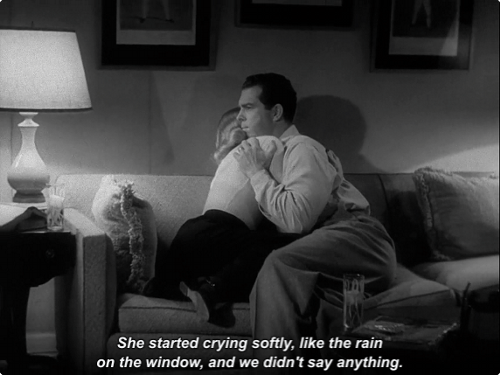
O doutor afirma que o diagnóstico de Fedora é paranoia. Ela apareceu depois de um colapso nervoso, quando ela tentou se matar porque amava um ator muito mais jovem, Michael York, e não era correspondida. Não era bem assim. Mas isso não é motivo para manter uma mulher numa camisa-de-força.

The doctor says the diagnosis for Fedora is paranoia. It appeared after a nervous breakdown, when she attempted suicide for loving a much younger actor, Michael York, and not being loved back. It was not exactly like this. But this is no reason to keep a woman in a straight jacket.

Numa conversa entre Fedora e Barry, ele diz a ela que a MGM vendeu seus estúdios e leiloou todas as peças, incluindo móveis onde ela fez amor para as câmeras com Robert Taylor. A MGM vinha diminuindo em tamanho e importância  desde o início dos anos 70 e o último filme rodado no seu famoso set foi o documentário “Era uma Vez em Hollywood” de 1974. 

In a talk between Fedora and Barry, he tells her that MGM sold the backlot and auctioned everything, including some furniture where she made love for the cameras with Robert Taylor. MGM had been downsizing since the early 1970s and the last movie shot in the famous backlot was the documentary “That’s Entertainment!” from 1974.

A trilha sonora ficou a cargo de Miklos Rozsa, que fez músicas grandiosas para filmes épicos mas também trabalhou em projetos “menores”. Para “Fedora”, sua trilha injeta suspense e inclusive aumenta o drama no incrível plot twist.

The soundtrack was by Miklos Rozsa, who made grand music for epic films but also worked on “smaller” projects. For “Fedora”, his soundtrack adds suspense and even enhances the drama in the amazing plot twist.

Eu tenho certeza de que você está pensando nisso e é verdade: é impossível assistir a “Fedora” e não se lembrar de e comparar com “Crepúsculo dos Deuses” (1950): Podemos comparar Fedora com Norma Desmond e com a atriz que interpreta Norma, Gloria Swanson. Swanson soube envelhecer longe das telas, mantendo-se dinâmica, escrevendo sua autobiografia e advogando pela nutrição saudável. Neste sentido, a reclusa Fedora não se parece em nada com ela e se assemelha mais a Greta Garbo. Na verdade, Garbo é mencionada em “Fedora”, pela Condessa que diz que Garbo fez Anna Karenina duas vezes, e Fedora não estaria interessada em fazer o mesmo papel. Outras atrizes do cinema clássico são mencionadas, como Joan Crawford, Monroe e Harlow.  

I’m sure you’re thinking this and it’s true: it’s impossible to watch “Fedora” and not remember and compare it with “Sunset Boulevard” (1950). We can compare Fedora to Norma Desmond and the actress who plays Norma, Gloria Swanson. Swanson knew how to get older out of the screens, remaining a dynamic force, writing her biography and advocating for healthy nutrition. In this sense, the recluse Fedora is nothing like her and more like Greta Garbo. In fact, Garbo is mentioned in “Fedora”, by the Countess who says Garbo did Anna Karenina twice, so Fedora wouldn’t be interested in a new version. Other classic film actresses are also mentioned, such as Joan Crawford, Monroe and Harlow.

“Fedora” é muito mais que um filme que acompanha “Crepúsculo dos Deuses”. É uma produção surpreendente, um comentário sobre a queda do Sistema de Estúdio e a busca pela juventude eterna. Billy Wilder faria mais um filme, mas “Fedora” foi uma maneira perfeita, ainda que agridoce, de terminar sua bem-sucedida parceria com o grande William Holden.

“Fedora” is much more than a companion piece to “Sunset Boulevard”. It’s a surprising movie, a comment on the fall of the Studio System and the search for eternal youth. Billy Wilder would make one more film, but “Fedora” was a perfect, yet bittersweet, way to end his successful partnership with the great William Holden.

This is my contribution to the 7th Golden Boy blogathon - a William Holden celebration, hosted by Virginie and Emily at The Wonderful World of Cinema and The Flapper Dame.

Wednesday, June 22, 2022

Lost in Translation: odd classic film titles in Portuguese – Billy Wilder edition


Ah, Billy Wilder. A master, a genius, a legend. He was born in Austria-Hungary, where it is Poland now, and wanted to be a lawyer, but found everlasting fame working behind the scenes in Hollywood. Coming from Berlin to the US in 1933, without knowing how to speak English, Wilder and his roommate, Peter Lorre, ended up making it big in Hollywood. Wilder started as a screenwriter and later became a director. A fantastic director: he rarely made a bad movie. To honor him in the “Lost in Translation” series, I present some curious titles his films received in Brazil. The titles not mentioned in this article were translated verbatim.

“That Certain Age” (1938) became “Dangerous Age” (Idade Perigosa”)

“What a Life” (1939) received the title “Life Begins at 14” (“A Vida Começa aos 14”)

“Hold Back the Dawn” (1942) is here “The Golden Door” (“A Porta de Ouro”)

“The Major and the Minor” (1942) was released as “The Incredible Suzana” (“A Incrível Suzana”)

“Double Indemnity” (1944) is here “Blood Pact” (“Pacto de Sangue”)

“The Lost Weekend” (1945) became “Human Rag” (“Farrapo Humano”)

“The Bishop’s Wife” (1947) received the title “An Angel Fell from Heaven” (“Um Anjo Caiu do Céu”)

“Sunset Boulevard” (1950) is known as “Dawn of the Gods” (“Crepúsculo dos Deuses”)

“Ace in the Hole” (1951) is here “The Mountain of the 7 Vultures” (“A Montanha dos Sete Abutres”)

“Stalag 17” (1953) received the title “Hell Number 17” (“O Inferno Nº 17”)

“The Seven-Year Itch” (1955) is known as “Sin Lives Next Door” (“O Pecado Mora ao Lado”)

“The Spirit of St Louis” (1957) became “Lonely Eagle” (“Águia Solitária”)

“Some Like It Hot” (1959) is known as “The Hotter, the Better” (“Quanto Mais Quente Melhor”)

“The Apartment” (1960) was retitled as “If my Apartment Could Talk” (“Se meu Apartmento Falasse”)

“One, Two, Three” (1961) is here “Cupid has no Flag” (“Cupido não tem Bandeira”)

“The Fortune Cookie” (1966) was retitled as “A Blonde for a Million” (“Uma Loura por um Milhão”)

Sunday, February 21, 2021

Lost in Translation: odd classic film titles in Portuguese – Part 1


I was talking with some fellow bloggers about classic movies when a thought crossed my brain: I had to memorize the titles of classic films at least twice, once in their original English and once as they were translated in Brazilian Portuguese – and I'm not considering the times I get to know the titles in Spanish or in Portuguese from Portugal, which is a different trip! As I kept thinking about that I was reminded how this is a blog with a global audience, and you guys certainly would get a kick out of some odd translations of classic film titles here in Brazil. I chose 12 of my favorite, most curious oddities to begin with:

Alice Adams” (1935) became “The Woman Who Knew How to Love”

The Awful Truth” (1937) is known as “Cupid is a Stubborn Brat”

Bringing Up Baby” (1938) received as title a slang that means “Naughty” or “Mischievous”

The Philadelphia Story” (1940) became “Wedding of Scandal


Mr and Mrs Smith” (1941) was exhibited as “A Crazy Couple” (a slang was also used here)

Sullivan's Travels” (1941) went on as “Human Contrasts”

Lifeboat” (1944) was too simple, so it became “A Boat and Nine Destinies”

The Heiress” (1949) was exhibited as “Too Late”

People Will Talk” (1952) went on as “They Say It's a Sin”

An Affair to Remember” (1957) is remembered here as “Too Late to Forget”

North by Northwest” (1959) got renamed as “International Intrigue”

One, Two, Three” (1960), a favorite of mine, got the clever title “Cupid has no Flag”

I hope you liked these and soon I'll come back with Part 2!

Sunday, September 2, 2018

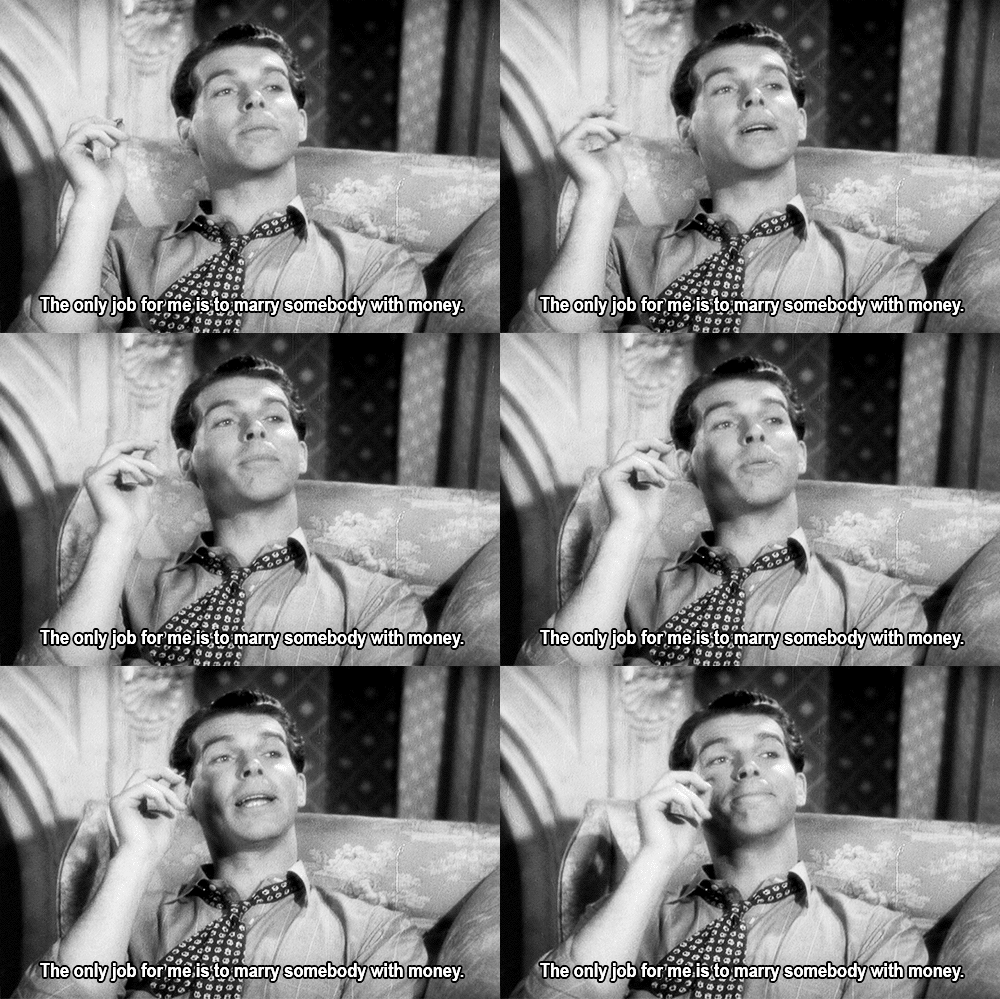
Fred MacMurray, Billy Wilder e a luxúria


Fred MacMurray, Billy Wilder and lust


Quer você queira ou não, um ator ou atriz desenvolve uma persona – especialmente nos dias do sistema de estúdio – para ser facilmente reconhecido pelo público e também para que o estúdio o utilize em papéis estereotipados. Isso aconteceu com Fred MacMurray, mais conhecido por interpretar caras bacanas pais de família, pais que tinham resposta para tudo e que poderiam ser ao mesmo tempo um pouco atrapalhados e muito sábios. Mas ele não fazia estes papéis quando trabalhava com Billy Wilder.

Whether you want it or not, a performer usually develops a persona – especially in the Studio System days – in order to be easily recognizable by the public and also typecasted by the studio. This happened to Fred MacMurray, better known as a lovely guy, a family man, a dad who knew it all and who could be at the same time a bit clumsy and very wise. But he didn't play by these rules when he was working with Billy Wilder.
 
1935
Billy Wilder desafiou os limites de MacMurray e tirou tudo de pior que existe na mente humana para encher seus personagens de ambição e luxúria – e, assim, Wilder dirigiu MacMurray nas duas melhores performances da carreira do ator, em que ele fez papéis muito diferentes dos habituais e, ironicamente, estas são as performances pelas quais MacMurray é mais conhecido hoje.

Billy Wilder went wild (LOL) with MacMurray, and took the worst he could have in his mind in order to infuse his characters with ambition and lust – and, by doing this, Wilder directed MacMurray in the two best performances of his career, in which he played against type and, ironically, these are the performances that today he has the biggest chance to be recognized for.


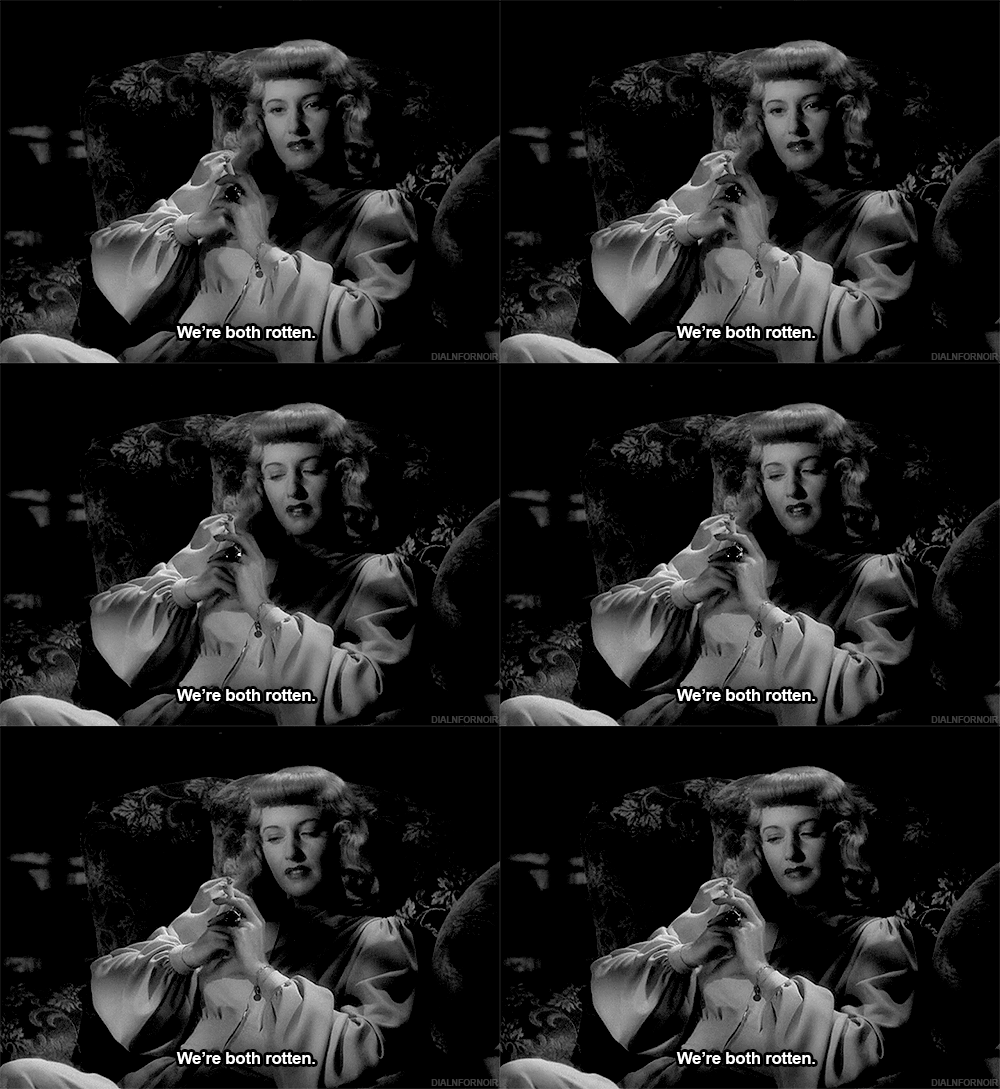
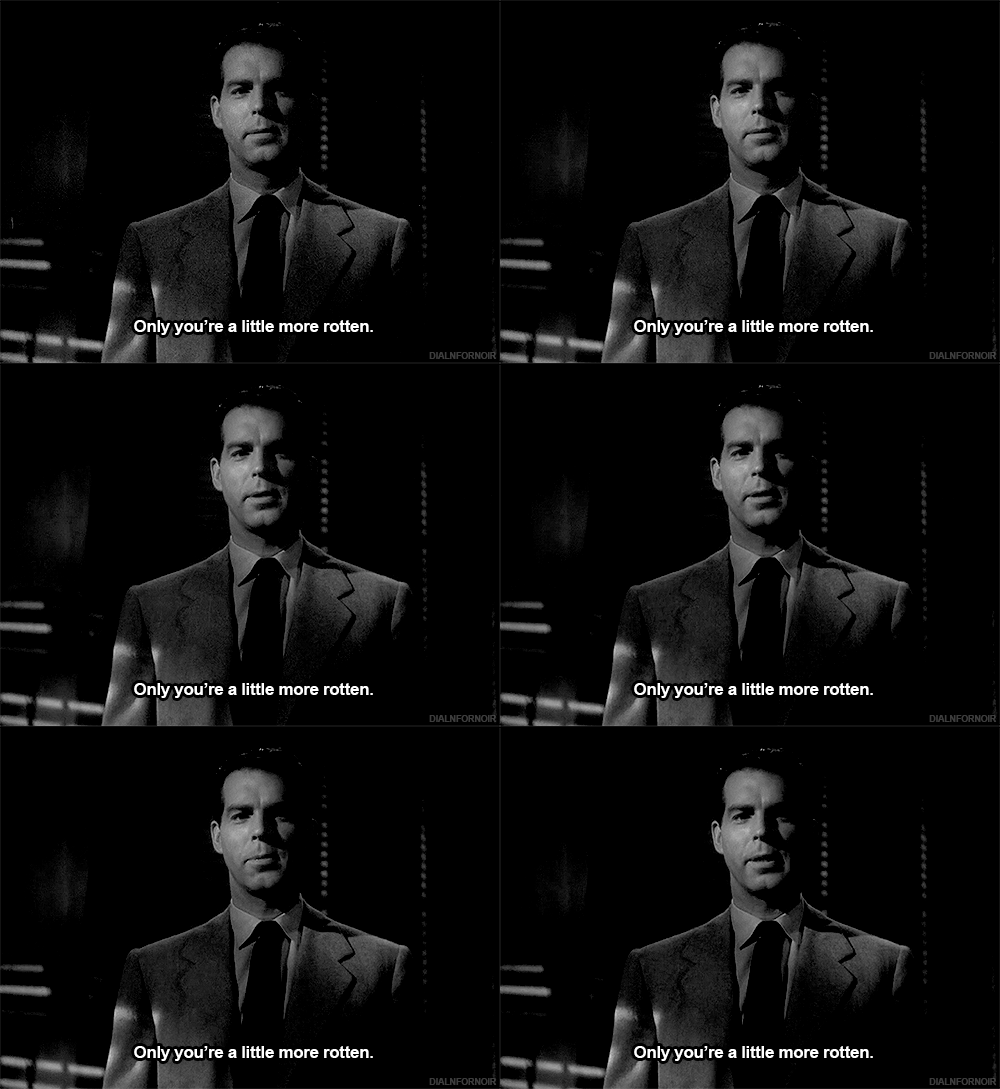
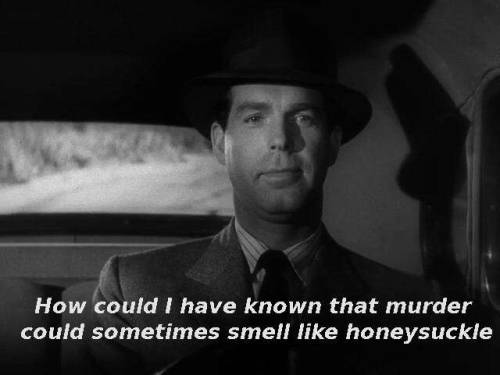
“Pacto de Sangue” (1944) é um dos melhores filmes noir de todos os tempos. Nele, Fred MacMurray é Walter Neff, o perfeito panaca que é seduzido pela femme fatale Phyllis Dietrichson (Barbara Stanwyck) e convencido a fazer parte do plano para matar o marido dela e ficar com o dinheiro do seguro. Obviamente, Walter não é um completo imbecil. Ele tem boa memória e boa atenção aos detalhes, habilidades que são importantes para o crime.

“Double Indemnity” (1944) is one of the best film noir of all time. In it, Fred MacMurray is Walter Neff, the perfect stupid man who is dragged down by femme fatale Phyllis Dietrichson (Barbara Stanwyck) and convinced to take part in her plan to kill her husband and get the insurance money. Of course, Walter is not totally idiot. He has a good memory and pays a lot of attention to detail, skills that are important for the crime.


Walter é movido por luxúria, por seu desejo sexual por Phyllis e periodicamente impedido de continuar por causa de sua amizade com Barton Keyes (Edward G. Robinson) – ou talvez haja também luxúria envolvida, porque algumas teorias apontam para um subtexto homossexual no filme. Só depende da maneira como cada pessoa interpreta o filme.

Walter is moved by lust, by his sexual desire for Phyllis and periodically stopped by his friendship with Barton Keyes (Edward G. Robinson) – or maybe there is also lust involved here, because some theories point at a gay subtext in the movie. It only depends on how each person interprets the movie.


Em 1943, Barbara Stanwyck era a atriz mais bem paga de Hollywood, e Fred MacMurray era o ator mais bem pago. Entretanto, foi coincidência que eles tenham se juntado para fazer “Pacto de Sangue”. Ambos estavam relutantes no início. Stanwyck foi facilmente convencida por Wilder a aceitar o papel, quando ele disse a ela para ser ousada, mas a história com MacMurray foi outra. Walter Neff era um anti-herói, e o papel já havia sido recusado por grandes atores como James Cagney, Spencer Tracy e Alan Ladd. Até o próprio MacMurray recusou o papel, dizendo que ele não era capaz de fazê-lo, mas Wilder insistiu, dia após dia, até que o ator se rendeu. No começo, MacMurray disse para Wilder: “Você está cometendo o maior erro da sua vida!”, e no fim, confessou: “Eu jamais sonharia que aquele seria o melhor filme que eu faria”.

In 1943, Barbara Stanwyck was the highest paid actress in Hollywood and Fred MacMurray, the highest-paid actor. It was, however, a coincidence that they ended up doing “Double Indemnity”. Both were reluctant at first. Stanwyck was easily convinced by Wilder, who told her to be fearless, but it was another thing with MacMurray. Walter Neff was an anti-hero and the role was refused by A-listers like James Cagney, Spencer Tracy and Alan Ladd. Even MacMurray himself turned down the role, saying he couldn’t do it, but Wilder insisted, day after day, until the actor compromised. At first, MacMurray said to Wilder: “You’re making the mistake of your life!”, and in end, he confessed: “I never dreamed it would be the best picture I ever made”.


MacMurray voltou a trabalhar com Wilder 16 anos depois. Na época, ele já era um favorito na Disney, tendo feito alguns filmes fofos para a família no estúdio do Mickey. O ano era 1960 e o filme era “Se Meu Apartamento Falasse”. Fred MacMurray interpretava Sheldrake, o chefe de C.C. Baxter (Jack Lemmon). Sheldrake usa o apartamento de seu empregado para ter encontros sexuais com outras mulheres sem correr o risco de ser descoberto pela esposa. A presa atual é Fran Kubelik (Shirley MacLaine), que é ascensorista no prédio de Sheldrake. Mais uma vez, o personagem de MacMurray é movido pela luxúria.

MacMurray reteamed with Wilder 16 years later. By then, MacMurray was already a Disney favorite, having made some cute family flicks for the Mickey Mouse studio. The year was 1960 and the film was “The Apartment”. Fred MacMurray played Sheldrake, C.C. Baxter's (Jack Lemmon) boss. Sheldrake uses his employee's apartment to have sexual encounters with other women far from his wife. The current prey is Fran Kubelik (Shirley MacLaine), who is an elevator operator at Sheldrake's building. Once again, MacMurray's character is drove by lust.


Sheldrake é simplesmente nojento – provavelmente o personagem menos simpático que MacMurray interpretou em toda sua carreira. Além de trair a esposa e enganar a senhorita Kubelik, ele também cria uma situação difícil para Baxter. E Sheldrake simplesmente não se importa. Ele quer ter prazer e evitar problemas. Quando a senhorita Kubelik para de lhe proporcionar prazer e se torna um problema, ele simplesmente a dispensa, e não se importa se isso for colocar a vida dela em perigo.

Sheldrake is simply disgusting – probably the least likeable character MacMurray ever played. Besides cheating on his wife and making empty promises to Miss Kubelik, he also creates a difficult situation for Baxter. And Sheldrake simply doesn’t care. He wants to have pleasure and avoid problems. When Miss Kubelik stops giving him pleasure and becomes a problem, he simply dumps her, and doesn’t even care if this puts her life in danger.


Convenhamos: se refletirmos sobre a maioria dos outros personagens de MacMurray, nos perguntamos como eles podem sequer transar. Quer dizer, em “Bon Voyage, Enfim Paris!”, ele tem dois filhos, mas é tão ingênuo e atrapalhado que se perde no esgoto parisiense. Em “Quando o Coração não Envelhece” (1967), ele é um pai trapalhão que tem um jacaré de estimação chamado George. Em outros filmes da Disney, como “O Fantástico Super-Homem” (1961) e “Nunca é Tarde para Amar” (1966), ele começa o filme como um cara solteiro, e depois de um namoro atrapalhado e fofo, acaba casado. O MacMurray da Disney não conhece luxúria – por isso ele é aceito pela Disney, e por isso ele não é tão interessante quanto o MacMurray de Billy Wilder.

Let's face it: if we think about most of MacMurray's characters, we ask ourselves how they could even get laid. I mean, in “Bon Voyage” (1962), he has two children, but is so naïve and absent-minded that he gets lost in the Parisian sewer. In “The Happiest Millionaire” (1967), he is a goofy father who has a pet alligator called George. In other Disney films, like “The Absent-Minded Professor” (1961) and “Follow Me, Boys!” (1966), he starts the movie as a single man, and after a sweet but clumsy dating process, he ends up married. The Disney MacMurray has no lust – that's why he is accepted by Disney, and that's why he is not as interesting as the Billy Wilder MacMurray.
 
1967
Billy Wilder e Fred MacMurray poderiam ter feito outro filme juntos. O ator foi um dos nomes considerado para o papel de Joe Gillis em “Crepúsculo dos Deuses” (1950), mas todos nós sabemos que William Holden foi escalado em seu lugar. Gillis é outro personagem que se deixa levar pela luxúria, e eu penso que MacMurray teria sido um ótimo Gillis. Mesmo sem este filme na parceria, nós não podemos negar que MacMurray nunca esteve tão bem quanto ao lado de Billy Wilder.

Billy Wilder and Fred MacMurray could have done another film together. The actor was considered for the role of Joe Gillis in “Sunset Boulevard” (1950), but we all know William Holden was cast instead. Gillis is another character very much driven by lust, and I imagine MacMurray would have played a great Gillis. Even without this movie in their partnership, we can’t deny that MacMurray did his best when he went a little Wilder.  

This is my contribution to the Fred MacMurray blogathon, hosted by Laura at Phyllis Loves Classic Movies.

Tuesday, July 3, 2018

A Porta de Ouro (1941) / Hold Back the Dawn (1941)


Todo mundo merece um lugar ao sol? Não sei ao certo, mas todo mundo quer um lugar ao sol. E geralmente a busca por este lugar cheio de alegria e satisfação envolve a migração. E o que acontece quando os imigrantes são parados no meio do caminho? Quando eles são proibidos de entrar no lugar que escolheram como sua nova casa? Você pode ligar a TV e encontrar respostas para estas questões agora mesmo, ou você pode ver “A Porta de Ouro”, um filme feito há mais de 75 anos.

Does everybody deserve a place in the sun? I’m not sure, but everybody wants a place in the sun. And often the pursuit of this place of happiness and fulfillment demands migration. And what happens when migrants are stopped midway their destiny? When they are forbidden to enter the place they chose as their new home? You could turn the TV and find answers for these questions right now, or you could watch “Hold Back the Dawn”, a film made over 75 years ago.
Georges Iscovescu (Charles Boyer) é um romeno que teve um probleminha na Europa e decidiu migrar para os EUA. Ele chega a uma escaldante cidade mexicana na fronteira, e descobre que, dos 150 mil imigrantes que o país deixava então entrar todos os anos, havia uma cota pequena para os romenos – e ele teria de esperar entre 5 e 8 anos para finalmente conseguir entrar no país legalmente. Por isso, ele e outros imigrantes de diversas nacionalidades ficam em um hotel até terem os documentos. O lugar tem um nome sugestivo: Hotel Esperanza.

Georges Iscovescu (Charles Boyer) is a Rumanian who had a little problem in Europe and decided to migrate to the United States. He reaches a hot Mexican city in the border, and finds out that, among the 150 thousand immigrants the US let in every year, there is only a very small quota for Rumanians – and he must wait from 5 to 8 years to finally be able to get in the US legally. So, he and other immigrants from several nationalities stay in a hotel until their visa is ready. The place has a suggestive name: Hotel Esperanza (Hope Hotel).
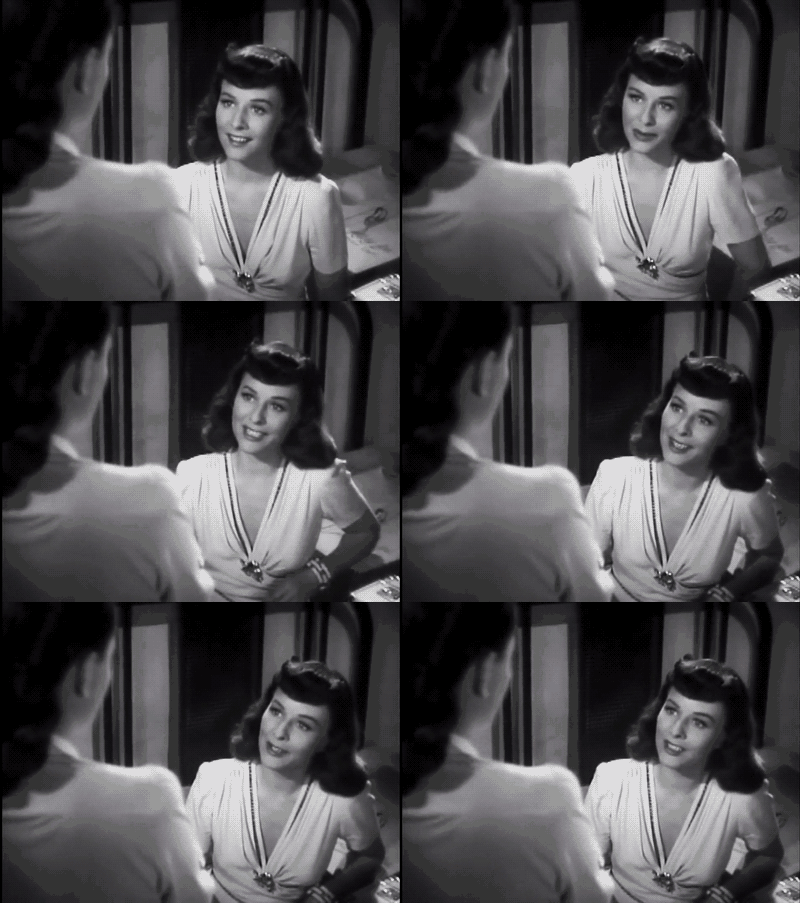
Mas a esperança não é a última que morre ali. Quando Georges chega ao hotel, um imigrante alemão havia se cansado de esperar e comete suicídio. No hotel, Georges encontra uma velha conhecida, Anita (Paulette Goddard), que lhe dá uma dica: é mais fácil e rápido ser admitido nos EUA se você se casar com uma norte-americana.

But hope is not the last one left standing there. When Georges arrives at Hotel Esperanza, a German immigrant has got tired of waiting and committed suicide. At the hotel Georges finds an old acquaintance, Anita (Paulette Goddard), who gives him a tip: it’s much easier and quicker to be admitted to the US if you marry an American.
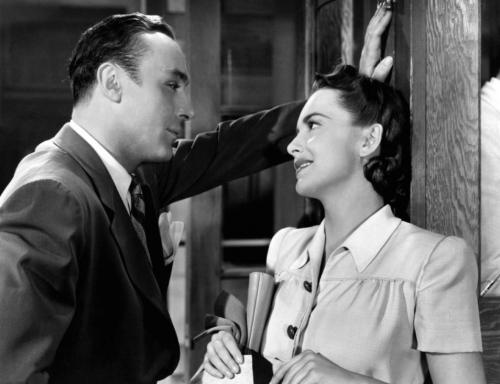
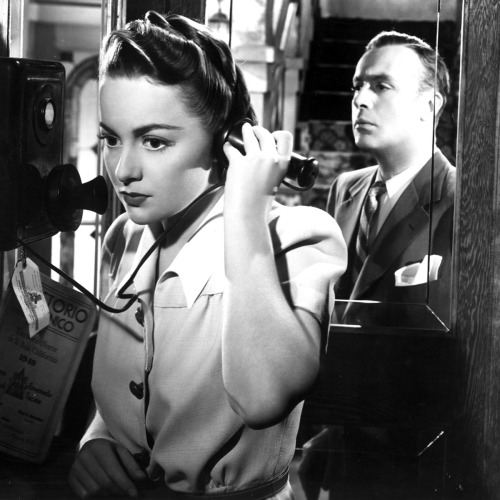
Então, Georges começa a paquerar todas as norte-americanas que ele encontra. A primeira delas acaba sendo uma mulher casada, mas a segunda norte-americana que ele encontra é Emmy (Olivia de Havilland), uma professora que levou seus aluninhos bagunceiros para uma excursão no México durante o feriado de 4 de julho – uma atividade pedagógica que desafia a lógica, eu sei. Georges é charmoso e diz coisas lindas para ela, e o plano funciona: no dia seguinte, eles estão casados. O plano de Georges consistia, desde o começo, em se casar com Emmy, ser aceito nos EUA – escapando assim da vigilância do inspetor Hammock (Walter Abel) – e depois pedir a anulação do casamento e viver livremente nos EUA com Anita.

So, Georges starts hitting on all American women he sees. The first one happens to be already married, but the second American woman he finds is Emmy (Olivia de Havilland), a schoolteacher vacationing with her young and loud students in Mexico for the 4th of July holiday – something that defies the logic, I know. Georges is charming and says beautiful things to her, and the plan works: on the following day, they’re married. Georges’s plan has been, all along, to marry Emmy, be accepted in the US – thus escaping the vigilance of Inspector Hammock (Walter Abel) – then ask for an annulment and live freely there with Anita.
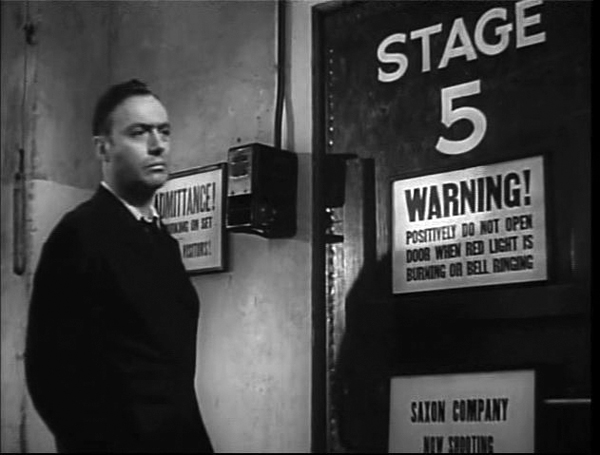
Há duas boas surpresas em “A Porta de Ouro”. Uma é a maneira como o filme começa: Georges está fugindo e entra em um estúdio de cinema, onde ele conta toda sua história de imigrante e falso amante para um diretor chamado Dwight Saxon (o próprio diretor do filme, Mitchell Leisen). O senhor Saxon estava filmando uma cena com Veronica Lake, e quando ele liberou a equipe, pôde finalmente ouvir a história de Georges. A outra boa surpresa é a lua de mel de Georges e Emmy em uma vila mexicana, onde eles participam de uma cerimônia religiosa. Não há nenhum estereótipo nesta parte do filme!

There are two nice surprises in “Hold Back the Dawn”. One is the way it starts: Georges is on the run and enters a film studio, where he tells his whole story as an immigrant and fake lover to a director called Dwight Saxon (director Mitchell Leisen himself). Mr. Saxon was filming a scene with Veronica Lake, and when he dismissed the team he was able to listen to Georges’s story. The other nice surprise is Georges’s and Emmy’s honeymoon in a Mexican villa, where they take part in a religious ceremony. There are no ugly stereotypes there!
Foi uma surpresa incrível e uma coincidência assustadora eu ter escolhido este filme para ver exatamente quando acontece um episódio que não pode ser considerado uma crise de imigração, mas um crime humanitário. Eu tento fugir da política, mas ela me persegue! Por falar em perseguir algo – um sonho - , em uma cena emblemática, um professor estrangeiro, no almoço de 4 de julho, recita para um oficial da imigração o poema na base na Estátua da Liberdade – um texto que prega valores que muitos americanos não apenas esqueceram, mas nos quais nunca sequer acreditaram.

It was an incredible surprise and a chilling coincidence that I chose to watch this movie exactly in the middle of an episode that can't be considered an immigration crisis, but a humanitarian crime. I try to stay away from politics, but they go after me! And talking about going after something, in an emblematic scene, a foreign professor, on the 4th of July lunch, recites to an immigration officer the poem on the basis of the Statue of Liberty – a text that shows values that many Americans not only have forgotten, but have never believed in the first place.
Um momento ruim aqui: Emmy fala dos EUA como a tão divulgada “terra de oportunidades” e compara o país com um lago que deve receber sempre novas correntezas para não ficar parado. Georges comenta: “o seu povo está construindo diques bem altos para parar estas correntezas”. A resposta dela? “Só para deixar o LIXO de fora”. Meu Deus. Isso poderia ter sido dito por um ultraconservador ontem mesmo.

A bad moment here: Emmy talks about the US as the so-called “land of opportunities” and compares the country to a lake that must keep receiving new streams to never go stank. Georges comments: “your people are building pretty high damps to stop these streams”. Her answer? “Just to keep out the SCUM”. Oh my God. This could have been said by an ultraconservative yesterday.
Não nos esqueçamos de que os roteiristas eram Charles Brackett e Billy Wilder – e Wilder era um imigrante, assim como as estrelas Charles Boyer (francês) e Olivia de Havilland (nascida no Japão). A maioria dos coadjuvantes também eram imigrantes, e formaram um grupo muito interessante que merecia muito mais destaque no filme.

Let's not forget that the screenwriters were Charles Brackett and Billy Wilder – and Wilder was an immigrant. So were the stars Charles Boyer (French) and Olivia de Havilland (born in Japan). Most of the supporting cast was also made of immigrants, and they were a very interesting group that deserved a lot more screen time.
Vamos dar uma olhada nestes personagens incríveis que esperam por seus vistos no Hotel Esperanza. Há o casal Kurz, Berta (Rosemary DeCamp) e Josef (Eric Feldary, vindo da antiga Áustria-Hungria). Eles esperam um bebê, e o sonho deles é que o bebê possa nascer sendo um cidadão norte-americano. Bonbois (interpretado por Curt Bois, um ator alemão que fez seu primeiro filme em 1908 e o último em 1988) é um nervoso cabeleireiro francês que serve de alívio cômico. Há também o porfessor Van Den Luecken (o ator belga Victor Francen) e suas duas filhas, Christine (Micheline Cheirel) e Anni (Madeleine Lebeau). Ambas eram atrizes francesas – e Madeleine é parte importante da icônica cena da Marselhesa em “Casablanca” (1942).

Let’s take a look at these amazing characters waiting for their visas at the Hotel Esperanza. There is the Kurz couple, Berta (Rosemary DeCamp) and Josef (Eric Feldary, from former Austria-Hungary). They are expecting a baby, and dream that him or her can be born an American citizen. Bonbois (played by Curt Bois, a German actor who made his first film in 1908 and his last in 1988) is a nervous French coiffeur who serves as the comic relief. There is also professor Van Den Luecken (Belgian actor Victor Francen) and his two daughters, Christine (Micheline Cheirel) and Anni (Madeleine Lebeau). Both actresses were French – and Madeleine is an important part of the iconic Marsellaise scene from “Casablanca” (1942).
Curt Bois in "Casablanca"
Madeleine LeBeau
Boyer é suave e charmoso como sempre. Olivia é adorável como sempre, tendo de ser ingênua a maior parte do tempo. Paulette Goddard está bem como uma femme fatale da fronteira. Mas os reais destaques são os imigrantes desesperados do hotel. Eles são a prova cabal e tangível de que a diversidade é o tempero da vida – e a melhor coisa deste filme.

Boyer is suave and charming as always. Olivia is lovely as always, having to be naïve most of the time. Paulette Goddard is good as a femme fatale of the border. But the true MVPs are the desperate migrants in the hotel. They are the real, touchable proof that diversity is the spice of life – and the best thing in this film.

This is my contribution to the third annual Olivia de Havilland blogathon, hosted by Laura and Crystal at Phyllis Loves Classic Movies and In the Good Old Days ofClassic Hollywood.


Related Posts Plugin for WordPress, Blogger...