} Crítica Retrô: Cantando na Chuva

Tradutor / Translator / Traductor / Übersetzer / Traduttore / Traducteur / 翻訳者 / переводчик

Showing posts with label Cantando na Chuva. Show all posts

Saturday, July 9, 2022

Cantando na Chuva: a cobertura de um clássico na imprensa brasileira


Singin’ in the Rain: the coverage of a classic in the Brazilian press

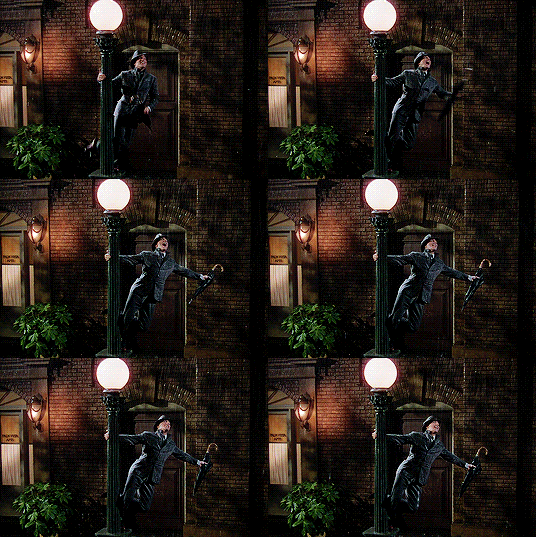
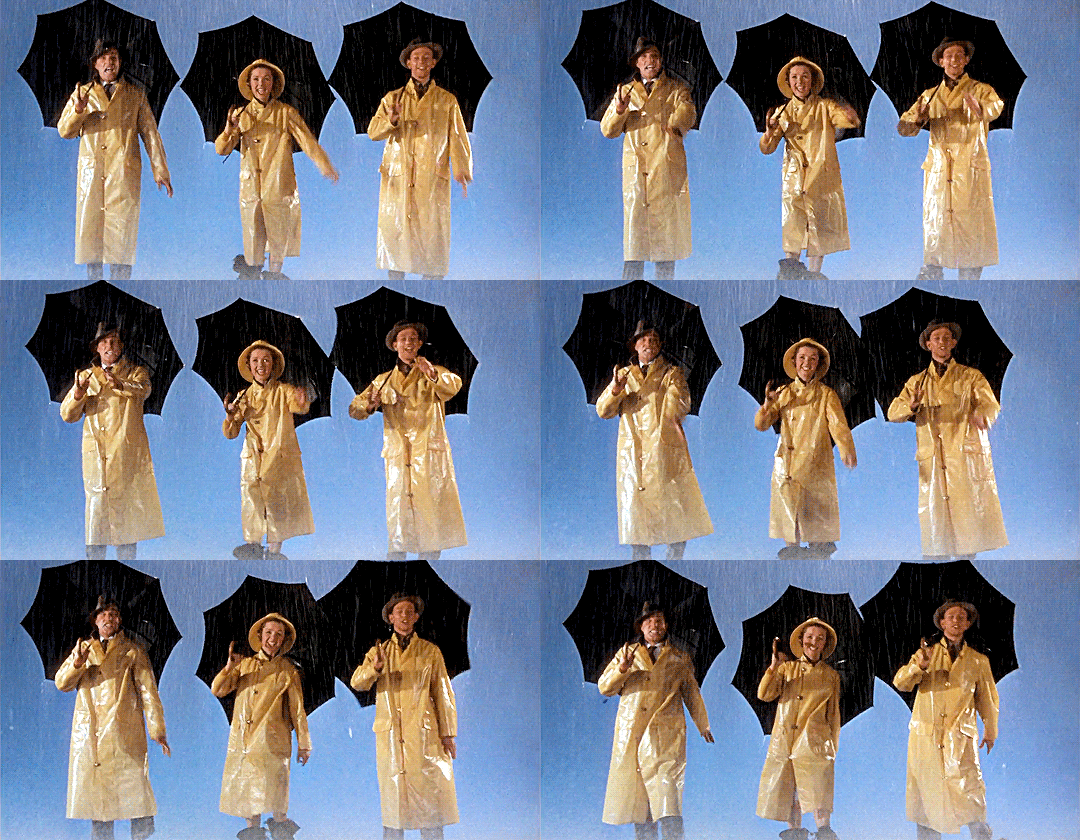
“Cantando na Chuva” estreou em 27 de março de 1952 nos EUA. O filme estreou no Brasil, segundo o IMDb, três meses depois, em 30 de junho de 1952. Setenta anos atrás, um filme que iria entrar para a história estreava, mas ele não foi considerado um clássico logo de cara. Foi um sucesso de bilheteria, claro, mas não ganhou nenhum Oscar e não animou os críticos - estivessem estes críticos nos EUA ou no Brasil.

“Singin’ in the Rain” had its premiere on March 27th, 1952 in the USA. It premiered in Brazil, according to IMDb, three months later, on June 30th, 1952. Seventy years ago, a film that would enter history premiered, but it wasn’t considered a classic right after its premiere. It was a box-office success, of course, but won no Oscars and didn’t excite critics - no matter if these critics were in the USA or Brazil.

O burburinho sobre “Cantando na Chuva” começou antes mesmo de o filme estrear. Num anúncio publicado no começo de 1952 na revista Cine Reporter, o filme foi citado, junto com “Scaramouche” e “Ivanhoé” como atrações vindouras da MGM que em breve chegariam aos cinemas. O texto do anúncio dizia, ao lado da figura de um leão: “Exibir MGM significa festa o ano inteiro!” Também antes da estreia, a mesma revista credita Gene Kelly como diretor de “Cantando na Chuva” e diz que a película é “considerada uma das melhores revistas musicais dos últimos tempos.”

The talk about “Singin’ in the Rain” started even before the film premiered. In an ad published early in 1952 in the magazine Cine Reporter, the movie was cited, together with “Scaramouche” and “Ivanhoe” as coming attractions from MGM that would reach the theaters soon. The text of the ad said, next to the figure of a lion: “Exhibiting MGM means partying during the whole year!” Also before the premiere, the same magazine credits Gene Kelly as director of “Singin’ in the Rain” and says it is “considered one of the best musicals of recent times.”

“Cantando na Chuva” foi exibido com “Scaramouche” e “Ivanhoé” num evento especial no Rio de Janeiro, então capital do Brasil, ocorrido no cinema Metro-Copacabana. Os três filmes ficaram conhecidos como “a trinca de ouro” e, depois desta estreia, já eram elogiados. O Cine Reporter chamou “Cantando na Chuva” de obra-prima, enquanto um repórter da Revista da Semana disse ser “nosso musical favorito”. A revista de cinema A Scena Muda elogiou o filme como símbolo do “amadurecimento do musical como gênero, englobando inclusive seriedade de intenções.” 

“Singin’ in the Rain” was exhibited with “Scaramouche” and “Ivanhoe” in a special event in Rio de Janeiro, then Brazil’s capital, hosted at the Metro-Copacabana movie theater. The three movies were known as “the golden trio” and, after this premiere, were already celebrated. Cine Reporter called “Singin’ in the Rain” a masterpiece, while a reporter from the Revista da Semana said it was “our favorite musical”. The film magazine A Scena Muda praised the movie as being a symbol of the “maturing of the musical as a gender, encompassing even serious intentions.”

O jornalista José Amádio, escrevendo a coluna Cine-Revista para a revista O Cruzeiro, chama o filme de “um leve e agradável Technicolor”, “agradável como uma tarde de primavera, no campo” e elogia as performances de Jean Hagen, que rouba todas as cenas em que está, e Donald O’Connor - primeiro chamando O’Connor de “quase sempre insípido”. Debbie Reynolds é “tão agradável aos olhos como um arco-íris” e Gene Kelly não é “tão bom cantor como bailarino”.

The journalist José Amádio, writing the Cine-Revista column at the magazine O Cruzeiro, calls the movie “a light and pleasant Technicolor”, “pleasant like a spring afternoon in the country” and praises the performances by Jean Hagen, who steals all the scenes she’s in, and Donald O’Connor - first calling O’Connor “almost always tasteless”. Debbie Reynolds is “as pleasant to the eyes as a rainbow” and Gene Kelly is not “as good as a singer as he is as a dancer”.

Além de ser elogiado pela imprensa, outros já estavam percebendo a qualidade de “Cantando na Chuva”. A Scena Muda publica que a The British Film Academy escolheu o musical como um dos melhores filmes do ano de 1953, junto com “Milagre em Milão”, “Rashomon”, “Carrie”, “Uma Aventura na África” e “Los Olvidados”.

Besides being praised by the press, others were already perceiving the high quality of “Singin’ in the Rain”. A Scena Muda publishes that The British Film Academy chose the musical as one of the best movies of the year 1952, together with “Miracle in Milan”, “Rashomon”, “Carrie”, “The African Queen” and “Los Olvidados”.

Em 1953, um artigo intitulado “A Garota que Venceu o Leão” foi publicado na revista Cinelândia sobre Debbie Reynolds. O artigo diz: “Ao entrar para o cinema, Debbie não sabia representar, mas aprendeu. Não sabia dançar, mas tomou algumas lições e tentou. Quem viu “Cantando na Chuva” pôde constatar o que dizemos.” A revista A Scena Muda foi mais bondosa com Debbie, dizendo que “em “Singin’ in the Rain”, Debbie saiu-se vitoriosa em uma verdadeira prova de fogo, cantando, dançando e representando como uma veterana “vedette” da tela.” E o artigo termina assim: “Não existe pessoa alguma que após assistir “Cantando na Chuva” não se tenha tornado fã de Debbie Reynolds.”

In 1953, an article called “The Girl who Won Over the Lion” was published in the Cinelândia magazine about Debbie Reynolds. It said: “When she got into the movie business, Debbie didn’t know how to act, but she learned. She didn’t know how to dance, but took a few lessons and tried. Whoever saw “Singin’ in the Rain” could see what we mean.” The magazine A Scena Muda was kinder to Debbie, saying that “in “Singin’ in the Rain”, Debbie won a hard battle, singing, dancing and acting like a true veteran of the musical movies”. And the article ends with this: “There is no person who, after watching “Singin’ in the Rain”, did not become a fan of Debbie Reynolds.”

Em 1974, um longo artigo sobre Gene Kelly na revista O Cruzeiro diz que, com “Cantando na Chuva”, ele se tornou um dos reis do musical. Naquela época, aos 62 anos, Kelly estava no Brasil para promover “Era uma Vez em Hollywood” e deu uma entrevista para a revista, na qual diz que seu próximo projeto era uma refilmagem musical de “A Mulher do Dia” (1942), algo que não se concretizou.

In 1974, a long article about Gene Kelly in the magazine O Cruzeiro says that, with “Singin’ in the Rain”, he became one of the kings of musical movies. At that time, at age 62, Kelly was in Brazil promoting “That’s Entertainment!” and gave an interview to the magazine, saying that his next project would be a musical remake of “Woman of the Year” (1942), something that was never made.

Mas nenhum jornalista brasileiro escreveu mais sobre “Cantando na Chuva” do que Ruy Castro. Na verdade, Gene Kelly e Cyd Charisse estão na capa de seu livro “Um Filme é para Sempre”. Neste livro, há uma seção inteira - Toró Mágico - dedicada a “Cantando na Chuva”, com quatro artigos sobre o filme. Nestes artigos, escritos entre 1991 e 2002, Ruy fala sobre a recepção morna do filme em 1952 e os papéis de Charisse, Kelly e Stanley Donen na feitura deste grande filme.

But no Brazilian journalist wrote more about “Singin’ in the Rain” than Ruy Castro. In fact, Gene Kelly and Cyd Charisse are on the cover of his book “Um Filme é para Sempre” (“A Film is Forever”). In this book, there is a whole section - Toró Mágico, or Magical Pouring - dedicated to “Singin’ in the Rain”, with four articles about the film. In these articles, published between 1991 and 2002, Ruy talks about the tepid reception of the film in 1952 and the roles of Charisse, Kelly and Stanley Donen in shaping this great film.

O tempo fez bem a “Cantando na Chuva”. O filme foi revisto, reconsiderado, serviu de assunto para reflexão através dos anos. Hoje, quase todos concordam que é o melhor musical já feito - não importa se é nosso favorito, é o melhor e ponto. Afinal, não há teste melhor para um filme que o teste do tempo.

Time was good to “Singin’ in the Rain”. It was rewatched, reconsidered, it served as food for thought through the years. Today, almost everybody agrees that it is the best movie musical ever made - no matter if it isn’t our favorite, it is definitely the best. After all, there is no better test for a movie than the test of time.

This is my contribution to the Singin’ in the Rain blogathon, hosted by The Classic Movie Muse. What a glorious feeling!

Wednesday, May 20, 2020

Cinco Clássicos para Dias Difíceis

Five Classics for Comfort

Enquanto houver cinema, haverá esperança. Este é o mantra que eu adotei nos últimos anos, quando a realidade começou a parecer um filme de terror e os tempos ficaram difíceis demais para nós, sonhadores. Em certo sentido, o cinema sempre me salvou de me afogar em minhas próprias emoções e desgostos. É isso: o cinema salva. Ele pode distrair, emocionar, confortar, maravilhar, inspirar. Quando eu era uma adolescente que sofria bullying, mais de 10 anos atrás, foi o cinema que me deu força para prosseguir, então por que o cinema não poderia fazer o mesmo pelo mundo todo durante uma pandemia? Para este momento, e para qualquer outro momento difícil, eu ofereço minha lista de cinco clássicos para dias difíceis:

As long as there is cinema, there is hope. This is the mantra I have adopted in the last few years, when reality started looking like a horror movie and times became too hard for us, dreamers. In a sense, cinema has always saved me from drowning in my own emotions and sorrows. That's it: cinema saves. It can distract, move, comfort, amuse, inspire. When I was a bullied teenager, over ten years ago, it was cinema that gave me strength to carry on, so why can't cinema do the same for the whole world during a pandemic? For this time, and for any other difficult time, I offer my top five comfort films:

Uma Semana (1920): Sinceramente, eu poderia ter escolhido qualquer filme de Buster Keaton. O homem que nunca ri, ironicamente, nunca falha em colocar um sorriso no meu rosto. “Uma Semana” foi o primeiro curta-metragem solo de Keaton – sem seu mentor no cinema, Roscoe Arbuckle – e é o meu favorito de seus curtas. Os recém-casados Buster e Sybil Seely recebem como presente de casamento uma casa montável que acaba ficando... peculiar. Hilário, adorável e surpreendente, “Uma Semana” é uma pequena dose de felicidade.

One Week (1920): Sincerely, I could have chosen any Buster Keaton film. The man who never laughs, ironically, never fails to put a smile on my face. “One Week” was Keaton's first solo short – without his movie mentor Roscoe Arbuckle – and it's my favorite. Newlyweds Buster and Sybil Seely receive as a wedding gift a DIY house that ends up being very... unique. Hilarious, lovely and surprising, “One Week” is a small doses of happiness.

“Uma Semana” foi recentemente exibido no Silent Comedy Watch Party, que foi a única coisa boa que este caos trouxe. Esta iniciativa traz curtas-metragens mudos exibidos com acompanhamento ao vivo do pianista Ben Model e comentários do historiador Steve Massa. A exibição semanal tem mantido a minha sanidade – e também a de muitos cinéfilos.

“One Week” was recently featured at the Silent Comedy Watch Party aka the only good thing that this chaos brought. This initiative brings silent shorts played with live music accompaniment by pianist Ben Model and commentary by historian Steve Massa. The weekly party has kept me – and many more film fans – sane.

Cantando na Chuva (1952): Há algum filme mais feliz do que “Cantando na Chuva”? Eu acho que não. Eu imagino que as pessoas que trabalhavam no cinema se desesperaram quando os filmes falados surgiram. É assustador seguir em frente quando você não sabe o que o futuro lhe reserva, certo? Você pode estar vivendo isso agora, ou já viveu, ou ainda vai viver, por isso tenha certeza: o show precisa continuar. “Cantando na Chuva” nos ensina que devemos nos adaptar como Don Lockwood, ter um amigo leal e esforçado como Cosmo Brown e seguir nossos sonhos como Kathy Selden – e de preferência, mantendo um senso de humor que nos permita zombar de um técnico de voz de vez em quando.

Singin' in the Rain (1952): Is there a happier movie than “Singin' in the Rain”? I don't think so. I imagine people working in movies got desperate when talkies became a thing. It's scary to go on when you don't know what the future has in store to you, right? You may be living this right now, or have lived this, or will live, so be sure: the show must go on. “Singin' in the Rain” teaches us that we must adapt like Don Lockwood, have a loyal and hardworking friend like Cosmo Brown and follow our dreams like Kathy Selden – and hopefully, keeping a sense of humor that allows us to mock a voice coach sometimes. 

Meu Tio (1958): Esta belezinha francesa funciona basicamente como um filme mudo. Monsieur Hulot, o tio, interpretado pelo próprio diretor Jacques Tati, vive uma vida simples em um bairro pobre. Enquanto isso, sua irmã, cunhado e sobrinho vivem em uma casa tecnológica e os dois adultos pensam que podem ajudar Hulot a ter uma vida melhor. Isso leva ao conflito entre o velho e o novo, e a várias gags visuais deliciosas. Além disso, por causa deste filme eu sempre serei louca por uma fonte em forma de peixe.

Mon Oncle (1958): This French beauty basically works as a silent film. Monsieur Hulot, the uncle, played by director Jacques Tati himself, lives a simple life in a poor neighborhood. Meanwhile, his sister, brother-in-law and nephew live in a high-tech house and the two adults think they can help Hulot have a better life. This leads to the conflict between old and new, and a lot of delightful visual gags. Also, because of this film I'll be forever obsessed with a fish-shaped fountain.

Descalços no Parque (1967): Assim como “Cantando na Chuva”, este filme mostra que, depois que as dificuldades são superadas, vem a alegria. Corie (Jane Fonda) e Paul (Robert Redford) são recém-casados e muito diferentes: Corie é extravagante e espontânea, enquanto Paul é quieto e sério. A tentativa deles de encontrar um equilíbrio conforme começam uma nova vida juntos é uma graça, e a noite de aventuras com a mãe de Corie e com um vizinho é brilhante. Você pode ler mais sobre “Descalços no Parque” AQUI.

Barefoot in the Park (1967): Just like “Singin' in the Rain”, this film shows that, after hardships are overcome, there comes bliss. Corie (Jane Fonda) and Paul (Robert Redford) are newlyweds and very different: Corie is extravagant and spontaneous, while Paul is quiet and serious. Their attempt to find balance as they begin a new life together is heartwarming, and their night out with Corie’s mother and a neighbor is priceless. You can read all my thoughts about “Barefoot in the Park” HERE.

Era uma Vez em Hollywood, a trilogia: Sinto que estou trapaceando duas vezes aqui porque estou escolhendo uma trilogia e esta trilogia tem pedaços de muitos filmes. De qualquer forma, os musicais sempre, sempre me deixam feliz. Eles foram minha fonte de esperança nos dias tristes da minha adolescência, e eu tinha 17 anos quando vi pela primeira vez “Era uma Vez em Hollywood” (1974). Este filme, assim como “Isso Também Era Hollywood” (1976) e “Era uma Vez em Hollywood – Parte III” (1994), traz uma compilação de clipes de musicais da era de ouro e também algumas cenas descartadas e material dos bastidores. Ah, e eu mencionei que o segundo filme traz Fred Astaire e Gene Kelly dançando juntos, 30 anos depois da primeira vez que eles fizeram ISSO? Porque isso acontece e é incrível. Essa trilogia prova que o cinema é, realmente, uma fábrica de sonhos e de esperança.

That's Entertainment! Trilogy: I feel like I'm cheating twice here because I'm choosing a trilogy and this trilogy has bits of many films. Anyway, musicals always, always make me happy. They were my main source of hope in my sad teen years, and I was 17 when I first saw “That's Entertainment! - Part 1” (1974). This film, and also Part II (released in 1976) and Part 3 (released in 1994), brings a compilation of clips from Golden Age musicals and also some unused footage and behind-the-scenes material. Oh, have I said that Part II brings Fred Astaire and Gene Kelly singing and dancing together, 30 years after the first time they did THIS? Because it does and it's awesome. This trilogy show that cinema really is a dream – and hope – factory.

This is my contribution to the Classics for Comfort blogathon, hosted by the Classic Movie Blog Association.

Wednesday, May 15, 2019

TOP 5 - Meus filmes favoritos dos anos 1950


TOP 5 - My favorite films of the 1950s


Se você me perguntasse se eu queria viver na década de 1950, eu responderia “claro que NÃO” instantaneamente. Os anos 50 foram péssimos para a diversidade. O racismo e o sexismo eram escancarados, havia segregação racial, a “Ameaça Vermelha” e o McCarthismo. As mulheres podiam apenas ser esposas e mães - havia poucas mulheres trabalhando fora. E você tinha de se conformar com as convenções sociais e jamais se destacar, ou você seria considerado estranho e poderia inclusive ser perseguido. Bem, considerando a última parte, eu poderia dizer que os anos 50 foram exatamente como minha época no ensino médio.

If you asked me if I wanted to live in the 1950s, I’d answer “hell, NO” instantly. The 1950s were not a very diverse decade. Racism and sexism were blatant, there was racial segregation, the Red Scare and the McCarthism. Women could only be wives and mothers - there were few who worked outside of the home. And you had to conform to society norms and not stand out, or you would be considered weird and could even be persecuted. Well, thinking about that last part, I could say that the 1950s were exactly like my high school years.


Mas uma coisa é inegável: os filmes feitos nos anos 50 foram incríveis. Praticamente todos os gêneros estavam em seu auge, e no mundo todo excelentes filmes eram feitos. E Hollywood estava no ápice de sua Era de Ouro. É por isso que o Dia do Cinema Clássico de 2019 será celebrado por blogueiros que escolherão seus cinco filmes favoritos dos anos 50.

But one thing is undeniable: the films made in the 1950s were amazing. Basically all genres were at their peak, and all over the world great movies were being made. And Hollywood was in the height of its Golden Age. That’s why the 2019 Classic Movie Day Will be celebrated by classic film bloggers who will choose their top five films from the 1950s.


E, puxa, essa não é tarefa fácil. Milhares de filmes foram feitos naquela década, e algumas centenas deles são realmente ótimos, ou ao menos filmes bons que têm um lugar especial no coração dos cinéfilos. Para fazer minha lista, levei em consideração ambos: qualidade e valor emocional.

And, wow, this is not an easy task. Thousands of films were made in that decade, and a few hundred are very, very good ones, or at least nice films that have a special place in cinephiles’ hearts. To write my list, I considered both: quality and emotional value.


Primeiro, algumas menções honrosas: Dizem que é Pecado (1951), A Lenda dos Beijos Perdidos (1954), Um Corpo que Cai (1958).

First, a few honorable mentions: People Will Talk (1951), Brigadoon (1954), Vertigo (1958).


Crepúsculo dos Deuses (1950): Como uma pessoa muito racional, eu tenho um filme favorito e um filme que considero o melhor já feito. Meu filme favorito é “Nasce uma Estrela” (1937), enquanto o filme que eu considero o melhor é “Crepúsculo dos Deuses” - coincidentemente, ambos são filmes sobre filmes. Tudo em “Crepúsculo dos Deuses” é perfeito: o roteiro, as atuações (Gloria Swanson está brilhante), os cenários, a trilha sonora, as participações especiais. Há poucos filmes mais icônicos que “Crepúsculo dos Deuses”, e não há diretor tão versátil quanto Billy Wilder.

Sunset Boulevard (1950): As a very rational person, I have one favorite movie and one movie that I consider to be the best ever made. My favorite movie is “A Star is Born” (1937), while the film I consider the best is “Sunset Boulevard” - as a coincidence, both are movies about movies. Everything in “Sunset Boulevard” is perfect: the screenplay, the acting (Gloria Swanson is superb), the sets, the soundtrack, the cameos. There are few movies more iconic as “Sunset Boulevard”, and there is no director as versatile as Billy Wilder.


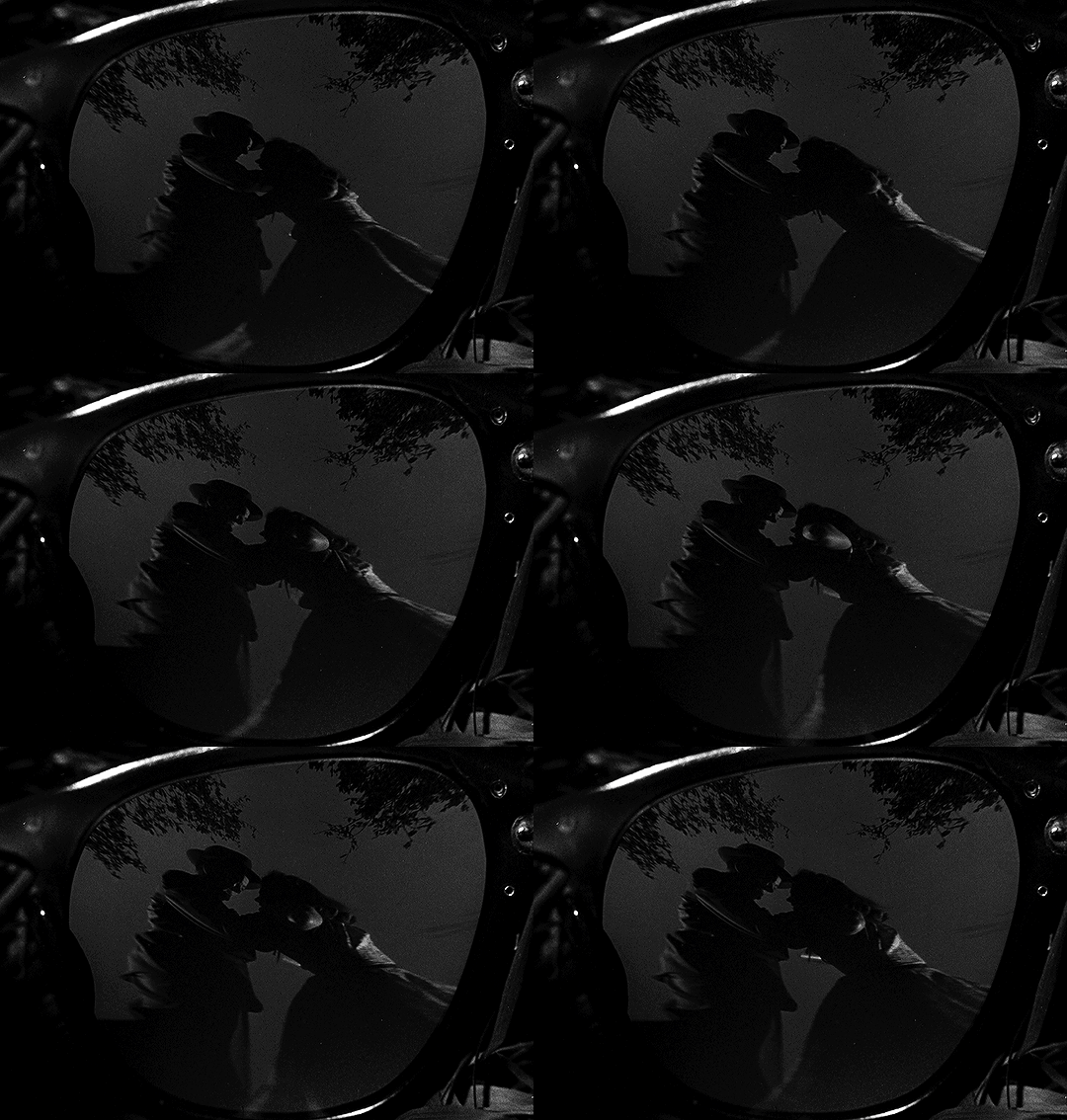
Pacto Sinistro (1950): Meu filme preferido de Hitchcock também é um filme perfeito. Começando com a maneira como os personagens principais se conhecem e terminando no clímax no carrossel, tudo é perfeito. Eu particularmente adoro duas sequências: uma em que um assassinato é refletido em um par de óculos, e a partida de tênis. Tudo neste filme é ótimo: a fotografia, o roteiro - baseado em um livro de Patricia Highsmith, o roteiro foi escrito por uma assistente de Ben Hecht chamada Czenzi Ormonde - e a performance eletrizante de Robert Walker.

Strangers on a Train (1951): My favorite Hitchcock film also happens to be a perfect film. From the way the two main characters meet until the climax in a merry-go-round, everything is perfect. I’m particularly fond of two sequences: the one in which a murder is seen reflected in a pair of glasses, and the tennis match. Everything in this film is great: the cinematography, the screenplay- based on a novel by Patricia Highsmith, the screenplay was written by Ben Hecht’s assistant, a woman named Czenzi Ormonde - and a chilling performance by Robert Walker.


Europa ‘51 (1952): Dezenas de outros filmes italianos poderiam ser mencionados como melhores representantes do Neorrealismo Italiano, mas este foi o que mais me tocou - porque ele é tão atual. Ingrid Bergman protagoniza “Europa ‘51” como uma mulher que, ao perder seu filho, decide só fazer o bem, e é considerada louca pelos seus amigos da alta sociedade. Ela é alguém que começa a seguir os ensinamentos de Jesus - e, como acontece sempre, os cristãos decidem silenciá-la. Como alguém que estudou em um colégio de freitas, que vive em um país profundamente desigual e que tem um forte senso de justiça, eu fiquei muito mexida com este filme. Eu escrevi sobre “Europa ‘51” AQUI.

Europa ‘51 (1952): Dozens of other Italian films could be mentioned as more representative of the Italian Neorealism movement, but this was the one that spoke to me - because it is so timely. Ingrid Bergman stars in “Europa ‘51” as a woman who, after losing her son, decides only to do good, and is considered crazy by her high society friends. She is someone who starts to follow what Christ has taught us - and, as it always happens, Christians quickly decide to silence her. As a person who studied in a Catholic school as a child, who lives in a profoundly unequal country and who has a strong sense of justice, I was deeply moved by this film. I wrote about “Europa ‘51” HERE.


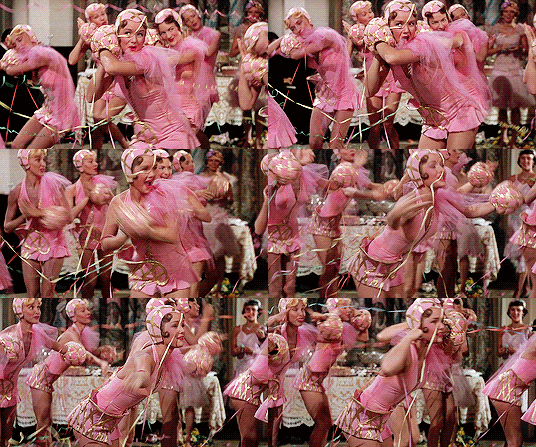
Cantando na Chuva (1952): Até eu começar a fazer esta lista, eu não havia percebido como 1952 foi um bom ano para o cinema - ou pelo menos para mim. Eu pensei em colocar “A Lenda dos Beijos Perdidos” (1954) como meu musical favorito na lista, mas eu estaria tentando enganar a mim mesma. “Cantando na Chuva” é um filme que me deixa feliz, e mais do que isso: ele é muito bem feito, com ótimas canções antigas, coreografias bacanas e até uma história coisa - algo que nem todos os musicais tinham. Eu já escrevi sobre meu amor por “Cantando na Chuva” AQUI.

Singin’ in the Rain (1952): Up until I started making this list, I hadn’t realized how 1952 was a good year for film - or at least for me. I thought about adding “Brigadoon” (1954) as my musical of choice to the list, but I’d be trying to deceive myself. “Singin’ in the Rain” is a film that makes me happy, and more than that: it’s beautifully done, with great vintage songs, nice choreography and even a smart storyline- something not all musicals had. I previously wrote about my love for “Singin’ in the Rain” HERE.


 O Rato que Ruge (1959): Quando tanto a cinéfila quanto a historiadora em mim apreciam um filme, você pode apostar que é uma película excelente. Esta comédia britânica lida com geopolítica ao contar a história de um pequeno país que decide invadir os EUA, declarar guerra, rapidamente perder a guerra e receber ajuda monetária. O problema é que eles ganham a guerra quando sequestram um cientista que possui uma bomba de hidrogênio. O melhor do filme é Peter Sellers interpretando três papéis: um soldado, um Primeiro-ministro... e uma Rainha.


The Mouse that Roared (1959): When both the movie nerd and the history nerd in me are pleased by a film, you can bet it is an outstanding production. This British comedy deals with geopolitics as it tells the story of a tiny country that decides to invade the US, declare war, quickly lose the war and then receive monetary help. The problem is that they win the war by kidnapping a scientist that has a hydrogen bomb. The best thing in this film is Peter Sellers playing three roles: a soldier, a Prime Minister... and a Queen.


This is my contribution to the “5 Favorite Films ofthe ‘50s” blogathon to celebrate National Classic Movie Day, hosted by Rick at Classic Film & TV Café.


Tuesday, May 15, 2018

“Cantando na Chuva” é o melhor remédio / “Singin’ in the Rain” is the best medicine

Quando você está para baixo, e não vê saída para sua situação, o que você faz? Você busca conforto. O conforto pode ser encontrado nas coisas simples da vida, como uma comida gostosa ou, nosso assunto de hoje, um filme animador. Há filmes que lhe deixam alegre quando você está triste, lhe dá forças quando você está para baixo, lhe faz sorrir em meio ao sofrimento. O filme que faz tudo isso comigo é “Cantando na Chuva” (1952). É sempre ótimo vê-lo!

When you’re blue and you don’t know where to go to, what do you do? You seek comfort. That’s the origin of terms like ‘comfort food’ or, our subject today, ‘comfort movie’. It’s that movie that brings you joy when you’re sad, puts you up when you’re down, makes you smile in the middle of sorrow. My comfort movie is “Singin’ in the Rain” (1952). And what a glorious feeling it is to watch it in times of need!
Deixe-me dizer por que “Cantando na Chuva” é o melhor remédio:

Let me tell you why “Singin’ in the Rain” is the best medicine:
É um musical maravilhoso: Eu sei que não é todo mundo que ama musicais – eu já fui uma dessas pessoas tristes que odiavam musicais, dá para acreditar? Mas então eu percebi que os musicais são o gênero cinematográfico mais mágico que existe. Nós suspendemos nossas crenças quando assistimos a musicais. Não nos importamos se os personagens começam a cantar e dançar, do nada, no meio da rua. Os musicais são como sonhos – e quem não deseja que a vida seja, vez ou outra, como um sonho?

It is a wonderful musical: I know that not everybody loves musicals – I was once one of those poor, sad musical-haters, can you believe? But then I saw that the musicals are the most magical genre. We suspend belief when we watch musicals. We don't care if the characters start singing and dancing, out of nowhere, in the middle of the street. Musicals are like dreams – and don't you wish that life was also like a dream sometimes? 
Ensina que você pode fazer algo inesquecível com ‘coisas velhas’: Esta é uma lição para nós, que escrevemos sobre cinema clássico. Nós estamos escrevendo críticas de filmes que estrearam há 60 anos – ou antes disso. Mas nós não precisamos fazer sempre a mesma coisa. Podemos criar algo muito bacana com o material antigo que temos. Apenas duas músicas de “Cantando na Chuva” eram novas, e haviam sido criadas para o filme: ‘Moses Supposes’ e ‘Broadway Rhythm Ballet’. Todas as demais eram canções antigas, incluindo a que dá título ao filme. A mesma coisa com os objetos usados em cena: o carro de Kathy Selden (Debbie Reynolds) havia pertencido a Andy Hardy, e a mobília da casa de Don já havia aparecido em “A Carne e o Diabo” (1926). E mesmo assim, Betty Comden e Adolph Green criaram um filme único, icônico, inesquecível com todo esse material ‘reciclado’!

It teaches you that you can do something remarkable with ‘old material’: This is a lesson for us, classic film bloggers. We’re reviewing movies released 60 years ago – or earlier. We’re writing about dead idols. But we don’t have to do the same thing always. We can create something very cool with the old material we have. Only two songs from “Singin’ in the Rain” were new, created by the movie: ‘Moses Supposes’ and ‘Broadway Rhythm Ballet’. All the others were old songs, including the title song. The same happened to the props: Kathy Selden's (Debbie Reynolds) car was Andy Hardy's and Don's furniture had already appeared in “Flesh and the Devil” (1926). And yet Betty Comden and Adolph Green created a unique, iconic, remarkable movie with all this 'recycled' content!
Ensina como reagir às mudanças: Esta é provavelmente a principal razão por eu ter escolhido “Cantando na Chuva” como o filme que me faz sentir melhor. Todo mundo é, de algum modo, resistente às mudanças – e elas me incomodam MUITO. Entretanto, mudanças são as únicas certezas na vida. O filme mostra a mudança do cinema mudo para o falado, e como isso impactou toda uma indústria e muitas pessoas. E Hollywood não acabou com a chegada dos filmes falados – ela resistiu. Don Lockwood e Cosmo Brown sobreviveram à mudança. E nós certamente podemos sobreviver às mudanças nas nossas vidas, com coragem, resiliência, flexibilidade e um pouco de sorte – e sem uma voz terrível.

It teaches you how to react to changes: This is probably my number 1 reason to choose “Singin’ in the Rain” as my comfort movie. Everybody is, at some degree, afraid of changes – and I’m VERY afraid of them. But changes are the only certain thing in life. The film shows the change from silent movies to talkies, and how it impacted the whole industry and many lives. And Hollywood didn’t end when talkies came – it persevered. Don Lockwood and Cosmo Brown survived the change. And we certainly can survive changes in our lives, with courage, resilience, flexibility and a little luck – and by not having a funny voice.
Ensina a fazer tudo de novo, se necessário: É hora de uma pequena história dos bastidores. Donald O’Connor, que interpreta Cosmo Brown, fumava muito, e viu que o número “Make ‘Em Laugh” era um grande desafio, pois necessitava de muita comédia física. Ele ensaiou e, depois de gravar o número com perfeição, percebeu que estava com dificuldades para respirar. Donald ficou uma semana acamado, e durante este período o negativo original de “Make ‘Em Laugh” foi danificado. Donald O’Connor então voltou ao estúdio e gravou o número novamente. Viu? Às vezes, a segunda vez sai ainda melhor que a primeira!

It teaches you to do things again, if necessary: Time for a little backstage story. Donald O'Connor, who plays Cosmo Brown, was a heavy smoker, and saw a huge physical challenge in the number “Make 'Em Laugh”, that demanded a lot of physical comedy. He rehearsed and, after shooting the number perfectly, collapsed with problems to breath. O'Connor stayed in bed rest for a week, and during that time the original footage of “Make 'Em Laugh” was damaged. Donald O'Connor then came back and shot the number all over again. See? Sometimes the second time is the charm!
Ensina a esperar e não se desesperar: Quando Don, Kathy e Cosmo saíram do cinema, o futuro não parecia brilhante, mas na manhã seguinte o sol surgiu e tudo mudou. Eles poderiam ter desistido quando parecia não haver nada mais a fazer, mas em poucas horas eles pensaram, refletiram, encontraram uma solução e tudo voltou a estar bem. O tempo cura, e nos dá boas ideias e insights.

It teaches you to wait and not freak out: When Don, Kathy and Cosmo left the movie show, the future wasn't bright, but came the dawn the show goes on and everything changed. They could have given up when there seemed to be no way out, but in a few hours they brainstormed a solution and were well again. Time heals, gives us good ideas and insights.
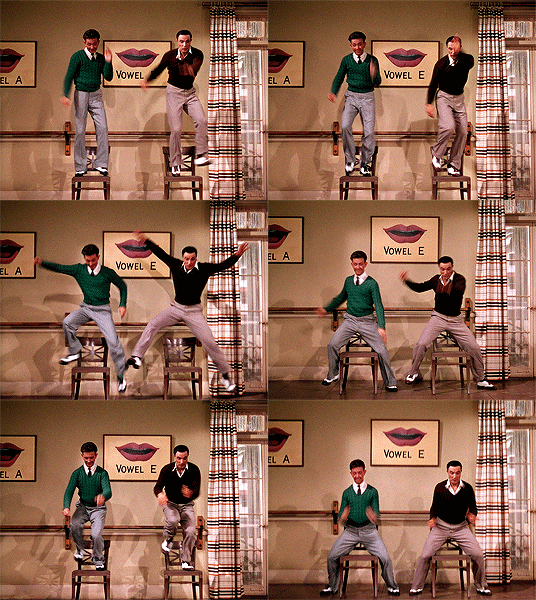
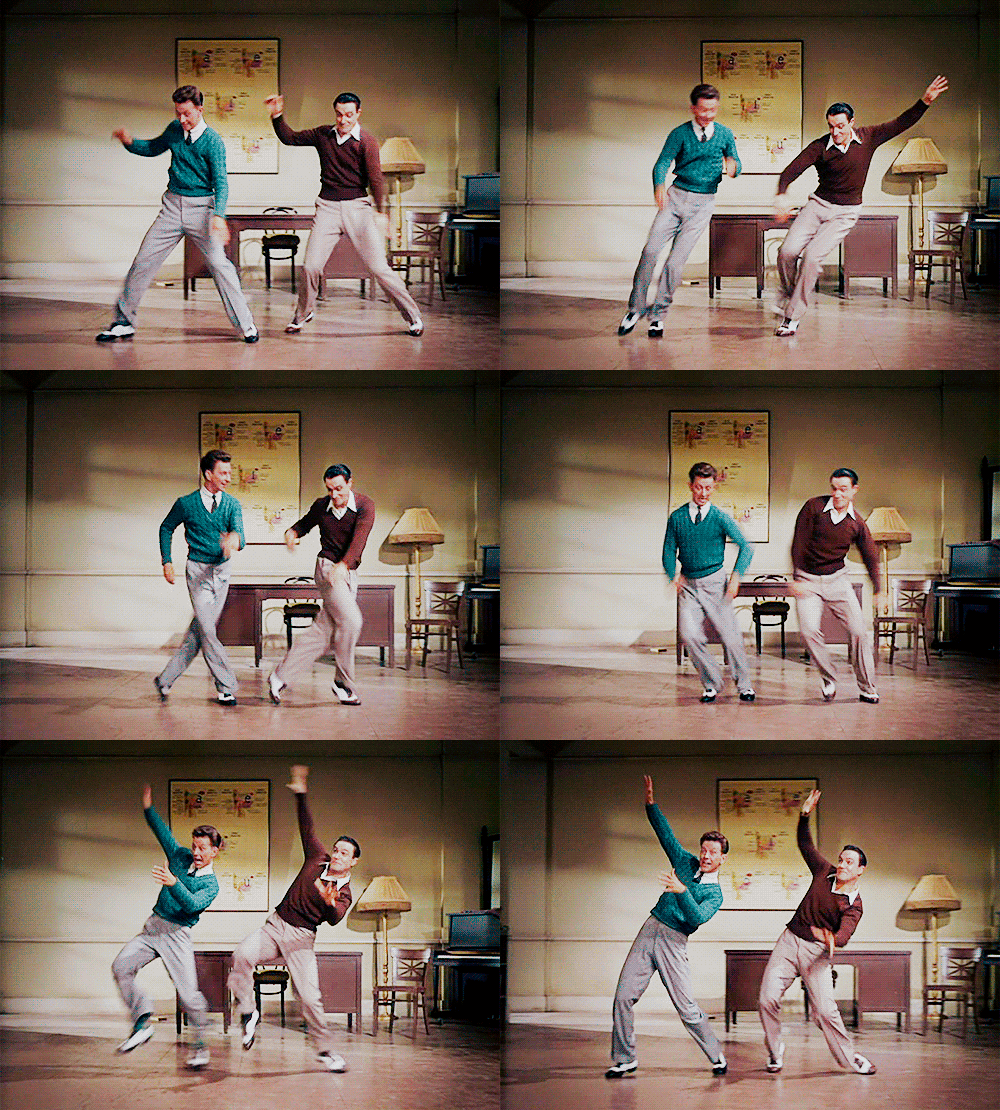
Ensina a não levar tudo a sério: Quando Don Lockwood e Cosmo Brown têm uma aula com um professor de oratória, eles fazem uma farra, tirando com a cara do professor. É uma sequência muito divertida, e uma chance para ambos, Gene Kelly e Donald O’Connor, mostrarem suas habilidades no sapateado. Mesmo se você não consegue repetir a coreografia de ‘Moses Supposes’, o número ensina que você não deve levar tudo a sério, e que precisa rir de suas obrigações, tarefas e até de si mesmo de vez em quando. Obviamente, você não precisa começar a dançar no meio de uma aula chata – pensar em outra coisa já é suficiente.

It teaches you to not take everything so seriously: When Don Lockwood and Cosmo Brown attend a class with a speech coach, they wreck havoc, mocking the ridiculous coach. It’s a very funny sequence, and a chance for both Gene Kelly and Donald O’Connor to showcase their tap-dancing skills. Even if you can’t repeat the choreography from ‘Moses Supposes’, the number teaches you to not take everything so seriously, and laugh at your obligations, chores and even yourself every now and then. Of course, you don’t have to start dancing in the middle of a boring class – daydreaming is more than enough to take everything less seriously.
Aproxima as famílias: Minha mãe não é uma grande fã de cinema clássico. Mesmo assim, quando eu a convidei para ver “Cantando na Chuva” comigo no primeiro final de semana de 2016, ela aceitou – talvez por causa da pipoca de caramelo que eu ia fazer. De qualquer modo, ela viu o filme comigo, não cochilou e GOSTOU verdadeiramente de “Cantando na Chuva”. Um pequeno passo para mim, mas um imenso passo para minha mãe enquanto cinéfila em formação!

It brings families together: My mother isn’t the biggest classic film fan. However, when I invited her to watch “Singin’ in the Rain” with me on the first weekend of 2016, she accepted – because of the caramel popcorn I promised, maybe? Anyway, she watched the movie with me, didn’t fall asleep and actually LIKED it. A small step for me, but a huge step for my mom as a budding cinephile!


Happy National Classic Movie Day!

This is my contribution to The Classic Comfort Movie Blogathon, hosted by Rick from Classic Film and TV Café.


Sunday, May 15, 2016

Cinco clássicos para uma ilha deserta

Qual seu dia favorito do ano? Seria seu aniversário? Ou talvez um feriado? Seria o Natal ou a Páscoa? Bem, meu dia favorito do ano (e que eu comemoro como um feriado) é o Dia dos Filmes Clássicos, o maravilhoso 16 de maio.

What is your favorite holiday? Your birthday should be a holiday? Or maybe you prefer Christmas or Easter? Well, my favorite day of the year (and one I celebrate like a holiday) is National Classic Movie Day, the wonderful May 16th.

Eu gosto de muitos filmes, de muitos gêneros. Para um cinéfilo, escolher um filme favorito é uma tarefa difícil. E que tal escolher apenas cinco para levar para uma ilha deserta? O desafio foi lançado, e esta é minha lista dos cinco clássicos que eu veria muitas e muitas vezes na minha ilha, até ser resgatada e, assim, poder ver mais clássicos.

I love many films, from many genres. For a cinephile, to choose a favorite film is a difficult task. And how about choosing five films to take to a desert island with you? The challenge was given, and this is my list of five classic movies I'd watch over and over again in my island, until I could be rescued to see more classics.
1- Ben-Hur (1925): Qualquer um enlouqueceria em uma ilha deserta se não tivesse apoio espiritual. Por isso meu filme religioso favorito seria item indispensável na bagagem. Além de ter uma história linda e inspiradora, este filme mudo tem sequências em Technicolor de tirar o fôlego!

1- Ben-Hur (1925): Anyone would freak out in a desert island without spiritual support. That's why my favorite religious film would be an essential item. Besides the wonderfully inspiring story, this silent movie has breathtaking sequences in two-strip Technicolor!

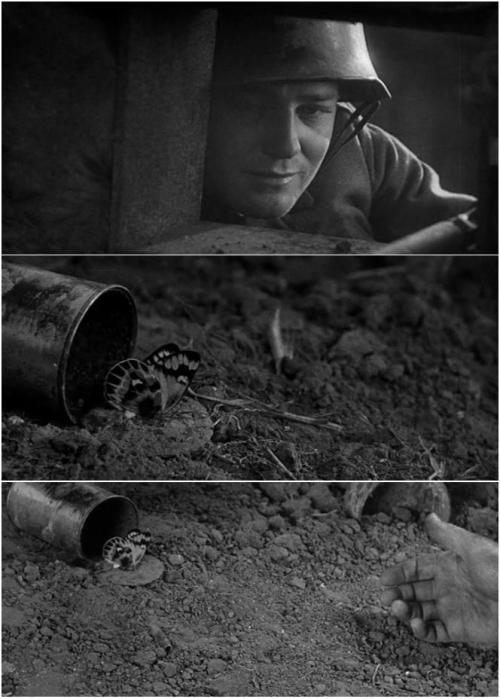
2- Sem Novidade no Front (1930): Ter uma ilha deserta só para você pode parecer maravilhoso, mas cedo ou tarde você sentirá falta de pessoas ao seu redor. Por isso, quando chegar a saudade, minha arma será este filme de partir o coração. Depois de vê-lo, ficarei feliz novamente por estar longe das bestialidades que as pessoas são capazes de cometer.

2- All Quiet on the Western Front (1930): Having a desert island only for you may seem wonderful, but sooner or later you'll miss having people around you. When this happens, my solution will be this heartbreaking film. After watching it, I'll be glad again to be far away from the human bestialities.
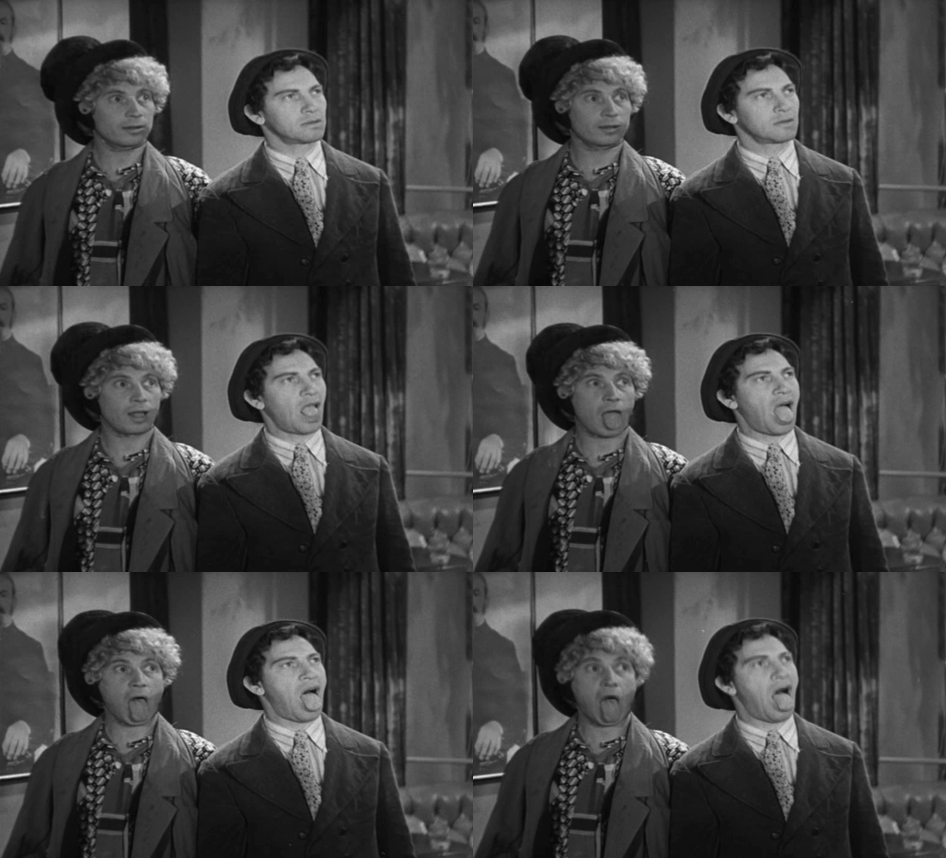
3- Os Gênios da Pelota (1932): Os irmãos Marx são gênios da comédia, e eu realmente os adoro. Toda vez que “Os Gênios da Pelota”, um filme curto mas engraçadíssimo, passa na TV, eu preciso parar o que estou fazendo e assistir. E toda vez eu acabo descobrindo um trocadilho ou um gracejo que havia me escapado. Não há melhor companhia em uma ilha deserta que Harpo, Chico, Groucho, Zeppo e Thelma Todd!

3- Horse Feathers (1932): The Marx brothers are comedy geniuses, and I really, really love them. Every time “Horse Feathers”, a relatively short but very funny movie, is on TV, I need to stop whatever I'm doing and watch it. And every time I discover a new pun or funny quote that had escaped me earlier. There is no better companion in a desert island than Harpo, Chico, Groucho, Zeppo and Thelma Todd!
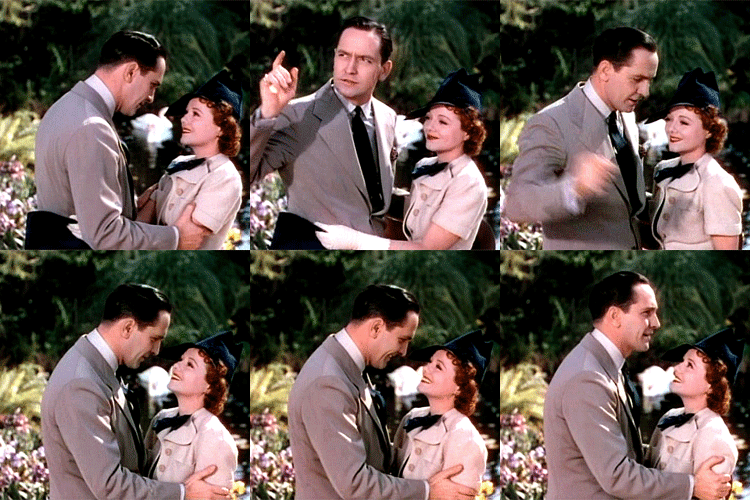
4- Nasce uma Estrela (1937): Há filmes que não dá para explicar. Eles simplesmente mexem com a gente, falam com a gente, tocam nossos corações de maneira que os milhares de outros não fazem. “Nasce uma Estrela” tem comédia, drama, romance, bastidores do cinema, Technicolor e lágrimas. É simplesmente um filme importante para mim – e importante para minha sobrevivência na ilha deserta.

4- A Star is Born (1937): There are some films that we cannot explain. They simply move us, talk to us, touch our hearts in a way that other thousands of films haven't done. “A Star is Born” has comedy, drama, romance, the film industry, Technicolor and tears. It's simply an important film to me – and an important film to make me survive in the desert island.
5- Cantando na Chuva (1952): Tenho a impressão de que este filme estará em outras listas de náufragos amantes de clássicos. Simplesmente porque este é o melhor filme para levantar o astral. Sempre que estou triste, uma cena ou canção do filme pode me deixar feliz de novo. Para escapar dos maus momentos na ilha, “Cantando na Chuva” é item obrigatório – mesmo que, a esta altura, eu provavelmente já saiba o filme de cor.

5- Singin’ in the Rain (1952): I have the impression that this film will also be included in other “5 Movies on an Island” lists. Simply because it is the best feel-good movie of all times. If I’m sad, a scene or a song from the movie can make me happy again. To escape from bad mood in the island, “Singin’ in the Rain” is mandatory, even though I probably already know the film by heart.

This is my contribution to the “5 Movies on an Island” blogathon, hosted by Rick at Classic film and TV Cafe.
Related Posts Plugin for WordPress, Blogger...