} Crítica Retrô: Carl Theodor Dreyer

Tradutor / Translator / Traductor / Übersetzer / Traduttore / Traducteur / 翻訳者 / переводчик

Showing posts with label Carl Theodor Dreyer. Show all posts

Thursday, October 31, 2019

O Vampiro (1932) / Vampyr (1932)


Somos seres altamente sugestionáveis. Os que se assustam facilmente são capazes de pular ao ouvir qualquer barulho ou ver uma sombra. Os entusiastas do horror também acabam se tornando sugestionáveis, pois quanto mais eles aprendem sobre o sobrenatural, mais tênue se torna a linha entre a realidade e o sobrenatural. É exatamente isso que acontece com nosso herói, Allan Gray, no filme “O Vampiro” (1932), de Carl Theodor Dreyer.

We’re highly suggestible beings. The easily scared jump whenever they hear a sound or see a shadow. The horror enthusiasts also end up becoming suggestible, because the more they learn about the supernatural, the more blurred the line between reality and the supernatural becomes. This is exactly what happens with our hero, Allan Gray, in Carl Theodor Dreyer’s “Vampyr” (1932).


Allan Gray (Julian West) é um estudante do sobrenatural. Uma tarde, ele está passeando distraído quando encontra uma hospedaria em uma pequena vila, onde ele decide passar a noite. Seus terrores noturnos não são mostrados, mas descritos por uma longa cartela de títulos. Pela manhã, um homem entra no quarto de Allan, diz a ele que “ela não pode morrer” e deixa um pacote escrito “que só pode ser aberto após sua morte”.

Allan Gray (Julian West) is a student of the supernatural. One evening, he’s wandering around when he finds a small inn in a village, where he decides to spend the night at. His nightly terrors are not shown, but described in a long title card. In the morning, a man enters Allan’s bedroom, tells him that “she mustn’t die” and leaves a package “to be opened when he is dead”.
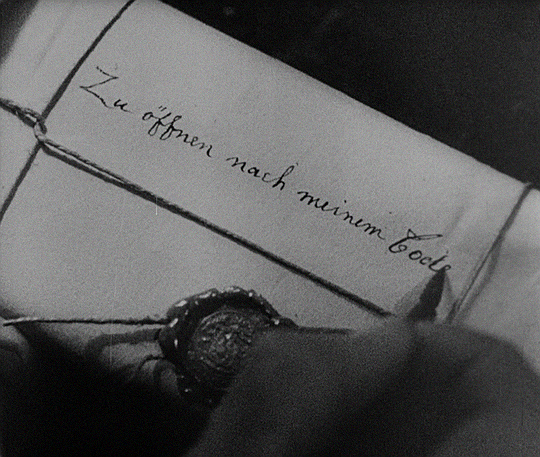

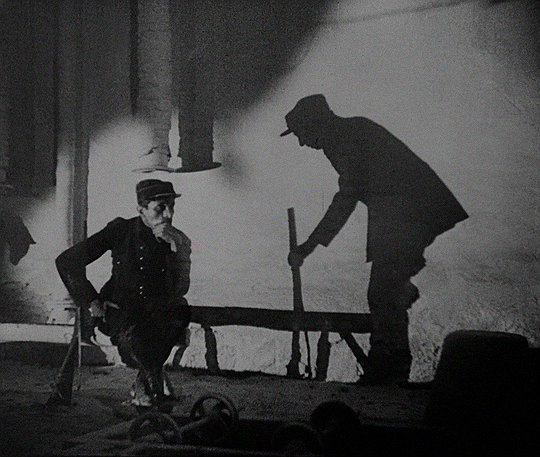
Mais tarde, Allan segue algumas sombras sem corpos e testemunha a morte do homem. Logo após o homem morrer, Allan abre o pacote e lá encontra um livro sobre vampiros. Allan então vê a filha do homem, Léone (Sybille Schmitz), ser mordida no pescoço. Um médico muito suspeito chega para cuidar dela. Agora Allan precisará impedir que Léone viva a eternidade como vampiro.

Later, Allan follows a few shadows without bodies and witnesses the man’s death. Right after the man dies, Allan opens the package and there he finds a book about vampires. Allan then witnesses the man’s daughter, Léone (Sybille Schmitz), being bitten on the neck. A very suspect doctor arrives to take care of her. Now Allan will be needed to save Léone from living eternity as a vampire.


O texto constante e enorme na tela quebra o ritmo do filme e, embora seja didático e importante para a história, atrapalha mais do que ajuda. “O Vampiro” foi concebido como um filme mudo, mas os planos mudaram durante a produção e o diálogo teve de ser gravado após as filmagens. Ainda assim há pouco diálogo no filme, o que, junto com a música de tensão, ajuda a criar suspense.

The constant and huge text in the screen breaks the film’s pace and, although didactical and important to the story, it bothers more than it helps. “Vampyr” was conceived as a silent movie, but the plans changed during production and the dialogue had to be recorded after shooting. There is still very little dialogue in the final film, which, along with the tense music, builds suspense.


O destaque em “O Vampiro” é, sem dúvida, uma sequência muito claustrofóbica num caixão, filmada do ponto de vista da pessoa que está no caixão. Visualmente, todo o filme é hipnotizante, e outras sequências brilhantes incluem sombras, corpos que são quase transparentes e uma sequência de sonho com um esqueleto. O diretor de fotografia Rudolph Maté – de “A Paixão de Joana D’Arc” (1928), também de Dreyer – fez maravilhas ao filmar estas sequências.

The highlight of “Vampyr” is, without a doubt, a very claustrophobic coffin scene, filmed from the perspective of the person in the coffin. Visually, the whole film is hypnotizing, and other brilliant sequences include shadows, bodies that are nearly transparent and a dream sequence with a skeleton. Cinematographer Rudolph Maté – from Dreyer’s previous film, “The Passion of Joan of Arc” (1928) – did wonders while shooting these scenes.

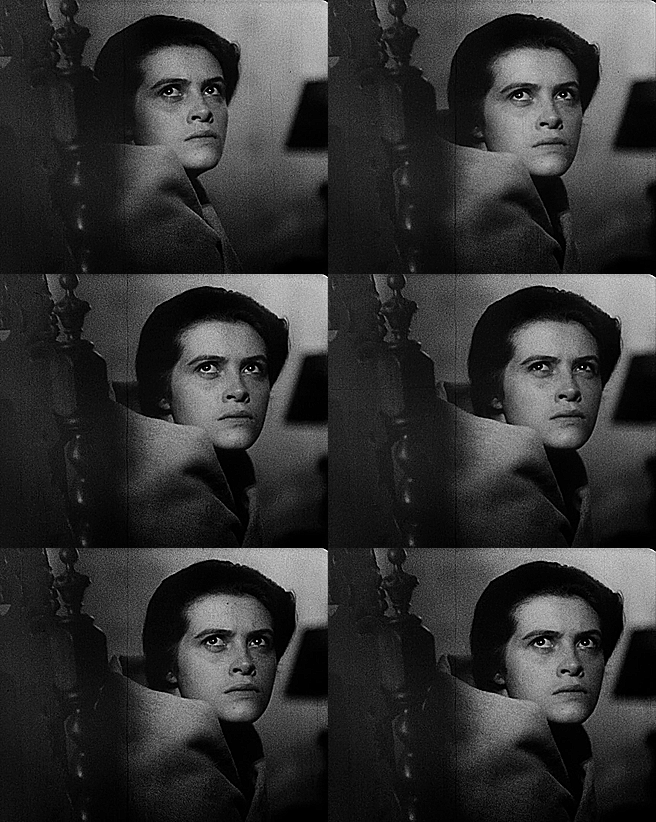
Assim como na maioria dos filmes de Carl Theodor Dreyer, quase todos os atores são amadores. Uma exceção importante em “O Vampiro” é Léone, a protagonista, interpretada por Sybille Schmitz. Nascida na Alemanha, ela trabalhou no teatro com Max Reinhardt e se tornou bastante popular na década de 1930. Em “O Vampiro”, sua expressão de desejo por sangue é ao mesmo tempo assustadora e fascinante. Sybille continuou trabalhando no cinema durante o Terceiro Reich, mas em papéis menores e fazendo femme fatales, porque ela não parecia “ariana o suficiente”. Por causa de seu vínculo empregatício sob o governo de Hitler, ela caiu no ostracismo a partir de 1945, e começou a abusar das drogas e do álcool. Sybille cometeu suicídio em 1955, e seus últimos anos serviram de base para o brilhante filme de 1982 “O Desespero de Veronika Voss”, de Rainer Werner Fassbinder.

Like in most Carl Theodor Dreyer films, almost all actors are amateurs. One important exception in “Vampyr” is Léone the leading lady, played by Sybille Schmitz. Born in German, she worked in theater under famous director Max Reinhardt and became quite popular in the 1930s. In “Vampyr”, her expression of lust for blood is at the same time scary and fascinating. Sybille kept on working in film during the Third Reich, but in smaller roles and as femme fatales, because she didn’t look “Aryan enough”. Because of this continuous employment under Hitler, she was ostracized after 1945, and started abusing drugs and alcohol. Sybille committed suicide in 1955, and her final years were the basis for the brilliant 1982 film “Veronika Voss”, by Rainer Werner Fassbinder.
 
Sybille Schmitz

Veronika Voss, 1982
Nicolas de Gunzburg, um herdeiro francês vindo de uma família nobre russa, financiou o filme com uma condição: ele deveria ser escolhido para o papel principal. Foi assim que Nicolas adotou o nome artístico Julian West. Nicolas / Julian nunca fez outro filme, mas se tornou famoso no mundo da moda como editor de revistas de moda como Vogue e Harper’s Bazaar. Aliás, você percebeu como ele e H.P. Lovecraft se pareciam?

Nicolas de Gunzburg, a French heir from a noble Russian family, financed the film with one condition: he should be given the leading role. That’s how Nicolas adopted the stage name of Julian West. Nicolas / Julian never made another film, but he became a famous figure in the fashion world as editor of fashion magazines such as Vogue and Harper’s Bazaar. By the way, do you see how much he and H.P. Lovecraft look alike?
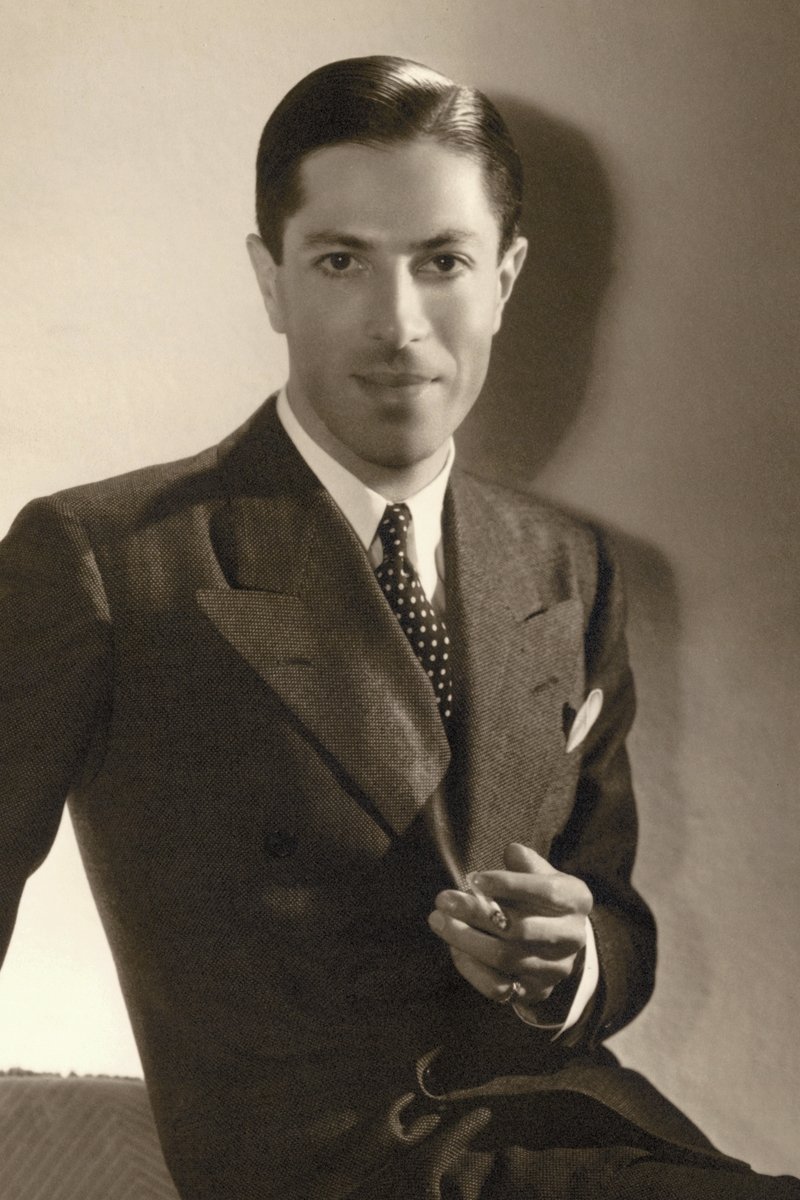
Nicolas / Julian
H.P. Lovecraft
Como acontecia nos primeiros filmes falados, em “O Vampiro” o diálogo foi gravado em diversas línguas para que o filme pudesse ser exportado para vários países. A versão em inglês foi perdida – embora alguns estudiosos digam que tal versão não foi sequer finalizada. Cópias em alemão e francês foram usadas para restaurar o filme à versão que temos hoje, com 73 minutos de duração. Ainda há algumas sequências perdidas.

Like it was common with early talkies, in “Vampyr” the dialogue was also recorded in several languages in order to export the film to several countries. The English version is lost – although some scholars claim that this version was never even completed. Prints in German and French were used to restore the film to the version we have today, and it is 73 minutes long. There are still some sequences lost.
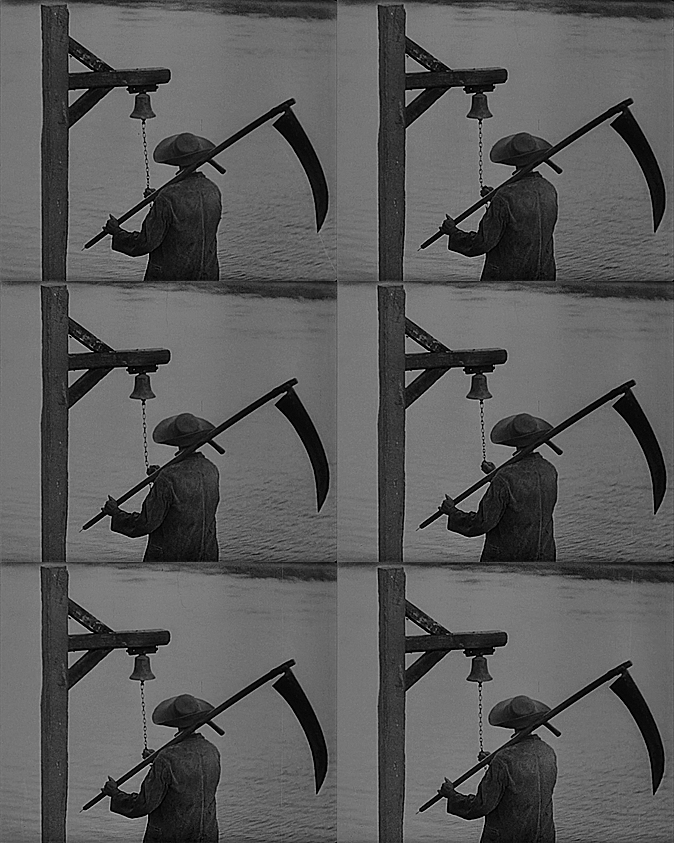

Carl Theodor Dreyer disse que, com “O Vampiro”, ele quis “fazer um filme diferente de todos os outros filmes” e “criar um sonho na tela e mostrar que o horror não é encontrado nas coisas ao nosso redor, mas em nosso subconsciente”. Ele conseguiu fazer as duas coisas, mas pagou um preço alto: “O Vampiro” foi um fracasso de bilheteria e esgotou o diretor emocional e financeiramente. Dreyer fez apenas mais quatro filmes, se aposentando em 1964. Mas “O Vampiro” resistiu ao teste do tempo, e agora é considerado um clássico experimental e cult, e suas imagens ainda assombram nossas mentes.

Carl Theodor Dreyer said that, with “Vampyr”, he wanted to “make a film different from all other films” and “to create a dream on scream and show that horror is not to be found in the things around us but in our own subconscious”. He ended up achieving both, but paid a high price: “Vampyr” was a box-office failure and drained the director emotionally and financially. Dreyer made only four more films, retiring in 1964. But “Vampyr” stood the test of time, and now it’s highly regarded as a cult, experimental classic, and its images are still hunting our minds.

This is my contribution to the Dark and Deep: The Gothic Horror Blogathon, hosted by Gabriela at Pale Writer.

Friday, August 28, 2015

Joana D’Arc (1948) / Joan of Arc (1948)

O filme nem precisa começar para termos certeza de que estamos assistindo a uma obra do diretor Victor Fleming. É um filme longo (145 minutos!) e os atores nos são apresentados em uma lista muito semelhante à que aparece no início de “E o Vento Levou / Gone with the Wind” (1939). É um elenco enorme, um épico em Technicolor e sua protagonista é uma personagem feminina forte e inesquecível – mais até que Scarlett O’Hara.

The film hasn’t even started and we’re already sure that we’re watching a Victor Fleming production. It’s a long film (145 minutes!) and the actors are presented in the beginning in a list that looks a lot with the opening credits of “Gone with the Wind” (1939). It has a huge cast, it is an epic in Tehcnicolor and the lead is a strong and unforgettable female character – even more iconic than Scarlett O’Hara.


Você já deve conhecer um pouco da história: o ano é 1429. A Inglaterra e a França estão em guerra há quase 100 anos (o conflito começou em 1337). Uma jovem camponesa de 17 anos, Joana D'Arc (Ingrid Bergman) recebe um chamado de Deus, dizendo-lhe que ela deve procurar o Delfim Carlos (José Ferrer) e comandar um exército que levará a França à vitória. O Delfim será coroado rei, com o título de Carlos VII, seguindo a vontade de Deus. Claro que isso não é uma missão fácil. Joana encontra muitas dificuldades em seu caminho, seja com as autoridades ou com os capitães no campo de batalha. É difícil para eles seguir as ordens de uma moça, e nem de longe este machismo fica restrito ao século XV em que se passa o filme. Joana D’Arc é uma figura histórica e religiosa, mas os temas de seu drama não poderiam ser mais atuais. Além do machismo, há as lutas políticas e a corrupção.

You may already know the essentials about the story: the year is 1429. England and France have been at war for nearly 100 years (the war started in 1337). A 17 year-old peasant, Joan of Arc (Ingrid Bergman) receives a message from God saying that she must go to the Dauphin Charles (José Ferrer) and lead the army that will make France will the war. The Dauphin will be proclaimed King Charles VII, as God wishes. Of course this won’t be an easy task. Joan meets many obstacles in her way, both with authorities and with commanders in the battlefield. For them, it’s difficult to follow the orders of a young woman, and this sexist bias is not something that was left behind in the 15th century. Joan of Arc is a historical and religious figures, but the themes of her story couldn’t be more modern. Besides sexism, there are political disputes and corruption.

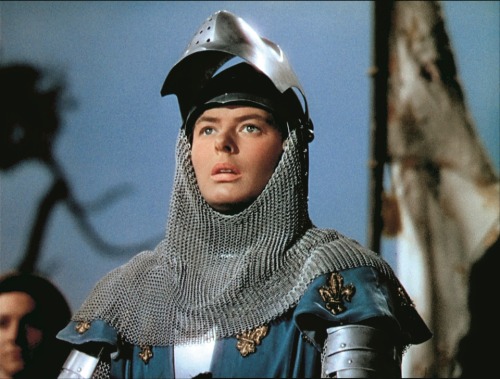
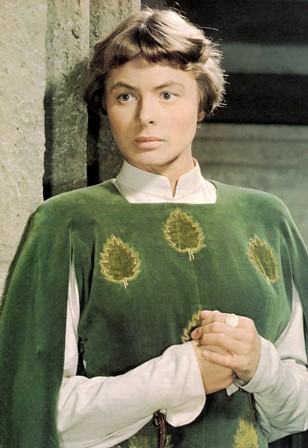
Como Joana D'Arc, Ingrid Bergman jamais aparenta ser uma adolescente (a estrela tinha 33 quando o filme foi feito), mas esta falha é perdoável. Ingrid imprime uma força sobrenatural ao papel, com sua voz grave nos momentos de dar ordem, e com doçura e inocência no olhar ao falar de Deus e das vozes dos santos que ouve. Gosto de pensar que a voz da maior intérprete de Joana D'Arc, Renée Falconetti (de “A Paixão de Joana D'Arc”, 1928) de alguma maneira se assemelharia à de Ingrid. Há convicção total na Joana D'Arc de Bergman, e ao mesmo tempo uma pureza descomunal.

As Joan of Arc, Ingrid Bergman never looks like a teenager (she was 33 when the film was made), but this is forgivable. Ingrid offers a supernatural strength to the role, with a deep voice when she's giving orders and with a sweet, innocent look when she talks about God and the voices of the saints she hears. I like to think that the voice of the actress who gave the best performance as Joan of Arc, Renée Falconetti (from “The Passion of Joan of Arc”, 1928) in some way sounded like Ingrid's voice. There is total conviction in Bergman's Joan of Arc, and at the same time a colossal purity.

Em 1946, Bergman protagonizou a peça “Joan of Lorraine”, que foi a base do filme. Entretanto, a peça é metalinguística, pois mostra como os atores de uma montagem de Joana D’Arc têm suas vidas mudadas pelos personagens que interpretam. Para os padrões de Hollywood, foi necessária uma história mais convencional, e sobrou apenas a trajetória da mártir no roteiro (imagine se o filme fosse feito na Inglaterra: Laurence Olivier perfeitamente obteria o efeito “teatro filmado”). Bergman queria muito fazer o filme, e por isso se juntou ao marido, o dentista Peter Lindstrom, ao diretor Fleming e ao produtor Walter Wanger para criar a Sierra Pictures – cujo primeiro e único projeto foi este épico impressionante.

In 1946 Ingrid starred in the play “Joan of Lorraine”, thar served as the basis for the film. The play, however, is metalinguistic, as it shows how the actors appearing in a play about Joan of Arc have their lives changed by the roles they play. In order to follow Hollywood patterns, the story became more conventional, focusing only in the martyr's trajetory (imagine if the film was made in England: Laurence Olivier could perfectly obtain the effect of “filmed theater”). Bergman really wanted to make the film, that's why she, her husband, the dentist Peter Lindstrom, the director Victor Fleming and the producer Walter Wanger got together and created Sierra Pictures – whose first and only project was this impressive epic film.

.
Victor Fleming e Ingrid Bergman

Talvez você também saiba qual foi o destino da película. Pouco após a estreia, Ingrid se envolveu com o diretor italiano Robert Rossellini e ganhou a antipatia dos americanos, que por sua vez se recusaram a ver uma adúltera interpretando uma santa no cinema. Victor Fleming faleceu poucos meses após o final das filmagens, e no auge do escândalo Bergman/Rossellini, o filme foi editado para uma versão de apenas 100 minutos, perdendo muito de suas características. Apenas em 1998 uma restauração foi feita e a versão completa ressurgiu.

Maybe you already know which was the fate of this film. A little after the premiere, Ingrid got involved with the Italian director Roberto Rossellini and became a pariah in the USA, as the public refused to see an adulterous woman playing the role of a saint onscreen. Victor Fleming passed away a few months after filming and, in the apex of the Bergman/Rossellini scandal, the film was edited into a 100-minute version, losing a lot of its characteristics. Only in 1998 a restoration was made and the complete version reappeared.


A versão de Joana D’Arc de 1948 é mais completa que o clássico silencioso de 1928? Provavelmente, pois conta tudo que se sabe sobre a santa, mesmo que ainda haja muitas dúvidas e lendas sobre ela. Mas jamais será mais emocionante. Mais bonita, sim, em fotografia Technicolor ganhadora do Oscar, mas a versão de 1928 tem em sua crueza o maior trunfo. Os algozes de Falconetti são mais dignos de ódio que os de Bergman. O julgamento da Joana D’Arc de Bergman é desonesto, o de Falconetti é desumano.

Is the 1948 version more complete than the silent classic from 1928? Probably, because it tells everything we know about the saint, even though there are still many doubts and legends about her. But it's not as emotive – and it'll never be. Prettier, yes, in an Oscar-winning Technicolor photography, but the 1928 has in its rawness its biggest triumph. Falconetti's accusers are more hateful than Bergman's. The judgement of Bergman's Joan of Arc is dishonest, the judgement of Falconetti's is inhuman.

Bergman mal sabia que seu relacionamento com Rossellini faria dela uma espécie de mártir da moral e dos bons costumes hipócritas da sociedade pós-Segunda Guerra Mundial. Em 1954 ela voltaria a interpretar Joana D’Arc, dirigida pelo novo marido em um filme estranhíssimo (afinal, é um musical!). Mas, apesar das críticas e do pouco caso com que é tratada, é a versão de 1948 que traz uma das melhores Joana D’Arc do cinema. É a força de Ingrid Bergman, atuando, como sempre, com perfeição.

Bergman barely knew that her relationship with Rossellini would make her some kind of martyr of morality and hypocritical good costumes in the post-WWII societey. In 1954 she would again play Joan of Arc, directed by her new husband in a very strange film (after all, it's a musical!). But, even with the critics and the near erasure it's the 1948 version that brings one of the best Joans of Arc in the history of film. It's Ingrid Bergman's strangth, who once again acts with perfection.


This is my contribution to The Wonderful Ingrid Bergman Blogathon, hosted by dear Virginie at The Wonderful World of Cinema. Happy 100th birthday, Ingrid!

Sunday, May 31, 2015

Estudando cinema (escandinavo) sem sair de casa

Eu uso qualquer desculpa para ver mais filmes. Se for possível ver muitos filmes, aprender um bocado e ainda conseguir um certificado (com honras!!!) de uma universidade internacional, pode ter certeza de que eu aproveitarei a chance. E de fato fiz isso, através do curso Scandinavian Film & TV, oferecido pela Universidade de Copenhagen no portal Coursera. E eu não poderia ter ficado mais feliz com o resultado.

Logo no começo pude aprender mais sobre meu período favorito: o cinema mudo dos países escandinavos (Suécia, Noruega, Finlândia e Dinamarca). Os primeiros filmes foram apresentados nestes países em 1896 e o cinema mudo dinamarquês e sueco tinham grande destaque na década de 1910... até a UFA, produtora e distribuidora alemã, monopolizar o mercado europeu.
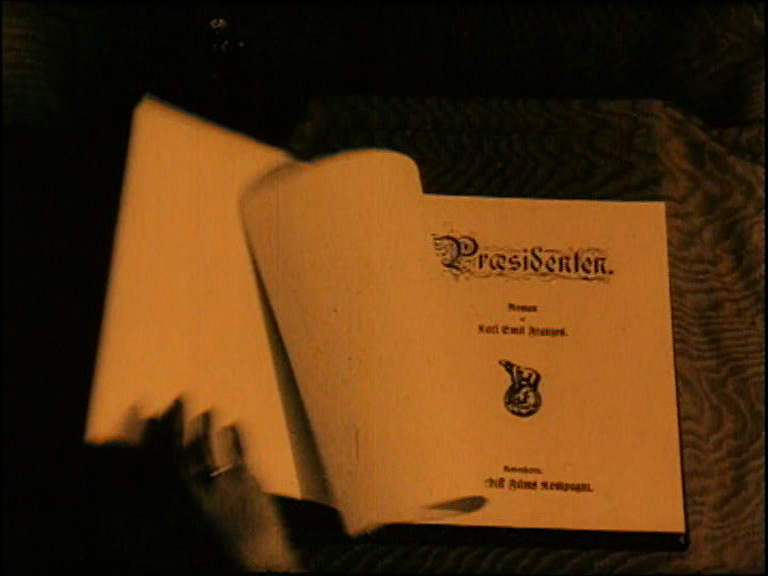
Os grandes mestres escandinavos mereciam um tópico só deles, e por isso estudamos Carl Theodor Dreyer (cujo nome aprendi a pronunciar com um sotaque autêntico) e Ingmar Bergman separadamente. Na vez de Dreyer, pude me encantar com seu primeiro longa-metragem, o fantástico “O Presidente” de 1919. Bergman e eu somos velhos conhecidos! Tanto Dreyer quanto Bergman filmavam as chamadas “chamber plays”: histórias que se passavam em cenários restritos (muitas vezes até desérticos) e com poucos personagens. É o drama psicológico à moda sueca.
Você tem medo de filmes antigos? Quer saber mais sobre Lars Von Trier e sua “Ninfomaníaca”? Não se preocupe: boa parte do curso é dedicada à nova onda de bons filmes dinamarqueses, incluindo ganhadores do Oscar, mulheres diretoras e o homem que hoje é Hannibal Lecter na TV. Há também tópicos como a “New Wave escandinava” e o polêmico e curioso Dogma 95 (manual de regras para ser levado a sério ou apenas uma jogada de marketing para atrair atenção para o cinema escandinavo?).
Algo muito interessante e curioso neste curso é que cada tópico tem um professor diferente (quando eu fiz o curso, em 2014, eram 10 temas em 10 semanas. Em 2015 o curso foi oferecido novamente com os mesmos 10 temas, mas condensados em cinco semanas). É como assistir semanalmente a pequenas lições com palestrantes distintos. Essa foi a primeira e única vez que isso aconteceu em um curso online que eu fiz até agora.
O curso acabou e eu consegui um certificado (com honras!!!) e ainda aumentei minha lista de filmes que quero ver (Asta Nielsen dos anos 1910, você é a próxima). Para conseguir o certificado, foi necessário fazer alguns teste fáceis de múltipla escolha e dois textos, um sobre o filme “A Palavra / Ordet”, de Dreyer, e outro sobre as causas do recente sucesso de séries de TV escandinavas em outros países.
Claro que nem todo mundo queria receber um certificado. É também possível se matricular e ver as lições apenas de um tema que mais lhe interesse.  E é esse caráter democrático que mais me fascina nos cursos online de cinema.

Por falar nisso, em 1º de junho começa o cursoInto the Darkness: Investigating Film Noir”. O canal TCM apoia o curso e, além de mim, dezenas de amigos meus da internet vão fazer o curso. E aí, nos encontramos na sala de aula?
Related Posts Plugin for WordPress, Blogger...