} Crítica Retrô: livro

Tradutor / Translator / Traductor / Übersetzer / Traduttore / Traducteur / 翻訳者 / переводчик

Showing posts with label livro. Show all posts

Thursday, November 26, 2026

A Revolução dos Bichos (1954) / Animal Farm (1954)


Esta animação tem porquinhos fofos como protagonistas e outros adoráveis animais da fazenda como coadjuvantes, mas definitivamente não é para crianças. É a adaptação de uma novela na qual tudo é alegoria e a política está no centro da narrativa. Eu tive a chance de ler o livro “A Revolução dos Bichos” de George Orwell e assistir à versão animada de 1954, duas obras que se complementam.

This animation has cute piggies as leads and other adorable farm animals as supporting characters, but it’s definitely not for kids. It’s the adaptation of a short novel where everything is an allegory and politics are front and center of the narrative. I had the chance to read the book “Animal Farm” by George Orwell and watch the 1954 animated version, two works that complement each other.

A Fazenda Manor é um lugar miserável, mas já teve dias de glória. Por causa destes tempos difíceis, o dono, Sr Jones (que se parece com Freakazoid, um desenho que me assustava quando criança) começou a beber. Numa noite, ele chega em casa mais tarde do que o usual. Naquela mesma noite, os animais se reúnem no celeiro.

Manor Farm is a miserable place, but once it was thriving. Because of these dark times, the owner Mr Jones (looking like Freakazoid, a cartoon I was terrified of as a child) started drinking. One night, he arrives home later than usual. That same night, animals gather for a reunion at the barn.

O porco Major conduz a reunião e sua morte faz com que os animais, grandes e pequenos, se rebelem contra o Sr Jones, que os deixa sem comida. Eles expulsam Jones, mas ele retorna com mais homens e armas. Liderados pelo porco Bola de Neve, os animais da fazenda ganham a batalha e se livram dos humanos na Fazenda Manor, pois “o homem é a única criatura que consome sem produzir”.

Old Major the pig conducts the reunion and his death makes animals big and small to rebel against Mr Jones, as they’re left without food. They expel Jones, but he returns with more men and guns. Led by Snowball the pig, the farm animals win this battle and get rid of humans in Manor Farm, since “Man is the only creature that consumes without producing”.

Bola de Neve, o herói da batalha, se torna o administrador da renomeada Fazenda dos Aniamis, e todos os bichos começam a produzir para si mesmos. A fazenda prospera. Os animais escrevem seus mandamentos e os porcos tentam educar os outros bichos, com sucesso moderado. Bola de Neve projeta um moinho para obter energia elétrica, mas o porco Napoleão tem seus próprios planos de dominação.

Snowball, the hero of the battle, becomes the manager of the renamed Animal Farm, and all the animals start producing for themselves. The farm thrives. The animals write down their commandments and the pigs try to educate the others, with mixed success. Snowball projects a windmill for electric power, but Napoleon the pig has his own domination plans.

Com seus ferozes cães que ele vem treinando desde que eram filhotes, Napoleão expulsa Bola de Neve. Ele se torna o novo líder, dizendo que Bola de Nve era um traidor. “A bravura não é o suficiente”, disse Squealer, o capanga de Napoleão. “Lealdade e obediência são mais importantes”. Eles começam a construir o moinho com menos comida para todos os animais - menos para os porcos, porque “a mais verdadeira felicidade está em trabalhar duro e viver frugalmente”.

With his ferocious dogs which he trained since they were puppies, Napoleon expels Snowball. He becomes the new leader, claiming that Snowball was a traitor. “Bravery is not enough,” said Squealer, Napoleon’s henchman. “Loyalty and obedience are more important.” They start building the windmill with less food for all the animals - except the pigs, because “the truest happiness lay in working hard and living frugally.”

Vamos comparar o livro com o filme. A sequência com os animais explorando a casa da fazenda de Jones é um pouco longa e não existe no livro, mas é um ótimo exemplo de storytelling visual e uma maneira de demonstrar contraste. Além disso, a rebelião das galinhas, que não querem ter seus ovos tirados delas, é só um detalhe no livro que é muito mais explorado no filme. Por outro lado, Boxer e seu lema “vou trabalhar mais duro” mal aparecem no filme, enquanto no livro ele é um personagem de destaque. E há, é claro, o final - que eu não vou contar.  

Let’s compare book and movie. The sequence of the animals exploring Jones’ farm house is a bit long and doesn’t exist in the novel, but it’s a great piece of visual storytelling and a way of showing contrast. Also, the rebellion of the chickens, who don’t want their eggs taken, is just a detail in the book that gets explored more in the movie. On the other hand, Boxer and his motto “I will work harder” are barely in the movie, while in the book he is an outstanding character. And there is, of course, the ending - one which I won’t spoil.

Os porcos são os únicos animais que falam, e há uma razão para isso: porcos são animais extremamente inteligentes! Eles conseguem diferenciar pessoas com base na roupa, no cheiro e na voz. Eles demosntraram habilidades para resolver problemas, têm memória espacial, percepção do tempo e podem usar ferramentas para cavar e alcançar objetos.  

The pigs are the only talking animals, and there is a reason why: pigs are extremely intelligent animals! They can tell humans apart from clothing, smell and sound. They display problem-solving skills, spatial memory, time perception and can use tools to dig or reach objects.

Precisamos falar sobre a alegoria. A história é claramente inspirada na Revolução Russa de 1917 e seus desdobramentos. Major é Lênin, Bola de Neve é Trotsky e Napoleão é Stalin, que usurpa o poder e se torna ditador. Não por coincidência, o filme foi secretamente financiado pela CIA no ápice do anticomunismo. Mas Orwell foi mais longe e declarou, apenas um ano depois que o livro foi publicado, que ele conta a história de todas as revoluções.

We must talk about the allegory. The story is clearly inspired by the Russian Revolution from 1917 and its aftermath. Old Major is Lenin, Snowball is Trotsky and Napoleon is Stalin, who abducts power and becomes a dictator. Not as a coincidence, the movie was secretly funded by the CIA at the apex of the Red Scare. But Orwell went further and declared, only one year after the book was published, that it tells the story of all revolutions.

O produtor de “A Revolução dos Bichos” é Louis de Rochemont, que foi responsável pelo cinejornal “The March of Time”, produzido entre 1935 e 1951. Trabalhando em documentários estavam os diretores John Halas e Joy Batchelor. A animação foi feita em Londres entre 1951 e 1954.  

The producer of “Animal Farm” is Louis de Rochemont, who was responsible for the newsreel “The March of Time” that was produced from 1935 to 1951. Working on documentaries were the directors John Halas and Joy Batchelor. Animation was done in London between 1951 and 1954. 

Cada frame é belo, em especial quando chega a primavera. Com apenas 72 minutos de duração, é ótimo para ser assistido depois de ler o livro. Quando estreou, confundiu pais que levaram seus filhos esperando ver uma animação tipo Disney, e o filme teve um mau resultado nas bilheterias. Mesmo assim, se tornou queridinho para ser exibido nas salas de aulas, por ser uma boa adaptação de uma novela icônica.

Each frame is beautiful, especially when spring arrives. At only 72 minutes long, it’s great to be watched after reading the book. On its original release, it deceived parents who took their children expecting a Disney-like animation, and the film performed poorly at the box office. Nevertheless, it became a darling for teachers to show at the classroom, as it’s a fine adaptation of a landmark novel.

Friday, August 9, 2024

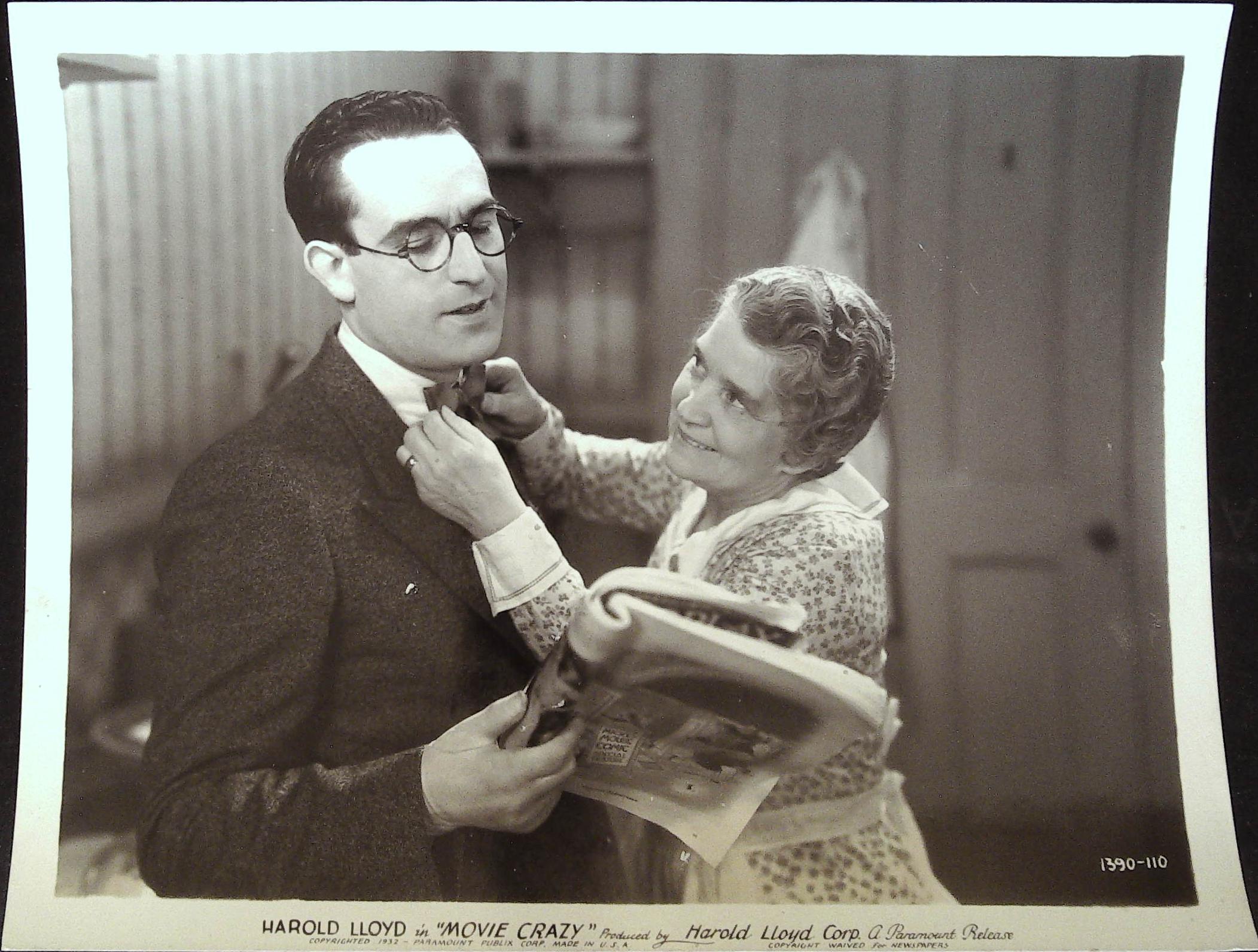
Cinemaníaco (1932) / Movie Crazy (1932)


Eu amo filmes. E os filmes que eu mais amo são filmes sobre filmes. Eu considero “Crepúsculo dos Deuses” (1950) o melhor filme já feito, meu filme favorito de todos os tempos é “Nasce uma Estrela” de 1937 e eu também amo profundamente “Fazendo Fita” (1928). Por isso eu não poderia deixar passar a oportunidade de ver e escrever sobre “Cinemaníaco” (1932), que não é apenas um filme sobre filmes que conversa comigo, mas também aquele que é considerado o melhor filme falado de Harold Llloyd.


I love movies. And the movies I love the most are movies about movies. I consider “Sunset Boulevard” (1950) to be the best movie ever made, my favorite movie of all times is “A Star is Born” from 1937 and I also love deeply “Show People” (1928). That’s why I couldn’t miss the opportunity to watch and review “Movie Crazy” (1932), not only a movie about movies that talks to me, but also a film that’s considered Harold Lloyd’s best sound picture.

Começando com uma divertida gag visual que poderia ter sido usada nos filmes mudos, “Cinemaníaco” conta a história de Harold (Lloyd), para quem o cinema é tudo. Sua mãe (Lucy Beaumont) concorda com isso, mas seu pai (DeWitt Jennings) não gosta muito – da mesma maneira que meu avô não gostava muito da minha “mania”. Harold manda uma carta e uma foto para um chefe de estúdio, mas em vez de sua foto ele acaba anexando a imagem de outra pessoa. Ele é chamado para Hollywood e, sem saber do erro, lá vai ele!


Starting with a fun visual gag that could have been used in silent films, “Movie Crazy” tells the story of Harold (Lloyd), for whom cinema is everything. His mother (Lucy Beaumont) is OK with it, but his father (DeWitt Jennings) is unimpressed – the same way my grandfather wasn’t impressed with my “mania”. Harold sends a letter and a picture to a studio head, but instead of his picture he ends up annexing someone else’s photo. He is called to Hollywood and, not knowing the mistake, here he goes!

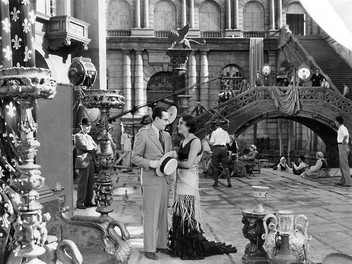
Assim que desembarca em Hollywood, Harold atrapalha uma cena que está sendo filmada, mas seu destino é a Planet Film Corporation, onde o Sr O’Brien (Spencer Charters) está esperando alguém diferente. O encontro deles é tempestuoso, como esperado, mas Harold tenta escapar – algo que não combina com seu desejo de se tornar astro do cinema.


Harold messes up with a scene being shot the moment he sets foot in Hollywood, but his final destination is Planet Film Corporation, where Mr O’Brien (Spencer Charters) is expecting someone different. Their meeting is tempestuous as expected, but Harold tries to escape – something that doesn’t match his desire to become a movie star.


Durante uma tempestade, Harold conhece Mary Sears (Constance Cummings). O primeiro contato é confuso por causa das trapalhadas de Harold, mas eles logo se tornam amigos. Mas eles já haviam se conhecido anteriormente: Mary é a atriz do filme que estava sendo rodado quando Harold chegou a Hollywood, e ele não a reconheceu porque ela usava uma peruca de cabelos negros no set de filmagem. No dia seguinte no estúdio, Mary está novamente usando a peruca e chama a atenção de Harold ao falar com um forte sotaque espanhol. Mary decide então brincar com a confusão da dupla identidade.


During a storm, Harold meets Mary Sears (Constance Cummings). Their beginning is shaky because of Harold’s clumsiness, but soon they become friends. But they had met before: Mary is the actress from the movie that was being shot when Harold first arrived in Hollywood, and he couldn’t recognize her because she was wearing a black wig on set. The following day at the studio, Mary is also wearing the wig and calls Harold’s attention by speaking with a heavy Spanish accent. Mary then decides to play with the mistaken identities.

Uma das minhas coisas favoritas em filmes sobre filmes é ver a fábrica de sonhos em ação, isto é, os bastidores de um estúdio de cinema. Também é ótimo ver alguém atuando mal de propósito. Você precisa ser um ator muito bom para atuar mal e fazer isso ser engraçado, mas não ridículo. O objetivo é a risada, não a vergonha.


One of my favorite things in movies about movies is seeing the dream factory in action, that is, the backstage of a film studio. It’s also great to see someone playing a bad actor. You’ve got to be a very good actor to act badly and make it funny but not ridiculous. The goal is the laugh, not the cringe.

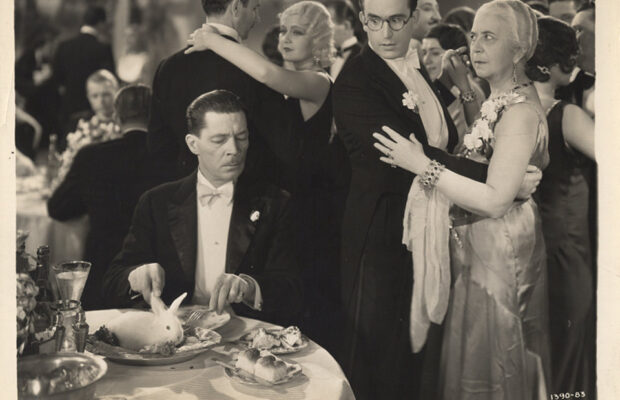
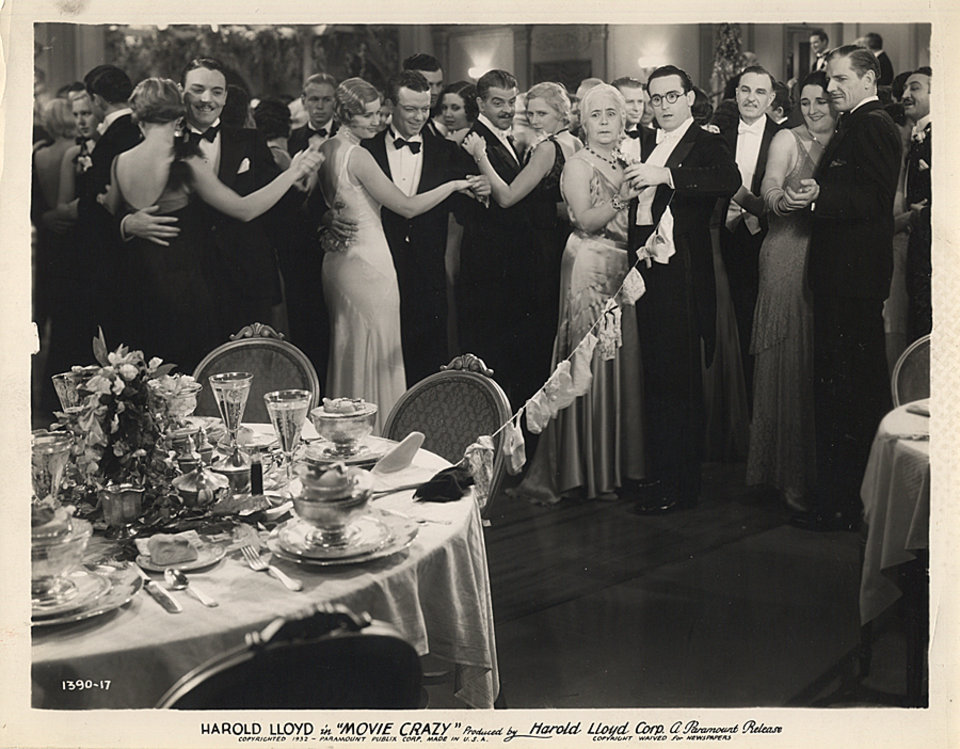
No começo da crítica eu escrevi que a gag que abre o filme poderia ter sido usada no cinema mudo. O mesmo se prova verdade para muitas outras gags, como o sapato que é arrastado pela correnteza até o bueiro ou o cigarro que queima a cabeça de um homem calvo. As muitas trapalhadas causadas quando Harold veste a jaqueta de um mágico também funcionariam num filme mudo. A briga no clímax é tirada diretamente dos filmes mudos – de fato: a sequência é um remake de uma semelhante em “O Caçula” (1927), também de Lloyd.


In the beginning of the review I said that the gag that opens the film could have been used in silent cinema. The same is true to many other gags, like the shoe being taken by the rain to the sewer and the cigarette burning a bald man’s head. The many shenanigans caused by Harold wearing a magician’s jacket instead of his own also would work in a silent film. The climatic fight is another element taken directly from silent movies – and in fact it was: the sequence is a reworking of a similar one from Lloyd’s “The Kid Brother” (1927).

“Cinemaníaco” é interessante para falar sobre diversidade no cinema. Há um personagem interpretado por Grady Sutton que é claramente gay – ou melhor, afeminado – porque ele sobe numa mesa e grita como uma mulher quando diversos ratos correm pelo chão durante um jantar chique. Há também dois personagens negros, a empregada de Mary, Besssie, e o valete no banheiro masculino. Ele é interpretado por Sam McDaniel, que não recebe crédito, enquanto a atriz que faz Bessie permanece não identificada no IMDb. Outro toque moderno, com ares feministas: o admirador de Mary, Vance (Kenneth Thomson), um ator bêbado, é um homem violento que diz em alto e bom tom que a mataria para que ela não namorasse outra pessoa.


“Movie Crazy” is interesting to talk about diversity in film. There is a character played by Grady Sutton that is clearly coded as gay – or rather, effeminate – because he goes up a table and screams like a woman while several rats are running around on the floor during a dinner party. There are also two black characters, Mary’s maid Bessie and the men’s restroom valet. He is played by an uncredited Sam McDaniel, while the actress who plays Bessie remains unidentified on IMDb. Another modern touch, with feminist undertones: Mary’s admirer Vance (Kenneth Thomson), a drunk actor, is a violent man who says out loud that he would kill her to prevent her from dating someone else.


O diretor é Clyde Bruckman, também responsável pela continuidade. Um bem-sucedido escritor, Bruckman co-escreveu obras-primas como “Bancando o Águia” (1924) e “A General” (1926). Ele dirigiu 21 filmes, incluindo curtas de O Gordo e o Magro e os dois primeiros filmes falados de Harold Lloyd. Apesar de creditado como diretor, durante as filmagens de “Cinemaníaco” Bruckman esteve constantemente incapacitado por causa da bebida e Harold Lloyd teve de dirigir a maioria das cenas. Bruckman usou material de “Cinemaníaco” em seu último filme, “Conquistando a Muque” (1945) e foi processado por Lloyd por não ter lhe dado crédito. Em desgraça, Bruckman cometeu suicídio em 1955.


The director is Clyde Bruckman, who is also responsible for continuity. An accomplished writer, Bruckman co-write masterpieces such as “Sherlock Jr” (1924) and “The General” (1926). He directed 21 movies, including Laurel & Hardy shorts and Harold Lloyd’s first two talkies. Despite being credited as director, during the making of “Movie Crazy” Bruckman was often incapacitated by his alcoholism and Harold Lloyd had to direct most scenes. Bruckman used material from “Movie Crazy” in his last film, “She Gets Her Man” (1945) and was sued by Lloyd because of the lack of credits. Discredited, Bruckman committed suicide in 1955.

O diretor assistente é Gaylord Lloyd, irmão mais velho de Harold. Seu primeiro filme como ator foi em 1916 e em muitas ocasiões ele foi dublê do irmão, pela similaridade física, e comumente não recebia créditos. Gaylord tem cinco créditos como diretor assistente entre 1927 e 1932, todos em filmes de Harold.


The assistant director is Gaylord Lloyd, Harold’s older brother. His first film as an actor was in 1916 and in many occasions he doubled for his brother, with whom he looked a lot alike, and he was often uncredited. Gaylord had five credits as assistant director between 1927 and 1932, all in Harold’s films.

“Cinemaníaco” foi feito por Lloyd para a Paramount. Ele havia trabalhado com Hal Roach desde 1914, quando desenvolveu o personagem Lonesome Luke. Harold e Roach seguiram caminhos diferentes em 1924, quando o comediante criou a Harold Lloyd Film Company, distribuindo seus filmes primeiro através da Pathé, depois através da Paramount.


“Movie Crazy” was made by Lloyd for Paramount. He had been working with Hal Roach since 1914, when he developed the Lonesome Luke character. Harold and Roach parted in 1924, when the comic created the Harold Lloyd Film Company, distributing his films first through Pathé, then through Paramount.

Eu sou como a personagem de Harold Lloyd: Cinemaníaca. Mas, ao contrário dele e de tantos cinemaníacos, nunca tive vontade de fazer filmes. Assitir e escrever sobre eles é o que me faz feliz – e o que me salvou. Eu escrevi sobre como os filmes me salvaram em meu primeiro livro infantojuvenil, “Menina Bonita com Mania de Fita”, cujas ilustrações da talentosa Clara Assis evocam Marion Davies no já mencionado “Fazendo Fita”. Meu livro está disponível na Amazon.


I’m like Harold Lloyd’s character: Movie Crazy. But, unlike him and so many movie crazy people, I never got the urge to appear in or make movies. Watching them and writing about them is what makes me happy – and what saved me. I wrote about how movies saved me in my first children’s book, “The Movie Crazy Pretty Girl”, whose illustrations by the talented Clara Assis evoke Marion Davies in the aforementioned movie about movies “Show People”. My book is available on Amazon.


Wednesday, July 10, 2024

Book review: Alfred Hitchcock’s Moviemaking Master Class, by Tony Lee Moral


“He pioneered and revolutionized the way all kinds of stories were told on screen.” Who could be that we’re talking about? None other than the Master of Suspense - and, as described in the book, suspense is the stretching out of anticipation -: Alfred Hitchcock. Because every story - even the love stories - could use a bit of suspense, Hitchcock’s influences can be seen in all of cinema and even in other arts. I once searched and found out that there were more than 2,600 books written about Hitchcock, according to the Goodreads database. Another one comes to the batch: Tony Lee Moral’s “Alfred Hitchcock’s Moviemaking Master Class”. Is it a good addition or an unnecessary new book? Let us see.


Through examples from Hitchcock’s oeuvre, the book teaches things such as pitching a story to a producer, choosing the theme of the film, writing the screenplay, exploring your background scenario and props to the maximum, storyboarding key scenes, working with actors (who are not cattle), exercising camera logic, the importance of editing and how to advertise your film.


The sub-sections of the chapters are short and straight to the point. Nothing is discussed in a deeper focus, and this isn’t a problem. Once the point has been made about the section’s title, it’s time to move on. This makes reading easy and in a nice flow. However, to Hitchcock’s experts, there is very little that they haven’t heard about. In the end of each chapter, something different appears: exercises and tips about movies to watch and books to read to further the ideas presented in the chapter.


Writing the screenplay is given a whole chapter. A job divided in the outline, the treatment and the screenplay, this is explored in deep focus, which is no surprise considering that writing the screenplay was Hitchcock’s favorite part of making a movie. He closely followed the writing of the screenplays for his movies, but, preferring to focus on telling a story visually, he left the dialogues for his screenwriters.


There is also a whole chapter devoted to how Hitchcock cut and assembled his films. The author explains how the director portrayed a character’s reaction through cutting - using the Kuleshov effect - and how he created fear and depicted violence also through cutting - by choosing to show several close-ups instead of the violent act: this is what happens in the shower murder scene in “Psycho” (1960). We then learn about how Hitch used jump cuts, match cuts and cross-cuts to establish ideas and develop the plots of his films.


We can find the definition and exemplification of terms such as the famous McGuffin and the “ice box syndrome”, that is, the holes left in the plot that become debates once the viewers leave the movie theater and hit home. One very interesting term I learned - and something Hitchcock used in many movies - is the double chase: when the hero is persecuted at the same time by the police and the villains. Another learning opportunity came with the discussion of the Vertigo Shot and how it was achieved, zooming in on camera and having the camera dollying back simultaneously.


We have the comparison between leading men Cary Grant and James Stewart. Grant was the debonair seductive man Hitchcock wanted to be, while Stewart was the boy-next-door type. The author said Stewart was the man Hitchcock actually was, but I just partially agree with this affirmation.


There is, of course, valuable advice and many great catchphrases, such as: “When characters are unbelievable, you never get real suspense, only surprise.”; “Surprise takes 10 seconds; anticipation can take an hour.”; “A successful movie juxtaposes tension and relaxation, and relieves horror with humor.”; “He was a purist and believed that film is a succession of images on the screen; this in turn creates ideas, which in turn creates emotion, which only seldom leads to dialogue.”


There are quotes from other directors about how Hitchcock influenced them, and plenty of examples of Hitchcockian non-Hitchcock movies. We can also find quotes from stars who worked with Hitch, such as Eva Marie Saint and Kim Novak, as well as quotes from people who were part of the crew in some Hitchcock movies.


There are also plenty of inspiring quotes from Hitchcock himself, such as: “A film cannot be compared to a play or a novel. It is closer to a short story, which, as a rule, sustains one idea that culminates when the action has reached the highest point of the dramatic curve.”; “Mystery is an intellectual process, as in [solving] a ‘whodunit’…but suspense is essentially an emotional process. With suspense it’s necessary to involve emotion.”; “I think a director should understand the psychology of audiences,”; “People don’t often always express their inner thoughts to one another; a conversation might be quite trivial, but often the eyes reveal what a person thinks or feels.”; “For me, suspense doesn’t have any value unless it’s balanced by humor,”; “A woman of elegance, on the other hand, will never cease to surprise you.”; “ The more successful the villain, the more successful the picture”; “ Sex on the screen should be suspenseful, I feel. If sex is too blatant or obvious, there’s no suspense.”; “You can’t direct intelligent men, the things that should come to them naturally, such as hesitancies.”


Alma Reville, Hitchcock’s wife and constant collaborator who helped shape many screenplays, is only briefly cited as the one who saw that Janet Leigh blinked after her character Marion was murdered in “Psycho”. Another mistake in the book is saying that the French term for “pre-production” is “mise-en-scène” - it simply isn’t. Some sentences are poorly written and there are some typos that a more accurate revision would have erased, as well as factual errors - Anny Ondra wasn’t on the cast list for “The Lodger” (1927).


The Master of Suspense - who was also the master of branding - is as relevant as ever, no matter that he died over forty years ago. As the book says, there is always something new and exciting to find out when rewatching Hitchcock’s films. We, creatives, can also learn something new by rewatching his movies. Tony Lee Moral, an expert in Hitch, offered us valuable advice in this tight and thought-provoking book.

Saturday, January 27, 2024

O Nome da Rosa (1986) / The Name of the Rose (1986)


Fato curioso: eu sou formada em Biblioteconomia! Mesmo trabalhando como crítica de cinema, tenho orgulho de dizer que me formei em 2022, depois de muito esforço. Dito isto, é óbvio que filmes - e livros - sobre bibliotecários me interessam muito. Por isso eu escolhi revisitar o filme “O Nome da Rosa”, e também ler o livro, tendo como foco o retrato do bibliotecário nestas obras.


Fun fact: I hold a degree in Library Science! Even though I work as a film critic, I’m proud to say I finished the degree in 2022, after a lot of hard work. That being said, it’s obvious that movies - and books - about librarians are of utmost interest to me. That’s why I chose to revisit the movie “The Name of the Rose”, and also read the novel, focusing on the portrayal of the librarian in these works.

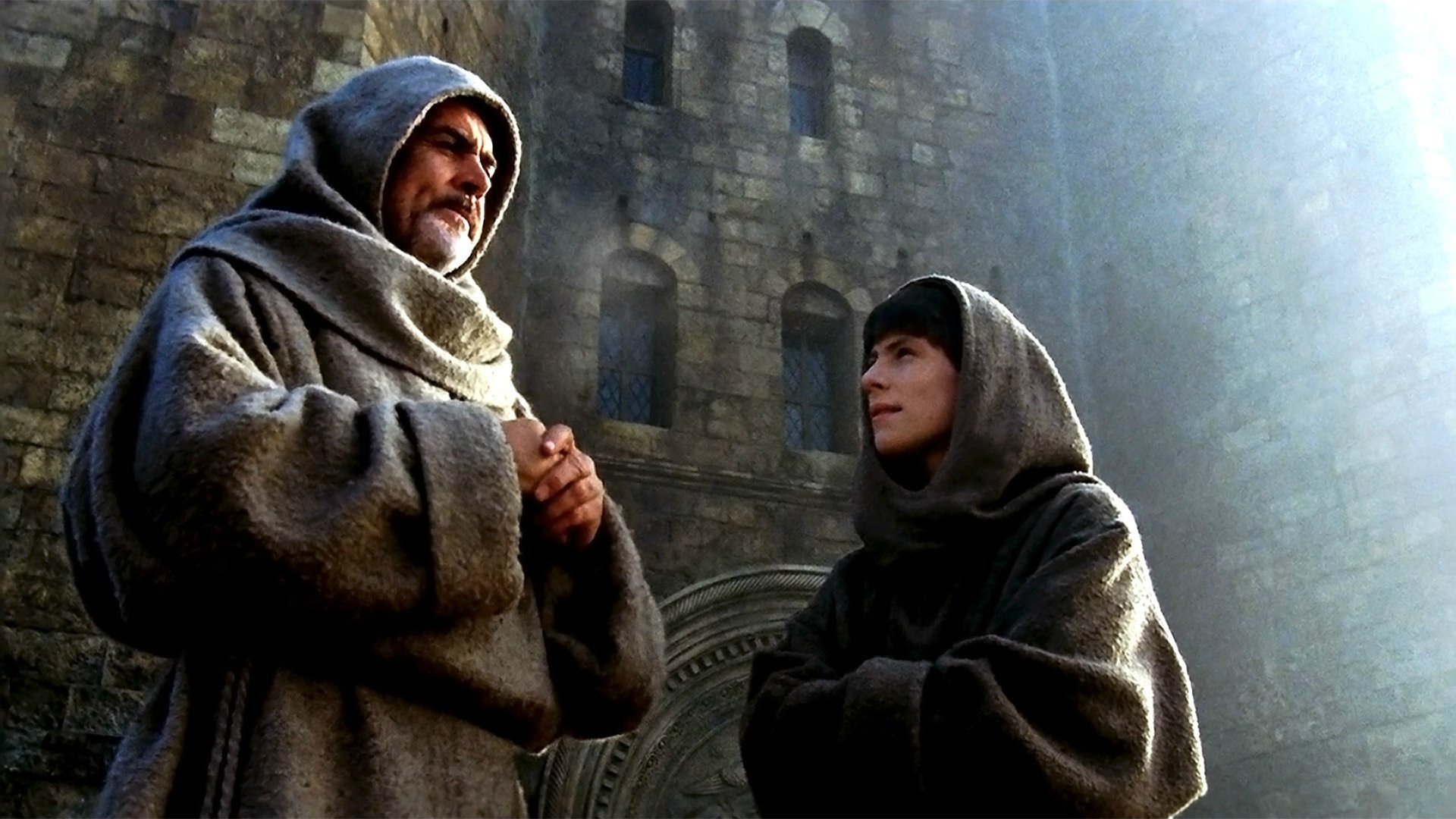
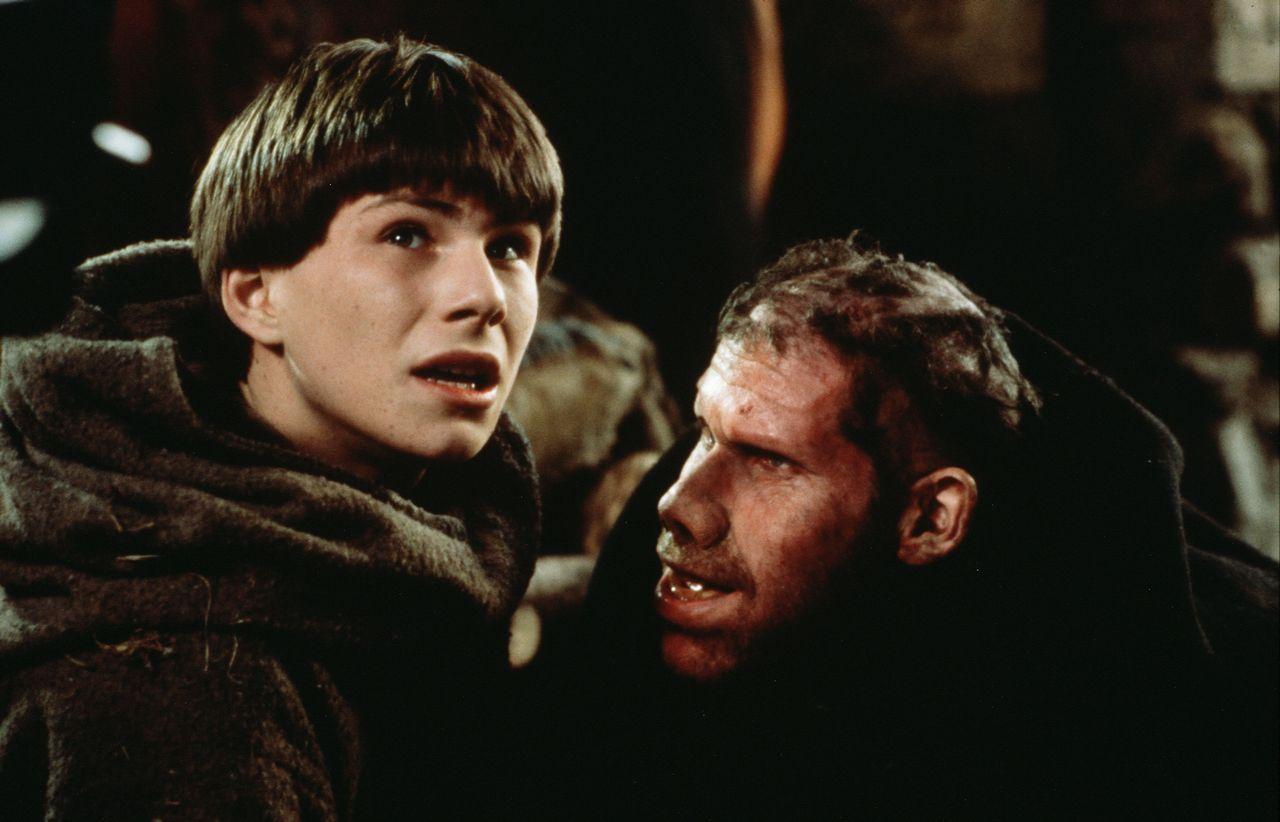
A história se passa durante sete dias em 1327, mas é na verdade narrada por um Adso mais velho. Em 1327, Adso de Melk (Christian Slater) e seu mentor William de Baskerville (Sean Connery) chegam a uma abadia onde algo terrível havia acontecido: um dos monges havia morrido em circunstâncias misteriosas. William, sendo um homem sábio, é chamado para investigar o caso. Logo depois de sua chegada, mais mortes misteriosas acontecem.  


The story takes place during seven days in 1327, but is actually being narrated by an older Adso. In 1327, Adso de Melk (Christian Slater) and his mentor William of Baskerville (Sean Connery) arrive in an abbey where a terrible thing has happened: one of the monks had died in obscure circumstances. William, being the wise man he is, is asked to investigate the case. Right after he arrives, more complicated deaths occur.

O que todos os monges mortos tinham em comum era alguma ligação com a biblioteca da abadia. A biblioteca é um local trancado, quase sagrado, e palco de intrigas. O lugar é protegido pelo bibliotecário-chefe Malaquias (Volker Prechtel) e seu assistente Berengário (Michael Habeck). É um local não para preservar e obter conhecimento, mas para manter o conhecimento cativo.


What all the dead monks had in common was that they all had some kind of link with the library of the abbey. The library is a locked, almost sacred, place and the stage for intrigues. The place is protected by chief librarian Malachia (Volker Prechtel) and his assistant Berengar (Michael Habeck). It’s a place not to preserve and obtain knowledge, but to hold knowledge captive.

Na Idade Média, o mais perto das modernas bibliotecas que existia eram os monastérios, onde livros não eram apenas guardados, mas estudados e copiados pelos monges. Isto é descrito em “O Nome da Rosa”, com muitos segredos sendo guardados pelos monges no scriptorium - onde os livros eram copiados -, especialmente pelos monges que sabiam línguas estrangeiras como árabe e grego. Os manuscritos eram sobre assuntos religiosos ou escritos por religiosos, e algumas obras seculares também eram guardadas - no livro, para servir de exemplo do que não pensar - e até mesmo emprestar e pegar emprestados manuscritos era possível devido aos monges itinerantes como William e Adso. No tempo em que se passam o livro e o filme, já havia bibliotecas sendo construídas dentro das novas universidades.  


In the Middle Ages, the closest we had to modern libraries were monasteries, where books were not only kept, but also studied and copied by monks. This is described in “The Name of the Rose”, with many secrets being held by the monks in the scriptorium - where the books were copied -, especially the monks who knew foreign languages such as Arab and Greek. Manuscripts were about religious issues or by religious figures, and some secular writings were kept - in the book, to be an example of what not to think - and even lending and borrowing manuscripts was made possible because of travelling monks such as William and Adso. By the time book and movie are set, there were already libraries being constructed inside the new universities.

O filme define a si mesmo como “um palimpsesto do romance de Umberto Eco. Palimpsesto significa, de acordo com o dicionário Merriam-Webster, “material escrito usado uma ou mais vezes depois que o escrito anterior foi apagado.” É um jeito elegante de dizer que se trata de uma adaptação mais ou menos fiel do livro. Duas diferenças principais: o personagem Salvatore (Ron Perlman) não é corcunda no livro; e no filme os inquisidores ficam por mais tempo, inclusive usando o pátio da abadia para queimar as pessoas consideradas culpadas após julgamento. Além disso, no filme, William é ainda mais perspicaz do que no livro, e muitas discussões sobre fé não estão no filme, embora sejam importantes para a trama.


The movie defines itself as “a palimpsest of Umberto Eco’s novel”. Palimpsest means, according to the Merriam-Webster dictionary, “writing material used one or more times after earlier writing has been erased”. It’s a fancy way to say that the movie is a somewhat-faithful adaptation of the novel. Two main differences: character Salvatore (Ron Perlman) doesn’t have a hunchback in the novel; and in the film the inquisitors stay for a longer time, even using the abbey’s patio to set fire to those found guilty in the judgments. Also, in the movie, William of Baskerville is even more perceptive than in the novel, and many discussions about faith are not in the movie, even though they are important to the plot.

Este é um filme que não passa no Teste de Bechdel, ou seja, um filme que não tem ao menos duas personagens femininas com nome e que conversam entre si sobre um assunto que não seja sobre homens. A garota no filme não tem nome, não tem falas nem poder. Isto é esperado de um filme cuja trama acontece dentro de uma abadia, e considerando toda a história da exclusão das mulheres pela religião católica. Há inclusive um momento em que William cita a Bíblia, dizendo: “mais amarga que a morte é a mulher”.


This is a movie that doesn’t pass the Bechdel Test, that is, a movie that doesn’t have at least two female characters with names and who talk to each other about a subject that is not men. The girl in the film is both nameless, lineless and powerless. This is expected, as a movie whose action happens in an abbey, and considering the whole history of female exclusion in the Catholic religion. There is even a moment when William quotes the Bible, saying: “bitterer than death is the woman”.

De acordo com o IMDb, Sean Connery estava em um momento difícil da carreira quando fez este filme. Mas seu retorno ao sucesso viria logo: no ano seguinte ele faria “Os Intocáveis”, pelo qual ganharia um Oscar de Melhor Ator Coadjuvante. Por “O Nome da Rosa” Connery ganhou um BAFTA de Melhor Ator.


According to IMDb, Sean Connery was in a very low point of his career when he made this movie. But his comeback was just around the corner: the following year he would make “The Untouchables”, for which he would win an Oscar for Best Supporting Actor. For “The Name of the Rose” Connery won a BAFTA for Best Actor.


Para a faculdade, eu tinha de escrever um artigo de 15 páginas sobre qualquer assunto dentro da Biblioteconomia. Meu primeiro impulso foi escrever sobre “O Nome da Rosa”, comparando livro, filme e vida real. Em vez disso, eu escolhi escrever sobre adaptações necessárias para uma biblioteca atender usuários com deficiência. Eu fico feliz que tenha mudado de ideia, pois agora posso escrever, num artigo para o blog simples mas - espero - informativo, sobre “O Nome da Rosa” - o mais famoso romance de Umberto Eco, mas ao mesmo tempo aquele que ele considerava seu pior trabalho de ficção. Sobre o filme, em 2013 Eco foi sucinto: “é um bom filme”.  


For college, once I had to write a 15-page paper on any topic of Library Science. My first urge was to write about “The Name of the Rose”, comparing novel, movie and real life. I chose instead to write about adaptations a library needs to accommodate users with disabilities. I’m glad I changed my mind, so now I can write, in a simple but I hope informative blog post, about “The Name of the Rose” - Umberto Eco’s most famous novel, but the one he considered his worst work of fiction. About the movie, in 2013 Eco was succinct: “it’s a nice movie”.


This is my contribution to the On the Job blogathon, hosted by Hamlette’s Soliloquy and The Midnite Drive-In.

Related Posts Plugin for WordPress, Blogger...