} Crítica Retrô: Kirk Douglas

Tradutor / Translator / Traductor / Übersetzer / Traduttore / Traducteur / 翻訳者 / переводчик

Showing posts with label Kirk Douglas. Show all posts

Friday, December 9, 2016

O Tempo Não Apaga (1946) / The Strange Love of Martha Ivers (1946)

Barbara Stanwyck tinha faro para descobrir novos talentos. Em 1939, ela insistiu que o estúdio desse ao novato William Holden o papel principal em “Conflito de Almas”, e assim nasceu uma estrela. Em 1946 ela fez isso de novo. “O Tempo Não Apaga” apresentou ao mundo uma nova estrela, que ainda não se apagou: Kirk Douglas.

Barbara Stanwyck knew how to recognize a new star. In 1939, she insisted on casting newcomer William Holden in “Golden Boy”, and a star was born. She did it again in 1946. “The Strange Love of Martha Ivers” introduced to the world a new star, one who is still (and not strangely) loved: Kirk Douglas.
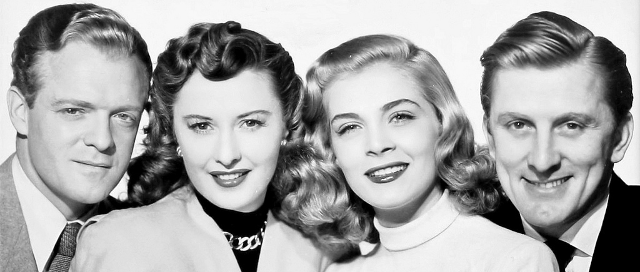

Em 1946, Issur Danielovitch, nascido em Nova York em uma família judia com raízes russas, já havia mudado legalmente seu nome para Kirk Douglas. Em 1946, Kirk já havia sido ferido na Segunda Guerra Mundial. Em 1946, Kirk já havia trabalhado no rádio e no teatro. Em 1946, Kirk já tinha um filho de dois anos de idade chamado Michael. E então, em 1946, a amiga Lauren Bacall disse ao produtor de Hollywood Hal Wallis para prestar atenção em Kirk. O que se seguiu foi seu primeiro papel no cinema.

By 1946 Issur Danielovitch, born in a Jewish family with Russian roots in New York city, had already changed his name legally to Kirk Douglas. By 1946, Kirk had been injured in World War II. By 1946, Kirk had made radio and stage work. By 1946, Kirk had a two-year-old son named Michael. And then, in 1946, his friend Lauren Bacall told Hollywood producer Hal Wallis to keep an eye on Kirk. His first film role was what followed.


A história de “O Tempo Não Apaga” começa em 1928, quando a jovem Martha está tentando fugir de sua tirania tia e tutora. O jovem e nerd Walter O’Neil conta onde Martha e o amigo Sam Masterson estão escondidos. Martha é trazida de volta para casa e, após uma briga, mata acidentalmente a tia (detalhe: a tia havia acabado de matar, não acidentalmente, o gatinho de Martha). Sam observa tudo.

The story of “The Strange Love of Martha Ivers” starts in 1928, when young Martha is trying to escape from her tyrannical aunt and tutor. Young and nerdy Walter O’Neill tells the aunt where Martha and her friend Sam Masterson are hiding. Martha is brought home and, after an argument, accidentally kills her aunt (note: her aunt has just killed, not accidentally, Martha’s pet kitten). Sam witnesses it.
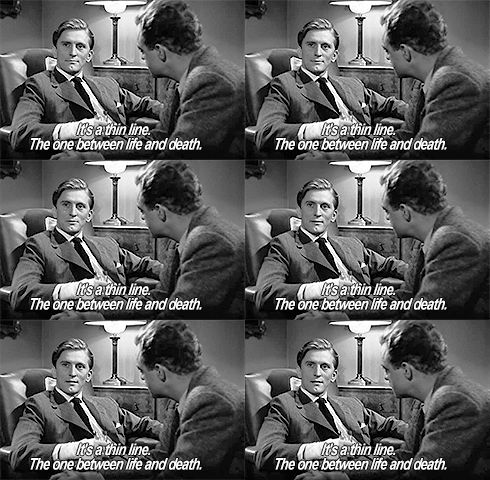

O ano agora é 1946. Sam Masterson (Van Heflin), que fugiu ainda criança, está de volta à cidade, mas contra sua vontade. Seu carro quebrou justamente na entrada de Iverstown, e ele precisa deixá-lo em uma oficina para consertar. Já que ele está na cidade, descobre que Martha (Barbara Stawnwyck) é agora uma mulher forte e rica, e casada com Walter (Kirk Douglas), um advogado.

The year is now 1946. Sam Masterson (Van Heflin), who ran away, is back in town, but against his will. His car just happened to break in Iverstown, and he must leave it to be fixed. Since he is in town anyway, he finds out that Martha (Barbara Stanwyck) is a strong, rich woman, now married to Walter (Kirk Douglas), a district attorney.
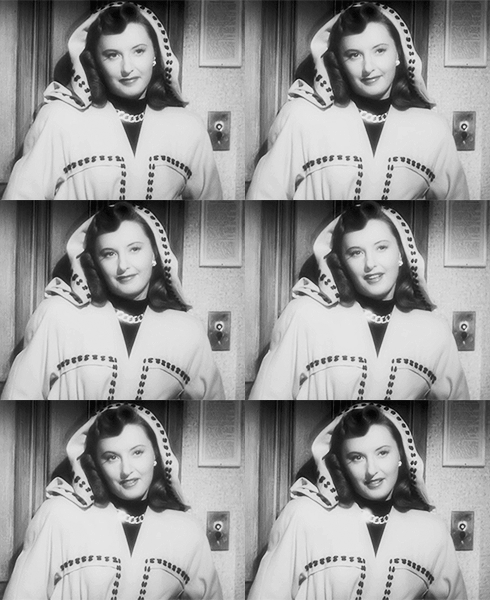

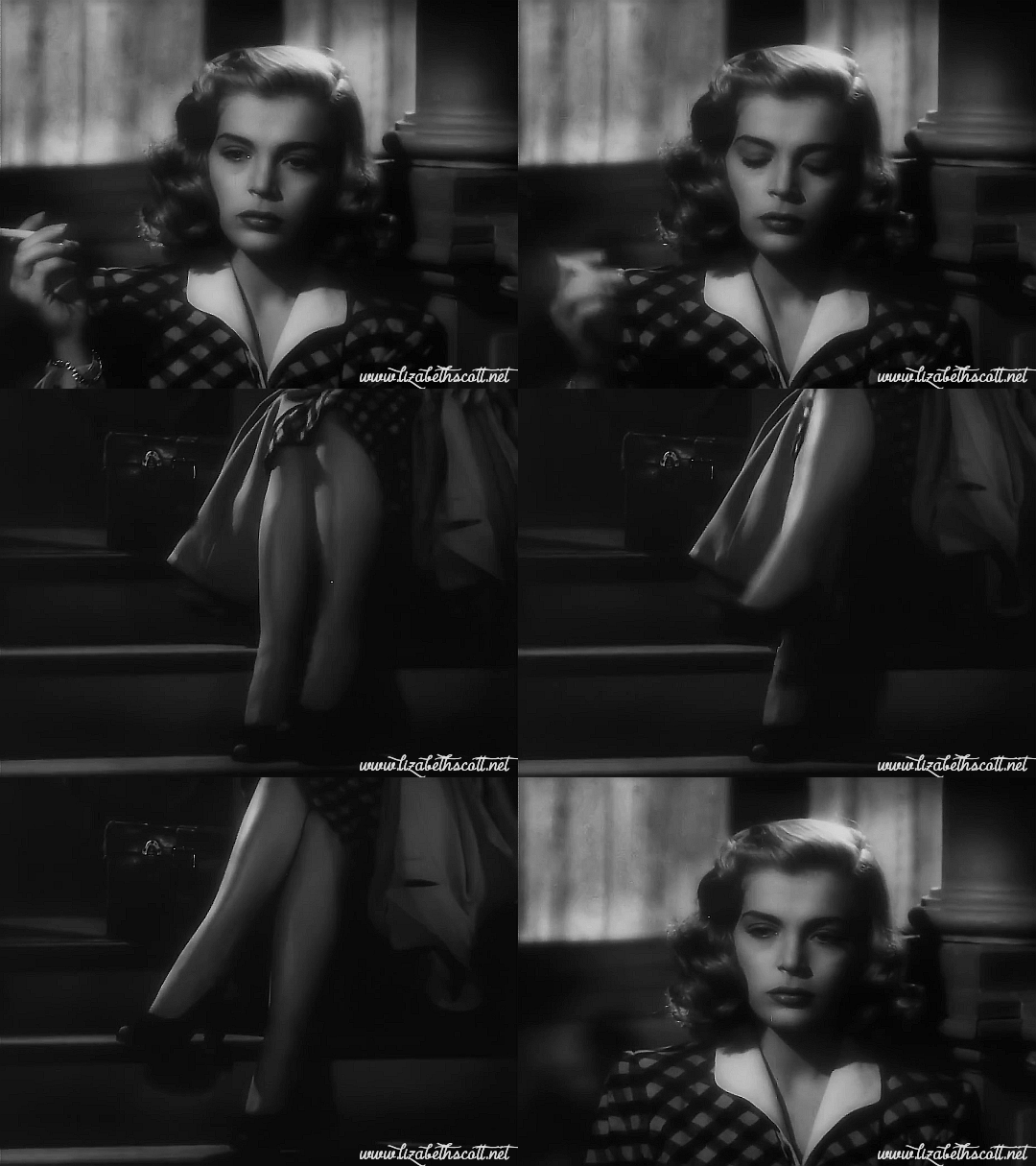
Sam não quer nem saber do casal disfuncional, mas Martha e Walter acreditam que ele voltou para chantageá-los, já que ele também estava presente na noite da morte da tia. E Sam acaba tendo de ir atrás do poderoso casal, para que eles ajudem uma moça que Sam acaba de conhecer, Toni Marachek (Lizabeth Scott), que acabou de sair da cadeia.

Sam wants nothing to do with their dysfunctional relationship, but Martha and Walter believe he’s back to blackmail them, because he saw everything that happened the night the old aunt was killed. And Sam indeed needs to talk to powerful Martha and Walter, but to save a sweet girl he meets, Toni Maracheck (Lizabeth Scott), who has just been released from jail.

É óbvio que o Novato tinha talento. Barbara Stanwyck lhe disse isso, e eles se tornaram bons amigos. Kirk atuava seguindo um lema: “quando você está interpretando um personagem fraco, encontre um momento em que ele é forte, se você está interpretando um personagem forte, encontre um momento em que ele é fraco”. Walter O’Neil era um personagem fraco e alcoólatra, mas o primeiro no cinema para um ator que ficou conhecido por interpretar tipos fortes.

It’s crystal clear that the newcomer had talent. Barbara Stanwyck told him this, and they became good friends. He played his part following a motto: “when you’re playing a weak character, find a moment when he’s strong, if you’re playing a strong character, find a moment when he’s weak”. Walter O’Neill was a weak alcoholic character that originated a career for an actor who subsequently played stronger characters.
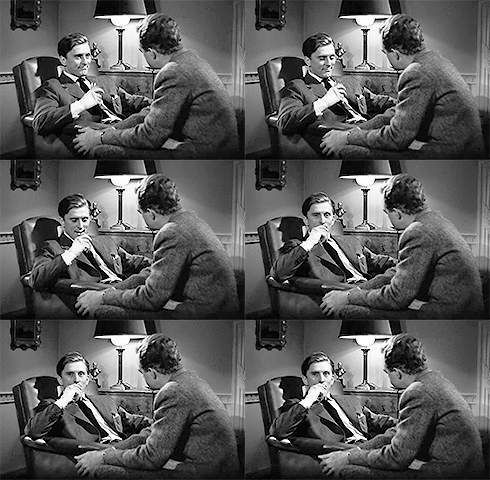

Este é um filme noir soberbo, com uma trilha sonora especialmente arrepiante. Ele merece ser visto simplesmente pela história e pelo desfecho inesquecível, mas para completar este foi também o primeiro passo em uma carreira de várias décadas (carreira que, eu acredito, deveria ter culminado em um Oscar em 1956 quando Kirk interpretou Van Gogh) de um verdadeiro ícone de Hollywood.

This is a superb film noir, with an especially striking soundtrack. It should be worth checking for its plot only and its haunting ending, but it also was the first step in a multi-decade career (that, I believe, should have culminated in an Oscar in 1956, when Kirk played Van Gogh) of a true Hollywood icon.

"The Strange Love of Martha Ivers" is on public domain and can be watched at YouTube and Internet Archive.

This is my contribution to the Kirk Douglas 100th Birthday blogathon, hosted by Karen at Shadows and Satin.

Saturday, September 21, 2013

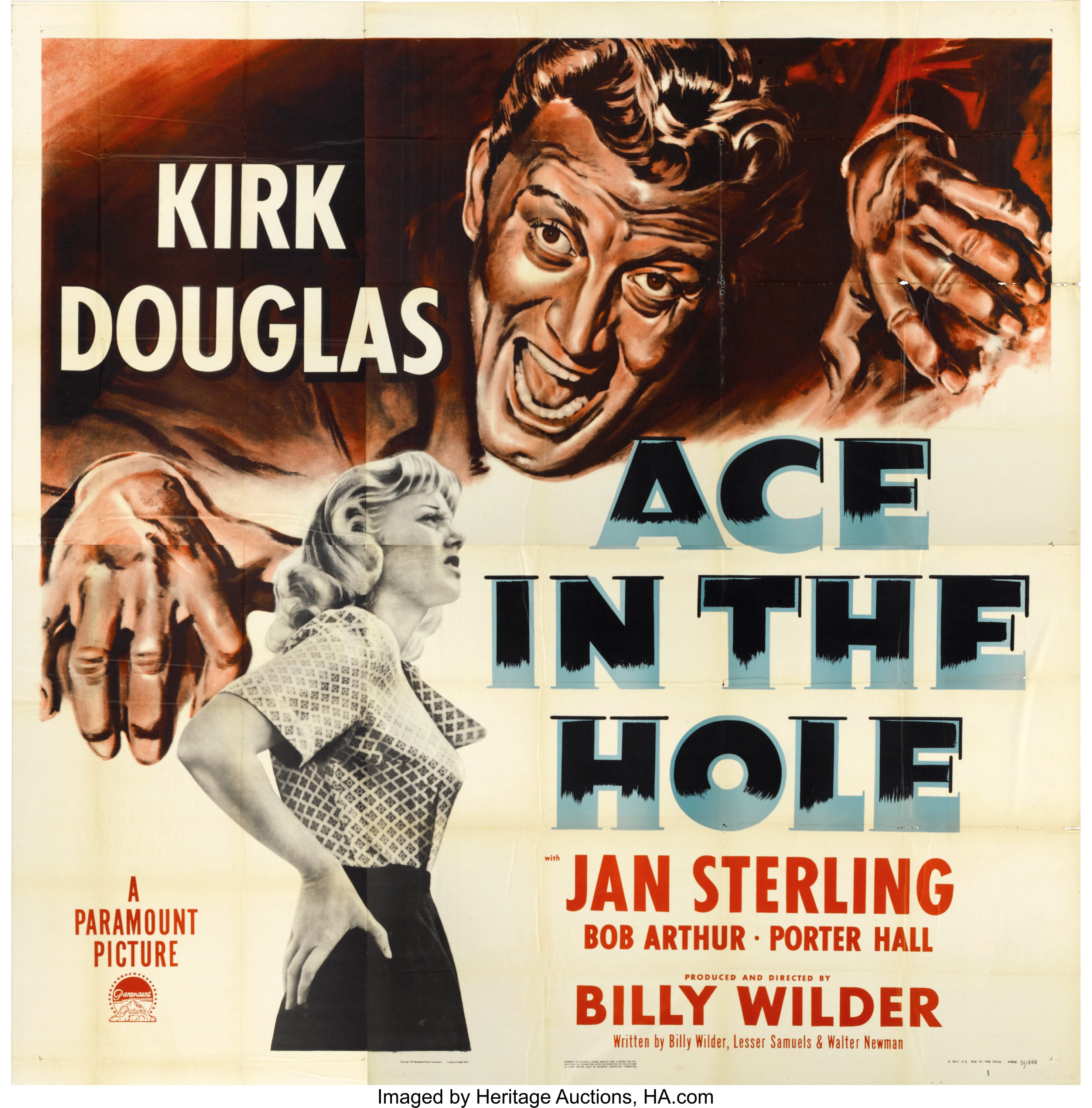
A Montanha dos Sete Abutres (1951) / Ace in the Hole (1951)

Esqueça por um momento “Sabrina” (1954), “Quanto Mais Quente Melhor” (1959), “Se meu Apartamento Falasse” (1960) e “Cupido não tem Bandeira” (1961). Billy Wilder, responsável por todas essas charmosas comédias, também fez filmes mais sérios. “A Montanha dos Sete Abutres” (1951) supera em seriedade “Farrapo Humano” (1945) e tem mais cinismo que “Crepúsculo dos Deuses” (1950). E, graças à sua crítica contumaz aos jornalistas e ao próprio público, criou um filme que fracassou, mas ressurgiu como uma profecia: dificilmente uma produção de 1950 é tão atual.

Forget for a moment “Sabrina” (1954), “Some Like It Hot” (1959), “The Apartment” (1960) and “One, Two, Three” (1961). Billy Wilder, responsible for all of those charming comedies, also made serious films. “Ace in the Hole” (1951) is more serious than “The Lost Weekend” (1945) and more cynical than “Sunset Boulevard” (1950). And, thanks to his contumacious critic to journlists and to the public, made a film that was a failure, but re-emerged as a prophecy: very few films from the 1950s feel so modern. 

Chuck Tatum (Kirk Douglas) é um repórter de um pequeno jornal que está de passagem por uma cidadezinha. Ele fica sabendo que o minerador Leo Minosa (Richard Benedict) está preso em uma caverna, e logo chama seus colegas da redação para cobrir o acontecido. Antes e depois de eles chegarem, Chuck começa seu próprio show, usando muito sensacionalismo e apelando para a curiosidade mórbida do público.

Chuck Tatum (Kirk Douglas) is a reporter from a small newspaper who is passing by a small town. He learns that miner Leo Minosa (Richard Benedict) is stuck in a cave, and soon he calls his mates from the newspaper to cover the story. Before and after they arrive, Chuck puts together his own spectacle, using a lot of sensationalism and appealing to the public’s morbid curiosity.

O título “ace in the hole” pode ser traduzido como “uma carta na manga”, o ás que vai ganhar a partida, ou seja, o furo de reportagem que Chuck encontra. Outro título pelo qual o filme ficou conhecido é “The Big Carnival”, e de fato é um grande festival que é organizado em torno do pobre homem soterrado. Em questão de dias aquele pedaço poeirento e esquecido da América está em evidência e a caverna, ou melhor, a montanha dos sete abutres, vira destino de excursões familiares. E, como é de se imaginar, para que a história continue gerando lucro, é necessário que Leo não seja resgatado tão cedo.

The title “ace in the hole”, obviously, is a reference of the ace in a deck of cards, being the card that can make someone win the game. Chuck’s ace in the role is the breaking news he can nor report. The movie is also known as “The Big Carnival”, and for sure a huge festival is put together around the poor buried man. In a matter of days, that dusty and forgotten piece of America is on the spotlight and the cave, or better, the mountain of the seven vultures (title given to the movie in Brazil), becomes the final destination of families on vacation. And, as you can imagine, in order to give profit, Leo must not be rescued so soon.

Chuck não é o jornalista exemplar, pois já foi demitido de vários jornais do estado de Nova York ao Novo México. Mesmo assim, o jovem fotógrafo Herbie Cook (Robert Arthur) tem nele um ídolo. Mas esta admiração só durará até que o jovem Herbie chegue ao palco do espetáculo e veja que Chuck convenceu as autoridades a escavarem um buraco abaixo de Leo, o que demorará muito mais que o plano inicial.

Chuck isn’t a model journalist, as he was already fired from several newspapers from New York to New Mexico. Nevertheless, young photographer Herbie Cook (Robert Arthur) idolizes Chuck. But this admiration will vanish when Herbie arrives at the big stage and sees that Chuck has convinced the authorities to dig a hole below Leo, taking longer to reach the man than originally planned.

Quem realmente lucra com o movimento gerado pela tragédia é Lorraine Minosa (Jan Sterling), a esposa de Leo, que trabalha em uma loja de beira de estrada que agora está cheia de turistas. Não é difícil perceber que ela não gostava muito de Leo, e um símbolo forte para essa relação é uma pele que Leo deu a Lorraine e que ela considera extremamente vagabunda.

Who really has a profit with the movement generated by the tragedy is Lorraine Minosa (Jan Sterling), Leo’s wife, who works in a shop down the road and now sees her workplace fill with tourists. It’s not difficult to see that she didn’t like Leo very much, and a strong symbol for this relationship is a fur that Leogave Lorraine – something she considers to be chintzy.


Wilder já tinha muitos sucessos na carreira e passeava, como continuaria, por dramas e comédias. Aqui ele teve seu primeiro fracasso. Nem o público nem a crítica foram generosos com este estranho filme considerado noir e que mostra uma realidade que muitos não gostariam de engolir. De fato, os jornalistas, ao lado talvez apenas dos advogados, são os profissionais que, segundo o cinema, têm nas mãos uma “faca de dois gumes”: podem fazer o bem ou o mal com suas informações, conhecimentos e muita capacidade de manipulação.

Wilder already had many successes in his career and went, as he would continue to do, from comedies to dramas with ease. Here he had his first failure. Neither the public nor the critics were generous with this strange movie that can be considered a noir and shows a truth that many don’t want to face. Indeed, the journalists, like the lawyers, are the professionals who, according to the movies, have in their hands a double-edged sword: they can do good or evil with their informations, knowledge and ability to manipulate people. 

O jornalismo sensacionalista, ao que nos conta Billy Wilder, sempre existiu, uma vez que o filme é baseado em uma história real, ocorrida em 1925 e que, apesar de ter terminado com a morte de um homem soterrado, Floyd Collins, garantiu ao jornalista que fez a cobertura da tragédia o prêmio Pulitzer. Outro caso relacionado foi de uma criança que ficou presa em um poço durante muitos dias e teve sua história explorada pela mídia. E por falar em exploração, o filme gerou uma batalha judicial quando o ator Victor Desny, que foi creditado em um único filme, acusou Wilder de plágio. Segundo Victor, ele havia ditado à secretária de Wilder uma sinopse baseada na história de Floyd Collins dois anos antes de o filme ser feito, e Wilder devia-lhe crédito. Em 1956, Wilder pagou uma indenização a Victor. (Aqui o site do TCM traz informações erradas, pois fala de Walter Newman e não de Victor Desny, prova de que nem a mais perfeita das redes de televisão é perfeita).

Sensationalist journalism, Wilder tells us, always existed, because the film is based on a real case from 1925. Even though the real story ended with the death of Floyd Collins, the buried man, the journalist who covered the story won the Pulitzer prize. Another similar case involved a child who was stuck in a well for several days and the story was explored by the media. And if we’re talking about exploring, the film generated a battle in court when when the actor Victor Desny, who worked in only one film during his career, accused Wilder of plagiarism. According to Victor, he had dictated to Wilder’s secretary a synopsis based on Floyd Collins’ case two years before the movie was made, and Wilder needed to give him credit. In 1956, Wilder paid an indemnity to Victor. (Here the TCM website brings some wrong information, because it talks about Walter Newman and not Victor Fresny, proving that not even the most perfect TV network is perfect). 

No Brasil, onde esse tipo de programa sensacionalista domina boa parte da tarde, o filme que melhor representa esse fenômeno nem um pouco saudável da prática jornalística é “O Bandido da Luz Vermelha” (1968). Para mim, a parte mais marcante do filme sobre a trajetória de um criminoso é a narração sensacionalista, ainda tão atual.

In Brazil, where this kind of sensationalist program dominates a good amount of afternoon TV, the film that best represents this unhealthy phenomenon in journalism is “The Red Light Bandit” (“O Bandido da Luz Vermelha”, 1968). For me, the most striking part of the film about a criminal is the sensationalist narration, still so modern.

Se há programas e coberturas jornalísticas baseados na desgraça alheia, é porque o público gosta de vê-los, e isso não é necessariamente culpa de um jornalista em particular, mas sim daqueles que, tendo o poder de colocar no ar um programa ou imprimir um jornal, optam pela audiência e pelas vendas. Seria mais irônico ainda se, assim como no filme, esses jornais e redes de televisão tivessem em suas redações uma placa com os dizeres: “Conte a verdade”.

If there are shows and journalistic coverages based on someone else’s disgrace, it’s because the public likes to see it, and it’s not necessarily the fault of a single journalist but of those who, having the power to produce a show or print a newspaper, choose for the sales and profits. It would be even more ironic if, like in the movie, these newspapers and TV networks had in their headquarters a plaque with the words: “Tell the truth”.

Kirk Douglas está excelente. Sua performance como homens de caráter duvidoso (como em “Assim Estava Escrito”, filmado no ano seguinte) é sempre boa. Wilder, responsável pela direção, roteiro e produção do filme, pode não ter agradado seus contemporâneos e aberto uma ferida no orgulho da imprensa, mas o tempo foi o juiz e “A Montanha dos Sete Abutres” mostrou-se mais um dos muitos filmes à frente de seu tempo.

Kirk Douglas is excellent. His performance as men of dubious character (like in “The Bad and the Beautiful”, shot in the following year) is always good. Wilder, who does the direction, screenplay and production of the movie, may not have pleased his contemporaries and opened a wound in the pride of the press, but time was the final judge and “Ace in the Hole”showed it was another movie made ahead of its time.


This is my contribution to the “Breaking News: Journalism in Classic Film Blogathon”, hosted by Jessica at Comet Over Hollywood and Lindsay at Lindsay’s MovieMusings. A real front page event!

Saturday, July 13, 2013

Dupla Dinâmica: Wyatt Earp e Doc Holliday

Dynamic Duo: Wyatt Earp and Doc Holliday

No Velho Oeste, não se pode confiar em ninguém, só na sua sombra e em seu cavalo, e nem sempre o cavalo é confiável. Mas muito antes de John Wayne me ensinar esta valiosa lição de vida, uma dupla de carne e osso ficou famosa com um episódio de um tiroteio no O.K. Corral. Wyatt Earp e Doc Holliday foram as provas vivas de que os opostos se atraem.

In the Old West, you could trust no one, only your shadow and a horse, and you couldn't always trust the horse. But before John Wayne taught me this precious lesson, a real duo became famous with an episode involving a gunfight in the O.K. Corral. Wyatt Earp and Doc Holliday were the living proof that opposites attract.
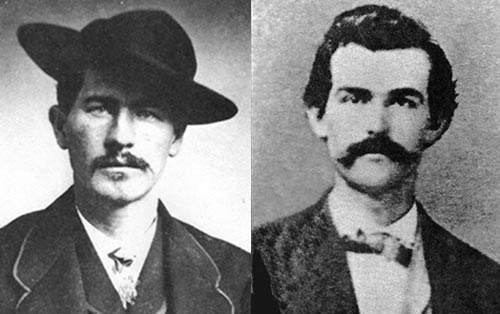
Wyatt e Doc
Wyatt Berry Stapp Earp (1848 – 1929) foi xerife, garimpeiro e apostador. Um ponto importante de sua vida foi a morte de sua primeira esposa no parto, em 1870, que o levou de volta ao oeste, trabalhando como caçador de búfalos e "motorista" de diligências. Em Tombstone, cidade do tiroteio, viviam seus quatro irmãos, também geralmente representados nas telas. Lá seu irmão Virgil era xerife, e foi daí que surgiu a rivalidade que acabou no tiroteio: os foras-da-lei Billy Claiborne, Ike e Billy Clanton, Tom e Frank McLaury enfrentaram Wyatt, Doc, Virgil e Morgan Earp após um mês de brigas. Embora os relatos da época sejam confusos (dois jornais dão duas versões diferentes), Wyatt disse que foi uma questão de auto-defesa, uma vez que eles estavam em menor número.

Wyatt Berry Stapp Earp (1848-1929) was a sheriff, mining worker and gambler. An important point in his life was the death of his first wife during childbirth, in 1870, something that sent him back to the west, where he worked as a buffalo hunter and stagecoach conductor. Tombstone, the scenario of the gunfight, was the home of his four brothers, often portrayed on the screen as well. There his brother Virgil was the marshall, and he was the starter of the rivalry that ended in the gunfight: the outlaws Billy Clairbone, Ike and Billy Clanton, Tom and Frank McLaury faced Wyatt, Doc, Virgil and Morgan Earp after a month of animosity. Although the sources of the time are not precise (two newspapers give two different versions), Wyatt declared that it was a matter of self-defense, because he and his brothers were in numeric disadvantage.

John Henry Holliday (1851 – 1887) foi um dentista (daí o apelido Doc), apostador e também um homem muito habilidoso com as armas. Apesar de sua precocidade (formou-se aos 20 anos, portanto era considerado menor de idade e não poderia pegar o diploma), a carreira brilhante que se anunciava para Doc foi cortada pela tuberculose, mal que matou sua mãe quando o menino tinha 15 anos. Segundo os médicos, ele tinha poucos meses de vida, então seu plano foi mudar-se para o Texas, onde o clima era mais agradável. Logo ele percebeu que jogos davam muito mais dinheiro que a profissão de dentista. Devido à tuberculose e sua morte apenas seis anos após o famoso tiroteio, em várias versões Doc morre durante o tiroteio, dando mais teor dramático à cena.

John Henry Holliday (1851-1887) was a dentist (hence the nickname Doc), gambler and also very good with guns. Although he was precocious (he graduated at 20, so was considered underage and couldn't receive his degree), the brilliant career he had on the horizon was cut short by tuberculosis, the same disease who left him motherless at 15. According to the doctors, he had few months to live, so he decided to move to Texas, where the climate was more pleasant. Soon he realized that gambling was more rewarding than being a dentist. Because of tuberculosis and his death six years after the shooting, in several versions Doc dies in the gunfight, adding more drama to the occasion.
A bizarrice foi extrema na primeira adaptação do episódio do O.K. Corral para as telas, em 1934, porque a viúva de Wyatt, Josephine, conseguiu que os estúdios não usassem o nome do marido, e assim o protagonista foi rebatizado como Michael Wyatt e vivido por George O’Brien.

The first adaptation of the O.K. Corral episode to the screen was extremely bizarre because, in 1934, Wyatt's widow, Josephine, forbade the studios to use the name of her husband, so the main character was renamed as Michael Wyatt and played by George O'Brien.

Um dos grandes nomes do western (e também um homem grande, 1,89 m), Randolph Scott interpretou Wyatt em 1939, no filme “A lei da fronteira”, com Cesar Romero como Doc. Extremamente fantasioso, neste filme Holliday morre antes do famoso tiroteio, que acontece em 1880, e Earp se vinga da morte do amigo.

One of the biggest names of the western genre (and also a big man, standing 6'2''), Randolph Scott played Wyatt in 1939 in the film “Frontier Marshall”, with Cesar Romero playing Doc. This film takes a lot of liberties, ofr instance: Holliday dies before the famous shooting, that happens in 1880, and Earp decides to avenge his friend. 
Mais um pouco de fantasia foi adicionada à história quando Doc (sem Wyatt), Pat Garrett e Billy The Kid disputam a atenção de Jane Russell em "O Proscrito" (1943). Doc é interpretado por Walter Huston e a trama até se mostra verossímil, pois Wyatt era casado e Doc, um conhecido mulherengo.

Some more fantasy was added to the story when Doc (without Wyatt), Pat Garrett and Billy the Kid fight for Jane Russell's attention in 'The Outlaw” (1943). Doc is played by Walter Huston and the story is even credible, because Wyatt was married and Doc, a famous womanizer.
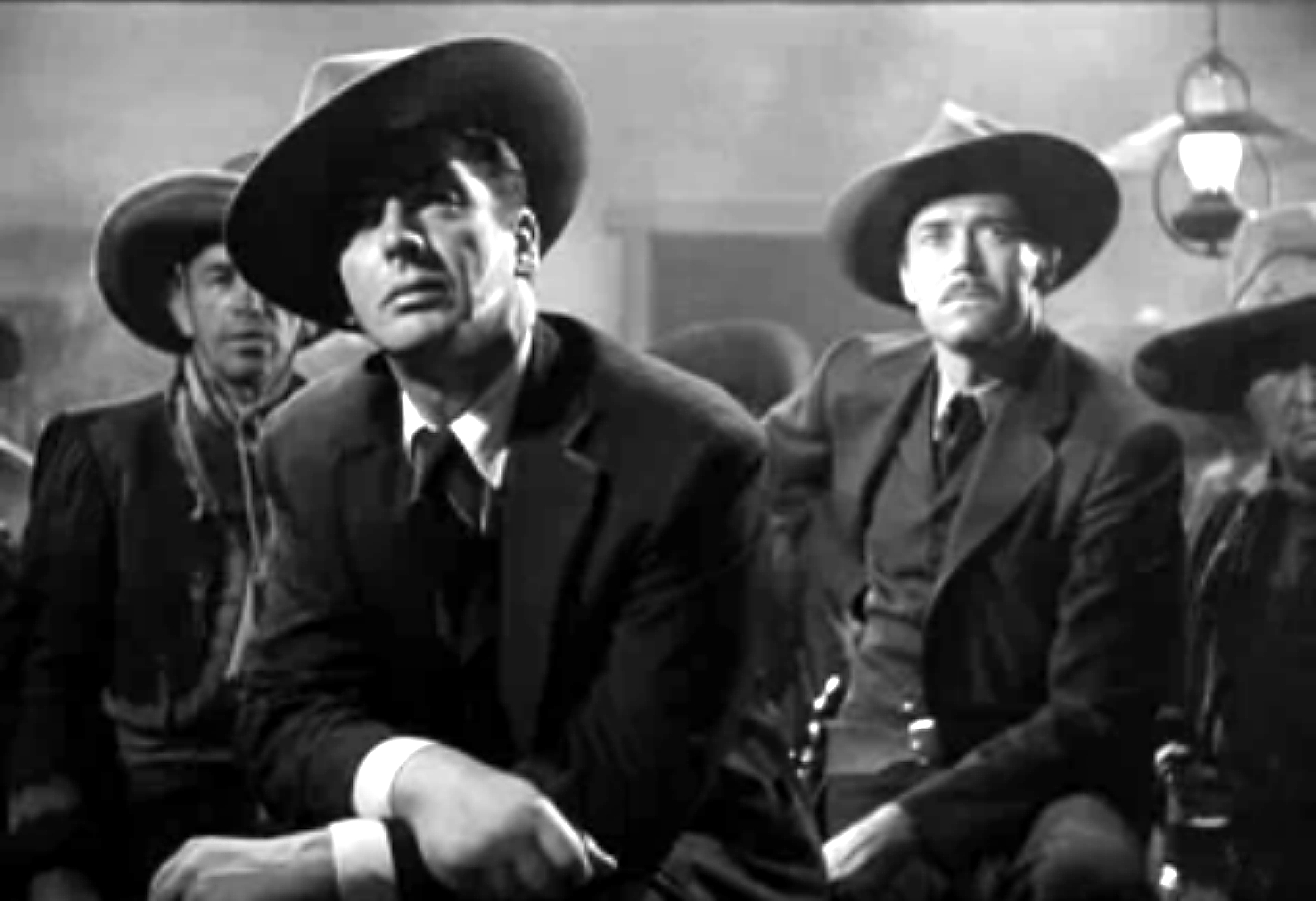
Sem dúvida a representação mais conhecida da dupla foi feita em “Paixão dos Fortes” (1946), de John Ford. Henry Fonda é Earp e Victor Mature, Holliday. Fonda inclusive se apresenta de maneira triunfal, dizendo: "Earp. Wyatt Earp". Ainda com um pouco de fantasia (e Doc sem seu bigode), o filme conta com um pouco do humor característico de John Ford e a estonteante Linda Darnell como a infeliz Chihuahua.

Without a doubt the most famous representation of the duo was made in “My darling Clementine” (1946), directed by John Ford. Henry Fonda plays Earp and Victor Mature, Holliday. Fond even introduces himself in a triunphal way, saying: “Earp. Wyatt Earp”. Still with some liberties (and Doc without his mustache), the film has a bit of Ford's characteristic humor and the gorgeous Linda Darnell as the ill-fated Chihuahua. 
Sucesso também alcançou “Sem lei, sem alma” (1957), com Burt Lancaster como Earp e Kirk Douglas como Holliday. O filme foca mais na amizade dos dois, com destaque para Doc, sempre divertido, e o tiroteio é o clímax do filme. No entanto, mais uma vez um personagem secundário surge para confundir: Johnny Ringo (John Ireland), um cowboy associado aos inimigos de Earp, morre no tiroteio, mas ele sequer estava presente. Sob o nome Jimmy Ringo, ele virou personagem em "O Matador" (1950), sendo interpretado por Gregory Peck.  

Another success was “Gunfight at the O.K. Corral” (1957), with Burt Lancaster playing Earp and Kirk Douglas as Holliday. The movie focuses on their friendship, with a lot of screen time for Doc, always funny, and the gunfight is the climax. However, once more a secondary character is here to make a confusion: Johnny Ringo (John Ireland), a cowboy who befriends Earp's enemis, dies in the shooting, but he wasn't even there in real life. Under the name Jimmy Ringo, he became a character in “The Gunfighter” (1950), and was played by Gregory Peck.
Nem sempre Doc e Earp eram os protagonistas do filme. Como lendas do oeste, eles apareceram em alguns filmes brevemente. Um exemplo disso é "Crepúsculo de uma raça " (1964), em que Wyatt Earp é interpretado por James Stewart e Doc Holliday por Arthur Kennedy. Ambos eram mais velhos que os personagens que interpretavam, e o diretor John Ford só decidiu inserir a cena cômica com essas duas lendas para não ter um intervalo na projeção. Ainda em um filme de James Stewart, "Winchester '73" (1950), Wyatt Earp surge brevemente interpretado por Will Geer.

Doc and Earp weren't always the main characters in the film. As legends of the Old West, they appeared briefly in some movies. One example is “Cheyenne Autumn” (1964), in which Wyatt Earp is played by James Stewart and Doc Holliday by Arthur Kennedy. Both were older than the characters they were playing and director John Ford only decided to add the comic scene with the two legends in order to avoid an intermission in the film. In another James Stewart picture, “Winchester '73” (1950), Wyatt Earp appears briefly and is playing by Will Geer.
Mais de uma vez Tombstone serviu de título para um filme sobre a dupla. Em 1942, com o subtítulo "the town too young to die" ("O Homem do Perigo" no Brasil), o filme trouxe Richard Dix como Wyatt e Kent Taylor como Doc, contando ainda com o bônus de ter Rex Bell, marido de Clara Bow, então já afastada do cinema, interpretando Virgil Earp. E, em 1993, Val Kilmer e Kurt Russell, respectivamente como Doc e Earp, filmaram no Arizona uma versão mais sangrenta da história. Outro grande nome do western moderno, Kevin Costner, encarnou Wyatt no ano seguinte em "Wyatt Earp", com Dennis Quaid como Doc.

More than once Tombstone was the title of a movie about the duo. In 1942, with the complementary title “the town too young to die”, the film had Richard Dix as Wyatt and Kent Taylor as Doc, and also Rex Bell, Clara Bow's husband (Clara had already been far from Hollywood fro a decade), playing Virgil Earp. And, in 1993, Val Kilmer an Kurt Russell, respectively as Doc and Earp, shot in Arizona a bloodier version of the story. Another big name of the modern wester, Kevin Costner, gave life to Wyatt the following year in “Wyatt Earp”, with Dennis Quaid as Doc.

Claro que Wyatt e Doc também apareceram separados. Em 1955, Joel McCrea foi Wyatt em "Choque de Ódio", que acompanha a vida do xerife antes de Tombstone, quando ele estava no Kansas.

Obviously, Wyatt and Doc also appeared by themselves in movies. In 1955, Joel McCrea was Wyatt in “Wichita”, a film that tells the marshall's trajetory before Tombstone, when he lived in Kansas.
Wyatt romântico
Ambos também foram transpostos para a televisão. "The Life and Legend of Wyatt Earp", série que durou cinco anos, contou com Hugh O'Brien como Wyatt e Douglas Fowley como Doc. Eles também apareceram brevemente em séries sobre Bat Masterson, sobre os tempos do western de modo geral e, pasmem, até na Ilha da Fantasia. Até em Doctor Who o tiroteio já foi retratado, em um episódio de 1966.

Both were also portrayed on television. “The Life and Legend of Wyatt Earp”, a series that had five seasons, had Hugh O'Brien as Wyatt and Douglas Fowley as Doc. They also appeared briefly in series about Bat Masterson, about the Old West times and, surprise, even in The Fantasy Island. Even in Doctor Who the gunfight was portrayed, in a 1966 episode.
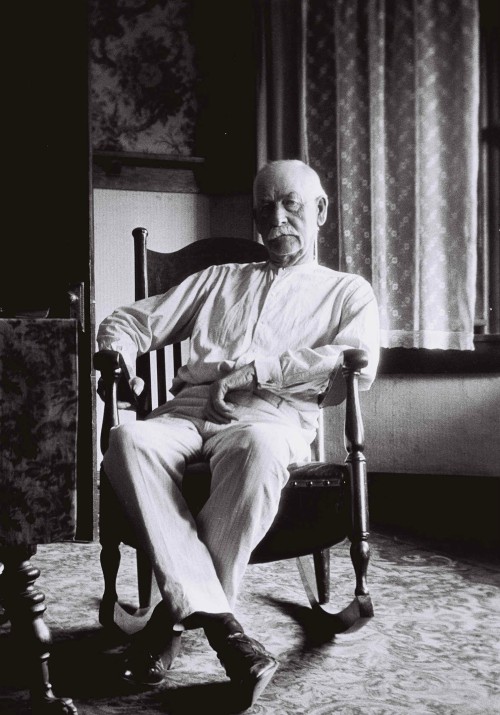
Mesmo se não ficasse famoso a ponto de virar personagem, Doc Holliday já teria uma ligação com o cinema: uma de suas primas distantes é Margaret Mitchell, autora do livro “E o vento levou...”. Já Wyatt Earp foi mais longe, e presenciou o nascimento do cinema, inclusive tornando-se amigo de caubóis das telas como William S. Hart e Tom Mix. Nessa temporada em Hollywood, Earp conheceu John Ford e John Wayne e contou a eles um pouco de suas aventuras. Foi a partir desses relatos que Wayne modelou sua persona cinematográfica de cowboy.

Even  if he didn't become famous enough to have his story told in the movies, he would already have a connection with the film world: one of his distant cousins is Margaret Mitchell, the author of the book “Gone with the Wind”. Wyatt Earp lived longer, saw the birth of cinema, and even became friends with screen cowboys such as William S. Hart and Tom Mix. When he visited Hollywood, Earp met John Ford and John Wayne and told them some of his adventures. It was based on these stories that Wayne created his cowboy film persona.
Wyatt Earp, 1923
Todos esses filmes mostram como o cinema gosta de exagerar, uma vez que o tiroteio real durou apenas 30 segundos. Mas, como James Stewart disse em outro western, "O homem que matou o fascínora / The man who shot Liberty Valance", em nada relacionado com Doc e Earp, mas resume perfeitamente a maneira como eles são retratados:

"When the legend becomes fact, print the legend"

All these movies show how films like to exaggerate, because the real shooting lasted only 30 seconds. But, as James Stewart said in another western, “The ma who shot Liberty Valance”, that has nothing to do eith Doc and Earp, but sums perfectly the way they are portraied:

“When the legend becomes fact, print the legend”


This is my contribution to the Dynamic Duos blogathon, hosted by Annmarie at ClassicMovie Hub and Aurora at Once Upon a Screen. A must-read event.


Tuesday, March 22, 2011

Sede de Viver / Lust for Life (1956)

Minha iniciação artística se deu com as pinturas de Van Gogh. E dá-lhe cópias de sua biografia e versões do quadro “O Quarto de Van Gogh em Arles”. Essas atividades ficaram em minha memória, e voltaram com força total assistindo à “Sede de Viver”, cinebiografia dirigida por Vincente Minnelli e estrelada por Kirk Douglas.

Com vocês, o biografado: Vincent Willen van Gogh (1853 – 1890) foi um pintor holandês que fez muito mais do que pintar girassóis e cortar a orelha esquerda. Foi um ativo pintor durante apenas cinco anos, deixando centenas de telas. Nome importante do pós-impressionismo (corrente preocupada em transmitir emoções nas pinturas), ao lado de Cézanne e de seu amigo Paul Gauguin, cada mudança nas pinceladas de suas obras representava uma mudança em sua conturbada vida. De gênio difícil, sempre atormentado e sofrendo com problemas mentais como outros membros da família, o pintor suicidou-se aos 37 anos, sem constituir família ou alcançar fama e fortuna.
Licença Cinematográfica: Algumas poucas notas referentes a detalhes (por exemplo, não é mostrado que Van Gogh enviou sua orelha cortada para uma mulher, embora esta apareça no filme). Isso mostra a perfeição do filme, uma biografia fidedigna do grande pintor.

A Crítica Retrô: “Sede de Viver” é uma obra-prima. Kirk Douglas, como Van Gogh, e Anthony Quinn, como seu amigo Gauguin, estão ótimos como homens de pavio curto e personalidade difícil, o que é um empecilho para a amizade deles. Quinn ganha o Oscar, merecido, é verdade, e talvez pela semelhança de temperamentos das personagens, a Academia tenha tirado o prêmio merecidíssimo de Kirk e dado para Yul Brinner em “O Rei e Eu”. Mesmo assim, fica a glória de Vincente Minnelli ter dirigido um belo drama e uma cinebiografia nota 10.
Related Posts Plugin for WordPress, Blogger...