} Crítica Retrô: Googie Withers

Tradutor / Translator / Traductor / Übersetzer / Traduttore / Traducteur / 翻訳者 / переводчик

Showing posts with label Googie Withers. Show all posts

Wednesday, November 9, 2022

Sombras do Mal (1950) / Night and the City (1950)


Você conhece Jules Dassin? O nome pode não fazer sentido num primeiro momento, mas ele merece ser conhecido. O ator / roteirista / diretor trabalhou em diversos gêneros, nos EUA em que nasceu e no estrangeiro, e até se beneficiou por ter sido posto na lista negra. Como Dassin foi acusado de ser comunista, teve de se mudar de Hollywood para a Europa, onde ele dirigiu filmes como “Rififi” (1955) e o adorável “Nunca aos Domingos” (1960). Mas no meio de seu processo na Casa de Atividades AntiAmericanas, ele fez outra obra-prima: o complexo e tenso noir “Sombras do Mal”.

Do you know Jules Dassin? The name might not ring a bell at first, but it should. The actor / writer / director worked in several genres, in his native US and abroad, and even benefited from being blacklisted. As Dassin was accused of being a communist, he moved from Hollywood to Europe, where he directed great movies such as “Rififi” (1955) and the lovely “Never on Sundays” (1960). But in the middle of being blacklisted, he made another masterpiece: the complex and tense noir “Night and the City”.


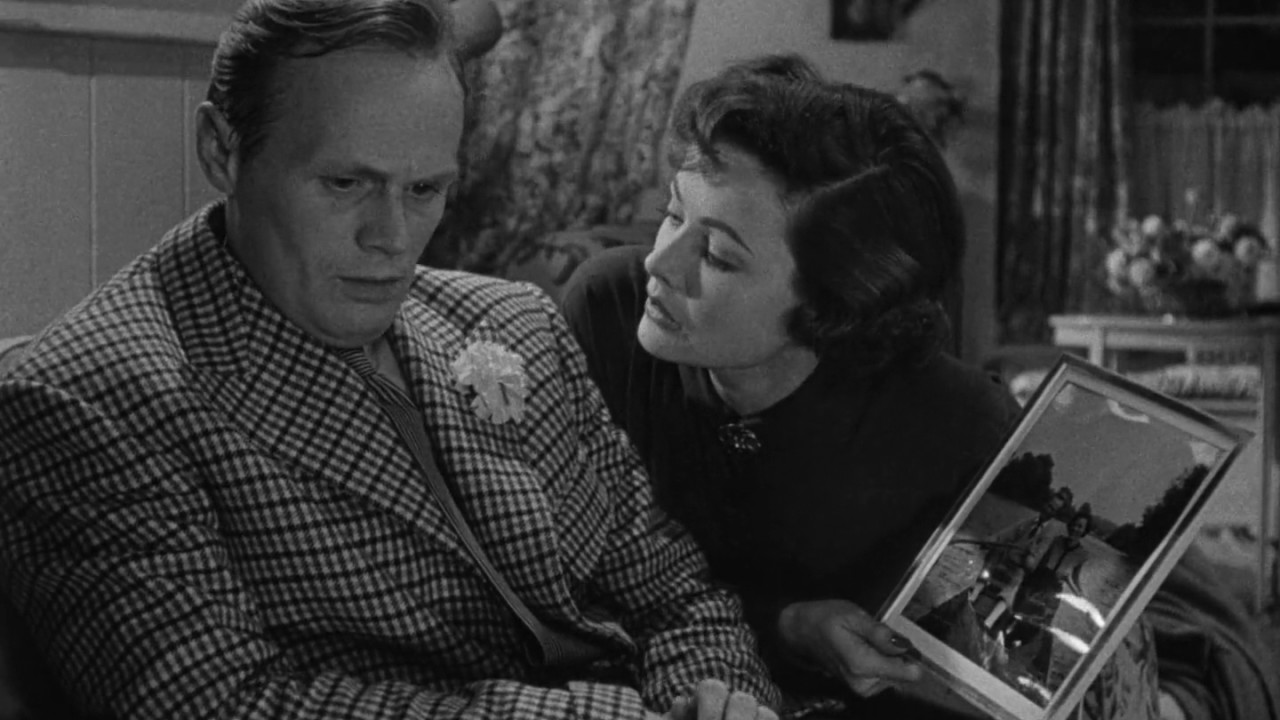
O narrador dá o tom: a noite é qualquer noite, a cidade é Londres. Numa noite qualquer em Londres encontramos Harry Fabian (Richard Widmark) correndo de um “velho conhecido”? Ele chega até o apartamento de sua namorada e, uma vez lá dentro, tenta vender seu mais novo esquema para Mary (Gene Tierney): Uma pílula que serve como combustível. Harry quer ser alguém na vida, enquanto Mary quer estar com alguém - com Harry, não com o vizinho que gosta dela, Adam (Hugh Marlowe).

The narrator sets the tone: the night is any given night, the city is London. At any given night in London we find Harry Fabian (Richard Widmark) running from an “old acquaintance”. He reaches his girlfriend’s apartment and, once inside, tries to sell his latest scheme to Mary (Gene Tierney): a pill that works as fuel. Harry wants to be someone in life, while Mary only wants to be with someone - with Harry, not with the neighbor who likes her, Adam (Hugh Marlowe).


Oficialmente, Harry e Mary trabalham num clube noturno que pertence a Phil (Francis L. Sullivan) e Helen (Googie Withers). Um dia, Harry tem uma ideia brilhante envolvendo lutas e o lutador grego Gregorius (Stanislaus Zbyszko, lutador na vida real) e seu pupilo Nikolas (Ken Richmond). Ao tentar controlar o ramo de lutas em toda a Londres, Harry atrairá chantagistas e assassinos.

Officially, Harry and Mary work at a nightclub that belongs to Phil (Francis L. Sullivan) and Helen (Googie Withers). One day, Harry has a brilliant idea that involves wrestling and the Greek wrestler Gregorius (Stanislaus Zbyszko, a real-life wrestler) and his pupil Nikolas (Ken Richmond). Wanting to control the wrestling scene in all of London, Harry will attract blackmailers and killers.
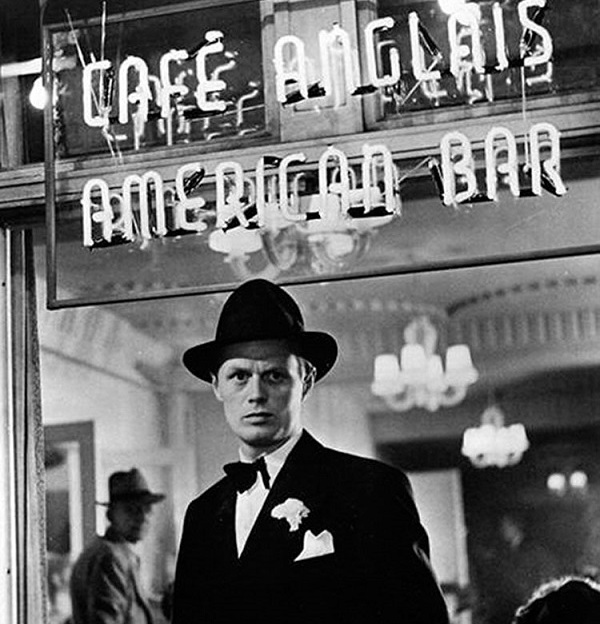

Os elementos formulaicos do filme noir estão presentes: as claramente visíveis fontes de luz, as muitas sombras criadas por essas luzes, a fotografia em preto e branco que realça essas sombras, a narração em voice over usada aqui só no início, escadas e ângulos de câmera ousados. Há até uma sequência muito interessante, apesar de breve, na qual entramos num carro com um personagem e compartilhamos do ponto de vista do passageiro do carro. Não há flashback e, principalmente, não há femme fatale. Gene Tierney havia interpretado uma fantástica femme fatale no noir em cores “Amar foi a Minha Ruína” (1945), mas aqui ela é a mulher sofredora que tem pouco tempo em cena.

The formulaic elements of film noir are there: the clearly visible sources of lights, the many shadows created by these lights, the black and white photography that enhances these shadows, the voice over narration used here only in the beginning, stairs and bold camera angles. There is even a very interesting, yet brief, sequence in which we enter a car with a character and share the viewpoint of a passenger in the car. There is no flashback and, mainly, there is no femme fatale. Gene Tierney had played a fantastic femme fatale in the colorful noir “Leave Her to Heaven” (1945), but here she is the suffering femme who has little screen time.


Uma perseguição muito importante acontece através de Londres até que Harry chega num terreno de obras. Isso me fez lembrar de dois outros filmes noir com perseguições em terrenos de obras: “Força do Mal” (1948) e o noir brasileiro posterior “Na Senda do Crime” (1954). Não há dúvidas de que um dublê foi usado em “Sombras do Mal”, e aqui precisamos dar o devido valor aos dublês que são uma parte fundamental da história do cinema desde o início. Mesmo assim, Richard Widmark teve de correr em várias sequências, algo que, segundo o IMDb, fez com que ele perdesse bastante peso.

A very important persecution happens throughout London until Harry arrives in a construction site. This reminds me of two other noirs with persecutions in construction sites: “Force of Evil” (1948) and the posterior Brazilian noir “Na Senda do Crime” (1954). There is no doubt that a body double was used in “Night and the City” and here we need to give the proper kudos to stunt men who have been a fundamental part of film history since its dawn. Nevertheless, Richard Widmark had to run in several sequences, something that, according to IMDb, made him lose a lot of weight.


Há uma breve sequência na qual Mary canta no clube. Não é Gene Tierney cantando: a voz dela foi dublada pela atriz Maudie Edwards, que já havia dublado outras estrelas de cinema como Diana Dors e Margaret Lockwood. Maudie começou a carreira no teatro aos quatro anos de idade, e fez diversos personagens masculinos na juventude. Sua carreira cinematográfica durou de 1936 a 1972.

There is a brief sequence in which Mary sings in the nightclub. It isn’t Gene Tierney singing: her voice was dubbed by actress Maudie Edwards, who had already dubbed other film stars such as Diana Dors and Margaret Lockwood. Maudie had first appeared on stage at four, and played many male roles in the theater while young.
Her film career lasted from 1936 to 1972.


Kristo é o filho de Gregorius e quem controla o ramo da luta quando Harry chega. Ele é interpretado por Herbert Lom e é bem curioso ver Lom como principal vilão de um filme. Você deve reconhecer o nome e o rosto dos filmes da Pantera Cor de Rosa: Lom interpretou o Inspetor Dreyfus em sete filmes com Peter Sellers como o detetive Clouseau. Nascido no que era na época o Império Austro-Húngaro - na atual República Tcheca -, a carreira de Lom no cinema britânico durou mais de 60 anos, nos quais interpretou também personagens sérios e trágicos, como o Fantasma da Obra numa versão da história em 1962.

Kristo is Gregorius’ son and the controller of the wrestling scene when Harry arrives. He’s played by Herbert Lom and it’s quite curious to see Lom as the main villain in a movie. You may recognize his name and his face from the Pink Panther movies: Lom played Inspector Dreyfus to Peter Sellers’ Clouseau in seven movies. Born in what was then Austria-Hungary - now Czech Republic -, Lon’s career in the British cinema lasted more than sixty years, playing also serious and tragic roles, like the Phantom of the Opera in a 1962 version of the story.

“Sombras do Mal” é baseado em um romance de Gerald Kersh. Jules Dassin confessou que só leu o livro depois de fazer o filme, por isso Harry é bem mais simpático no filme do que no livro. A adaptação para as telas foi feita pelo roteirista Jo Eisinger, que já fazia parte da história do filme noir porque foi roteirista de “Gilda” (1946), outro noir com uma história complexa.

“Night and the City” was based on a novel by Gerald Kersh. Jules Dassin confessed that he only read the novel after making the movie, that’s why Harry is a much more sympathetic character in the movie than he is in the book. The adaptation for the screen was made by Jo Eisinger, who was already in the film noir history because he was the screenwriter for “Gilda” (1946), another noir with a complex story.


“Sombras do Mal” não foi bem recebido pelos críticos quando estreou. Entretanto, como comumente acontece na história do cinema, mais tarde o filme foi revisitado por estudiosos e pelo público e reavaliado. Hoje um dos mais elogiados filmes noir dos anos 50, “Sombras do Mal” e sua galeria de personagens trágicos tem o lugar que merece no panteão do noir.

“Night and the City” wasn’t well-received by critics when it premiered. However, as it often happens in film history, later the movie was revisited by scholars and the public and reevaluated. Now one of the most complimented noirs of the 1950s, “Night and the City” and its gallery of tragic characters has the place it deserves in the noir pantheon.


This is a contribution to the Movies are Murder blogathon, hosted by the Classic Movie Blog Association.


Friday, June 28, 2019

On Approval (1944)


“On Approval” começa de maneira criativa com um narrador (E.V.H. Emmett) comparando os tempos modernos de 1939 – antes da guerra que estava então acontecendo – e a era Vitoriana. O narradora diz que a era Vitoriana foi muito melhor porque, entre outras coisas, as mulheres eram mulheres e não se esqueciam disso – embora os homens se esquecessem disso algumas vezes. Então nós e o narrador chagamos a um teatro, onde a peça “On Approval” está sendo encenada. Sim, este filme é uma peça dentro de um flashback dentro de um filme.

On Approval” starts in a creative way as a narrator (E.V.H. Emmett) compares the modern times of 1939 – before the then ongoing war – and the Victorian times. The narrator says the Victorian times were much better because, among other things, women were women and didn't forget that – even though men forgot it sometimes. Then we and the narrator arrive in a theater, were the play “On Approval” is being presented. Yes, this film is a play within a flashback within a film.


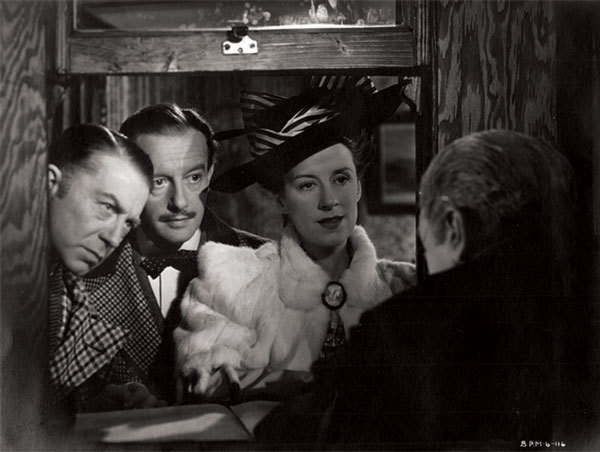
George (Clive Brook) é um mulherengo. Ele está em uma festa com seu amigo Richard (Roland Culver), que é apaixonado por Maria Wislack (Beatrice Lillie). Maria, que é viúva e tem 41 anos de idade, decide viajar com Richard durante um mês para fazer um teste: se ele foi aprovado, eles podem se casar. Enquanto isso, George zomba de Maria por causa da idade dela, tenta ajudar Richard e não percebe que Helen (Googie Withers) está apaixonada por ele.

George (Clive Brook) is a womanizer. He is attending a party with his friend Richard (Roland Culver), who is in love with Maria Wislack (Beatrice Lillie). Maria, who is widowed and 41, decides to take Richard out during a month “on approval”: if she approves of him, they can get married. Meanwhile, George mocks Maria for her age, tries to help Richard and doesn't see that Helen (Googie Withers) is in love with him.


Logo Richard e Maria partem para a Escócia para passar um mês fazendo o teste de casamento. Só há um problema: George decide acompanhá-los. Richard e George deveriam ficar em um hotel, mas eles mandam um telegrama falso para que o hotel aparente estar lotado e não haja lugar para eles. Helen descobre o plano e os segue até o hotel. Mas o hotel está realmente cheio, e os quatro têm como única opção se hospedar na propriedade de Maria.

Soon Richard and Maria leave for Scotland to spend a month in their marriage attempt. There is only one issue: George decides to go with them. Richard and George are supposed to stay in a hotel, but they send a fake telegram so the hotel will be apparently full and there won't be room for them. Helen discovers the plan and follow them to the hotel. But it happens that the hotel is indeed full, and all the four need to stay in Maria's property.


Durante o tempo em que estão juntos, com quase nenhuma ligação com o mundo lá fora, os quatro conhecem melhor uns aos outros. Eles também veem o pior e o melhor de cada um, e isso os faz mudar de opinião sobre suas paixões e sobre os relacionamentos de longa duração.

During this time they spend together, with almost no links to the outside world, the four get to know each other more. They also get to see the worst and the best of each other, and thus change their minds about passions and long-term relationships.


Um filme como “On Approval” só poderia ter sido feito na Inglaterra. Com o Código Hays a todo vapor nos anos 40, a maioria das frases com duplo sentido e as referências a sexo teriam de ser cortadas do filme se este fosse feito em Hollywood, e então o filme perderia boa parte de seu charme. De fato, a Legião da Decência Norte-Americana bem que poderia ser intepretada pelos criados de Maria, que deixam a casa quando suspeitam de que algo indecente está acontecendo apenas porque Richard tocou Maria e Helen tem uma camisola transparente.

A film like “On Approval” could only be made in England. With the Hays Code in full-on mode during the 1940s, most of the double entendres and the references to sex would have to be cut from the movie if it was made in Hollywood, and it would lose most of its charm. Indeed, the American Legion of Decency could well be portrayed by the servants of Maria's property, who leave the house as they suspect there is indecency going on among the guests only because Richard touches Maria and Helen has a transparent  nightgown.


O próprio Clive Brook adaptou a peça para o cinema e escolheu a década de 1890, e não a década original de 1920, como pano de fundo. Ele também produziu, dirigiu e protagonizou o filme. Seu George é egoísta e preguiçoso, e suas discussões com a Maria de Beatrice Lillie são deliciosamente ferinas. Beatrice Lillie, aliás, já foi considerada a mulher mais engraçada do mundo. Mesmo assim, ela fez apenas sete filmes, dedicando-se mais ao teatro, onde teve longa carreira.

Clive Brook himself adapted the play to the screen and chose the 1890s, and not the original 1920s, as the setting. He also produced, directed and starred in the film. His George is selfish and lazy and his banter with Beatrice Lillie's Maria is wonderfully catty. Beatrice Lillie, by the way, was once considered the funniest woman in the world. Nevertheless, she only appeared in seven feature films, spending the rest of her long career on stage.


Nos créditos, encontramos algo curioso: o responsável pela câmera é C. Friese-Greene, da família do quase esquecido pioneiro do cinema William Friese-Greene. O C é de Claude, que era filho do nosso pioneiro pouco conhecido. Infelizmente, Claude faleceu antes de “On Approval” estrear. Os figurinos são se Cecil Beaton, que fez um excelente trabalho: as roupas de Helen são lindas, em especial um vestido adornado com pérolas.

During the credits, something curious: the camera is C. Friese-Greene, from the family of almost forgotten film pioneer William Friese-Greene. The C stands for Claude, and he was the son of our little-known pioneer. Unfortunately, Claude passed away before “On Approval” was released. The costumes are by Cecil Beaton, and he did a wonderful job: Helen's gowns are gorgeous, in special one dress adorned with pearls.


O estúdio não gostou do filme, e “On Approval” ficou na prateleira por um ano e meio antes de estrear em 1944... e foi um imenso sucesso! Mesmo com o sucesso, Clive Brook nunca mais escreveu, dirigiu ou produxiu outro filme – e trabalhou apenas esporadicamente na TV dali em diante.

The studio didn’t like the film when it was finished, and “On Approval” was shelved for a year and a half until it finally premiered in 1944… and it was a huge hit! Even with the success, Clive Brook never wrote, directed or produced another film again – and worked only sporadically on TV from then on.


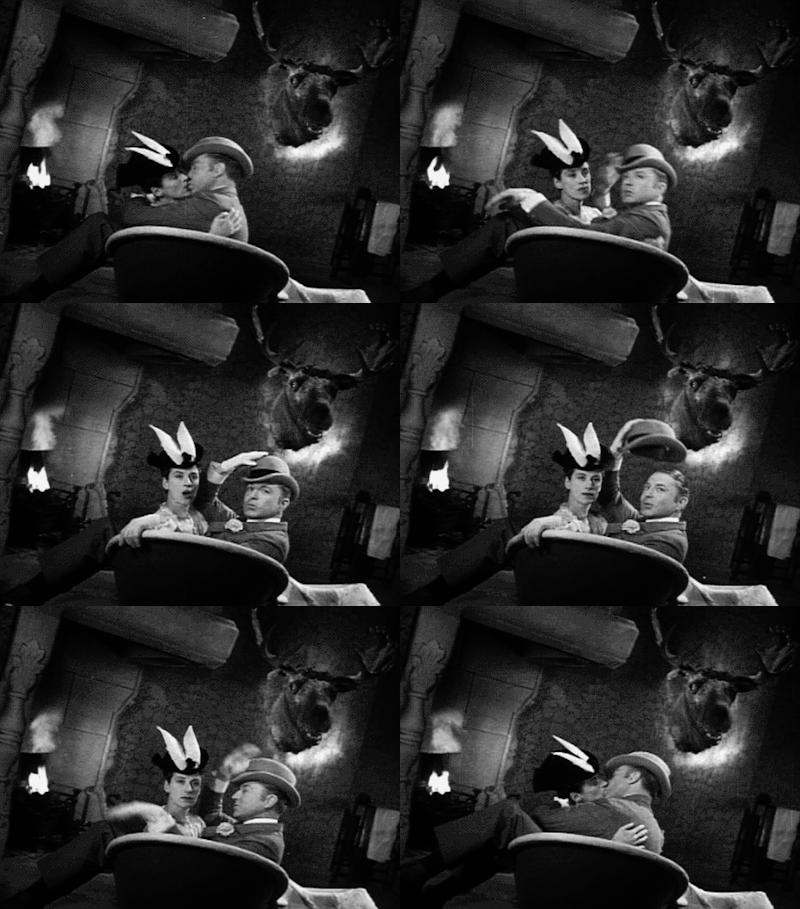
O site do TCM diz que “On Approval” “se parece com uma combinação maluca dos Irmãos Marx com Oscar Wilde” Eu não vejo muito dos Irmãos Marx no filme – um pouco de Groucho nos diálogos, um pouco mais de todos eles em uma estranha sequência de sonho que nos deixa em dúvida sobre o destino de nossos personagens por uns cinco minutos, pouco antes do final.

The TCM.com website says the “On Approval” “feels like a crazy combination of the Marx Brothers and Oscar Wilde”. I don’t see much of the Marx Brothers in it – a little Groucho in the dialogues, a bit more of them all in a strange dream sequence that leaves us guessing about the fate of our characters for about five minutes, until the ending.


“On Approval” apresenta uma ideia que mais tarde seria desenvolvida para dar origem a reality shows de sucesso. Agora, o mundo modern evoluiu tanto que mais pessoas podem ter seu período de teste com seus parceiros antes do casamento – com ou sem muitas câmeras e milhões de pessoas assistindo. E isso já mostra como “On Approval” é moderno e revolucionário.

“On Approval” presents one idea that would later be developed into successful reality shows. Now, the modern world has evolved so more people can have an “on approval” period with their partners before really tying the knot – with or without many cameras and millions of people watching. And this alone shows how modern and revolutionary “On Approval” is.

This is my contribution to the Made in 1944 blogathon, hosted by Robin at Pop Culture Reverie.


Related Posts Plugin for WordPress, Blogger...