“On Approval” começa de
maneira criativa com um narrador (E.V.H. Emmett) comparando os tempos modernos
de 1939 – antes da guerra que estava então acontecendo – e a era Vitoriana. O
narradora diz que a era Vitoriana foi muito melhor porque, entre outras coisas,
as mulheres eram mulheres e não se esqueciam disso – embora os homens se
esquecessem disso algumas vezes. Então nós e o narrador chagamos a um teatro,
onde a peça “On Approval” está sendo encenada. Sim, este filme é uma peça
dentro de um flashback dentro de um filme.
“On Approval”
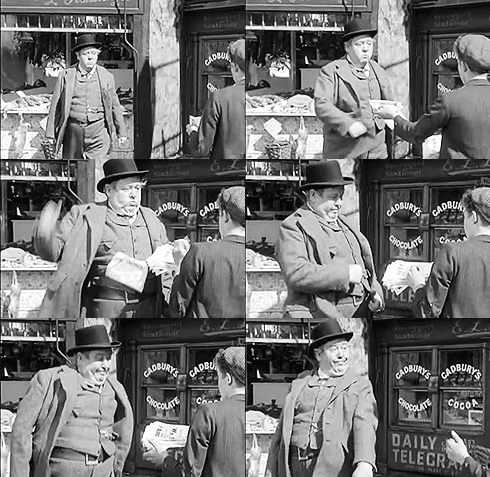
starts in a creative way as a narrator (E.V.H. Emmett) compares the modern
times of 1939 – before the then ongoing war – and the Victorian times. The
narrator says the Victorian times were much better because, among other things,
women were women and didn't forget that – even though men forgot it sometimes.
Then we and the narrator arrive in a theater, were the play “On Approval” is
being presented. Yes, this film is a play within a flashback within a film.

George (Clive
Brook) é um mulherengo. Ele está em uma festa com seu amigo Richard (Roland
Culver), que é apaixonado por Maria Wislack (Beatrice Lillie). Maria, que é
viúva e tem 41 anos de idade, decide viajar com Richard durante um mês para
fazer um teste: se ele foi aprovado, eles podem se casar. Enquanto isso, George
zomba de Maria por causa da idade dela, tenta ajudar Richard e não percebe que
Helen (Googie Withers) está apaixonada por ele.
George (Clive
Brook) is a womanizer. He is attending a party with his friend Richard (Roland
Culver), who is in love with Maria Wislack (Beatrice Lillie). Maria, who is
widowed and 41, decides to take Richard out during a month “on approval”: if
she approves of him, they can get married. Meanwhile, George mocks Maria for
her age, tries to help Richard and doesn't see that Helen (Googie Withers) is
in love with him.

Logo Richard
e Maria partem para a Escócia para passar um mês fazendo o teste de casamento.
Só há um problema: George decide acompanhá-los. Richard e George deveriam ficar
em um hotel, mas eles mandam um telegrama falso para que o hotel aparente estar
lotado e não haja lugar para eles. Helen descobre o plano e os segue até o
hotel. Mas o hotel está realmente cheio, e os quatro têm como única opção se
hospedar na propriedade de Maria.
Soon Richard
and Maria leave for Scotland to spend a month in their marriage attempt. There
is only one issue: George decides to go with them. Richard and George are
supposed to stay in a hotel, but they send a fake telegram so the hotel will be
apparently full and there won't be room for them. Helen discovers the plan and
follow them to the hotel. But it happens that the hotel is indeed full, and all
the four need to stay in Maria's property.
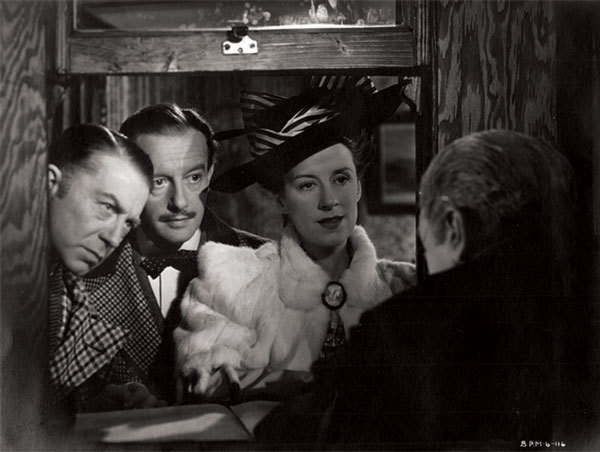
Durante o
tempo em que estão juntos, com quase nenhuma ligação com o mundo lá fora, os
quatro conhecem melhor uns aos outros. Eles também veem o pior e o melhor de
cada um, e isso os faz mudar de opinião sobre suas paixões e sobre os
relacionamentos de longa duração.
During this
time they spend together, with almost no links to the outside world, the four
get to know each other more. They also get to see the worst and the best of
each other, and thus change their minds about passions and long-term
relationships.

Um filme como
“On Approval” só poderia ter sido feito na Inglaterra. Com o Código Hays a todo
vapor nos anos 40, a maioria das frases com duplo sentido e as referências a
sexo teriam de ser cortadas do filme se este fosse feito em Hollywood, e então
o filme perderia boa parte de seu charme. De fato, a Legião da Decência
Norte-Americana bem que poderia ser intepretada pelos criados de Maria, que
deixam a casa quando suspeitam de que algo indecente está acontecendo apenas
porque Richard tocou Maria e Helen tem uma camisola transparente.
A film like
“On Approval” could only be made in England. With the Hays Code in full-on mode
during the 1940s, most of the double entendres and the references to sex would
have to be cut from the movie if it was made in Hollywood, and it would lose
most of its charm. Indeed, the American Legion of Decency could well be
portrayed by the servants of Maria's property, who leave the house as they
suspect there is indecency going on among the guests only because Richard
touches Maria and Helen has a transparent
nightgown.

O próprio
Clive Brook adaptou a peça para o cinema e escolheu a década de 1890, e não a
década original de 1920, como pano de fundo. Ele também produziu, dirigiu e
protagonizou o filme. Seu George é egoísta e preguiçoso, e suas discussões com
a Maria de Beatrice Lillie são deliciosamente ferinas. Beatrice Lillie, aliás,
já foi considerada a mulher mais engraçada do mundo. Mesmo assim, ela fez
apenas sete filmes, dedicando-se mais ao teatro, onde teve longa carreira.
Clive Brook
himself adapted the play to the screen and chose the 1890s, and not the
original 1920s, as the setting. He also produced, directed and starred in the
film. His George is selfish and lazy and his banter with Beatrice Lillie's
Maria is wonderfully catty. Beatrice Lillie, by the way, was once considered
the funniest woman in the world. Nevertheless, she only appeared in seven
feature films, spending the rest of her long career on stage.

Nos créditos,
encontramos algo curioso: o responsável pela câmera é C. Friese-Greene, da
família do quase esquecido pioneiro do cinema William Friese-Greene. O C é de
Claude, que era filho do nosso pioneiro pouco conhecido. Infelizmente, Claude
faleceu antes de “On Approval” estrear. Os figurinos são se Cecil Beaton, que
fez um excelente trabalho: as roupas de Helen são lindas, em especial um
vestido adornado com pérolas.
During the
credits, something curious: the camera is C. Friese-Greene, from the family of
almost forgotten film pioneer William Friese-Greene. The C stands for Claude,
and he was the son of our little-known pioneer. Unfortunately, Claude passed
away before “On Approval” was released. The costumes are by Cecil Beaton, and
he did a wonderful job: Helen's gowns are gorgeous, in special one dress
adorned with pearls.

O estúdio não
gostou do filme, e “On Approval” ficou na prateleira por um ano e meio antes de
estrear em 1944... e foi um imenso sucesso! Mesmo com o sucesso, Clive Brook
nunca mais escreveu, dirigiu ou produxiu outro filme – e trabalhou apenas
esporadicamente na TV dali em diante.
The studio
didn’t like the film when it was finished, and “On Approval” was shelved for a
year and a half until it finally premiered in 1944… and it was a huge hit! Even
with the success, Clive Brook never wrote, directed or produced another film
again – and worked only sporadically on TV from then on.

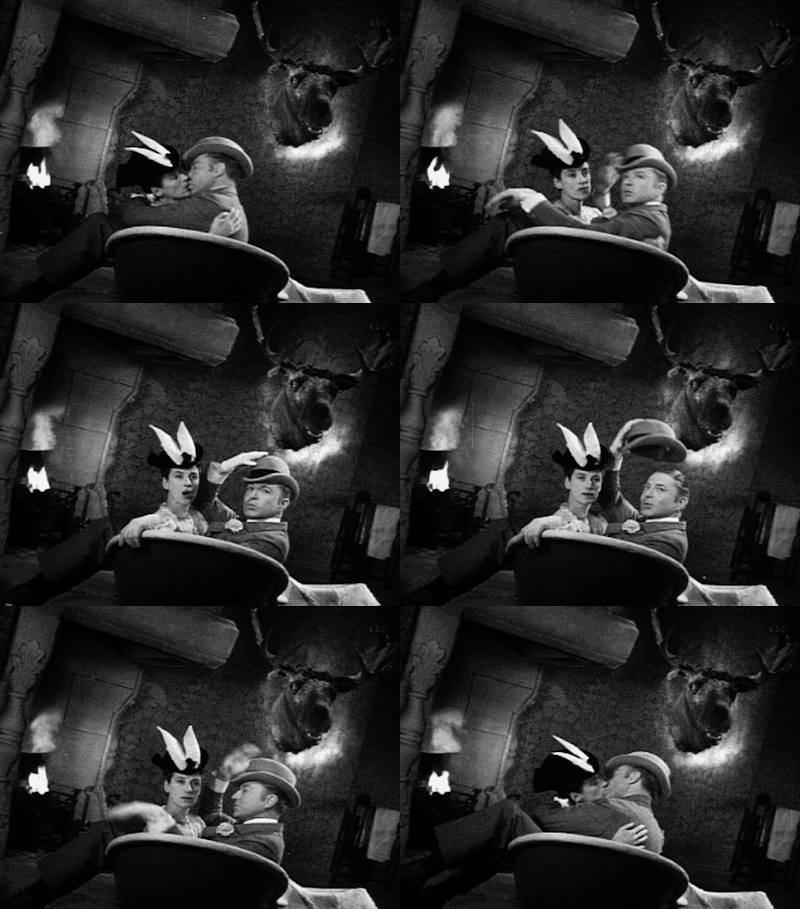
O site do TCM
diz que “On Approval” “se parece com uma combinação maluca dos Irmãos Marx com
Oscar Wilde” Eu não vejo muito dos Irmãos Marx no filme – um pouco de Groucho
nos diálogos, um pouco mais de todos eles em uma estranha sequência de sonho
que nos deixa em dúvida sobre o destino de nossos personagens por uns cinco
minutos, pouco antes do final.
The TCM.com
website says the “On Approval” “feels like a crazy combination of the Marx
Brothers and Oscar Wilde”. I don’t see much of the Marx Brothers in it – a
little Groucho in the dialogues, a bit more of them all in a strange dream
sequence that leaves us guessing about the fate of our characters for about
five minutes, until the ending.
“On Approval”
apresenta uma ideia que mais tarde seria desenvolvida para dar origem a reality
shows de sucesso. Agora, o mundo modern evoluiu tanto que mais pessoas podem
ter seu período de teste com seus parceiros antes do casamento – com ou sem
muitas câmeras e milhões de pessoas assistindo. E isso já mostra como “On
Approval” é moderno e revolucionário.
“On Approval”
presents one idea that would later be developed into successful reality shows.
Now, the modern world has evolved so more people can have an “on approval”
period with their partners before really tying the knot – with or without many
cameras and millions of people watching. And this alone shows how modern and
revolutionary “On Approval” is.