Diz-se que a prisão muda um homem. Mas o que
ela faz com uma mulher? Não importa se a pena é de alguns meses ou muitos anos,
ir para a prisão é sempre uma experiência traumática, pois a prisão não melhora
ninguém, é só um lugar de punições diárias. Eu nunca fui presa, mas graças aos
filmes posso ter uma ideia de como é esta experiência. O filme que me mostrou
isso é “À Margem da Vida” (1950).
It is said that prison changes a man. But what does it do to a woman? No matter if the penalty is a few months or many years, going to prison is always a traumatic experience, as prison doesn’t improve anyone, is just a place for daily punishment. I've never been to prison, but thanks to the movies I can imagine how it is to be there. The movie that showed me how is 1950’s “Caged”.

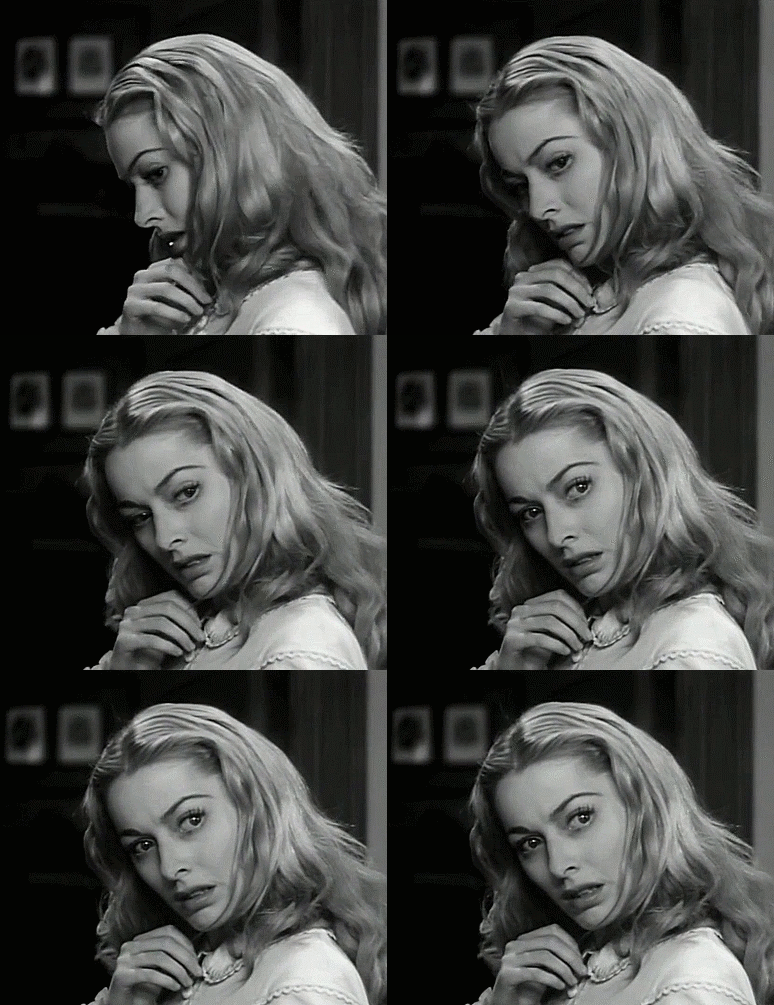
Marie Allen (Eleanor Parker) foi considerada
cúmplice de assalto à mão armada, delito cometido pelo marido dela. Aos 19
anos, ela ainda é uma adolescente quando vai para a cadeia – Parker tinha na
época 27 anos. A senhora Benton (Agnes Moorehead) diz a Marie que ela
trabalhará na lavanderia, mas a senhora Harper (Hope Emerson) a coloca para
esfregar o chão. Para piorar as coisas, Marie está grávida e seu marido está
morto.
Marie Allen (Eleanor Parker) was considered an “accessory” to armed robbery, crime committed by her husband. At 19, she’s still a bobby-soxer when she goes to jail – Parker was in reality 27. Mrs Benton (Agnes Moorehead) tells Marie she’ll work in the laundry, but Mrs Harper (Hope Emerson) puts the girl to scrub floors instead. To make things worse, Marie is pregnant and her husband is dead.

Algumas mulheres foram presas porque homens
fizeram com que elas se envolvessem em crimes, como aconteceu com a própria
Marie e a detenta June (Olive Deerin). Outra detenta, a aparentemente bobinha
Emma (Ellen Corby), está lá porque matou um homem, seu marido abusivo, após
três tentativas. E há outras mulheres do lado de fora tendo problemas com
homens, como a mãe de Marie com seu novo marido.
Some women were arrested because men got them involved in crimes, like it happened to Marie herself and fellow inmate June (Olive Deering). Another one, silly-sounding Emma (Ellen Corby), is there because she killed a man, her abusive husband, after three attempts. And there are other women outside having troubles with men, like Marie’s mother with her new husband.

Quando Marie pede um pente para pentear seus
cabelos antes de tirar a foto oficial da prisão, aquela com números e tudo
mais, a fotógrafa, outra mulher, diz que não há necessidade de ter pentes
porque não há nenhum homem ali. Mas para Marie pentear o cabelo não era para sedução,
mas sim para autoestima – se é que é possível cultivá-la num lugar como aquele.
When Marie asks if she can have a comb to comb her
hair before taking the official prison photo, with numbers and all, the
photographer, also a woman, says that there is no need for combs because there
aren’t any men in there. But for Marie combing her hair wasn’t a matter of
seduction, it was a matter of self-esteem – if any could be cultivated in a place
like that.

A bondosa Ruth Benton, interpretada por Agnes
Moorehead, só quer o melhor para “suas meninas” e as trata com respeito e até
um tipo de amor materno. É por isso que ela entra em atrito com a grosseira e
aproveitadora Evelyn Harper e Harper denuncia os métodos muito humanos da
senhora Benton como inadequados para os superiores.
The kind Ruth Benton, played by Agnes Moorehead, only wants the best for “her girls” and treats them with respect and even some kind of motherly love. That’s why she clashes with rude and corrupt Evelyn Harper and Harper denounces Mrs Benton’s very humane methods as inadequate to their superiors.

Quase a última nos créditos é a ganhadora do Oscar
Jane Darwell. Ela aparece por poucos minutos, como a responsável pela sala de
isolamento. Nos Oscars, “À Margem da Vida” foi indicado em três categorias:
Atriz para Eleanor Parker, Atriz Coadjuvante para Hope Emerson e Roteiro. Parker
ganhou o prêmio de Melhor Atriz no Festival de Cinema de Veneza.
Almost the last billed, we find Oscar winner Jane
Darwell. She is there for just a few minutes, as the matron responsible for the
isolation room. At the Oscars, “Caged” was nominated in three categories:
Actress for Eleanor Parker, Supporting Actress for Hope Emerson and Writing.
Parker won the Best Actress Award at the Venice Film Festival.

A trilha sonora de Max Steiner permite alguns
momentos sublimes num ambiente tão duro. A dureza era real porque, para
escrever o roteiro, a jornalista investigativa Virginia Kellogg foi a muitas
prisões de mulheres como parte do processo de pesquisa e foi inclusive mantida
presa numa delas.
Max Steiner’s soundtrack allows a few moments of the sublime to emerge in such a raw environment. The rawness was real, because, to write the screenplay, investigative journalist Virginia Kellogg went to many women’s prisons as part of the research process and was even incarcerated in one of them.

A Warner Brothers ficou famosa por seus filmes realistas
no começo dos anos de 1930. Embora numa escala menor, o estúdio continuou
fazendo tais filmes, e “À Margem da Vida” é prova disso. O produtor Jerry Wald
queria, com esse filme, gerar a mesma mudança – para as prisões femininas – que
o estúdio gerou quase 20 anos antes, quando leis foram mudadas por causa do
realismo de “O Fugitivo” (1932).
Warner Brothers became known for its films with gritty
realism in the early 1930s. Although in a smaller scale, the studio kept doing
these kind of movies, and “Caged” proves that. Producer Jerry Wald wanted, with
this film, to create the same change – for women’s prison – the studio created
almost 20 years prior, when laws were changed because of the grittiness of “I am a Fugitive from a Chain Gang” (1932).

Há uma cena muito interessante filmada em
contra-plongée (de baixo para cima) na qual Harper humilha a detenta Kitty
(Betty Garde). A sombra das grades é vista no teto, criando um efeito incrível.
Outra ótima composição vem mais tarde após uma rebelião, quando a senhora
Benton está toda coberta por sombras e somente Marie, dentre todas as detentas,
tem seu rosto iluminado.
There is a very interesting scene shot in a contra-plongée (from bottom to top) in which Harper humiliates the inmate Kitty (Betty Garde). The shadow of the prison bars is visible in the ceiling, creating a great effect. Another great composition comes later after a rebellion, when Mrs Benton is all covered in shadows and only Marie, of all inmates, receives light in her face.

Como o Código Hays proibia assuntos como
gravidez e parto de serem tratados de forma realista no cinema, temos aqui um
desafio com Marie. Quando ela deveria estar grávida de oito meses, mal é
visível a barriga, e o parto é filmado focando no rosto da senhora Benton, que
está em outro quarto esperando para ouvir o choro do recém-nascido.
Since the Hays Code prohibited subjects such as pregnancy and childbirth to be realistically portrayed in movies, we have here a challenge with Marie. When she’s supposed to be eight months pregnant she barely has a bump, and the birth is filmed focused on Mrs Benton waiting in the outside room to hear the newborn’s cry.

Uma detenta conta para Marie que “nesta gaiola
ou você fica forte ou você acaba morta”. Meses se passam e Marie diz que ela viveu
“uma vida em apenas um ano nesta gaiola”. Marie ficou tão forte que endureceu,
assim como acontece com muitas mulheres que vão presa, e isso não tem mais
volta. Um excelente filme, “À Margem da Vida” prova o que hoje sabemos tão bem:
a prisão muda uma mulher – para pior.
One fellow inmate tells Marie that “in this cage you
get tough or you get killed”. Months pass and Marie says that she has lived “a
lifetime in one year at this cage”. Marie got so tough that she became hardened,
like most women do when incarcerated, and there is no going back. A great
movie, “Caged” proves what we know so well today: prison changes a woman – for the
worst.
This is my contribution to The Third Agnes Moorehead blogathon, hosted by Crystal at In the Good Old Days of Classic Hollywood.