} Crítica Retrô: Cantinflas

Tradutor / Translator / Traductor / Übersetzer / Traduttore / Traducteur / 翻訳者 / переводчик

Showing posts with label Cantinflas. Show all posts

Sunday, November 13, 2016

O Circo / El Circo (1943)

Comparar gênios da comédia é uma boa maneira de se ter uma dimensão da popularidade e genialidade de alguns atores. Comumente, Cantinflas é comparado com Charles Chaplin, e diz-se que o próprio Carlitos considerava o comediante mexicano melhor que ele. Na recente cinebiografia Cantinflas (2014), muita licença poética é usada quando o filme mostra que foi Chaplin que mandou o script de “A Volta ao Mundo em 80 Dias” para Cantinflas, e assim o tirou do fundo do poço e o convenceu a fazer seu grande filme em Hollywood. Isso tudo provavelmente é mentira, mas há um elo ligando Chaplin e Cantinflas: o remake de “O Circo”.

Comparing comedy geniuses is a good way to have a notion of their popularity and geniality. Cantinflas is commonly compared to Charles Chaplin, and it is told that Chaplin himself considered the Mexican comedian the best of the two. In the recent biopic Cantinflas (2014), a lot of poetic license is taken when the film shows how Chaplin was the one who sent the script of “Around the World in 80 Days” to Cantinflas and convinced him to do the movie, taking Cantinflas out of depression and giving him his big break in Hollywood. All this script story is much probably invented, but there is something connecting Chaplin and Cantinflas: the remake of “The Circus”.  
Resolvi ver “El Circo” (1943) em um domingo à noite apenas porque, com 92 minutos de duração, seria uma diversão relativamente rápida. Comecei a ver, a rir, e a me dar conta de que eu já conhecia aquela história. Era como se eu estivesse tendo um déjà vu. Mas aí me lembrei de que no mundo do cinema não existem déjà vus: existem apenas remakes.

I decided to watch “El Circo” (1943) on a Sunday night only because it was a relatively quick distraction, clocking at 92 minutes. I started watching, laughing, and realized that I already knew that story. It was like having a déjà vu. But then I remembered that in the film world there are no déjà vus: there are only remakes.
No filme de 1928, Chaplin é o conhecido Vagabundo. Acusado injustamente de roubar uma carteira. Perseguido por um policial, ele foge e invade o picadeiro do circo. Ele interfere em diversos números do circo, e é aplaudido pelo público. Logo, o Vagabundo é contratado pelo dono do circo e se apaixona pela filha do dono do circo, a equilibrista (Merna Kennedy). Ele limpa jaulas e o picadeiro, ensaia com palhaços, participa dos números do mágico e dos equilibristas.

In the 1928 film, Chaplin is the well-known Tramp. He is wrongly accused of stealing a wallet. Running away from a police officer, he invades a circus presentation. He interferes with several circus numbers and the public loves him. Soon the Tramp is hired and falls in love with the circus’s owner’s daughter and bareback rider (Merna Kennedy). He cleans cages, rehearses with clowns, takes part in magic tricks and acrobatic numbers.
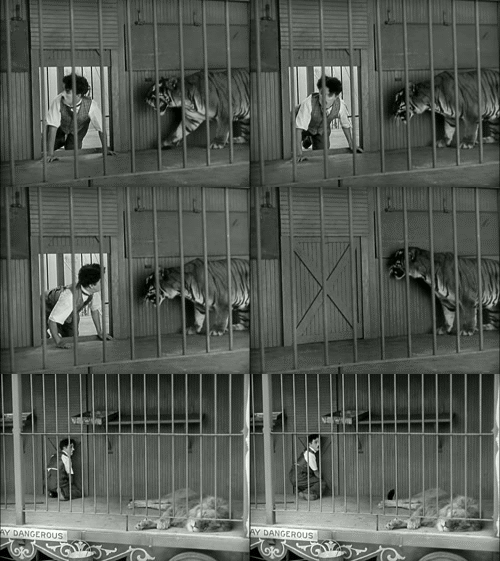
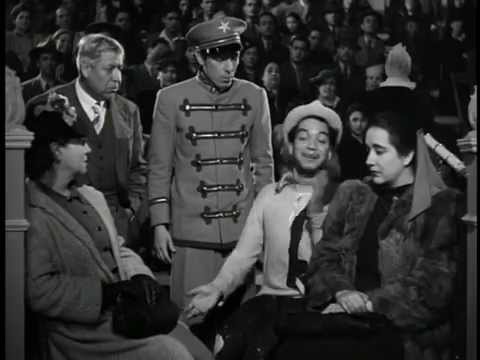
No filme de 1943, Cantinflas é um sapateiro anônimo. Ele vai a um show do circo, e se apaixona pela domadora de cavalos e filha do dono do circo, Rosalinda (Gloria Lynch). Ela vai à oficina dele pedir que ele conserte sua bota e, ao ir entregá-la no circo, ele acaba contratado para trabalhar lá. Ele acaba sendo trapezista, limpador de jaulas, mestre de cerimônias e equilibrista.

In the 1943 film, Cantinflas is na unnamed shoemaker. He goes to a circus presentation and falls in love with the circus’s owner’s daughter and horse tamer, Rosalinda (Gloria Lynch). She goes to his shoe shop and asks him to fix her boot. When he goes to the circus to give her the fixed boot, he is hired to work there. He works as a trapeze artist, cage cleaner, master of ceremonies and acrobat.
É particularmente interessante observar como um filme mudo é refeito como filme falado. Chaplin fez um filme recheado de gags visuais, enquanto a versão de Cantinflas está cheia de frases bem-humoradas e inesperadas, além de uma boa quantia de trocadilhos que infelizmente perdem a graça quando traduzidos. “O Circo” de Chaplin e “El Circo” de Cantinflas são, por isso, filmes com fontes de comédia diferentes, mas histórias idênticas.

It’s particularly interesting to see how a silent film is remade as a talkie. Chaplin made a film full of visual gags, while Cantinflas’s version has a lot of humorous quotes, unexpected comebacks and also a good amount of puns that, unfortunately, make no sense when translated. Chaplin’s “The Circus” and Cantinflas’s “El Circo” are movies with different comic sources, but identical plots.
“El Circo” foi produzido pela Posa Films, um pequeno estúdio e distribuidor do qual Cantinflas era um dos sócios. A Posa Filsm foi responsável por diversas paródias de filmes hollywoodianos, como “Ni Sangre Ni Arena” (1940) e “Romeo Y Julieta” (1943), que parodiavam “Sangue e Areia” (1922, remake em 1941) e “Romeu e Julieta” (1936). Ambas as paródias estrelavam Cantinflas.

“El Circo” was produced by Posa Films, a small studio and distributor owned by Cantinflas and two other partners. Posa Filsm was responsible for several parodies of Hollywood films, like “Ni Sangre Ni Arena” (1941) and “Romeo y Julieta” (1943), parodies of respectively “Blood and Sand” (1922, remade in 1941) and “Romeo and Juliet” (1936). Both these parodies starred Cantinflas.
Misturando comédia física, verbal e uma pitada de emoção, Cantinflas conseguiu fazer um excelente remake. Seus melhores filmes ainda estavam por vir, mas, para quem quer conhecer a obra do grande mexicano, “El Circo” é um ótimo ponto de partida.

Mixing physical comedy, verbal slapstick and a bit of emotion, Cantinflas could make an excellent remake. His best films were still to come but, if you want to get to know the whole body of work of the great Mexican comedian, “El Circo” is a perfect starting point.

This is my contribution to the #AtTheCircus blogathon, hosted by dear Summer at Serendipitous Anachronisms and, well… me.


Thank you to all who took part in our event! There is more to come!  

Saturday, September 24, 2016

Cantinflas (2014)

Ele chegou a ser o comediante mais importante e amado do mundo mas, se não tivesse passado brevemente por Hollywood, é provável que a fama de Mario Moreno, ou Cantinflas, hoje se restringisse aos países de língua espanhola. E são as negociações para contratar Cantinflas para seu grande filme norte-americano, “A Volta ao Mundo em 80 Dias” (1956), que dão início à cinebiografia do ídolo mexicano.

He was once the most important and beloved comedian in the world but, if he hadn’t worked briefly in Hollywood, it’s probable that Mario Moreno, or Cantinflas, would be known today only in Spanish-speaking countries. And the negotiations to hire Cantinflas to his biggest Hollywood movie, “Around the World in 80 Days” are the starting point for his biopic.
Michael Todd (interpretado por Michael Imperioli) é um produtor de teatro que tem a ideia de fazer o maior e mais fascinante filme do mundo, que contará com um ingrediente secreto: sua adaptação da história de Júlio Verne para os cinemas contará com participações especiais de astros do mundo inteiro! Ele APENAS precisa convencer a United Artists a financiá-lo e distribuir o filme! E isso é uma tarefa complicada ao extremo: se há uma coisa que Hollywood nunca gostou de fazer, mas sempre deveria ter feito, é arriscar.

Michael Todd (portrayed by Micheal Imperioli) is a theater producer who has the plan to make the greatest, biggest film in the world, and a film with a secret ingredient. He wants his adaptation of Jules Verne’s story to have cameos of films stars from all over the world! He ONLY has to convince United Artists to finance and distribute it! And this is an extremely complicated task: if there is one think Hollywood never liked doing, but should have always done, it is taking risks.
Michael Todd diz, ao ouvir pela primeira vez sobre Mario Moreno: “tá, ponha ele no primeiro burro voador para LA.” Afinal, “Ele é a pessoa mais amada no México, Espanha e resto da América Latina.”. Mas como Cantinflas conseguiu tanto prestígio?

Michael Todd says, hearing of Mario Moreno for the first time: “Yeah, get him in the next flying donkey to LA”. After all, “He is the most beloved person in Mexico, Spain and all of Latin America”. But how exactly Cantinflas became so?
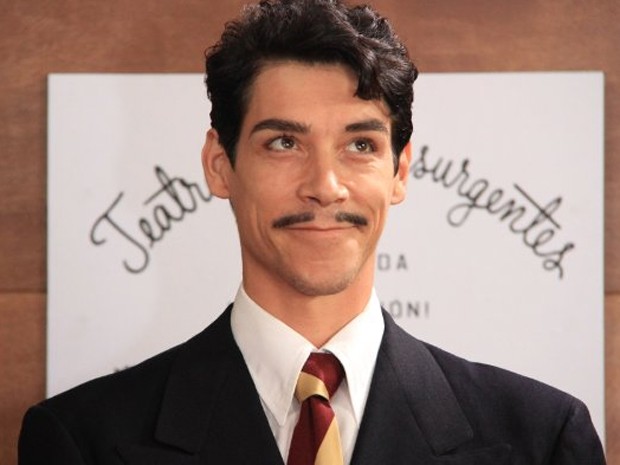
À luta de Michael Todd são costuradas cenas da trajetória artística de Mario Moreno (Oscar Jaenada), o homem que tentou ser boxeador e toureiro, mas que nasceu para ser palhaço. A história avança e retrocede no tempo, entre o México dos anos 1930 e 1940 e Los Angeles em 1955 – até que os destinos de Michael Todd e Mario Moreno se cruzam.

To Michael Todd’s effort we add scenes from Mario Moreno’s (Oscar Jaenada) artistic path: he tried to be a boxer and a bullfighter, but he was born to be a clown. The story goes back and forth in time, between Mexico in the 1930s and Los Angeles in 1955 – until Mario’s and Michael’s fates cross.
Precisamos saber que há uma diferença entre Mario Moreno, a pessoa, e Cantinflas, a personagem. Da mesma maneira e com os mesmos materiais que Chaplin criou seu vagabundo, Mario criou Cantinflas: com roupas simples, um colete (chamado comicamente de “La gabardina”) pendurado em um só ombro, um chapéu, um bigode e um cigarro. Cantinflas e Chaplin de fato se conheceram, mas Chaplin nada teve a ver com a contratação de Cantinflas para “A Volta ao Mundo em 80 Dias”, como mostra a cinebiografia.

We need to know there are differences between Mario Moreno, the person, and Cantinflas, the persona. In the same way and with the same ingredients that Chaplin created his Tramp character, Mario created Cantinflas: with simple clothes, a vest (comically called “la gabardina”) hanging in only one shoulder, a hat, a moustache and a cigarette. Cantinflas and Chaplin actually met, but Chaplin had nothing to do with hiring Cantinflas for “Around the World in 80 Days”, like the biopic shows us.
“Cantinflas”, o filme, é um prato cheio para quem gosta de cinema clássico, com as muitas menções desde os minutos iniciais. É um pouco frustrante ver que os escolhidos para interpretar, ainda que brevemente e às vezes sem falas, astros de Hollywood como Elizabeth Taylor e Marlon Brando não se parecem com os atores. E um erro dolorido: em 1956 Mary Pickford de fato deixou o comando da United Artists, mas de maneira alguma deixou o estúdio nas mãos de Douglas Fairbanks e Charles Chaplin – afinal, Fairbanks estava morto há mais de 15 anos e Chaplin, radicado na Europa. Inserir a figura de Chaplin na cinebiografia, aliás, é a grande manobra emocional feita com o público.

“Cantinflas”, the film, is a great piece for anyone who likes classic film, with lots of mentions to films and stars of the time since the beginning. It is a little frustrating when you realize that the actors chosen to play Hollywood stars like Elizabeth Taylor and Marlon Brando – in a cameo with no lines – look nothing like the people being portrayed. And a painful mistake: in 1956 Mary Pickford really had left a leading position at United Artists, but by no means she left the studio in the hands of both Douglas Fairbanks and Charles Chaplin – after all, Fairbanks died more than 15 years before that and Chaplin was living in Europe.
Todos os clichês do show business estão ali: a pobreza do começo de carreira, a trupe mambembe, o envolvimento com a filha do primeiro patrão e a demissão, o sucesso em uma cidade grande, o astro já estabelecido que menospreza o novato, a felicidade e infelicidade no casamento, a infidelidade, o fundo do poço e a redenção. Outros traços comuns na trajetória de grandes estrelas que não podiam faltar na cinebiografia de Cantinflas foram o desdém da elite e acolhimento inicial rápido por parte do povo, e a luta pela liberdade criativa e o direito de improvisar no teatro e no cinema.

All the show clichés in show business are there: the poverty in the beginning of his career, the carnival, the time he got caught with his boss’s daughter and was fired, the success in a big city, the well-known star who treats the newcomer badly, the happiness and unhappiness in married life, the unfaithfulness, hitting the bottom and the redemption. Some other common steps in a big star’s career: Cantinflas also suffered with the disdain of the rich ones, was well received quickly by the poorer ones, and also fought for creative freedom and his right to improvise in both theater and film.
O filme atingiu seus objetivos principais: atraiu um grande público (mais de um milhão e meio de espectadores só no México), foi uma ode à nostalgia e foi escolhido como o representante mexicano para o Oscar de Melhor Filme Estrangeiro em 2015. Houve polêmica com a escolha do ator espanhol Oscar Jaenada para interpretar Cantinflas, mas sua performance foi muito elogiada e é um dos pontos altos do filme.

The film reached its main goals: it attracted a lot of moviegoers (more than 1.5 million in Mexico alone), was an ode to nostalgia and was chosen as the Mexican representative for the Best Film in a Foreign Language Oscar in 2015. There was a negative buzz when Spanish actor Oscar Jaenada was chosen to play Cantinflas, but his performance received praise and is one of the best things in the movie.
Há relatos que colocam Mario Moreno e Cantinflas como duas personalidades completamente opostas: o personagem era querido e simpático, enquanto seu criador era antipático na vida real. O personagem se tornou lendário e deu origem ao verbo “cantinflear”, ou seja, falar muito até confundir o interlocutor. Mario pode não ter sido um grande exemplo, mas o legado Cantinflas vive, e o comediante ainda é um orgulho para a América Latina.

There are stories that put Mario Moreno and Cantinflas as two completely opposite personalities: the character was beloved and humble, while his creator was unsympathetic in real life. The character became a legend and was the origin of the verb “cantinflear” in Spanish, that is, to talk too much in order to confuse who you’re talking to. Mario may not have been the best example to follow, but Cantinflas’s legacy lives on, and the comedian is still the pride of Latin America.

This post is part of the Hispanic Heritage Month celebration. Follow the hashtag #DePelicula to find more content.

Tuesday, August 23, 2016

At the Circus! Blogathon

Respeitável público! 2016 é um ano de grandes conquistas para esta blogueira que vos escreve. Comecei a escrever posts bilíngues e me orgulhei de ter criado os infográficos deste artigo sobre Alberto Cavalcanti. E agora é hora de dar mais um grande passo.

Ladies and gentlemen of the audience! 2016 is a great year in blogging for me. I started writing bilingual posts and was particularly proud of the infographics I created for this article about Alberto Cavalcanti. And now it's time for another big step.

Este blog sobrevive graças às blogagens coletivas, e chegou a hora de realizar um sonho, que já esteve até entre minhas resoluções de ano novo: ser hostess de uma blogagem coletiva. E a ideia do tema veio quando eu via “O Circo” (1943), estrelado por Cantinflas, que nada mais é que um remake mexicano do filme de 1928 de Charles Chaplin.

This humble blog survives thanks to blogathons, and now it's time for me to accomplish a dream that once was among my New Year's resolutions: host my own blogathon. The idea for the theme came when I was watching “El Circo” (1943), starring Cantinflas. This film is the Mexican remake of the 1928 famous Chaplin film.
Abram espaço no picadeiro para At the Circus Blogathon, idealizada por mim e pela querida Summer do blog Serendipitous Anachronisms, umas das blogueiras que mais gosto de ler e de quem me aproximei recentemente. Summer topou minha ideia e estamos juntas neste circo!

Open space in the arena for the At the Circus Blogathon, hosted by me and by dear Summer from the blog Serendipitous Anachronisms! Summer is one of my favorite bloggers and one that I got to know better in the last year or so. Summer liked my idea and now we are together in this circus!

As regras para ser admitido no show são simples:

The rules to be admitted to the show are simple:

Escreva posts relacionados ao maravilhoso mundo do circo! A ação do filme pode se passar toda no circo, ou apenas uma parte dela. Não temos preconceitos: circos itinerantes e freak shows também são bem-vindos!

Write posts about the wonderful world of circus! The film may be set in the circus in its entirety or only have a scene in a circus. We have no prejudice: carnivals and freak shows are also welcome!

Sem limite de data: escreva sobre filmes feitos em qualquer época.

No limits of date: write about movies made in any era.

Sem limite geográfico: escreva sobre filmes feitos em qualquer país (eu estou pensando em você, “A Estrada da Vida”).

No geographic limit: write about movies made in any country (I’m looking at you, “La Strada”).
Não aceitamos duplicatas. Cada mágico deve fazer um truque diferente do outro, certo?

No duplicates. Each magician must perform a different trick to be accepted in our circus, OK?

Sem posts reciclados: só conteúdo novo. Você quer apresentar um número inédito para a plateia, certo?

No recycled posts, only new content. You want to present a new number to the audience, right?

Comente aqui ou deixe no Twitter (@startspreading / @kitschmeonce) o tema de sua escolha.

Comment in this post or get in touch with us on Twitter (@startspreading / @kitschmeonce).

Pegue um pôster e ajude a divulgar nosso show! Use também a hashtag #AtTheCircus.

Grab the bills (as we call the posters in circus slang) and spread the world! Also use the hashtag #AtTheCircus on social media!


As atrações:

The attractions:

Crítica Retrô                                        
Lon Chaney’s circus films

Serendipitous Anachronisms  
Annie Get Your Gun


Movie Movie Blog Blog               
At the Circus (1939)
La Strada (1954)

Cinema Parrot Disco                   
Freaks (1932)

Wide Screen World                      
Roustabout (1964)
Houdini (1953)

Movies, Silently                             
Circus Clowns (1922)
Big Fish (2003)
Something Wicked this Way Comes (1983)

Recap Retro                             
Five Men in the Circus (1935)

Weegie Midget                        
The Walk (2015)

Cinema Cities                           
Nightmare Alley (1947)

Caftan Woman             
Charlie Chan at the Circus (1936)
Behind the Makeup (1930)

Polly of the Circus (1932)

The Wonderful World of Cinema
Trapeze (1956)

Silents and Talkies
Circus Queen Murder (1933)

Moon in Gemini
Sawdust and Tinsel (1953)

Laura's Miscellaneous Musings
The Big Circus (1959)

B Noir Detour
The Cabinet of Doctor Caligari (1919)

A Person in the Dark
Sunny (1930)

In the Good Old Days of Classic Hollywood
The Circus (1928)

Once Upon a Screen
Dumbo (1941) and Big Top Bunny (1951)

Paula's Cinema Club
I'm No Angel (1933)

Virtual Virago
Captive Wild Woman (1943)

Love Letters to Old Hollywood
Billy Rose's Jumbo (1962)

Wolffian Classics Movie Digest
7 Faces of Doctor Lao (1964)

Silver Scenes
The Greatest Show on Earth (1952)

Christina Wehner
Lili (1953)

The Midnite Drive-In
Killer Klowns from Outer Space (1988)

Big V Riot Squad
Chaplin's unfinished "The Professor"

Old Hollywood Films
Susan Lennox: Her fall and rise (1931)

The Movie Rat
Stephen King's IT (1990) 

Movie Rob 
Shadows and Fog (1992) and Bronco Billy (1980)

Speakeasy
The Dark Tower (1943)

Thoughts All Sorts
Cirque du Soleil: Worlds Away (2012)

It came from the man cave!
Cirque du Freak: The Vampire's Assistant (2009)

Champagne for Lunch
A Bug's Life (1998)

Crimson Kimono
Ring of Fear (1954)
Related Posts Plugin for WordPress, Blogger...