} Crítica Retrô: Eddie 'Rochester' Anderson

Tradutor / Translator / Traductor / Übersetzer / Traduttore / Traducteur / 翻訳者 / переводчик

Showing posts with label Eddie 'Rochester' Anderson. Show all posts

Saturday, June 6, 2020

Do Mundo Nada se Leva (1938) / You Can’t Take It With You (1938)

Nenhum homem que tem amigos é um fracasso. Essa é a lição aprendida por James Stewart como George Bailey em “A Felicidade Não se Compra” (1946), de Frank Capra. Entretanto, a mesma lição havia sido ensinada em outro filme de Capra estrelado por James Stewart e Lionel Barrymore: “Do Mundo Nada Se Leva”, um filme que também traz a melhor e mais excêntrica família do cinema.

No man is a failure who has friends. This is the lesson learned by James Stewart as George Bailey in Frank Capra's “It's a Wonderful Life”, from 1946. However, the same lesson had been taught in another Capra movie starring James Stewart and Lionel Barrymore: “You Can't Take It With You”, a film that also brings the best and most eccentric family to ever grace the screen.

O Sr Kirby (Edward Arnold) quer controlar toda a indústria de munição, e para isso ele precisa construir uma fábrica ao redor do negócio de seu concorrente. Entretanto, há um problema: a fábrica não pode ser construída enquanto um terreno não for comprado. O teimoso proprietário deste terreno é um cavalheiro chamado Vanderhof.

Mr Kirby (Edward Arnold) wants to control the whole ammunition industry, and to do this he needs to construct a factory around his competitor’s business. However, there is one problem: the factory can’t be built if one lot isn’t sold. The stubborn owner of this lot is a gentleman called Vanderhof.

Martin Vanderhof (Lionel Barrymore) é uma figura. Em vez de solucionar seu problema sobre o terreno com o senhor Blakely (Clarence Wilson), que trabalhar para o Sr Kirby, ele apenas faz com que o Sr Poppins (Donald Meek), um contador que estava na empresa havia 20 anos, abandone o emprego para seguir seu sonho de construir brinquedos. Vanderhof leva Poppins até sua casa, que é, obviamente, um lar peculiar.

Martin Vanderhof (Lionel Barrymore) is quite a guy. Instead of solving the issue about his lot with Mr Blakely (Clarence Wilson), who works for Mr Kirby, he only makes Mr Poppins (Donald Meek), an accountant who had been working there from 20 years, abandon his job and follow his dream of manufacturing toys. Vanderhof takes Poppins to his house, and, of course, it is a peculiar household.

A filha de Vanderhof, Penny (Spring Byington), é uma dramaturga amadora. Seu genro, Paul Sycamore (Samuel S. Hinds), faz fogos de artifício. Sua neta mais nova, Essie (Ann Miller), sonha em ser bailarina. Enquanto isso não acontece, ela faz bombons para o marido, Ed (Dub Taylor), vender. Alice (Jean Arthur), a neta mais velha, trabalha como datilógrafa.

Vanderhof’s daughter, Penny (Spring Byington), is an amateur playwright. His son-in-law, Paul Sycamore (Samuel S. Hinds), makes fireworks. His younger granddaughter, Essie (Ann Miller), dreams about being a ballerina. While this doesn’t happen, she makes candy for her husband, Ed (Dub Taylor), to sell. Alice (Jean Arthur), the older granddaughter, works as a stenographer.

E aqui as coisas ficam mais interessantes: Alice trabalha como datilógrafa no escritório de Tony Kirby Jr (James Stewart). Eles estão apaixonados e Tony pede Alice em casamento – sem saber que o avô dela é dono do terreno que o pai dele tanto cobiça.

And here things get more interesting: Alice works as a stenographer at the office that belongs to Tony Kirby Jr (James Stewart). They are in love and Tony asks Alice to marry him – without knowing that her grandfather owns the lot his father wants to buy so badly.

Vanderhof tem um motivo sentimental para não vender a casa: as memórias de sua falecida esposa ainda estão lá, em cada canto. Ele conta isso a Alice em uma cena comovente. A cena deve ter sido particularmente difícil de gravar porque Lionel havia perdido a esposa na véspera de Natal de 1936.

Vanderhof has a good sentimental reason to not sell the house: the memories about his late wife are still there, in many corners. He tells this to Alice in a very moving scene. The scene must have been particularly difficult to shoot because Lionel had just lost his wife on Christmas Eve, 1936.

Vanderhof e sua família só fazem o que gostam. Se eles estão se divertindo, estão felizes. Não importa se eles não estão enriquecendo nem seguindo regras da sociedade: eles simplesmente VIVEM intensamente. Eles entendem que a vida não é uma lista de tarefas que temos de completar de todas as maneiras – a vida é outra coisa. Talvez um presente, uma bênção ou mesmo uma maldição, mas com certeza algo tem de ser feito com ela. Então por que não viver uma vida feliz?

Vanderhof and his family only do what pleases them. As long as they’re having fun, they’re happy. It doesn’t matter if they aren’t getting rich nor following societal rules: they simply LIVE to the fullest. They understand that life isn’t a to-do list that we must complete no matter what – life is something else. Maybe a gift, maybe a blessing, maybe a curse, but certainly something has to be done with it. So why not live a happy life?

Tony fica fascinado com a maneira como a família Vanderhof-Sycamore vive. Ele diz que é preciso muita coragem para ignorar as expectativas dos outros e só fazer o que você gosta. E ele se enche de coragem para levar sua família para jantar na casa de Alice não no dia combinado, mas um dia antes para pegar todos à vontade em casa. O problema é que todos estão muito à vontade – e isso inclui o senhor DePinna (Halliwell Hobbes), que também faz fogos de artifício mas no momento está posando para uma pintura, e Kolenkhov (Mischa Auer), o professor russo de balé de Essie que acha que tudo é um lixo. O que realmente será um lixo será a relação do relaxado Vanderhof e do ambicioso Sr Kirby.

Tony is marveled at how the Vanderhof-Sycamore family lives. He says it takes a lot of courage to ignore everybody else’s expectation and just do what makes you happy. And he is full of courage when he takes his family to have dinner at Alice's house not on the scheduled day, but one day earlier to catch everybody comfortable at home. The problem is that everybody is too comfortable – and this includes Mr DePinna (Halliwell Hobbes), who also makes fireworks but is currently posing for a painting, and Kolenkhov (Mischa Auer), Essie's Russian ballet teacher who thinks everything stinks. What will really stink is the relationship between fun-loving Mr Vanderhof and money-hungry Mr Kirby.

“Do Mundo Nada se Leva” era originalmente uma peça, escrita por George S. Kaufman e Moss Hart. Vanderhof foi interpretado, na peça, por Henry Travers, que mais tarde ensinou uma lição de amizade para George Bailey. A peça de sucesso ganhou o Prêmio Pulitzer e deu origem ao filme, que ganhou dois Oscars: Melhor Diretor e Filme. “Do Mundo Nada se Leva” é a primeira de apenas duas peças que ganharam o Pulitzer e mais tarde o Oscar de Melhor Filme – a outra é “Conduzindo Miss Daisy”.

 “You Can't Take It With You” was originally a play, written by George S. Kaufman and Moss Hart. Vanderhof was played, in the play, by Henry Travers, who later taught George Bailey a lesson in friendship. The successful play won the Pulitzer Prize and originated the film, that went on to win two Oscars: Best Director and Best Picture. “You Can't Take It With You” is one of only two plays to win both the Pulitzer and later the Best Picture Oscar – the other one is “Driving Miss Daisy”.

A Peça / The Play
A Peça / The Play

Robert Riskin, colaborador constante de Frank Capra, adaptou a peça para o cinema e adicionou seu toque inspirador – na verdade, muito do que mais tarde foi considerado “Capracorn” veio da mente de Riskin, como a mensagem alegre, o conflito da cobiça contra a ingenuidade, o homem comum contra o sistema e muito mais. É possível encontrar várias semelhanças entre “Do Mundo Nada se Leva” e outros filmes de Capra e Riskin do final dos anos 30, como “O Galante Mr Deeds” (1936) e “A Mulher Faz o Homem” (1939), indo da Cinderela em fuga até a mensagem de que dinheiro não traz felicidade.

Capra's constant collaborator Robert Riskin adapted the play to the screen and added his inspirational touch – in fact, much of what was later considered “Capracorn” came from Riskin's mind, like the feel-good message, the greed versus naïveté conflict, the common man against the system and many more. You can find many similarities between “You Can't Take It With You” and other Capra-Riskin films of the late 1930s, like “Mr Deeds Comes to Town” (1936) and “Mr Smith Goes to Washington” (1939), from the runaway Cinderella to the lesson that money doesn't buy happiness.

Algumas mudanças foram feitas na peça, em especial no terceiro ato. O personagem Poppins não existia, nem o conflito principal do Sr Kirby querer comprar a casa de Vanderhof. Algumas cenas com muitos extras foram adicionadas, num restaurante, fora da casa de Vanderhof e numa cadeia, e este último cenário trouxe uma deliciosa participação de Harry Davenport como um juiz.

Some changes were made in the play, in special in the third act. The character Mr Poppins didn't exist, nor the main conflict of Mr Kirby wanting to buy the Vanderhof house. Some crowd scenes were added, in a restaurant, outside the Vanderhof house and in a jail, and this last set allowed for a delightful appearance by Harry Davenport as a judge.


Capra, o elenco e seus autógrafos / Capra, the cast and their autographs

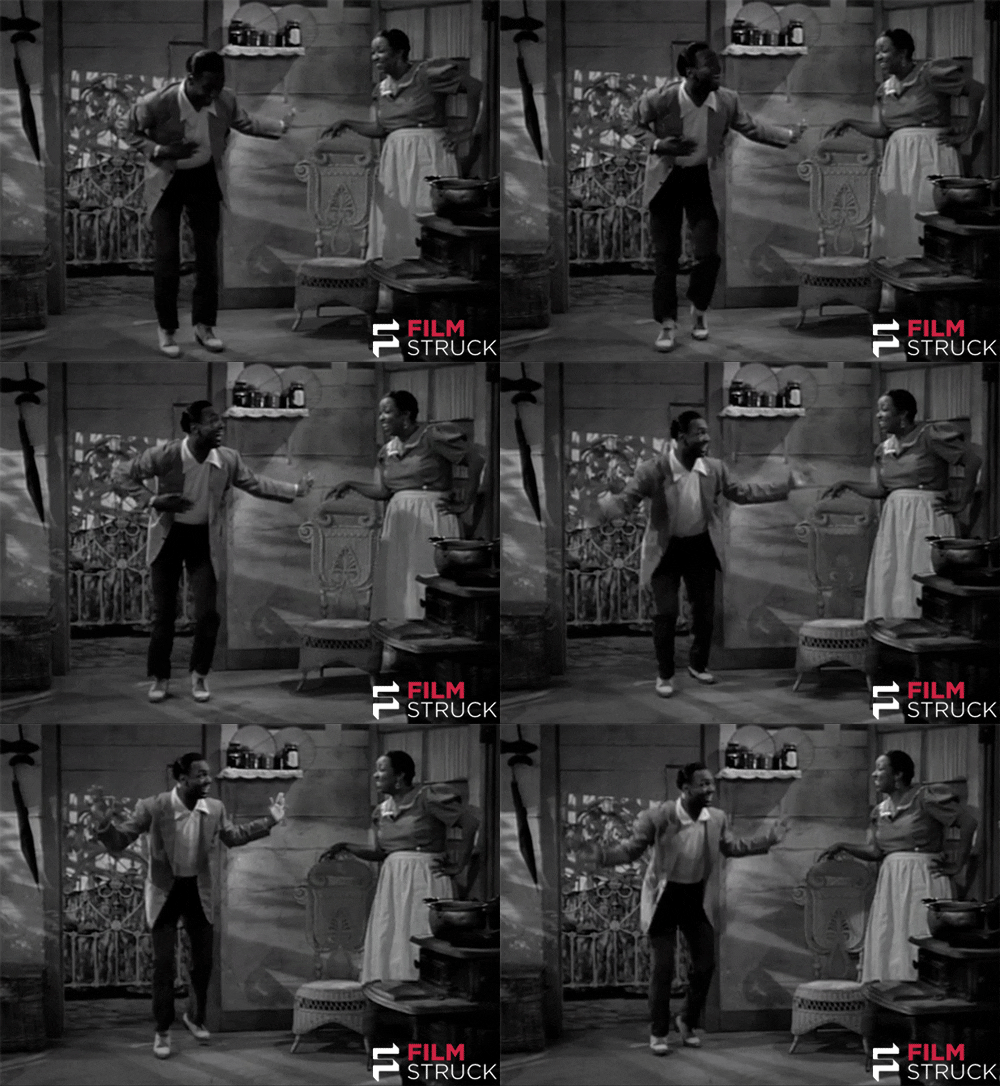
Eu apenas considero de mau gosto a maneira como os personagens negros são tratados, em especial Donald (Eddie 'Rochester' Anderson), namorado de Rheba – Rheba (Lillian Yarbo) é a empregada da família. Donald é preguiçoso e não muito inteligente, e na oficina ele trabalha tendo como ajudante um corvo chamado... Jim Crow – em alusão às leis racistas de segregação da época. Aff.

I only find distasteful the way black characters are treated, in special Donald (Eddie 'Rochester' Anderson), Rheba’s boyfriend – Rheba (Lillian Yarbo) is the maid of the house. Donald is portrayed as lazy and not very bright, and in the workshop he works assisted by a crow named… Jim Crow. Ugh.

Embora “Do Mundo Nada se Leva” seja um filme adorável e divertido, as gravações não foram fáceis. Robert Riskin começou a acreditar que Capra estava levando crédito pelo trabalho dele, e o primeiro e único filme de Riskin como diretor havia fracassado recentemente. Lionel Barrymore, sofrendo com artrite e uma bacia recém-quebrada, estava usando muletas e tomando remédios para dor. Ann Miller, com apenas 15 anos, achava difícil fazer suas cenas de balé e constantemente chorava no set.

Although “You Can't Take It With You” is a lovely and funny film, shooting wasn't so easy. Robert Riskin started to believe that Capra was taking credit for his work, and Riskin's first and only film as a director had recently bombed. Lionel Barrymore, suffering from arthritis and a broken hip, was using crutches and taking painkillers. Ann Miller, at only 15 found it difficult to do her ballet scenes and constantly cried on set.

E, mesmo assim, nenhuma destas dificuldades transparece no filme. Talvez hoje, mais de 80 anos após a estreia, “Do Mundo Nada se Leva” traga uma mensagem difícil demais de seguir – você consegue se imaginar vivendo para seus hobbies? - mas ao mesmo tempo nos faz sorrir e acreditar que, com algumas palavras sábias e uma gaita, tudo é possível.

And, yet, none of those difficulties appear when we watch the film. Maybe now, over 80 years after it was released, “You Can't Take It With You” brings a message too difficult to follow  - can you imagine living for your hobbies? - but at the same time it puts a smile on our faces and makes us believe that, with a few wise words and a harmonica, anything is possible.

This is my contribution to the Third Broadway Bound blogathon, hosted by Rebecca at Taking Up Room.

Saturday, March 14, 2020

Uma Cabana no Céu (1943) / Cabin in the Sky (1943)


Hollywood é racista? A maioria de nós concordaria com a afirmação – e diria que Hollywood era ainda mais racista na chamada “Era de Ouro do cinema”, que não foi de ouro para todo mundo. Filmes com protagonistas negros eram raros, e diretores negros eram ainda mais raros. Mas, durante a Segunda Guerra Mundial, Hollywood viu potencial no mercado afro-americano e, tentando abraçar a diversidade, fez alguns musicais com elenco 100% negro. “Uma Cabine no Céu” (1943) foi um destes musicais.

Is Hollywood racist? Most of us would agree that it is – and it was even more in the so-called “Golden Age of Cinema”, one that wasn’t golden for everybody. Films with black leads were rare, and black directors were even rarer. But, during World War II, Hollywood saw a potential in the African-American market and, trying to embrace diversity, it made some all-black musicals. “Cabin in the Sky” (1943) was one of them.


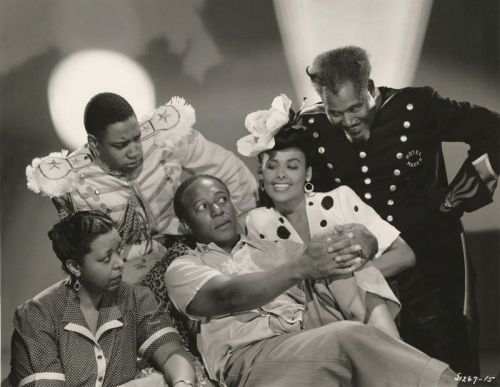
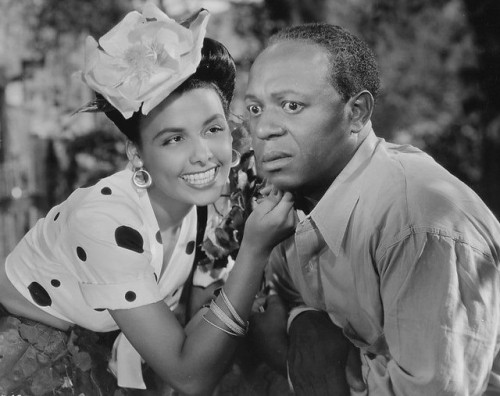
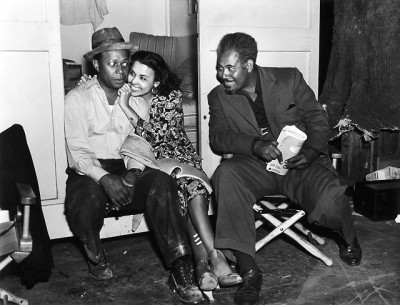
Petunia (Ethel Waters) e Little Joe (Eddie ‘Rochester’ Anderson) se amam profundamente. Entretanto, Joe tem vícios que incomodam sua esposa e atrapalham sua vida. Estes vícios são jogos de azar e a vamp Georgia Brown (Lena Horne). Um dia, Joe escapa da missa para ir jogar e, talvez, pagar uma dívida. Mas ele é baleado no clube e levado de volta para casa em estado crítico.

Petunia (Ethel Waters) and Little Joe (Eddie 'Rochester' Anderson) love each other very much. However, Joe has addictions that bother his wife and prevents him to live his fullest. These addictions are gambling and the vamp Georgia Brown (Lena Horne). One day, Joe escapes church service to go gambling and, maybe, pay a debt. But he is shot at the club and taken back home in a critical state.


Joe morre, e começa uma batalha por sua alma. Para Lúcifer Jr. (Rex Ingram), é óbvio que ele pertence ao inferno. Mas a prece de Petunia é tão poderosa que um soldado (Kenneth Spencer) de Deus intervém. Depois de consultar o próprio Deus, os dois lados decidem dar a Joe uma segunda chance. Ele agora tem seis meses para limpar a alma (o termo usado é “whitewashing”!!!), ou ele irá direto para o inferno. O uso de luz e sombras nesta sequência é admirável.

Little Joe dies, and a battle for his soul starts. It's clear for Lucifer Jr. (Rex Ingram) that he belongs to hell. But Petunia's prayer is so powerful that a soldier (Kenneth Spencer) of God intervenes. After consulting God himself, the two sides decide to give Joe a second chance. He now has six months to “whitewash” (!!!) his soul, or he'll go straight to hell. The use of light and shadows in this sequence is something to admire.


Lúcifer Jr. e seu bando decidem intervir e mandar tentações para Joe. Eles decidem torná-lo rico – uma ideia de um diabólico Louis Armstrong – e adicionar Georgia Brown à equação para criar desentendimentos entre Petunia e Joe e fazê-lo escolher o pecado.

Lucifer Jr. and his crew decide to intervene and send temptations to little Joe. They decide to make him rich – an idea from a devilish Louis Armstrong – and add Georgia Brown to the equation to create a misunderstanding between Petunia and Joe and make him choose sin.


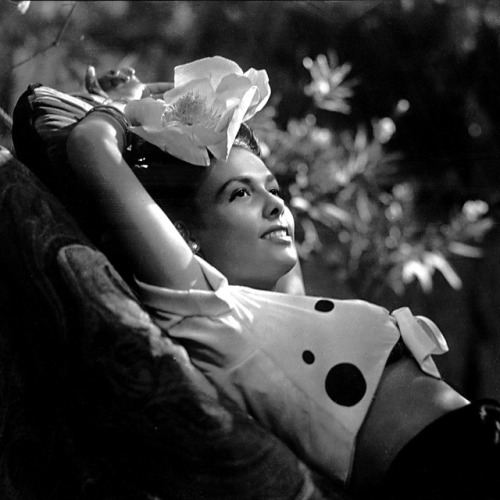
Nossa vamp Georgia Brown aparece apenas depois de 44 minutos. Ela é o exato oposto de Petunia. Petunia é a esposa esperta e trabalhadora, que se dedica de corpo e alma ao marido – sua felicidade tem nome, e esse nome é Joe. Georgia é uma femme fatale num musical, uma sedutora interessada em presentes, dinheiro e sexo.

Our vamp Georgia Brown only appears after 44 minutes. She is the exact opposite of Petunia. Petunia is the smart, hardworking wife who is completely devoted to her husband – her happiness has a name, and this name is Joe. Georgia is a femme fatale in a musical movie, a seductress interested in gifts, money and sex.


Ethel Waters e Lena Horne eram cantoras extraordinárias. Eddie ‘Rochester’ Anderson, por outro lado, não cantava tão bem, mas isso ajudou na imagem de homem comum de Joe. Você consegue imaginar alguém com a voz de, por exemplo, Paul Robeson como um pobre homem viciado em jogo e fraco para as tentações? Eu também não.

Ethel Waters and Lena Horne were outstanding singers. Eddie 'Rochester' Anderson, on the other hand, couldn't sing so well, but this helped the everyman image of his character Joe. I mean, can you imagine someone with the vocal range of, let's say, Paul Robeson being a poor man addicted to gambling and weak to temptations? Neither can I.


Lena Horne começou sua carreira como corista no famoso Cotton Club de Nova York no início dos anos 1930. No final da década ela já cantava com várias orquestras, e em 1942 ela foi contratada pela MGM. No entanto, na maioria de seus filmes ela aparecia como ela mesma em pequenas performances, sem importância para a trama, para que seu número pudesse ser cortado para a exibição do filme no sul dos EUA, região notadamente racista.

Lena Horne started her career as a chorus girl at the famous Cotton Club in New York in the early 1930s. By the end of the decade she was singing with several big band orchestras, and in 1942 she was hired by MGM. However, most of her film appearances at this time were as herself and in small walk-on performances, unimportant to the plot, so her number could be cut when the film was exhibited in the racist US South.


Mas houve alguns filmes que escandalizariam os racistas, e estes filmes tinham elenco 100% negro. “Uma Cabine no Céu” foi um deles – embora fosse apenas o quarto musical protagonizado por negros feito por um grande estúdio desde a chegada do som no cinema. Outro musical com elenco todo negro foi “Tempestade de Ritmo”, também feito em 1943, e também com Lena Horne. Isso significa que os dois maiores sucessos de Lena em Hollywood estrearam no mesmo ano.

But there were some films that would freak racists out, and those films had an all-black cast. “Cabin in the Sky” was one of them – although only the fourth all-black musical made by a major studio since the arrival of talkies. Another musical with an all-black cast was “Stormy Weather”, also released in 1943, and also featuring Lena Horne. This means the two biggest successes Lena had in Hollywood happened in the same year.


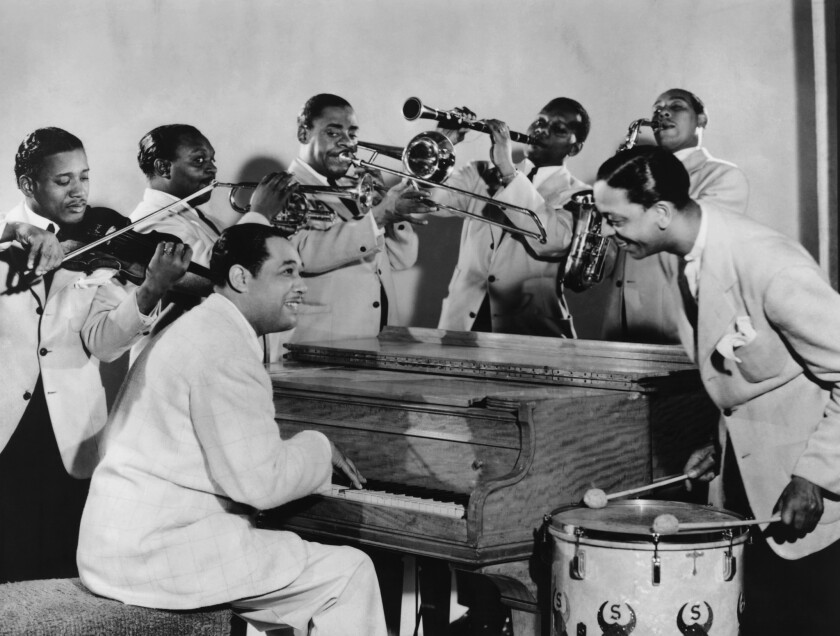
Além de Lena, você também encontrará Duke Ellington e sua orquestra tocando no clube onde Joe vai jogar. A orquestra de Ellington era o que chamavam de “hot bands”: bandas lideradas por negros e especializadas em swing e blues – jazz para dançar, não para relaxar. Duke Ellington esteve à frente de sua orquestra por mais de 60 anos e compôs mais de mil músicas.

Besides Lena, you can also find Duke Ellington and his orchestra playing at the club Joe goes to gamble. Ellington’s orchestra was what they called “hot bands”: bands leaded by black performers and specialized in swing and blues – jazz to dance, not to relax while listening. Duke Ellington led his orchestra for over 60 years and composed over 1,000 songs.


O então jovem diretor Vincente Minnelli recebeu seu primeiro crédito de direção em “Uma Cabine no Céu”. Busby Berkeley ajudou o novato em uma sequência, mas não recebeu crédito. Minnelli queria que Dooley Wilson, que interpretou Little Joe na Broadway, repetisse o papel no filme, mas a MGM acreditava que Eddie ‘Rochester’ Anderson era mais conhecido. Dooley Wilson, obviamente, é mais lembrado como o pianista Sam de “Casablanca”.

Up-and-coming director Vincente Minnelli received his first directing credit in “Cabin in the Sky”. Busby Berkeley helped the newcomer in one sequence, but went uncredited. Minnelli wanted Dooley Wilson, who had played Little Joe on Broadway, to also play the role in the film, but MGM believed Eddie ‘Rochester’ Anderson was a bigger star. Dooley Wilson, of course, is best remembered as pianist Sam from “Casablanca” (1942).


Eu vi duas coincidências interessantes entre “Uma Cabine no Céu” e “O Mágico de Oz” (1939), estrelado por Judy Garland, que mais tarde se casaria com Minnelli. Em ambos há um tornado importante para a trama – na verdade, a MGM reutilizou algumas tomadas do tornado de Oz no filme de 1943. E em ambos há atores que interpretam dois papéis, um num mundo de sonho ou sobrenatural – a terra de Oz em “O Mágico de Oz” e o Céu / Inferno em “Uma Cabine no Céu” – e outro no mundo real.

I saw two cool coincidences with “Cabin in the Sky” and “The Wizard of Oz” (1939), starring Judy Garland, who later would marry Minnelli. In both there is a tornado that is key to the plot – indeed, MGM reused some of the Oz tornado footage in the 1943 movie. And in both there are actors who play two roles, one in the dream or supernatural world – the Land of Oz in “The Wizard of Oz” and the Heaven / Hell in “Cabin in the Sky” – and another in the real world.


Este filme foi feito em uma época em que Hollywood estava tentando mostrar como eles eram amigáveis no tratamento do público afro-americano. Alerta de spoiler: eles não eram tão amigáveis. Estamos falando sobre os anos 1940, quando a segregação era forte e quando alguns prisioneiros de guerra nazistas se surpreenderam como péssimo tratamento dispensado aos negros no sul dos EUA. A própria Lena Horne se recusava a se apresentar para as tropas se os prisioneiros alemães fossem colocados nas fileiras da frente e os soldados negros nas fileiras de trás – uma prática muito comum até então.

This film was made in a time when Hollywood was trying to show how friendly they were towards the African-American public. Spoiler alert: they weren't so friendly. We're talking about the 1940s, when segregation was in full swing and when some Nazi prisoners of war were surprised by how badly black people were treated in the US South. Lena Horne herself refused to perform for war troops if German prisoners were put in the front row and black soldiers were put in the back – a very common practice then.


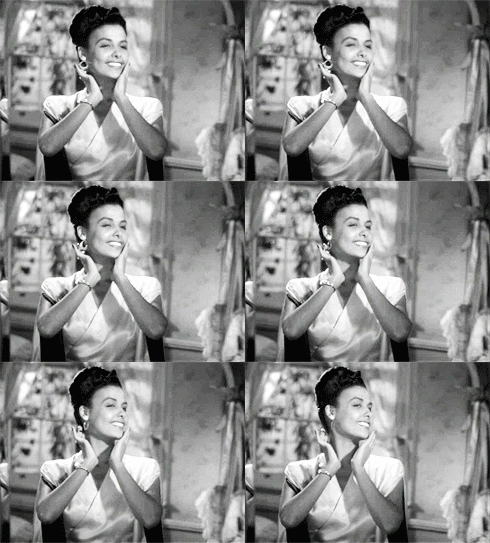
Lena Horne poderia ter mais tempo na tela em “Uma Cabine no Céu” se seu número “Ain’t It the Truth” não tivesse sido cortado. Ele foi considerado arriscado demais, pois Lena cantava enquanto tomava um banho de espuma. Como consequência, a versão de Louis Armstrong da mesma música também foi cortada, e ele ficou com um papel mínimo. A sequência foi usada num curta-metragem de 1946 e exibida em “Era Uma Vez em Hollywood, Parte III” (1994).

Lena Horne could have had more screen time in “Cabin in the Sky” if her number “Ain’t It the Truth” wasn’t cut. It was considered too risky, as Lena sung it while taking a bubble bath. As a consequence, Louis Armstrong’s rendition of the same song was also cut, leaving the musician with a minimum role. The sequence was used in a 1946 short and featured in “That’s Entertainment! III” (1994).


“Uma Cabine no Céu”, tanto o show da Broadway quanto o filme de Hollywood, foram escritos e dirigidos por homens broncos. Por causa disso, vemos algumas semelhanças na maneira como os negros são retratados aqui e em outras obras dos anos 1940. Por exemplo: em “Uma Cabine no Céu” e no último esquete de “Seis Destinos” (1942) – que também tinha Ethel Waters no elenco – os negros são mostrados como um pouco ingênuos, muito religiosos e com um forte senso de comunidade. Enquanto alguns temas, como a escolha entre bom e mau, são universais, é revigorante ver uma história como essa interpretada por artistas negros, o que também nos faz imaginar o que mais eles poderiam ter feito se Hollywood estivesse realmente interessada em diversidade.

“Cabin in the Sky”, both the Broadway show and the Hollywood movie, were written and directed by white men. Because of this, we see some similarities between how black people are portrayed here and in other works from the 1940s. For instance: in both “Cabin in the Sky” and in the last segment of “Tales of Manhattan” (1942) – that also had Ethel Waters in the cast – black people are portrayed as a bit naïve, deeply religious and with a strong sense of community. While some themes, like choosing good over evil, are universal, it’s refreshing to see a story like this played by black performers, which also makes us wonder what else they could achieve if Hollywood was really interested in diversity.

This is my contribution to the Pop Stars Moonlighting blogathon, hosted by Gill at ReelWeegieMidget Reviews.

Related Posts Plugin for WordPress, Blogger...