} Crítica Retrô: James Stewart

Tradutor / Translator / Traductor / Übersetzer / Traduttore / Traducteur / 翻訳者 / переводчик

Showing posts with label James Stewart. Show all posts

Friday, February 25, 2022

Sortilégio do Amor (1958) / Bell, Book and Candle (1958)

ESTA CRÍTICA TEM SPOILERS

THIS REVIEW HAS SPOILERS

Quando somos crianças, aprendemos com os contos de fadas que bruxas são feias, más e amargas. Mas muitos filmes contam uma história diferente. Estes filmes têm lindas feiticeiras, bondosas curandeiras e adoráveis bruxas. Tome como exemplo Veronica Lake em “Casei-me com uma Feiticeira” (1942). Ou Samantha, interpretada por Elizabeth Montgomery na série “A Feiticeira”. E podemos adicionar outra bruxa boa à lista: Kim Novak em “Sortilégio do Amor”.

When we are kids, we learn through fairy tales that witches are ugly, evil and bitter. But many movies tell a different story. These movies have gorgeous sorceresses, kind enchantresses and lovely witches. Think about Veronica Lake in “I Married a Witch” (1942), for instance. Or Samantha, played by Elizabeth Montgomery in the TV show “Bewitched”. And we could add another good witch to the list: Kim Novak in “Bell, Book and Candle”.
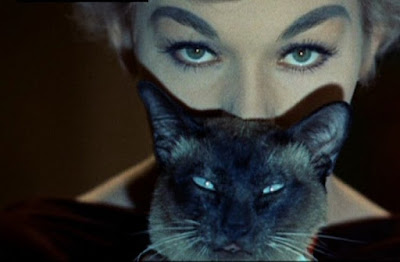
É Natal e a lojista Gillian Holroyd (Kim Novak) quer algo diferente da vida. Ela quer conhecer pessoas novas, ou melhor, ela quer que alguém novo preste atenção nela. Gillian está apaixonada por seu vizinho do andar de cima, Shepherd Henderson (James Stewart).

It’s Christmas and shop owner Gillian Holroyd (Kim Novak) wants something different in her life. She wants to meet new people, or better said, she wants someone who’s new to notice her. Gillian is in love with her upstairs neighbor Shepherd Henderson (James Stewart).

Shepherd encontra a tia de Gillian, Queenie (Elsa Lanchester), em seu apartamento e ela quebra o telefone dele, obrigando-o a ir no andar de baixo e pedir o telefone de Gillian emprestado - a tia Queenie quer que sua sobrinha tenha um romance! Lá, Shepherd é convidado pela tia Queenie para ir ao Clube Zodíaco, onde Queenie e Gillian irão passar a véspera de Natal.

Shepherd meets Gillian’s aunt Queenie (Elsa Lanchester) in his apartment and she breaks his phone so he can go downstairs and use Gillian’s – aunt Queenie wants her niece to have romance! While there Shepherd is invited by aunt Queenie to go to the Zodiac Club, where Queenie and Gilian will spend their Christmas Eve.

Shepherd vai ao Clube Zodíaco e leva com ela sua noiva Merle (Janice Rule), que por acaso é uma velha conhecida de Gillian. O irmão de Gillian, Nicky (Jack Lemmon), toca bongô no clube. Depois de uma noite desagradável - para Merle - no clube, todos vão para casa.

Shepherd goes to the Zodiac Club and brings along his fiancée Merle (Janice Rule), who happens to be Gillian’s old acquaintance. Who is playing the bongo at the club is Gillian’s brother Nicky (Jack Lemmon). After an unpleasant – for Merle – evening at the club, they all go home.

Em casa, Gillian recebe Shepherd, que diz que vai se casar no dia de Natal. Gillian o enfeitiça e o faz se apaixonar por ela. Ele desmancha o noivado e começa a sair com Gillian, indo a parques e restaurantes. A alegria deles é baqueada pela chegada do autor Sidney Redlitch (Ernie Kovacs), que quer escrever um livro sobre bruxas em Nova York.

At home, Gillian receives Sheperd, who says he’s getting married on Christmas Day. Gillian puts on a spell on him and makes him fall in love with her. He breaks up with his fiancée and starts going out with Gillian, to the park and to dinners. Their happiness is shaken   with the arrival of author Sidney Redlitch (Ernie Kovacs), who wants to write a book about witches in New York.

Nicky se envolve com o livro de Redlitch quando conta ao autor que ele é um mago e se oferece para ser consultor no projeto. A família Madrigal Holroyd se encontra numa encruzilhada, pois Gillian se preocupa com a possibilidade de seu segredo ser descoberto e isso atrapalhar seus planos de casamento - um casamento que ela deseja ardentemente, ignorando que bruxas que se apaixonam podem perder seus poderes.

Nicky gets entangled in Redlitch’s book when he tells the author he’s a warlock and wants to serve as consultant for the writing. The Madrigal Holroyd family find themselves at a crossroads, as Gillian gets nervous that her secret will be discovered and this will spoil her upcoming wedding – a wedding she wants so much, ignoring that witches who fall in love may lose their powers.

Mesmo que tudo no filme seja sobre ela, Kim Novak não é o primeiro nome que aparece nos créditos - James Stewart é que recebe esta honra. Novak estava trabalhando no cinema desde 1954 e já havia feito bons filmes como “Férias de Amor” (1955) e “Um Corpo que Cai”, que havia acabado de ser lançado. Stewart vinha trabalhando no cinema desde meados da década de 1930 - na verdade, ele fez sua estreia em filmes quando Novak tinha apenas dois anos de idade - e era ganhador de um Oscar, por isso era natural que seu nome precedesse o dela. Também ganhador do Oscar, Jack Lemmon é o terceiro listado nos créditos.

Even though everything in the film revolves around her, Kim Novak wasn’t first billed – James Stewart received top billing. Novak had been working in movies since 1954 and had already made good films like “Picnic” (1955), and “Vertigo” had just been released. Stewart had been working since the mid-1930s – in fact, he made his film debut when Novak was only two years old – and was an Oscar winner, so his first billing is only natural. Also an Oscar winner, Jack Lemmon receives third billing.

Como você deve saber, Kim Novak e James Stewart trabalharam juntos em “Um Corpo que Cai”, também de 1958. Anos depois, Novak disse que Stewart foi seu colega de cena favorito e que ela gostaria de ter feito mais filmes com ele. De 1959 em diante, Stewart passou a recusar papéis de galã, pois atrizes muito mais novas eram escaladas para viver seu par romântico. Ele decidiu que estes tipos de papéis não mais lhe cabiam, e focou em papéis paternais e mais sérios.

As you may know, Kim Novak and James Stewart worked together in “Vertigo”, also from 1958. Later in life, Novak said that Stewart was her favorite leading man and that she wished they worked together in more films. From 1959 onwards, Stewart started refusing romantic leading roles, as he was often paired with much younger actresses. He decided these roles suited him no more, and focused on fatherly roles or more serious ones.

Também no elenco temos Hermione Gingold como a grande bruxa Bianca de Passe. É interessante vê-la neste curto papel, tão diferente do papel que ela interpretou em “Gigi” no mesmo ano. Tanto Gingold quanto Elsa Lanchester, duas veteranas das telas, têm pouco tempo em cena em “Sortilégio do Amor”, mas se destacam.

Also in the cast we have Hermione Gingold as the great witch Bianca de Passe. It’s interesting to see her in this small part, so different from the role she played in “Gigi” that same year. Both Gingold and Elsa Lanchester, two screen veterans, have little screen time in “Bell, Book and Candle”, but they make the best of it.

O figurino foi feito pelo estilista Jean Louis. Kim Novak veste lindas roupas, desde as mais confortáveis usadas na loja até aquelas para ocasiões mais formais. Jean Louis não é muito lembrado como figurinista - não tanto quanto Edith Head ou Orry-Kelly, para citar alguns - mas trabalhou em quase 200 filmes e programas de TV, com sua mais famosa criação sendo o vestido de strip-tease usado por Rita Hayworth em “Gilda” (1946).

The gowns were made by Jean Louis. Kim Novak dresses beautiful clothes, from the comfy ones used at her store to the ones for more formal occasions. Jean Louis is not often remembered as a costume designer for film – not as much as others, like Edith Head and Orry-Kelly, to name a few - but he worked in almost 200 movies and TV shows, with his most famous piece being Rita Hayworth’s strip-tease dress from “Gilda” (1946).

Gatos são comumente associados às bruxas. Gillian tem um gato siamês fofo, e os olhos de Kim Novak combinam perfeitamente com os do animal. Algo incomum em “Sortilégio do Amor” é que Gillian usa seu gato para os feitiços. De acordo com o site Cinema Cats (sim, isso existe), há histórias conflituosas sobre quantos gatos foram usados nas filmagens - o IMDb até menciona que um deles, Houdini, sofreu maus-tratos nas mãos da equipe de filmagem. De qualquer modo, o que nós sabemos da imprensa da época é que a busca pelo gato perfeito foi levada a sério, e os produtores queriam um gato com “uma personalidade de Ava Gardner”.

Cats are often associated with witches. Gillian has a cute Siamese cat, and Kim Novak’s eyes perfectly match the animal’s. An unusual thing in “Bell, Book and Candle” is that Gillian uses her cat for the spells. According to the website Cinema Cats (yes, this is a real thing), there are conflicting stories about how many cats were used in the shooting - IMDb even mentions that one of them, Houdini, was mistreated by the film crew. Anyway, what we know from the press of the time is that the search for a perfect cat for the movie was taken seriously, and the producers wanted a cat with “an Ava Gardner personality”.

O título do filme em inglês (Bell, Book and Candle) vem de uma velha frase repetida por Redlitch. Desde a Idade Média, um sino (Bell), um livro (Book) e uma vela (Candle) são os objetos usados no rito religioso da excomunhão - sendo o livro em questão a Bíblia Sagrada. Embora seja mais um alívio cômico, Redlitch prova que também é fonte de cultura!

The title of the movie comes from an old saying that is repeated by Redlitch. Since the Middle Ages, bell, book and candle are the objects used in the religious rite of excommunication - the book in question being the Holy Bible. Although more of a comic relief character, Redlitch proves he’s also source of culture!

A única coisa que me incomodou em “Sortilégio do Amor” foi que, para ser aceita por Shepherd, Gillian teve de perder seus poderes. O mesmo não acontece na já mencionada série “A Feiticeira”, na qual o marido “normal” tem de aprender a viver com a magia da esposa. O IMDb diz que “Sortilégio do Amor” serviu de inspiração para “A Feiticeira”, e fico feliz que essa mudança tenha sido feita.

The only thing that bothered me in “Bell, Book and Candle” was the fact that, to be accepted by Shepherd, Gillian had to lose her powers. The same doesn’t happen in the aforementioned “Bewitched” TV show, where the “normal” husband has to learn how to live with his wife’s magic. IMDb says that “Bell, Book and Candle” was actually the inspiration for “Bewitched”, and I’m glad this small change was made.

“Sortilégio do Amor” originou-se como peça da Broadway em 1950, estrelada por Rex Harrison e Lilli Palmer. David Selznick comprou os direitos da peça com a ideia de escalar sua esposa Jennifer Jones para o papel principal, mas o projeto não se materializou. Os estúdios Columbia então compraram os direitos e fizeram este charmoso filme - melhorado pela química entre James Stewart e Kim Novak.

 “Bell, Book and Candle” originated as a Broadway play in 1950, starring Rex Harrison and Lilli Palmer. David Selznick bought the rights to the play with the idea of casting his wife Jennifer Jones as the lead, but the project didn’t materialize. Columbia Pictures then bought the rights and made this charming little movie - one enhanced by the fine chemistry between James Stewart and Kim Novak.

This is my contribution to the Kim Novak blogathon, hosted by The Classic Movie Muse.

Saturday, June 6, 2020

Do Mundo Nada se Leva (1938) / You Can’t Take It With You (1938)

Nenhum homem que tem amigos é um fracasso. Essa é a lição aprendida por James Stewart como George Bailey em “A Felicidade Não se Compra” (1946), de Frank Capra. Entretanto, a mesma lição havia sido ensinada em outro filme de Capra estrelado por James Stewart e Lionel Barrymore: “Do Mundo Nada Se Leva”, um filme que também traz a melhor e mais excêntrica família do cinema.

No man is a failure who has friends. This is the lesson learned by James Stewart as George Bailey in Frank Capra's “It's a Wonderful Life”, from 1946. However, the same lesson had been taught in another Capra movie starring James Stewart and Lionel Barrymore: “You Can't Take It With You”, a film that also brings the best and most eccentric family to ever grace the screen.

O Sr Kirby (Edward Arnold) quer controlar toda a indústria de munição, e para isso ele precisa construir uma fábrica ao redor do negócio de seu concorrente. Entretanto, há um problema: a fábrica não pode ser construída enquanto um terreno não for comprado. O teimoso proprietário deste terreno é um cavalheiro chamado Vanderhof.

Mr Kirby (Edward Arnold) wants to control the whole ammunition industry, and to do this he needs to construct a factory around his competitor’s business. However, there is one problem: the factory can’t be built if one lot isn’t sold. The stubborn owner of this lot is a gentleman called Vanderhof.

Martin Vanderhof (Lionel Barrymore) é uma figura. Em vez de solucionar seu problema sobre o terreno com o senhor Blakely (Clarence Wilson), que trabalhar para o Sr Kirby, ele apenas faz com que o Sr Poppins (Donald Meek), um contador que estava na empresa havia 20 anos, abandone o emprego para seguir seu sonho de construir brinquedos. Vanderhof leva Poppins até sua casa, que é, obviamente, um lar peculiar.

Martin Vanderhof (Lionel Barrymore) is quite a guy. Instead of solving the issue about his lot with Mr Blakely (Clarence Wilson), who works for Mr Kirby, he only makes Mr Poppins (Donald Meek), an accountant who had been working there from 20 years, abandon his job and follow his dream of manufacturing toys. Vanderhof takes Poppins to his house, and, of course, it is a peculiar household.

A filha de Vanderhof, Penny (Spring Byington), é uma dramaturga amadora. Seu genro, Paul Sycamore (Samuel S. Hinds), faz fogos de artifício. Sua neta mais nova, Essie (Ann Miller), sonha em ser bailarina. Enquanto isso não acontece, ela faz bombons para o marido, Ed (Dub Taylor), vender. Alice (Jean Arthur), a neta mais velha, trabalha como datilógrafa.

Vanderhof’s daughter, Penny (Spring Byington), is an amateur playwright. His son-in-law, Paul Sycamore (Samuel S. Hinds), makes fireworks. His younger granddaughter, Essie (Ann Miller), dreams about being a ballerina. While this doesn’t happen, she makes candy for her husband, Ed (Dub Taylor), to sell. Alice (Jean Arthur), the older granddaughter, works as a stenographer.

E aqui as coisas ficam mais interessantes: Alice trabalha como datilógrafa no escritório de Tony Kirby Jr (James Stewart). Eles estão apaixonados e Tony pede Alice em casamento – sem saber que o avô dela é dono do terreno que o pai dele tanto cobiça.

And here things get more interesting: Alice works as a stenographer at the office that belongs to Tony Kirby Jr (James Stewart). They are in love and Tony asks Alice to marry him – without knowing that her grandfather owns the lot his father wants to buy so badly.

Vanderhof tem um motivo sentimental para não vender a casa: as memórias de sua falecida esposa ainda estão lá, em cada canto. Ele conta isso a Alice em uma cena comovente. A cena deve ter sido particularmente difícil de gravar porque Lionel havia perdido a esposa na véspera de Natal de 1936.

Vanderhof has a good sentimental reason to not sell the house: the memories about his late wife are still there, in many corners. He tells this to Alice in a very moving scene. The scene must have been particularly difficult to shoot because Lionel had just lost his wife on Christmas Eve, 1936.

Vanderhof e sua família só fazem o que gostam. Se eles estão se divertindo, estão felizes. Não importa se eles não estão enriquecendo nem seguindo regras da sociedade: eles simplesmente VIVEM intensamente. Eles entendem que a vida não é uma lista de tarefas que temos de completar de todas as maneiras – a vida é outra coisa. Talvez um presente, uma bênção ou mesmo uma maldição, mas com certeza algo tem de ser feito com ela. Então por que não viver uma vida feliz?

Vanderhof and his family only do what pleases them. As long as they’re having fun, they’re happy. It doesn’t matter if they aren’t getting rich nor following societal rules: they simply LIVE to the fullest. They understand that life isn’t a to-do list that we must complete no matter what – life is something else. Maybe a gift, maybe a blessing, maybe a curse, but certainly something has to be done with it. So why not live a happy life?

Tony fica fascinado com a maneira como a família Vanderhof-Sycamore vive. Ele diz que é preciso muita coragem para ignorar as expectativas dos outros e só fazer o que você gosta. E ele se enche de coragem para levar sua família para jantar na casa de Alice não no dia combinado, mas um dia antes para pegar todos à vontade em casa. O problema é que todos estão muito à vontade – e isso inclui o senhor DePinna (Halliwell Hobbes), que também faz fogos de artifício mas no momento está posando para uma pintura, e Kolenkhov (Mischa Auer), o professor russo de balé de Essie que acha que tudo é um lixo. O que realmente será um lixo será a relação do relaxado Vanderhof e do ambicioso Sr Kirby.

Tony is marveled at how the Vanderhof-Sycamore family lives. He says it takes a lot of courage to ignore everybody else’s expectation and just do what makes you happy. And he is full of courage when he takes his family to have dinner at Alice's house not on the scheduled day, but one day earlier to catch everybody comfortable at home. The problem is that everybody is too comfortable – and this includes Mr DePinna (Halliwell Hobbes), who also makes fireworks but is currently posing for a painting, and Kolenkhov (Mischa Auer), Essie's Russian ballet teacher who thinks everything stinks. What will really stink is the relationship between fun-loving Mr Vanderhof and money-hungry Mr Kirby.

“Do Mundo Nada se Leva” era originalmente uma peça, escrita por George S. Kaufman e Moss Hart. Vanderhof foi interpretado, na peça, por Henry Travers, que mais tarde ensinou uma lição de amizade para George Bailey. A peça de sucesso ganhou o Prêmio Pulitzer e deu origem ao filme, que ganhou dois Oscars: Melhor Diretor e Filme. “Do Mundo Nada se Leva” é a primeira de apenas duas peças que ganharam o Pulitzer e mais tarde o Oscar de Melhor Filme – a outra é “Conduzindo Miss Daisy”.

 “You Can't Take It With You” was originally a play, written by George S. Kaufman and Moss Hart. Vanderhof was played, in the play, by Henry Travers, who later taught George Bailey a lesson in friendship. The successful play won the Pulitzer Prize and originated the film, that went on to win two Oscars: Best Director and Best Picture. “You Can't Take It With You” is one of only two plays to win both the Pulitzer and later the Best Picture Oscar – the other one is “Driving Miss Daisy”.

A Peça / The Play
A Peça / The Play

Robert Riskin, colaborador constante de Frank Capra, adaptou a peça para o cinema e adicionou seu toque inspirador – na verdade, muito do que mais tarde foi considerado “Capracorn” veio da mente de Riskin, como a mensagem alegre, o conflito da cobiça contra a ingenuidade, o homem comum contra o sistema e muito mais. É possível encontrar várias semelhanças entre “Do Mundo Nada se Leva” e outros filmes de Capra e Riskin do final dos anos 30, como “O Galante Mr Deeds” (1936) e “A Mulher Faz o Homem” (1939), indo da Cinderela em fuga até a mensagem de que dinheiro não traz felicidade.

Capra's constant collaborator Robert Riskin adapted the play to the screen and added his inspirational touch – in fact, much of what was later considered “Capracorn” came from Riskin's mind, like the feel-good message, the greed versus naïveté conflict, the common man against the system and many more. You can find many similarities between “You Can't Take It With You” and other Capra-Riskin films of the late 1930s, like “Mr Deeds Comes to Town” (1936) and “Mr Smith Goes to Washington” (1939), from the runaway Cinderella to the lesson that money doesn't buy happiness.

Algumas mudanças foram feitas na peça, em especial no terceiro ato. O personagem Poppins não existia, nem o conflito principal do Sr Kirby querer comprar a casa de Vanderhof. Algumas cenas com muitos extras foram adicionadas, num restaurante, fora da casa de Vanderhof e numa cadeia, e este último cenário trouxe uma deliciosa participação de Harry Davenport como um juiz.

Some changes were made in the play, in special in the third act. The character Mr Poppins didn't exist, nor the main conflict of Mr Kirby wanting to buy the Vanderhof house. Some crowd scenes were added, in a restaurant, outside the Vanderhof house and in a jail, and this last set allowed for a delightful appearance by Harry Davenport as a judge.


Capra, o elenco e seus autógrafos / Capra, the cast and their autographs

Eu apenas considero de mau gosto a maneira como os personagens negros são tratados, em especial Donald (Eddie 'Rochester' Anderson), namorado de Rheba – Rheba (Lillian Yarbo) é a empregada da família. Donald é preguiçoso e não muito inteligente, e na oficina ele trabalha tendo como ajudante um corvo chamado... Jim Crow – em alusão às leis racistas de segregação da época. Aff.

I only find distasteful the way black characters are treated, in special Donald (Eddie 'Rochester' Anderson), Rheba’s boyfriend – Rheba (Lillian Yarbo) is the maid of the house. Donald is portrayed as lazy and not very bright, and in the workshop he works assisted by a crow named… Jim Crow. Ugh.

Embora “Do Mundo Nada se Leva” seja um filme adorável e divertido, as gravações não foram fáceis. Robert Riskin começou a acreditar que Capra estava levando crédito pelo trabalho dele, e o primeiro e único filme de Riskin como diretor havia fracassado recentemente. Lionel Barrymore, sofrendo com artrite e uma bacia recém-quebrada, estava usando muletas e tomando remédios para dor. Ann Miller, com apenas 15 anos, achava difícil fazer suas cenas de balé e constantemente chorava no set.

Although “You Can't Take It With You” is a lovely and funny film, shooting wasn't so easy. Robert Riskin started to believe that Capra was taking credit for his work, and Riskin's first and only film as a director had recently bombed. Lionel Barrymore, suffering from arthritis and a broken hip, was using crutches and taking painkillers. Ann Miller, at only 15 found it difficult to do her ballet scenes and constantly cried on set.

E, mesmo assim, nenhuma destas dificuldades transparece no filme. Talvez hoje, mais de 80 anos após a estreia, “Do Mundo Nada se Leva” traga uma mensagem difícil demais de seguir – você consegue se imaginar vivendo para seus hobbies? - mas ao mesmo tempo nos faz sorrir e acreditar que, com algumas palavras sábias e uma gaita, tudo é possível.

And, yet, none of those difficulties appear when we watch the film. Maybe now, over 80 years after it was released, “You Can't Take It With You” brings a message too difficult to follow  - can you imagine living for your hobbies? - but at the same time it puts a smile on our faces and makes us believe that, with a few wise words and a harmonica, anything is possible.

This is my contribution to the Third Broadway Bound blogathon, hosted by Rebecca at Taking Up Room.

Sunday, November 12, 2017

O Mundo é um Teatro / Ziegfeld Girl (1941)

As mulheres frequentavam os cinemas nos anos 1930 queriam ter uma garota como melhor amiga: Joan Blondell. Esperta, divertida, espirituosa e sempre pronta para te apoiar: as personagens de Joan tinham tudo o que uma boa amiga deveria ter. As mulheres que frequentavam os cinemas nos anos 1940, por outro lado, tinham outro tipo de melhor amiga dos sonhos: Eve Arden.

Female filmgoers from the 1930s wished they had one girl as their best friend: Joan Blondell. Wise, funny, quick-witted and supportive: Joan's characters embodied everything a good pal should have. Female filmgoers from the 1940s, on the other hand, had other kind of dream best friend: Eve Arden.
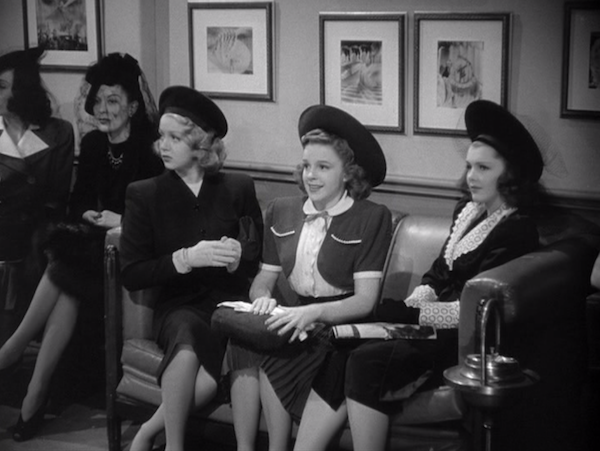
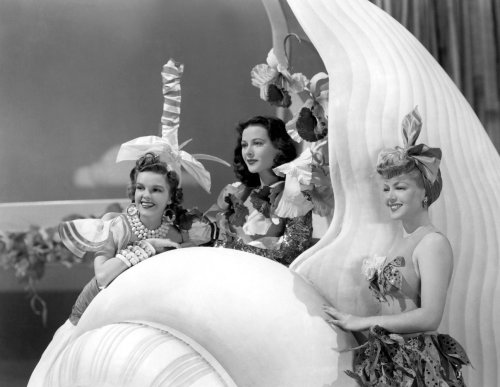
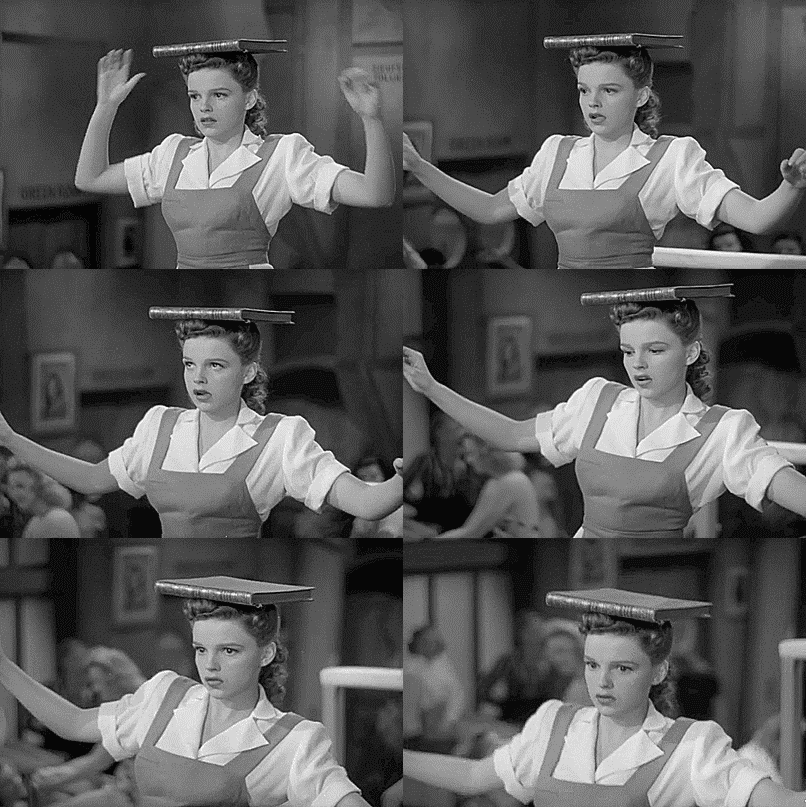
Três moças são recém-chegadas no grupo das Ziegfeld Girls. Sheila (Lana Turner) era ascensorista antes de ser descoberta pelo próprio Sr. Ziegfeld. Susie (Judy Garland) nasceu em uma família do teatro e o Sr. Ziegfeld viu o número que ela fazia com o pai, mas contratou apenas a garota. Sandra (Hedy Lamarr) estava acompanhando o marido violinista em um teste quando um cantor a viu e a mandou para o Sr. Ziegfeld. Ela aceitou o trabalho porque o casal estava passando por dificuldades.

Three women are new in the Ziegfeld Girls group. Sheila (Lana Turner) was an elevator operator before being spotted by Mr. Ziegfeld himself. Susie (Judy Garland) was born in a vaudeville family and Mr. Ziegfeld saw her number with her father, but hired only her. Sandra (Hedy Lamarr) was accompanying her violinist husband in an audition when a singer spotted her and sent her to Mr. Ziegfeld. She accepted the job as a show girl because the couple was out of money.
“O Mundo é um Teatro” é sobre as relações destas mulheres com os homens de suas vidas. Sheila tem um namorado simples, Gil (James Stewart), mas decide sair com um “benfeitor das artes”, Geoffrey Collins (Ian Hunter), que lhe presenteia com joias caras.

“Ziegfeld Girl” is all about the relationship these women have with the men in their lives. Sheila has a simple-minded boyfriend, Gil (James Stewart), but she decides to hang out with an “arts benefactor”, Geoffrey Collis (Ian Hunter), who gives her expensive jewelry.
O pai de Susie (Charles Winninger) deve encarar uma amarga verdade: ele ensinou tudo para sua garotinha, mas agora ele está acabado e o show quer contratar apenas ela. Ao mesmo tempo, Susie se interessa pelo irmão mais novo de Sheila, Jerry (Jackie Cooper).

Susie's father (Charles Winninger) must face a bitter truth: he has taught everything to his little girl, and now he's washed up and the shows only want her. At the same time, Susie becomes sweethearts with Sheila's young brother, Jerry (Jackie Cooper).
Sandra se vê dividida entre o marido Franz (Philip Dorn), que não gosta do novo trabalho dela, e o cantor Frank Merton (Tony Mayer), um conhecido mulherengo que foi responsável pela descoberta dela. Das três, Susan é aquela que tem menos tempo em cena, enquanto Sheila é a que tem mais.

Sandra becomes torn between her husband Franz (Philip Dorn), who disapproves her new job, and lead singer Frank Merton (Tony Martin), a well-known womanizer who discovered her. Out of the three, Sandra is the one that gets less screen time, while Sheila has the most.
Patsy Dixon (Eve Arden) não é uma das estrelas principais entre as Ziegfeld girls. A pobre Eve sequer é creditada no começo do filme! Patsy é uma artista que coleciona duas coisas: joias e maridos. Ela parece antipática e frívola, até que dá um conselho a Sheila em um momento delicado. E, se Eve Arden está lhe dando um conselho, é melhor escutá-la.

Patsy Dixon (Eve Arden) is not one of the main Ziegfeld girls. Poor Eve is not even credited in the beginning of the movie! Patsy is a showgirl that collects two things: jewelry and husbands. She sounds unsympathetic and frivolous, until a pivotal moment in which she gives advice to Sheila. And, if Eve Arden is giving you advice, you'd better listen to her.
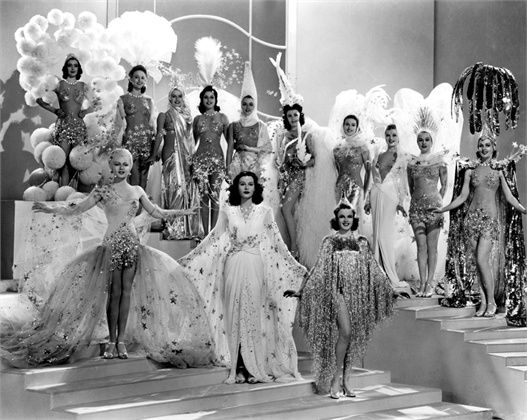
Busby Berkeley foi a escolha perfeita para dirigir os números de dança. Florenz Ziegfeld Jr não era um homem básico, e seu estilo combinou perfeitamente com o de Berkeley. Obviamente, a edição e os truques de câmera impossíveis de serem realizados no teatro deram uma pequena vantagem a Berkeley, e ele chegou um pouco mais longe de Ziegfeld com suas criações, que estão eternizadas em celuloide.

Busby Berkeley was the perfect choice to direct the dance numbers. Florenz Ziegfeld Jr wasn't a basic man at all, and his style combined perfectly with Berkeley's. Of course, editing and camera tricks that were not part of the theater world gave Berkeley a small advantage, and he went a mile further than Ziegfeld with his own creations, forever burned on celluloid.
É interessante notar que o próprio Sr. Ziegfeld nunca é visto. Quando o filme tinha data de estreia prevista para 1938, Walter Pidgeon havia sido escalado, e havia a possibilidade de William Powell reprisar o papel de Ziegfeld que já havia feito em “Ziegfeld – Criador de Estrelas” (1936). Walter Pidgeon acabou interpretando Ziegfeld em “Funny Girl – A Garota Genial” (1968). Em minha opinião, foi uma decisão sábia não mostrar o Sr. Ziegfeld no filme, ou o foco mudaria da vida das artistas, da Ziegfeld girls, para a vida do próprio showman.

It's interesting to notice that Mr. Ziegfeld is never seen. When the film was set for a 1938 release, Walter Pidgeon had been cast, and there was a chance that William Powell would recreate his role as Ziegfeld from the 1936 Oscar-winning extravaganza “The Great Ziegfeld”. Walter Pidgeon ended up playing Ziegfeld in “Funny Girl” (1968). In my opinion, it was a wise decision to not show Mr. Ziegfeld in the movie, because otherwise the focus would shift from the girls’ lives to the showman’s life.
Edward Everett Horton está adorável como sempre em seu papel de caça-talentos super-preocupado. Jackie Cooper tem pouco a fazer, apenas ser fofo ao lado de uma igualmente adorável Judy Garland, e foi particularmente bom ver o veterano do vaudeville Al Shean fazendo um número em frente às câmeras. James Stewart está muito bem e demonstra grande alcance nas técnicas de atuação.

Edward Everett Horton is his usual delightful self as the over-worried talent hunter. Jackie Cooper has little to do but to be cute to an equally adorable Judy Garland, and it was particularly nice to see vaudevillian Al Shean doing his routine for the cameras. James Stewart is very good in the movie, showing a fine acting range.
O final é previsível, mas isso não tira os méritos do filme. Se nem todas as histórias são exploradas ao máximo, “O Mundo é um Teatro” merece ser visto por causa dos incríveis números musicais, da direção de arte de Cedric Gibbons, dos figurinos fantásticos de Adrian, da boa performance de Lana Turner e da voz maravilhosa de Judy Garland.

The ending is predictable, but this doesn't take away the film's merits. If not all the stories deliver their full potential, “Ziegfeld Girl” deserves to be seen because of the amazing song and dance numbers, the art direction by Cedric Gibbons, the fantastic gowns by Adrian, Lana Turner’s good performance and Judy Garland’s marvelous voice.


This is my contribution to the Eve Arden blogathon, hosted by Laura at Phyllis Loves Classic Movies.
Related Posts Plugin for WordPress, Blogger...