} Crítica Retrô: mitologia grega

Tradutor / Translator / Traductor / Übersetzer / Traduttore / Traducteur / 翻訳者 / переводчик

Showing posts with label mitologia grega. Show all posts

Wednesday, July 15, 2026

A Odisseia (1911) / The Odyssey (1911) / L’Odissea (1911)


Quando eu tinha treze anos, a escola exigiu a leitura de uma versão resumida de duas obras-primas de Homero: a Ilíada e a Odisseia. Já naquela época, a leitura não era uma obrigação para mim, era um prazer. Eu fiquei surpresa com a presença e a intervenção dos deuses gregos nas histórias e suas tramas ficaram marcadas na minha mente.

When I was thirteen, school made us read an abridged version of Homer’s two masterpieces: the Iliad and the Odyssey. Already at the time, reading wasn’t an obligation for me, it was a pleasure. I was surprised by the presence and intervention of the Greek gods in the stories and their plots were glued to my mind. 


No meu primeiro ano de faculdade surgiram os MOOCs - sigla em inglês para Cursos Abertos Online em Massa. O primeiro que eu fiz era sobre a Ilíada e a Odisseia, com um professor especialista nestas duas obras da literatura. Dá para imaginar ser especialista numa obra de arte? Isso mexeu comigo e o curso foi exigente, mas foi um prazer fazê-lo.

In my first year of college MOOCs - Massive Open Online Courses - became a thing. The first I took part in was about the Iliad and the Odyssey, taught by a professor with a degree in these two works of literature. Can you imagine having a degree in a work of art? It puzzled my mind and the course was demanding, but also rewarding.


Semana passada vi um post no Instagram da Le Giornate del Cinema Muto sobre o filme de 1911 “A Odisseia / L’Odissea”. A publicação nos contava que essa adaptação do poema épico de Homero foi feita após o sucesso de “L’Inferno” (1911), um filme sobre o qual já escrevi AQUI. Por isso, em vez de marchar para os cinemas para assistir à nova adaptação de Christopher Nolan, eu decidi escrever sobre a adaptação vintage de uma das maiores histórias de todos os tempos.

Last week I saw a post on the Instagram account of the Pordenone Silent Film Festival about the 1911 film “The Odyssey / L’Odissea”. The publication told us that this adaptation of Homer’s epic tale was made after the success of “L’Inferno” (1911), a film I previously reviewed HERE. So, instead of marching to the cinemas to watch Christopher Nolan’s new adaptation, I decided to review the vintage retelling of one of the greatest stories ever told.


Ulisses ou Odisseu (Giuseppe de Liguoro) deixa sua família na ilha de Ítaca para lutar na guerra de Troia. Começam os rumores de que Odisseu morreu e pretendentes começam a fazer fila esperando que a viúva Penélope decida com quem se casará em seguida. Com o  intuito de adiar essa decisão, Penélope tece uma mortalha para o marido de dia e desfaz o trabalho de noite - essa noite sendo representada por um filtro azul na película.

Odysseus (Giuseppe de Liguoro) leaves his family on the island of Ithaca to fight the war in Troy. People start the rumor that Odysseus is dead and suitors start to line up waiting for widow Penelope to decide whom she will remarry. Wanting to postpone the decision, Penelope weaves a shroud for her husband by day and unweaves at night - night being represented by a blue tinting.


A guerra em Troia acaba - sem nenhum cavalo à vista - e Odisseu, vivíssimo, começa sua viagem de volta. É verdade que quando estamos voltando a viagem parece mais rápida, mas não para nosso herói: antes de chegar a Ítaca ele vai encontrar um ciclope, sereias, todo tipo de monstros e a fúria dos deuses.

The war in Troy ends - no horse in sight - and Odysseus, very much alive, starts his voyage home. It’s true that when you’re coming back the trip seems quicker, but not for our hero: before reaching Ithaca he’ll encounter a cyclop, sirens, all kinds of monsters and the rage of the gods.


Você deve achar que em 1911 o cinema era muito rudimentar, certo? ERRADO! Em “A Odisseia” há efeitos especiais como dupla exposição para revelar a deusa Atena e o gigante de um olho só Polifemo é convincentemente assustador. Agora é um bom momento para contar que o episódio do gigante já havia sido contado antes nas telas, por ninguém menos que nosso velho amigo Méliès em 1905.

You think that in 1911 cinema was very rudimentary, right? WRONG! In “The Odyssey” there are special effects such as double exposure to reveal the goddess Athena and the one-eyed giant Polyphemus is seen as convincingly menacing. Here it’s a good moment to tell that the episode of the giant had been told before on screen, by none other than our old friend Méliès in 1905.


“A Odisseia” foi feita pela Milano Filmes, então uma das mais importantes companhias produtoras italianas. Fundada em 1908, continuou firme até o final da década de 1920. Em 1919, ela surpreendentemente se recusou a se juntar ao conglomerado Unione Cinematografica Italiana.

“The Odyssey” was made by Milano films, then one of the most important Italian film production companies. Founded in 1908, it remained strong until the late 1920s. In 1919, it surprisingly refused to join the conglomerate Unione Cinematografica Italiana.


O filme foi feito para ser exibido na Feira Mundial de Turin, um evento que durou seis meses e recebeu quse 7,5 milhões de visitantes. O evento também celebrava os 50 anos da Unificação Italiana. Uma competição de filmes foi levada a cabo dentro da feira e “A Odisseia” ganhou um prêmio na categoria de filmes educativos.

The film was made to be exhibited in the Turin World Fair, an event that lasted six months and received almost 7,5 million visitors. The event was also celebrating 50 years of the Italian Unification. A film competition was held in the fair and “The Odyssey” won an award in the educational films category.   


Apesar de durar apenas 44 minutos, o filme cobre quase todas as histórias de dentro da Odisseia, com a ausência óbvia do encontro de Odisseu com a feiticeira Circe. A Odisseia é a história de um homem sábio, e sua primeira adaptação completa para a tela só podia ser assim: cheia de sabedoria.

Despite being only 44 minutes long, the movie covers almost all tales inside of the Odyssey, with the obvious absence being the encounter between Odysseus and the witch Circe. The Odyssey is all about a clever man, and its first full adaptation to the screen could only be that: clever.

Saturday, December 10, 2022

Édipo Rei: A Tragédia de um Rei (1968) / Oedipus the King (1968)


A literatura grega clássica prova ser, continuamente, uma excelente fonte de histórias para o cinema. O exemplo em questão: “Édipo Rei” de Sófocles foi adaptada muitas vezes para as telonas, começando em 1910. Em 1967 uma versão foi feita pelo famoso diretor Pier Paolo Pasolini, mas hoje falaremos de uma versão que estreou no ano seguinte, com um elenco fantástico que incluiu Orson Welles e Christopher Plummer.


Classical Greek literature is proven to be, again and again, an excellent source for stories for movies. The example here: “Oedipus Rex” by Sophocles has been adapted many times for the big screen, starting as early as 1910. In 1967 a version was made by the famous filmmaker Pier Paolo Pasolini, but today we’ll talk about a version released the following year, with a fantastic cast that included Orson Welles and Christopher Plummer.

A história é conhecida, mas vamos recapitular: com metade de seu peito nu, Édipo (Plummer) é um rei belo e benevolente. Há uma praga em curso e um assassino solto. O deus Apolo diz que a praga não desaparecerá enquanto o assassino não for pego. Édipo ofende um vidente (Welles) que faz terríveis previsões sobre a vida de Édipo. E elas se tornam realidade: Édipo descobre que a mulher com quem ele é casado, Jocasta (Lili Palmer), é na verdade sua mãe, e que foi responsável pela morte de seu pai.


 The story is well-known, but let’s recapitulate: with half of his chest bare, Oedipus (Plummer) is a handsome and benevolent king. There is a plague going on and a killer on the loose. The god Apollo says that the plague won’t go away until the killer is caught. Oedipus offends a seer (Welles) who makes terrible predictions about Oedipus’ life. And they do come true: Oedipus finds out that the woman he’s married to, Jocasta (Lilli Palmer), is actually his mother, and that he was responsible for his father’s death.

Muitos deuses gregos são mencionados, mas Apolo é o mais importante na narrativa. Apolo é o deus da profecia e dos oráculos, da música e da poesia, do arco e flecha, da cura, das pragas e doenças e também protetor da juventude – um deus realmente muito poderoso. É muito propício que ele seja o deus de destaque em “Édipo Rei”, pois se trata da história de um jovem rei lidando com uma profecia tremendamente sombria.


There are several Greek gods mentioned, but Apollo is the main one in the narrative. Apollo is the god of prophecy and oracles, music and poetry, archery, healing, plague and disease and also the protector of the youth – a pretty powerful god, for sure. It’s very fitting that he’s the outstanding god in “Oedipus the King”, as it is the story of a young king dealing with a tremendously dark prophecy.

Christopher Plummer domina cada cena em que aparece em “Édipo Rei”. Nós normalmente não pensamos que o Capitão Von Trapp de “A Noviça Rebelde” (1965) é um grande ator, mas Plummer certamente era excelente. Plummer teve por quase uma década o recorde de mais velho ganhador do Oscar por atuação, pois aos 82 ele ganhou o prêmio de Melhor Ator Coadjuvante por “Toda Forma de Amor” (2010) – ele apenas perdeu o recorde em 2021 quando Anthony Hopkins ganhou o Oscar por “Meu Pai”.


Christopher Plummer dominates every single scene he’s in in “Oedipus the King”. We don’t usually think about Captain Von Trapp from “The Sound of Music” (1965) as a great actor, but Plummer certainly was excellent. Plummer held for nearly a decade the record for oldest acting Oscar winner, as he was 82 when he won the Best Supporting Actor Oscar for “Beginners” (2010) – he only lost that record in 2021 when Anthony Hopkins won for “The Father”.

Nesta versão, a adaptação de uma peça de centenas de anos foi um esforço conjunto do director Philip Saville e do produtor Michael Luke. A linguagem nos diálogos é pomposa e pode ser a causa de uma demora para entrarmos no clima do filme. É um filme teatral no seu âmago, pois foi o primeiro filme feito pelo director Saville, que era um ator dramático.


 In this version, the adaptation of the centuries-old play to a screenplay was a joint effort by director Philip Saville and producer Michael Luke. The language in the dialogs is pompous and it may be the cause of us taking a while to enter the mood of the film. It’s a theatrical film in its core, as it was also the first film made by director Saville, who was a trained dramatic actor.

A maior parte do filme acontece em um anfiteatro e foi filmado em locação na Grécia. O local escolhido para as filmagens foi depois transformado em sítio arqueológico. Boa parte da equipe foi de profissionais gregos, como o diretor de arte Yannis Migadis e os departamentos inteiros de arte, câmera e som.


Most of the film happens in an amphitheater and was shot on location in Greece. The place chosen for the shooting was later transformed into an archaeological site. A good part of the cast were local Greek professionals, such as art director Yannis Migadis and the whole art, camera and sound departments.

Não há nada muito especial em “Édipo Rei”. O filme se beneficiaria de mais Orson Welles – embora não haja necessidade narrativa para mais cenas com o personagem. Pode ser um filme raro – não estreou nos cinemas nos EUA e na Europa, e apenas se tornou disponível quando foi exibido na TV – mas é uma adaptação fiel da peça. Sófocles ficaria orgulhoso.


 There’s nothing very special in “Oedipus the King”. The film could have benefitted from more Orson Welles – even though there is no narrative need for more scenes with his character. It might be a rare film – it was not theatrically released in the US and Europe, and only became available when it was shown on TV – but it is a faithful adaptation of the play. Sophocles would be proud.


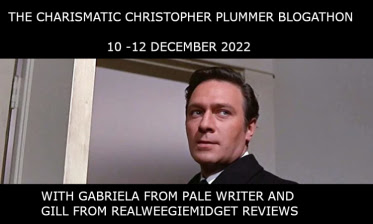
This is my contribution to the Charismatic Christopher Plummer blogathon, hosted by RealWeegieMidgetReviews and Pale Writer.

Related Posts Plugin for WordPress, Blogger...