Ler Agatha Christie é quase uma tradição familiar. Minha avó gosta muito
dela, e minha mãe tem uma respeitável coleção (foto acima). E é natural que eu
tenha herdado estes livros. Tenho predileção pelas histórias que foram adaptadas
para o cinema, e foi uma surpresa quando encontrei o livro “A Morte no Nilo”
ainda lacrado, sem ser lido desde sua publicação, em 1984 – e tendo na capa o
elenco do filme de 1978, com um brilhante elenco. Coube a mim ser a primeira a
ler o livro.
Reading
Agatha Christie is kind of a familiar tradition. My grandma likes her a lot,
and my mother owns a respectable collection (picture above). And it is natural
that I inherited those books. I usually prefer the stories that were adapted to
the screen, and I had a surprise when I found “Death in the Nile” still with
the plastic cover on: nobody read the book since it was published and bought in
1984. Moreover, there was on the cover a picture of the all-star cast of the
1978 adaptation. I knew I had to be the first to read it.
 |
| #AgathaChristieBookshelf |
É a história do assassinato de uma moça muito
rica, Linnet Ridgeway (Luise Chiles), em sua lua de mel, a
bordo de um navio no Egito. Todos os passageiros são suspeitos, seja por causa
do dinheiro de Linnet, ou pelo fato de ela ter se casado com o ex-noivo da
melhor amiga, Jacqueline de Bellefort (Mia Farrow). Mas não há problema: a
bordo está também o detetive belga Hercule Poirot (Peter Ustinov), que não
deixará o caso sem solução.
It
is the story of the murder of a very rich girl, Linnet Ridgeway (Luise Chiles),
in her honeymoon, aboard a ship in Egypt. All the passengers are suspects, considering
Linnet’s fortune or the fact that she had just married the former fiancée of
her best friend, Jacqueline de Bellefort (Mia Farrow). But there are no
troubles: on the ship we also have the Belgian detective Hercule Poirot (Peter
Ustinov), and he won’t leave the case without a solution.

Sempre haverá decepção quanto a adaptações de livros de mistério para o
cinema. Quando você já teve contato com a obra, já irá consumir o filme sabendo
o final – salvo os raros casos em que a história é modificada. A comparação é inevitável,
mas felizmente temos pontos positivos tanto no livro quanto no filme em questão.
There
will always be disappointment when mystery books are adapted to the screen. When
you had already read the book, you’ll see the film knowing “who did it” – not considering
the rare cases in which the storyline is changed. We can’t avoid the
comparison, but fortunately we have positive points for book and movie here.
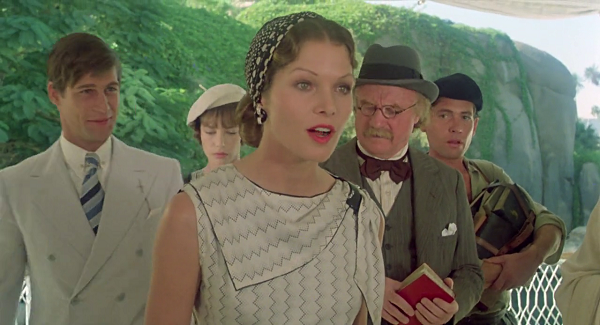
Agatha Christie sempre cria uma galeria memorável de personagens, e nem
todos têm o merecido destaque em pouco mais de duas horas de filme. E alguns
personagens ainda foram cortados, como o patinho feio Cornelia Robson, o
arqueólogo Richetti, a senhora Allerton e seu filho Tim. O mesmo acontece em
outro filme com grande elenco adaptado de um romance de Christie, “Assassinato
no Expresso do Oriente”, feito em 1974.
Agath
Christie always creates a memorable gallery of characters, and not all of them
have the screen time they deserve in the 135-minute film. And some characters
were cut during the book to film transition, including ugly duckling Cornelia
Robson, Signor Richetti the archaeologist, Mrs Allerton and her son Tim. The
same thing happens in another all-star adaptation of a Christie novel, “Murder
on the Orient Express”, made in 1974.
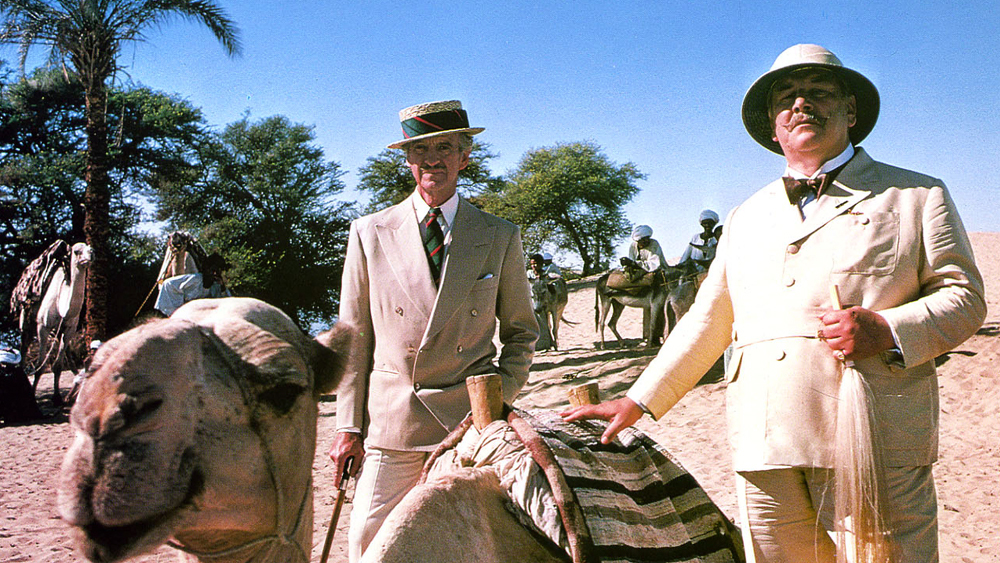
É impagável a “dança conceitual” entre a excêntrica e bêbada senhora Salome
Otterbourne (Angela Lansbury) e o Colonel Race (David Niven). Ustinov, em sua
primeira de seis vezes como Poirot, é excelente. Suas cenas com David Niven nos
dão vontade de ver mais da dupla Poirot e Colonel Race.
We
have a priceless dance with the eccentric and drunk Mrs Salome Otterbourne
(Angela Lansbury) and Colonel Race (David Niven) Ustinov, in his first of six
times as Poirot, is excellent. His scenes with David Niven make us wish to see
more of the Poirot – Colonel Race partnership.
 |
| #SquadGoals |
O papel do guia do navio Karnak (interpretado por I.S. Johare) é ingrato
e desconfortável. Ele é construído em cima de preconceitos: o guia usa um
turbante, tenta ser agradável a qualquer custo e tem um sotaque engraçado.
The
role of the guide of the ship Karnak (played by I.S. Johare) is uncomfortable to
be seen. He is built on prejudices and stereotypes: the guide wears a thick turban,
tries to please all the passengers and has a laugh-inducing English accent.
É muito interessante como são mostrados os motivos que cada passageiro
tinha para matar Linnet: Poirot narra a “reconstituição hipotética” e a cena se
passa na tela, o que nos dá a oportunidade de ter diversos pontos de vista e
probabilidades. Mas talvez já houvesse indícios muito fortes desde o início que
apontavam para o culpado...
I
found especially interesting the scenes with the “hypothetical reconstruction”
of the crime: Poirot narrates all the reasons each passenger had to kill
Linnet, and the scene appears on the screen, giving us the chance to see
several points of view, different perspectives and analyze the odds. But maybe
there were, in the very beginning of the film, things pointing out to the
guilty person…
SPOILERS!!!
Jacqueline parece desequilibrada desde o começo no filme. Há até uma
metáfora (que eu enxerguei, pelo menos) quando ela e Simon se beijam num carro
em movimento, o carro sai da estrada, mas volta logo depois. Eles se desencontrarão
na vida, mas voltarão a se juntar logo depois – e se juntam para matar.
Jacqueline
looks disturbed since the beginning of the movie. There is even a metaphor (at
least, I interpreted the scene this way): when Jacqueline and Simon kiss in a
moving car, the car leaves the road and enters the field, but re-enters the
road a few seconds later. They will be separated briefly in life, but they will
get together again later – and they’ll get together to kill.
FIM DOS SPOILERS
END OF SPOILERS

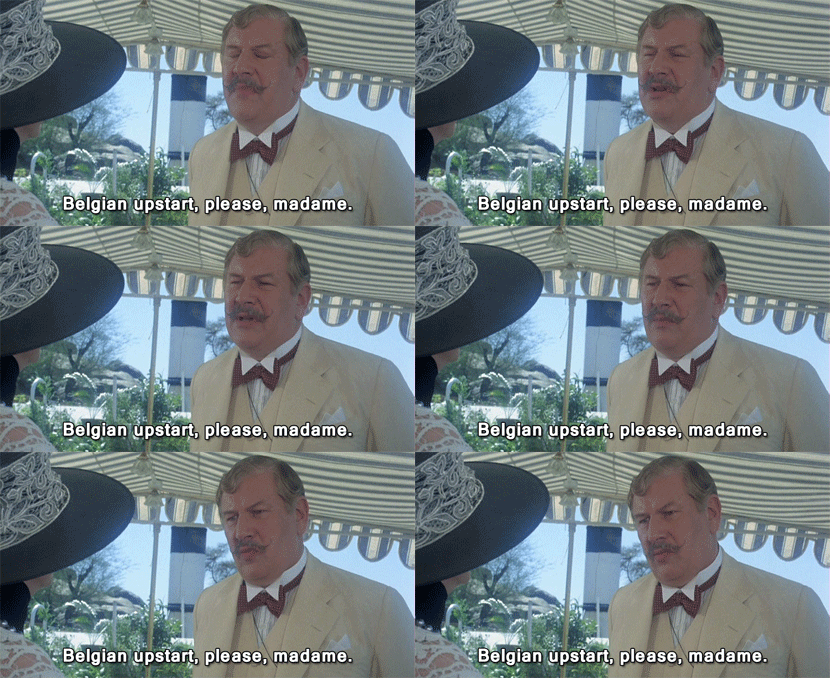
A fotografia do filme é maravilhosa, e isso só é possível porque ele foi
de fato gravado no Egito. Claro que isso significou desconforto para os atores,
que enfrentavam dias de mais de 40 graus Celsius. Bette Davis, que tem um papel
relativamente pequeno, reclamou de ter de ir ao local de filmagem, dizendo que “antigamente
eles construíam o Nilo no estúdio”!
The
cinematography is wonderful, thanks to the film really being shot on location
in Egypt. Of course it meant discomfort to the cast, who faced temperatures
higher than 100 degrees Fahrenheit. Bette Davis, who has a relatively small
role, complained about going to shoot on location, saying that “In the older
days, they’d have built the Nile for you”!

Além das belas paisagens, os cenários e figurinos são deslumbrantes, e
podem até desviar a atenção da ação principal – o mesmo acontece em “Assassinato
num Dia de Sol” (1982), a empreitada seguinte de Ustinov como Poirot.
Besides
the breathtaking Egyptian nature, the sets and costumes are gorgeous, and they
can even take your focus off from the main action – the same happens with “Evil
Under the Sun” (1982), the following work of Ustinov as Poirot.
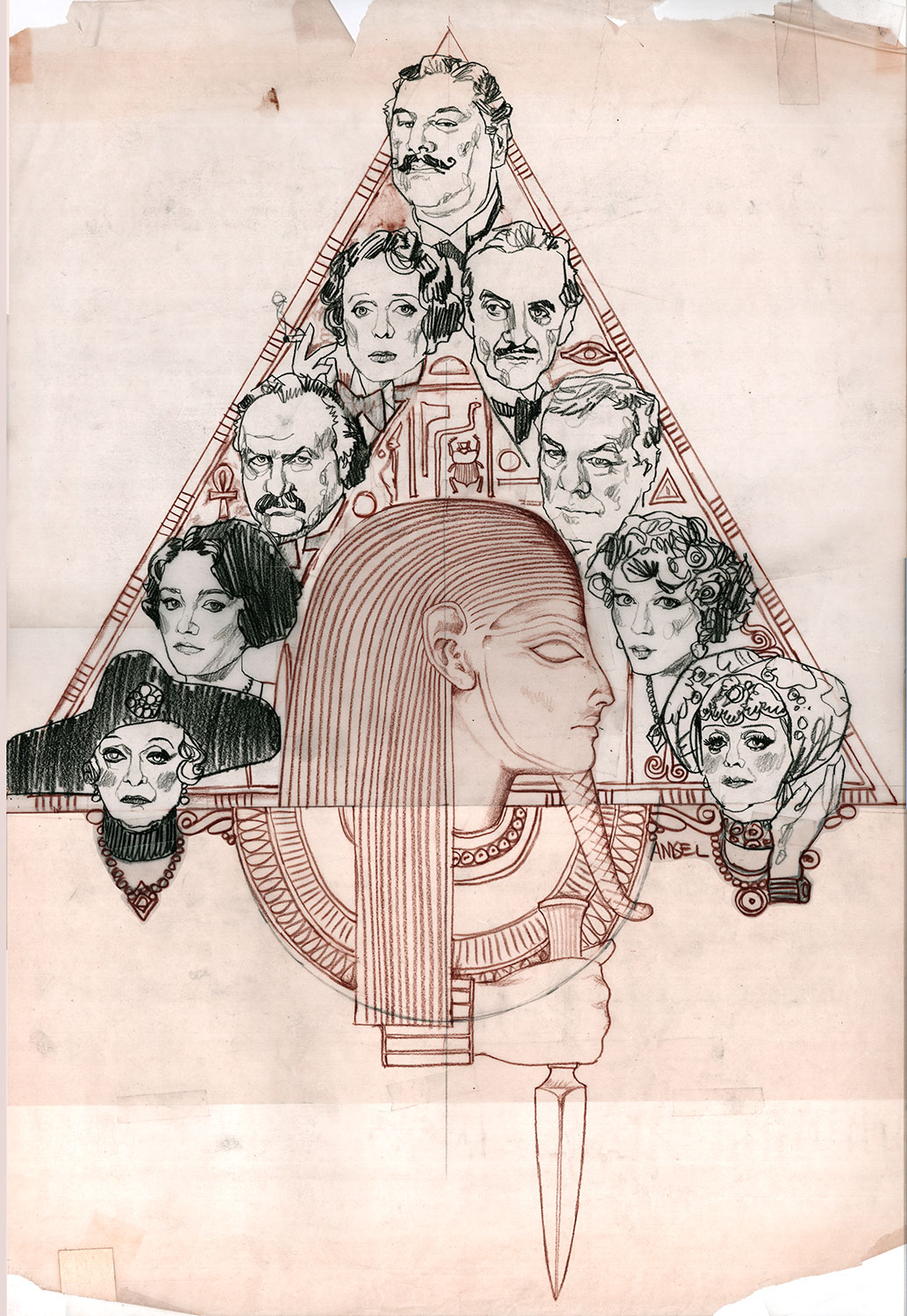
“A Morte no Nilo” é bonito e astuto, em especial para quem ainda não
conhece a obra. Veja o filme, sim, e depois faça um favor a si mesmo e corra
atrás do livro. E depois, se tiver coragem, vá fazer uma viagem de barco pelo
Nilo.
“Death
on the Nile” is visually beautiful and very clever, in special to the ones who
haven’t read the book. Watch the movie, and then do yourself a favor and go
read the book. And, if you still have courage, it’s time to travel the Nile on
a boat!
This
is my contribution to the Agatha Christie Blogathon, hosted by Christina and Domi
at Christina Wehner and Little Bits of Classics.