} Crítica Retrô

Tradutor / Translator / Traductor / Übersetzer / Traduttore / Traducteur / 翻訳者 / переводчик

Saturday, April 15, 2023

Você Já Foi à Bahia? (1944) / The Three Caballeros (1944)

Se você me perguntasse qual o meu lugar favorito do mundo inteiro, eu responderia sem pestanejar: o estado da Bahia. É um lugar para o qual eu estou sempre voltando, e onde um dia ainda hei de morar. Na Bahia tudo é fantástico: as praias, a comida – o acarajé – e, claro, as pessoas. A bela Bahia foi mostrada em diversos filmes, incluindo aí uma adorável animação: a bem intitulada “Você Já Foi à Bahia?” (1944), de Walt Disney.

If you asked me which is my favorite place in the entire world I’d answer without a doubt: the state of Bahia in Brazil. It’s a place I keep coming back, and one I desire to live in someday. In Bahia everything is outstanding: the beaches, the food – the acarajé! - and, of course, the people. The beautiful Bahia was showcased in several films, including a lovely animation: Walt Disney’s “The Three Caballeros” (1944). Aptly, this film was titled “Have You Been to Bahia?” here in Brazil.

É aniversário do Pato Donald – uma sexta-feira 13! – e ele recebe um presente de seus amigos sul-americanos: alguns rolos de filmes caseiros sobre pássaros. Com estes rolos de filme, somos apresentados, entre outros, a Pablo, um pinguim que não gosta do frio e quer se mudar para Galápagos, e a um burrinho voador.

It’d Donald Duck’s birthday – Friday the 13th! - and  he receives a gift from his South American friends: some reels of home movies about his fellow birds. We are introduced this way, among others, to Pablo, a penguin that dislikes the cold and dreams about living in Galapagos, and to a flying donkey.

Do seu amigo Zé Carioca Donald recebe um livro pop-up que o transporta diretamente para a Bahia. O primeiríssimo frame que vemos de lá é do Elevador Lacerda, construído entre 1869 e 1873, um famoso cartão-postal da cidade de Salvador, capital da Bahia.

From his friend Joe Carioca Donald receives a pop-up book that transports him directly to Bahia. The very first frame we see is from the Elevador Lacerda, built between 1869 and 1873, a famous postcard from the city of Salvador, capital of Bahia.


Somos então apresentados para a vista da Igreja do Nosso Senhor do Bonfim em Salvador, e também aos casarões do Pelourinho. Vemos as jangadas cruzando os oceanos e a bela natureza da Bahia.

We’re then presented with the views of the Nosso Senhor do Bonfim Church in Salvador, as well as the old houses in the Pelourinho. We see the jangadas (boats) crossing the ocean and also the beautiful nature of Bahia.


Então Donald e Zé Carioca entram no livro e vão para a Bahia, onde encontram uma baiana típica chamada Yayá (interpretada por Aurora Miranda, irmã de Carmen Miranda) que está vendendo quindins. A sequência quase termina num jogo de capoeira, mas em vez disso termina com música e dança conforme uma banda e mais baianas se juntam a Donald, Zé e Yayá.

Then Donald and Joe Carioca enter the book and go to Bahia, where they meet a typical baiana named Yayá (played by Aurora Miranda, Carmen Miranda’s sister) who is selling quindins – a kind of pudding made of egg yolks. The sequence almost ends in a game of capoeira but instead it ends with song and dance as a band and more baianas join the Donald, Joe and Yayá.

Depois desta aventura na Bahia, Donald e Zé se reúnem com o terceiro cavaleiro, Panchito Pistoles, que dá a Donald uma piñata e ensina coisas sobre a história e a cultura mexicanas. No México, Donald dança, canta e persegue garotas na praia.

After this adventure in Bahia, Donald and Joe are reunited with the third caballero, Panchito Pistoles, who gives Donald a piñata and teaches him about Mexican history and culture. In Mexico, Donald dances, sings and runs after girls at the beach.

“Você Já Foi à Bahia?” foi mais um produto da Política da Boa Vizinhança levada a cabo durante a Segunda Guerra Mundial para manter os países latino-americanos perto de – e, o mais importante, fiéis aos – Estados Unidos. Devido ao seu tamanho e posição estratégica, o Brasil foi o principal alvo desta política e foi literalmente bombardeado por propaganda norte-americana, inclusive no cinema. Zé Carioca foi criado como parte desta política.

“The Three Caballeros” was another product from the Good Neighbor Policy that existed during World War II to keep Latin American countries close to – and more important, faithful to – the United States. Due to its size and strategical position, Brazil was the main target of this policy and was literally bombarded with US propaganda, including on film. Joe Carioca was created as part of this policy.

Em “Você Já Foi à Bahia?”, Zé Carioca é dublado por José do Patrocínio Oliveira, que foi também um músico que tocou em shows de Carmen Miranda. Ele foi para os EUA com Carmen, onde tocou em alguns filmes, até o dia em que conheceu Walt Disney e inspirou a criação de Zé Carioca: diz-se que a aparência e os gestos de José foram traduzidos para o papagaio animado.

In “The Three Caballeros”, Joe Carioca is voiced by José do Patrocínio Oliveira, who was also a musician who played for Carmen Miranda in shows. He went to Hollywood with Carmen, where he played in some movies, until he met Walt Disney and inspired the creation of character Joe Carioca: it’s said that José’s appearance and mannerisms were copied in the famous Brazilian parrot.

É interessante que os animadores de “Você Já Foi à Bahia?” tenham escolhido usar filmagens reais de cidades mexicanas no filme, mas animaram os cenários de Salvador. Não sei por que essa escolha foi feita – talvez eles já tivessem as filmagens do México, ou era mais barato filmar lá do que filmar no Brasil – mas os desenhos da Bahia são muito fidedignos.

It’s interesting that the animators in “The Three Caballeros” chose to show real footage from Mexican cities in the movie, but they animated the scenarios from Salvador. I don’t know why this choice was made – maybe they already had footage of Mexico, or it was cheaper to go to the neighboring country to shoot than to go down to Brazil – but the drawings of Bahia were spot on.


No seu aniversário, Donald ganhou o presente do conhecimento sobre países e tradições da América do Sul. Nós, como espectadores, também aprendemos muito com “Você Já Foi à Bahia?”. O cinema é outra maneira de viajar sem sair do lugar, e os exemplos desta verdade são infinitos.

For his birthday, Donald got the gift of knowledge about South American countries and traditions. We, as viewers, also learned a lot from “The Three Caballeros”. Cinema is another way to travel without leaving your seat, and the examples of such truth are endless.


This is my contribution to the Seen on Screen blogathon, hosted by Rebecca at Taking Up Room. 


Friday, March 31, 2023

O Mosqueteiro (1922) / The Three Must-Get-Theres (1922)


Quanto de ação pode ser contida em alguns minutes de projeção de um filme? Se você é fã de filmes mudos, você sabe que a resposta para esta pergunta é MUITA AÇÃO. Há milhares de exemplos de filmes de um ou dois rolos cheios de ação feitos na era muda. Mas hoje vamos além deles e analisamos um filme de cinco rolos cheio de ação feito por Max Linder - seu mais conhecido trabalho filmado em Hollywood.

How much action can you pack in a few minutes of film? If you are a silent movie fan, you know the answer is A LOT. There are thousands of examples of action-packed one-reelers and two-reelers in silent cinema. But today we go beyond and analyze an action-packed five reeler by Max Linder - his best known effort in Hollywood.

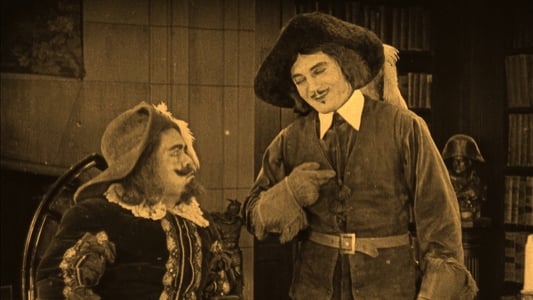
Dart-In-Again (Max Linder) recebe uma espada de seu pai e sai para conquistar o mundo. Seu destino é Paris, onde reina o Rei Luís XIII (Frank Cooke). Há diversas intrigas em andamento na corte: a Rainha Anne (Caroline Rankin) tem um amante, enquanto o conselheiro do rei, Cardeal Richie-Loo (Bull Montana), está conspirando contra o monarca.

Dart-In-Again (Max Linder) receives a spear from his father and leaves to conquer the world. His destination is Paris, where King Louis XIII (Frank Cooke) reigns. There are several intrigues going on at the court: Queen Anne (Caroline Rankin) has a lover, while the King’s counselor Cardinal Richie-Loo (Bull Montana) is conspiring against the King.

Dart-In-Again demonstra sua bravura e seus movimentos com a espada e é aceito como um dos Mosqueteiros do Rei. Ele recebe como sua primeira missão uma viagem para a Inglaterra para recuperar as jóias semipreciosas da Rainha que estão com o amante dela. Mas o Cardeal Richie-Loo tentará impedir que Dart-In-Again cumpra sua missão.

Dart-in-Again showcases his bravery and his moves with the sword and is accepted as the fourth of the King’s Musketeers. He receives as his first mission a trip to England to recover the Queen’s semi-precious jewels that are currently with her lover. But the Cardinal Richie-Loo will try to stop Dart-In-Again from accomplishing the recovery.

É óbvio que “O Mosqueteiro” é uma paródia de “Os Três Mosqueteiros” de Douglas Fairbanks, que estreou em agosto de 1921. O filme de Max Linder estreou um ano depois, em setembro de 1922 e, apesar de não ser tão atlético quanto Fairbanks, Linder consegue exibir suas habilidades como acrobata. Ele interpreta Dart-In-Again não como um bobo para alívio cômico: na verdade, o personagem se mostra mais esperto que o cardeal e seus capangas.

It’s obvious that “The Three Must-Get-Theres” is a spoof of Douglas Fairbanks’ “The Three Musketeers”, that premiered in August 1921. Max Linder’s film premiered one year later, in September of 1922, and, although not as athletic as Fairbanks, Linder manages to show off his skills as an acrobat. He plays Dart-In-Again not like a fool for comic purposes: in fact, Dart outsmarts the Cardinal and many of his foes.

O que é sim usado como alívio cômico são os anacronismos: podemos ver durante o filme diversos equipamentos - que não haviam ainda sido inventados na época do Rei Luís XIII - sendo usados pelos personagens, como o telefone em várias cenas, a máquina de escrever e a motocicleta.

What is actually used for comic purposes is anachronism: we can see throughout the movie several gadgets - that were not yet invented by the time of Louis XIII - being used by the characters, like the telephone in several moments, the typing machine and the motorcycle.

Como Connie Bonne-aux-Fieux, a criada particular da Rainha e sua confidente, temos uma atriz que foi popular na era muda, mas está quase esquecida atualmente: Jobyna Ralston. Este é um de seus primeiros filmes e ela encontraria a fama como protagonista dos filmes de Harold Lloyd a partir de 1923. Um de seus mais famosos papéis é o de Sylvia Lewis em “Asas” (1927). Depois de três filmes falados, ela abandonou o cinema, pois estava casada com seu colega de elenco de “Asas”, Richard Arlen.

As Connie Bonne-aux-Fieux, the Queen’s chambermaid and confidant, we have an actress popular in the silent era, but nearly forgotten today: Jobyna Ralston. This is one of her first movies and she would find more fame as Harold Lloyd’s leading lady starting in 1923. One of her best known roles is Sylvia Lewis in “Wings” (1927). After three talkies, she left the movie business, as she was now married to her “Wings” co-star Richard Arlen.

Max Linder foi verdadeiramente a primeira estrela de cinema internacional. Ele começou como coadjuvante  para os estúdios Pathé em 1905, e em 1911 já estava escrevendo e co-dirigindo curtas em que interpretava Max, um homem elegante sempre em apuros. Seus curtas eram sucesso por toda parte, mas veio a guerra e Max foi lutar pela França. Ele se envolveu em um sério acidente de carro, e sua vida nunca mais foi a mesma. A depressão crônica surgiu em sua vida naquele momento e jamais abandonou Max, causando problemas para trabalhar e por fim matando Max em um suicídio em 1925.

Max Linder was truly the first international movie star. He started as a supporting player for Pathé shorts in 1905, and by 1911 was already writing and co-directing shorts in which he played Max, a dapper gentleman always in trouble. His shorts found success everywhere, but the war came and Max went to fight for France. He was involved in a serious car crash, and his life was never the same again. Chronic depression appeared at the time in Linder’s life and would never leave him, causing trouble to work and ultimately killing him in a suicide in 1925.

“O Mosqueteiro” é um dos três médias-metragens feitos por Max Linder em Hollywood com sua própria produtora, sendo os outros dois “Sete Anos de Azar” e “Seja Minha Mulher”, ambos de 1921. Linder produziu, escreveu e dirigiu o filme. Ele demonstra perfeito domínio da língua inglesa, fazendo jogos de palavras com os nomes de seu e de outros personagens, além de adicionar diversos trocadilhos às cartelas de texto. Infelizmente, muitos destes trocadilhos se perdem com a tradução: na versão a que eu assisti, o tradutor escolheu eliminar todos os nomes com trocadilhos, usando no lugar os nomes reais dos personagens verídicos e dos mosqueteiros.

“The Three Must-Get-Theres” is one of three featurettes made by Max Linder in Hollywood under his own production company, the two others being “Seven Years Bad Luck” and “Be my Wife”, both from 1921. Linder produced, wrote and directed the film. He shows perfect knowledge of the English language, doing wordplay with his and other characters’ names, as well as adding several puns to the title cards. Unfortunately, many of these puns get lost in translation: in the version I saw, the translator chose to eliminate all punny names, using instead the real names of historical characters and the musketeers.

No começo do filme aparece um aviso de que a versão norte-americana do filme se perdeu, e o que podemos ver hoje é uma restauração feita usando como base a versão no Netherlands Filmmuseum. A restauração e gravação da nova trilha sonora foram feitas em 2008. Não há por que se perguntar qual a causa do desaparecimento da versão norte-americana: o filme não foi um sucesso de bilheteria, o que deixou Linder desapontado e achando que ele não era mais engraçado.

In the beginning of the film, there is a disclaimer that the American version of the film has disappeared, and what we can see today is a restoration made using as basis the version at the Netherlands Filmmuseum. The restoration and recording of the new soundtrack were made in 2008. There is no wonder to why the American version of the film disappeared: it wasn’t a box-office success, which left Linder disappointed and thinking he just wasn’t funny anymore.

Admirado por Charles Chaplin - que se referia a ele como “Professor” em algumas fotos autografadas - Max Linder merece o reconhecimento que vem recebendo agora, mais de um século após experimentar pela primeira vez o estrelato. Se você nunca viu Linder em ação, ou se ainda tem dúvidas sobre por que ele foi a primeira estrela de cinema internacional, não precisa procurar outro filme: “O Mosqueteiro” foi totalmente concebido por ele e é uma amostra perfeita do talento único que Linder tinha para a comédia.

Admired by Charles Chaplin - who called him his “Professor” in some autographed photos - Max Linder deserves the recognition he is receiving now, more than a century after he first experienced stardom. If you have never seen Linder in action, or if you still have doubts about why he was the first international movie star, look no further: “The Three Must-Get-Theres” is wholly his brainchild and a perfect showcase of Linder’s unmatched talent for comedy.

Thursday, March 9, 2023

Announcing the Third Luso World Cinema Blogathon


O Cangaceiro / The Bandit (Lima Barreto, 1953)

Did you miss us? Well, I didn’t go anywhere and I’m still blogging often, but I certainly missed the one and only blogathon dedicated to Portuguese-speaking cinema and performers from Lusophone countries and Luso blood. The good news is: we’re back! Yes, Beth from Spellbound with Betth Ann and I are back for the third edition of the successful Luso World Cinema Blogathon. This edition is extra-special for a couple of reasons.

The first reason is that we scheduled the blogathon to start on May 5th, that is World Portuguese Language Day, a date established by UNESCO to celebrate the first meeting of the Ministers of Culture of the Community of Portuguese Language Countries that happened on May 5th, 2005.

The second reason is that now I’m a Portuguese citizen, besides being a Brazilian citizen. Double citizenship is allowed here and I started the process in 2019, concluding it early this year. I now feel proud of my second homeland, and closer to my roots - my great-grandfather was born in Portugal.

The Portuguese flag and me


Now, let’s talk more about the blogathon rules:  

The Luso World Cinema Blogathon once again accepts posts about films made in Lusophone countries, that is, countries that speak Portuguese – see the list below –, and film stars with Luso heritage, that means, film stars of Portuguese descent. This list includes natives like Carmen Miranda, Rodrigo Santoro, Sônia Braga, Raul Roulien, Maria de Medeiros and also Keanu Reeves, Mary Astor, Louise Fazenda, Tom Hanks, Joe DeRita, James Franco, Daniel Brühl, Auli'i Cravalho (the voice of Disney's Moana!), Nestor Paiva, Amy Poehler,  Dorothy DeBorba and many more you can find listed HERE. You can write an overview of those people's lives or careers or focus on a specific film or TV show they made.

Here are a few lists of movies from Lusophone countries:

List of films from Portugal: https://en.wikipedia.org/wiki/Category:Portuguese_films

List of films from Brazil: https://en.wikipedia.org/wiki/Category:Brazilian_films

List of films from Cape Verde: https://en.wikipedia.org/wiki/Category:Cape_Verdean_films

List of films from Mozambique: https://en.wikipedia.org/wiki/Category:Mozambican_films

List of films from Angola: https://en.wikipedia.org/wiki/Category:Angolan_films

List of films from Guinea-Bissau:  https://en.wikipedia.org/wiki/Category:Bissau-Guinean_films

List of films from São Tomé and Príncipe: https://en.wikipedia.org/wiki/Cinema_of_S%C3%A3o_Tom%C3%A9_and_Pr%C3%ADncipe

List of films from Equatorial Guinea: https://en.wikipedia.org/wiki/Category:Equatoguinean_films

List of films from East Timor: https://en.wikipedia.org/wiki/Category:East_Timorese_films


The list of contributions so far:


Crítica Retrô - A tale of two Carmens: Carmen Santos and Carmen Miranda

Realweegiemidget Reviews - Daniel Brühl in “Good Bye, Lenin!” (2003)

Dubsism - Tom Hanks in “A League of their Own” (1992)

Taking Up Room - Carmen Miranda in “A Date with Judy” (1948)

Silver Screenings - Mozambique’s Kuxa Kanema - O Nascimento do Cinema (2003)


And now, the banners, beautifully made by Beth:

Os Mutantes / The Mutants (Teresa Villaverde, 1998)

Os Verdes Anos / The Green Years (Paulo Rocha, 1963)


Lisbon Story (Wim Wenders, 1994)


Amália (Carlos Coelho da Silva, 2008)


Tiger Shark (Howard Hawks, 1932)


Mystic Pizza (Donald Petrie, 1988)


Gaijin (Tizuka Yamasaki, 1980) 


Ganga Bruta (Humberto Mauro, 1933)


Macunaíma (Joaquim Pedro de Andrade, 1969)


Vitalina Varela (Pedro Costa, 2019)


That Night in Rio (Irving Cummings, 1941)

Saturday, March 4, 2023

O Bobo da Corte (1955) / The Court Jester (1955)


Há beleza na incompletude. Deixe-me explicar: não importa se assistimos a milhares de filmes, sempre tem algo faltando na nossa educação fílmica. Esses são pontos cegos que tentamos consertar, seja com resoluções de Ano Novo ou com simples promessas de “eu verei isso algum dia”. Eu sempre dizia para mim mesma que “eu verei “O Bobo da Corte” algum dia” para consertar meu ponto cego envolvendo Danny Kaye. E este “algum dia” finalmente chegou.

There is beauty in incompleteness. Let me explain: no matter if we watch thousands of movies, there is always something missing from our film education. These are the blind spots we try to fill, let this be with New Year’s resolutions or with simple promises of “I’ll watch it someday”. I kept saying to myself that “I’ll watch “The Court Jester” someday” as a way of filling my blindspot about Danny Kaye. And this “someday” finally arrived.


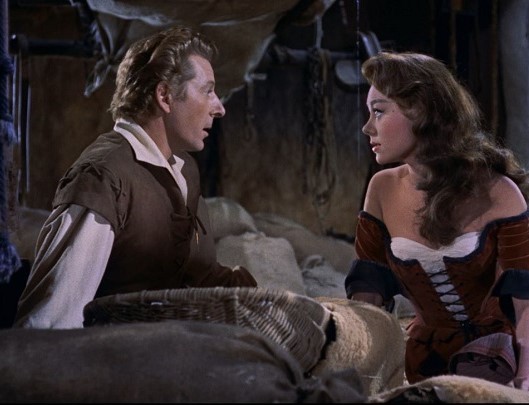
Na Inglaterra, há muitos séculos, o Rei Roderick (Cecil Parker) governa como um tirano. Ele subiu ao trono após um massacre liquidar com a Família Real, mas um membro da família sobreviveu: um bebê com uma marca de nascença que agora é cuidado por um grupo de camponeses e outras gentes do povo, cujo líder é o benfeitor Raposa Negra.

In England, many centuries ago, King Roderick (Cecil Parker) governs as a tyrant. He rose to the throne after a massacre swept the Royal Family, but one member of the family survived: an infant with a birthmark that is now taken care of by a group of peasants and simple people, whose leader is the do-gooder Black Fox.


Entre aqueles que tomam conta do jovem e legítimo herdeiro do trono, temos Hubert Hawkins (Danny Kaye) e a nobre Maid Jean (Glynis Johns). Seus caminhos cruzam com o do novo Bobo da Corte, e Jean vê uma oportunidade de ouro: colocar Hawkins no lugar do Bobo da Corte, para que ele possa entrar no castelo e ajudar, de dentro da corte, a tirar o Rei Roderick do trono. É assim que Hawkins se torna “Rei dos Animadores, Animador dos Reis”.

Among those who take care of the rightful young heir to the throne, there are Hubert Hawkins (Danny Kaye) and the noble Maid Jean (Glynis Johns). Their path crosses with the new Court Jester, and Maid Jean sees a golden opportunity: trade places between the jester and Hawkins, so he can enter the castle and help overthrow King Roderick from the inside of the court. This is how Hawkins becomes “King Of Jesters, Jester of Kings”.


Dentro do castelo, há intrigas acontecendo: Sir Ravenhurst (Basil Rathbone) quer mais poder e acredita que o novo Bobo da Corte está lá para ajudá-lo a tomar o poder. Enquanto isso, a Princesa Gwendolyn (Angela Lansbury) ouviu de sua criada que o novo Bobo da Corte é sua alma gêmea. Hawkins será enfeitiçado, o que torna sua missão mais caótica mas também mais divertida.

Inside the castle, there is intrigue going on: Sir Ravenhurst (Basil Rathbone) wants more power and believes the new Court Jester is there to help him seize this power. Meanwhile, Princess Gwendolyn (Angela Lansbury) has been told by her maid that the new Court Jester is her soulmate. Hawkins will be put under a spell, what makes his whole mission more chaotic and also more fun.


As canções estão presentes desde os créditos iniciais. As canções entretêm conforme são cantadas, mas não são “chiclete” - não ficam na nossa cabeça depois. Há apenas três canções principais no filme todo - o que cria o debate sobre se “O Bobo da Corte” pode ser chamado verdadeiramente de um filme musical - e minha favorita delas foi “Life Could Not Better Be”, cantada nos créditos iniciais. As canções foram compostas por Sammy Cahn e Sylvia Fine, que era esposa de Danny Kaye.

Songs are present starting in the opening credits. The songs are entertaining as they are being sung, but are not catchy- they don’t remain with us afterwards. There are only three main songs in the whole movie - which creates the debate about if “The Court Jester” could be called a true movie musical - and my favorite of them was “Life Could Not Better Be”, sung in the credits. The songs were composed by Sammy Cahn and Sylvia Fine, who was Danny Kaye’s wife.


Danny Kaye é excelente como o protagonista. Eu o havia visto apenas em papéis coadjuvantes, e este papel principal é perfeito para ele. Um dos meus momentos favoritos é a sequência de “estalar de dedos” no quarto da Princesa Gwendolyn. Também gostei da sequência de testes pelos quais Hawkins teve de passar para se tornar um cavaleiro. Entretanto, algumas piadas envolvendo jogos de palavras se perderam na tradução.

Danny Kaye is outstanding as the lead. I had only seen him in supporting roles, and this starring role is perfect for him. One of my favorite bits is the snapping sequence in Princess Gwendolyn’s chamber. I also liked the sequence of tests Hawkins had to pass in order to become a knight. A few jokes involving wordplay ended up lost in translation, though.


“O Bobo da Corte” foi completamente concebido - isto é, escrito, produzido e dirigido- por uma dupla: Melvin Frank e Norman Panama. Os dois se conheceram na Universidade de Chicago, onde Melvin estava estudando engenharia, mas foi convencido por Norman a trocar pelo curso de Inglês. Já formados e trabalhando juntos, eles escreviam gags para Bob Hope e Milton Berle no rádio, e logo foram contratados pelos estúdios Paramount para escreverem comédias. Eles trabalharam juntos até meados dos anos 1960, quando seguiram caminhos distintos: Melvin se tornou diretor e produtor solo, além de roteirista, e Norman trabalhou como diretor para filmes para a TV.

“The Court Jester” was entirely conceived - that is, written, produced and directed - by a duo: Melvin Frank and Norman Panama. The two met at the University of Chicago, where Melvin was pursuing an engineering degree, but was convinced by Norman to switch to English. Graduated and working together, they provided gags for Bob Hope and Milton Berle on radio, and soon were employed by Paramount Studios to write comedies. They worked together until the mid-1960s, when they went separate ways: Melvin became a solo director and producer, besides screenwriter, and Norman worked as director for made-for-TV movies.


Incrivelmente divertido e fonte de muitas risadas, “O Bobo da Corte” é realmente uma das melhores comédias feitas na era de ouro de Hollywood. Eu fiquei bem surpresa ao descobrir que o filme foi um fracasso nas bilheterias! Considerado - provavelmente com razão - o melhor filme de Danny Kaye, fico feliz em finalmente tê-lo visto, pois me diverti muito.

Incredibly entertaining and the source of many laughs, “The Court Jester” is truly one of the best comedies made in the golden age of Hollywood. I was quite surprised to learn that the film bombed at the box office! Considered - probably with reason - Danny Kaye’s best film, I’m glad I finally checked this movie, as I had a lot of fun watching it.

This is my contribution to the Danny Kaye blogathon, hosted by Erica at Poppity Talks Classic Film.

Related Posts Plugin for WordPress, Blogger...