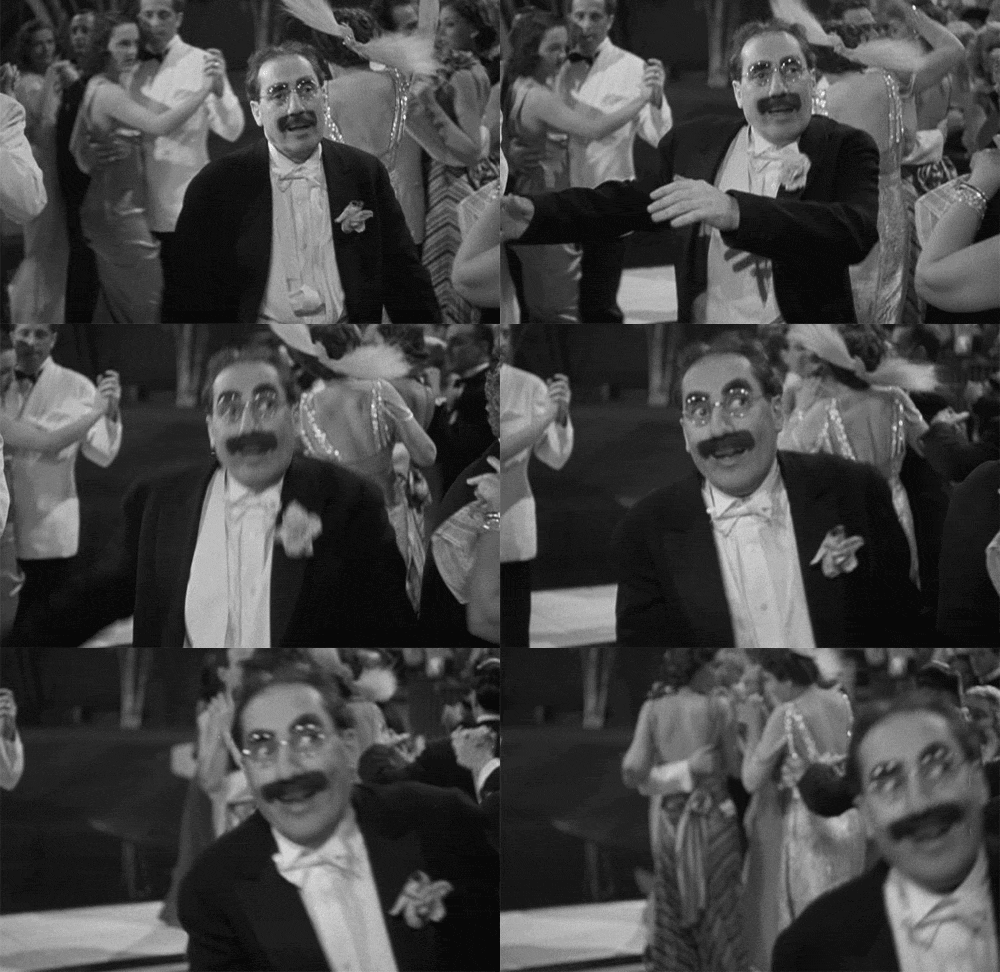
} Crítica Retrô: Chico

Tradutor / Translator / Traductor / Übersetzer / Traduttore / Traducteur / 翻訳者 / переводчик

Showing posts with label Chico. Show all posts

Friday, December 16, 2016

O quinto irmão Marx: Margaret Dumont

The fifth Marx brother: Margaret Dumont

Equilíbrio.

Balance.

Equilíbrio é o que todos nós devemos tentar alcançar na vida, e também na arte. A vida – e a arte – sem equilíbrio é apenas exagero, e isso nunca é bom. Quem vive uma vida sem equilíbrio é, mais cedo ou mais tarde, punido pela justiça ou pelo karma. Arte sem equilíbrio não é boa de se ver,  é rejeitada pelo público, é em geral classificada como “de mau gosto”.

Balance is what we all should seek in life, and also in art. Life – and art – without balance is just exaggeration, and it's never good. Who lives live without balance is, sooner or later, punished by justice or karma. Art without balance is not nice to look at, is rejected by the public, is often labeled as “of bad taste”.

Se não há um personagem mais “normal” para criar equilíbrio em uma dupla, trio ou grupo maluco, a comédia pode perder a graça. Hardy, o Gordo, era mais esperto e mais realista que Laurel, o magro. Precisávamos de Dean Martin para neutralizar as loucuras do atrapalhado Jerry Lewis. E sempre havia alguém mais normal junto com os Três Patetas. Tudo para criar equilíbrio. Porque o público precisa se identificar com alguém no filme, e quanto mais normal, melhor.

If there is not a more “normal” character to create balance in a crazy duo, trio or group, the comedy may fall flat. Hardy was smarter, and more down-to-earth than Laurel. We needed straight man Dean Martin to go with the shenanigans of goofy Jerry Lewis. And there was always someone more normal along the Three Stooges. All to create balance. Because the public needs an identification with someone onscreen, the more normal, the better.


E que tal ser o único normal no meio de quatro malucos? Esta era a difícil tarefa de Margaret Dumont nos sete filmes que ela fez comos irmãos Marx. Porque ela não era apenas uma ilha de razão em um mar de loucura, como era Zeppo, ela era também o motivo de muitas, muitas piadas.

And what about being the only one normal in the middle of four weirdos? This was Margaret Dumont's hard task in the seven movies she did with the Marx Brothers. Because she wasn't just an island of reason in a sea of wackiness, like Zeppo was, she was also the target of many, many jokes.

O nome Daisy Juliette Baker pode não ser familiar, mas foi assim que Margaret foi batizada ao nascer, em 1882. Ele era uma soprano, e se apresentou pela primeira vez no vaudeville pouco antes de completar 20 anos. Sua beleza quando jovem era impressionante, e ela era em geral escalada para papéis de “soubrette”: moças jovens que gostavam de flertar em óperas e shows cômicos.

The name Daisy Juliette Baker may not ring a bell, but it was with this name that Margaret was christened when she was born, in 1882. She was a trained soprano, and first entered vaudeville when she was about to turn 20. Her beauty as a young woman was mesmerizing, and she was often cast in “soubrette” roles: the ones of young flirtatious girls in comic operas and shows.
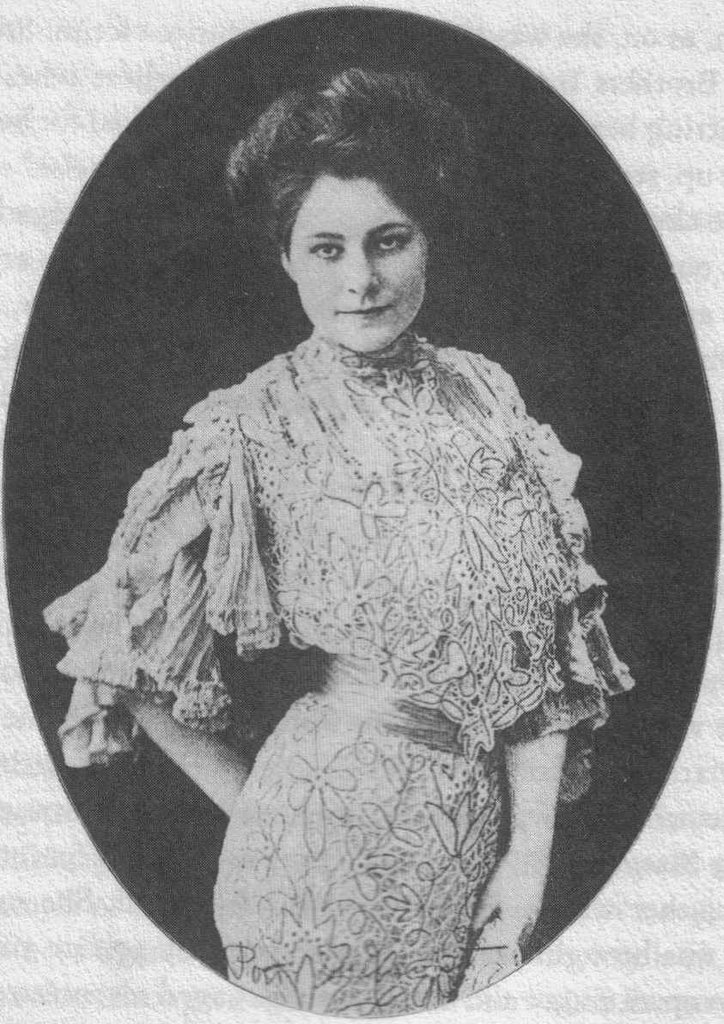

Sua primeira investida como atriz durou até 1910, quando ela se casou com o rico John Moller Jr. Durante a epidemia de gripe espanhola de 1918, seu marido morreu e a viúva de 38 anos voltou aos palcos.

Her first entertainment phase lasted until 1910, when she married heir John Moller Jr. During the 1918 influenza pandemic, her husband died and the 36-year-old widow came back to the stages.
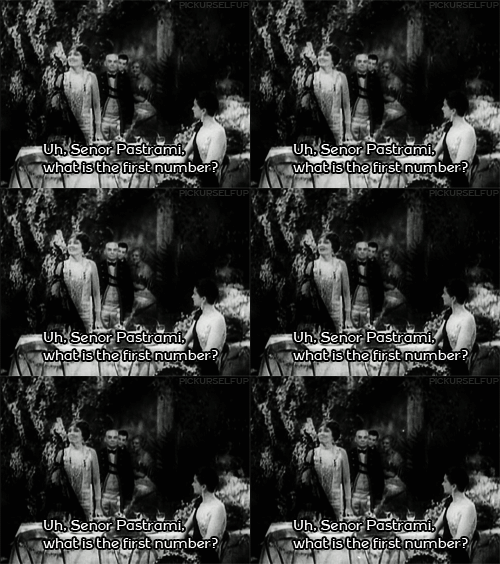

Foi nos palcos que ele encontrou pela primeira vez os quatro irmãos Marx. Em 1925, ela foi escolhida para a peça “The Cocoanuts”. Em 1928, ela foi novamente escalada para contracenar com os irmãos em “Animals Crackers”. Quando os irmãos receberam uma oferta da Paramount para transportar seus shows para o cinema – que agora era falado – Margaret os seguiu. Até então, ela havia feito apenas papéis como extra em dois filmes mudos.

It was on the stage that she first met the four Marx brothers. In 1925 she was cast in their play The Cocoanuts. In 1928, she was again cast along them in Animal Crackers. When the brothers received an offer from Paramount to transport their plays to the – now talking – movies, Margaret followed them. Until then she had only appeared as an uncredited extra in two silent films.
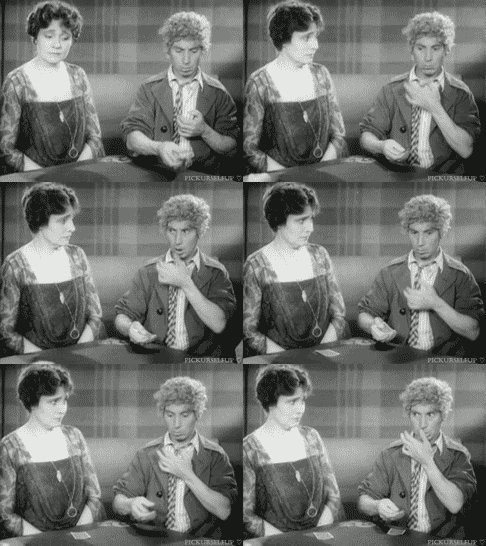

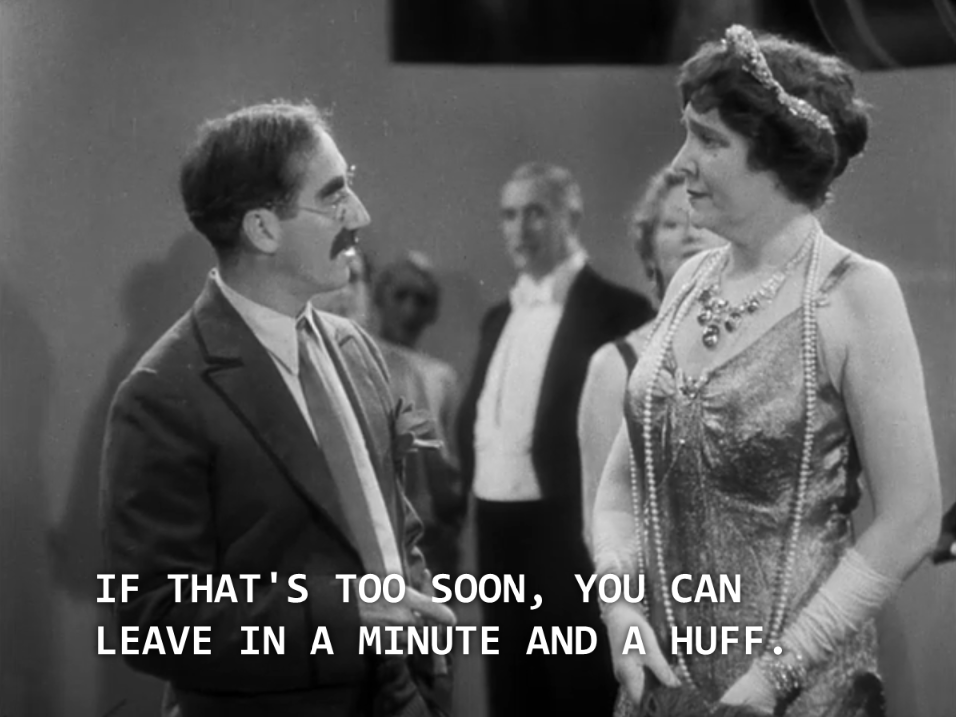
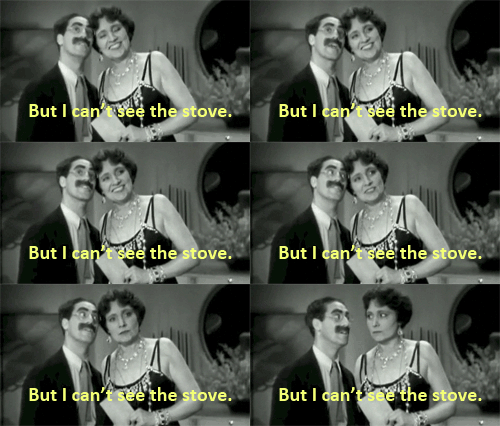
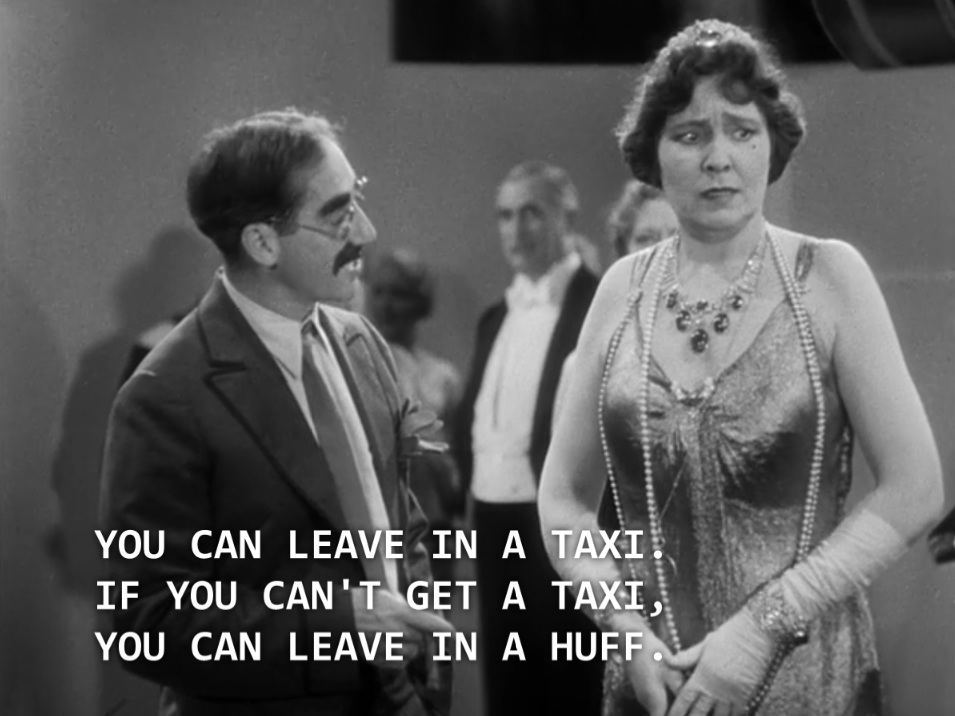
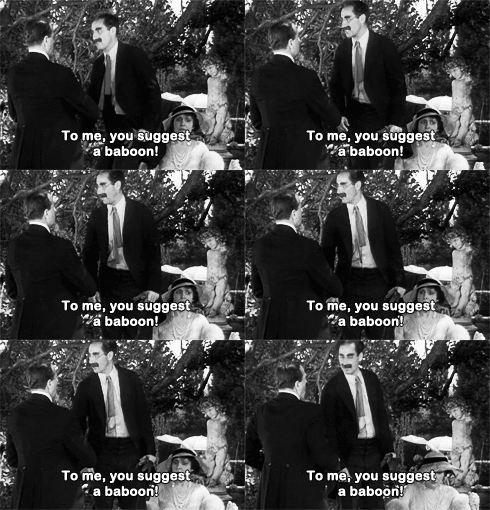
Hoje, muitas das piadas dos irmãos seriam consideradas grosseiras ou politicamente incorretas. Margaret estreou no cinema com os Marx quando tinha 47 anos, ou seja, não era uma jovenzinha, e sabemos como o trabalho de atriz pode ser duro para mulheres mais velhas. Frequentemente ela era insultada, chamada – indiretamente – de feia, gorda ou velha por Groucho Marx, que era apenas oito anos mais novo que ela. Pode ser dito que estes insultos faziam parte da graça de Groucho, ou que não tinha importância porque Margaret não entendia as piadas (o que não é verdade, pois ela era uma atriz experiente e inteligente).

Today, many of the brothers' antics would be considered unpolite or politically incorrect. Margaret entered the movies business with the brothers when she was 47, so she was no youngster, and we know how hard work is for older actresses. Too often she was insulted, called – indirectly – ugly or fat or ancient by a Groucho Marx who was only eight years her junior. It can be said the insults are part of Groucho's fun, or that Margaret didn’t understand the jokes (which is not true, since she was an experienced and intelligent performer herself).
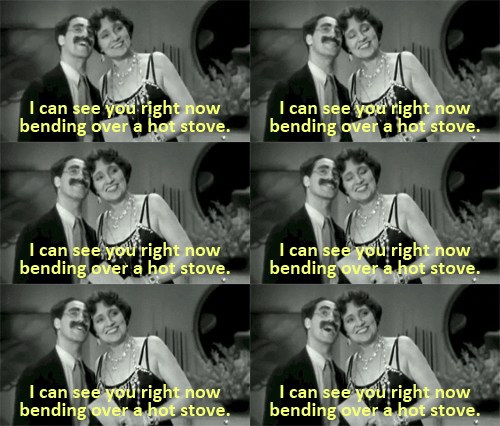

É interessante notar quão forte era a relação de Margaret e Groucho. Ela o chamava carinhosamente de “Julie” na vida real – o nome de batismo de Groucho é Julius – e Groucho disse que muitas vezes o público pensava que ele e Margaret eram de fato casados. Quando ele recebeu um Oscar Honorário em 1974, Margaret foi uma das poucas pessoas a quem ele agradeceu – os irmãos Gummo e Zeppo, que ainda estavam vivos, ficaram fora do discurso de agradecimento. E a última aparição de Margaret na TV aconteceu ao lado de Groucho no programa “The Hollywood Palace”, oito dias antes de ela morrer.

It's interesting to notice how strong Margaret's relationship with Groucho was. She fondly called him “Julie” in real life – Groucho’s real name is Julius – and Groucho said that the public often thought he and Margaret were, indeed, a couple off-screen. When he received an Honorary Oscar in 1974, Margaret was one of the few people he thanked – brothers Gummo and Zeppo, who were still alive, were left out of the acceptance speech. And Margaret's last appearance on camera happened alongside Groucho in the TV show The Hollywood Palace, eight days before her death.

This is my contribution to the 5th Annual What a Character Blogathon, hosted by mighty trio Aurora, Kellee and Paula at Citizen Screen, Outspoken & Freckled and Paula’s Cinema Club.

Thursday, May 24, 2012

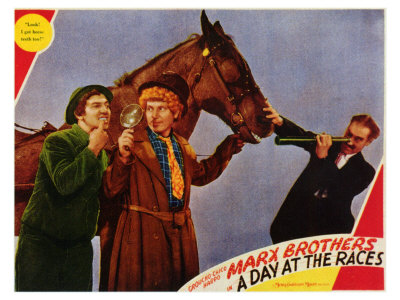
Um dia nas corridas / A day at the races (1937)

Como um cavalo pode ajudar a salvar um sanatório? Ganhando uma importante corrida. E se os envolvidos nessa corrida forem um trio tão maluco quanto os divertidos irmãos Marx?

How can a horse save an asylum? By winning an important race. And what happens if the ones involved in the race are as zany as the three Marx brothers?


O médico veterinário Hugo Z. Hackenbush (Groucho Marx) é chamado para trabalhar como médico psiquiatra (!) no sanatório de Judy (Maureen O’Sullivan), que está à beira da falência. Na instituição o caso mais grave é o da senhora Emily Upjohn (Margaret Dumont), uma rica mulher que aparentemente não sofre de doença alguma. E é esse o problema: ela quer que os médicos encontrem algo errado nela e Judy também deseja que isso aconteça, ou vai perder sua mais rica paciente. O namorado de Judy, o cantor Gil (Allan Jones) é dono do cavalo Hi-Hat, que se torna a grande esperança quando surge uma corrida com um bom prêmio. Stuffy (Harpo Marx) será o jóquei.

Veterinarian Hugo Z. Hackenbush (Groucho Marx) is hired to be a psychiatrist (!) at Judy's (Maureen O'Sullivan) asylum, a place about to be closed. There, the worst case is Mrs Emily Upjohn (Margaret Dumont), a rich woman who apparently has no disease at all. And that's the problem: she WANTS  the doctors to find something wrong with her, and so does Judy, or the richest patient in the asylum will go away. Judy's boyfriend, Gil (Allan Jones), owns the horse Hit-Hat, the one who becomes their only hope when a race with a big prize is announced. Stuffy (Harpo Marx) will be the jockey.
Este segundo filme dos irmãos na MGM repete uma tendência vista no primeiro: a inserção de um romance e números musicais em meio à anarquia dos irmãos. A saída de Zeppo do grupo deixou espaço para que fosse inserido um personagem menos maluco, papel aqui de Allan Jones, que também atuou e cantou em “Uma noite na ópera” e “Show Boat” (1936).

This is the second film the brothers did at MGM, and it has one thing in common with the first: there are a romantic subplot and musical numbers mixed with the brothers' anarchy. Zeppo left the group and left a space for a not-so-crazy character. Here the normal one is played by Allan Jones, who also acted and sang in “A Night at the Opera” and “Show Boat” (1936).
Mesmo antes de “Uma noite na ópera” (1935) chegar aos cinemas, os roteiristas da MGM já estavam trabalhando neste filme. Depois de serem escritos 18 roteiros, finalmente o produtor Irving G. Thalberg permitiu que a produção começasse. Mas, duas semanas depois, ele faleceu aos 37 anos, causando caos no estúdio e selando o destino dos Irmãos Marx, que eram como protegidos dele. Groucho chegou a afirmar que com a morte de Irving ele perdeu a vontade de fazer filmes. 

Even before “A Night at the Opera” (1935) premiered, the MGM screenwriters were working on this film. Eighteen screenplays were refused, until finally Irving Thalberg approved one and let pre-production start. But, two weeks later, Irving died suddenly at age 37. Chaos spread in MGM and the Marx brothers' fate became darker, since they were Irving's protegées. Groucho even said the, with Irving's death, he lost the will of making movies. 
A corrida de cavalos é o clímax do filme, e uma longa e divertida sequência se passa no jóquei clube: quando Chico passa uma mensagem em código para Groucho, de modo a ajudá-lo a ganhar dinheiro apostando nas corridas. No entanto, quem fica um pouco mais rico ao longo da cena é Chico, que vende vários livros para Groucho decifrar o código que ele havia lhe dado.

The horserace is the film's climax, and a long, funny sequence happens in the jockey club: it's when Chico sends a coded message to Groucho tobhelp him to earn money betting on the races. However, who really gets richer as the scene develops is Chico, who sells several books só Groucho can decipher the code Chico gave him in the start. 
Meu favorito entre os irmãos sempre será Groucho, que tem excelentes momentos e frases hilárias. Com um raciocínio que me causa inveja, ele sempre pensa numa resposta para sair das mais complicadas situações. E olhe que o estúdio teve de enfrentar uma dessas situações: no início da produção, o nome da personagem de Groucho era Dr. Quackenbush. No entanto, havia 37 veradeiros doutores Quackenbush que podiam processar a MGM, que teve de mudar o nome da personagem. Groucho acabou por gostar da mudança, tanto que até assinava cartas como Hugo Z. Hackenbush de vez em quando.

My favorite brother is Groucho, who has excellent moments and hilarious lines. With a quick, envy-inducing train of thoughts, he always has the perfect comeback for any complicated situation. And the studio itself had to face one complicated situation: when pre-production began, Groucho's character was named Dr. Quackenbush. However, there were 37 real doctors named Quackenbush who could sue MGM, so the studio had to change the character's name. Groucho liked the change so much that every now and then he signed his letters as Hugo Z. Hackenbush.  
No filme há bons momentos de Chico e Harpo, em especial durante o grande concerto de Gil, em que eles fazem uma grande confusão. Numa das melhores cenas cômico-musicais, Harpo vai destruindo um piano até transformá-lo em uma harpa. A MGM, berço dos maiores musicais do cinema, inclui números musicais longos no filme. O segundo deles conta com uma multidão de negros, incluindo a então desconhecida Dorothy Dandrige. Anos depois, esta sequência foi cortada para a exibição do filme na televisão, devido ao racismo.

In the film there are good moments with Chico and Harpo, in special during Gil's big concerto, in which they make a huge mess. In one of the best comic/musical scenes, Harpo destroys a piano and transforms it in a harp. MGM, home of the biggest film musicals, included several singing and dancing routines in the movie. The second of them has a crowd of black people, including then-unknown Dorothy Dandrige. Years later, this sequence was dut when the film was shown on TV, because it was considered too racist.
É o mais longo filme dos irmãos Marx, embora não chegue nem às duas horas de duração. Foi também a única produção deles a receber uma indicação ao Oscar, de Direção de Dança, sendo que 1938 foi o último ano em que existiu esta categoria. E para completar as honras, foi o filme dos irmãos que arrecadou mais dinheiro da bilheteria: quatro milhões de dólares.

This is the longest of the Marx brothers' movie, even thought it's not two hours long. It was also their only film to receive an Oscar nomination,in the Dance Direction category, one that was extinct after 1938. And, to add to the records, this was the Marx film with the highest box-office: four million dollars. 
Provando o que Chico disse no filme anterior, de que não há cláusula de sanidade (“There ain’t no sanity clause!”) também no cinema, os irmãos fazem mais uma comédia inspirada e divertidíssima, terminando o filme com uma frase que logo se tornaria antológica na história cinematográfica: “Tomorrow is another day.”.

Proving what Chico had said in the previous movie, that “There ain't no sanity clause” - the film had no sanity at all, and in it the brothers do another fun and inspired comedy, ending the movie with a quote that soon would become über-famous in film history: “Tomorrow is another day”.

This entry is part of the very first Horseathon, hosted by the lovely Page at My Love of Old Hollywood

Related Posts Plugin for WordPress, Blogger...