Sherlock Holmes é um dos
personagens literários mais famosos do mundo. Criado por Arthur Conan Doyle em
1887, Holmes foi protagonista de 60 obras do autor e, até o presente momento,
de mais de 300 filmes. Começando em 1900, Sherlock se tornou o personagem mais
prolífico nas telas, segundo o livro Guinness, e já foi interpretado por mais
de 70 atores. O grande John Barrymore interpretou Sherlock Holmes apenas uma
vez, em 1922, mas que interpretação!
Sherlock Holmes is one of the most well known
literary characters in the world. Holmes was created by Arthur Conan Doyle in
1887 and was the lead in 60 works by Doyle and, until today, more than 300 movies.
Starting in 1900, Sherlock became the most portrayed character on screen,
according to the Guinness Book, and was played by more than 70 actors. The
great John Barrymore played Sherlock Holmes only once, in 1922, but, oh my,
what a performance he gave!
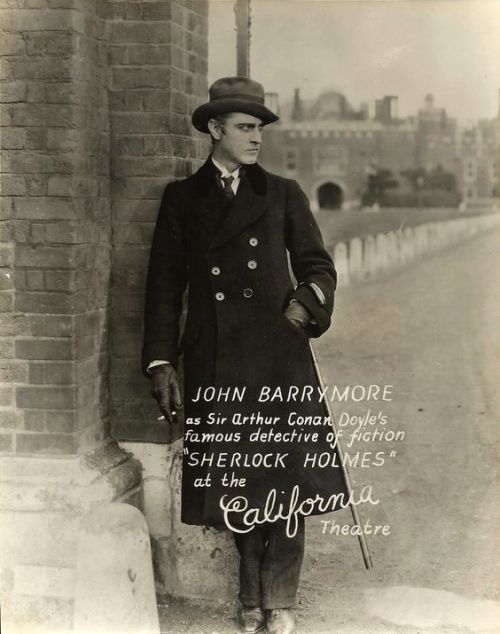
Temos no filme um elenco
primoroso, liderado por John Barrymore. Uma filmagem aérea de Londres. Um
professor Moriarty que é a combinação de Abraham Lincoln com o Doutor Caligari.
Um Nick Charles embrionário. Cinematografia belíssima. Todos os ingredientes
juntos criam uma película imperdível.
We have in the movie an outstanding cast,
starting with John Barrymore. Aerial footage of London. A professor Moriarty
who is the combination of Abraham Lincoln and Doctor Caligary. An embrionary
Nick Charles. Wonderful cinematography. All the ingredients create a must-see
movie.

Era uma vez um estudante
de Cambridge chamado Sherlock Holmes (John Barrymore). Seu amigo Watson (Roland
Young) indica-o para resolver um problema que aflige o príncipe Alexis
(Reginald Denny): vossa alteza está sendo acusado de roubar dinheiro da
sociedade atlética da universidade. Este primeiro caso leva Holmes a se
encontrar com o professor Moriarty (Gustav von Seyffertitz, que aterrorizou
Mary Pickford em “Sparrows”, de 1926), e então nosso amigo Sherlock encontra
sua vocação: trabalhar como detetive para livrar o mundo de todo o mal
representado por gente como Moriarty, e então se estabelece na 221B Baker
Street.
Once upon a time there was a student from
Cambridge called Sherlock Holmes (John Barrymore). His friend Watson (Roland
Young) refers him to solve a problem that Prince Alexis (Reginald Denny) has:
your Highness is being accused of stealing money from the university’s athletic
society. This first case takes Sherlock to Professor Moriarty (Gustav von
Seyffertitz, who terrorized Mary Pickford in “Sparrows”, from 1926) and then
our friend Sherlock finds his calling: he was born to be a detective and erase
the evil off the world. Then Sherlock establishes 221B Baker Street as his
headquarters.

Anos
depois, estamos diante do Sherlock Holmes que conhecemos e amamos. O príncipe Alexis se
tornou herdeiro do trono, desistiu do casamento com Rose Faulkner (Peggy
Bayfield) e agora está sendo chantageado por Moriarty. Holmes não se importa
muito com a reputação do príncipe, mas não vai perder a chance de rever Alice
Faulkner (Carol Dempster), por quem se apaixonou.
Years later, we find the Sherlock Holmes we
all know and love. Prince Alexis inherited the throne, broke up his engagement
with Rose Faulkner (Peggy Bayfield) and is being blackmailed by Moriarty.
Holmes doesn’t really care about the Prince’s reputation, but he won’t miss the
opportunity to once again see Alice Faulkner (Carol Dempster), with whom he
fell in love.
 |
| Sherlock in love |
O diretor Albert S. Parker
não teve como inspiração as histórias originais de Conan Doyle, mas sim uma
peça de 1899 escrita e protagonizada por William Gillette, o maior Sherlock
Holmes do teatro. Gillette levou a peça para o cinema em 1916, e por muitos
anos seu Sherlock cinematográfico foi considerado perdido, mas felizmente o
filme foi encontrado e restaurado em 2015.
Director Albert S. Parker didn’t adapt any of
Conan Doyle’s original stories, but an 1899 play written and starred by William
Gillette, the greatest Sherlock Holmes of the stage. Gillette turned his play
into a movie in 1916, and for many years his film was considered lost, but
fortunately it was found and restored in 2015.
 |
| William Gillette |
A restauração também faz
parte da história do Sherlock de 1922, pois o filme também ficou durante
décadas desaparecido. Nos anos 70, uma cópia foi encontrada, mas com os takes
fora de ordem. O trabalho de detetive ficou por conta do próprio diretor Albert
S. Parker, que instruiu os restauradores sobre a ordem dos takes. Com falhas de
memória, Parker morreu antes de o trabalho ser completado, e coube ao
historiador Kevin Brownlow reconstruir a película da melhor forma possível. A
restauração foi financiada por Hugh Hefner – sim, o editor da revista Playboy.
Restoration is also part of the story involving
the 1922 Sherlock. This film was also considered lost for decades. In the
1970s, a copy was found, but with the takes all mixed. The detective work was
made by Albert S. Parker himself, who recalled the order of the takes and
helped the restaurators. His memory, however, was fading, and Parker died
before the job was completed. Then historian Kevin Bowwnlow jumped into the
work and rebuilt the film the best way he could. The restoration was paid by
Hugh Hefner – yes, the editor of Playboy magazine.
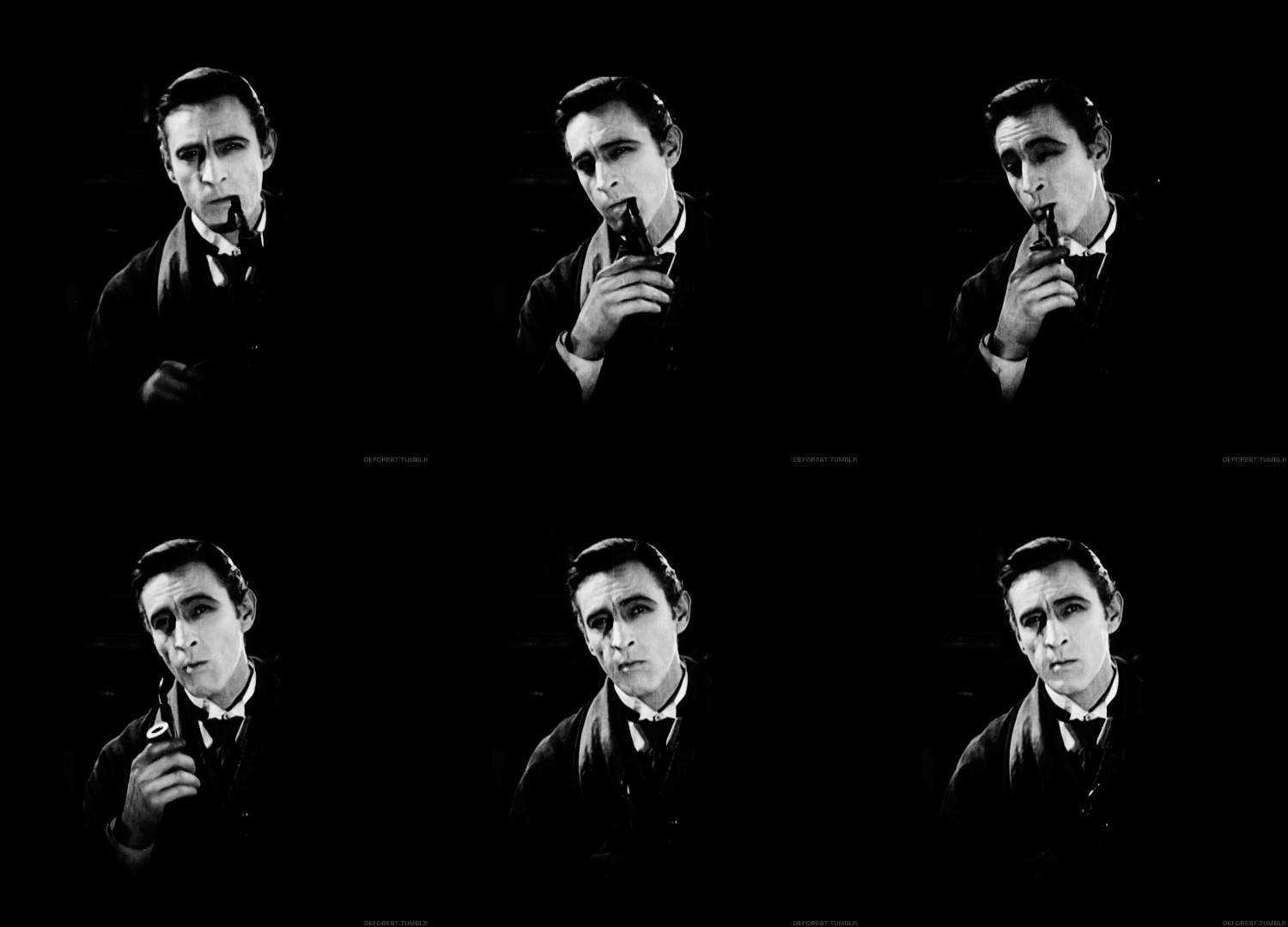
Se o filme fosse perdido,
além da interpretação de Barrymore, o mundo também ficaria para sempre sem ver
uma jovem Hedda Hopper no papel secundário de Madge Larrabee, e seria perdida
também a estreia de William Powell no cinema, sem bigode, interpretando um
estudante de Cambridge que depois se torna um mordomo. A imagem a seguir,
senhoras e senhores, é a primeira vez que o mundo viu nosso querido Bill
Powell:
If the film was lost, besides Barrymore’s
performance, the world would never again see a young Hedda Hopper as secondary
character Madge Larrabee, and William Powell’s film debut would also be lost
forever. William is here without a mustache, playing a Cambridge student who
later becomes a butler. The image above, ladies and gentlemen, is the very first
time the world saw our beloved Bill Powell:

Ao final, o que temos é
um veículo que faz Barrymore brilhar, desde que Sherlock aparece pela primeira
vez embaixo de uma árvore, aos oito minutos de projeção. A sequência de
Moriarty invadindo a casa de Holmes é orquestrada com muito suspense, mas seu
desfecho é rápido demais para a tensão que foi criada - a impressão é de que
estariam ainda faltando cenas. Pode ser meio estranho encontrar um estudante
universitário de 40 anos de idade, mas Barrymore é um Sherlock Holmes perfeito:
alto, elegante, charmoso, inteligente e habilidoso.
In the end, we have a movie in which Barrymore
shines. He is the focus of the feature since the first time Sherlock appears,
under a tree, at the eight minute mark. The sequence in which Moriarty invades
Holmes’s house is full of suspense, but its conclusion is too fast compared to
the tension that escalated – it looks like there is some scene missing. It may
be weird to find a 40 year-old college student, but Barrymore is a perfect Sherlock
Holmes: tall, elegant, charming, intelligent and skilled.
 |
| Watson (sentado), Holmes (em pé) e uma caveira decorando o ambiente Watson (seating), Holmes (standing) and a skull used as decoration |
Se você gosta de Benedict
Cumberbatch, Basil Rathbone ou qualquer outro Sherlock da história, perceba
como todos eles devem a Barrymore a aura cavalheiresca e intelectual do
personagem. William Gillette pode ter introduzido a frase “Elementar, meu caro
Watson”, mas foi John Barrymorre, em sua única aventura como Sherlock Holmes,
que nos mostrou o que é realmente elementar para incorporar um personagem tão
icônico.
If you are a fan of Benedict Cumberbatch,
Basil Rathbone or any other Sherlock, you’ll see how all of them owe to
Barrymore the intellectual gentleman aura the character is famous for. William
Gillette may have introduced the quote “Elementary, my dear Watson”, but it was
John Barrymore, in his only adventure as Holmes, who showed what really is to
incorporate such an iconic character.
This is my contribution to the Barrymore Trilogy
Blogathon, hosted by Ethel Barrymore connoisseur Crystal at In the Good Old Days of Classic Hollywood.


-large-picture.jpg)