Um
filme sobre o circo. Codirigido por Busby Berkeley, escrito por Sidney Sheldon,
baseado numa peça escrita por Ben Hecht, estrelando Doris Day, Jimmy Durante e
Stephen Boyd – sim, o Messala de “Ben-Hur”. E é um musical! O que poderia dar errado?
A movie about the circus. Co-directed
by Busby Berkeley, written by Sidney Sheldon, based on a play written by Ben
Hecht, starring Doris Day, Jimmy Durante and Stephen Boyd – yes, Messala from
“Ben-Hur”. And it’s a musical! What could go wrong?

Um
circo itinerante do passado está passando por dificuldades financeiras. Há
muitas dívidas e o urso domesticado se demitiu por falta de pagamento. Não é só
o urso que está de saída: alguns músicos, palhaços e um grande acrobata também
vão embora. É neste momento que um belo estranho, Sam Rawlins (Stephen Boyd),
chega à procura de trabalho – ele diz que pode fazer qualquer coisa. Num
primeiro momento ele se desentende com Kitty (Doris Day), a gerente não oficial
do circo e filha do dono do empreendimento circense.
An
itinerant circus of days gone by is going through financial difficulties. There
are lots of debts and the trained bear quit because it wasn’t paid. It’s not
only the bear that’s leaving: some musicians, clowns and the star acrobat are
also out. It’s in this moment that a tall dark stranger, Sam Rawlins (Stephen
Boyd), arrives wanting work – he says he can do any kind of work. At first he
clashes with Kitty (Doris Day), the circus’ unofficial manager and the owner’s
daughter.

O dono
do circo é Anthony Wonder (Jimmy Durante), que está noivo de Lulu (Martha
Raye), a vidente do circo, há 14 anos. Entretanto, Anthony está mais apaixonado
por Jumbo, o talentoso elefante do circo. Mas o principal concorrente de
Anthony, John Noble (Dean Jagger), está de olho em Jumbo e mal pode esperar
para comprar o elefante e todo o resto quando Anthony falir.
The
owner of the circus is Anthony Wonder (Jimmy Durante), who has been engaged to
Miss Lulu (Martha Raye), the circus’ fortune teller, for 14 years. However,
Anthony is more in love with Jumbo, the circus’ talented elephant. But
Anthony’s main competitor, John Noble (Dean Jagger), has an eye on Jumbo and
can’t wait to buy the elephant and everything else when Anthony becomes
bankrupt.
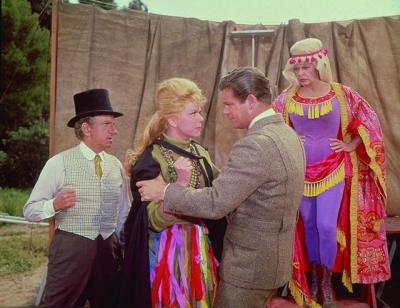
O
número de Jimmy Durante na corda bamba é cheio de comédia física e eu tive de
aplaudi-lo ao final. Ele também nos faz rir em muitos outros pequenos momentos,
como quando ele diz que Jumbo se parece com ele, e também quando ele interage
com Lulu. Se você pensou que Maurice Chevalier e Hermione Gingold foram a
melhor coisa de “Gigi” (1958), espere até ver Jimmy Durante e Martha Raye em “A
Mais Querida do Mundo”! Jimmy Durante não fez nenhum filme por 10 anos antes de
“A Mais Querida do Mundo”, e não perdeu o jeito de fazer rir.
Jimmy
Durante’s tightrope number is full of physical comedy and I couldn’t help but
clap in the end. He also makes us laugh in many other small moments, like when
he says Jumbo and him have an undeniable resemblance, and also whenever he
interacts with Lulu. If you thought Maurice Chevalier and Hermione Gingold were
the best thing in “Gigi” (1958), wait until you see Jimmy Durante and Martha
Raye in “Billy Rose’s Jumbo”! Jimmy Durante hadn’t made any film for 10 years
before “Billy Rose’s Jumbo” and didn’t lose his ability to make us laugh.

O circo
é um meio muito visual. As ações importam muito mais que as palavras, e os
movimentos dos acrobatas, palhaços e dançarinos são lembrados depois de muito
tempo, enquanto as poucas palavras do mestre de cerimônias são logo esquecidas
pelo respeitável público. Os números na corda bamba são os mais memoráveis –
embora, obviamente, tenham sido executados por dublês e não por Jimmy Durante e
Stephen Boyd. O coreógrafo que virou diretor Charles Walter faz maravilhas com
sua câmera – ajudado por um idoso Busby Berkeley –, capturando toda a mágica de
dias de glória do circo – melhor do que DeMille fez no oscarizado “O Maior
Espetáculo da Terra” (1952).
The
circus is a very visual medium. The actions matter way more than the words, and
the movements of acrobats, clowns and dancers are remembered after a long time,
while the few words of the master of ceremonies are soon forgotten by the
public. The tightrope numbers are the most memorable ones – although,
obviously, they were performed by stunts and not by Jimmy Durante and Stephen
Boyd. Choreographer-turned-director Charles Walters does wonders with his
camera – with the help of an old Busby Berkeley –, capturing all the magic of
bygone circus’ glory days – better than DeMille did in his Oscar-winning “The
Greatest Show on Earth” (1952).


Atualmente,
a maioria dos circos não tem mais animais – algo que eu considero certo, por muitas razões. É interessante perceber que a tradição circense europeia
apresentava seus animais em números divertidos, enquanto a tradição
norte-americana preferia mostrar um domador domando “feras selvagens”. Exotismo
era a norma nos circos, e você pode ver muitos animais exóticos – como camelos –
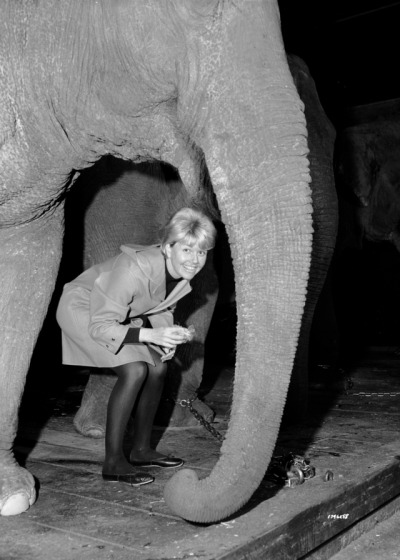
desfilando no filme. De toda forma, em “A Mais Querida do Mundo”, o elefante é
tratado como parte da família por Anthony e, em especial, por Kitty. Doris Day,
conhecida ativista pelos direitos dos animais, e o elefante Sidney se deram
muito bem antes e durante as filmagens, e é possível ver como os elefantes são
inteligentes através dos truques que Sidney / Jumbo aprendeu.
Nowadays,
most circuses don’t have animal stars anymore – something I agree with, for a bunch of reasons. It’s interesting to notice that the European circus tradition
presented their animals in playful acts, while the North American tradition
preferred to show a trainer taming “wild beasts”. Exoticism was the norm is
circuses, and you can see many exotic animals – like camels – on parade in the
film. Anyway, in “Billy Rose’s Jumbo”, the elephant is treated as part of the
family by Anthony and, in special, Kitty. Doris Day, a notorious animal rights’
advocate, and the star elephant Sidney formed a true bond before and during
filming and you can see how intelligent elephants are by the tricks Sidney /
Jumbo performs.

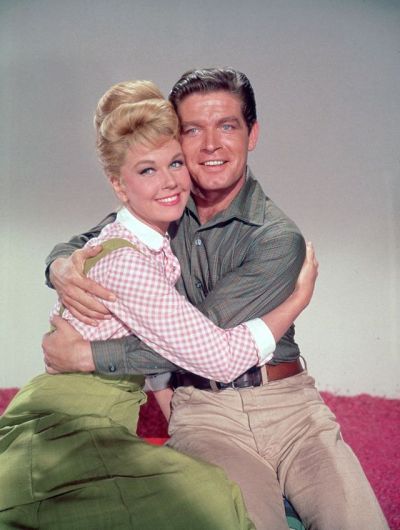
As
canções não são particularmente memoráveis. Além disso, Stephen Boyd foi
dublado cantando, mas ninguém sabe quem o dublou, pois as fontes da época não
são claras sobre isso. Boyd está muito bonito no filme, apresenta uma química
excelente com Doris Day e foi indicado ao Globo de Ouro por sua performance.
Boyd havia abandonado a produção de “Cleópatra” (1963) e foi substituído por
Richard Burton – e Burton havia sido a primeira opção de Charles Walters para
interpretar Sam em “A Mais Querida do Mundo”!
The
songs are not particularly memorable. Furthermore, Stephen Boyd’s singing was
dubbed, but nobody knows who dubbed him, as sources of the time aren’t clear
about the matter. Boyd is probably at his most handsome, had an amazing
chemistry with Doris Day and was nominated for a Golden Globe for his
performance. Boyd had left the production of “Cleopatra” (1963) and was
replaced by Richard Burton – and Burton had been Charles Walters’ first choice
for Sam in “Billy Rose’s Jumbo”!
“A Mais
Querida do Mundo” teve origem como uma peça em 1935 e Jimmy Durante fez parte
do elenco original que se apresentou no Teatro Hippodrome de Nova York – a peça
do empresário Billy Rose foi um fracasso. Os direitos da peça foram adquiridos
pela MGM nos anos 1940, e em 1952 um musical baseado nela seria feito com
Donald O’Connor e Debbie Reynolds, mas o projeto foi cancelado em pré-produção.
Antes disso, “A Mais Querida do Mundo” seria um possível veículo para Judy
Garland e Mickey Rooney ou Gene Kelly.
“Billy
Rose’s Jumbo” was originated as a play in 1935 and Jimmy Durante was part of
the original cast that performed at the New York city’s Hippodrome Theater –
the play by showman Billy Rose was a flop. The rights of the play were acquired
by MGM in the 1940s, and in 1952 a musical based on it was in the works, with
Donald O’Connor and Debbie Reynolds, but it was cancelled during pre-production.
Before that, “Billy Rose’s Jumbo” had been thought as a possible vehicle for
Judy Garland and Mickey Rooney or Gene Kelly.
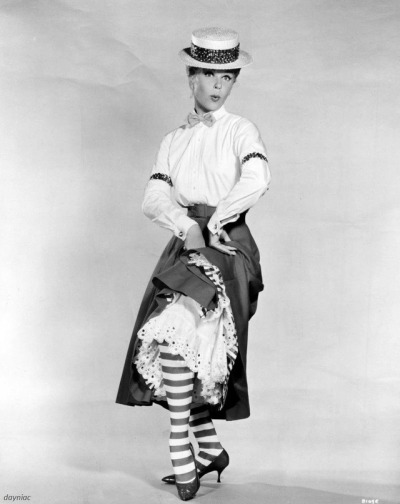
“A Mais
Querida do Mundo” é um dos musicais pertencentes a um tempo em que musicais
extravagantes estavam caindo de moda. Com mais de duas horas de duração, com
direito a uma abertura, este foi um dos últimos grandes musicais da MGM, e
também o último musical da carreira de Doris Day.
“Billy
Rose’s Jumbo” is one of the musicals that belong to a time when extravagant
musicals were dying. With over two hours, and complete with overture, this was
one of the last big budget MGM musicals, as well as Doris Day’s last musical
movie.
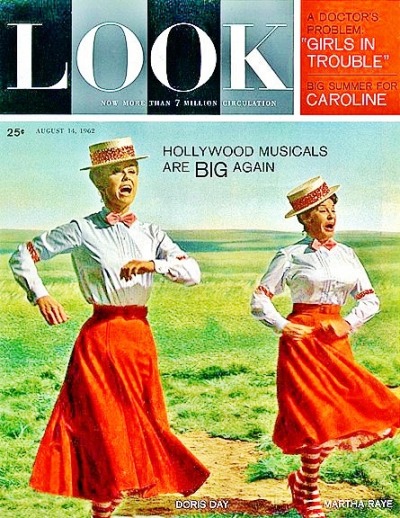
“A Mais
Querida do Mundo” é um filme regular. Seu enredo é previsível, e a resolução do
conflito principal é muito rápida. Mesmo assim, é um filme bem divertido – que te
fará rir, se assustar, aplaudir e esquecer seus problemas. Acho que todos nós
precisamos de um filme assim agora, não?
“Billy
Rose’s Jumbo” is a regular movie. Its plot is predictable, and the resolution
of the main conflict is incredibly quick. Nevertheless, it’s a very enjoyable
movie – one that will make you laugh, gasp, clap and forget the current
troubles. I guess we all need this kind of movie right now, isn’t so?
This is
my contribution to the Fourth Annual Doris Day blogathon, hosted by Michaela at
Love Letters to Old Hollywood.



_1.jpg)