} Crítica Retrô: Alexander Knox

Tradutor / Translator / Traductor / Übersetzer / Traduttore / Traducteur / 翻訳者 / переводчик

Showing posts with label Alexander Knox. Show all posts

Monday, August 28, 2017

Europa '51 (1952)

Consciência social. Guerras. Esquerda contra direita. A boba e infantil vida burguesa. Suicídio infantil. Memórias de guerra. “Europa '51” trata de todos estes temas em seus primeiros trinta minutos. E já podemos sentir, por estes temas, que é um filme de Rossellini. E ele só melhora conforme avança a trama.

Social conscience. Strikes. Left vs right. The silly and childish life of the bourgeois. Child suicide. War memories. “Europa '51” touches all these themes in its first half an hour. And we can sense, by those themes, that we are watching a film by Rossellini. And it only gets better as the plot goes on.
É a morte do filho de Irene (Ingrid Bergman) que dá início à sua jornada. O menino se sentia negligenciado, por isso ele se joga de uma escada e se machuca. Quando ele morre depois de uma cirurgia no fêmur, Irene entra em choque – e nós podemos sentir o choque no olhar de Ingid. Ela não grita, não chora, não perde a cabeça. Ela fica em choque. Só isso. E é também tudo isso.

It's the death of Irene's (Ingrid Bergman) son that starts her journey. The boy was feeling neglected, so he hurt himself by falling down the stairs. When he dies after a fêmur surgery, Irene is in shock – and we can see the shock in Ingrid's eyes. She doesn't scream, she doesn't cry, she doesn't lose her mind. She is in shock. It's only that. And it's also all that.
Enquanto se recupera, Irene se aproxima do primo de seu marido, Andrea (Ettore Giannini), um jornalista comunista. Andrea a convence a ajudar uma pobre família cujo filho precisa de um remédio caro para sobreviver. Andrea também empresta livros e jornais a Irene. A maneira como ela vê o mundo muda. Ela tenta ajudar os pobres de todas as maneiras. Ela até experimenta a noite de entretenimento dos pobres – ela vai ao cinema popular, em vez de ir ao teatro elitista.

While recovering Irene becomes closer of her husband's cousin Andrea (Ettore Giannini), a communist journalist. Andrea convinces her to help a poor family whose son needs an expensive medication to survive. Andrea also lends Irene books and newspapers. The way she sees the world changes. She tries to help poor peaople in any way she can. She even attends the poor people's entertainment night – she goes to the popular cinema, and not the elitist theater.
Irene passa a ser julgada pelas pessoas ao seu redor. Não pelas pessoas que ela ajuda, mas pelas pessoas de seu convívio – isto é, pessoas “respeitáveis”. Ela é uma figura semelhante a Cristo, e sofre nas mãos de ignorantes que dizem estar “seguindo a lei”, “protegendo a sociedade” e “fazendo isso pelo bem dela”. Se Jesus fosse uma mulher, ele provavelmente teria sofrido muito mais.

Irene is then judged by all people around her. Not by the people she is helping, but by the people she used to live among – that is, “respectable” people. She is a Christ-like figure, and suffers on the hands of the ignorants who claim to be “following the law”, “protecting society” and “doing it for her own good”. If Jesus was a woman, he might have suffered even more.
Mesmo tendo passado pelos horrores da guerra, Irene é agora uma mulher privilegiada. Seu novo comportamento é condenado por sua mãe, por seu marido George (Alexander Knox, que interpretou o presidente Woodrow Wilson em 1944) e seus amigos. Ela ajuda pessoas. Ela faz exatamente o que Jesus ou um santo fariam. Algum de nós faria o que ela faz? A maioria de nós gosta de pensar que sim, mas eu acredito que quase ninguém se comportaria como ela.

Even if she has suffered the horrors of war, Irene is now a privileged member of society. Her new behavior is disapproved by her mother, her husband George (Alexander Knox, who played president Woodrow Wilson in 1944) and her friends. She helps people. She does exactly what Jesus Christ would do, or a saint would do. Would any of us do what she does? Most of us like to think we would, but I believe almost nobody would behave like her.
Além da brilhante Bergman, outra presença no filme me deixa feliz: Giulietta Masina. Seu papel como uma pobre e trabalhadora mãe de seis crianças é pequeno, mas ela brilha em cada segundo na tela. Ela fala alto, é um pouco grossa, espontânea e temperamental. Ela não tem medo de falar a verdade sobre as coisas. Assim como em muitos de seus papéis coadjuvantes – como em “A Trapaça” (1955) – Giulietta é aqui inesquecível. Quer dizer, ela é tão inesquecível que eu estou 100% convencida de que a reconheci como extra em “Paisà”, de 1946, também dirigido por Rossellini.

Besides brilliant Bergman, another presence in this movie makes me happy: Giulietta Masina. Her role as a poor yet hard-working mother of six is a small one, but she shines in every second of it. She is loud, a bit rough, spontaneous and temperamental. She is not afraid of saying things the way they really are. As in many of her supporting roles – like in “Il Bidone” (1955) – here Giulietta is unforgettable. I mean, she is so unforgettable that I'm 100% sure that I recognized her in a cameo in 1946's “Paisà”, also directed by Rossellini.
Um filme como este nunca seria feito nos Estados Unidos, especialmente com as investigações anticomunistas acontecendo. E é simbólico ter Ingrid Bergman neste papel. Ela havia acabado de interpretar Joana D'Arc nos EUA quando conheceu Rossellini, engravidou e se tornou persona non grata em Hollywood. E aqui está ela, na Itália, interpretando uma verdadeira santa que é vítima de hipocrisia e julgamento. Eu gosto muito da Hollywood clássica, mas fico feliz por poder ver filmes de outras partes do mundo e que mostram perspectivas diferentes e exploram temas complexos.

A film like this one would never have been done in the US, especially with the HUAC investigations going on. And it's symbolic to have Ingrid in this role. She has just played Joan of Arc in the US when she met Rossellini, got pregnant and became persona non grata in Hollywood. And here she is, in Italy, playing a true saint who is the victim of hypocrisy and judgment. I really enjoy classic Hollywood, but I'm happy to be able to see films from other parts of the world to show us different perspectives and explore difficult themes.
É incrível como os temas deste filme refletem o que está acontecendo no mundo agora – um pouco nos EUA, e muito no Brasil. Sempre que uma pessoa acredita que todos os seres humanos têm os mesmos direitos e deveriam ganhar o suficiente para uma existência digna, esta pessoa é chamada de “liberal” / “social justice warrior” nos EUA ou “comunista” / “esquerdista” no Brasil.

It's incredible how the themes in this film mirror what is happening in the world now – a little in the US, a lot in Brazil. Whenever a person thinks all human beings deserve the same rights and should earn enough to live decent lives, this person s  called “liberal” / “social justice warrior” in the US or “communist” / “leftist” in Brazil. 
Há uma cena em que Andrea e Irene conversam, e Andrea diz que o mundo será um paraíso quando os homens perceberem que o futuro precisa incluir progresso para todos. Infelizmente, eu vim do futuro para transmitir uma mensagem triste a Andrea: nós estamos cada vez mais longe do seu paraíso. E isso acontece porque pessoas como Irene são impedidas de fazer a diferença no mundo.

There is a scene in which Andrea and Irene are talking, and Andrea says that the world will be a paradise when men realize that the future needs to have progress for everyone. Unfortunately, I'm here from the future to deliver a sad message to Andrea: we're further and further from your paradise. And that's because people like Irene are prevented from making the difference in this world.

This is my contribution to the 3rd Wonderful Ingrid Bergman blogathon, hosted by Virginie at The Wonderful World of Cinema.

Sunday, October 30, 2016

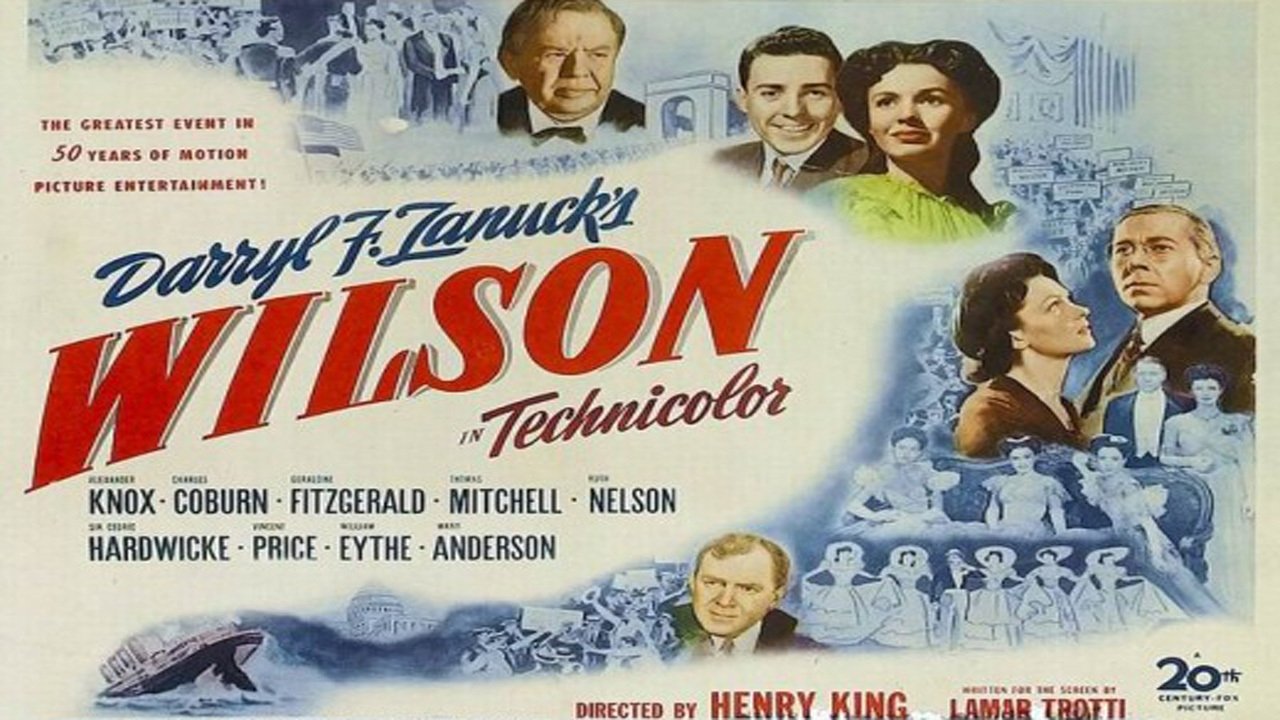
Wilson (1944)

Segundo o site Huffington Post, Woodrow Wilson foi o terceiro pior presidente da história dos Estados Unidos, enquanto seu antecessor, William Howard Taft, foi o melhor de todos. O site Rant Political, entretanto, coloca Wilson entre os 15 melhores e o chama de visionário. Se Wilson não tivesse governado durante a Primeira Guerra Mundial, proposto 14 pontos de paz e idealizado a Liga das Nações, provavelmente estaria ainda mais esquecido – e certamente eu, uma blogueira brasileira, nunca teria ouvido falar dele.

According to the website Huffington Post, Woodrow Wilson was the third worst president of the United States, while his predecessor, William Howard Taft, was the best of them all. The website Rant Political, however, puts Wilson among the 15 best presidents and calls him a visionary. If Wilson was not the governor during World War I, after which he proposed 14 peace points and had the idea of the League of Nations, he would be even more forgotten – and certainly I, a Brazilian blogger, would have never heard about him. 


Obviamente, é difícil e polêmico fazer um ranking do pior para o melhor presidente. Há subjetividade, há o saudosismo dos que viveram sob governos passados, há objetividade e uma visão diferente daqueles que governaram há mais de cem anos. Por isso, para investigar a figura de Woodrow Wilson, resolvi levar em conta outra fonte, tão parcial e cheia de defeitos quando uma lista na internet: uma cinebiografia!

Obviously, it is difficult and polemic to rank the presidents from worst to best. There is subjectivity, there is the nostalgia from those who lived during their terms, there is objectivity and a distinct vision from those who study about a president who ran the nation more than 100 years ago. That’s why I chose to investigate Woodrow Wilson using another source of information, as biased and full of defects as a list on the internet: a biopic!


A cinebiografia começa com a mesma pompa e circunstância de um filme sobre a vida de um santo. Um texto diz que, “às vezes, a vida de um homem espelha a vida de uma nação” e coloca Woodrow Wilson no mesmo patamar de dois adorados presidentes: George Washington a Abraham Lincoln.

The biopic starts with the same pomp and circumstance of a biopic of a saint. A text says that, “sometimes, the life of a man mirrors the life of a nation” and puts Woodrow Wilson at the same level of two beloved presidents: George Washington and Abraham Lincoln.


Em 1909, Woodrow Wilson (Alexander Knox) era apenas o humilde reitor da Universidade de Princeton. Ele reluta em aceitar um convite para concorrer ao cargo de governador de New Jersey, mas acaba convencido a tentar pela esposa e pelas filhas.

In 1909, Woodrow Wilson (Alexander Knox) was just the humble dean of Princeton University. He hesitates to accept an invitation to run for the place of governor of New Jersey, but he makes up his mind thanks to his wife and daughters’ support.

Como governador, ele desafia o poderoso senador Big Ed Jones (Thurston Hall), que foi exatamente o responsável por inserir Wilson na política. Ao impedir que Big Ed se candidatasse à reeleição como senador, Wilson ganha popularidade e se torna um queridinho da mídia – e logo o povo clama que ele seja candidato à presidência.

As a governor, he challenges powerful senator Big Ed Jones (Thurston Hall), exactly the man responsible for the start of his political career. When he impedes Big Ed to run for re-election, Wilson becomes more popular and gains a lot of sympathy from the media – and soon the people start rallying for him to run for president.


Uma vitória heroica sobre o pré-candidato favorito, discursos memoráveis sobre direitos humanos, liberdade, comparações com Abraham Lincoln, a morte da esposa de Wilson, Ellen (Ruth Nelson), uma guerra na Europa: ingredientes perfeitos para pintar Woodrow Wilson como um homem verdadeiramente admirável.

An heroic victory over the favorite pre-candidate, memorable speeches about human rights, freedom, comparisons with Abraham Lincoln, the death of Wilson’s wife, Ellen (Ruth Nelson), a war in Europe: the perfect ingredients to paint Woodrow Wilson as a truly remarkable man.


Como candidato à reeleição, ele precisa calcular as consequências de sua decisão de se casar novamente, desta vez com Edith Bolling Galt (Geraldine Fitzgerald), e também provar que sua estratégia de não envolvimento com a guerra não é um ato de covardia, mas uma tentativa de diplomacia.

As candidate for re-election, he must calculate the consequences of marrying Edith Bolling Galt (Geraldine Fitzgerald), and also prove that his no-war strategy is not a sign of cowardice, but an attempt of being diplomatic. 

Obviamente, “Wilson” é um filme feito pontualmente para 1944: com os Estados Unidos envolvidos em outra guerra contra a Alemanha, após outra tentativa de manter distância do conflito. O único projeto pelo qual Wilson lutou intensamente, a Liga das Nações, fracassou e, acreditava-se na época, poderia ter evitado outra guerra.

Obviously, “Wilson” is a film that could only be made in 1944: with the USA involved once again in a war against Germany, right after another attempt to be away from the battlefield. The only project that Wilson was passionate about, the League of Nations, failed, and it was believed at the time that his idea could have prevented another war. 


Darryl F. Zanuck acreditava que os Estados Unidos precisavam de outra injeção de ânimo e sua ideia era fazer de “Wilson” seu maior sucesso. Apesar dos cinco Oscars ganhos (Edição, Fotografia a Cores, Direção de Arte, Roteiro Original e Mixagem de Som), o filme foi um fracasso de bilheteria, desapontando inclusive Winston Churchill, que saiu no meio de uma exibição do filme.

Darryl F. Zanuck believed that the United States needed another mood boost and his idea was to make of “Wilson” her greatest success ever. It may have won five Oscars (Editing, Cinematography - Color, Art Direction - Interior Decoration, Sound - Recording, Original Screenplay), but the film was a box office failure and even disappointed Winston Churchill, who left a screening to go to bed. 


Wilson é mostrado como um homem simples, caseiro, que gostava de cantar ao lado do piano com sua família, honesto, corajoso, sem ambição, mas movido por um forte senso de justiça, à mesma maneira de “A Mocidade de Lincoln” (1939).

Wilson is shown as a simple man, loving his home, enjoying singing by the piano with his family, an honest, bold, ambitionless less, moved by a strong sense of justice, exactly like in “Young Mr. Lincoln” (1939).

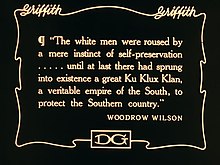
Ele é mostrado como alguém que quer acabar com os privilégios de classes, mas o filme “esquece” de mencionar que Woodrow Wilson era simpatizante da Ku Klux Klan e foi durante seu governo que a segregação racial se fortaleceu. Mas temos aqui uma ajudinha do bom, velho e nem sempre confiável D.W. Griffith para refrescar nossa memória:

He is shown as someone who wants to end class privileges, but the film “forgets” to mention that Woodrow Wilson sympathized with the Ku Klux Klan and it was during his government that racial segregation became stronger. But we have here a little help from good, old, not always reliable D.W. Griffith to refresh our memory:


Sim, no governo de Wilson foi concedido o voto às mulheres, mas ele só apoiou a ideia porque precisava: na verdade, Wilson acreditava que as mulheres poderiam votar em cargos municipais e estaduais, mas não para presidente. E olhe que ironia: após um derrame que o debilitou seriamente, Wilson passou a depender da segunda esposa para governar o país. Sim, era 1919 e quem comandava os Estados Unidos era uma mulher.

Yes, it was during Wilson’s administration that women were allowed to vote, but he only supported the idea because he had no other option: in fact, Wilson believed that women could vote for mayor and governor, but never for president. And look how ironic: after a stroke that left him seriously debilitated, Wilson relied on his second life to rule the country. Yes, it was 1919 and it was a woman who ran the United States.

Wilson and Edith
Alexander Knox se parece muito com Wilson, embora seja muito mais novo que o biografado. Ele passa confiança e seriedade. Gostaria de ter visto mais de Charles Coburn, que interpreta um amigo de Wilson de Princeton, e diz uma ótima frase: “Toda eleição é decepcionante, meu jovem, se você tem o azar de ser eleito”.

Alexander Knox looks a lot with Wilson, although he was much younger than the president when the film was made. He looks trust-worthy and serious. I’d like to have seen more of Charles Coburn, who plays a friend of Wilson’s from Princeton and has this great quote: “Any election is an upset, young man, if you’re unfortunate enough to be elected”.


“Wilson” é um filme bonito de se ver, por ser em cores e ter cenas grandiosas em belos cenários. É, como toda cinebiografia, um exercício de desconfiança, mas tornado ainda maior por ser tão parcial ao retratar um presidente que estava longe de ser santo – ou o segundo Lincoln.

“Wilson” is a feast for the eyes, because it is a color movie with grand scenes in wonderful sets. It is, as any biopic, an exercise in distrust, but made even bigger because it is so biased when trying to portray a president who was not a saint – nor the second Lincoln.

This is my contribution to the Hail-to-the-Chief blogathon, hosted by Robin at Pop Culture Reverie. Now go out and VOTE!

Related Posts Plugin for WordPress, Blogger...