Quando foi exibido pela primeira
vez na TV, assisti à animação “O Lendário Cão Guerreiro” (2022), sobre um cão
que quer se tornar samurai numa terra onde só há gatos. Fiquei surpresa ao ver
o nome de Mel Brooks como produtor executivo, mas não deveria me surpreender: a
premissa da animação é a mesma de seu clássico “Banzé no Oeste” (1974). Vejamos
como a ideia foi executada originalmente.
When it was first shown on TV, I
watched the animation “Paws of Fury: The Legend of Hank” (2022), about a dog
who wants to become a samurai in a land where there are only cats. I was
surprised to see Mel Brooks’ name as executive producer, but I shouldn’t have
been: the premise of the animation is the same as his classic “Blazing Saddles”
(1974). Let’s take a look at the original idea.

Os créditos surgem por cima da
imagem de um deserto, com os nomes mudando conforme um chicote estala. O filme
começa com a construção de uma estrada de ferro que deve cruzar a cidade de
Rock Ridge, o que alimenta a ambição do advogado e assistente do governador,
Hedley Lamarr (Harvey Corman).
The credits appear over the image
of a desert, with the names changing at the noise of a whip. The movie begins
with the building of a railroad that shall cross the town of Rock Ridge,
something that feeds the ambition of attorney and assistant to governor, Hedley
Lamarr (Harvey Corman).

Rock Ridge está tomada pela
criminalidade. A população clama por um novo xerife que deve ser mandado pelo
governador, interpretado por Mel Brooks. O governador passa a missão para
Hedley que, querendo tirar vantagem, escolhe o pior xerife possível, um homem
negro chamado Bart (Cleavon Little).
Rock Ridge is taken by
criminality. The population asks for a new sheriff to be sent by the governor,
played by Mel Brooks. The governor gives the mission to Hedley who, wanting to
take advantage, chooses the worst possible sheriff, a black man named Bart
(Cleavon Little).
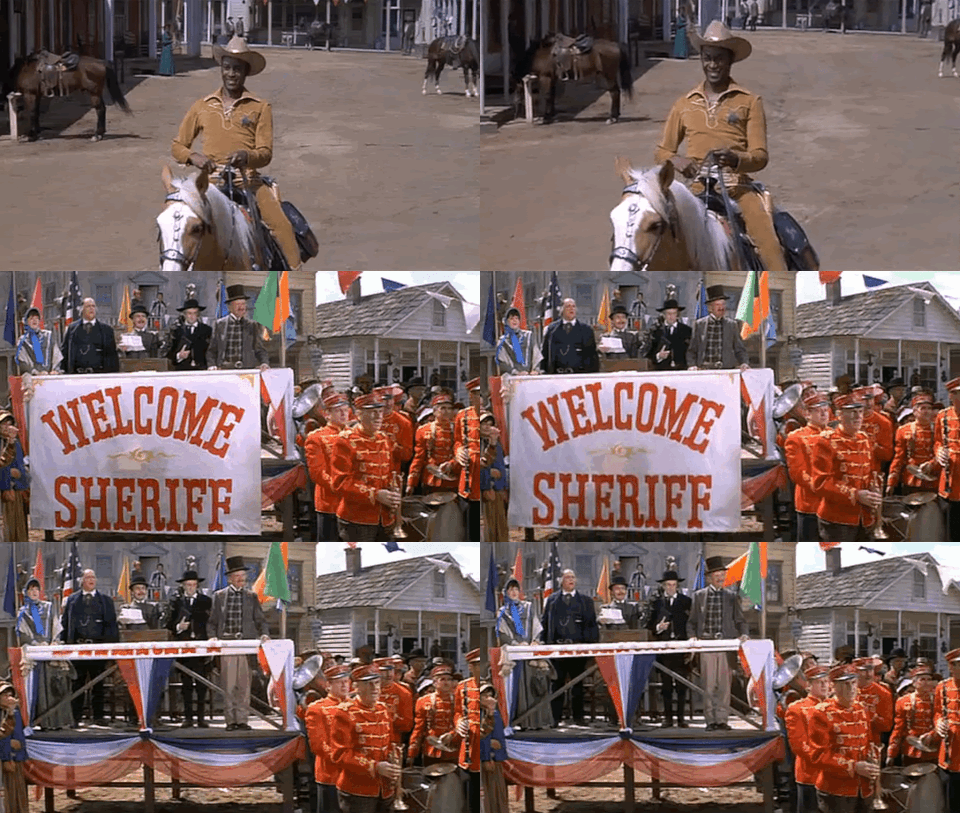
A cidade, habitada totalmente por
pessoas brancas, fica horrorizada com a chegada do novo xerife. Enquanto eles
desmontam a festa de boas-vindas que organizaram e escrevem cartas iradas para
o governador, Bart fica amigo de um preso chamado Jim (Gene Wilder), mas
anteriormente conhecido como Waco Kid. Jim diz que “eu devo ter matado mais
pessoas que Cecil B. DeMille” - uma frase que me fez rir alto. Bart e Jim se
tornam parceiros.
The all-white town is horrified
when the new sheriff arrives. While they dismantle the welcome party they
organized and write irate letters to the governor, Bart befriends a prisoner
named Jim (Gene Wilder), but formerly known as Waco Kid. Jim says “I must have
killed more men than Cecil B. DeMille” - a sentence that made me laugh out
loud. Bart and Jim become partners.

Para desmoralizar Bart e esvaziar
a cidade, Hedley manda o troglodita Mongo (Alex Karras), mas o novo xerife
consegue prender o homem. Já que a Fera falhou, é hora de tentar com a Bela.
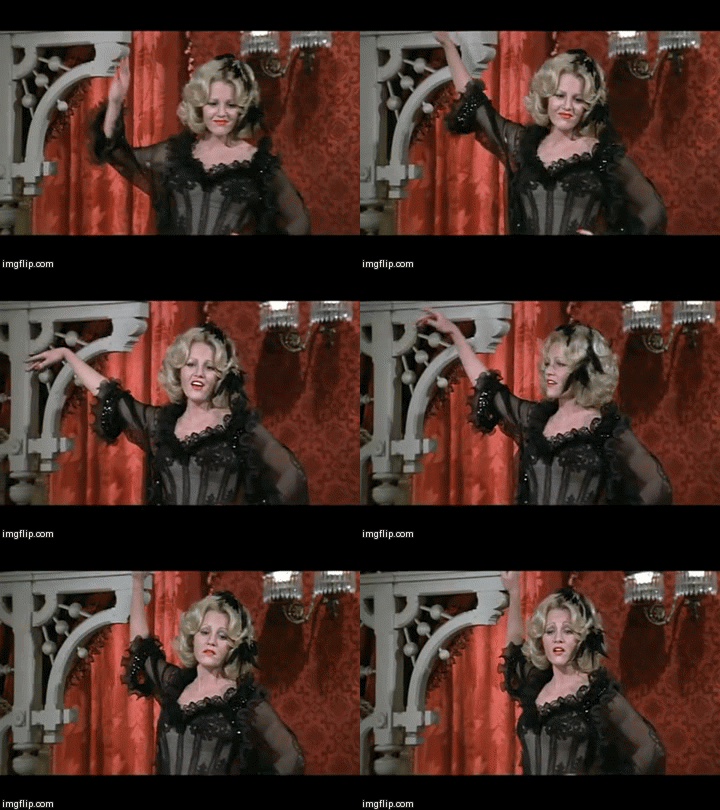
Hedley recruta a cantora e dançarina Lili von Shtupp (Madeline Kahn) para
seduzir Bart.
To demoralize Bart and empty the
city, Hedley sends the troglodyte Mongo (Alex Karras), but the new sheriff
manages to arrest the man. Since the Beast failed, it’s time to try with the
Beauty. Hedley recruits the singer and dancer Lili von Shtupp (Madeline Kahn)
to seduce Bart.
Mel Brooks dirige, escreve, tem
dois papéis e escreve as letras das músicas de “Banzé no Oeste”. Na época, ele
já havia ajudado a criar uma das minhas séries de TV favoritas, “Agente 86”, e
feito grandes filmes como “Primavera para Hitler” (1967). Naquele mesmo ano ele
também faria “O Jovem Frankenstein”. Com dois clássicos estreando no mesmo ano,
Brooks cimentou sua reputação como mestre da comédia.
Mel Brooks directs, writes, has
two roles and writes the lyrics for the songs in “Blazing Saddles”. At the
time, he had already helped create one of my favorite TV shows, “Get Smart”,
and done great movies such as “The Producers” (1967). That same year he’d also
make “Young Frankenstein”. With two classics releasing in the same year, Brooks
cemented his reputation as a master in comedy.

Há piadas flatulentas, gags
visuais, trocadilhos, uso cômico de músicas, muitos jogos e palavras que
infelizmente se perdem na tradução - como o desejo de dar ao novo xerife “a
Laurel and a Hardy handshake”. Há até mesmo uma piada com a Ku Klux Klan,
quando Bart e Jim se vestem como membros da KKK e entram numa fila de bandidos.
Quando eles precisam falar de suas experiências na vilania, eles dizem que já
provocaram “um estouro da boiada… no Vaticano!”
There are fart jokes, visual gags,
puns, funny musical clues, varied plays with words that unfortunately are lost
in translation - such as giving the new sheriff “a Laurel and a Hardy
handshake”. There is even a joke about the Ku Klux Klan, when Bart and Jim
dress up as members of the KKK and enter a line of bandits. When they have to
talk about their experiences in villainous acts, they say “stampeding cattle…
through the Vatican!”

Há uma excelente gag envolvendo
música diegética e não-diegética, conceitos que talvez você não conheça. Música
diegética é tocada dentro do mundo do filme, por isso os personagens também
podem ouvi-la, enquanto música não-diegética é a trilha que só a plateia pode
ouvir. A gag acontece quando o novo xerife está a caminho de Rock Ridge e nós
ouvimos uma animada música instrumental. Conforme ele cavalga, saímos do plano
detalhe para ver o corpo todo dele e depois o ambiente, quando finalmente vemos
que a música está sendo tocada ao vivo por uma orquestra!
There is a great gag involving
diegetic and non-diegetic music, a concept you might not know. Diegetic music
is played inside the film world, thus heard also by the characters, while
non-diegetic music is the score only the audience can hear. The gag happens
when the new sheriff is going to Rock Ridge and we listen to an exciting
instrumental song. As he rides, we go from the focus on the details to his
whole body and then the environment, when we finally see that the song is being
played live by an orchestra!

O papel principal aqui é o ponto
alto da carreira de Cleavon Little. Um experiente ator da Broadway, ele teve a
ajuda de seu novo amigo Gene Wilder para interpretar em frente às câmeras. Ele
continuaria fazendo mais peças, filmes e séries de TV, ganhando alguns prêmios
numa carreira que durou 25 anos.
This leading role is the highest
point in the career of Cleavon Little. A seasoned Broadway actor, he had the
help of his new friend Gene Wilder to perform in front of a camera. He would go
on to appear in more plays, films and TV shows, grabbing a few awards for a
career that lasted 25 years.

Mais do que uma comédia hilária, “Banzé no Oeste” é uma história sobre vencer preconceitos e o poder do trabalho em equipe. Foi, além disso, uma ótima maneira de terminar minhas resoluções de Ano Novo de 2025. Sou uma pessoa mais feliz por ter visto e me divertido com este filme.
More than a hilarious comedy,
“Blazing Saddles” is a tale of overcoming prejudice and the power of team work.
It was, moreover, a great way to end my 2025 New Year’s resolution. I’m a
happier person for having watched and laughed with this movie.