} Crítica Retrô

Tradutor / Translator / Traductor / Übersetzer / Traduttore / Traducteur / 翻訳者 / переводчик

Thursday, May 18, 2023

Raymond Burr como Perry Mason / Raymond Burr as Perry Mason


Perry Mason é um personagem criado por Erle Stanley Gardner em 1933. Gardner escreveu 82 romances e quatro contos estrelando o advogado fictício. A última vez que vimos Perry Mason, ele era interpretado por Matthew Rhys na série da HBO que investiga a história de origem do personagem numa Los Angeles proto-noir no começo da década de 1930. Mas Perry Mason foi imortalizado na telinha da televisão por Raymond Burr, que interpretou o personagem numa série que durou nove temporadas - 271 episódios! - e depois em 26 filmes feitos para a TV. Embora o personagem tenha sido interpretado por outros atores no cinema, rádio e TV, ele sempre será associado a Burr, e é sobre um destes filmes feitos para a TV que falaremos hoje.


Perry Mason is a character created by Erle Stanley Gardner in 1933. Gardner wrote 82 novels and four short stories starring the fictional lawyer. We last saw Perry Mason played by Matthew Rhys in the HBO series that investigates the character’s origin story in a proto-noir Los Angeles in the early 1930s. But Perry Mason was immortalized on the small screen by Raymond Burr, who played the character in a TV show that lasted nine seasons - 271 episodes! - and subsequently in 26 films made for TV. Although the character was portrayed by other actors on film, radio and TV, he’ll be forever associated with Burr, and it’s about one of these made-for-TV movies that we talk about today.


Seis filmes de Perry Mason foram feitos pela Warner Brothers em 1930, três deles com Warren William, um com Ricardo Cortez e um com Donald Woods como o justo advogado. Nascido em 1917, Raymond Burr já estava atuando no começo dos anos 30, em tour com um grupo de teatro canadense. Em 1940 Burr fez sua estreia na Broadway, e em 1946 fez seu primeiro filme. Burr esteve em 50 filmes entre 1946 e 1957, o mais conhecido deles sendo “Janela Indiscreta” (1954), de Alfred Hitchcock. Seu papel em “Um Lugar ao Sol” (1951), numa cena de julgamento, chamou a atenção da atriz Gail Patrick, que estava trabalhando atrás das câmeras como produtora de uma nova versão das histórias de Gardner - desta vez, para a TV.


Six Perry Mason movies were made by Warner Brothers in 1930, three of them with Warren William, one with Ricardo Cortez and another with Donald Woods as the rightful lawyer. Born in 1917, Raymond Burr was already acting in the early 1930s, touring with a Canadian theater group. In 1940 Burr made his Broadway debut, and in 1946 he made his first movie. Burr appeared in 50 films from 1946 to 1957, the most famous of them being Alfred Hitchcock’s “Rear Window” (1954). His role in “A Place in the Sun” (1951), in a courtroom scene, called the attention of fellow thespian Gail Patrick, who was working behind the cameras as a producer for a new iteration of Gardner’s work - this time, on TV.


A série de TV, começando em 1957, ficou muito popular e rendeu a Raymond Burr dois prêmios Emmy de Melhor Ator em Série Dramática. Barbara Hale, como Della Street, também ganhou um Emmy de Melhor Atriz Coadjuvante em Série Dramática. O trio não estaria completo sem Paul Drake, interpretado por William Hopper. Hopper fez um teste para o papel de Perry Mason, mas os produtores consideraram que ele era perfeito para o papel de Paul Drake. Por falar em escolha de elenco, o IMDb nos conta que outros atores considerados para o papel de Perry Mason foram William Holden, Richard Carlson, Mike Connors, Efrem Zimbalist Jr e Fred MacMurray.


The TV show, starting in 1957, became widely popular and earned Raymond Burr two Primetime Emmy Awards for Outstanding Leading Actor in a Drama Series. Barbara Hale, playing Della Street, also won an Emmy as Outstanding Supporting Actress in a Drama Series. The trio wouldn’t be complete without Paul Drake, played by William Hopper. Hopper first auditioned for the role of Perry Mason, but the producers thought he was perfect for the Paul Drake character. Talking about casting, IMDb tells us that other actors considered for the role of Perry Mason were William Holden, Richard Carlson, Mike Connors, Efrem Zimbalist Jr and Fred MacMurray.


Entre os filmes feitos para a TV de Perry Mason disponíveis no YouTube, eu escolhi ver “The Case of the Sinister Spirit” (1987) para poder conferir como era Raymond Burr como o personagem. Também de volta da série original temos Barbara Hale como Della Street.


Among the made-for-TV Perry Mason movies available on YouTube, I chose to watch “The Case of the Sinister Spirit” (1987) to see what’s the deal with this fellow Raymond Burr. Also returning from the original TV show is Barbara Hale as Della Street.


Em “The Case of the Sinister Spirit”, nós primeiro vemos Perry Mason em um tipo de mansão, andando cuidadosamente num ambiente pouco iluminado. Ele para debaixo de um lustre chique e a peça pesada cai sobre sua cabeça. Um telefone toca. Era tudo apenas um sonho para o advogado, que estava dormindo em cima de uma pilha de livros. Do outro lado da linha está Jordan White (Robert Stack), editor do livro que Mason estava lendo, “The Resort”. Jordan está indo encontrar o autor do livro, David Hall (Matthew Faison).


In “The Case of the Sinister Spirit”, we first see Perry Mason in some kind of mansion, walking around carefully in the dimly lit scenario. He stops under a fancy chandelier and the heavy piece falls on his head. A phone rings. It was all just a dream for the lawyer who was sleeping laying his head on a pile of books. On the line with Mason is Jordan White (Robert Stack), the editor of the book “The Resort” that Mason was reading. Jordan is on his way to meet the author of the book, David Hall (Mathew Faison).


O local de encontro é um resort exatamente como aquele do livro. Além de Jordan, outras pessoas foram convidadas: pessoas que inspiraram personagens do livro. Depois de um jantar frustrado e piadas sádicas, David liga para o quarto de Jordan e pede que ele vá para o bar, e daí para a torre do resort. Antes que Jordan chega, há uma briga entre David e outra pessoa, e David cai do alto da torre. Jordan se torna, como esperado, o principal suspeito do assassinato.


The meeting place is a resort just like the one in the book. Besides Jordan, other people were invited: people who inspired characters in the book. After a failed dinner and sadistic practical jokes, David calls Jordan’s bedroom and asks him to go to the bat, then to the resort tower. Before Jordan arrives, there is a fight between David and someone else, and David falls from the tower. Jordan becomes, as expected, the main suspect on the murder.


Tudo fica mais complicado para Jordan quando a polícia encontra uma foto partida em dois pedaços: um pedaço com o corpo de David e o outro no terno de Jordan. A foto é de Janet, amante de Jordan. Jordan liga para seu advogado - nosso Perry Mason - e lá vai ele para o resort, onde os quatro suspeitos estão à espera de uma solução para o crime. Enquanto isso, a única testemunha do crime, a herdeira do local, Susan Warrenfield (Kim Delaney), está sendo perseguida pelo real assassino, que quer levá-la à loucura.


Things get more complicated for Jordan when the police finds a picture in two pieces: one piece with David’s body and the other in Jordan’s suit. The picture is of Janet, Jordan’s mistress. Jordan calls his lawyer - our Perry Mason - and there he goes to the resort, where the four suspects are also waiting for the solution of the crime. Meanwhile, the only witness to the crime, the heiress of the place, Susan Warrenfield (Kim Delaney), is being persecuted, as the real murderer tries to drive her crazy.


Com 70 anos em 1987, quando “The Case of the Sinister Spirit” foi ao ar pela primeira vez, Raymond Burr está excelente, em especial nas cenas de tribunal. Barbara Hale como Della Street também merece elogios, pois ela é bem mais que “o amuleto da sorte” de Mason, como ele a chama. Della também faz parte da investigação, e se juntando à dupla temos Paul Drake Jr (William Katt), que também se garante como ótimo investigador.


Aged 70 in 1987, when “The Case of the Sinister Spirit” first aired, Raymond Burr is excellent, in special in courtroom scenes. Barbara Hale as Della Street must be highlighted, as she is much more than Mason’s “good luck charm”, as he calls her. Della investigates together, and joining the duo is Paul Drake Jr (William Katt), another great investigator on his own.


Eu nunca consegui ver a série original de Perry Mason, mas assisti ao reboot da HBO - e adorei - e, claro, assisti a “The Case of the Sinister Spirit”. O filme para a TV é muito bem feito, com ótimas performances do elenco e uma trama intrigante. Eu gostei muito da experiência e espero um dia poder encontrar episódios da série original de Perry Mason para conferir.


I wasn’t able to watch the Perry Mason original series, but I watched the HBO reboot - loved it - and of course “The Case of the Sinister Spirit”. The TV movie is very well-done, with great performances by the cast and an intriguing plot. I was mostly pleased with the experience and hope to catch episodes of the original Perry Mason somewhere one day.


Numa entrevista, Sam White, produtor associado da série Perry Mason, disse que Raymond Burr confessou a ele: “Se você não gostar de mim como Perry Mason, eu mudo e interpreto o papel do promotor de justiça, Hamilton Burger.” Nós com certeza nos alegramos por Burr ter sido um ótimo e icônico Perry Mason.


In an interview, Sam White, associate producer of the Perry Mason series, said that Burr told him: “If you don't like me as Perry Mason, then I'll go along and play the part of the district attorney, Hamilton Burger." We certainly are glad he made a wonderful iconic Perry Mason.


This is my contribution to the Big Stars on the Small Screen blogathon, hosted by the Classic Movie Blog Association in support of the National Classic Movie Day.


Friday, May 5, 2023

The Third Luso World Cinema Blogathon is here!

 It's May 5th! This means that today is World Portuguese Language Day... and also the first day of the Third Luso World Cinema blogathon! Beth Ann and I, your hostesses, couldn't be more thrilled to share the love of all things Luso in film!


Now, the entries!

I kick things off with the two Carmens of Brazilian cinema: Carmen Santos and Carmen Miranda.


Gill from Realweegiemidgtet Reviews showcases Daniel Brühl in "Good Bye Lenin!" (2003)


Ruth from Silver Screenings brings the Mozambican documentary “Kuxa Kanema - The Birth of Cinema” (2002).


Rebecca from Taking Up Room shines a light on Carmen Miranda in “A Date with Judy” (1948).


Next up is Raquel from Out of the Past with a review of Sarah Maldoror's Sambizanga (1972), the first fiction feature made by a Portuguese-speaking country in Africa.


Co-hostess Beth from Spellbound with Beth Ann analyzes three classic films with Portuguese characters.


Wednesday, May 3, 2023

As duas Carmens do cinema brasileiro


A tale of two Carmens


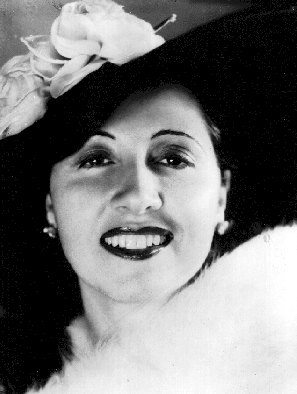
Ambas nasceram em Portugal, chegaram ao Brasil ainda crianças e encontraram seu lugar na história do cinema brasileiro. Foram ambas batizadas como Maria do Carmo, e ambas escolheram Carmen como nome artístico. Ambas partiram cedo demais. Elas são a atriz, produtora e diretora Carmen Santos e a multiartista Carmen Miranda – as duas Carmens do cinema brasileiro.

They were both born in Portugal, arrived in Brazil as children and found their place in Brazilian film history. They were both christened Maria do Carmo, and both chose Carmen as their stage name. They were both gone too soon. They are actress, producer and director Carmen Santos and entertainer Carmen Miranda – the two Carmens from Brazilian cinema.
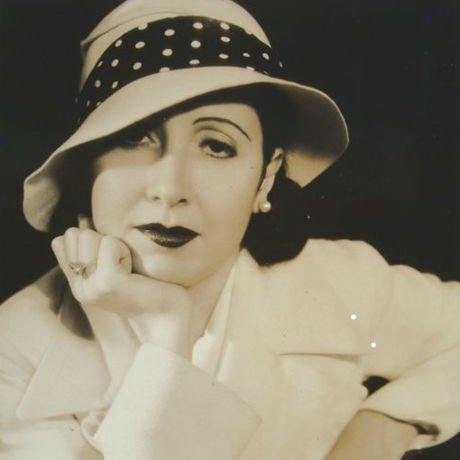

Maria do Carmo Santos Gonçalves nasceu na cidadezinha de Vila Flor em 1904 e chegou ao Rio de Janeiro aos oito anos de idade. Ainda adolescente, parou de estudar e arrumou um emprego para ajudar a família. Primeiro foi costureira numa loja, e depois se tornou vendedora. Em 1919, aos 15 anos, fez seu primeiro filme. A verdade sobre como ela foi descoberta é incerta: primeiro ela declarou à imprensa que foi descoberta imitando Mary Pickford na loja onde trabalhava. Em outra entrevista, disse que nunca havia ido ao cinema antes de fazer o filme, e fez o teste por diversão. A verdade é que ela conseguiu o papel principal em “Urutau” (1919), um filme que seria exibido poucas vezes por seu diretor, o americano William Jansen. Quando deixou o Brasil, Jansen levou consigo todas as cópias do filme.

Maria do Carmo Santos Gonçalves was born in the small town of Vila Flor in 1904 and arrived in Rio de Janeiro at age eight. Barely a teenager, she stopped studying and got a job to help her family. First she was a seamstress at a shop, and later became a saleswoman. In 1919, at age 15, she made her first film. The truth about how she was discovered is uncertain: at first she told the press that she was discovered while imitating Mary Pickford at the shop she worked in. In another interview, she said she had never been to the movies before starring in one, and made a screen test for fun. The truth is that she got the lead role in “Urutau” (1919), a film that would be screened only a few times by its maker, the American William Jansen. When he left Brazil, Jansen left with all the copies of the film.


Maria do Carmo Miranda da Cunha nasceu em Marco de Canaveses em 1909 e chegou ao Brasil quando tinha apenas um ano de idade. Já adolescente, empregou-se numa chapelaria. Em 1926 foi figurante em seu primeiro filme, “A Esposa do Solteiro”, de Carlo Campogalliani. Em 1929 começou a cantar no rádio e em 1930, depois de gravar o sucesso “Taí”, Carmen se tornou uma superestrela. Ela foi a primeira pessoa a assinar um contrato com uma estação de rádio no Brasil e logo se tornou a pessoa mais bem-paga no rádio. A transição para os filmes era um caminho natural, e entre 1932 e 1939 fez seis filmes, aparecendo como ela mesma na maioria. Infelizmente, quase todos estes filmes foram perdidos.

Maria do Carmo Miranda da Cunha was born in Marco de Canaveses in 1909 and arrived in Brazil when she was only one year old. As a teenager, she found work in a hat store. In 1926 she was an extra in her first film, Carlo Campogalliani’s “A Esposa do Solteiro” (“The Single Man’s Wife”). In 1929 she started singing on the radio and in 1930, after recording the hit song “Taí”, Carmen became a superstar. She was the first person to ever sign a contract with a radio station in Brazil and soon she became the highest-paid professional in radio. Her transition to the movies was a natural step, and between 1932 and 1939 she made six films, most of them appearing as herself. Unfortunately, almost all of these films are lost.


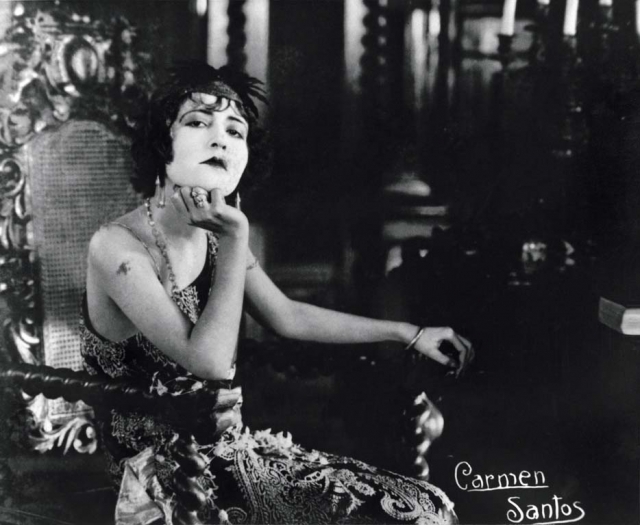
Carmen Santos chamou muito a atenção da imprensa com seu primeiro filme. A imprensa faria dela uma superestrela – sem que um único filme dela chegasse às telas na década seguinte. Seus dois esforços subsequentes seriam dirigidos por Leo Merten, um realizador tchecoslovaco: “A Carne” (1924) e “Mademoiselle Cinema” (1925). Em ambos, além de ser a estrela, Carmen era também produtora, pois havia fundado sua própria produtora, a Films Artístico Brasileiro, FAB. Ambos os filmes jamais são projetados, pois os negativos são destruídos por incêndios e acidentes no laboratório onde eram revelados e armazenados.

Carmen Santos garnered a lot of press attention with her first work. The press would make her a superstar – without a single film with her reaching the theaters in the following decade. Her next two efforts would be directed by Leo Merten, a filmmaker from Czechoslovakia: “A Carne” (“The Flesh”, 1924) and “Mademoiselle Cinema” (1925). In both, besides being the star, Carmen was also a producer, as she had founded her own production company, Films Artístico Brasileiro, FAB. Both movies never see the light of the day, destroyed by fires and accidents at the movie lab.

Em 1939, enquanto cantava no Cassino da Urca, Carmen Miranda atraiu a atenção do empresário da Broadway Lee Shubert, que a contratou para seu novo espetáculo. Carmen aceitou o convite de ir para a Broadway com uma condição: ela queria levar consigo o grupo musical Bando da Lua. Com tudo acertado, Carmen zarpou. Ela teve muito sucesso na Broadway, mas foi criticada por brasileiros: algumas pessoas achavam que ela estava apresentando uma imagem estereotipada do país e, quando ela voltou para fazer shows no Brasil, disseram que ela voltou americanizada.

In 1939, while singing at the Casino da Urca, Carmen Miranda called the attention of Broadway impresario Lee Shubert, who hired her for his new revue. Carmen accepted the invitation to go to Broadway, with one condition: she wanted to take with her the musical group Bando da Lua. When everything was settled, off went Carmen. She had a lot of success on Broadway, but was criticized by Brazilians: some people believed she was presenting a stereotyped image of the country and, when she returned for shows in Brazil, that she returned “Americanized”.


Carmen Santos poderia ter existido, mas ela já era uma estrela, graças à proximidade com o jornalista Pedro Lima, da revista Cinearte. Figurinha carimbada na revista, Carmen era sempre questionada sobre seus próximos projetos. Estes próximos projetos vieram quando ela conheceu o cineasta Humberto Mauro em Cataguases, Minas Gerais. Com Mauro ela finalmente apareceu nas telas: ela protagonizou quatro dos filmes do diretor, “Sangue Mineiro” (1929), “Favela dos Meus Amores” (1935), “Cidade Mulher” (1936) e “Argila” (1942).

Carmen Santos could have given up, but she was already a star, thanks to being close to journalist Pedro Lima from the magazine Cinearte. An habitué at the magazine, Carmen was always questioned about her next projects. The next projects came as she met filmmaker Humberto Mauro in Cataguases, Minas Gerais. With Mauro she finally appeared on screen: she starred in four of his films, “Sangue Mineiro” (“Blood from Minas”, 1929), “Favela dos Meus Amores” (“My Love, the Shanty Town”, 1935), “Cidade Mulher” (“Woman City”, 1936) and “Argila” (“Clay”, 1942).


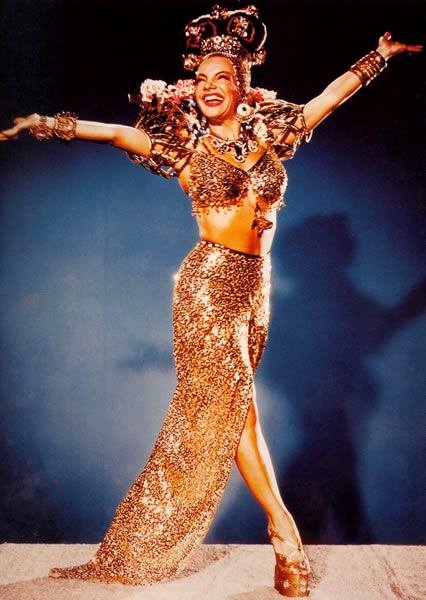
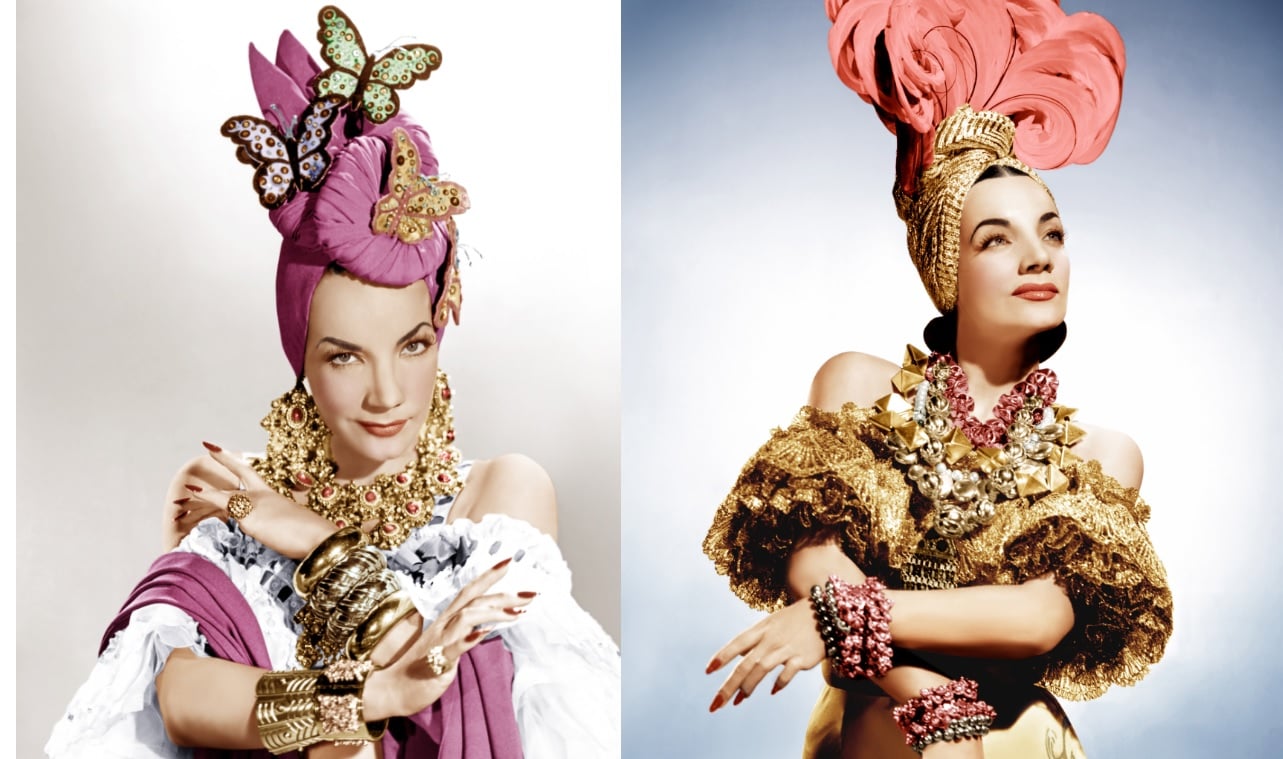
Carmen Miranda fez sucesso imediato na Broadway, e Hollywood era o próximo passo, naturalmente. A “Brazilian Bombshell” fez seu primeiro filme em Hollywood em 1940, “Serenata Tropical”. Durante a Segunda Guerra Mundial, e graças à Política da Boa Vizinhança, Carmen Miranda fez oito filmes. Em março de 1941, ela colocou as marcas de suas mãos e pés na calçada do Grauman’s Chinese Theater, tornando-se a primeira pessoa da América Latina a fazê-lo.

Carmen Miranda was an instant hit on Broadway, and Hollywood was the natural next step. The “Brazilian Bombshell” made her first film in Hollywood in 1940, “Down Argentine Way”. During World War II, and thanks to the Good Neighborhood Policy, Carmen Miranda made eight movies. In March of 1941, she imprinted her hand and feet at the Grauman’s Chinese Theatre, becoming the first Latin person to do so.


O projeto seguinte de Carmen Santos seria o melhor filme brasileiro já feito: o clássico cult “Limite” (1931), dirigido por Mario Peixoto, um cinéfilo que faria apenas este filme. Mesmo com um papel pequeno, Carmen rouba a cena neste filme silencioso tardio. Seu novo projeto, novamente com Peixoto, seria “Onde a Terra Acaba”, um filme deixado incompleto por Peixoto e finalizado por outro cineasta, Otávio Gabus Mendes.

Carmen Santos’s next project would be the best Brazilian film ever: the cult classic “Limite” (1931), directed by Mario Peixoto, a cinephile who would go on to make only this movie. Even with a small role, Carmen steals the scene in this late silent. Her next project, again with Peixoto, would be “Onde a Terra Acaba” (“Where land ends”), a film that was left incomplete by Peixoto, and finished by another filmmaker, Otávio Gabus Mendes.


Um dos maiores sucessos de Carmen Miranda foi “Entre a Loura e a Morena” (1943), de Busby Berkeley. Seu número “The Lady in the Tutti-frutti Hat” foi levado a outro nível graças ao talento de Berkeley para composições caleidoscópicas. O filme foi um grande sucesso de bilheteria e as imagens de frutas gigantes dançando ao redor de Carmen se tornaram icônicas. Em 1945 ela se tornou a mulher mais bem-paga dos Estados Unidos.

One of Carmen Miranda’s biggest hits was Busby Berkeley’s “The Gang’s All Here”, from 1943. Her routine “The Lady in the Tutti-frutti Hat” was enhanced by Berkeley’s caleidoscopic vision for musical numbers. The movie was a huge box-office hit and the images of giant fruits dancing around Carmen became iconic. In 1945 she became the highest paid woman in the whole United States.


Em 1934, com ajuda financeira do marido e consultoria técnica de Humberto Mauro, Carmen Santos funda uma nova produtora, primeiro chamada Brasil Vox Films e mais tarde Brasil Vita Films. Seu sonho é produzir, dirigir e protagonizar um filme sobre a Inconfidência Mineira, movimento de 1792 que buscou fazer do Brasil um país independente. Tal filme só seria finalizado em 1948.

In 1934, with the financial help of her husband and technical help from Humberto Mauro, Carmen Santos founds a new production company, first named Brasil Vox Films and later changed to Brasil Vita Films. Her dream is to produce, direct and star in a movie about the Inconfidência Mineira, a 1792 movement that sought to make Brazil an independent country. This film would only be finished in 1948.


Com o fim da Segunda Guerra Mundial, Carmen Miranda fez seus primeiros filmes em preto e branco. Este “rebaixamento” mostra que Hollywood estava menos interessada em fazer musicais para o público de casa e também menos interessada em promover uma Política da Boa Vizinhança com países latino-americanos. A carreira de Carmen estava em declínio, mas ela ainda trabalhava, agora livre do contrato com o estúdio. Ela ainda tinha sucesso gravando discos e fazendo aparições em clubes noturnos e na TV.

With the end of World War II, Carmen Miranda made her first black and white movies. This “demotion” shows that Hollywood was less interested in making musicals for the public in the home front and also less interested in promoting a Good Neighborhood Policy with Latin American countries. Her career was in decline, but she still worked, now free from her studio contract. She still enjoyed success recording discos and appearing in nightclubs and on TV.


Dois dos filmes de Carmen Santos com Humberto Mauro feitos nos anos 1930 foram sucesso de público e crítica, mas hoje estão perdidos. Seu épico “Inconfidência Mineiro” também está perdido. Sua produtora / estúdio sofreu com dificuldades financeiras. E ainda assim ela não desistia. A única coisa que impediu Carmen Santos de fazer mais pelo cinema brasileiro foi a morte: Carmen faleceu em 1952, aos 48 anos, depois de uma batalha contra o câncer.

Two of Carmen Santos’s films with Humberto Mauro made in the 1930s were hits with the public and the critics, but are now lost. Her epic “Inconfidência Mineira” is also lost. Her production company / studio faced financial problems. And yet she wouldn’t give up. The only thing that stopped Carmen Santos from doing more for Brazilian cinema was death: Carmen died in 1952, aged 48, after a battle against cancer.


Diz-se que Carmen Miranda usava barbitúricos e outros remédios para cumprir uma agenda extenuante como atriz e cantora. Ela passou por uma reabilitação mas não foi suficiente. Pouco depois de receber o convite para ter seu próprio programa de televisão, Carmen Miranda faleceu em 1955, aos 46 anos, de ataque cardíaco horas após sua última performance na televisão.

It’s said that Carmen Miranda used barbiturates and other medicines to be able to follow extenuating routines as actress and singer. She went to a detoxification but it wasn’t enough. Just after receiving the invitation to have a TV show all her own, Carmen Miranda died in 1955, aged 46, of cardiac arrest mere hours after her last performance on television.


Carmen Santos foi quase esquecida após sua morte. Ela foi casada apenas uma vez e teve dois filhos, um menino e uma menina. Em tempos mais recentes, Carmen está sendo redescoberta e ganhando o espaço que merece na história do cinema brasileiro: o lugar de uma verdadeira pioneira, que merece ser inspiração para todos nós.

Carmen Santos was nearly forgotten after her death. She was married only once and had two children, a boy and a girl. In recent times, Carmen is being rediscovered and given the place she deserves in Brazilian film history: the place of a true pioneer, who should be an inspiration to all of us.


Estima-se que sessenta mil pessoas foram ao funeral de Carmen Miranda no Brasil, e meio milhão viram o cortejo do corpo pelas ruas do Rio de Janeiro. Nunca esquecida, sempre um ícone, Carmen Miranda foi frequentemente imitada, mas nunca igualada.

It’s estimated that sixty thousand people were at Carmen Miranda’s funeral in Brazil, and half a million could see her body as it paraded Rio de Janeiro. Never forgotten, always an icon, Carmen Miranda was imitated often, but never equaled.


This is my contribution to the Third Luso World Cinema Blogathon, hosted by Beth Ann at Spellbound and me here at Crítica Retrô.

Friday, April 28, 2023

Aelita – A Rainha de Marte (1924) / Aelita, Queen of Mars (1924)

 ESTA CRÍTICA TEM SPOILERS / THIS REVIEW HAS SPOILERS


Marte! O sonho de muitos aventureiros, astronautas e lunáticos. Um local que já foi visitado, através do cinema: eu já escrevi sobre viagens cinematográficas para Marte antes, mas há uma lista infindável de filmes com passagem por Marte. Um destes filmes, feito na União Soviética na era muda, é o estranho filme de propaganda “Aelita – A Rainha de Marte”, de 1924.

Mars! The dream of many adventurers, astronauts and lunatics. A place that was already visited, through cinema: I’ve talked about movie trips to Mars before, but there is a never-ending list of films with a passage to Mars. One of these films, made in the Soviet Union in the silent era, is the strange propaganda flick “Aelita, Queen of Mars”, from 1924.

Em Marte, a rainha Aelita (Yuliya SoIntseva) vê num telescópio os habitantes do planeta vizinho, a Terra, com genuína curiosidade. Ela se apaixona por um dos terráqueos. Enquanto isso, na Terra, muitas pessoas em laboratórios recebem uma estranha mensagem: “Anta Odeli Uta”. Acreditando ser uma mensagem de Marte, o engenheiro Loss (Nikolai Tsereteli) decide construir uma nave espacial para visitar o planeta vermelho.

On Mars, Queen Aelita (Yuliya SoIntseva) sees throw a telescope the inhabitants of the neighboring planet, Earth, with genuine curiosity. She falls in love with one of them. Meanwhile, on Earth, several people in laboratories receive a strange message: “Anta Odeli Uta”. Believing it’s a message from Mars, the engineer Loss (Nikolai Tsereteli) decides to build a spaceship to visit the red planet.


Depois de seis meses trabalhando numa usina, Loss volta para casa e encontra a esposa Natasha (Valentina Kuindhzi) numa pose comprometedora com um canalha. Loss atira em Natasha e decide que é hora de ir para Marte. No planeta vermelho, ele encontra Aelita e causa profundo impacto com mudanças para os menos afortunados.

After six months working on a power plant, Loss returns home to find his wife Natasha (Valentina Kuindhzi) in a compromising pose with a scoundrel. Loss shoots Natasha and decides it’s the ideal time to go to Mars. On the red planet, he meets Aelita and has a deep impact on changing how things happen there for the less powerful.


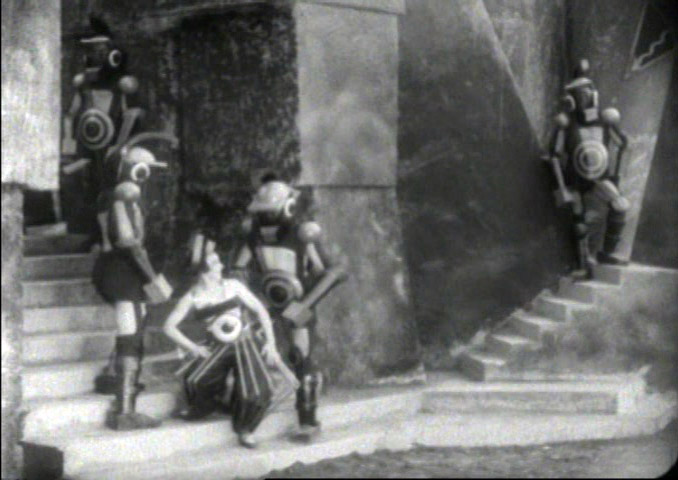
Marte em “Aelita” é futurístico, mas não muito. As roupas usadas pelos marcianos são brilhantes e curiosas – mais curiosas que belas. Não há equipamentos futurísticos mostrados além do estranho telescópio do começo do filme. É futurístico em Marte, mas a norma social vigente é construída em cima da escravidão.

Mars in “Aelita” is futuristic, but not so much. The clothes worn by the Martians are shiny and curious – more curious than charming. There is no futuristic gadget shown other than the weird-looking telescope from the beginning. It’s futuristic on Mars, but the societal norm is built on slavery.


Loss acredita que pode ajudar a “reconstruir a Rússida” com sua missão para Marte. A mensagem “Anta Odeli Uta” é recebida em quatro de dezembro de 1921: apenas quatro anos após a Revolução Russa. Neste sentido, “Aelita” é um tipo estranhíssimo de propaganda, pois os russos vão para Marte para ajudar a estabelecer uma União de Repúblicas Socialistas Soviéticas por lá.

Loss believes he can help “reconstruct Russia” with his mission to Mars. The message “Anta Odeli Uta” is received on December 4th, 1921: only four years after the Russian Revolution. In this sense, “Aelita” is the oddest kind of propaganda, as the Russians who go to Mars help establish a Union of Socialist Soviet Republics there.

Yuliya SoIntseva é mais lembrada hoje como a primeira mulher a ganhar o prêmio de Melhor Direção no Festival de Cinema de Cannes, com o filme “A Epopeia dos Anos de Fogo” (1961). Yuliya foi casada com o diretor Aleksandr Dovzhenko e estreou como assistente de direção no seu filme “Terra” (1930), hoje um clássico cult. “Aelita” foi o primeiro trabalho de Yuliya como atriz, e ela apareceu em outros sete filmes até 1930, quando fez a mudança para trás das câmeras. Yuliya dirigiu 14 filmes entre 1939 e 1980.

Yuliya SoIntseva is best remembered today as the first female filmmaker to win the Best Director Award at the Cannes Film Festival, with the film “The Story of the Flaming Years” (1961). Yuliya was married to the director Aleksandr Dovzhenko and debuted as assistant director in his film “Earth” (1930), now a cult classic. “Aelita” was Yuliya’s first role as an actress, and she appeared in seven more films until 1930, when she went behind the cameras for good. Yuliya directed 14 films between 1939 and 1980.

O director Yakov Protazanov estava voltando do exílio. Ele havia deixado o país durante a Revolução Russa, e fez filmes na França e na Alemanha enquanto estava exilado. Protazanov fazia filmes desde 1909, quando dirigiu seu primeiro curta, e escreveu boa parte dos filmes que dirigiu.

Director Yakov Protazanov was coming back from exile. He had fled the country during the Russian Revolution, and made films in France and Germany while on exile. Protazanov had been making films since 1909, when he directed his first short, and he had written a good amount of the movies he directed.

Algo que ninguém esperava: o filme é baseado num romance de Tolstoy. Mas não é Lev Tolstoy: o autor é Alexei Tolstoy, um homem provavelmente assombrado por ter o mesmo nome de um autor conhecidíssimo. Mais lembrado hoje exatamente por escrever o material que deu origem a “Aelita”, Alexei Tolstoy é também o autor de “The Golden Key, or Buratino’s Adventure”, algo que surgiu como um fanfic de Pinóquio.

Something nobody expected: the movie is based on a novel by Tolstoy. But it’s not Leo Tolstoy: the author is Alexei Tolstoy, a man probably plagued by having the same last name of a remarkable writer. Best remembered today exactly for writing the material that gave birth to “Aelita”, Alexei Tolstoy is also the writer of “The Golden Key, or Buratino’s Adventure”, something that was originally a Pinocchio fanfic.

Eu ouvi falar tanto de “Aelita” nos últimos anos e estava animada por finalmente poder conferir o filme. Infelizmente, minhas expectativas eram altas demais, e acabei a sessão frustrada. Eu esperava mais cenas em Marte e, o pior de tudo, o filme tem meu tipo mais odiado de Deus ex machina: a resolução “foi tudo um sonho” – neste caso, foi tudo um sonho acordado. Eu reconheço a importância de “Aelita” para a história da ficção científica e como o filme influenciou o retrato de Marte e dos marcianos em filmes subsequentes. Há muito para se gostar em “Aelita” – isto é, se você não estiver esperando um filme só sobre Marte. É possível fazer uma viagem melhor para Marte em outros filmes.

I’ve heard about “Aelita” so much over the years and was excited to finally see it. Unfortunately, my high expectations weren’t met and I left the session underwhelmed. I expected more scenes in Mars, and, the worst of all, the movie had my least favorite kind of Deus ex machina: the “it was all a dream” resolution – in this case, it was all a daydream.  I recognize the importance “Aelita” has in sci-fi history and in shaping the overall look of Mars and Martians in future films. There is plenty to like in “Aelita” – that is, if you don’t come expecting a huge Mars festival. You can take a better trip to Mars elsewhere..


This is my contribution to the Futurethon, hosted by Gill and Barry at Realweegiemidget Reviews and Cinematic Catharsis

Saturday, April 22, 2023

Nana (1926)


Eu sou apaixonada por muitas coisas, e o cinema francês é uma delas. Eu tento ver o máximo de filmes franceses que consigo, cubro estréias francesas para a Revista Eletrônica Ambrosia e aprendi mais que algumas palavrinhas em francês só assistindo a tantos filmes made in France. Eu aprendi muito sobre os mestres do cinema francês, e Jean Renoir é um deles. Por isso, não podia deixar passar a oportunidade de ver um dos primeiros filmes de Renoir e procurar o gênio em formação em “Nana” (1926).

I’m passionate about many things, and French cinema is one of them. I try to watch as many French films as I can, I cover French film premieres at the electronic magazine Ambrosia and I’ve learned more than a few French words by watching so many French films. I’ve learned a lot about the masters of French cinema, and Jean Renoir is one of them. So, I couldn’t say “no” to the opportunity of seeing one of Renoir’s early work, and finding the genius blossoming in “Nana” (1926).

Nana (Catherine Hessling) é descrita como “uma garota bonita, sem voz ou talento” mas ainda assim “a ídola do boulevard”. Ela enfeitiça todos os homens da plateia, do mais pobre ao mais rico, incluindo condes e jornalistas. Uma noite, depois do espetáculo, ela recebe no camarim o Conde Muffat (Werner Krauss), que se apaixona por ela. A Condessa Muffat (Jacqueline Forzane), por sua vez, está aproveitando a presença de Fauchery (Claude Autant-Lara), jornalista e dramaturgo.

 Nana (Catherine Hessling) is described as “a pretty girl, without a voice or talent”, but still “the idol of the boulevard”. She bewitches all men in the audience, from the poorest to the richest, and including counts and journalists. One night, after the show, she receives backstage the Count Muffat (Werner Krauss), who falls in love with her. Countess Muffat (Jacqueline Forzane), on the other hand, is enjoying the presence of Fauchery (Claude Autant-Lara), journalist and playwright.

De início, Nana recusa os avanços do Conde, mas ela muda de ideia quando perde o cobiçado papel da Pequena Duquesa numa peça para outra atriz, Rose Mignon (Jacqueline Ford). Nana pede que o Conde intervenha, e ele decide investir na peça contanto que Nana tenha o papel principal. Fauchery, que escreveu a peça, não fica feliz com a mudança, mas tem de concordar com o que o dono do teatro, Bordenave (Pierre Lestringuez), decidiu na negociação com o Conde. A peça é um fracasso e Nana abandona o teatro para se tornar cortesã. Em vez de aplausos, agora ela vai colecionar amantes.  

 At first, Nana refuses the Count’s approach, but she changes her mind when she loses the coveted role of The Little Duchess in a play to another actress, Rose Mignon (Jacqueline Ford). Nana asks the Count for intervention, and he decides to invest in the play as long as Nana plays the lead. Fauchery, who wrote the play, is not happy with the change, but has to agree with what the theater owner, Bordenave (Pierre Lestringuez), has decided in a negotiation with the Count. The play is a failure and Nana abandons the theater to become a courtesan. Instead of applauses, now she will collect lovers.

Catherine Hessling era esposa e musa de Jean Renoir. Não é um simples caso de nepotismo: Hessling é muito boa, seja seduzindo um homem, sofrendo ou dançando can-can. Sempre com olhos muito maquiados e boca pintada em formato de coração, Hessling podia interpretar personagens trágicas - como em “A Dama da Água” (1925) - e fez 14 filmes em uma carreira que durou de 1925 a 1925, quando, já separada de Renoir, ela se aposentou.

Catherine Hessling was Jean Renoir’s wife and muse. It’s not simply a case of nepotism: Hessling is really good, no matter if she’s seducing a man, suffering or dancing the can-can. Always with heavy eye makeup and heart-shaped lips, Hessling could play well tragic characters - like in “Whirlpool of Fate” (1925) - and appeared in 14 movies in a career that lasted 10 years, from 1925 to 1935, when, already divorced from Renoir, she retired.

Nos créditos é dito que o filme foi inspirado no romance de Emile Zola. O IMDb lista 13 adaptações da “Nana” de Zola, da era muda aos dias de hoje, incluindo longas-metragens, curtas e séries de TV. O roteiro do filme de Renoir foi escrito por Pierre Lestringuez, que também interpreta Bordenave. Tendo começado suas carreira como roteirista com a estreia de Renoir na direção, “A filha da Água”, Lestringuez escreveu 25 roteiros até sua morte em 1950. Sua carreira como ator foi bem mais curta, sendo ele creditado em apenas seis performances em frente às câmeras.

In the credits it’s said that the film was inspired by the novel by Emile Zola. IMDb lists 13 adaptations of Zola’s “Nana”, from the silent era to nowadays, including features, shorts and TV series. The scenario for Renoir’s film was written by Pierre Lestringuez, who also plays Bordenave. Starting his career as a screenwriter with Renoir’s debut “Whirlpool of Fate”, Lestringuez went on to write 25 scenarios until his death in 1950. His career as an actor was much shorter, as he’s credited with only six performances in front of the camera.

“Nana” se passa no final da década de 1860, o que pode ser percebido pelas roupas usadas pelas mulheres. O figurino é decente, mas os cenários luxuosos são o verdadeiro destaque. Pode se tratar de um passado recente - pelo menos o era na década de 1920 -, mas algumas coisas não mudaram, como por exemplo o medo da varíola.

 “Nana” is set in the late 1860s, which can be told by the clothes the women are wearing. The clothes are nice, but the lavish sets are truly outstanding. It may be a near past - near to 1920s, that is - but some things remained the same, like the fear of smallpox.

A parte com Nana no teatro é mais interessante que seu tempo como cortesã. Há também uma subtrama sobre apostas em corridas de cavalos que deveria ser emocionante, mas não é. Infelizmente, a parte no teatro é a mais curta, o que faz o filme parecer muito longo - e é realmente longo, com quase três horas de duração. Pode ser descrito como um Renoir ousado, mas ainda não o Renoir genal que conhecemos mais tarde em sua carreira.

The bit with Nana in the theater is more interesting than her times as a courtesan. There is also a whole subplot about bets in horse races that is supposed to be exciting, but isn’t really. Unfortunately, the theater bit is the shortest, which makes the film feel too long - and it’s long indeed, as it’s nearly three hours long. It can be described as a bold Renoir, but not yet the genius Renoir we all knew later in his career.

Related Posts Plugin for WordPress, Blogger...