} Crítica Retrô: 2025

Tradutor / Translator / Traductor / Übersetzer / Traduttore / Traducteur / 翻訳者 / переводчик

Monday, December 29, 2025

Retrospectiva Retrô 2025 / 2025: Year in Review


Mais um ano chega ao fim e outro está prestes a começar! É hora de fazer planos para melhorar, mas também olhar para trás e reconhecer as coisas boas que aconteceram neste ano. Entre as coisas boas, estão os bons filmes, e aqui listo os favoritos mês a mês. Escolhi apenas filmes que não tinha visto antes, pois estou revendo diversos clássicos para meu próximo livro. E sim, o livro está entre meus planos para 2026. Agora é hora de olhar para 2025:

Another year is over and a new one is about to begin! It’s time to make plans for a better year, but also to look back and recognize the good things that happened this year. Among the good things, there are the good movies, listed here month by month. I chose only movies I hadn’t seen before, because I’m rewatching several classics for my upcoming book. And yes, the book is among my plans for 2026. Now to a look back to 2025:


Janeiro: O Auto da Compadecida 2 (2024)

Minha primeira ida ao cinema este ano foi para ver um filme muito esperado: a continuação, 25 anos depois, de uma das obras mais amadas do cinema brasileiro. Fui de mente aberta e não me decepcionei!  “O Auto da Compadecida 2” não é uma continuação per se, mas uma homenagem ao primeiro filme e por isso foi um grande acerto.

January: A Dog’s Will 2 (2024)

My first trip to the movie theater this year was to see a film I had been waiting for: the sequel, made 25 years after the first one, of a beloved Brazilian film. I went with an open mind and open heart and wasn’t disappointed! “A Dog’s Will 2” isn’t really a sequel, but a tribute to the first movie, a choice that proved to be the right one.

Fevereiro: No país das Amazonas (1922)

Um filme feito para substituir o roubado “Amazonas, o Maior Rio do Mundo” (1918), é uma peça de propaganda e uma janela para o passado. O filme de 1918, hoje redescoberto e restaurado, entrou no meu Top 12 de 2024, e seu substituto, mais longo mas igualmente rico dos pontos de vista imagético e narrativo, é um deleite para os olhos e uma lição de História muito agradável. Mais sobre o filme AQUI.

February: In the land of the Amazons (1922)

A movie made to replace the stolen “Amazon, the Biggest River of the World” (1918), this is a piece of propaganda and a window to the past. The 1918 movie, now rediscovered and restored, was in my Top 12 from 2024, and its replacement, longer but equally rich from both imagetic and narrative points of view, is easy on the eyes and is also a very pleasant History lesson. More about the movie HERE.

Março: Cidade dos Ventos (2008)

Costumo não gostar muito de filmes “coming of age”, por não me ver retratada neles, talvez por ser autista. Também não encontrei identificação neste “coming of age” ambientado na derrocada da União Soviética, mas foi um deleite assistir ao amadurecimento dos personagens.

March: Vanished Empire (2008)

I’m not very fond of “coming of age” movies as I usually don’t see myself in them, probably because I’m autistic. I also haven’t seen myself in this “coming of age” set in the downfall of the Soviet Union, but it was great to watch the characters mature.

Abril: Saneamento Básico, o Filme (2007)

Há muito tempo eu não ria tanto num filme! Meu interesse veio após um Tweet do Jornal Nota e me apaixonei por esta comédia logo nos primeiros minutos. A história de um grupo de pessoas comuns que quer dinheiro para fazer uma fossa mas só encontram um edital para fazer um filme nasce como uma ideia genial e original. Eles terão de fazer o filme, apesar de serem completamente leigos em tudo que envolve cinema. Mais sobre o filme AQUI.

April: Basic Sanitation, the Movie (2007)

It has been a long time since I laughed so much with a movie! My curiosity came from a tweet and I fell in love with this comedy in the opening minutes. The story is of a group of regular people who want money for a sewage system but all they can find is a call to make a movie. It’s a genius original idea. They have to make a movie, even though they know nothing about moviemaking.

Maio: Sempre Garotas (2024)

Quem diria que viria mais um coming of age para minha listinha? O que permaneceu de “Sempre Garotas” foi o retrato da mãe da protagonista. A menina está passando por um crescimento e amadurecimento, inclusive sexual, mas a mãe não assiste a tudo de braços cruzados. Ela é uma personagem complexa, também com desejos e necessidades. Mais sobre o filme AQUI.

May: Girls Will Be Girls (2024)

Who would have told me that another coming of age would make my list? What remained from “Girls Will Be Girls” was the portrayal of the lead’s mother. The girl is growing up, with sexual maturity included, but the mother is not there watching everything with her arms crossed. She is a complex character, with desires and needs. 

Junho: Homem com H (2025)

Num mês com ótimos filmes, incluindo “Tatami” (2023) e a comédia romântica soviética “Romance de Escritório” (1977), meu favorito foi um filme muito aguardado, mais que uma cinebiografia: uma belíssima homenagem a um dos maiores artistas do Brasil. Jesuíta Barbosa, canceriano arretado, se metamorfoseia e está perfeito no papel principal.

June: Latin Blood - The Ballad of Ney Matogrosso (2025)

In a month with great films, such as “Tatami” (2023) and the Soviet rom-com “Office Romance” (1977), my favorite was a movie I’d been waiting for, more than a biopic: a gorgeous tribute to one of the biggest artists in Brazil. Jesuíta Barbosa, with the same star sign as me, goes through a metamorphosis and is perfect in the lead role.

Julho: Compasso de Espera (1969)

Filme apresentado para mim através de um curso muito proveitoso sobre racismo no cinema e na literatura, ele conversa com “Adivinhe Quem Vem para Jantar” (1967), mas quem julga aqui o casal interracial são todos, inclusive desconhecidos. O Mito da Democracia Racial é brilhantemente destruído por uma sequência de entrevista no começo do filme e por si só já vale a sessão inteira.

July: Compasso de Espera (1969)

This film was introduced to me by a very good course I took about racism in cinema and literature. It establishes a dialogue with “Guess Who’s Coming to Dinner” (1967), but here the interracial couple is judged by all, even people who don’t know them. The myth of racial democracy - that says that people from all “races” live together peacefully in Brazil - is beautifully destroyed in an interview sequence in the beginning and this alone is worth the admission price.

Agosto: Guerra Civil (2024)

Muitas pessoas não gostaram deste filme, mas eu gostei. E o que eu mais gostei foi que apresentaram uma história de guerra diferente, ao acompanhar fotógrafos de guerra, em geral vítimas esquecidas dos conflitos. Temas como lealdade e sacrifício, tão comuns nos filmes de guerra, estavam aqui também presentes. Outro tema importante foi o conflito geracional, entre a repórter veterana e calejada e a fotógrafa novata cheia de sonhos e ambição.

August: Civil War (2024)

Many people disliked this movie, but I enjoyed it. And what I liked the most is that it’s about a different view on wars, as the movie follows war photographers, who are usually the forgotten victims of the conflicts. Themes such as loyalty and sacrifices, so common in war movies, were here too. Another important theme was the generational conflict, between the veteran reporter with trauma and the newcomer who is full of dreams and ambition.

Setembro: O Último Episódio (2025)

No último dia do mês de setembro, assisti ao melhor do mês: mais um triunfo da produtora Filmes de Plástico, “O Último Episódio”. Uma espécie de coming of age - olha ele aí de novo!  - que surfa bem na onda da nostalgia, escrevi mais e melhor sobre ele AQUI.

September: O Último Episódio (2025)

On the last day of September, I watched the best of the month: another triumph by the production company Filmes de Plástico, “O Último Episódio”. A kind of coming of age - here’s it again! - that is nostalgic and magic.

Outubro: Totto-Chan: A Menina na Janela (2023)

Uma raridade: não saiu da Giornate del Cinema Muto o meu favorito de outubro, mas sim de uma cabine de imprensa, vista alguns dias antes de o festival começar. Este filme traz frescor a um tema praticamente batido - a Segunda Guerra Mundial - ao contar uma história real tirada de um livro best-seller. Focar numa infância durante a guerra é verossímil e acertado. Escrevi sobre este filme AQUI.

October: Totto-Chan: The Little Girl at the Window (2023)

A rarity: my favorite film from October didn’t come from the Giornate del Cinema Muto. It came from a screener seen a few days before the festival started. This film is a fresh take in a much explored theme - World War II - as it tells a real story directly from a best-selling book. Focusing on a childhood during the war is believable and a good choice.

Novembro: O Agente Secreto (2025)

O filme mais premiado da edição de 2025 do Festival de Cannes veio do Brasil e é uma obra-prima. Eu já sabia que esse badalado filme seria o melhor do mês, e minha ida ao cinema, ainda que acompanhada de apenas duas outras pessoas na sessão, não me decepcionou.

Wagner Moura interpreta Marcelo, de volta ao Recife para conseguir um visto e ir com o filho para o exterior. É 1977 e Marcelo está sendo perseguido pela ditadura militar brasileira. E aqui vale notar um detalhe muito importante: ele não é perseguido por sua posição política, mas sim por uma pontual desavença com um homem poderoso. Um dos pontos altos deste grande filme é quando aparece Dona Sebastiana (Tânia Maria) ao lado dos “refugiados” que ela abriga. 

November: The Secret Agent (2025)

The most awarded movie from the 2025 Cannes Film Festival comes from Brazil and it’s a masterpiece. I already knew that this would be the best of the month, and as I went to the movie theater, even though it was a session with only two other people, it didn’t let me down.

Wagner Moura plays Marcelo, back at Recife to get a visa and go with his son to live abroad. It’s 1977 and Marcelo is a target for the Brazilian military dictatorship. And here an important detail: he didn’t become a target because of his political leaning, but because of a small misunderstanding with a powerful man. One of the climaxes in this great movie is the presence of Dona Sebastiana (Tânia Maria) next to her “refugees”. I wrote about the context and the small details from the movie HERE.

Dezembro: Lumière! A Aventura Continua (2024)

Um dos filmes mais lindos que vi nos últimos anos, “Lumière! A Aventura Começa” de 2016 mereceu uma crítica no Letterboxd em que disse que meu desejo era que a sessão nunca acabasse. Bem, pelo menos agora ela ganhou uma parte 2.

O filme é composto por 120 curtas dos irmãos Lumière, feitos há mais de 120 anos. Os comentários de Thierry Frémaux da Cinemateca Francesa não apenas dão contexto, mas chamam a atenção para detalhes que poderiam passar despercebidos.

Nesta sequência, o fio condutor é justamente a trajetória dos Lumière, que prenunciam Rossellini e a Nouvelle Vague. Dos primeiros filmes posados aos primeiros making-offs, essa foi mais uma jornada extraordinária.

December: Lumière! The Adventure Continues (2024)

One of the most beautiful movies I’ve watched in the past few years, “Lumière!” from 2026, deserved a review on Letterboxd in which I said my wish was for the film to never be over. Well, at least now I got a sequel.

The movie is made of 120 shorts from the Lumière brothers, made over 120 years ago. The comments by Thierry Frémaux from the French Cinematheque give not only context, but call attention to details that might have been overlooked otherwise.

In this sequel, the link is the Lumières’ trajectory, the seed for Rossellini and the Nouvelle Vague. From the first acted movies to the first making-offs, this was another extraordinary journey.

Menção honrosa: Câncer com ascendente em virgem (2025)

Pelas comunicações que recebia da assessoria de imprensa, praticamente acompanhei todo o feitio deste filme, o que me deixou curiosa para assistir. Como mulher a pouco tempo da primeira mamografia, sei o peso que um diagnóstico de câncer de mama tem, e me imaginar na situação da protagonista é angustiante. Nela, aliás, encontrei ecos de minha própria família: professora de matemática como minha mãe, vivendo na mesma casa com avó e filha, como é na minha casa. Com o filme, aprendi que o câncer não apaga a totalidade de quem aquela mulher é, e pode ser algo angustiante, sim, e que toda ajuda é bem-vinda, o que me preocupa enquanto mulher sem rede de apoio. Mas é uma história leve, de esperança. Daquilo que mais precisamos em 2025 e adiante.

Honorable mention: Cancer with Virgo rising (2025)

Through the emails from the press I basically followed closely the making of this movie, and that made me curious to check it out. As a woman nearing the age of the first mammogram, I know the weight of a breast cancer diagnosis, and imagining myself in the lead’s shoes is exhilarating. In her, by the way, I found echoes of my own family: she is a math teacher like my mom,  she lives with her mother and her daughter, like us. With the movie, I learned that cancer can’t erase the whole of a woman, and it can be exhilarating, but all help is welcome, something that bothers me as a woman without a support network. But it’s a light story, one of hope. Hope, what we need the most in 2025 and beyond.


E, claro, meu maior trunfo de 2025: tem começado o blog Lost and Found Films! Se você lê em inglês, visite-o AQUI.

And, of course, my Top achievemente in 2025: starting the Lost and Found Films blog! Have you visited it yet? You can do it HERE.

Thursday, December 18, 2025

Banzé no Oeste (1974) / Blazing Saddles (1974)


Quando foi exibido pela primeira vez na TV, assisti à animação “O Lendário Cão Guerreiro” (2022), sobre um cão que quer se tornar samurai numa terra onde só há gatos. Fiquei surpresa ao ver o nome de Mel Brooks como produtor executivo, mas não deveria me surpreender: a premissa da animação é a mesma de seu clássico “Banzé no Oeste” (1974). Vejamos como a ideia foi executada originalmente.

When it was first shown on TV, I watched the animation “Paws of Fury: The Legend of Hank” (2022), about a dog who wants to become a samurai in a land where there are only cats. I was surprised to see Mel Brooks’ name as executive producer, but I shouldn’t have been: the premise of the animation is the same as his classic “Blazing Saddles” (1974). Let’s take a look at the original idea.

Os créditos surgem por cima da imagem de um deserto, com os nomes mudando conforme um chicote estala. O filme começa com a construção de uma estrada de ferro que deve cruzar a cidade de Rock Ridge, o que alimenta a ambição do advogado e assistente do governador, Hedley Lamarr (Harvey Corman).

The credits appear over the image of a desert, with the names changing at the noise of a whip. The movie begins with the building of a railroad that shall cross the town of Rock Ridge, something that feeds the ambition of attorney and assistant to governor, Hedley Lamarr (Harvey Corman).

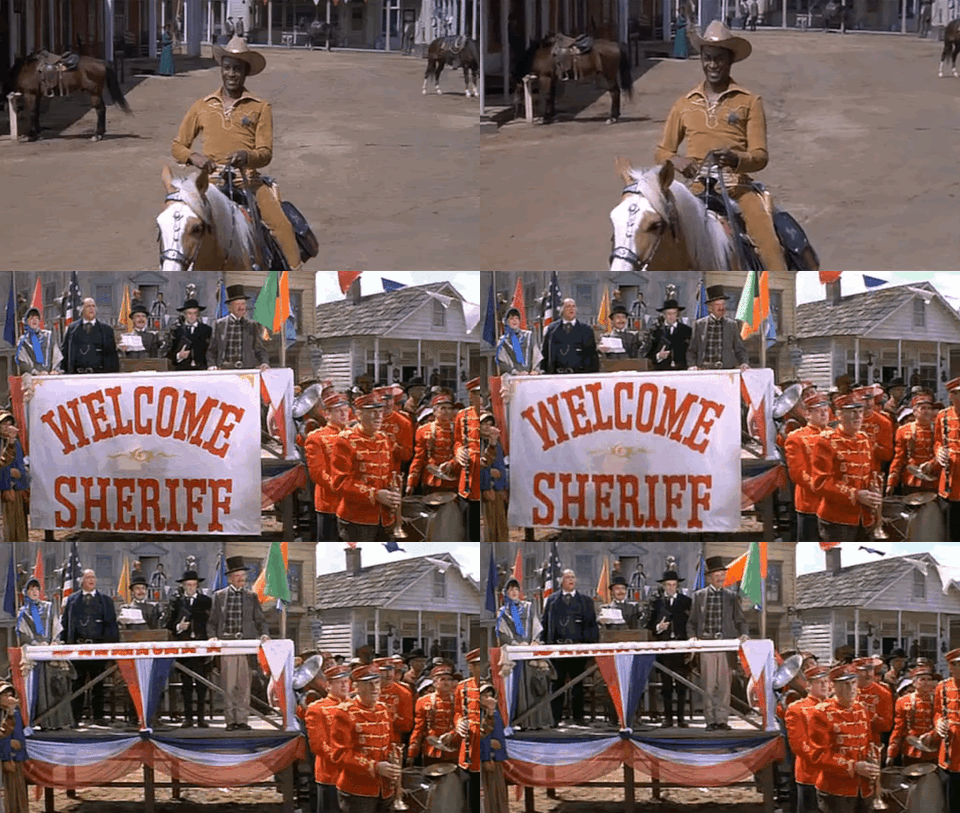
Rock Ridge está tomada pela criminalidade. A população clama por um novo xerife que deve ser mandado pelo governador, interpretado por Mel Brooks. O governador passa a missão para Hedley que, querendo tirar vantagem, escolhe o pior xerife possível, um homem negro chamado Bart (Cleavon Little).

Rock Ridge is taken by criminality. The population asks for a new sheriff to be sent by the governor, played by Mel Brooks. The governor gives the mission to Hedley who, wanting to take advantage, chooses the worst possible sheriff, a black man named Bart (Cleavon Little).

A cidade, habitada totalmente por pessoas brancas, fica horrorizada com a chegada do novo xerife. Enquanto eles desmontam a festa de boas-vindas que organizaram e escrevem cartas iradas para o governador, Bart fica amigo de um preso chamado Jim (Gene Wilder), mas anteriormente conhecido como Waco Kid. Jim diz que “eu devo ter matado mais pessoas que Cecil B. DeMille” - uma frase que me fez rir alto. Bart e Jim se tornam parceiros. 

The all-white town is horrified when the new sheriff arrives. While they dismantle the welcome party they organized and write irate letters to the governor, Bart befriends a prisoner named Jim (Gene Wilder), but formerly known as Waco Kid. Jim says “I must have killed more men than Cecil B. DeMille” - a sentence that made me laugh out loud. Bart and Jim become partners.

Para desmoralizar Bart e esvaziar a cidade, Hedley manda o troglodita Mongo (Alex Karras), mas o novo xerife consegue prender o homem. Já que a Fera falhou, é hora de tentar com a Bela. Hedley recruta a cantora e dançarina Lili von Shtupp (Madeline Kahn) para seduzir Bart.    

To demoralize Bart and empty the city, Hedley sends the troglodyte Mongo (Alex Karras), but the new sheriff manages to arrest the man. Since the Beast failed, it’s time to try with the Beauty. Hedley recruits the singer and dancer Lili von Shtupp (Madeline Kahn) to seduce Bart.

Mel Brooks dirige, escreve, tem dois papéis e escreve as letras das músicas de “Banzé no Oeste”. Na época, ele já havia ajudado a criar uma das minhas séries de TV favoritas, “Agente 86”, e feito grandes filmes como “Primavera para Hitler” (1967). Naquele mesmo ano ele também faria “O Jovem Frankenstein”. Com dois clássicos estreando no mesmo ano, Brooks cimentou sua reputação como mestre da comédia. 

Mel Brooks directs, writes, has two roles and writes the lyrics for the songs in “Blazing Saddles”. At the time, he had already helped create one of my favorite TV shows, “Get Smart”, and done great movies such as “The Producers” (1967). That same year he’d also make “Young Frankenstein”. With two classics releasing in the same year, Brooks cemented his reputation as a master in comedy.

Há piadas flatulentas, gags visuais, trocadilhos, uso cômico de músicas, muitos jogos e palavras que infelizmente se perdem na tradução - como o desejo de dar ao novo xerife “a Laurel and a Hardy handshake”. Há até mesmo uma piada com a Ku Klux Klan, quando Bart e Jim se vestem como membros da KKK e entram numa fila de bandidos. Quando eles precisam falar de suas experiências na vilania, eles dizem que já provocaram “um estouro da boiada… no Vaticano!” 

There are fart jokes, visual gags, puns, funny musical clues, varied plays with words that unfortunately are lost in translation - such as giving the new sheriff “a Laurel and a Hardy handshake”. There is even a joke about the Ku Klux Klan, when Bart and Jim dress up as members of the KKK and enter a line of bandits. When they have to talk about their experiences in villainous acts, they say “stampeding cattle… through the Vatican!”

Há uma excelente gag envolvendo música diegética e não-diegética, conceitos que talvez você não conheça. Música diegética é tocada dentro do mundo do filme, por isso os personagens também podem ouvi-la, enquanto música não-diegética é a trilha que só a plateia pode ouvir. A gag acontece quando o novo xerife está a caminho de Rock Ridge e nós ouvimos uma animada música instrumental. Conforme ele cavalga, saímos do plano detalhe para ver o corpo todo dele e depois o ambiente, quando finalmente vemos que a música está sendo tocada ao vivo por uma orquestra! 

There is a great gag involving diegetic and non-diegetic music, a concept you might not know. Diegetic music is played inside the film world, thus heard also by the characters, while non-diegetic music is the score only the audience can hear. The gag happens when the new sheriff is going to Rock Ridge and we listen to an exciting instrumental song. As he rides, we go from the focus on the details to his whole body and then the environment, when we finally see that the song is being played live by an orchestra!

O papel principal aqui é o ponto alto da carreira de Cleavon Little. Um experiente ator da Broadway, ele teve a ajuda de seu novo amigo Gene Wilder para interpretar em frente às câmeras. Ele continuaria fazendo mais peças, filmes e séries de TV, ganhando alguns prêmios numa carreira que durou 25 anos. 

This leading role is the highest point in the career of Cleavon Little. A seasoned Broadway actor, he had the help of his new friend Gene Wilder to perform in front of a camera. He would go on to appear in more plays, films and TV shows, grabbing a few awards for a career that lasted 25 years.

Mais do que uma comédia hilária, “Banzé no Oeste” é uma história sobre vencer preconceitos e o poder do trabalho em equipe. Foi, além disso, uma ótima maneira de terminar minhas resoluções de Ano Novo de 2025. Sou uma pessoa mais feliz por ter visto e me divertido com este filme.

More than a hilarious comedy, “Blazing Saddles” is a tale of overcoming prejudice and the power of team work. It was, moreover, a great way to end my 2025 New Year’s resolution. I’m a happier person for having watched and laughed with this movie.

Wednesday, November 26, 2025

Os Abutres Têm Fome (1970) / Two Mules for Sister Sara (1970)


A expectativa de vida vem crescendo e hoje temos muitas pessoas vivendo para além dos 90 anos de idade, incluindo algumas pessoas famosas. Algumas delas ainda estão trabalhando, e outras aproveitando a aposentadoria. Clint Eastwood pertence ao primeiro grupo, de nonagenários ativos, enquanto Shirley MacLaine pode não ser tão ativa quanto ele, com sua última aparição tendo sido em “Only Murders in the Building”. Cinquenta e cinco anos atrás, eles formaram uma estranha dupla no faroeste “Os Abutres Têm Fome”.

Life expectancy is growing and now we have many people living over the barrier of 90 years old, including some famous people. Some of them are still working, some are enjoying their retirement. Clint Eastwood belongs to the first group, of active nonagenarians, while Shirley MacLaine may not be as active as he is, but she still acts, with her last appearance being in “Only Murders in the Building”. Fifty-five years ago, they formed an unlikely duo in the western “Two Mules for Sister Sara”.

Numa terra cheia de animais peçonhentos e esqueletos, um caubói resgata uma mulher de um trio que queria estuprá-la e matá-la. O caubói é Hogan (Clint Eastwood) e a mulher, surpreendendo a ele e ao público, é uma freira chamada Irmã Sara (Shirley MacLaine). A freira está em fuga: fugindo do exército francês porque eles descobriram que ela estava ajudando o exército mexicano.  

In a land full of poisonous animals and skeletons, a cowboy rescues a woman from a trio that wanted to rape and kill her. The cowboy is Hogan (Clint Eastwood) and the woman, a surprise for him and the audience, is a nun called Sister Sara (Shirley MacLaine). The nun is on the run: she’s running away from the French army because they found out that she was helping the Mexican army.

Esta dupla estranha bola um plano: ele quer ir até Chihuahua, de onde ela partiu, e destruir o quartel-general francês que fica lá. Eles têm oito dias para executar o plano. Isso muda quando eles ficam sabendo de um trem com carregamento para os franceses e decidem, juntos, explodir uma ponte. Mas não se engane: isso é só uma pequena mudança de rota!

This unlikely duo comes up with a plan: he wants to go to Chihuahua, where she came from, and destroy the French headquarters there. They have eight days to execute the plan. This shifts when they learn about a train carrying goods for the French, and instead decide to, together, blow up a bridge. But don’t be fooled: this is just a small detour!

Hogan pensa que uma mulher como Sara ser freira é um “desperdício” e, uma vez bêbado, confessa seus sentimentos pela Irmã Sara numa sequência tensa na qual pensamos que ele vai beijá-la, afinal, eles estão perigosamente perto. Mas ela é uma mulher de fé e uma mulher razoável: ela sabe que as palavras dele podem vir do coração, mas só saíram por causa do álcool. 

Hogan thinks that a woman like Sara being a nun is a “waste” and, when drunk, confesses his feelings for Sister Sara in a tense sequence in which we think he will kiss her, after all, they’re dangerously close. But she is a woman of faith and also a reasonable woman: she knows his words may come from his heart, but we’re only enabled by the alcohol.

Uma atriz proeminente desde o fim dos anos 1950, Shirley MacLaine vê seu nome primeiro nos créditos e após ela, mas ainda acima do título, vem Clint Eastwood. Em “Os Abutres Têm Fome”, Shirley fala inglês, obviamente, mas também um pouco de francês e espanhol com forte sotaque. O papel havia sido oferecido primeiro para Elizabeth Taylor, que o recusou, e Shirley MacLaine não se deu bem com o diretor Don Siegel. 

A prominent actress since the late 1950s, Shirley MacLaine is first billed and behind her, but still above the title, comes Clint Eastwood. In “Two Mules for Sister Sara”, Shirley speaks English, of course, but also a bit of French and Spanish with a heavy accent. The role was first offered to Elizabeth Taylor, who turned it down, and Shirley MacLaine didn’t get along with director Don Siegel.

A música é do grande Ennio Morricone, que na época já tinha carreira sólida. Ele fez a trilha de mais de 550 filmes e séries de TV, começando sua carreira no cinema em 1961. Sobre seu começo, ele declarou: “Meus primeiros filmes foram comédias leves ou filmes que época que precisavam de trilhas simples que eram facilmente criadas, um gênero que eu nunca abandonei por completo quando fui trabalhar em filmes muito mais importantes com grandes diretores”. Como sempre, sua trilha é um ponto alto em “Os Abutres Têm Fome”.

The music is by the great Ennio Morricone, who at the time had already a solid career. He scored more than 550 films and TV shows, starting his film career in 1961. He talked about his beginnings: "My first films were light comedies or costume movies that required simple musical scores that were easily created, a genre that I never completely abandoned even when I went on to much more important films with major directors". As always, Morricone’s score is a high point in “Two Mules for Sister Sara”.

O diretor Don Siegel começou sua carreira no cinema como bibliotecário no acervo da Warner Bros e aprendeu a editar no estúdio. Ele trabalhou em diversos gêneros, tanto em filmes B como em “filmes A”. Sua primeira colaboração com Clint Eastwood foi em”Meu Nome é Coogan” em 1968. Juntos eles fizeram cinco filmes e o faroeste de Clint “Os Imperdoáveis”, que estreou um ano após a morte de Siegel, foi dedicado ao mentor.

Director Don Siegel started his film career as a film librarian at Warner Bros and learned editing there. He worked in a plethora of genres, both B-movies and A-listers. His first collaboration with Clint Eastwood was in “Coogan’s Bluff” in 1968. Together they made five movies and Clint’s western “Unforgiven”, released one year after Siegel’s death, was dedicated to his mentor.

“Os Abutres Têm Fome” foi filmado no México, e isso pode ser notado pelos créditos, com todos os latinos em papéis coadjuvantes. A história se passa quando os franceses estavam forçando para que o México se tornasse colônia francesa, após a Guerra Civil Americana. A Irmã Sara está ajudando os Juaristas, isto é, os seguidores do político Benito Juárez García, que se tornaria o primeiro presidente indígena do México. Como sempre, cinema também é cultura!

“Two Mules for Sister Sara” was filmed in Mexico, and a hint is in the credits with all the Latinos in supporting roles. The story is set when the French were forcing Mexico to become their colony following the American Civil War. Sister Sara is aiding the Juaristas, that is, the followers of politician Benito Pablo Juárez García, who would become the first Indigenous president of Mexico. As always, cinema is also culture!

Não importa se você acredita em milagres como a Irmã Sara ou apenas em acidentes como Hogan: se você gosta de faroestes, e faroestes dirigidos por mestres como Don Siegel, “Os Abutres Têm Fome” deveria estar no seu radar. Já que todo mundo tem direito de ser um otário uma vez, não desperdice sua chance ao deixar passar este filme!

No matter if you believe in miracles like Sister Sara or only in accidents like Hogan: if you like westerns, and westerns directed by masters such as Don Siegel, “Two Mules for Sister Sara” should be in your radar. Since everybody has the right to be a sucker once, don’t waste your chance by not watching this movie!

Monday, November 10, 2025

Häxan - A Feitiçaria Através dos Tempos (1922) / Häxan (1922)


Alguns meses atrás, investiguei a carreira do diretor dinamarquês Urban Gad e mencionei um filme de Benjamin Christensen, “The Mysterious X” (1914). Hoje retorno a Christensen para finalmente assistir à sua obra mais conhecida, um documentário que expande os limites pouco claros do novo gênero com reconstruções e dramatizações 

Earlier this year, I investigated the career of Danish filmmaker Urban Gad and mentioned one film from Benjamin Christensen, “The Mysterious X” (1914). Now I return to Christensen to finally watch his most well-known work, a documentary that expands the blurred limits of the new genre with reconstruction and dramatizations. 

Em inglês, “witch”. Em espanhol, “bruja”. Em alemão, “Hexe”. Em italiano, “strega”. Em francês, “sorcière”. Não importa o nome, quando algo difícil de acreditar ou de explicar acontecia, ela era culpada: a bruxa!

In Portuguese, “bruxa”. In Spanish, “bruja”. In German, “Hexe”. In Italian, “strega”. In French, “sorcière”. No matter the name, when something hard to believe or explain happened, she was blamed: the witch!

O primeiro capítulo de “Häxan” é muito peculiar porque apresenta o contexto histórico de mitos sobre bruxas e bruxaria em geral, majoritariamente na Idade Média. As cartelas de texto descrevem e contextualizam imagens retiradas de livros antigos e outras fontes históricas. Podemos dizer, com alguma margem de certeza, que ninguém estava fazendo nada parecido com isso na época.

The first chapter of “Häxan” is very unique in the sense it presents historical context for myths about the witch and witchcraft in general, mostly in the Middle Ages. The title cards describe and contextualize ancient images taken from old books and other historical sources. We could say, with a margin of certainty, that nobody was doing this at the time.

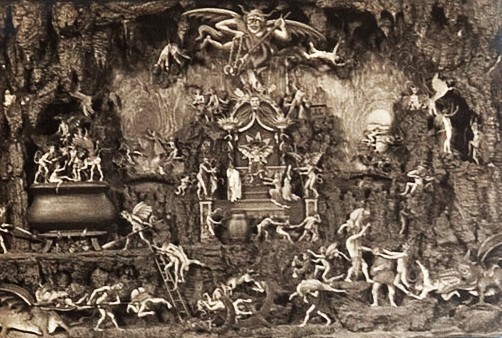
No capítulo dois somos levados para dentro do esconderijo de uma bruxa do século XV. A feiticeira Karna (Ella La Cour) usa dedos de enforcados em poções e cadáveres são violados em busca de segredos. A adoração do diabo é explicada, bem como os hábitos das bruxas conforme elas ganham seu poder diretamente do encardido.

In chapter two we’re taken inside a witch’s den in the 15th century. The witch Karna (Ella La Cour) uses fingers of the hanged in potions and corpses are violated in search of meaningful secrets. The adoration of the devil is explained, as well as the habits of witches as they gain their power directly from the king of the underworld.

O capítulo três traz o começo de uma história sobre a Inquisição na Alemanha. Quando um homem adoece, uma mendiga, Maria (Maren Pedersen), é acusada de feitiçaria. O capítulo quatro mostra a tortura e confissão de Maria. O capítulo cinco traz a prisão e tortura de outras mulheres acusadas de feitiçaria e a questão é levantada: como confiar em membros do clero que mentem e enganam?

Chapter three brings the beginning of a story about the Inquisition in Germany. When a man falls ill, a beggar, Maria (Maren Pedersen), is accused of witchcraft. Chapter four shows Maria’s torture and confession. Chapter five brings the arrest and torture of other women accused of witchcraft and the question appear: how can you trust clergy members who lie and deceive?

O capítulo seis é sobre instrumentos de tortura e também a histeria que se espalha num convento quando uma freira é enfeitiçada. Finalmente, o capítulo sete é sobre possessão no mundo moderno - resultado de doenças mentais. A situação muda: a mulher que teria problemas com a igreja no passado agora pode ter problemas com a lei e a polícia. 

Chapter six is all about torture instruments and also the hysteria that spreads in a convent when a nun is bewitched. Finally, chapter seven is about possession in modern days - the results of mental illness. The situation then shifts: the woman who would have had trouble with the church now may face issues with the law and the police.

O poder da feitiçaria reside na sugestão: as pessoas creem que foram enfeitiçadas porque estão sugestionadas a isso. Como o filme coloca em palavras: “a crença era tão forte que o Diabo se tornou algo real”. Em tempos em que a superstição era mais presente, as pessoas acreditavam em coisas surreais quando eram incapazes de explicar algo. Mas como o filme lida com a possessão em tempos modernos, fica claro que não é a época que cria as ilusões: é a fraqueza da mente. E não estou sendo psicofóbica: como alguém com uma doença mental, conheço bem nossas fraquezas.  

The power of witchcraft lies in suggestion: people believe they were bewitched because they are open to it. As the film puts in words: “The belief was so strong that the Devil became something real”. In times when superstitions were more widespread, people believed in surreal things when they couldn’t explain something. But as the movie deals with possession in modern times, it becomes clear that it isn’t the era that allows delusions: it’s the weakness of the mind. And I’m not being against people with mental illnesses: I have one too and I know we have weaknesses.

Uma camada extra de estigma é adicionada quando o filme descreve a parceira do diabo como “velha, pobre e miserável”. Em muitas línguas uma mulher feia pode ser chamada de bruxa, como você deve saber. Mas o filme vai mais além ao dizer que ser velha e feia em tempos medievais era perigoso, mas não era seguro ser jovem e bonita. Uma velha podia enfeitiçar um homem por pirraça, e uma mulher jovem podia fazer um homem religioso ter pensamentos obscenos através da bruxaria. No passado, ainda mais que hoje, era arriscado simplesmente ser mulher. 

An extra layer of stigma is added when the movie describes the devil’s partner as “old, poor and miserable”. In many languages an ugly woman can be called a witch, you know. But the film goes further saying that being old and ugly in Medieval times was dangerous, but it wasn’t safe to be young and pretty. An old woman could bewitch a man out of pettiness, and a young one could make a pious man have dirty thoughts also through witchcraft. In the past, even more than today, it was risky simply being a woman.

O cinema em sua infância já era inventivo. Em “Häxan”, encontramos técnicas como dupla exposição, shots reversos, uso de miniaturas e animação em stop-motion de um boneco do Diabo. O cinema em sua infância também era “assombroso”, conforme usava luzes e sombras para criar o clima e mesmo como elemento narrativo. Para fazer o filme parecer ainda mais sombrio,"Häxan” foi gravado quase sempre à noite. A sequência de bruxas voando atrás de sombras de pessoas é icônica, talvez a mais lembrada do filme. 

Early cinema has always been inventive. In “Häxan”, we can find techniques such as double exposure, reverse shots, miniatures and stop-motion animation of a little Devil doll. Early cinema has also always been “shadowy”, as it uses lights and shadows to create the mood and even as a narrative device. To make the film look even gloomier, “Häxan” was mostly shot at night.The sequence of witches flying behind the shadows of people is iconic, perhaps the one more associated with the film.

Nascido em 1879, Benjamin Christensen queria ser cantor de ópera, mas o medo do palco o impediu de realizar esse sonho. Em vez disso, criou pesadelos para as telas. Depois de “Night of Revenge” de 1916, ele se retirou das telas por alguns anos para criar “Häxan”, no qual ele confiou só em si mesmo para interpretar o Diabo. O sucesso permitiu que ele se mudasse para Hollywood, mas desta fase de sua carreira só um filme sobreviveu, chamado “Nos Domínios de Satã”, de 1929. De volta à Dinamarca, ele dirigiu mais alguns títulos e gerenciou um cinema.

Born in 1879, Benjamin Christensen wanted to become an opera singer, but stage fright prevented him from achieving his dream. Instead, he created nightmares for the screen. After the 1916 “Night of Revenge”, he removed himself from the screen for a few years to craft “Häxan”, in which he trusted only himself to play the Devil. The success made it possible for him to move to Hollywood, but from this phase in his career only one film survives, the aptly titled 1929 “Seven Footprints to Satan”. Back to Denmark, he directed a few more titles and ran a movie theater.

O capítulo cinco termina com a estatística de que oito milhões de pessoas foram queimadas acusadas de feitiçaria - um Holocausto Medievel. Um Pecado, com letra maiúscula, real, pelo qual ninguém - nem a Igreja Católica nem as pessoas que denunciaram, torturaram e queimaram - pediu perdão. Hoje somos queimadas em outros tipos de fogueiras, algumas inclusive metafóricas, e olhamos para trás para enfrentar fanáticos e a superstição. E, como verdadeiro documento histórico, “Häxan” está aqui para nos informar e empoderar.

Chapter five ends with the statistics that eight million people have been burned accused of witchcraft - a Medieval Holocaust. A real Sin, with a capital letter, nobody - not the Catholic Church nor the people who reported, tortured and burned - asked forgiveness for. As we’re tossed to other kinds of fires, some even metaphorical ones, we look back and fight fanatics and superstition. And, as a true historical document, “Häxan” is here to inform and empower us.

This is my contribution to the Early Shadows and Pre-Code Horror blogathon, hosted by the Classic Movie Blog Association.

Related Posts Plugin for WordPress, Blogger...