“Esta é uma história verídica”: sempre que essas palavras aparecem na tela antes do começo do filme, meu coração acelera. Às vezes a realidade é mais louca e mais inacreditável que a ficção, e este é o caso de “Cinco Dedos” (também conhecido pelo título “Operação Cícero”), um filme de suspense extremamente subestimado protagonizado por James Mason. Desde que eu o vi pela primeira vez em 31 de dezembro de 2012 – foi tão memorável que eu me lembro do dia – eu considero “Cinco Dedos” como um exemplo perfeito de um tesouro escondido do cinema.
“This is a true story”: anytime those words pop up on screen before a film starts, my heart skips a bit. Sometimes reality is wilder and more unbelievable than fiction, and this is the case of “5 Fingers”, an extremely underrated thriller starring James Mason. Since I saw it for the first time on December 31st, 2012 – it was so memorable that I remember the day – I consider “5 Fingers” to be a palpable example of a “hidden gem”.

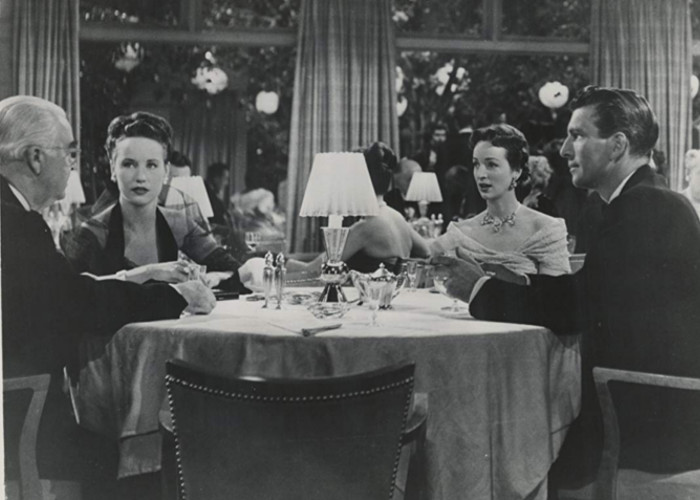
É março de 1944, e o cenário é a Turquia, um país neutro durante a Segunda Guerra Mundial. A condessa Anna Staviska (Danielle Darrieux) é uma francesa que vivia em Varsóvia com o falecido marido, um conde polonês. Ela deixou a Polônia quando os bombardeios começaram. Agora ela só consegue comer quando é convidada para algum jantar por um amigo. São tempos difíceis para ela, como nota o conde Franz Von Papen (John Wengraf), embaixador alemão. Em tempos difíceis são tomadas decisões difíceis: a condessa está disposta a trabalhar como espiã, e Von Papen a aconselha a desistir da ideia.
It’s March 1944, and the scenery is Turkey, a neutral country during World War II. Countess Anna Staviska (Danielle Darrieux) is a French woman who lived in Warsaw with her late husband, a Polish count. She left Poland when the bombings started. She now can only eat when she’s invited for any friend's reception. These are difficult times for her, as Count Franz Von Papen (John Wengraf), the German Ambassador, notices. In desperate times, desperate measures: the countess is willing to work as a spy, and Von Papen advises her to forget this idea.

L.C. Moyzisch (Oskar Karlweis), que trabalha para Von Papen, é visitado numa noite por um espião de verdade, Ulysses Diello (James Mason), que oferece para os alemães várias informações armazenadas em microfilme. Diello é na verdade o camareiro do embaixador britânico, por isso ele tem acesso a documentos ultrassecretos.
L.C. Moyzisch (Oskar Karlweis), who works for Von Papen, is visited one night by a real spy, Ulysses Diello (James Mason), who offers a bunch of information in microfilm for the Germans. Diello is actually the valet of the British Ambassador, that’s why he has access to top secret documents.

Moyzisch fica nervoso facilmente e é um pouco tonto. Diello é esperto, muito esperto – ou foi o patriotismo dos alemães que os deixou burros e sem imaginação? Diello consegue abrir o cofre da casa de Moyzisch usando como combinação a data em que Hitler chegou ao poder. Moyzisch fica abestalhado mas, seguindo as ordens que havia recebido, ele diz que a embaixada alemã irá trabalhar com Diello, que dali em diante receberá o codinome Cícero. Diello fica satisfeito porque Cícero, o chefe de Estado romano foi, nas palavras de Diello, “um homem de nobreza, eloquência e insatisfação”. Como podemos ver, Diello é esperto mas também vaidoso.
Moyzisch is nervous and a bit silly. Diello is smart, very smart – or did German’s patriotism made them dumb and unimaginative? Diello is able to open the safe at Moyzisch’s place using the date when Hitler rose to power as the combination. Moyzisch is stunned but, as he was advised to do, he says the German Embassy will now work with Diello, who will from now on be referred to with the codename Cicero. Diello is pleased, as Cicero the Roman statesman was, as he says “a man of nobility, eloquence and dissatisfaction”. As we can see, Diello is clever but also vain.

Agora todas as pontas soltas se unem: Diello dá parte do dinheiro para a condessa Staviska – porque ele era camareiro do conde e, após a morte do patrão, a condessa o demitiu. Ela diz que o demitiu porque ele era “esperto demais para um criado”. Ele sabe que ela o demitiu porque ele gostava dela. Agora ele oferece parte do dinheiro que ganhou para que a condessa alugue uma casa onde Diello possa, de vez em quando, fazer negócios. Em três meses, ele terá dinheiro suficiente para conseguir uma nova identidade e começar uma vida nova com ela na América do Sul.
Now everything comes full circle: Diello gives part of the money to Countess Staviska – because he was the count’ valet and, after his boss died, the countess fired him. She says she fired him because he was “too clever for a servant”, he knows she fired him because he liked her. Now he offers part of the money he made for the countess to get a house where Diello can, sometimes, do his business. In three months, he will have enough to adopt a new identity and start a new life with her in South America.

Obviamente, não demora para que a embaixada britânica desconfie de que há um espião entre eles. O agente especial Colin Travers (Michael Rennie) é enviado da Inglaterra para investigar o caso. Agora todos são suspeitos, incluindo Diello e a condessa Anna Staviska.
Of course, soon the British Embassy suspects that there is a spy among them. Special agent Colin Travers (Michael Rennie) is sent from England to investigate the case. Now everybody is a suspect, including Diello and the Countess Anna Staviska.

“Cinco Dedos” foi filmado em locação na Turquia, com o objetivo de parecer mais real. Entretanto, a produção se recusou a deixar tudo ainda mais real quando dispensaram serviços de consultoria do verdadeiro Cícero, o espião Elyesa Bazna, e de Moyzisch, que escreveu o livro que deu origem ao filme. O Moyzisch verdadeiro não gostou da maneira como foi retratado nas telas. A história foi recontada em 1956 em um episódio da série de TV antológica “The 20th Century-Fox Hour”, com Ricardo Montalban como Diello/Cicero e com Peter Lorre como Moyzisch.
“5 Fingers” was shot in location in Turkey, aiming for reality. However, the production refused to make things even more real when they refused technical advice from both the real Cicero, the spy Elyesa Bazna, and from Moyzisch, who wrote the book who originated the film. The real Moyzisch was displeased with the manner he was portrayed on screen. The story was told again in 1956 in an episode of the TV anthology series “The 20th Century-Fox Hour”, with Ricardo Montalban as Diello/Cicero and Peter Lorre as Moyzisch.

“Cinco Dedos” foi dirigido por Joseph L. Mankiewicz, que também dirigiu “Quem é o Infiel?” (1949) e “A Malvada” (1950). Mas a direção e as mudanças no roteiro feitas pelo outro Mank não são a parte mais importante do filme: na minha opinião, a música de Bernard Herrmann é o elemento que se destaca. Herrmann havia estreado no cinema com “Cidadão Kane” (1941) e suas colaborações com Hitchcock ainda aconteceriam dali a alguns anos, mas em “Cinco Dedos” sua trilha sonora cria suspense da maneira que só um mestre da música conseguiria.
“5 Fingers” was directed by Joseph L. Mankiewicz, who also directed “A Letter to Three Wives” (1949) and “All About Eve” (1950). But the other Mank's direction and changes in the script aren't the most important part of the film: I think the music by Bernard Herrmann is the real outstanding element. Herrmann had debuted in films with “Citizen Kane” (1941) and his collaborations with Hithcock were still a few years in the future, but in “5 Fingers” his soundtrack creates suspense like only a master musician could do.

É interessante perceber como é a relação entre Diello e a condessa Anna Staviska. Em alguns momentos ela fala para ele preparar um drink para ela, como se ele fosse empregado dela. Quando eles finalmente se beijam, isto mudo e ele que fala para ela preparar-lhe um drink, o que ela faz com um sorriso tímido nos lábios. Entretanto, existe sempre a sensação de que eles vão entregar um ao outro, em especial quando Diello fala para Colin Travers sobre seus anos trabalhando para o conde.
It’s interesting to notice the relationship between Diello and Countess Anna Staviska. In some moments she tells him to fix him a drink, as if he was her servant. When they finally kiss, this changes and he tells her to fix him a drink, which she does with a shy smile in her lips. However, there is always the feeling that they are going to betray each other, in special when Diello talks to Colin Travers about the years he worked for the count.

Von Papen é um personagem extremamente interessante. Ele é um embaixador alemão, mas diz que “representamos um governo de delinquentes juvenis” - que é um jeito bem leve de se referir a nazistas. Começamos a ver que ele é diferente dos outros alemães na primeira cena, quando ele confessa que não suporta as composições de Wagner. Mais humano e preocupado com os outros, ele acredita que os alemães precisavam contar aos outros povos – os romenos, no caso – que seu país estava prestes a ser bombardeado pela Inglaterra, de acordo com os documentos vendidos por Diello, em vez que ficar esperando para confirmar se esta informação era correta. Na vida real, Franz Von Papen não era tão legal: enquanto chanceler, ajudou Hitler a chegar ao poder e serviu por dois anos como vice-chanceler de Hitler. Não faço ideia do motivo que levou Hollywood a retratá-lo como um cara legal.
Von Papen is an extremely interesting character. He is a German ambassador, but says that “we represent a government of juvenile delinquents” - which is a rather light term to refer to Nazis. We start to see that he’s different from other Germans in his very first scene, when he confesses that he can’t stand Wagner’s compositions. More human and concerned with others, he believes the Germans needed to tell other people – the Romanians, in this case – that their country was about to be bombarded by England, according to the documents Diello sold, rather than wait and watch to confirm the information is correct. In real life, Franz Von Papen was nowhere as nice: as a Chancellor, he helped Hitler rise to power and served as Hitler's Vice-Chancellor for two years. I have no idea why Hollywood portrayed him as a nice guy.

Ulysses Diello é esperto, sedutor e por vezes esnobe. Ele está trabalhando para os nazistas – somente por dinheiro, porque ele não é simpatizante nazista – e mesmo assim torcemos por ele. Talvez a razão para esta torcida seja porque ele é interpretado pelo sempre fabuloso James Mason. Outro dia eu me surpreendi novamente com o fato de que Mason nunca ganhou o Oscar. Talvez seja porque a Academia não foi capaz de reconhecer a facilidade e a classe com que ele atuava – e essas são as características de um ótimo espião, não?
Ulysses Diello is clever, seductive and sometimes a snob. He’s working for the Nazis – only for money, because he isn't a sympathizer – and yet we root for him. Maybe the reason why we root for him is because he’s played by the always fabulous James Mason. The other day I was once again surprised with the fact that Mason won no Oscars. Maybe it's because the Academy couldn't recognize the effortlessness and class with which he acted – and an effortless and classy spy sounds like a great spy, doesn't it?

Cheio de reviravoltas até o final, “Cinco Dedos” é um ótimo suspense que deveria ser mais conhecido. Joseph L. Mankiewicz disse que Darryl F. Zanuck, o produtor, supervisionou o processo de edição e eliminou algumas das melhores cenas. O que vemos na tela já é incrível – e eu posso apenas imaginar como este filme poderia ter sido ainda melhor se acreditarmos na palavra de Mankiewicz.
Full of plot twists until the very end, “5 Fingers” is a thrilling movie that should be better known. Joseph L. Mankiewicz said that Darryl F. Zanuck, the producer, supervised the editing process and ended up cutting some of the best scenes. What we see on screen is already amazing – and I can only wonder how much better the film could have been if we believe Mankiewicz's claim.
This is my contribution to the CMBA Hidden Classics blogathon, hosted by the Classic Movie Blog Association.