} Crítica Retrô: Oscar Wilde

Tradutor / Translator / Traductor / Übersetzer / Traduttore / Traducteur / 翻訳者 / переводчик

Showing posts with label Oscar Wilde. Show all posts

Friday, September 19, 2025

A Importância de ser Honesto (1952) / The Importance of Being Earnest (1952)


Oscar Wilde foi um famoso autor, um dos mais respeitados da década de 1890. Ele escreveu ensaios, contos de ficção, romances, poesia e peças de teatro, e é a uma dessas últimas que damos atenção hoje. “A Importância de ser Honesto”, com o subtítulo “uma comédia trivial para pessoas sérias”, foi montada no teatro pela primeira vez em 1895. Meio século depois, era chegada a hora de ir para os cinemas.

Oscar Wilde was a famous author, one of the most respected in the late 1890s. He wrote essays, short fiction, novels, poetry and plays, and it’s at one of the latter that we pay attention today. “The Importance of Being Earnest”, with the subtitle “a trivial comedy for serious people”, was first performed in 1895. Half a century later, it would grace the screens.

Ernest (Michael Redgrave) está apaixonado por Gwendolen (Joan Greenwood), mas a mãe dela é contra o relacionamento. Há uma razão para isso: Ernest não se chama Ernest, mas sim Jack, e tem uma família complicada, e é responsável por zelar por uma jovem que vive no campo, Cecily (Dorothy Tutin).

Ernest (Michael Redgrave) is in love with Gwendolen (Joan Greenwood), but her mother is against their relationship. There is a reason for that: Ernest isn’t called Ernest, but Jack, and has a muddy lineage, and is the guardian of a young woman in the countryside, Cecily (Dorothy Tutin).

O primo de Gwendolen, Algernon (Michael Denison), viaja para o campo e se apresenta como o irmão de Jack, Ernest, que a menina nunca havia visto, só ouvido falar sobre. Quando Jack e Gwendolen chegam também no campo, o caos se instaura.

Gwendolen’s cousin Algernon (Michael Denison) travels to the countryside and presents himself as Jack’s brother Ernest, someone the girl has never seen before, only heard about. When Jack and Gwendolen arrive at the property, mayhem starts.

No comecinho há uma cartela de texto informando que aquela é “Uma Produção de Anthony Asquith”. Ele foi co-produtor, roteirista e diretor do filme. Ele também era o filho de H.H Asquith, um jurista que conseguiu as provas de imoralidade que mandaram Oscar Wilde para a cadeira em maio de 1895, poucos meses após a estreia de “A Importância de ser Honesto”. Que mundo pequeno e maluco, não?

In the very beginning there is a title card saying “An Anthony Asquith Production”. He was the co-producer, writer and director of the film. He also happened to be the son of H.H. Asquith, a lawyer who brought the charges of immorality that sent Oscar Wilde to jail in May of 1895, a few months after the premiere of “The Importance of Being Earnest”. Such a small, crazy world, right?

Michael Redgrave foi o patriarca de uma família de atores. Suas filhas Vanessa e Lynn e seu filho Corin seguiram seus passos. Muitos de seus netos também trabalham na indústria do cinema, como a atriz Natasha Richardson, a fotógrafa Annabel Clark e o roteirista e diretor Carlo Gabriel Nero, que é filho de Vanessa Redgrave com o ator Franco Nero. Além da descendência, o pai de Michael Roy Redgrave foi um ator de cinema mudo que trabalhou na Austrália.

Michael Redgrave was the patriarch of an acting family. His daughters Vanessa and Lynn and his son Corin followed his footsteps. Also working in the industry are many of his grandchildren, such as actress Natasha Richardson, still photographer Annabel Clark and screenwriter and director Carlo Gabriel Nero, who is the son of Vanessa Redgrave and actor Franco Nero. Besides all that lineage, Michael’s father Roy Redgrave was a silent film actor who worked in Australia.

Como tutora de Cecily temos a sempre ótima coadjuvante Margaret Rutherford. Com uma infância marcada por tragédias, ela começou relativamente tarde, com seu primeiro trabalho de atuação aos 33. Ela ganhou notoriedade interpretando Lady Bracknell na adaptação para os palcos de John Gielgud de “A Importância de ser Honesto” em 1939. Aqui ela interpreta Miss Prism, que de acordo com o IMDb tem quase o mesmo prenome que eu, Laetitia. Nos anos 1960, ela estrelou como Miss Marple, a famosa detetive amadora criada por Agatha Christie, em quatro adaptações de seus romances dirigidas por George Pollock. 

As Cecily’s tutor we have the always amazing character actress Margaret Rutherford. With a childhood marked by tragedy, she was a late bloomer, starting her acting career at 33. She gained notoriety playing Lady Bracknell in John Gielgud’s stage adaptation of “The Importance of Being Earnest” in 1939. Here she plays Miss Prism, who according to IMDb has almost the same first name as me, Laetitia. In the 1960s, she starred as Miss Marple, the famous amateur detective created by Agatha Christie, in four adaptations of her novels directed by George Pollock. 

Este é um dos filmes que nos alegram por ter sido filmado em Technicolor. Além dos brilhantes olhos verdes de Redgrave, tudo conspira para criar um deleite visual, incluindo lindos cenários e figurinos. A diretora de arte foi Carmen Dillon e a responsável pelos figurinos, Beatrice Dawson. O Technicolor, cuja consultora foi Joan Bridge e não a usual, Natalie Kalmus, certamente melhorou a aparência de elementos como objetos de cenas e roupas de época. Este foi o primeiro filme em Technicolor filmado por Anthony Asquith.  

This is one of those films that makes us glad it was shot in Technicolor. Besides Redgrave’s bright green eyes, there is much to create a feast for our eyes, including brilliant sets and outfits. The art director was Carmen Dillon and the costume designer, Beatrice Dawson. The Technicolor, whose advisor was Joan Bridge and not the usual consultant Natalie Kalmus, certainly enhanced the appearance of the elements such as props and clothes. This was the first film in Technicolor shot by Anthony Asquith.

De acordo com o IMDb, os escritos de Oscar Wilde foram adaptados para as telas, telinhas ou telonas, mais de 350 vezes. A primeira foi em 1906, meros seis anos após sua morte prematura aos 46. Com uma trama complexa e muitas surpresas, é óbvio que o nome da peça, agora um filme, é um trocadilho com o nome Ernest e o adjetivo Honesto. Mais uma prova de que Oscars Wilde também tinha um grande senso de humor.

According to IMDb, Oscar Wilde’s writings have been adapted to the screen, both big and small, over 350 times. The very first was in 1906, mere six years after his premature death at age 46. With a complex plot and several twists, it’s clear that the name of the play, now a movie, is a joke with the name Ernest and the adjectives Earnest and Honest. Further proof that Oscar Wilde also had a great sense of humor.

This is my contribution to the 12th Annual Rule, Britannia blogathon, hosted by Terry at A Shroud of Thoughts.

Saturday, September 21, 2024

O Marido Ideal (1947) / An Ideal Husband (1947)


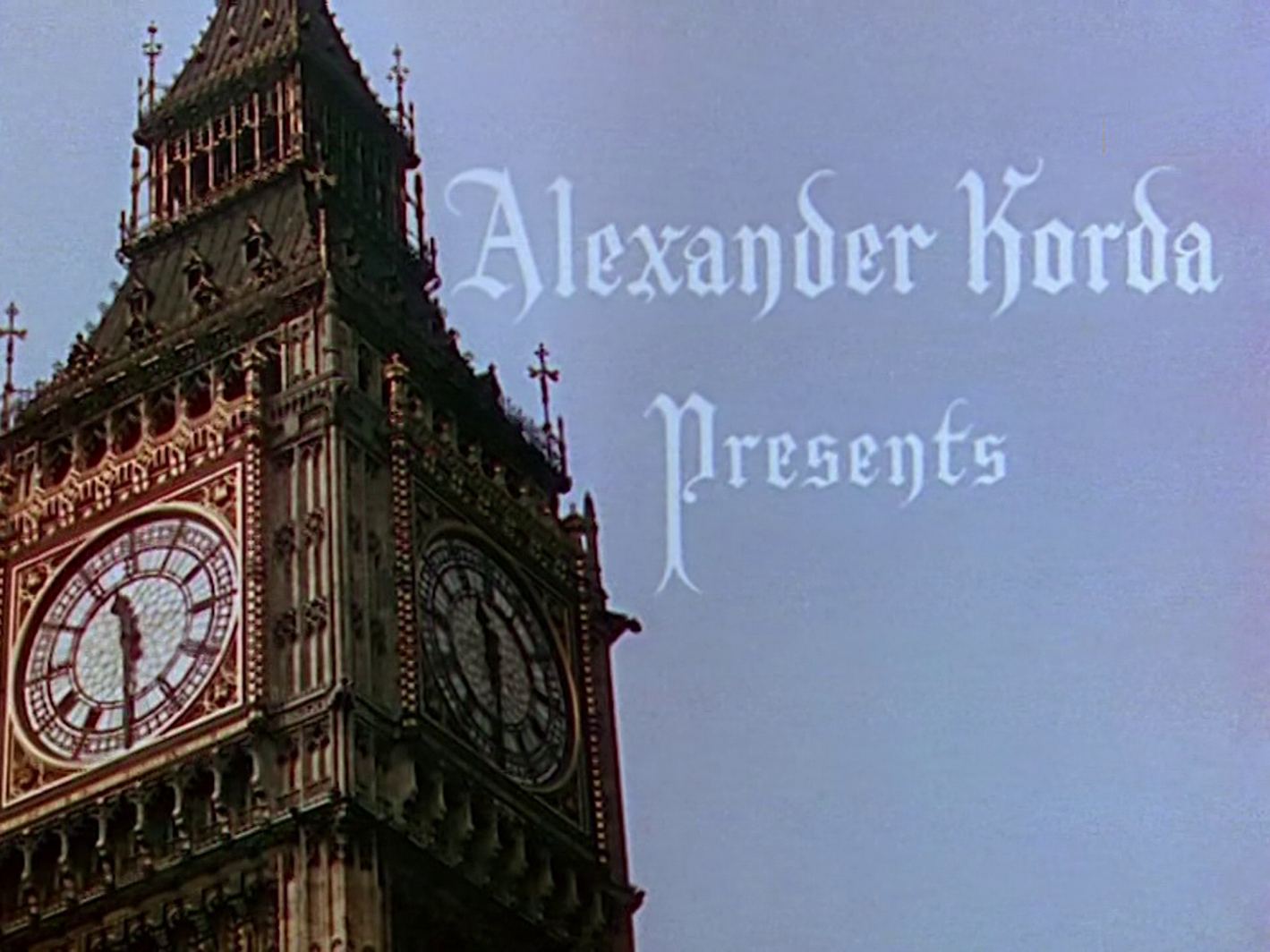
A melhor coisa que pode acontecer quando você começa a assistir a um filme britânico é ver na abertura o alvo redondo que indica que o filme a que você assistirá é uma produção The Archers, companhia de Powell e Pressburger. A segunda melhor coisa que pode acontecer na mesma situação é ver o Big Bem, indicando que você assistirá a uma produção de Alexander Korda. Esta segunda coisa acontece no começo de “O Marido Ideal” (1947), produzido e dirigido por Korda.


The best thing that can happen when you start watching a British film is seeing in the opening the round target that indicates that the film you’ll watch was a production of The Archers, the production company for Powell and Pressburger. The second best thing that can happen in the same situation is seeing the Big Ben, indicating that you’ll watch an Alexander Korda production. This second thing happens in the beginning of “An Ideal Husband” (1947), produced and directed by Korda.


Como diz Mabel (Glynis Johns), a (alta) sociedade de Londres é “inteiramente composta de belos idiotas e brilhantes lunáticos”. É numa festa da alta sociedade dada pela cunhada de Mabel, Gertrude (Diana Wynyard), que somos apresentados aos personagens. O anfitrião é Robert Chiltern (Hugh Williams) e vinda de Viena para falar diretamente com ele temos a senhora Cheveley (Paulette Goddard). Ao redor deles há ainda o Lorde Caversham (C. Aubrey Smith) e seu filho, o Lorde Goring (Michael Wilding).


As Mabel (Glynis Johns) says, London (high) society is “entirely composed of beautiful idiots and brilliant lunatics”. It is in a high society séance hosted by Mabel’s sister-in-law Gertrude Chiltern (Diana Wynyard) that we’re introduced to our characters. The host is Robert Chiltern (Hugh Williams) and coming from Vienna to speak directly to him is Mrs Cheveley (Paulette Goddard). Around them there are also Lord Caversham (C. Aubrey Smith) and his son, Lord Goring (Michael Wilding).


O marido ideal é Robert, mas é Gertrude que o salva de cair na teia da senhora Cheveley. A socialite de Viena queria que ele defendesse um esquema para construir um canal na Argentina, e o convenceu a fazer isso através de chantagem. Quando Gertrue fica sabendo que seu marido não era tão “ideal” quanto ela pensava, o casamento entra em crise.


The ideal husband is Robert, but it’s Gertrude who saves him from falling in Mrs Cheveley’s web. The socialite from Vienna wanted him to endorse a scheme to build a canal in Argentina, and convinced him to do so through blackmail. When Gertrude learns that her husband isn’t as “ideal” as she thought, the marriage goes into crisis.

“O Marido Ideal” é baseado em uma peça de 1895 de Oscar Wilde, e foi adaptado para as telas por Laos Biró. Há espaço para humor, como quando duas mulheres – a senhora Cheveley e a Lady Markby (Constance Collier), para ser mais precisa – com chapéus extravagantes conversam sobre moda. Nascido no que era então o Império Austro-Húngaro, Lajos Biró faleceu menos de um ano após a estreia de “O Marido Ideal” nos cinemas. Ele era o chefe de roteiros para o estúdio de Korda.


“An Ideal Husband” is based on a work from 1895 by Oscar Wilde, written for the screen by Lajos Biró. There is space for humor, like when two women – Mrs Cheveley and Lady Markby (Constance Collier), to be precise –  with extravagant hats talk about fashion. Born in what was then Austria-Hungary, Lajos Biró died less than one year after “An Ideal Husband” premiered in theaters. He was the scenario chief for Korda’s production company.


Os figurinos foram feitos por Cecil Beaton. O destaque vai para um vestido lilás extravagante com uma capa laranja usada por Goddard. Ainda havia racionamento na Inglaterra durante as filmagens, por isso Beaton teve de improvisar em muitas cenas. Para piorar a situação, o filme foi rodado no verão, com o clima deixando os vestidos ainda mais desconfortáveis. Beaton mais tarde faria vestidos semelhantes para “Gigi” (1958) e “Minha Bela Dama” (1964).


The costumes were made by Cecil Beaton. The highlight is an extravagant lilac dress with an orange cape worn by Goddard. There was still rationing in England during the period, so Beaton had to improvise in many scenes. To make things worse, the film was shot during summer, making the heavy costumes even more uncomfortable to wear. Beaton later made similar dresses for “Gigi” (1958) and “My Fair Lady” (1964).


“O Marido Ideal” foi o último filme feito por Korda como diretor, embora ele tenha continuado trabalhando como produtor. O primeiro produtor de cinema britânico a se tornar Sir, Korda produziu 82 filmes e dirigiu 69, numa carreira que começou no cinema mudo na sua Hungria natal, assim como na Áustria e na Alemanha. Ele passou dois breves períodos em Hollywood, um no final da era muda e o segundo durante a Segunda Guerra Mundial. Entre os filmes mais famosos que ele dirigiu, temos “Longe dos Olhos”(1945) e, obviamente, “O Ladrão de Bagdá” (1940).


“An Ideal Husband” was Alexander Korda’s last credit as a director, even though he continued working as a producer. The first British film producer to receive knighthood, Korda produced 82 movies and directed 69, in a career that started in silent movies in his native Hungary as well as in Austria and German. He had two brief stints in Hollywood, one in the end of the silent era and the second during World War II. Among the most famous movies he directed, we have “Vacation from Marriage” (1945) and, of course, “The Thief of Bagdad” (1940).


“O Marido Ideal” é espirituoso e charmoso, mas o destaque é o Technicolor. O assunto é bastante arriscado, mas não se arrisca em demasiado. É como se a Inglaterra estivesse seguindo o código de produção de Hollywood. Não funcionou, pois o filme não teve grande bilheteria em mercados estrangeiros, mesmo sendo um dos dez maiores sucessos de bilheteria na Inglaterra. Há certas coisas que só os nativos gostam!


“An Ideal Husband” is witty and charming, but the highlight is the Technicolor. The subejct is rather raw, but no risks are taken. It's as if England was following Hollywood’s production code. It didn’t work, as the movie performed poorly in foreign markets, despite being one of the Top 10 money-makers in England. There are certain things that only locals can enjoy!


“O Marido Ideal” está disponível no YouTube com legendas em inglês.


“An Ideal Husband” is available on YouTube.


This is my contribution to the 11th Annual Rule, Britannia Blogathon, hosted by Terence at A Shroud of Thoughts.

Related Posts Plugin for WordPress, Blogger...