} Crítica Retrô: Margaret Rutherford

Tradutor / Translator / Traductor / Übersetzer / Traduttore / Traducteur / 翻訳者 / переводчик

Showing posts with label Margaret Rutherford. Show all posts

Friday, September 19, 2025

A Importância de ser Honesto (1952) / The Importance of Being Earnest (1952)


Oscar Wilde foi um famoso autor, um dos mais respeitados da década de 1890. Ele escreveu ensaios, contos de ficção, romances, poesia e peças de teatro, e é a uma dessas últimas que damos atenção hoje. “A Importância de ser Honesto”, com o subtítulo “uma comédia trivial para pessoas sérias”, foi montada no teatro pela primeira vez em 1895. Meio século depois, era chegada a hora de ir para os cinemas.

Oscar Wilde was a famous author, one of the most respected in the late 1890s. He wrote essays, short fiction, novels, poetry and plays, and it’s at one of the latter that we pay attention today. “The Importance of Being Earnest”, with the subtitle “a trivial comedy for serious people”, was first performed in 1895. Half a century later, it would grace the screens.

Ernest (Michael Redgrave) está apaixonado por Gwendolen (Joan Greenwood), mas a mãe dela é contra o relacionamento. Há uma razão para isso: Ernest não se chama Ernest, mas sim Jack, e tem uma família complicada, e é responsável por zelar por uma jovem que vive no campo, Cecily (Dorothy Tutin).

Ernest (Michael Redgrave) is in love with Gwendolen (Joan Greenwood), but her mother is against their relationship. There is a reason for that: Ernest isn’t called Ernest, but Jack, and has a muddy lineage, and is the guardian of a young woman in the countryside, Cecily (Dorothy Tutin).

O primo de Gwendolen, Algernon (Michael Denison), viaja para o campo e se apresenta como o irmão de Jack, Ernest, que a menina nunca havia visto, só ouvido falar sobre. Quando Jack e Gwendolen chegam também no campo, o caos se instaura.

Gwendolen’s cousin Algernon (Michael Denison) travels to the countryside and presents himself as Jack’s brother Ernest, someone the girl has never seen before, only heard about. When Jack and Gwendolen arrive at the property, mayhem starts.

No comecinho há uma cartela de texto informando que aquela é “Uma Produção de Anthony Asquith”. Ele foi co-produtor, roteirista e diretor do filme. Ele também era o filho de H.H Asquith, um jurista que conseguiu as provas de imoralidade que mandaram Oscar Wilde para a cadeira em maio de 1895, poucos meses após a estreia de “A Importância de ser Honesto”. Que mundo pequeno e maluco, não?

In the very beginning there is a title card saying “An Anthony Asquith Production”. He was the co-producer, writer and director of the film. He also happened to be the son of H.H. Asquith, a lawyer who brought the charges of immorality that sent Oscar Wilde to jail in May of 1895, a few months after the premiere of “The Importance of Being Earnest”. Such a small, crazy world, right?

Michael Redgrave foi o patriarca de uma família de atores. Suas filhas Vanessa e Lynn e seu filho Corin seguiram seus passos. Muitos de seus netos também trabalham na indústria do cinema, como a atriz Natasha Richardson, a fotógrafa Annabel Clark e o roteirista e diretor Carlo Gabriel Nero, que é filho de Vanessa Redgrave com o ator Franco Nero. Além da descendência, o pai de Michael Roy Redgrave foi um ator de cinema mudo que trabalhou na Austrália.

Michael Redgrave was the patriarch of an acting family. His daughters Vanessa and Lynn and his son Corin followed his footsteps. Also working in the industry are many of his grandchildren, such as actress Natasha Richardson, still photographer Annabel Clark and screenwriter and director Carlo Gabriel Nero, who is the son of Vanessa Redgrave and actor Franco Nero. Besides all that lineage, Michael’s father Roy Redgrave was a silent film actor who worked in Australia.

Como tutora de Cecily temos a sempre ótima coadjuvante Margaret Rutherford. Com uma infância marcada por tragédias, ela começou relativamente tarde, com seu primeiro trabalho de atuação aos 33. Ela ganhou notoriedade interpretando Lady Bracknell na adaptação para os palcos de John Gielgud de “A Importância de ser Honesto” em 1939. Aqui ela interpreta Miss Prism, que de acordo com o IMDb tem quase o mesmo prenome que eu, Laetitia. Nos anos 1960, ela estrelou como Miss Marple, a famosa detetive amadora criada por Agatha Christie, em quatro adaptações de seus romances dirigidas por George Pollock. 

As Cecily’s tutor we have the always amazing character actress Margaret Rutherford. With a childhood marked by tragedy, she was a late bloomer, starting her acting career at 33. She gained notoriety playing Lady Bracknell in John Gielgud’s stage adaptation of “The Importance of Being Earnest” in 1939. Here she plays Miss Prism, who according to IMDb has almost the same first name as me, Laetitia. In the 1960s, she starred as Miss Marple, the famous amateur detective created by Agatha Christie, in four adaptations of her novels directed by George Pollock. 

Este é um dos filmes que nos alegram por ter sido filmado em Technicolor. Além dos brilhantes olhos verdes de Redgrave, tudo conspira para criar um deleite visual, incluindo lindos cenários e figurinos. A diretora de arte foi Carmen Dillon e a responsável pelos figurinos, Beatrice Dawson. O Technicolor, cuja consultora foi Joan Bridge e não a usual, Natalie Kalmus, certamente melhorou a aparência de elementos como objetos de cenas e roupas de época. Este foi o primeiro filme em Technicolor filmado por Anthony Asquith.  

This is one of those films that makes us glad it was shot in Technicolor. Besides Redgrave’s bright green eyes, there is much to create a feast for our eyes, including brilliant sets and outfits. The art director was Carmen Dillon and the costume designer, Beatrice Dawson. The Technicolor, whose advisor was Joan Bridge and not the usual consultant Natalie Kalmus, certainly enhanced the appearance of the elements such as props and clothes. This was the first film in Technicolor shot by Anthony Asquith.

De acordo com o IMDb, os escritos de Oscar Wilde foram adaptados para as telas, telinhas ou telonas, mais de 350 vezes. A primeira foi em 1906, meros seis anos após sua morte prematura aos 46. Com uma trama complexa e muitas surpresas, é óbvio que o nome da peça, agora um filme, é um trocadilho com o nome Ernest e o adjetivo Honesto. Mais uma prova de que Oscars Wilde também tinha um grande senso de humor.

According to IMDb, Oscar Wilde’s writings have been adapted to the screen, both big and small, over 350 times. The very first was in 1906, mere six years after his premature death at age 46. With a complex plot and several twists, it’s clear that the name of the play, now a movie, is a joke with the name Ernest and the adjectives Earnest and Honest. Further proof that Oscar Wilde also had a great sense of humor.

This is my contribution to the 12th Annual Rule, Britannia blogathon, hosted by Terry at A Shroud of Thoughts.

Saturday, November 9, 2024

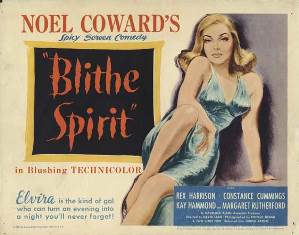
Uma Mulher do Outro Mundo (1945) / Blithe Spirit (1945)

 Uma discussão recente causou frisson entre os cinéfilos do Twitter porque um usuário disse que filmes antigos eram displicentes quanto ao uso das cores. Esta pessoa poderia mudar sua visão caso assistisse a qualquer filme em Technicolor feito na Inglaterra nos anos 1940 – os mais notáveis exemplos sendo os filmes de Powell e Pressburger “Narciso Negro” (1947) e “Os Sapatinhos Vermelhos” (1948). De 1945 vem outra maravilha do Technicolor: “Uma Mulher do Outro Mundo”, baseado na obra de Noël Coward.  

A recent discussion caused frisson on Film Twitter because an user said that old movies didn’t put an effort when the issue was color. This person could have his/her mind changed if he/she watched any Technicolor marvel made in 1940s England – the most notorious examples being Powell and Pressburger’s movies such as “Black Narcissus” (1946) and “The Red Shoes” (1948). From 1945 comes another Technicolor marvel: Noël Coward’s “Blithe Spirit”.

Charles Condomine (Rex Harrison) é um autor prestes a iniciar a escrita de seu novo livro – mas primeiro ele precisa fazer uma pesquisa. Ele e a esposa Ruth (Constance Cummings) convidam para jantar um casal de amigos e também uma médium chamada Madame Arcati (Margaret Rutherford). O objetivo é ver que o transe da Madame não passa de charlatanismo, mas algo acontece: a primeira esposa de Charles, Elvira (Kay Hammond), que havia morrido sete anos antes, é invocada. Mas apenas Charles pode vê-la e ouvi-la!

Charles Condomine (Rex Harrison) is a writer ready to start his new book – but first he needs to do some research. He and his wife Ruth (Constance Cummings) invite over for dinner a couple of friends and also a psychic named Madame Arcati (Margaret Rutherford). The goal was to see how Madame’s trance was nothing but charlatanism, but something happens: Charles’ first wife, Elvira (Kay Hammond), who died seven years before, is summoned. But only Charles can see and hear her!

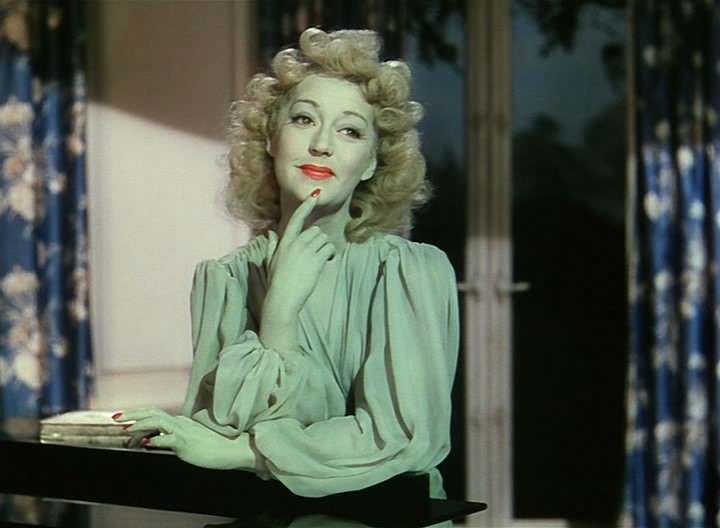
A materialização de Elvira, obviamente, traz todo tipo de problema. Ao falar com ela, é como se Charles dissesse ofensas para Ruth. Quando Elvira começa a interagir com os objetos da casa, Ruth se apavora, como seria esperado na presença de um fantasma. E que fantasma: com pele pálida e unhas e lábios de um vermelho vivo, Elvira deveria aparecer em todas as listas de mais memoráveis fantasmas do cinema.

Elvira’s materialization, of course, brings all sorts of troubles. When talking to her, Charles is perceived as saying offenses to Ruth. When Elvira starts interacting with the things in the house, Ruth freaks out, as one does in the presence of a ghost. And what a ghost: with pale skin and bright red lispstick and nail polish, Elvira should figure in all the lists of most memorable ghosts of cinema.

É interessante notar que muito do diálogo entre Charles e Ruth acontece ao redor da mesa, conforme consomem suas refeições. Isto destaca as origens teatrais de “Uma Mulher do Outro Mundo” e também adiciona a empregada Edith (Jacqueline Clarke) à ação.

It’s interesting to notice that much of Ruth and Charles’ dialogue happens around the table where they are sharing meals. This highlights the theatrical origins of “Blithe Spirit” while also adding the maid Edith (Jacqueline Clarke) to the action.

O visual de Elvira foi criado misturando roupas e maquiagem verde-fluorescente com truques de iluminação – e os efeitos especiais ganharam um Oscar. Kay Hammond literalmente brilha como Elvira, um papel que foi pensado para Myrna Loy – e ela escreveu que havia “nascido para interpretar o papel” – mas a atriz não foi emprestada pela MGM. Filha dos atores Guy Standing e Dorothy Hammond, Kay encontrou sucesso no teatro, onde deu origem à personagem Elvira em 1941, e fez 38 filmes entre 1930 e 1961.

Elvira’s look was created by a mix of fluorescent green clothes and make-up and lighting tricks – and the special effects won an Oscar. Kay Hammond literally shines as Elvira, a role that was intended for Myrna Loy – and one she said she was “born to play” – but the actress wasn’t loaned by MGM. The daughter of actors Guy Standing and Dorothy Hammond, Kay found success in the theater, where she originated the role of Elvira in 1941, and made 28 movies between 1930 and 1961.

Não podemos falar da história das cores no cinema sem mencionar a supervisora de Technicolor Natalie Kalmus. De acordo com o IMDb, ela é creditada em quase 400 filmes feitos entre 1928 e 1950, com dezenas de créditos todos os anos. Esposa de Herbert T. Kalmus, inventor do processo Technicolor, Natalie contribuiu com a invenção e era inserida nos sets de filmagem para supervisionar o uso das câmeras de Tehcnicolor, que eram sensíveis e caras, e decidir as melhores cores para cenários e figurinos. Problemas com as cores fizeram com que as filmagens de “Uma Mulher do Outro Mundo” se prolongassem, e no final Margaret Rutherford estava reclamando que as filmagens duraram seis meses e não as doze semanas previstas.

We can’t talk about the history of color in film without mentioning Technicolor supervisor Natalie Kalmus. According to IMDb, she is credited in almost 400 movies made between 1928 and 1950, with dozens of credits every year. The wife of Herbert T. Kalmus, the inventor of the Technicolor process, Natalie contributed to the invention and was put in film sets to oversee the use of Technicolor cameras, that were both sensitive and expensive, and to decide the colors in sets and clothes. Issues with color made the production of “Blithe Spirit” drag, and in the end Margaret Rutherford was complaining that they were shooting for six months instead of the twelve weeks planned. 

A peça de Noël Coward foi escrita em 1945 e o autor – também produtor do filme – não vendeu os direitos para Hollywood porque as adaptações de seu trabalho feitas por norte-americanos não haviam lhe agradado. Mesmo assim, com as mudanças feitas pelo roteirista e diretor David Lean – que incluíram mudar o final, impossível nos palcos – Coward declarou que a melhor peça que ele havia escrito foi arruinada.

Noël Coward’s play was written in 1941 and the author – also producer of the movie – didn’t sell the rights to Hollywood because he disliked the adaptations of his work made by North Americans until then. Nevertheless, with the changes made by screenwriter and director David Lean – including changing the end, adding one that would be impossible on stage –, Coward declared that they ruined the best play he’d ever written.


Nós, como humanos, amiúde pensamos e imaginamos o que acontece depois que morremos. Há um Paraíso ou uma vida após a morte? O cinema tentou responder à questão de muitas maneiras e em muitas ocasiões. Elvira volta do além mas conta pouco do que acontece por lá. Temos visões mais elaboradas da próxima vida em filmes como “Neste Mundo e no Outro” (1946), da já mencionada dupla Powell e Pressburger. O assunto é tão presente e pertinente que não apenas filmes sobre isso são sucesso mas também médiuns como a Madame Arcati têm sua clientela para conversar com o além.

We, as humans, often think and imagine what happens after we die. Is there a Heaven or an afterlife? Cinema tried to answer the question in many ways and occasions. Elvira comes back from beyond but tells little about what happens there. Wa have more elaborate views of the next life in films such as “A Matter of Life and Death” (1946), by the aforementioned duo Powell and Pressburger. The issue is so present and pertinent that not only movies about it are a success but also psychics such as Madame Arcati have their clientele to talk to the beyond.

“Uma Mulher do Outro Mundo” foi um fracasso de bilheteria, por causa de erros na escalação de elenco, de acordo com o roteirista Anthony Havellock-Allan. Ele disse que precisavam de um homem de meia-idade – e não Rex Harrison – e uma primeira esposa atraente – Constance Cummings era mais bonita que Kay Hammond, Anthony declarou. Mesmo assim, o filme sobreviveu ao teste do tempo e agora é considerado um clássico, e um clássico muito divertido!

“Blith Spirit” was a box-office failure, due to a mistaken casting, according to screenwriter Anthony Havellock-Allan. He said the need was for a middle-aged man – not Rex Harrison – and an attractive first wife – Constance Cummings was more attractive than Kay Hammond, Anthony noticed. Nevertheless, the film stood the test of time and now is righteously considered a classic, and a very enjoyable one!


This is my contribution to A Haunting Blogathon: In the Afterlife, by the Classic Movie Blog Association.

Related Posts Plugin for WordPress, Blogger...