} Crítica Retrô: Paul Robeson

Tradutor / Translator / Traductor / Übersetzer / Traduttore / Traducteur / 翻訳者 / переводчик

Showing posts with label Paul Robeson. Show all posts

Tuesday, July 29, 2025

Magnólia: O Barco das Ilusões (1936) / Show Boat (1936)


Um dos meus atores / cantores favoritos é Paul Robeson. Eu sempre fiquei intrigada com a letra de uma música comumente associada à Robeson: Ol’ Man River. A letra é assim: “Estou cansado de viver mas com medo de morrer”. Já ouvi alguns idosos dizendo que estavam cansados de viver, mas ouvir um adulto saudável dizendo isso me chocou. Isso aconteceu porque eu não conhecia o contexto, algo que corrigi quando finalmente assisti ao filme “Magnólia: O Barco das Ilusões” (1936).

One of my favorite singers / actors is Paul Robeson. I’ve always been intrigued with the lyrics of one tune commonly associated with Robeson: Ol’ Man River. The lyrics are those: “I’m tired of living but scared of dying”. I’ve heard quite a few old people saying they were tired of living, but a healthy adult saying this shocked me. It was because I didn’t get the context, something I fixed by finally watching “Show Boat” (1936).

Você sabe que a sessão vai ser boa quando um verdadeiro desfile traz os créditos.

You know you’re in for a treat when a whole parade brings the credits.

A família Hawks administra um barco de espetáculos cuja aparição no horizonte é suficiente para deixar todas as pessoas - e os animais! - de uma cidade alvoroçados. Os Hawks só têm um desejo: que sua filha Magnólia (Irene Dunne) se torne uma pessoa respeitável, isso é, que ela nunca se apresente no barco de espetáculos. Mas Magnólia, ou Nola, sonha em cantar, dançar e se apresentar para o público.

The Hawks are the managers of a show boat whose sighting is enough to make all the people - and the animals! - of a town excited. They only have one wish: that their daughter Magnolia (Irene Dunne) becomes a respectable person, that is, that she never becomes a show boat attraction. But Magnolia, or Nola, dreams about singing, dancing and acting for the public.

Ela tem sua grande chance após um episódio triste: descobre-se que Steve (Donald Cook) e Julie (Helen Morgan), as estrelas do show, são um casal interracial, algo proibido no Mississipi. Num país em que “uma gota de sangue negro faz de você um negro”, ter pele clara não faz uma pessoa ser considerada branca. O episódio pode soar como um problema de um passado distante, mas não se engane: a última lei de segregação foi abolida apenas em 1965 e a genética ainda dita quem é branco e quem não é. Em “Magnólia: O Barco das Ilusões”, Julie e Steve têm que abandonar o espetáculo.

She gets her big chance after a shameful episode: it’s discovered that Steve (Donald Cook) and Julie (Helen Morgan), the stars of the show, are a mixed-race couple, a thing forbidden in Mississippi. In a country where “one drop of negro blood makes you a negro”, having fair skin doesn’t make a person be seen as white. The whole episode might sound as a problem from a distant past, but don’t be fooled: the last segregation law only fell in 1965 and genetics still dictate who is white and who isn’t. In “Show Boat”, Julie and Steve have to leave the show.

Como ela era próxima de Julie, Magnólia conhecia o papel principal e podia substituí-la, o que faz sua mãe se desesperar. Para o papel masculino principal, os Hawks contratam um viajante, Gaylord Ravenal (Allan Jones) do Tennessee. Ele e Magnólia têm uma química incrível, afinal, estão apaixonados! Mas este é um melodrama musical, então você pode esperar que muitos obstáculos aparecerão em seus caminhos.

Since she was close to Julie, Magnolia knew the lead part and could replace her, to her mother’s desperation. As the leading man, the Hawks hire a passerby, Gaylord Ravenal (Allan Jones) from Tennessee. He and Magnolia have a magnificent chemistry, after all, they’re in love! But this is a musical melodrama, so you can expect that many hardships will come their way.

A escolha do diretor pode parecer estranha: James Whale, o mesmo cara que dirigiu “Frankenstein” (1931), entre outros filmes de monstro. Na sequência de Ol’ Man River, há alguns ângulos de câmera inspirados e sombras que contam uma história. “Magnólia: O Barco das Ilusões” acabou sendo o filme favorito de Whale entre suas próprias obras.

The director choice may look odd: James Whale, the same guy who directed “Frankenstein” (1931), among other monster movies. In the Ol’ Man River sequence, there are some inspired camera angles and shadows telling the story. “Show Boat” ended up being the favorite among Whale’s own films.

A música é de Jerome Kern e as letras de Oscar Hammerstein II. As canções são mais o estilo de uma ópera, como aquelas nos filmes de Nelson Eddy e Jeanette MacDonald. Elas são perfeitas para o estilo de Allan Jones, que também foi estrela do filme dos Irmãos Marx “Uma Noite na Ópera” (1935).

The music is by Jerome Kern and the lyrics by Oscar Hammerstein II. The songs are more operatic, such as the ones in the Nelson Eddy and Jeanette MacDonald movies. They suit perfectly the style of Allan Jones, who also starred in the Marx Brothers vehicle “A Night at the Opera” (1935).

Falamos dos pontos positivos, agora vem a parte negativa: o racismo. Quando Irene Dunne começa a fazer uma dança chamada cakewalk, é simplesmente ofensivo. E aí fica pior: ela canta com blackface. Mais do que isso, Hattie McDaniel faz um papel de empregada (“Mamie”). O Joe de Paul Robeson é retratado como preguiçoso - mesmo com suas canções sendo as melhores do filme.

We talked about the good, now comes the bad and the ugly: racism. When Irene Dunne starts doing the cakewalk it’s simply offensive. And then it gets worse: she sings while doing blackface. Moreover, Hattie McDaniel is stuck in a Mamie kind of role. Paul Robeson’s Joe is portrayed as lazy - even though his songs are the best in the movie.

Agora que eu assisti a “Magnólia: O Barco das Ilusões”, eu sei que a letra de Ol’ Man River vai além: Paul Robeson canta expressando seu desejo de cruzar o Rio Jordão, o que significa que ele está em busca de liberdade e redenção. Morrer numa vida para começar de novo. No final das contas, o filme pode ser uma saga focada numa família do ramo do entretenimento, mas o que se perpetua e sobrevive através do tempo é o grande número de Paul Robeson.

Now that I have watched “Show Boat”, I know there is more to the Ol’ Man River lyrics: Paul Robeson sings about his wish to cross the Jordan River, meaning he’s looking for freedom and redemption. Dying in one life to start anew. In the end, the film might be a saga focusing on a white family in the entertainment business, but what remains and shall survive through the ages is Paul Robeson’s big number.

Friday, June 1, 2018

A Canção da Liberdade (1936) / Song of Freedom (1936)

Um conhecedor de filmes, quando ouve “Hammer Films”, pensará em filmes de horror, como os da série do Drácula com Peter Cushing e Christopher Lee. Eles não estão errados. Entretanto, a Hammer Films engloba muito mais que isso: assim como qualquer estúdio de cinema, ela teve de começar em algum lugar, e no começo a Hammer era muito diferente daquilo que a tornou conhecida a partir dos anos 50. Para conhecer prestes primeiros tempos, analisaremos o mais antigo filme da Hammer que ainda sobrevive em sua versão completa: “A Canção da Liberdade” (1936).

A film connoisseur, after hearing “Hammer Films”, will think about horror movies, like the Dracula series with Peter Cushing and Christopher Lee. They are not wrong. However, there is more to Hammer Film: like any movie studio, it had to start somewhere, and in the beginning Hammer was so very different from what made it popular in the 1950s onwards. To look at this beginning, we analyze the earliest Hammer film that fully survives: “Song of Freedom” (1936).
É o ano de 1700 em um canto ainda não explorado da África. Lá reina a tirana rainha Zinga, que sente prazer em humilhar os prisioneiros antes da execução. Em uma destas terríveis cerimônias, Zinga coloca seu medalhão real no pescoço de um homem que havia tentado tirá-la do poder. Uma moça rouba o medalhão do pescoço dele, e foge com o filho de Zinga. Eles chegam a uma vila e pedem ajuda para seguirem com a fuga. O único problema é que eles pedem ajuda a um traficante de escravos.

It’s the year 1700 in a not yet explored corner of Africa. There reigns the tyrant queen Zinga, who loves to humiliate her prisoners before execution. In one of these horrible ceremonies, Zinga places her royal medallion in the neck of a man who was trying to take her out of the throne. A girl steals the royal medallion from his neck, and runs away with Zinga’s son. They reach a village and ask for help to go further away. The only problem is that they asked a slave trader for help.
Crazy queen Zinga
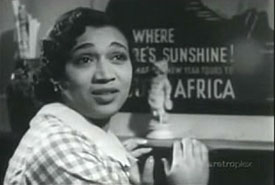
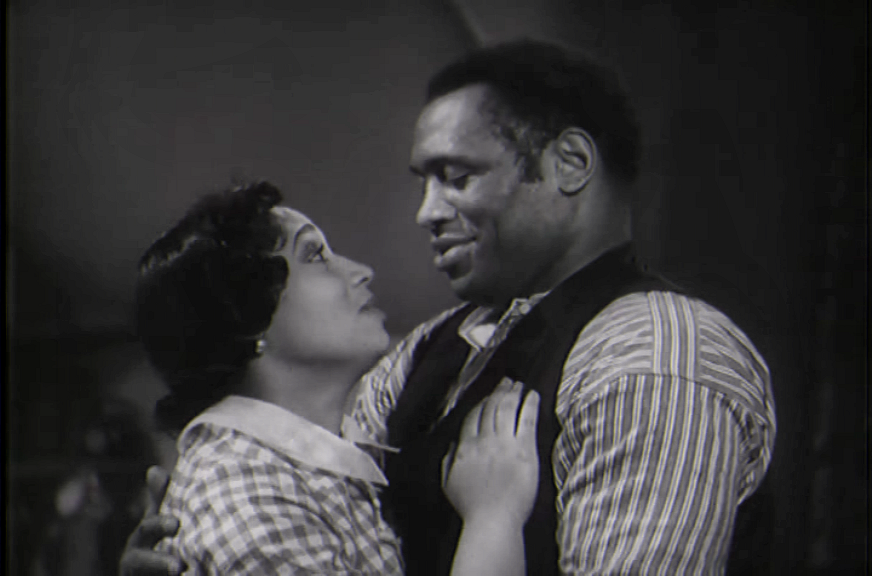
O filho de Zinga e a moça se tornam escravos, e uma montagem mostra que o medalhão deles passou de pai para filho nos séculos seguintes. No ano de 1838, o tráfico de escravos acaba (exceto para o Brasil) e os negros são libertações. Finalmente, chegamos ao tempo presente. O mais jovem Zinga é John Zinga (Paul Robeson), um estivador que adora cantar uma música que ele lembra da infância, e cujo sonho é voltar para sua terra, a África, um sonho que incomoda sua esposa Ruth (Elisabeth Welch).

Zinga’s son and the girl become slaves, and a montage shows that the medallion they had passes from father to son in the following centuries. In the year 1838, the slave trade is over (except to Brazil) and black people are liberated. Finally, we arrive in the present time. The youngest Zinga is John Zinga (Paul Robeson), a dock worker who loves to sing a song he knew since childhood, and who longs to come back to his land, Africa, a wish that upsets his wife, Ruth (Elisabeth Welch).
John's two loves: Africa and Ruth
Eis que chega ao porto o compositor de óperas italiano Gabriel Donozetti (Esme Percy). Ele ouve uma voz fantástica, mas não consegue ver quem é o cantor. Na noite seguinte, ele vai até as docas procurar o cantor misterioso, e finalmente encontra John cantando em uma taverna. Ele convida John para conversarem na casa dele e, apesar de a primeira lição de treinamento não terminar muito bem, John assina um contrato com Donozetti porque ele quer juntar dinheiro suficiente para viajar para a África.

This is when Italian opera composer Gabriel Donozetti (Esme Percy) arrives in the harbor. He listens to a fantastic voice, but is unable to see who is singing. The following night, he goes to the docks looking for the mysterious singer and finally finds John singing in a tavern. He invites John to his house and, although the first voice training session is not very peaceful, John signs a contract with Donozetti because he wants to earn enough money to travel to Africa.
John faz uma turnê pela Europa e obtém grande sucesso, mas é em casa que ele obtém a resposta para seu questionamento: depois da ópera “The Black Emperor” (cujo subtítulo é, aff, “a negro opera”), ela canta para a plateia a canção que ele conhece desde menino, mas cuja origem ele nunca soube. Um pesquisador tem a resposta: a música e o medalhão vêm da ilha africana de Casanga – e assim que John chega lá, tudo piora.

John travels Europe singing with great acclaim, but he finds the answer for his question at home: after the opera “The Black Emperor” (whose subtitle is, ugh, “a negro opera”) he sings to the audience the song he knew since childhood but never knew where it comes from. A researcher has the answer: the song and the medallion John uses point out to the African island of Casanga - and once John arrives there, things get ugly.
O filme é surpreendentemente bem feito, mas quando chegamos à África pela segunda vez, ficamos envergonhados. O racismo e o imperialismo estão por toda parte. E nem tudo estava perfeito antes disso. O mordomo de John, Monty (Robert Adams), é o negro bobo que serve apenas de alívio cômico, um tipo que você já deve conhecer de alguns filmes que John Ford fez nos anos 1930. Na ilha, descobrimos que um grupo de feiticeiros tomou o poder após a morte da rainha Zinga, e dali em diante a miséria se espalhou. Os nativos acreditam em rituais, danças e curas mágicas, e nada sabem sobre agricultura, política, armazenamento de comida e medicina moderna. 

The film is surprisingly well-done, but when we reach the African island for the second time, we feel embarrassed. Racism and imperialism are now everywhere. Not that all was perfect before. John’s butler, Monty (Robert Adams) is the silly black man who exists as comic relief only, and you might know the type from some John Ford movies of the 1930s. In the island, we find that a bunch of witch-doctors took the power after Queen Zinga’s death, and from then on they spread misery. The natives believe in rituals, magic dances and cures, and know nothing of agriculture, politics, food storage and modern medicine.
John pode ser negro, mas ele é o homem europeu – afinal, ele nasceu em Londres – que vai levar a civilização a estas pobres pessoas. Os africanos são retratados como não tendo nenhum conhecimento – algo muito longe da realidade, mas um tropo comum nas histórias contadas pelo colonizador. Pelo menos, é bom que Casanga não seja o nome de nenhuma ilha real. Entretanto, aí vai uma curiosidade: Casanga era o nome de um quilombo localizado em Ubatuba, no litoral de São Paulo.

John may be black, but he is the European man - after all, he was born in London - that will bring civilization to those poor people. The Africans are portrayed as having no knowledge - something that was far from the truth, but it is a common trope in stories told by the colonizers. It’s at least a good thing that Casanga is not the name of a real island. However, here is a curious fact: Casanga was the name of a quilombo in Ubatuba, São Paulo, Brazil - a quilombo being a community formed by slaves who ran away from captivity.
Paul Robeson me dá arrepios sempre que canta. Robeson foi um americano que encontrou apenas preconceito em seu país e por isso foi morar na Inglaterra. Depois de abandonar sua carreira como advogado por causa do preconceito e ao ter dificuldades para encontrar bons papéis para negros no cinema e no teatro americanos, Robeson foi para Londres. Lá, ele fez sucesso em peças e filmes – foi em Londres que ele pela primeira vez fez parte de uma montagem de “Show Boat” – e “A Canção da Liberdade” é o filme que o deixou mais orgulhoso – porque alguns dos outros filmes estavam cheios de racismo. Robeson deixou o cinema após uma experiência ruim em “Seis Destinos” (1942) e mais tarde foi posto na lista negra maccarthista por ter ido várias vezes à União Soviética e por defender a igualdade entre todos.

Paul Robeson gives me chills every time he sings. Robeson was an American who found only prejudice in his home country and left for England. After abandoning his career as a lawyer early on due to prejudice and having trouble finding good parts for black men on American film and theater, Robeson went to London. There, he was successful in several plays and movies – it was in London that Robeson worked for the first time in the musical “Show Boat” -, being “Song of Freedom” the one that made him the proudest - some of the others had blatant racism. Robeson left cinema after being discontent with his experience in “Tales of Manhattan” (1942) and he was later blacklisted in the US due to having made several trips to Soviet Union and for being a vocal defender of equality.
“A Canção da Liberdade” foi um grande sucesso entre seu público-alvo: negros. Talvez eles estivessem suficientemente felizes em ver alguém como eles na tela, sem ser ridicularizado ou torturado. Talvez eles não tivessem minhas habilidades de historiadora que vê problema em tudo. Não podemos negar que o filme é muito melhor que outros da mesma época – aliás, houve algum outro filme antes desse que mostrasse o interior de um navio negreiro? Há elementos datados, mas a presença de Paul Robeson redime todos eles, e torna possível algo que muitos filmes modernos ainda não conseguem fazer: dá dignidade a um protagonista negro.

“Song of Freedom” was a huge success among its target: black people. Maybe they were happy enough to see one of theirs on screen, not being ridiculed or tortured. Maybe they didn’t have my sharp skills as a historian that sees trouble everywhere. We can’t deny that the film is much better than several contemporaries – by the way, was there any other film made before this one that shows the interior of a slave ship? There are dated elements, but Paul Robeson’s presence redeems them all and makes possible something many modern films are still failing to do: it gives dignity to a black leading character.

This is my contribution to the Hammer-Amicus blogathon, hosted by Gill at RealWeegieMidget Reviews and Barry from Cinematic Catharsis.
Related Posts Plugin for WordPress, Blogger...