} Crítica Retrô: The Wizard of Oz

Tradutor / Translator / Traductor / Übersetzer / Traduttore / Traducteur / 翻訳者 / переводчик

Showing posts with label The Wizard of Oz. Show all posts

Saturday, February 22, 2025

O Feiticeiro de Oz (1925) / The Wizard of Oz (1925)

 “O Feiticeiro de Oz” é um dos piores filmes já feitos. Espere um pouco antes de se zangar: não se trata da amada versão de 1939 com Judy Garland, é a versão de 1925. Ela tem de tudo: tem o Gordo - creditado como Oliver N. Hardy - num papel no estilo Príncipe Encantado (palavras tiradas diretamente das cartelas de texto do filme), mas ele é mais vilão que herói. Tem muito racismo. Ah, e tem também um pato vomitando. Vamos dar uma olhada nessa bela bagunça.

“The Wizard of Oz” is one of the worst movies ever made. Wait before you get mad: it’s not the beloved 1939 version with Judy Garland, it’s the 1925 version. It has everything: it has Ollie - credited as Oliver N. Hardy - in a Prince Charming-type role (words taken directly from the movie’s title cards) but he’s more of a villain than a hero. There are loads of racism. Oh, and there is also a duck vomiting. Let’s take a look at this mess.

Primeiro, algum contexto: Lyman Frank Baum publicou “O Maravilhoso Mágico de Oz” em 1900 e teve sucesso instantâneo. Dois anos depois a história foi adaptada para o teatro musical, e a primeira adaptação para o cinema veio em 1910 com uma jovem Bebe Daniels, mas antes houve uma tentativa multimídia: uma mistura de atores de carne e osso com técnicas de lanterna mágica resultou em 1908 em “The Fairylogue and Radio-Plays”, na qual Baum também participava como ele mesmo (foto abaixo). Baum faleceu em 1919 e felizmente não estava lá para ver a versão de 1925. O diretor Larry Semon declara, na primeira cartela de texto do filme, que sua missão é adicionar um sorriso ou dois às nossas memórias de infância. Ai, ai.

First, a bit of context: Lyman Frank Baum published “The Wonderful Wizard of Oz” in 1900 and it was an instant success. Two years later the story was adapted to the musical theater, and the first film version came in 1910 with a young Bebe Daniels, but before that there was a mixed media attempt: a mix of live-action actors with magic lantern techniques resulted in 1908’s “The Fairylogue and Radio-Plays”, in which Baum also appeared as himself (picture below). Baum died in 1919 and fortunately was not there to see the 1925 version. Director Larry Semon declares, in the very first title card in the movie, that his mission is to add a smile or two to our memories of childhood. Oh boy.

Um artesão está fazendo bonecos dos personagens de “O Mágico de Oz” para uma menininha, sua neta, que ama o livro. O vovô lê no livro que um tirano cruel está governando Oz desde o desaparecimento da Princesa. Enquanto isso, no Kansas, há uma doce jovem chamada Dorothy (Dorothy Dwan), Que vive com sua amada Tia Em (Mary Carr) e o severo Tio Henry (Frank Alexander). Entre os trabalha da fazenda deles temos Oliver Hardy e Larry Semon.

A puppet maker is making toys of the characters from “The Wizard of Oz” for a little girl, his granddaughter, who loves the book. Grandpa reads from the book that a cruel tyrant is governing Oz since the disappearance of their Princess. Meanwhile, in Kansas, there is a sweet girl named Dorothy (Dorothy Dwan), who lives with her beloved aunt Em (Mary Carr) and strict uncle Henry (Frank Alexander). Among those working in their farm we have Oliver Hardy and Larry Semon.

A verdade sobre a origem nobre de Dorothy será revelada a ela no seu aniversário de 18 anos. Quando chega o dia, capangas enviados de Oz tentam destruir a carta, mas um tornado leva Dorothy, Tio Henry e três trabalhadores da fazenda diretamente para Oz. Semon se disfarça de espantalho e Hardy de homem de lata. Eles são mandados para um calabouço e o terceiro trabalhador, interpretado por G. Howe Black, se disfarça de leão, com a ajuda do charlatão astuto Mágico de Oz (Charles Murray).

The truth about Dorothy’s noble origins will be revealed to her in a letter that can only be opened on her 18th birthday. When the day arrives, henchmen sent from Oz try to destroy the letter, but a storm takes Dorothy, Uncle Henry and three farm workers directly to Oz. Semon disguises as a scarecrow and Hardy as a tin woodsman. They are sent to the dungeons and the third farmhand, played by G. Howe Black, disguises as a lion, helped by the powerless but clever Wizard of Oz (Charles Murray).

Por onde começamos? Os nomes dizem tudo: o governante tirano é Kruel, sua assistente Lady Vishuss, o príncipe bondoso é Prince Kynd (“kind” significa bondoso). Há logo no começo um momento racista com o Mágico fazendo um concurso de caretas com um servo. O outro personagem negro, trabalhador da fazenda, é retratado como preguiçoso, medroso e não muito esperto: relâmpagos o atingem na cabeça e nada acontece. Para coroar o festival de racismo há a frase sobre os leões preferirem “carne escura”. Ai. E, de alguma maneira, há samurais nos calabouços de Oz.

Where do we begin? The names say it all: the tyrant ruler is Kruel, his assistant Lady Vishuss, the nice prince is Prince Kynd. There is right in the beginning a racist moment with the Wizard having a face making trade-off with a servant. The other black character, a farm worker, is portrayed as lazy, easily scared and not very bright: he’s struck by lightning many times in the head and nothing happens. To crown all that there is the line about lions preferring “dark meat”. Ouch. And, somehow, there are samurais at the dungeons of Oz.

Como estrela / roteirista / diretor / produtor, Larry Semon dá bastante tempo de tela para si mesmo. Há longos e desnecessários problemas com animais da fazenda no começo, incluindo o pato que vomita, mas pelo menos os efeitos especiais são bacanas. Em 1924 Semon se casou com Dorothy Dwan, que interpreta a protagonista, mas isso não significou regalias durante as filmagens.

As the star / screenwriter / director / producer, Larry Semon devotes a good amount of screen time to himself. There are long and unnecessary troubles with farm animals in the beginning, including the duck vomiting, but at least the special effects are cool. In 1925 Semon married Dorothy Dwan, who plays the lead here, but this doesn’t mean she was treated with benefits during the make of the movie.

Semon foi também responsável pela adaptação do livro para as telas, ao lado de L. Frank Baum Jr e Leon Lee. Lee também esteve a cargo das cartelas de texto. A contribuição de Frank Jr pode ter sido mais na área jurídica do que qualquer outra coisa, de acordo com o estudioso da obra de Baum, Michael Patrick Hearn.

Semon was also responsible for the adaptation of the book to the screen, alongside L. Frank Baum Jr and Leon Lee. Lee was also in charge of the title cards. Frank Jr’s contribution may have been more legal than anything, according to Baum scholar Michael Patrick Hearn.

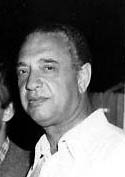
O editor foi Sam Zimbalist. Nascido na Rússia em 1901, chegou aos EUA em 1914. Dois anos depois, ele começou de baixo no mundo do cinema, como office-boy para o diretor da Metro, e nas horas vagas podia ser encontrado na sala de edição. Ele trabalhou por um tempo diretamente com Nazimova e em 1924 finalmente encontrou trabalho como editor. Ele editou, entre outros, este filme e “Melodia da Broadway” de 1929, mesmo ano em que passou a ser também produtor. Foi produtor de vários sucessos, incluindo seu último trabalho, “Ben-Hur” (1959), pelo qual ele se tornou a única pessoa a receber postumamente o Oscar de Melhor Filme.

The editor was Sam Zimbalist. Born in Russia in 1901, he arrived in the USA in 1914. Two years later, he started small in the film business, as an office-boy for the president of Metro studios, and in the spare time could be found in the editing room. He worked a while directly with Nazimova and in 1924 finally found work as an editor. He edited, among others, this film and “The Broadway Melody” from 1929, the year he got his first credit as assistant producer. He was the producer of several hits, including his last credit, “Ben-Hur” (1959), for which he became the only person to receive a posthumous Best Picture Oscar.
“O Feiticeiro de Oz” foi um desastre de bilheteria. A companhia Chadwick Pictures quase foi à falência graças à campanha de propaganda do filme. O próprio Larry Semon declarou falência e faleceu três anos depois, com apenas 39 anos.

“The Wizard of Oz” was a disaster at the box-office. Chadwick Pictures nearly went bankrupt thanks to the film’s advertising campaign. Larry Semon himself failed for bankruptcy and died three years after the film was made, aged only 39.

Esta versão é tão radicalmente diferente da mais conhecida e também do livro que é até difícil de julgar este filme como uma adaptação. No mínimo, é um filme inventivo. O racismo, por outro lado, é indesculpável. A revista Photoplay disse aos seus leitores: “Se você não levar seus filhos para ver o filme, eles nunca lhe perdoarão.” . Nós ousamos discordar: ver a versão de 1925 de “O Feiticeiro de Oz” é hoje mais tortura que passatempo.

This version is so radically different from the best known one and also from the book that it’s even hard to judge it as an adaptation. At the very least, it was an inventive movie. The racism, on the other hand, is inexcusable. Photoplay magazine said to its readers: “If you don’t take your children to see this, they will never forgive you.”. We dare to disagree: watching the 1925 version of “The Wizard of Oz” is now more torture than pastime.

This is my contribution to the Seventh So Bad It’s Good blogathon, hosted by Rebecca at Taking Up Room.


Friday, August 23, 2019

Over the Rainbow: a história de uma canção

Over the Rainbow: the history of a song

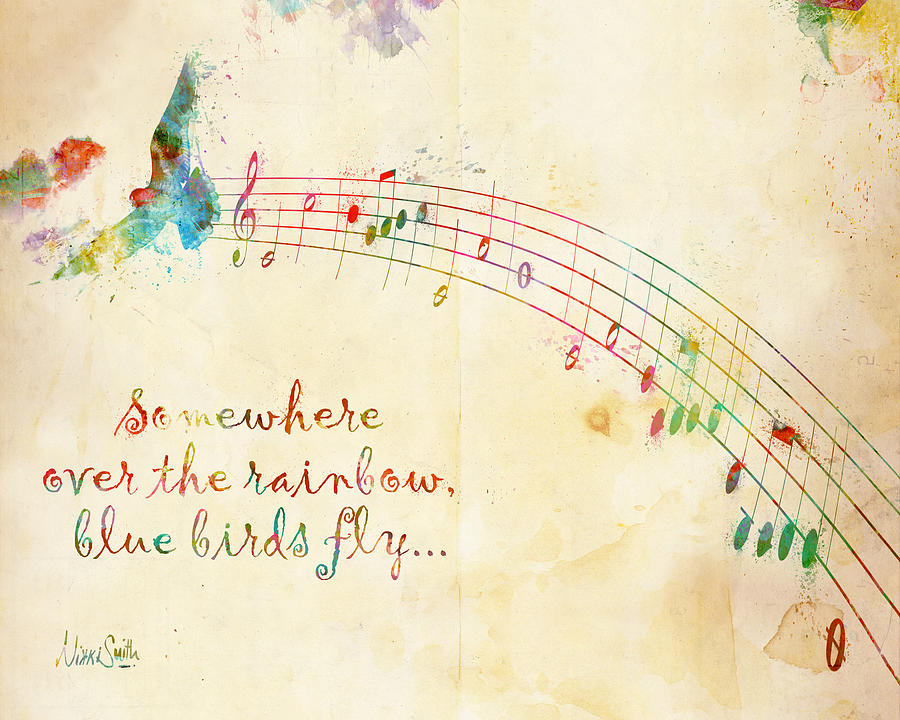
Há uma grande chance de que você já tenha ouvido esta charmosa música, que é quase uma canção de ninar, sobre um lugar onde pássaros azuis voam e sonhos se realizam, muito antes de ter visto o filme que apresentou a música para o mundo. De fato, “Over the Rainbow” é uma das canções mais icônicas da história do cinema, e é facilmente reconhecida – não importa se é Judy Garland ou outra pessoa cantando. Por isso, não é de se espantar que a música tenha sido escolhida como a número um na lista de Canções de Filmes do American Film Institution em 2004.

Chances are that you have heard this charming song, almost a lullaby, about a place where bluebirds fly and dreams come true, a long time before you actually saw the film that introduced the song to the world. Indeed, “Over the Rainbow” is one of the most iconic songs in the history of film, and an easily recognizable one – no matter if it is Judy Garland or someone else singing. No wonder it was chosen as the number one Song in Film by the American Film Institute in 2004.


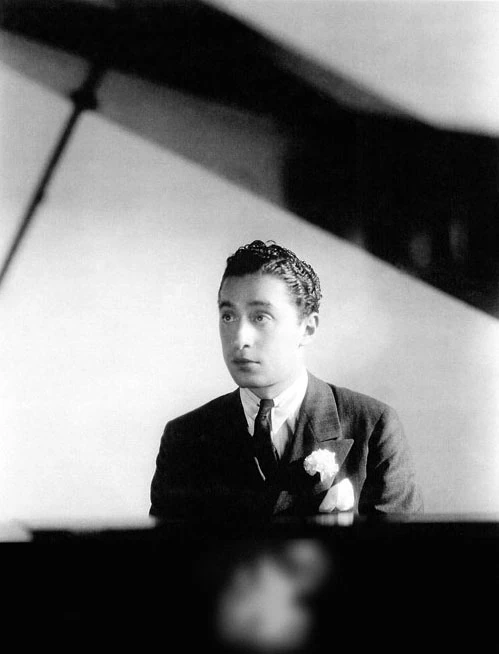
Você deve saber que “Over the Rainbow” foi apresentada em “O Mágico de Oz” (1939), mas você provavelmente não sabe quem a compôs e quem escreveu a letra. Harold Arlen foi o compositor e Yip Harburg escreveu a letra. Quem, você deve estar se perguntando? Bem, eles não eram os Gershwin nem Rodgers e Hammerstein, mas eles certamente merecem destaque:

You may know that “Over the Rainbow” was introduced in “The Wizard of Oz” (1939), but you probably don't know who composed it and wrote the lyrics. Harold Arlen was the composer and Yip Harburg was the lyricist. Who, you may ask? Well, they were no Gershwins or Rodgers and Hammerstein, but they were certainly worth noticing:


Harold Arlen (1905-1986) compôs mais de 500 canções, incluindo “Get Happy”, “Stormy Weather”, “Come Rain or Come Shine” e “The Man That Got Away”. Quando jovem, ele e o ator Ray Bolger, que interpreta o Espantalho em “O Mágico de Oz”, foram colegas de quarto, e mantiveram a amizade por anos.

Harold Arlen (1905-1986) composed more than 500 songs, among them “Get Happy”, “Stormy Weather”, “Come Rain or Come Shine” and “The Man That Got Away”. As a young man, he and actor Ray Bolger, who plays the Scarecrow in “The Wizard of Oz”, were roommates, and the two remained friends for years.


Edgar Yipsel ‘Yip’ Harburg (1896-1981) só começou a escrever letras de música depois de perder uma grande quantia na quebra da bolsa de 1929. Ele e Ira Gershwin se conheceram no ensino médio e continuaram amigos a vida toda, e foi Ira que o aconselhou a escrever letras de música. De acordo com o filho de Yip, ele também escreveu alguns diálogos para “O Mágico de Oz”. Yip ficou na Lista Negra entre 1950 e 1962 por causa de sua visão liberal. Sua mais famosa canção é “Brother, Can You Spare a Dime?”.

Edgar Yipsel 'Yip' Harburg (1896-1981) only started writing songs after he lost a huge sum in the crash 1929. He and Ira Gershwin met in high school and remained friends for life, and it was Ira who advised him to become a lyricist. According to Yip's son, he also wrote some dialogue for “The Wizard of Oz”. Yip was blacklisted from 1950 until 1962 because of his liberal views. His most famous song is “Brother, Can You Spare a Dime?”.


Arlen e Harburg se conheceram no começo dos anos 30 e fizeram, em 1933, a canção “It´s Only a Paper Moon”. Outras músicas criadas pela dupla foram “Lydia the Tattooed Lady”, do filme “Os Irmãos Marx no Circo” (1939), e “Happiness is a Thing Called Joe”, de “Uma Cabana no Céu” (1943). Arlen e Harburg trabalharam em outro filme de Judy Garland: “A Gata dos Meus Sonhos”, uma animação de 1962 em que Judy dublava a protagonista. Eles também criaram a música “I Could Go on Singing”, do filme “Na Glória, a Amargura” (1963), o último filme de Judy Garland.
  
Arlen and Harburg met in the early 30s and created, in 1933, the song “It's Only a Paper Moon”. Other songs they created together were “Lydia the Tattooed Lady” from the Marx's brothers “At the Circus”, and “Happiness is a Thing Called Joe”, from “Cabin in the Sky” (1943). Arlen and Harburg worked in another Judy Garland film: “Gay Purr-ee”, a 1962 animation in which Judy dubbed the lead. They also wrote the title song for “I Could Go on Singing” (1963), Judy Garland's last movie.


De acordo com o IMDb, Harold Arlen teve uma inspiração súbita na Farmácia Schwab’s em Sunset Boulevard, quando as primeiras notas da melodia de “Over the Rainbow” surgiram em sua mente. Algumas fontes dizem que a inspiração foi completada por um arco-íris que ele avistou no horizonte. Num primeiro momento, Harburg não gostou da canção, mas mudou de ideia quando Ira Gershwin a aprovou. Isto pode ou não ser verdade, mas ao menos é uma história poética sobre uma canção poética.

According to IMDb, Harold Arlen had a sudden inspirational moment at the Schwab’s Drugstore on Sunset Boulevard, as the first notes of the melody of “Over the Rainbow” came to his mind all of a sudden. Some sources claim that the inspiration was completed by a rainbow he saw in the horizon. At first, Harburg didn’t like the song, but he changed his mind when Ira Gershwin approved it. Whether this is true of not, it’s a poetical story about a poetical song.


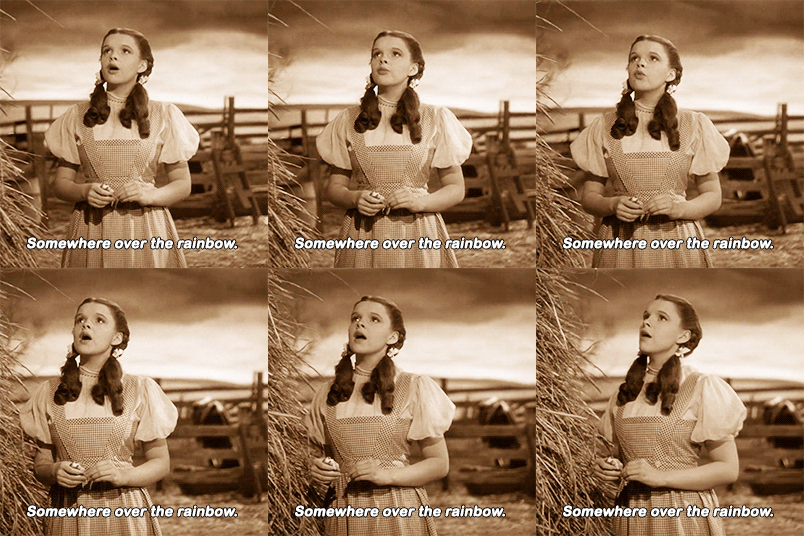
A sequência que apresenta “Over the Rainbow” foi filmada por King Vidor, não creditado, usando uma câmera móvel – não uma estática, como era de costume. A cena tem Judy Garland, aos 16 anos, e o cãozinho Toto em tons de sépia, no celeiro da fazenda da Tia Em. Judy gravou a música – não a cena – exatamente no dia sete de outubro de 1938. Uma segunda versão da canção deveria ser cantada quando Dorothy é capturada pela Bruxa Má do Oeste, mas essa cena foi considerada triste demais para ser incluída no filme.

The sequence that features “Over the Rainbow” was shot by an uncredited King Vidor using a fluid camera – not a static one, as it was intended. It presents Judy Garland, then 16, and the dog Toto in sepiatone, in the barnyard of Aunt Em's farm. Judy recorded the song – not shot the scene – exactly on October 7th, 1938. A second rendition of the song was supposed to happen when Dorothy is trapped by the Wicked Witch of the West, but the scene was deemed too sad to be included in the film.


“Over the Rainbow” quase foi cortada de “O Mágico de Oz”. Louis B. Mayer achava que a música deixava o filme lento e também não era muito glamouroso ter uma estrela cantando em um celeiro, de acordo com alguns empregados da MGM. No final, graças aos protestos dos produtores Mervyn LeRoy e Arthur Freed, a música permaneceu no filme – e se tornou a maior marca registrada tanto do filme quanto da carreira de Judy Garland. Arlen e Harburg também ganharam o Oscar de Melhor Canção Original.

“Over the Rainbow” was almost cut from “The Wizard of Oz”. Louis B. Mayer believed the song slowed the picture down and it also wasn't very glamorous for the star to sing a ballad in a barnyard, according to some MGM employees. In the end, thanks to protests from the producers Mervyn LeRoy and Arthur Freed, the song remained in the film – and became the biggest trademark of both the film and of Judy Garland’s career. Arlen and Harburg also won the Oscar for Best Original Song.


A relação de Judy com a canção nem sempre foi pacífica. Enquanto algumas fontes dizem que ela amava a inocência que a música traduzia, outras afirmam que ela cantou tanto a canção que se cansou dela.

Judy’s relationship with the song was not always a peaceful one. While some sources say she loved the innocence the song translated, others affirm she sang it so much she got bored by it.


A carreira de Judy na televisão durou 14 anos, mas ela só cantou “Over the Rainbow” na TV duas vezes. Uma destas ocasiões foi em um especial de TV de 1955, vestida com a fantasia de mendiga do número “A Couple of Swells”. Este episódio foi lindamente recriado na minissérie “Eu e Minhas Sombras” (2001), com Judy Davis interpretando Judy Garland.

Judy's career on television lasted 14 years, but she only sang “Over the Rainbow” twice on TV. One of those occasions was in a 1955 TV special, while wearing the tramp costume from the routine “A Couple of Swells”. This episode was beautifully recreated in the miniseries “Me and My Shadows” (2001), with Judy Davis playing Judy Garland.


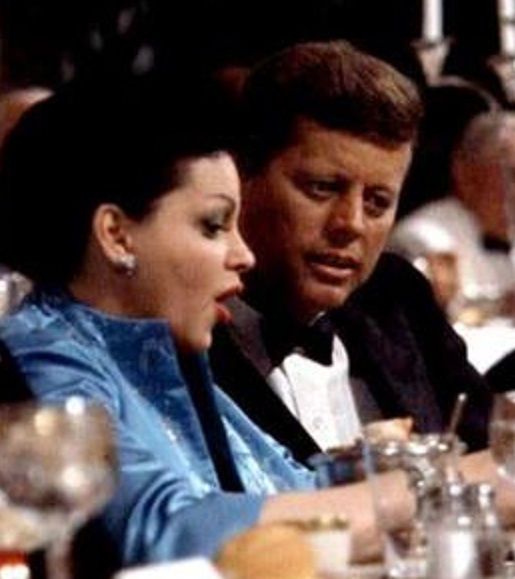
Em 1963, Judy estava tendo problemas nas filmagens de seu programa de TV. Por isso, sempre que ela precisava desabafar, ela ligava para um velho amigo: o então presidente dos EUA John Kennedy. Cada conversa com Kennedy na Casa Branca terminava com ele pedindo para que ela cantasse um trecho de “Over the Rainbow”, e ela o fazia, não sem antes protestar. Esta história foi contada por Liza Minnelli e mais tarde confirmada pela antiga secretária de Kennedy.

In 1963, Judy was having a hard time during filming her TV show. So, whenever she needed to vent, she called an old friend: the then US president John Kennedy. Every phone conversation with Kennedy in the White House ended with him asking her to sing a bit of “Over the Rainbow”, and she agreeing to do so, not without protesting first. This story was told by Liza Minnelli and later confirmed by Kennedy's former secretary.


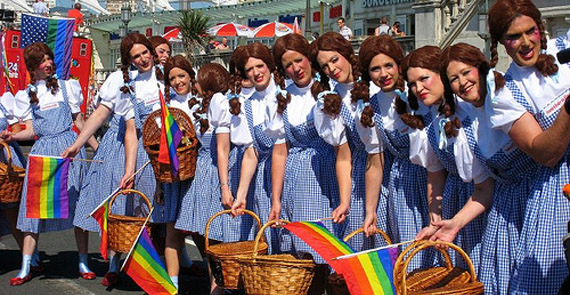
O significado da canção é imenso. O site songfacts.com diz que Yip Harburg escreveu a letra pensando no New Deal de Roosevelt e em como isso trazia esperança para o povo – mas devemos nos lembrar de que o New Deal oficialmente terminou em 1937, pois isso esta história é difícil de acreditar. Entretanto, não podemos negar a influência que a música tem na comunidade LGBTQ, tendo sido adotada como hino, pois a música fala sobre um lugar feliz onde as diferenças são aceitas – lembre-se de como Dorothy aceitou o Leão Covarde, o Espantalho e o Homem de Lata com todas as suas imperfeições. Judy Garland também se tornou um ícone LGBTQ, pois muitos homens gays dos anos 50 e 60 se intitulavam “Amigos de Dorothy”.

The significance of the song is immense. Site songfacts.com says that Yip Harburg wrote the lyrics thinking about Roosevelt’s New Deal and how it brought hope to the people – but we must remember that the New Deal officially ended in 1937, so this story is hard to believe. However, we can’t deny the influence the song has on the LGBTQ community, as it was adopted as an anthem, since the song talks about a happy place where differences are embraced – just remember how Dorothy embraced the Cowardly Lion, the Scarecrow and the Tin Man with all their imperfections. Judy Garland also became a LGBTQ icon, as many gay men of the 50s and 60s called themselves “Friends of Dorothy”.


Embora a interpretação de Judy Garland de Over the Rainbow” seja considerada definitiva,muitos artistas gravaram a música, incluindo Frank Sinatra, Ella Fitzgerald, Doris Day, Eric Clapton, Plácido Domingo, Ray Charles, Bob Marley, Tony Bennett, Rita Lee, Ariana Grande e muitos outros. A versão instrumental também foi gravada por orquestras do mundo todo.

Although Judy Garland's rendition of “Over the Rainbow” is considered the definitive one, many artists recorded the song, among them Frank Sinatra, Ella Fitzgerald, Doris Day, Eric Clapton, Plácido Domingo, Ray Charles, Bob Marley, Tony Bennett, Rita Lee, Ariana Grande and many more. The instrumental version was also recorded by orchestras all over the world.


Ao longo dos anos, “Over the Rainbow” foi usada em muitos filmes e programas de TV. Apenas um ano depois da estreia de “O Mágico de Oz”, a música foi cantada por Macaulay Connor (James Stwewart), bêbado, enquanto ele carregava Tracy Lord (Katharine Hepburn), igualmente bêbada, pelo quintal da casa dela em “Núpcias de Escândalo”.

Over the years, “Over the Rainbow” appeared in many films and TV shows. Only a year after “The Wizard of Oz” premiered, the song was sung by a drunk Macaulay Connor (James Stewart) as he carried an equally drunk Tracy Lord (Katharine Hepburn) through her yard in “The Philadelphia Story”.


Este foi só um exemplo. O IMDb lista 287 filmes e programas de TV que incluem a música – entre eles temos documentários, séries, talk shows, animações, curtas e longas-metragens do mundo todo. Produções da China, França, Espanha, Brasil, Suécia, Dinamarca, Alemanha e outros países já incluíram a música. “Over the Rainbow” foi composta mais de 80 anos atrás e ainda é conhecida e amada no mundo inteiro – talvez porque todos nós desejamos conhecer o lugar que a música descreve.

This was only one example. IMDb lists 287 film and TVs that feature the song – among them there are documentaries, TV series, talk shows, animations, shorts and feature films from all over the world. Productions from China, France, Spain, Brazil, Sweden, Denmark, Germany and other countries already featured the song. “Over the Rainbow” was composed more than 80 years ago and it's still known and loved all over the world – maybe because we all long for that place that the song described.

This is my contribution to The Wizard of Oz blogathon, hosted by Rebecca from Taking Up Room.


Related Posts Plugin for WordPress, Blogger...