} Crítica Retrô: música

Tradutor / Translator / Traductor / Übersetzer / Traduttore / Traducteur / 翻訳者 / переводчик

Showing posts with label música. Show all posts

Friday, August 23, 2019

Over the Rainbow: a história de uma canção

Over the Rainbow: the history of a song
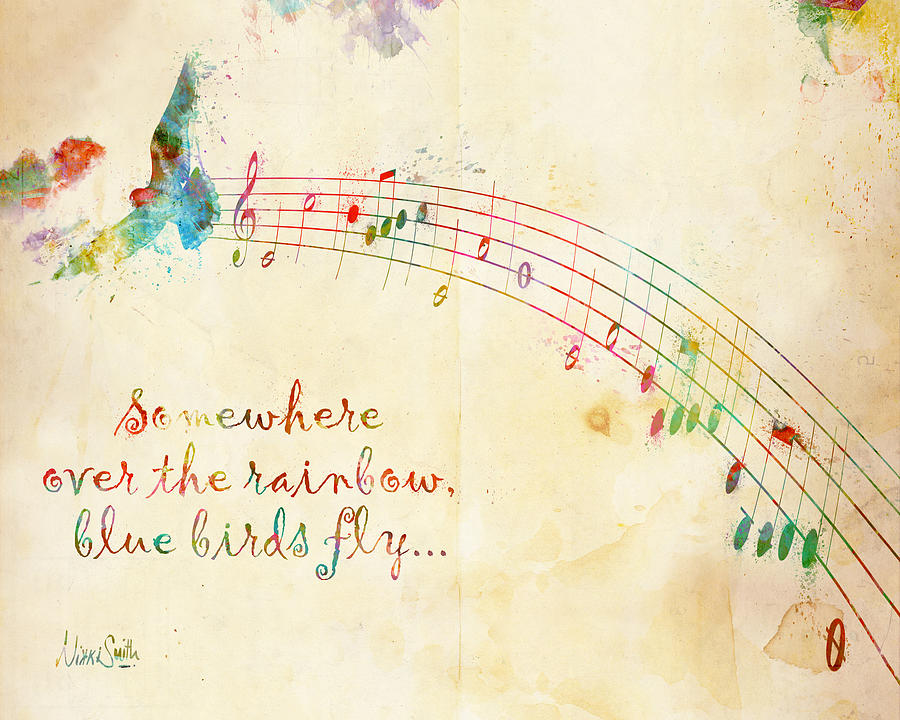
Há uma grande chance de que você já tenha ouvido esta charmosa música, que é quase uma canção de ninar, sobre um lugar onde pássaros azuis voam e sonhos se realizam, muito antes de ter visto o filme que apresentou a música para o mundo. De fato, “Over the Rainbow” é uma das canções mais icônicas da história do cinema, e é facilmente reconhecida – não importa se é Judy Garland ou outra pessoa cantando. Por isso, não é de se espantar que a música tenha sido escolhida como a número um na lista de Canções de Filmes do American Film Institution em 2004.

Chances are that you have heard this charming song, almost a lullaby, about a place where bluebirds fly and dreams come true, a long time before you actually saw the film that introduced the song to the world. Indeed, “Over the Rainbow” is one of the most iconic songs in the history of film, and an easily recognizable one – no matter if it is Judy Garland or someone else singing. No wonder it was chosen as the number one Song in Film by the American Film Institute in 2004.


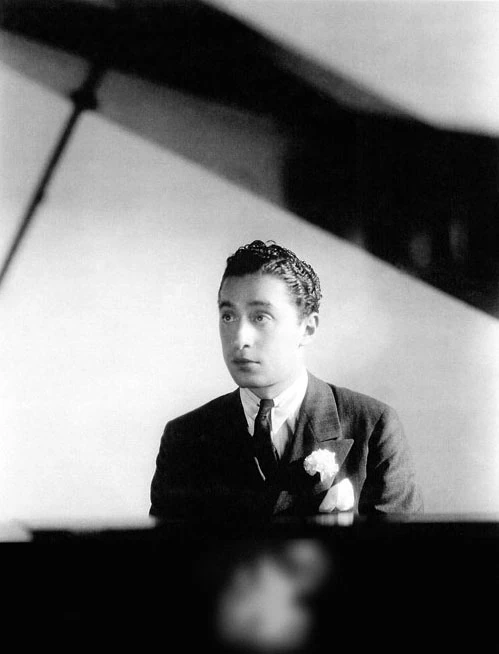
Você deve saber que “Over the Rainbow” foi apresentada em “O Mágico de Oz” (1939), mas você provavelmente não sabe quem a compôs e quem escreveu a letra. Harold Arlen foi o compositor e Yip Harburg escreveu a letra. Quem, você deve estar se perguntando? Bem, eles não eram os Gershwin nem Rodgers e Hammerstein, mas eles certamente merecem destaque:

You may know that “Over the Rainbow” was introduced in “The Wizard of Oz” (1939), but you probably don't know who composed it and wrote the lyrics. Harold Arlen was the composer and Yip Harburg was the lyricist. Who, you may ask? Well, they were no Gershwins or Rodgers and Hammerstein, but they were certainly worth noticing:


Harold Arlen (1905-1986) compôs mais de 500 canções, incluindo “Get Happy”, “Stormy Weather”, “Come Rain or Come Shine” e “The Man That Got Away”. Quando jovem, ele e o ator Ray Bolger, que interpreta o Espantalho em “O Mágico de Oz”, foram colegas de quarto, e mantiveram a amizade por anos.

Harold Arlen (1905-1986) composed more than 500 songs, among them “Get Happy”, “Stormy Weather”, “Come Rain or Come Shine” and “The Man That Got Away”. As a young man, he and actor Ray Bolger, who plays the Scarecrow in “The Wizard of Oz”, were roommates, and the two remained friends for years.


Edgar Yipsel ‘Yip’ Harburg (1896-1981) só começou a escrever letras de música depois de perder uma grande quantia na quebra da bolsa de 1929. Ele e Ira Gershwin se conheceram no ensino médio e continuaram amigos a vida toda, e foi Ira que o aconselhou a escrever letras de música. De acordo com o filho de Yip, ele também escreveu alguns diálogos para “O Mágico de Oz”. Yip ficou na Lista Negra entre 1950 e 1962 por causa de sua visão liberal. Sua mais famosa canção é “Brother, Can You Spare a Dime?”.

Edgar Yipsel 'Yip' Harburg (1896-1981) only started writing songs after he lost a huge sum in the crash 1929. He and Ira Gershwin met in high school and remained friends for life, and it was Ira who advised him to become a lyricist. According to Yip's son, he also wrote some dialogue for “The Wizard of Oz”. Yip was blacklisted from 1950 until 1962 because of his liberal views. His most famous song is “Brother, Can You Spare a Dime?”.


Arlen e Harburg se conheceram no começo dos anos 30 e fizeram, em 1933, a canção “It´s Only a Paper Moon”. Outras músicas criadas pela dupla foram “Lydia the Tattooed Lady”, do filme “Os Irmãos Marx no Circo” (1939), e “Happiness is a Thing Called Joe”, de “Uma Cabana no Céu” (1943). Arlen e Harburg trabalharam em outro filme de Judy Garland: “A Gata dos Meus Sonhos”, uma animação de 1962 em que Judy dublava a protagonista. Eles também criaram a música “I Could Go on Singing”, do filme “Na Glória, a Amargura” (1963), o último filme de Judy Garland.
  
Arlen and Harburg met in the early 30s and created, in 1933, the song “It's Only a Paper Moon”. Other songs they created together were “Lydia the Tattooed Lady” from the Marx's brothers “At the Circus”, and “Happiness is a Thing Called Joe”, from “Cabin in the Sky” (1943). Arlen and Harburg worked in another Judy Garland film: “Gay Purr-ee”, a 1962 animation in which Judy dubbed the lead. They also wrote the title song for “I Could Go on Singing” (1963), Judy Garland's last movie.


De acordo com o IMDb, Harold Arlen teve uma inspiração súbita na Farmácia Schwab’s em Sunset Boulevard, quando as primeiras notas da melodia de “Over the Rainbow” surgiram em sua mente. Algumas fontes dizem que a inspiração foi completada por um arco-íris que ele avistou no horizonte. Num primeiro momento, Harburg não gostou da canção, mas mudou de ideia quando Ira Gershwin a aprovou. Isto pode ou não ser verdade, mas ao menos é uma história poética sobre uma canção poética.

According to IMDb, Harold Arlen had a sudden inspirational moment at the Schwab’s Drugstore on Sunset Boulevard, as the first notes of the melody of “Over the Rainbow” came to his mind all of a sudden. Some sources claim that the inspiration was completed by a rainbow he saw in the horizon. At first, Harburg didn’t like the song, but he changed his mind when Ira Gershwin approved it. Whether this is true of not, it’s a poetical story about a poetical song.


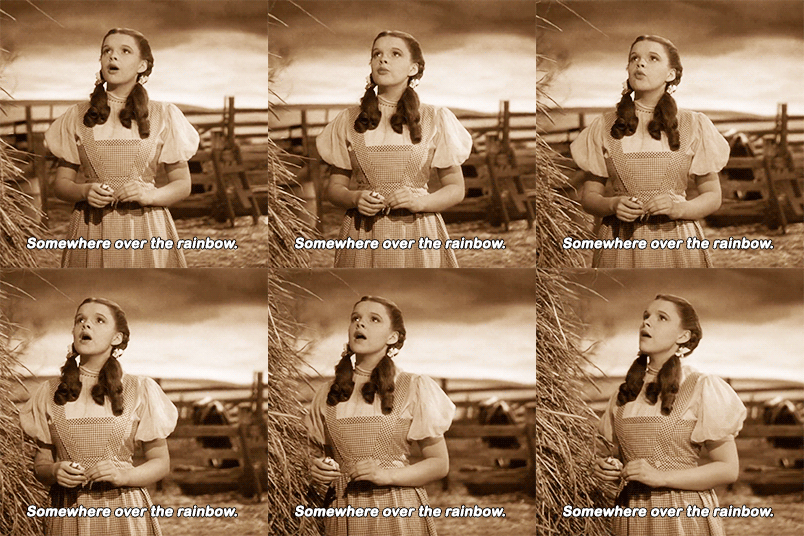
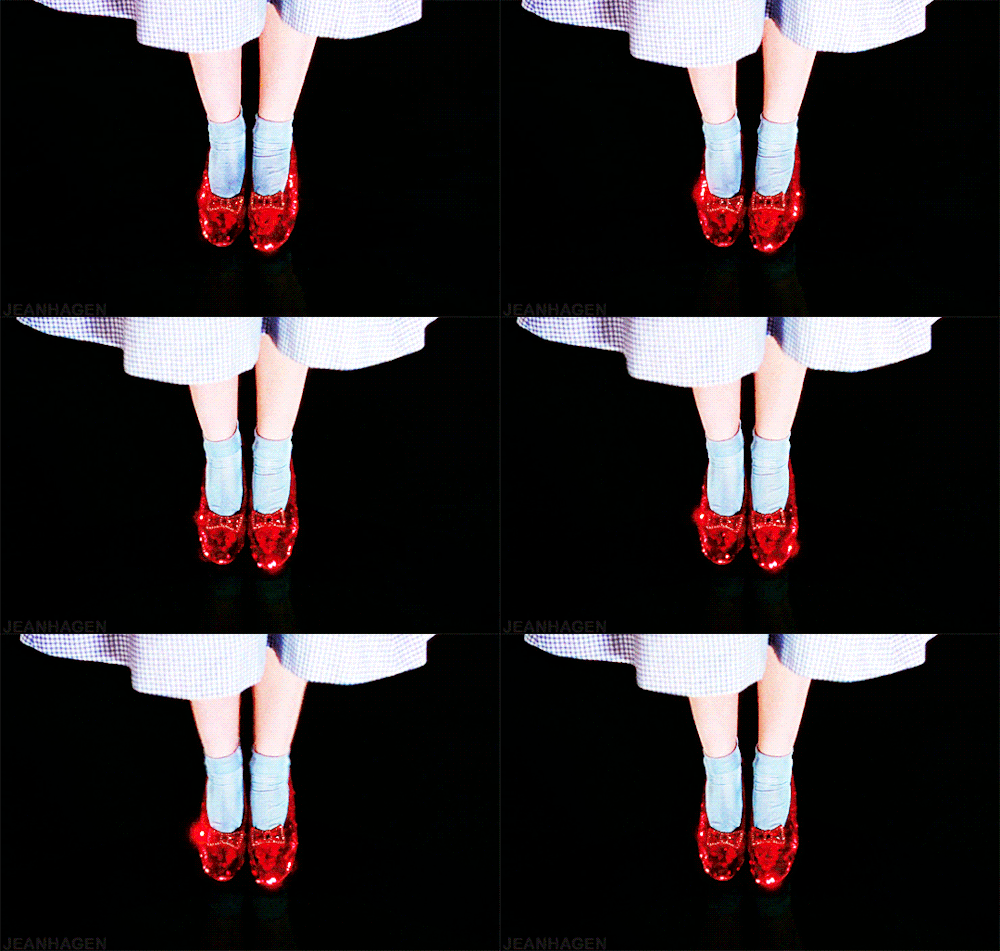
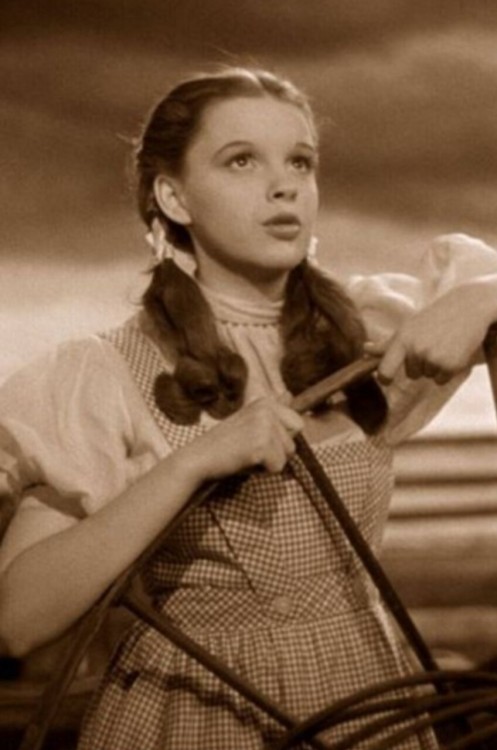
A sequência que apresenta “Over the Rainbow” foi filmada por King Vidor, não creditado, usando uma câmera móvel – não uma estática, como era de costume. A cena tem Judy Garland, aos 16 anos, e o cãozinho Toto em tons de sépia, no celeiro da fazenda da Tia Em. Judy gravou a música – não a cena – exatamente no dia sete de outubro de 1938. Uma segunda versão da canção deveria ser cantada quando Dorothy é capturada pela Bruxa Má do Oeste, mas essa cena foi considerada triste demais para ser incluída no filme.

The sequence that features “Over the Rainbow” was shot by an uncredited King Vidor using a fluid camera – not a static one, as it was intended. It presents Judy Garland, then 16, and the dog Toto in sepiatone, in the barnyard of Aunt Em's farm. Judy recorded the song – not shot the scene – exactly on October 7th, 1938. A second rendition of the song was supposed to happen when Dorothy is trapped by the Wicked Witch of the West, but the scene was deemed too sad to be included in the film.


“Over the Rainbow” quase foi cortada de “O Mágico de Oz”. Louis B. Mayer achava que a música deixava o filme lento e também não era muito glamouroso ter uma estrela cantando em um celeiro, de acordo com alguns empregados da MGM. No final, graças aos protestos dos produtores Mervyn LeRoy e Arthur Freed, a música permaneceu no filme – e se tornou a maior marca registrada tanto do filme quanto da carreira de Judy Garland. Arlen e Harburg também ganharam o Oscar de Melhor Canção Original.

Over the Rainbow” was almost cut from “The Wizard of Oz”. Louis B. Mayer believed the song slowed the picture down and it also wasn't very glamorous for the star to sing a ballad in a barnyard, according to some MGM employees. In the end, thanks to protests from the producers Mervyn LeRoy and Arthur Freed, the song remained in the film – and became the biggest trademark of both the film and of Judy Garland’s career. Arlen and Harburg also won the Oscar for Best Original Song.


A relação de Judy com a canção nem sempre foi pacífica. Enquanto algumas fontes dizem que ela amava a inocência que a música traduzia, outras afirmam que ela cantou tanto a canção que se cansou dela.

Judy’s relationship with the song was not always a peaceful one. While some sources say she loved the innocence the song translated, others affirm she sang it so much she got bored by it.


A carreira de Judy na televisão durou 14 anos, mas ela só cantou “Over the Rainbow” na TV duas vezes. Uma destas ocasiões foi em um especial de TV de 1955, vestida com a fantasia de mendiga do número “A Couple of Swells”. Este episódio foi lindamente recriado na minissérie “Eu e Minhas Sombras” (2001), com Judy Davis interpretando Judy Garland.

Judy's career on television lasted 14 years, but she only sang “Over the Rainbow” twice on TV. One of those occasions was in a 1955 TV special, while wearing the tramp costume from the routine “A Couple of Swells”. This episode was beautifully recreated in the miniseries “Me and My Shadows” (2001), with Judy Davis playing Judy Garland.


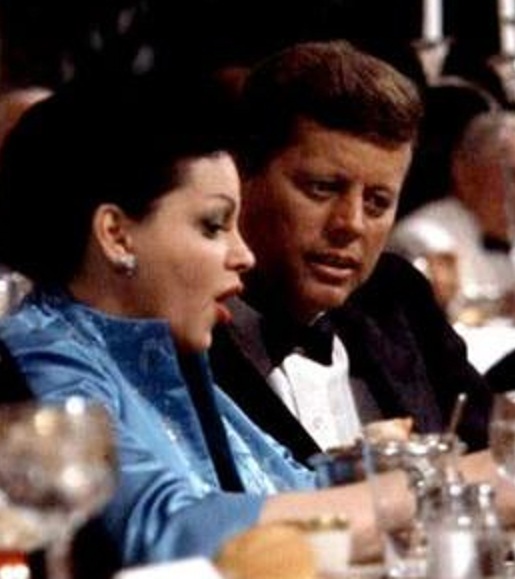
Em 1963, Judy estava tendo problemas nas filmagens de seu programa de TV. Por isso, sempre que ela precisava desabafar, ela ligava para um velho amigo: o então presidente dos EUA John Kennedy. Cada conversa com Kennedy na Casa Branca terminava com ele pedindo para que ela cantasse um trecho de “Over the Rainbow”, e ela o fazia, não sem antes protestar. Esta história foi contada por Liza Minnelli e mais tarde confirmada pela antiga secretária de Kennedy.

In 1963, Judy was having a hard time during filming her TV show. So, whenever she needed to vent, she called an old friend: the then US president John Kennedy. Every phone conversation with Kennedy in the White House ended with him asking her to sing a bit of “Over the Rainbow”, and she agreeing to do so, not without protesting first. This story was told by Liza Minnelli and later confirmed by Kennedy's former secretary.


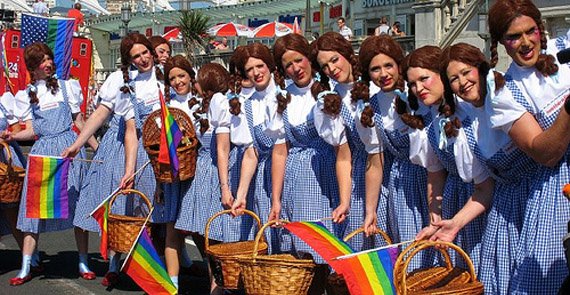
O significado da canção é imenso. O site songfacts.com diz que Yip Harburg escreveu a letra pensando no New Deal de Roosevelt e em como isso trazia esperança para o povo – mas devemos nos lembrar de que o New Deal oficialmente terminou em 1937, pois isso esta história é difícil de acreditar. Entretanto, não podemos negar a influência que a música tem na comunidade LGBTQ, tendo sido adotada como hino, pois a música fala sobre um lugar feliz onde as diferenças são aceitas – lembre-se de como Dorothy aceitou o Leão Covarde, o Espantalho e o Homem de Lata com todas as suas imperfeições. Judy Garland também se tornou um ícone LGBTQ, pois muitos homens gays dos anos 50 e 60 se intitulavam “Amigos de Dorothy”.

The significance of the song is immense. Site songfacts.com says that Yip Harburg wrote the lyrics thinking about Roosevelt’s New Deal and how it brought hope to the people – but we must remember that the New Deal officially ended in 1937, so this story is hard to believe. However, we can’t deny the influence the song has on the LGBTQ community, as it was adopted as an anthem, since the song talks about a happy place where differences are embraced – just remember how Dorothy embraced the Cowardly Lion, the Scarecrow and the Tin Man with all their imperfections. Judy Garland also became a LGBTQ icon, as many gay men of the 50s and 60s called themselves “Friends of Dorothy”.


Embora a interpretação de Judy Garland de Over the Rainbow” seja considerada definitiva,muitos artistas gravaram a música, incluindo Frank Sinatra, Ella Fitzgerald, Doris Day, Eric Clapton, Plácido Domingo, Ray Charles, Bob Marley, Tony Bennett, Rita Lee, Ariana Grande e muitos outros. A versão instrumental também foi gravada por orquestras do mundo todo.

Although Judy Garland's rendition of “Over the Rainbow” is considered the definitive one, many artists recorded the song, among them Frank Sinatra, Ella Fitzgerald, Doris Day, Eric Clapton, Plácido Domingo, Ray Charles, Bob Marley, Tony Bennett, Rita Lee, Ariana Grande and many more. The instrumental version was also recorded by orchestras all over the world.


Ao longo dos anos, “Over the Rainbow” foi usada em muitos filmes e programas de TV. Apenas um ano depois da estreia de “O Mágico de Oz”, a música foi cantada por Macaulay Connor (James Stwewart), bêbado, enquanto ele carregava Tracy Lord (Katharine Hepburn), igualmente bêbada, pelo quintal da casa dela em “Núpcias de Escândalo”.

Over the years, “Over the Rainbow” appeared in many films and TV shows. Only a year after “The Wizard of Oz” premiered, the song was sung by a drunk Macaulay Connor (James Stewart) as he carried an equally drunk Tracy Lord (Katharine Hepburn) through her yard in “The Philadelphia Story”.


Este foi só um exemplo. O IMDb lista 287 filmes e programas de TV que incluem a música – entre eles temos documentários, séries, talk shows, animações, curtas e longas-metragens do mundo todo. Produções da China, França, Espanha, Brasil, Suécia, Dinamarca, Alemanha e outros países já incluíram a música. “Over the Rainbow” foi composta mais de 80 anos atrás e ainda é conhecida e amada no mundo inteiro – talvez porque todos nós desejamos conhecer o lugar que a música descreve.

This was only one example. IMDb lists 287 film and TVs that feature the song – among them there are documentaries, TV series, talk shows, animations, shorts and feature films from all over the world. Productions from China, France, Spain, Brazil, Sweden, Denmark, Germany and other countries already featured the song. “Over the Rainbow” was composed more than 80 years ago and it's still known and loved all over the world – maybe because we all long for that place that the song described.

This is my contribution to The Wizard of Oz blogathon, hosted by Rebecca from Taking Up Room.


Monday, June 11, 2018

Sinatramania

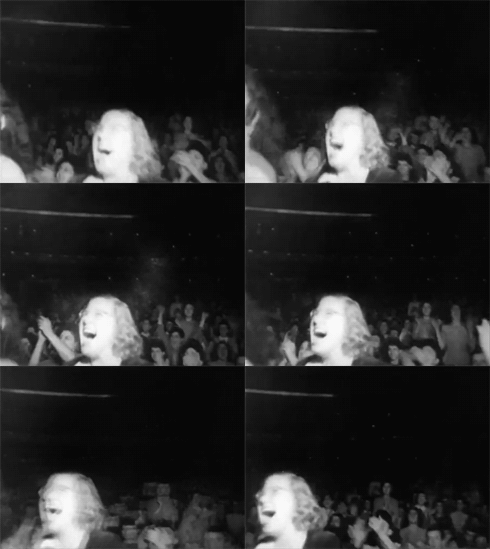
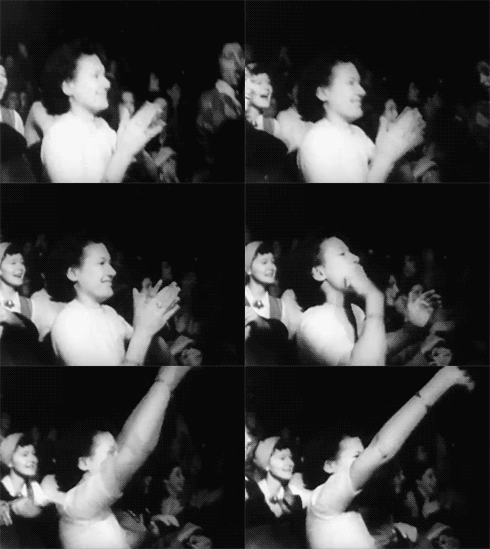
Adolescentes e jovens mulheres gritando até perder a voz. Quando elas finalmente veem o ídolo, elas gritam mais alto, choram, desmaiam. Algumas delas até perseguiam o ídolo, em busca de um autógrafo, foto ou talvez, uma mecha de cabelo. Seriam elas fãs do século XXI, loucas pelo cantor mais famoso do momento? Não. Fãs malucas não são novidade. Será que Al Jolson teve de lidar com flappers malucas? Havia groupies que seguiam Beethoven? Obviamente, eu não posso responder a estas perguntas por falta de provas, mas posso mostrar um exemplo de super-estrelato de 70 anos atrás. Nos anos 40, quase todas as garotas eram loucas por Sinatra.

Teenagers and young women screaming until they become voiceless. When they finally see their idol, they scream louder, cry, faint. Some of them even go after the idol, in the pursuit of an autograph, photo or, maybe, a lock of hair. Are they 21st century fans of the newest singer who is currently in vogue? No. Insane fans is nothing new. Did Al Jolson have to deal with crazy flappers? Were there any Beethoven groupies? Of course, I can't answer these questions because I don't have any proof, but I can show an example of superstardom from 70 years ago. In the 1940s, almost all girls were crazy for Sinatra.  


Francis Albert Sinatra nasceu em 1915. O jovem Frank amava música e, de acordo com livros biográficos, começou a cantar em reuniões familiares e no bar de seus pais em Hoboken – ele aprendeu música de ouvido, ou seja, sem aprender a ler partituras. Quando ele tinha 20 anos, conheceu o sucesso pela primeira vez: como membro do grupo “The Hoboken Four”, ele conseguiu seu primeiro contrato para uma turnê. E adivinhe qual dos quatro meninos de Hoboken chamava a atenção de todas as garotas?

Francis Albert Sinatra was born in 1915. Young Frank loved music and, according to biographic books, started performing at family gatherings and at his parents' tavern in Hoboken – he only learned music by ear, that is, he couldn't read music sheets. When he was 20, he had his first break: as a member of the group “The Hoboken Four”, he got his frst contract for a tour. And guess which of the four boys from Hoboken attracted all the girls' attention?


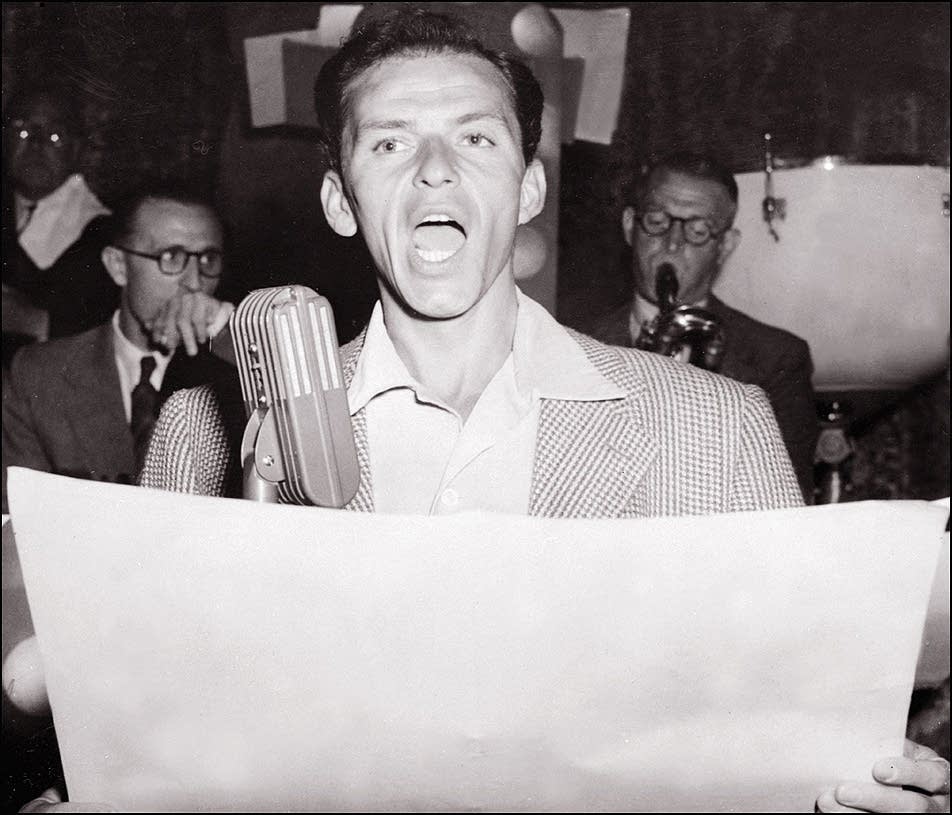
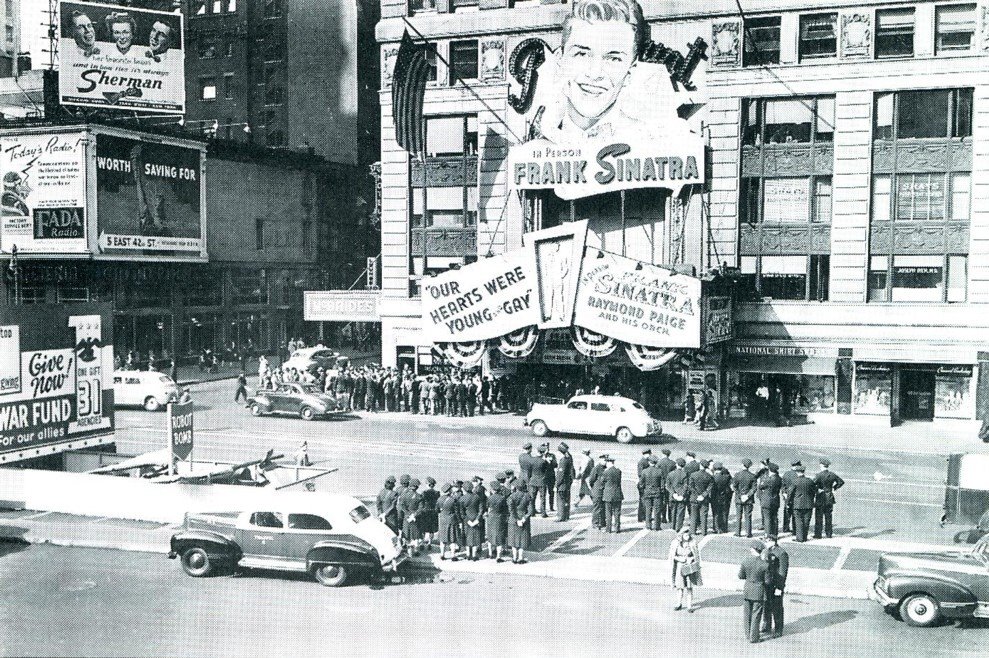
Depois de cantar com a orquestra de Tommy Dorsey, era a hora de Frank Sinatra começar a carreira solo e causar furor no mundo da música. Em dezembro de 1942, Frank estava nervoso com esta mudança na carreira, mas quando ele chegou ao teatro Paramount em Nova York, foi outra coisa que o deixou nervoso: a animação das fãs. Havia milhares de adolescentes histéricas, que conheciam suas canções do rádio e estavam agora mais do que animadas para vê-lo ao vivo.

After singing with the Tommy Dorsey orchestra, it was time for Frank Sinatra to go solo and cause mayheim in the music world. In December 1942, Frank was nervous as he was beginning his solo career, but when he arrived in the Paramount Theater in New York, something else made him nervous: the excitement of his fans. There were thousands of hysterical bobby-soxers, teenagers who had heard him on the radio and now were more than excited to see him live.


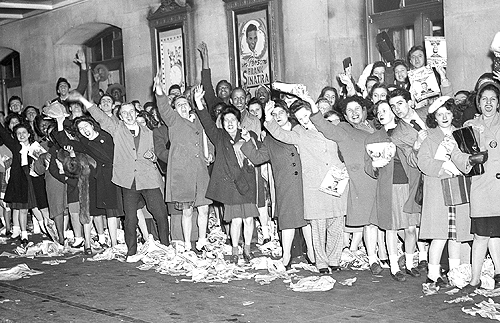
E durante os três anos seguintes, Sinatra continuou levando as adolescentes à loucura – mesmo sendo um homem casado de quase trinta anos... ou talvez tenha sido essa a razão? O clímax de sua popularidade e um pináculo na cultura pop americana é o chamdo “Columus Day riot”: um concerto, novamente no teatro Paramount em Nova York, em 12 de outubro de 1944, atraiu um recorde de fãs malucas. À meia-noite, a fila começou a se formar, e em quatro horas já havia 500 adolescentes esperando na fila para ver Frank. Algumas delas nem tinham ingressos, elas só queriam a oportunidade de ver o ídolo de perto. Soa familiar, não?

And during the following three or four years, Sinatra kept on driving teenagers crazy – even though he was a married man in his late 20s... or maybe this was the reason? The climax of his popularity and a pinnacle in American pop culture is the Columbus Day riot: a concert again at the Paramount Theater in New York on October 12th 1944 that attracted more crazy fans than ever. At midnight, the line started forming, and in four hours there were already 500 teenagers waiting to see Frank. Some of them didn't even have tickets, they only wanted the opportunity to catch a glimpse of the idol. Sounds familiar, doesn't it?


Essas garotas eram loucas por estarem apaixonadas por Frank Sinatra? Eu acho que não. Ele era um homem muito magro, com olhos azuis, cabelos pretos e uma voz que não parecia combinar com seu corpo. Ele tinha beleza e talento. Em um nível subconsciente, ele era um símbolo dos tempos de guerra: ele foi considerado inapto a servir o exército e ficou nos EUA cantando, e para muitas garotas ele representava o garoto conhecido que estava lutando na Europa – e que poderia nunca mais voltar. O próprio Sinatra disse que a solidão dos anos de guerra foi uma das coisas responsáveis por seu imenso sucesso.

Were these girls right to be crazily in love with Frank Sinatra? I think so. He was a very skinny, blue-eyed, black-haired man with a powerful voice that didn't seem to match his physique. He had looks and talent. In a subconscious level, he was a symbol in war times: he was considered unfit to serve the army and stayed in the US singing, and for many girls he represented the boy-next-door that was fighting in Europe – and could never return. Sinatra himself said that the loneliness of war years was one of the things responsible for his massive success.


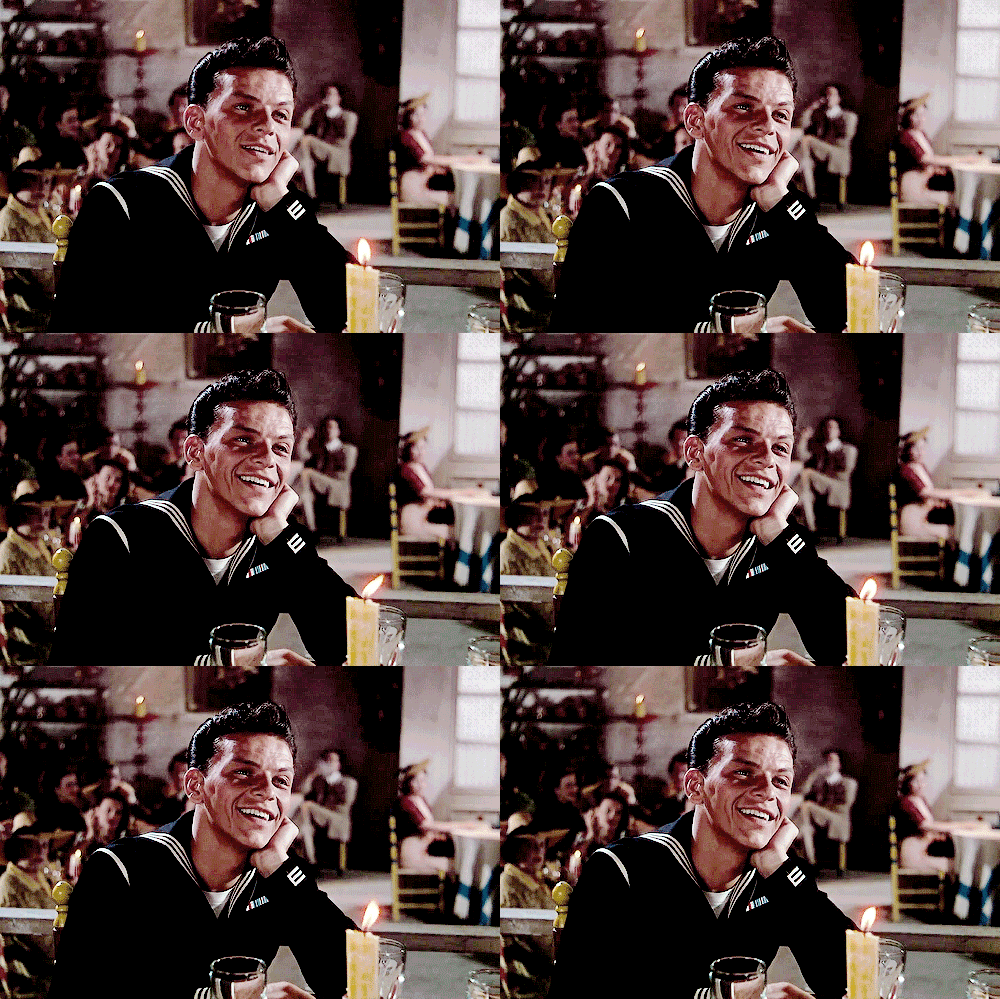
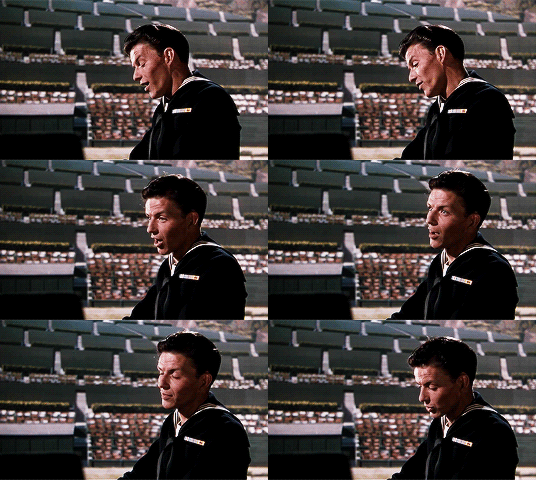
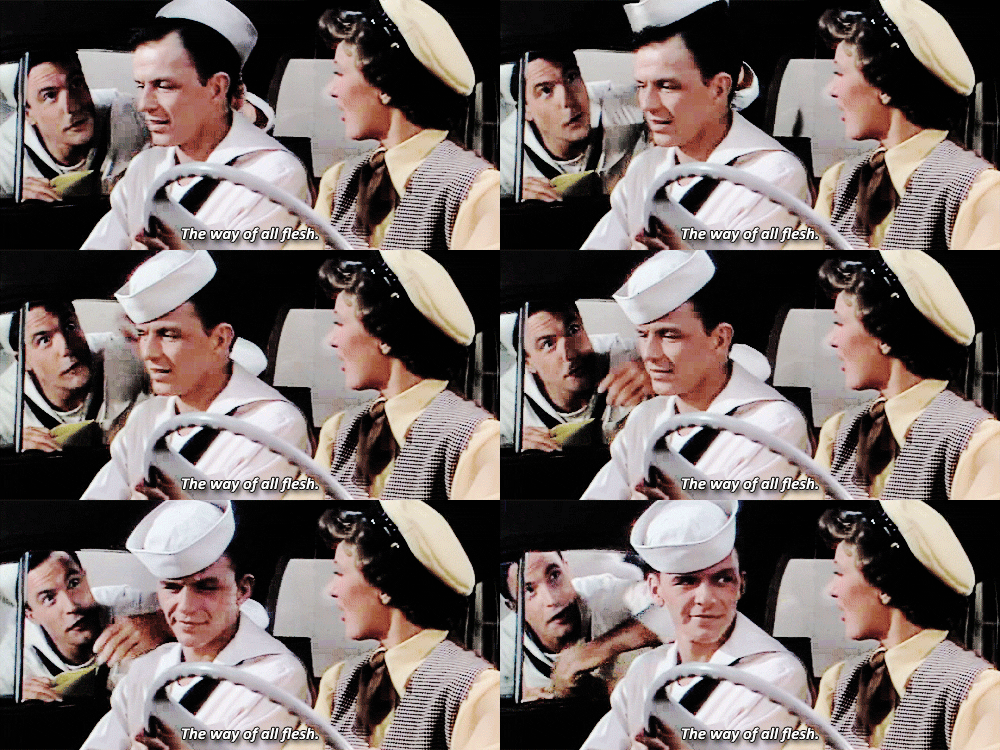
Em seus primeiros filmes, esta imagem foi explorada. Em “Marujos do Amor” (1945), seu personagem, Clarence, é muito tímido e pede para que o maigo Joe (Gene Kelly) o ensine a conquistar as garotas. Ele é, no filme, o tipo mais fofo de tímido, e até canta a doce “I Fall in Love Too Easily”. Um comportamento semelhante é encontrado em Chip, seu personagem em “Um dia em Nova York” (1949). chip quer ver todos os pontos turístico de NY que seu avô um dia viu – o problema é que a maioria destes pontos não existe mais. Chip não corre atrás de uma garota como o Gabey de Gene Kelly faz – é a esperta taxista Hildy (Betty Garrett) que tem de flertar agressivamente com ele mais de uma vez.

In his first films, this image was explored. In “Anchors Aweigh” (1945), his character, Clarence, is too shy and asks his friend Joe (Gene Kelly) to teach him how to get girls. He is, in this film, the cutest kind of shy, and even sings the sweet song “I Fall in Love Too Easily”. Almost the same kind of behavior can be found in Chip, his character in “On the Town” (1949). Chip wants to see all the New York landmarks his grandfather has once seen – the problem is that almost all of these landmarks don't exist anymore. Chip doesn't pursue a girl like Gene Kelly's Gabey does – it's smart taxi driver Hildy (Betty Garrett) that must flirt with him aggressively again and again.


É interessante notar como nós ainda usamos alguns termos e ideias da Sinatramania em conceitos de fandoms de internet. Frank era comumente chamado de “Swoonatra”. As garotas da fandom chamavam a si mesmas de “Sinatratics” - da mesma maneira que a fandom da Beyonce é a “beyhive” e nós fãs de Benedict Cumberbatch nos chamamos de “Cumberbitches”. Eu só imagino que hashtags as fãs de Sinatra usariam no Twitter e no Tumblr...

It's very interesting to notice how we still use some terms and ideas from the Sinatramania in our concepts of internet fandom. Frank was commonly referred to as “Swoonatra”. The girls in his fandom called themselves “Sinatratics” - in the same way that the Beyonce fandom is the “Beyhive” and we Benedict Cumberbatch's fans call ourselves “Cumberbitches”. I only wonder what hashtags the Sinatratics would use on Twitter and Tumblr...


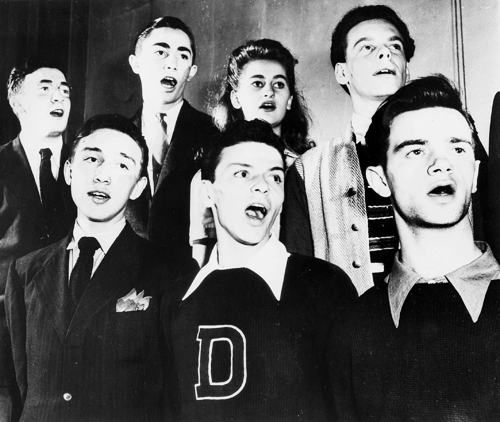
Elas também faziam “cosplay”: as fãs usavam gravata-borboleta, assim como o ídolo, e geralmente prendiam uma foto de Sinatra com um alfinete na roupa. E muitas pessoas encontraram um jeito de explorar a Sinatramania para ganhar dinheiro: havia vários produtos com o rosto de Sinatra estampado, ele foi capa de diversas revistas e, uma vez, algumas fotos foram tiradas mostrando Frank Sinatra como membro de um coral no ensino médio. O problema é que as fotos foram tiradas pelo fotógrafo Peter Martin para trazer Sinatra ainda mais perto de suas fãs – na verdade, ele nunca foi parte de um coral e já tinha 27 anos quando a foto foi tirada. Suas fãs, obviamente, não se importaram.

They also kind of cosplayed: the Sinatratics wore bow-ties, just like their idol, and usually pinned Sinatra's pictures to their outfits. And many people found a way of exploring the Sinatramania in order to make money: there were several products with Sinatra's face on it, he was on the over of many magazines, and once, some publicity photos were taken showing Frank Sinatra as a member of a high school glee club. The problem was that the photos were staged by photographer Peter Martin in order to make Sinatra even closer to his fans – in reality, he was never a part of a glee club and was actually 27 when the pic was taken. The fans, of course, didn't care.


Frank Sinatra viu sua carreira cinematográfica sofrer no final dos anos 40, mas retornou em 1953 com uma performance ganhadora do Oscar em “A um passo da eternidade”. Sua carreira na música foi um sucesso até sua morte, em 1998 – 20 anos atrás – e não podemos negar que ele ainda é uma das maiores influências no mundo da música (de acordo com o Spotify, Frank tem mais de 5 milhões de ouvintes mensais fiéis na plataforma de streaming, incluindo eu). Para ele e para a cultura pop, a Sinatramania foi só o começo.

Frank Sinatra saw his film career suffer a little in the end of the 1940s, but he returned in 1953 with an Oscar-winning performance in “From Here to Eternity”. His singing career was successful until his death, in 1998 – 20 years ago – and we can't deny that he is still a major influence in the music world (according to Spotify, Frank has more than 5 million faithful monthly listeners on the straming platform, me included). For him and for pop culture, Sinatramania was just the beginning.


This is my contribution to the Reel Infatuation blogathon, hosted by Ruth at Silver Screenings and Maedez at Font & Frock.

Saturday, June 24, 2017

Oito razões para admirar Anthony Perkins

 Eight reasons to admire Anthony Perkins

O que a maioria das pessoas sabe sobre Anthony Perkins é que ele interpretou Norman Bates na obra-prima “Psicose” (1960) e em três sequências esquecíveis. De fato, quando buscamos por seu nome no Tumblr, a maior parte dos resultados são GIFs de Psicose.

What most people know about Anthony Perkins is that he played Norman Bates in the masterpiece “Psycho” (1960) and in three other not-so-good sequels. Indeed, when we look for his name on Tumblr, most of the content is about Psycho. 
Outras pessoas, interessadas em tanatologia ou fofocas, devem saber que ele morreu de AIDS em 1992. E eu acho incrivelmente triste que este grande homem seja lembrado por estas duas coisas. Por isso fiz uma lista com oito razões para admirar meu crush alto, magro e fofo Anthony Perkins:

Other people, who are interested in thanatology or gossip, may know that he died of AIDS in 1992. And I think it's incredibly sad that this great guy is remembered by these two things. That's why I made this list with eight reasons to admire the tall, thin and cute man who I have a crush on, Anthony Perkins:
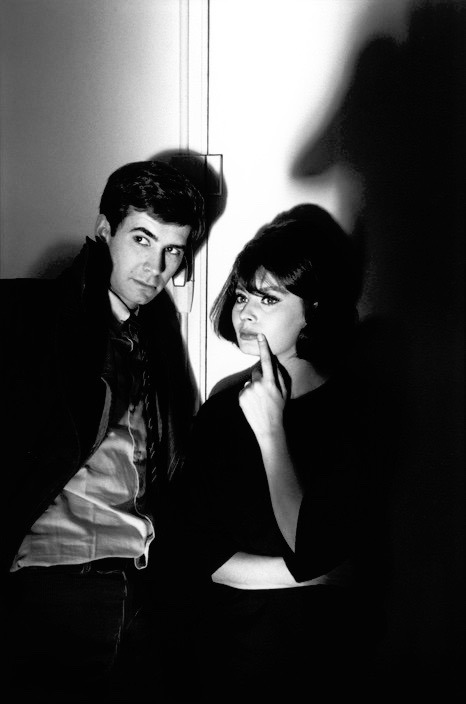
1- O sorriso: Fala sério, olha para essa coisinha fofa. Quando Tony sorri, você pode perceber um tom de brincadeira e timidez em seu rosto – como se ele tivesse vergonha de demonstrar sua felicidade. Eu considero timidez algo fofo, mas entendo que deve ter sido um problema para ele durante toda a vida – em especial em Hollywood.

1- His SMILE: Come on, look at that cuteness. When Tony smiles, you can see some goofiness and shyness in his face – as if he was ashamed to be showing happiness. I find his shyness cute, but I understand it must have been a problem for him during his life – especially in Hollywood.
2- Um grande talento para atuar: Anthony Perkins fez dramas, westerns, filmes românticos e, claro, filmes de terror. Ele trouxe humanidade a todos os personagens que interpretou, e fez todos críveis. Bem, ele até fez o público se importar com um psicopata!

2- The man had a great acting range: Anthony Perkins did dramas, westerns, romantic movies and, of course, horror films. He brought warmth to all the characters he played, and made them believable. Well, he even made the public care for a psycopath! 

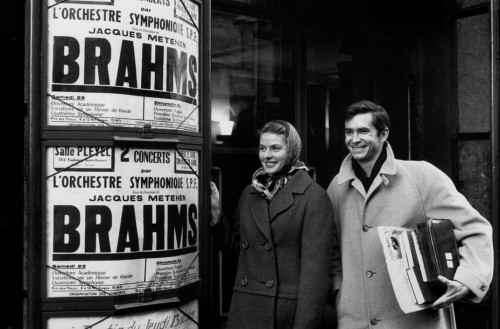
Ele trabalhava bem ao lado de atores já famosos, como Henry Fonda e Ingrid Bergman, sem ser obscurecido por eles. Ele até ganhou o prêmio de melhor ator em Cannes por “Mais uma vez, adeus”, um filme maravilhoso de 1961 em que contracena com Bergman.

He could hold up well next to established actors, like Henry Fonda and Ingird Bergman, without being overshadowed by them. He even won the best actor award at Cannes for “Goodbye Again”, a marvelous 1961 film in which he acts with Bergman.
3- Ele também trabalhou como diretor: Seguindo os passos de Orsons Welles, quem ele admirava imensamente, Perkins também trabalhou como diretor. Infelizmente, ele dirigiu apenas dois filmes: “Psicose III” (1986) e “Lucky Stiff” (1988). Eu fico imaginando que outros filmes ele poderia ter dirigido se tivesse vivido mais!

3- He also worked as a director: Following the footsteps of Orson Welles, who he great admired, Perkins also worked as a director. Unfortunately, he only directed two movies: “Psycho III” (1986) and “Lucky Stiff” (1988). I wonder what else he could have done if he had lived longer!
4- Ele também foi roteirista: Perkins e o amigo Stephen Sondheim escreveram o roteiro que se tornou o filme “O Fim de Sheila” (1973). Herbert Ross, o diretor, foi quem convenceu a dupla a transformar os “jogos de mistério e assassinatos” que eles jogavam em uma história.

4- He ALSO wrote a screenplay: Perkins and his friend Stephen Sondheim wrote a screenplay that became the 1973 film “The Last of Sheila”. Herbert Ross, who directed the film, was the one who encouraged the duo to turn their usual “murder mystery parlor games” into a story for the screen.
5- Ele falava francês: Você deve saber, por experiência própria ou pelas sábias palavras de Maurice Chevalier, que francês é a língua da paixão – l'amour!

5- He spoke French: You must know, through your own experience or through the wise words of Maurice Chevalier, that French is the language of romance – l'amour!

Nos anos 60, Perkins fez alguns fimes na Europa, deu entrevistas em Cannes e gravou algumas músicas em francês.

In the 1960s, Perkins made a few films in Europe, gave interviews while in Cannes and recorded some songs in French.
6- Ele lutou contra os estereótipos: Ele conseguiu apenas papéis estereotipados, ao estilo Norman Bates, depois de “Psicose”, mas ele procurou maneiras de mostrar seu talento em outros trabalhos que não fossem dentro do gênero horror.

6- He fought typecasting: He was forever typecast in movies after “Psycho”, but he looked for ways to show his talent in other works that did not belong to the horror genre.

Perkins foi o protagonista de duas comédias da Broadway nos anos 60, e na década seguinte esteve na montagem original de Equus substituindo Anthony Hopkins no papel principal. Seu trabalho na Europa também foi uma tentativa de escapar dos estereótipos.

Perkins was the lead in two Broadway comedies in the 1960s, and on the following decade he was on the original production of Equus replacing Anthony Hopkins as the lead. His work in Europe was also an attempt to escape typecasting.
With Sophia Loren in 1962
7- Ele sabia cantar: Nem todo mundo sabe disso, mas Anthony Perkins amava música e até gravou alguns CDs! Ele não era nenhum Sinatra, mas acho que era um cantor muito bom. Ouça:

7- He could SING: Not everybody knows about this, but Anthony Perkins loved music and even recorded a few CDs! He was no Sinatra, but I think his singing was pretty decent. Listen:
8- Ele lutou corajosamente contra a AIDS: A mídia não é nojenta? O preconceito não é horrível? Nos anos 50, Perkins não podia se assumir homossexual e tinha de ir a encontros arranjados com jovens atrizes para convencer os tabloides de que ele era hétero – esta prática, inclusive, ainda é comum entre as estrelas de TV brasileiras.

8- He fought AIDS with courage: Isn't the media disgusting? Isn't prejudice horrible? In the 1950s, Perkins couldn't be his true homosexual self and had to go on arranged dates with starlets to make tabloids convinced that he was straight – this practice is still common with Brazilian television stars now.

Perkins começou a se odiar e tentou encontrar uma cura para sua “doença”. Ele acabou se casando com Berry Berenson, e com ela teve dois filhos. Mas não seriam felizes para sempre: em 1990, um tabloide teve acesso a um exame de sangue de Perkins e publicou que o ator tinha AIDS. Sim, Tony e a família ficaram sabendo do diagnóstico através de um jornal.

Perkins went on to hate himself and try to find a cure for his “disease”. He ultimately married Berry Berenson and had two sons with her. But there would be no happily ever after: in 1990, a tabloid got access to his blood exam records and published that he had AIDS. Yes, Tony and his family found out through a newspaper.
Dali em diante, os jornalistas cercavam a casa deles o tempo todo, e seguiam os funcionários da família para tentar descobrir mais sobre a doença de Tony. Apesar deste inferno, Perkins continuou trabalhando até sua morte, em 12 de setembro de 1992.

From them on, journalists would be in front of their house 24/7 and follow their employees, wanting to know details about Tony's disease. Nevertheless, Perkins kept on working until his death, on September 12th, 1992.

Não posso deixar de pensar em quantas outras coisas Anthony Perkins poderia ter feito com seu talento se o mundo tivesse sido mais bondoso com ele. E eu imagino quantas pessoas como Tony não conseguem atingir seu potencial e têm de viver atormentados porque, todos os dias, o mundo não é bondoso com eles.

I can't avoid but wonder how much more Anthony Perkins could have accomplished if the world had been kinder to him. And I wonder how many people like Tony can't fulfill their potential and have to live tormented lives because the world isn't kind to them every day.

This is my contribution to the Reel Infatuation blogathon, hosted by Silver Screenings and Font and Frock.

Thursday, February 16, 2017

Música, Maestro: o Oscar de Melhor Canção Original / Oscar for Best Original Song

Para mim, o estranho e deplorável ano de 2016 começou a mostrar suas cruéis intenções em relação às pessoas de bom senso durante o Oscar. Claro, Leo DiCaprio ganhou a desejada estatueta depois de cinco indicações, porém, mais uma vez, as surpresas geraram mais debates que os ganhadores mais previsíveis. Eu fiquei chocada quando o prêmio de Melhor Canção Original foi para “Writing’s on the Wall”, a música mias sem graça do filme mais sem graça de James Bond. Eu havia apostado em “Til it Happens to You”, uma poderosa canção sobre violência sexual composta e gravada por Lady Gaga. Foi a primeira vez em 2016 que algo machista derrubou a causa feminista.

For me, the odd, disgusting year 2016 started to show its cruel intentions to people of common sense at the Oscars. Sure, Leo DiCaprio won this coveted award after years of trying, but once more the surprises caused more buzz than the predictable winners. I was shocked when the Best Original Song award went to “Writing’s on the Wall”, the most boring Bond music from the most boring Bond film ever. I had bet in “Til It Happens to You”, a powerful song about sexual violence by Lady Gaga. It was the first time in 2016 that a macho thing knocked over a feminist.
A categoria de Melhor Canção Original foi criada em 1934, e daí em diante deu destaque a musicais, comédias e outras produções que têm historicamente poucas chances de ganhar o Oscar de Melhor Filme. Alguns ganhadores ficam para sempre na cultura mundial (“Over the Rainbow”), enquanto outros se tornam muito mais famosos do que os filmes que os originaram – porque você provavelmente já ouviu “You’’l Never Know”, mas só os maiores fãs de filmes clássicos já viram o filme “Aquilo sim era vida”, de 1943.

The Best Original Song category was created in 1934, and from then on gave a place in the sun to musicals, comedies and other films that had few chances of collecting a Best Picture Oscar. Some winners became forever enthralled in pop culture (“Over the Rainbow”) and others became much more famous than the films that introduced them – because you’ve probably heard “You’ll Never Know”, but only die-hard Old Hollywood fans have watched “Hello, Frisco, Hello” (1943).

Em sua primeira década, a Academia estava fazendo experiências, adicionando, retirando e modificando as categorias do Oscar. Na sétima cerimônia, o ganhador da recém-criada categoria de Melhor Canção Original foi The Continenal, do filme “A Alegre Divorciada” (1934). A sequência de The Continental dura 17 minutos, e é a mais longa a figurar em um filme de Fred e Ginger.

In its first decade, the Academy was making experiences, adding, taking away and modifying the Oscar categories. In its 7th ceremony, the Best Original Song category was created, and the first winner was The Continental, from “The Gay Divorcée” (1934). The whole Continental sequence lasts 17 minutes, and was the longest in any Astaire-Rogers film.
Ao longo das décadas, as regras continuaram mudando, devido a problemas, polêmicas e a incrível necessidade de aumentar a audiência. Por exemplo: Jerome Kern, compositor de “The Last Time I Saw Paris”, que ganhou o prêmio em 1941, sugeriu que apenas músicas compostas especificamente para um filme feito no ano anterior deveria participar da seleção. Outra situação: quando “Dreamgirls” e “Encantada” tiveram cada um três músicas indicadas na categoria, ficou decidido que nenhum filme poderia ter mais de duas músicas competindo na grande noite.

Throughout the decades, the rules were still changing, due to troubles, anomalies and the incredible need of higher ratings. For instance: Jerome Kern, the composer of The Last time I Saw Paris, song that won in 1941, suggested that only songs composed specifically for a motion picture released the previous year should be eligible. Also, when “Dreamgirls” and “Enchanted” has each three songs nominated at the category, the Academy decided that no film should have more than two competing for the award.
Jerome Kern
Esta nova regra sugerida por Jerome Kern é o que justifica o fato de tantas músicas inesquecíveis terem ficado sem Oscar: elas foram apresentadas primeiro nos palcos ou em outros filmes. Se considerarmos outra lista de grandes canções, a AFI 110 Years 100 Songs, veremos que apenas 28 músicas da lista ganharam também o Oscar. No TOP 3 temos “Over the Rainbow”, o inesquecível ganhador do Oscar, e mais duas canções familiares: “As Time Goes By” foi originada em uma peça de teatro fracassada de 1931, enquanto a memorável “Singin’ in the Rain” foi apresentada pela primeira vez no cinema em um filme de 1929, bem antes de o maior musical da história ser filmado.

This new rule suggested by Jerome Kern is the reason why so many great songs never won an Oscar: they were presented first on stage or another film. If we consider another list of wonderful songs, the AFI 100 Years 100 Songs, we see that only 28 songs in this list also won the Academy Award. In the TOP 3 we have “Over the Rainbow”, the unforgettable Oscar winner, and two more familiar tunes: “As Time Goes By” was originated in a failed 1931 stage play, while the memorable “Singin’ in the Rain” was first sung in a 1929 movie, way before the greatest musical ever was released.
Só três músicas que não eram em inglês ganharam o prêmio: a primeira, “Never on Sunday”, do filme “Nunca aos Domingos”, de 1960, é cantada em grego. A segunda foi “Al Outro Lado Del Rio”, de “Diários de Motocicleta” (2004), cantada em espanhol. E a mais recente foi Jai Ho, de “Quem quer ser um milionário?” (2008), cantada em hindi.

Only three songs not sung in English got the award: the first, “Never on Sunday”, from the film by the same name released in 1960, was sung in Greek. The second one was “Al Otro Lado Del Rio”, from “Motorcycle Diaries” (2004), sung in Spanish. And the most recent case was “Jai Ho”, from “Slumdog Millionaire” (2008), sung in Hindi.
A Renascença dos estúdios Disney foi marcada por vários Oscars de Melhor Canção Original, uma vez que não havia ainda a categoria de Melhor Animação. De 1990 a 2000, seis vencedoras vieram da Disney: estas laureadas canções vieram dos filmes “A Pequena Sereia”, “A Bela e a Fera”, “Aladdin”, “Rei Leão”, “Pocahontas” e “Tarzan”.

Disney's renaissance period was marked by several Best Original Song Oscars, since there was no Best Animated Feature category until 2001. From 1990 to 2000, six winners came from the Disney studios: these celebrated songs came from the movies “The Little Mermaid”, “Beauty and the Beast”, “Aladdin”, “The Lion King”, “Pocahontas” and “Tarzan”.
A maioria dos vencedores do Oscar de Melhor canção Original é bem previsível – exceto quando há um Sam Smith no meio do caminho – mas não se pode dizer o mesmo dos indicados. Surgiram muitos textos e debates sobre os indicados de 2017, e a ausência de alguma música do delicioso musical “Sing Street”.

The majority of Best Original Song winners are quite predictable – except when there is Sam Smith in your way – but you can’t say the same about nominations. Much has been written about the 2017 nominations and the absence of a single tune from the delightful musical “Sing Street”.
Há ainda uma grande caminhada para o amadurecimento desta categoria. Por exemplo, apenas uma mulher ganhou o prêmio sozinha, sem estar colaborando com um compositor ou letrista do sexo masculino, e foi também a única vez que um documentário ganhou na categoria: foi em 2007, quando Melissa Etheridge ganhou por “Uma Verdade Inconveniente”. Em todo caso, a galeria de ganhadores é muito rica, e nos diz muito sobre a evolução da cultura pop nos últimos 80 anos. Afinal, o que Irving Berlin, Barbra Streisand, Bob Dylan, Eminem e Adele poderiam ter em comum além de um Oscar?

There is still a long walk ahead of this category. For instance, there is only one woman who won the prize alone, without collaboration with a male composer and lyricist, and it was also the only time a documentary got the Best Original Song Oscar: it was in 2007, when Melissa Etheridge won for “An Inconvenient Truth”. Anyway, the gallery of winners is a rich one, and tells us a lot about the evolution of pop culture in the last 80+ years. After all, what else could Irving Berlin, Barbra Streisand, Bob Dylan, Eminem and Adele have in common if not the Oscar?

Para testar seus conhecimentos sobre as Melhores Canções Originais, aqui está um ótimo quiz:
To test your general knowledge about the Best Original Songs, take this cool quiz: 


Aqui temos uma lista com todas as vencedoras de 1934 até 2015, em um ranking da pior para a melhor: http://www.spin.com/2015/02/oscars-academy-awards-best-original-song-every-winner-ranked/

Here’s a list of all the winners from 1934 to 2015, with the songs ranked: http://www.spin.com/2015/02/oscars-academy-awards-best-original-song-every-winner-ranked/

E aqui está uma playlist do Spotify que eu fiz para que você possa ouvir todas as músicas, onde quer que esteja:

Here’s a Spotify playlist I made so you can listen to all the songs on the go:


This is my contribution to the 30 Days of Oscar Blogathon 2017, hosted by the trio Aurora, Kellee and Paula at Once Upon a Screen, Outspoken & Freckled and Paula’s Cinema Club.
Related Posts Plugin for WordPress, Blogger...