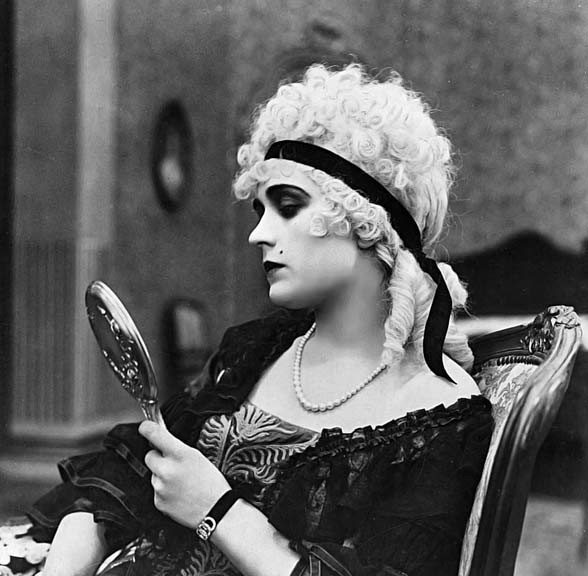
Um dos fatos mais significativos que aprendemos
na escola aqui no Brasil sobre o século XVI é o casamento do rei inglês Henrique
VIII com Ana Bolena e a fratura que isso causou na Inglaterra, criando a
religião Anglicana. Como a boa aluna que fui e a historiadora que sou, estava
ansiosa para ver a versão de Ernst Lubitsch para a história, filmada em 1920, e
provavelmente o primeiro longa-metragem sobre Ana Bolena.
One of the most significant things we learn at school here in Brazil about the 16th century is the marriage of English King Henry VIII with Anna Boleyn and the fracture it caused in England, creating the Anglican religion. As the good student I was and the historian I am, I was anxious to check out Ernst Lubitsch’s version of this story, made in 1920, and probably the first feature film about Anna Boleyn.

Henrique VIII é apresentado como um glutão,
assim como D. João VI, que veio de Portugal para o Brasil em 1808. Ele é interpretado
por Emil Jannings, antes ainda de seus anos nazistas, mas não menos
perturbador. Henrique é um mulherengo que não se importa com sua esposa, a
Rainha Catarina (Hedwig Pauly-Winterstein). Seu primeiro encontro com a nova
donzela da Corte, Ana Bolena (Henny Porten), começa estranho mas logo ele o faz
se tornar predatório.
Henry VIII is
presented as a glutton, like D. João VI who came from Portugal to Brazil in
1808. He is played by Emil Jannings, still before his Nazi years, but this
doesn’t make him less creepy. Henry is a womanizer who doesn’t care about his
wife, Queen Catherine (Hedwig Pauly-Winterstein). His first meeting with the
new damsel in Court, Anna Boleyn (Henny Porten), starts awkward but soon
becomes predatory from his part.

A próxima coisa que vemos é Ana jogando peteca
com o Rei. Ela é imediatamente ostracizada pelos nobres e desprezada pelo seu
amado Henrique Norris (Paul Hartmann). O Rei quer se casar com Ana para ter com
ela o filho homem que não teve com Catarina. Para isso, primeiro ele precisará
de um divórcio – sem a autorização do Papa, um escândalo!
The next thing
we see is Anna playing badminton with the King. She’s immediately ostracized by
the nobles and despised by her beloved Henry Norris (Paul Hartmann). The King
wants to marry Anna to have with her the male child he didn’t have with Catherine.
For this, he would first need a divorce – without the Pope’s consent, a scandal!

Tendo seu pedido negado pelo Papa, Henrique
VIII se declara Chefe Supremo da Igreja na Inflaterra e consegue o divórcio.
Ainda um pouco reticente com isso, Ana se casa com Henrique VIII, mas ela não o
ama: ela o teme. O amor entre eles florescerá após a Festa da Primavera ou
Henrique VIII voltará aos seus velhos hábitos?
With his wish
denied by the Pope, Henry VIII declares himself Supreme Chief of the Church in
England and gets the divorce. Although a bit unsure about it, Anna marries
Henry VIII, but she doesn’t love him: she fears him. Will their love blossom
after the Spring Party or will Henry VIII return to his old habits?

Você deve ter ouvido falar de Emil Jannings,
mas não de Henny Porten... mas todos nós deveríamos conhecê-la. Ela não foi
apenas uma das primeiras estrelas de cinema do mundo, fazendo sua estreia em
1906, mas também teve uma carreira que durou seis décadas. Ela já era viúva
quando fez “Ana Bolena” e seu amor por seu segundo marido, que era judeu, a colocou
contra o regime Nazista. Seu pai, Franz, foi diretor, ator e roteirista, mesmas
funções da irmã de Henny, Rosa.
You might have heard about Emil Jannings, but not of Henny Porten... but we all should. She was not only one of
the first film stars in the world, making her debut in 1906, but also had a
career that spanned six decades. She was already a widow when she made “Anna
Boleyn” and her love for her second husband, who was Jewish, made her clash
with the Nazis. Her father Franz was a diretor, writer and actor, just like her
sister Rosa.
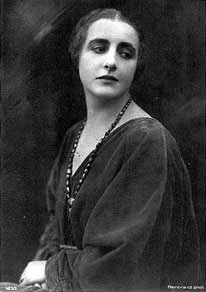
Muito antes de se tornar conhecido pelo “toque de Lubitsch” em
Hollywood, Ernst Lubitsch já era um mestre do cinema. Ele havia começado como
ator no cinema em 1913 e no ano seguinte já estava dirigindo curtas. Em “Ana
Bolena”, Lubitsch brincou com alguns enquadramentos astutos e ousados. Graças a
este filme, Lubitsch foi para os EUA: Mary Pickford gostou tanto de “Ana Bolena”
que exigiu, dois anos depois, que Lubitsch dirigisse seu filme “Rosita”. Sobre
este filme, Pickford declarou, para a revista Photoplay: “um exemplo de direção
magnífica e atuação esplêndida, especialmente a de Emil Jannings. Foi a
primeira vez nas telas que um Rei foi humanizado. Tem humor sutil e satírico”.
Way before he became known for the “Lubitsch touch” in Hollywood, Ernst Lubitsch was already a master of cinema. He had started as an actor on film in 1913 and in the following year he was already directing shorts. In “Anna Boleyn” Lubitsch played with a few clever and bold framings. Thanks to this film, Lubitsch went to America: Mary Pickford liked “Anna Boleyn” so much that she demanded, two years later, that Lubitsch directed her vehicle “Rosita”. About this film, Pickford declared, for Photoplay magazine: “an example of superb direction and splendid acting, especially that of Emil Jannings. It was the first time on the screen that a King had been made human. It has subtle, satirical humor”.
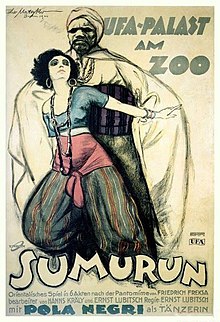
Muitas críticas no Letterboxd mencionaram “Sumurun”,
também de 1920, como um filme com temas semelhantes. Então decidi assistí-lo
para escrever uma crítica mais completa. Ambos os filmes foram dirigidos por
Lubitsch e têm nomes de mulheres no título, mas tirando isso, não vi muitas
semelhanças entre os filmes. “Sumurun” traz duas histórias. A primeira é de uma
dançarina interpretada por Pola Negri que faz um tipo de Serpentine Dance e
rouba os corações de muitos homens, incluindo o jovem Xeque. A segunda é sobre
Sumurun (Jenny Hasselqvist), a favorita no harém do velho Xeque, que se
apaixona por um mercador. “Sumurun” tem um final melhor e a presença luminosa
de Pola Negri, além de Lubitsch também como ator, mas no geral preferi “Ana Bolena.
Many reviews on
Letterboxd mentioned “Sumurun”, also from 1920, as a film with similar themes.
I then watched it to write a more complete review. Both movies not only were
directed by Lubitsch, both have in their title the name of a woman; apart from
those two things, I didn’t see many similarities between the films. “Sumurun”
brings two stories. The first is about a dancer, played by Pola Negri, who
performs some kind of Serpentine Dance and steals the hearts of many men,
including the young Sheik. The second is about Sumurun (Jenny Hasselqvist), the
favorite in the old Sheik’s harem, who falls in love with a salesman. “Sumurun”
has a better ending and the luminous presence of Pola Negri, and also Lubitsch
playing a character, but overall I preferred “Anna Boleyn”.
Este é o tipo de história que deveria ficar no
passado: de um mulherengo que exige fidelidade da esposa, e detesta as filhas
mulheres. Podemos dizer que Ana Bolena é retroativamente um ícone feminista? De
certa maneira, sim, porque ela foi vítima de uma das mais fortes manifestações
do patriarcado, a monarquia absolutista, e foi vista apenas como um ser para reprodução.
O fato de que ela defendia mais tempo de educação formal para mulheres só
adiciona argumentos para o caso.
This is a kind of story that should remain in the past: of a womanizer who demands fidelity from his wife, and despises his children who are not male. Could we say that Anna Boleyn was retroactively a feminist icon? In a sense, yes, because she was the victim of one of the strongest manifestations of patriarchy, the absolute monarchy, and was seen only as a being for reproduction. The fact that she supported more years of formal education for women only adds to the case.
Com impressionantes cenas de multidão,
especialmente na sequência da coroação, e lindos cenários e figurinos, “Ana
Bolena” é um deleite para os olhos. Amantes de História vão amar. Aqueles que
só conhecem Lubitsch por seus filmes posteriores podem até se desapontar, mas
nunca poderão reclamar de tédio.
With impressive crowd scenes, especially in the coronation sequence, and gorgeous sets and wardrobe, “Anna Boleyn” is a feast for the eyes. History buffs will have a blast. Those who know Lubitsch from his later films may be a little disappointed, but, for sure, not for a minute bored.