} Crítica Retrô: Marinha

Tradutor / Translator / Traductor / Übersetzer / Traduttore / Traducteur / 翻訳者 / переводчик

Showing posts with label Marinha. Show all posts

Friday, October 2, 2026

Eva na Marinha (1952) / Skirts Ahoy! (1952)

 Aqueles velhos filmes feitos pela MGM eram todos clássicos, certo? Errado. Sim, o estúdio com “mais estrelas que há no céu” fez grandes clássicos, mas também produziu filmes nem tão brilhantes. Estou falando de entretenimento barato, morno, inofensivo. Há filmes que são clássicos, e há muitos outros do passado que são apenas… velhos. Esse é o caso com “Eva na Marinha” (1952).

Those old movies made by MGM were all classics, right? Wrong. Yes, the studio with “more stars than there are in Heaven” made great classic films, but also produced not so brilliant movies. I’m talking about cheap, bland, harmless entertainment. There are movies that are classics, and there are many more from the past that are just… old. “Skirts Ahoy!” (1952) is one of those films.

Uma garota simples, Mary Kate (Joan Evans), é deixada no altar pelo noivo. Uma garota rica, Whitney (Esther Williams), deixa seu noivo no altar. E uma garota trabalhadora, Una (Vivian Blaine), quer subir ao altar, mas raramente vê seu namorado. Todas as três garotas se alistam na Marinha - ou melhor, na Reserva da Marinha conhecida como WAVES.

A simple girl, Mary Kate (Joan Evans), is left by her groom at the altar. A rich girl, Whitney (Esther Williams), leaves her groom at the altar. And a working girl, Una (Vivian Blaine), wants to reach the altar, but seldom sees her boyfriend. All three girls join the Navy - better said, the Navy Reserve known as WAVES.

Num primeiro momento Mary Kate se sente miserável e suas duas novas amigos tentam uma dispensa da Marinha. Mas um encontro com Dick (Keefe Brasselle), o homem que a deixou, a faz perceber que ela quer viver e deixar de ser, nas palavras dela, uma tola (“dope”). Dali em diante, as três garotas se tornam inseparáveis.

At first Mary Kate is miserable and her two new friends try to get her out of the Navy. But an encounter with Dick (Keefe Brasselle), the man that got away, makes her realize she wants to live a little and stop being, in her own words, a dope. Then forward, the three girls become inseparable.

Num momento de folga, Whitney se apresenta como Mary Smith para um homem que diz ser John Smith. Mais tarde ela descobre que ele é o médico da Marinha Paul Elcott (Barry Sullivan). Enquanto isso, sobre sua folga, Una diz que “tive muitas oportunidades, mas eles não sabiam como começar”, uma sugestão sexual que de alguma maneira não foi censurada.

While on leave, Whitney presents herself as Mary Smith to a man who introduces himself as John Smith. Later she finds out he’s the Navy doctor Paul Elcott (Barry Sullivan). Meanwhile, about her leave, Una says that she “got a lot of opportunities, but they didn’t know how to begin”, an innuendo that somehow went uncensored.

A primeira piada é que Esther Williams se une a um grupo de marinheiras que não sabem nadar. Sua mentira dura pouco, pois ela salva Mary Kate de um afogamento. A estrela dos aquamusicais da MGM, Williams tem algumas oportunidades em “Eva na Marinha” para nadar e fazer acrobacias, incluindo uma gangorra humana com duas crianças (os trágicos Aquatots).

The first joke is that Esther Williams joins the group of sailors who can’t swim. Her lie lasts for little, as she saves Mary Kate from drowning. The star of MGM’s aqua-musicals, Williams has a few opportunities in “Skirts Ahoy!” to swim and do her acrobatics, including an underwater human seesaw with two children (the tragic Aquatots).

Além dos números com as três estrelas, juntas ou não, há números com convidados especiais, como Debbie Reynolds e Bobby Van. Eles dependem muito do exotismo e do imaginário daquilo que se considera exótico, e por isso são datados, e por vezes até ofensivos. Há também uma balada romântica cantada por um coro junto às cinco Irmãs DeMarco, que também cantam uma reprise de uma canção cantada pelo trio protagonista.

Besides the numbers with the three stars, together or not, there are numbers with special guests, such as Debbie Reynolds and Bobby Van. The numbers really heavily on exoticism and the imaginary of what is considered exotic, and thus are dated, sometimes even offensive. There is also a love ballad sung by a chorus alongside the five DeMarco Sisters, who also do a reprise of a song sung by the main trio.

Eu nunca tinha prestado muita atenção a Vivian Blaine antes de ela ganhar sua própria blogathon pelas mãos de minha amiga Rebecca. Aqui, embora seja uma coadjuvante, sua Una é muitíssimo divertida. Nascida em 1921, Vivian teve sucesso nos palcos e nas telas, fazendo seu primeiro filme em 1942. Seu papel mais lembrado é o de Adelaide tanto na versão Broadway quanto na de Hollywood de “Eles e Elas”. Ela também é notável por ter sido a primeira celebridade a falar publicamente em favor da causa de conscientização da AIDS. Ela faleceu em 1995.

I had never paid much attention to Vivian Blaine before she was highlighted in her own blogathon hosted by my friend Rebecca. Here, although a supporting character, her Una is ferociously funny. Born in 1921, Vivian was successful on stage and screen, making her first film in 1942. Her best remembered role is as Adelaide in both Broadway and Hollywood versions of “Guys and Dolls”. She is also worth notice for being the first celebrity to speak publicly supporting the AIDS awareness cause. She died in 1995.

Quando Mary Kate diz que iria para casa ajudar seus pais e seu irmão mais novo, Whitney diz que “isso não é uma grande vida”. Mesmo assim, era a única vida que muitas mulheres conheciam na época. E estas mulheres iam ao cinema, uma vez por semana, buscando fortes emoções. Ali, com a tela grande e no escurinho do cinema, elas podiam experimentar vidas emocionantes.

When Mary Kate says she would like to go home and help her parents and her kid brother, Whitney says “this isn’t much of a life”. Nevertheless, it was the only life many women knew at the time. And these women went to the movies, sometimes every week, in search of thrills. There, with the big screen and the dark surroundings, they could experience thrilling lives.

O estereótipo nos conta que ser um marinheiro é excitante. Nossos velhos amigos Gene Kelly e Frank Sinatra interpretaram marinheiros duas vezes: em “Marujos do Amor” (1945) e “Um Dia em Nova York” (1949). Bem, de acordo com estes dois filmes, uma tese com a qual corrobora “Eva na Marinha”, é que mais excitante que ser um marinheiro é ser um marinheiro de folga!

Stereotype tells us that being a sailor is exciting. Our old friends Gene Kelly and Frank Sinatra played sailors twice: in “Anchors Aweigh” (1945) and “On the Town” (1949). Well, according to these two movies, a thesis corroborated by “Skirts Ahoy!”, is that more exciting than being a sailor is being a sailor on leave!

O filme teve consequências para a Marinha. Foi feito pela MGM para recrutar mulheres, pois a maioria dos homens estava combatendo na Guerra da Coreia na época e havia necessidade de pessoal. Além disso, Esther Williams não gostou do traje de banho oficial da Marinha e ajudou a desenhar um novo traje oficial.

The movie had consequences for the Navy. It was made by MGM to recruit women, as most men were combating in the Korean War at the time and the ranks were low on personnel. Also, Esther Williams disliked the official Navy swimsuit and helped design a new official one.

Sem nenhuma canção memorável e durando mais tempo que o necessário, “Eva na Marinha” não é um clássico, é só um filme velho. Entretanto, é uma maneira agradável de passar 110 minutos e um filme que vai te dar vontade de chupar pirulito. Não vou explicar a parte final da frase anterior, você vai ter que ver por si mesma!

With no memorable song and a higher duration than necessary, “Skirts Ahoy!” isn’t a classic, it’s just old. However, it is a pleasant way to spend 110 minutes and a movie that you make you crave a lollipop. I won’t elaborate the last part of the sentence, you’ll have to see by yourself!

This is my contribution to the Vivian Blaine blogathon, hosted by Rebecca at Taking Up Room.


Thursday, November 7, 2019

A Águia Azul (1926) / The Blue Eagle (1926)


Há filmes mudos de todos os tamanhos e durações. Além disso, não é regra que, quando um diretor começa a fazer longas-metragens, ele pare de fazer filmes mais curtos. Veja John Ford, por exemplo. Ford começou como diretor em 1917 e, em 1926, ele já havia dirigido dezenas de filmes, incluindo o impressionante épico “O Cavalo de Ferro”, de 1924, que tem mais de duas horas de duração. Ford não teve vergonha de voltar a fazer filmes menores e mais intimistas, e foi exatamente isso que ele fez em 1926 com “A Águia Azul”.

Silent film comes in all shapes and sizes. Furthermore, it’s not a rule that, once a director graduates to feature films, he never comes back to shorter films. Take John Ford, for instance. Ford started directing movies in 1917 and, in 1926, he had already directed dozens of films, including the impressive epic “The Iron Horse”, from 1924, that is over two hours long. Ford wasn’t ashamed to go back to more intimate films, made in a smaller scale, and this was exactly what he did in 1926 with “The Blue Eagle”.


George Darcy (George O'Brien, completamente lambuzado com óleo para parecer que está suando) e Big Tim Ryan (William Russell, igualmente lambuzado com óleo) estão servindo no mesmo navio na Primeira Guerra Mundial, mas eles são rivais na cidade natal. Juntos na guerra, eles vivenciam as batalhas, a adrenalina e a perda de companheiros. Mas assim que a guerra acaba, a velha rivalidade ressurge.

George Darcy (George O’Brien, completely covered in oil to look like he’s sweating) and Big Tim Ryan (William Russell, equally covered in oil) are shipmates during World War I, but back at home they’re rivals. Together at war, they experience the battles, the adrenaline and the loss of shipmates. But once the war is over, the old grudge comes back.


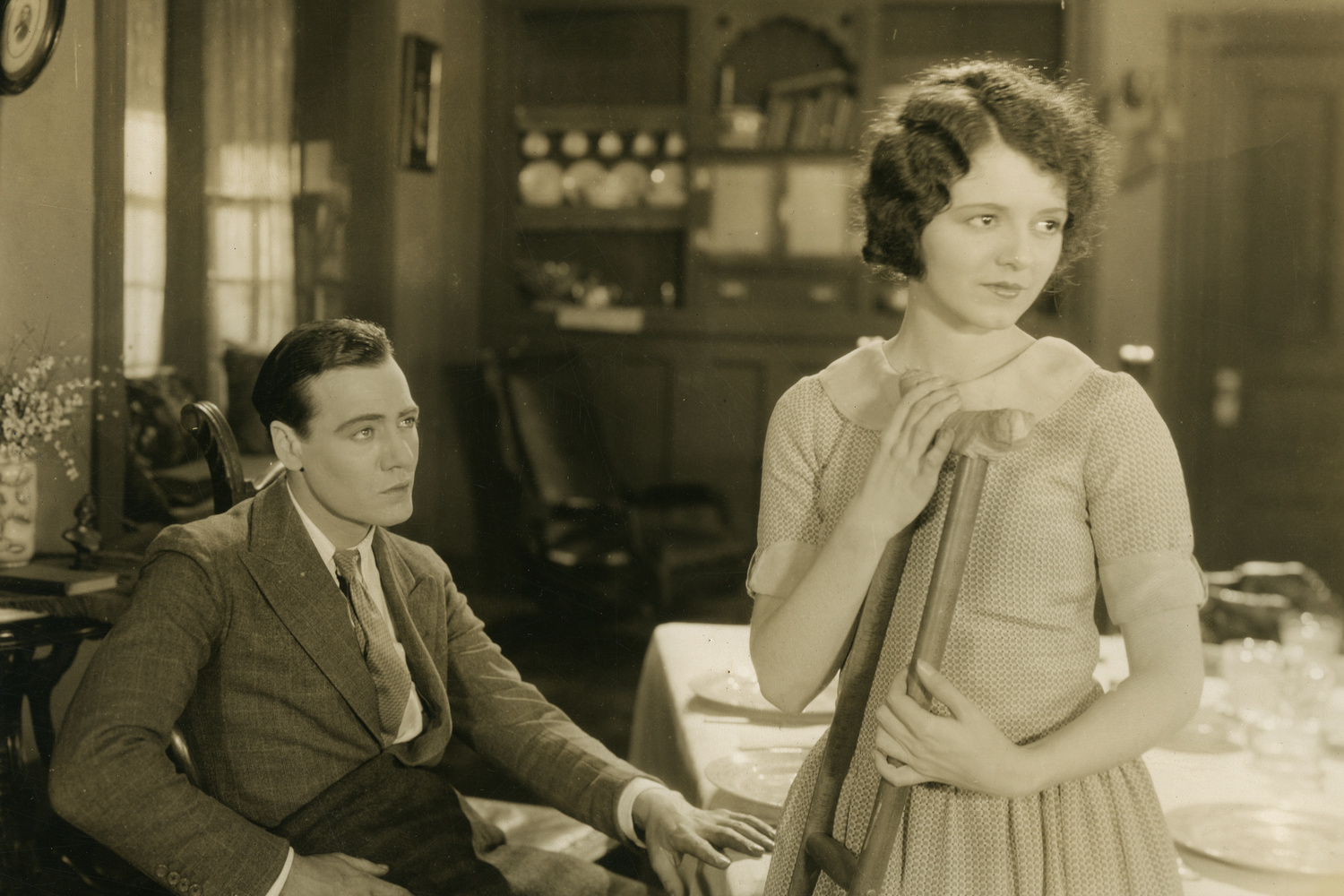
Darcy e Ryan vivem perto das docas, em um bairro pobre dominado por gangues rivais, algo que também pode ser visto em “Anjos de Cara Suja” (1938) e “Sindicato de Ladrões” (1954). Darcy e Ryan pertencem a gangues rivais – Darcy aos Terriers e Ryan aos Rats – e ambos estão apaixonados pela mesma mulher, Rose Kelly (Janet Gaynor), filha do policial Sargento Kelly (Lew Short). No bairro deles, problemas com drogas estão crescendo, e o Padre Joe (Robert Edeson), também ex-marinheiro, decide pedir para Darcy e Ryan ajudarem a polícia a prender os traficantes.

Darcy and Ryan are from the waterfront – a rather poor neighborhood dominated by rival gangs, something that can be seen in films like “Angels with Dirty Faces” (1938) and “On the Waterfront” (1954). Darcy and Ryan belong to rival gangs – Darcy’s Terriers and Ryan’s Rats – and they both are in love with the same woman, Rose Kelly (Janet Gaynor), daughter of police Sergeant Kelly (Lew Short). In their neighborhood, problems with drugs are on the rise, and Father Joe (Robert Edeson), also a former Marine, decides to ask both Darcy and Ryan to help the police arrest the smugglers.


Num mundo em que traficantes têm um SUBMARINO e gangues são formadas apenas para intimidar parte de um bairro, é de se esperar que haja uma mistura de gêneros, algumas subtramas que não vão a lugar algum – qual a importância dos irmãos gêmeos de Rose na narrativa? - e conclusões rápidas. Afinal, “A Águia Azul” tem menos de uma hora de duração!

In a world where drug dealers have a SUBMARINE and gangs are formed only to intimidate part of a neighborhood, it's expected a mix of genres, a few subplots that go nowhere – what is the use of Rose's twin brothers in the narrative? - and quick conclusions. After all, “The Blue Eagle” is less than one hour long!


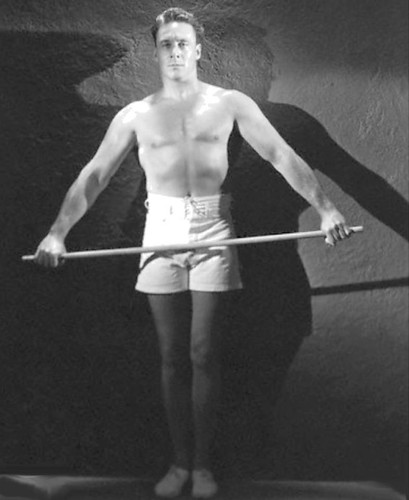
George O'Brien foi um galã popular na década de 1920 e estrela de faroestes nos anos 30, e seu filme mais famoso é a obra-prima “Aurora” (2927), também com Janet Gaynor. Foi através do filme “O Cavalo de Ferro” de Ford que O'Brien alcançou o estrelato – embora ele desejasse, quando chegou em Hollywood, ser operador de câmera!

George O'Brien was a popular leading man in the 1920s and western star in the 1930s, and his most famous film is the masterpiece “Sunrise” (1927), also with Janet Gaynor. It was through Ford's “The Iron Horse” that O'Brien achieved stardom – although his only wish when he went to Hollywood was to become a cameraman!


As aventuras anteriores de George O'Brien ajudaram-no muito em “A Águia Azul”: ele serviu na Marinha norte-americana durante a Primeira Guerra Mundial, e foi condecorado por bravura, e depois da guerra ele se tornou campeão de boxe. Ele se alistou novamente na Marinha durante a Segunda Guerra. O título do filme “A Águia Azul” vem do fato de os marinheiros norte-americanos serem conhecidos como “águias azuis”. George O'Brien tinha orgulho de seu serviço na Marinha e deste filme em particular porque, mais tarde, lhe foi perguntado que filme ele queria que fosse exibido em uma mostra retrospectiva de sua carreira, e ele escolheu “A Águia Azul”.

George O'Brien's previous life adventures helped him a lot in “The Blue Eagle”: he had been in the US Navy during World War I, and was decorated for bravery, and after the war he became a boxing champion. He re-enlisted in the Navy during World War II. The title of the film “The Blue Eagle” comes from the fact that the US Marines are often referred to as Blue Eagles. George O'Brien was fond of his time at the Navy and of this film in particular because, later in his life, he was asked which film he wanted to see showed in a career retrospective festival honoring him, and he chose “The Blue Eagle”.


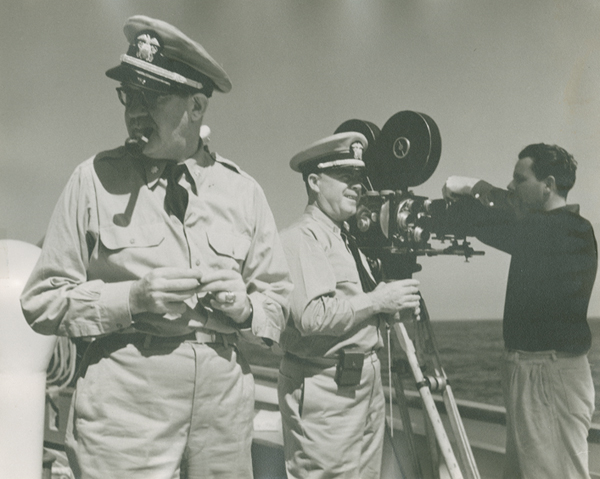
John Ford também teve uma ligação íntima com a Marinha, mas apenas depois de fazer “A Águia Azul”. Durante a Segunda Guerra Mundial, Ford trabalhou com a Marinha fazendo documentários de guerra. Um destes documentários é “A Batalha de Midway” (1942), ganhador de um Oscar. Ford foi uma testemunha ocular do Dia D em 1944, mas a maioria das imagens que ele filmou do Dia D foi considerada forte demais para ser exibida para o público.

John Ford also had a close link with the Navy, but only after making “The Blue Eagle”. During World War II, Ford worked with the Navy Department doing war documentaries. One of these documentaries is “The Battle of Midway” (1942), that won an Oscar. Ford was an eyewitness of the D-Day in 1944, but most of his footage shot on D-Day was considered too gruesome to be released to the public.


Janet Gaynor também fez outro filme com John Ford em 1926, “A Folha do Trevo”. Este é mais um pequeno filme que mistura comédia, drama e esporte – desta vez, corrida de cavalos. Com Janet Gaynor em um papel mais substancial e também um pouco de racismo, “A Folha do Trevo” é considerado o primeiro filme de John Ford que se passa na Irlanda.

Janet Gaynor also appeared in another John Ford film from 1926, “The Shamrock Handicap”. This is another small scale film that mixes drama, romance and sports – this time, it’s horse race. With Janet Gaynor in a more substantial role and also a bit of racism, “The Shamrock Handicap” is considered  the first John Ford film set in Ireland.
 
The Shamrock Handicap
Dois personagens muito importantes – aqueles que convencem Darcy e Ryan a declararem uma trégua – são o irmão deficiente de Darcy, Limpy (Philip Ford, sobrinho de John Ford), e o amigo bobão de Ryan, Dizzy (David Butler). Tanto Ford quanto Butler tiveram carreiras curtas como atores e mais tarde se tornaram prolíficos diretores.

Two very important characters – the ones that convince Darcy and Ryan to declare a truce – are Darcy’s handicapped brother, aptly named Limpy (Philip Ford, John Ford’s nephew), and Ryan’s good and dumb friend Dizzy (David Butler). Both Ford and Butler had brief careers as actors and later became prolific directors.


“A Águia Azul” tem atrativos para todos os públicos: romance, ação na guerra, drama urbano, um pouco de humor e até uma luta de boxe. Além disso, amantes de belos cenários, prestem atenção às luzes da cidade quando os personagens estão no cais. Infelizmente, as cenas com as batalhas navais ainda estão perdidas, o que torna o filme menos emocionante de ver hoje do que foi quando estreou. Mesmo assim, o filme nos traz o mais próximo que temos de um filme de gângster de John Ford, e por isso já merece ser visto.

“The Blue Eagle” has something for everyone in the audience: romance, war action, urban drama, a bit of humor and even a boxing match. Also, lovers of beautiful scenery, pay attention to the city lights when the characters are on the waterfront. Unfortunately, the scenes with the sea battles are currently lost, which makes the film less exciting to see today than when it was originally released. Nevertheless, it brings the closest we have from a John Ford gangster picture, and for this alone it is worth a watch.

This is my contribution to the Send in the Marines blogathon, hosted by Gill and J-Dub at RealWeegieMidget Reviews and Dubsism.


Thursday, October 16, 2014

The D.I. (1957) e o incrível Jack Webb

The D.I. (1957) and the amazing Jack Webb
Ator, produtor, diretor, roteirista. Com este currículo, Jack Webb me fez lembrar Orson Welles. Mas eu nunca havia ouvido falar de Jack Webb, o que me fez pensar que Jack era o Orson Welles dos pobres. Como eu estava enganada! Welles e Web têm muito em comum, além dos diversos papéis em frente e atrás das câmeras: homens durões e sérios, que começaram a carreira no rádio, conquistaram mulheres bonitas, conseguiram sucesso e não cuidaram bem da própria saúde. Welles dirigiu e estrelou seu filme mais conhecido, “Cidadão Kane”. Jack estrelou, dirigiu e também produziu seu filme mais conhecido, “The D.I.” (1957).

Actor, producer, director, screenwriter.  With this resumée, Jack Webb  reminded me of Orson Welles. But I had never heard about Jack Webb, so I though he was the poor people's Orson Welles. How wrong I was! Welles and Webb had a lot in common, besides their functions in front of and behind the cameras: tough and serious men, they both started in the radio, conquered pretty women, were successful and didn't take care of their own health. Welles directed and starred in his best known film, “Citizen Kane”. Jack starred, directed and also produced his best known film, “The D.I.” (1957).


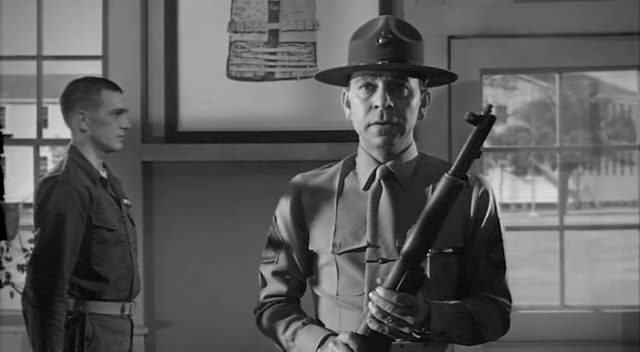
O sargento Jim Moore (Jack Webb) treina seu pelotão com disciplina e pulso firme. Não há lugar para moleza entre os soldados! Mas o exemplar recruta Owens (Don Dubbins), quando está sob pressão, não consegue manter o foco e se atrapalha. Isso leva o sargento Moore a gritar muito com Owens & Companhia, e o ponto alto da tirania acontece quando ele obriga todo o pelotão a encontrar uma mosca que Owens matara naquela tarde na praia. A missão? Enterrar a mosca!

Sergeant Jim Moore (Jack Webb) trains his platoon with discipline and toughness. There is no place for laziness among soldiers! But exemplary newcomer Owens (Don Dubbins), whenever he is under pressure, can't focuse and makes mistakes. That's why sergeant Moore shouts a lot with Owens and Co., and the climax of his tiranny is when he makes the platoon find a fly Owens had killed that afternoon at the beach. The mission? To bury the fly!

Este era apenas o segundo filme dirigido por Jack Webb, mas ele já acumulava grande prestígio. Webb foi um dos atores que se tornou ídolo nos primeiros anos da televisão. O novo meio engatinhava e ele já soube o que fazer para alcançar o sucesso. E Jack trabalhou com o que mais gostava: investigação policial. Foi com o filme “O Demônio da Noite / He Walked by Night” (1948) que ele teve a ideia de criar um programa de rádio (e, depois, de televisão) contando casos verídicos investigados pela polícia de Los Angeles. Pela primeira vez o público poderia se sentir parte da investigação, conhecendo métodos e jargões policiais. No rádio, “Dragnet” durou de 1949 a 1957. Na televisão, de 1951 a 1959.

This was only the second film directed by Jack Webb and he already had prestife. Webb was one of the actors who became an idol when TV appeared. The new medium was still crawling and he already knew what to do to be successful. And Jack worked with his favorite thing: police investigation. It was through the film “He Walked by Night” (1948) that he had the idea to create a radio show (and, later, a TV show) about real cases investigated by the LA police department. For the first time, tthe audience could feel like part of the investigation, getting to know the method and the slang used by the police. In the radio, “Dragnet” lasted from 1949 to 1957. On TV, from 1951 to 1959.


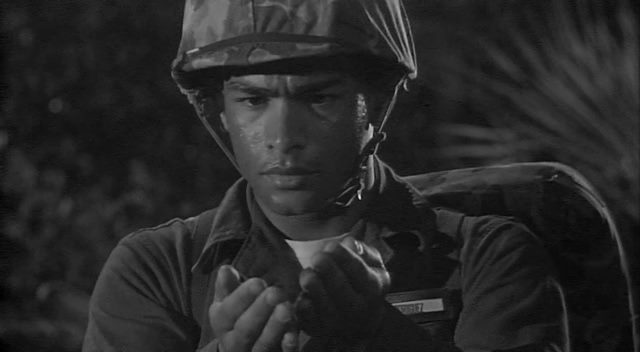
Jack Webb gostava de duas coisas em suas produções: economia e veracidade. E ele conseguiu ambos neste filme ao contratar marinheiros de verdade para interpretar os colegas de pelotão do recruta Owens. O próprio ator Don Dubbins, intérprete de Owens, tinha um pouco de experiência na frente de batalha cinematográfica: trabalhou como extra nos filmes de guerra “A um passo da eternidade / From Here to Eternity” (1954) e “A Nave da Revolta / The Caine Mutiny” (1954).

Jack Webb liked two things in his productions: economy and truth. And he got both in “The D.I.” as he hired real Mariners to play the members of Owens's platoon. Actor Don Dubbins himself had some experience in the film front: he had worked as an extra in the war movies “From Here to Eternity” (1954) and “The Caine Mutiny” (1954).


Podemos ver que Webb era um excelente diretor com apenas uma cena: o close da boca de um soldado enquanto este fala suas dezenas de tarefas. São muitos os closes neste filme, e também os travellings no alojamento dos soldados. Webb pode não ter inovado tanto nos ângulos de câmera quanto Welles, mas sem dúvida fez um belo trabalho neste drama psicológico.

We can see that Jack Webb was an excellent director with only one scene: the close-up of a soldier's mouth while he says dozens of chores. There are a lot of close-ups in this film, and also many travellings in the soldiers' quarters. Webb may not have been as innovative with the camera angles, but without a doubt he did a good job in this psychological drama.


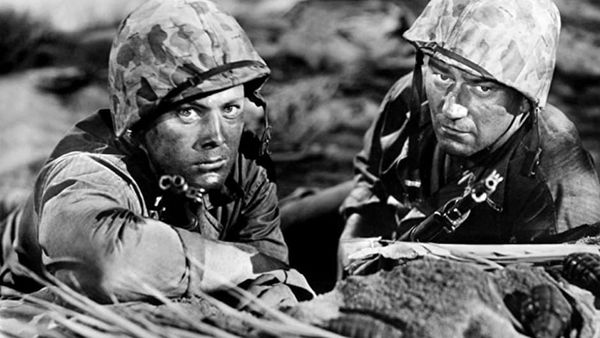
São muitos os filmes sobre a Marinha. São muitos os filmes com comandantes tiranos. O sargento Jim Moore em muito se parece, por exemplo, com o capitão Morton, interpretado por James Cagney em “Mister Roberts” (1955). E a situação de treinamento para a batalha nas praias lembra muito “Iwo Jima – O Potal da glória / Sands of Iwo Jima” (1949, que também contava com alguns soldados de verdade no elenco). Não há como não associar os sentimentos paternalistas de Moore pelo recruta Owens com o carinho velado que o sargento Stryker (John Wayne) tem pelo recruta Conway (John Agar) no filme de 1949.

There are many films about the Marines. There are many films with tyrannical commanders. Sergeant Jim Moore is a lot like Captain Morton, played by James Cagney in “Mister Roberts” (1955). And the training sequence at the beach reminds us of “Sands of Iwo Jima” (1949, that also had some real soldiers in the cast). There is no way to deny that Moore's fatherly feelings towards Owens are just like the kind of love Sergeant Stryker (John Wayne) has towards Conway (John Agar) in the 1949 film.
Sands of Iwo Jima (1949)
As três mulheres do filme merecem atenção: Virginia Gregg rouba a cena como a mãe do recruta Owens. Virginia terminaria a carreira dando voz a outra mãe, bem mais notória: ela dubla Norma Bates em “Psicose III” (1986). Monica Lewis canta uma canção escrita por Ray Conniff, “If’n You Don’t, Somebody Else Will”. A vendedora por quem o sargento Moore se interessa é Jackie Loughery, então esposa de Jack Webb e ex-Miss Estados Unidos. Mas, como em todos os filmes em que a Marinha é tema, o destaque é masculino. E Jack Webb merece todos os créditos pelo sucesso de “The D.I.”

The three women in the film deserve attention: Virginia Gregg steals the scene as Owens's mother. Virginia would end her career dubbing another mother, a more famous one: she was the voice of Norma Bates in “Psycho III” (1986). Monica Lewis sings a song written by Ray Conniff, “If’n You Don't, Somebody Else Will”. The salesgirl for whom Sergeant Moore falls is Jackie Loughery, then Jack Webb's wife and former Miss USA. But, as it happens in all films about the Marines, the men receive more attention. And Jack Webb deserves all the credit for the success of “The D.I.”.

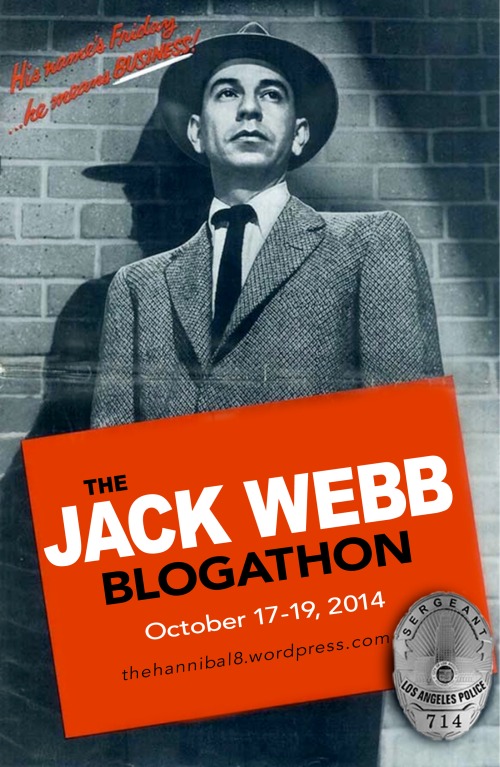
This is my contribution to the Jack Webb blogathon, hosted by Toby at The Hannibal 8. Yes, sir!

Related Posts Plugin for WordPress, Blogger...