} Crítica Retrô: A Bela e a Fera

Tradutor / Translator / Traductor / Übersetzer / Traduttore / Traducteur / 翻訳者 / переводчик

Showing posts with label A Bela e a Fera. Show all posts

Thursday, March 16, 2017

Variações sobre um mesmo tema: A Bela e a Fera (1946, 1991 e além)

Variations on the same theme: Beauty and the Beast (1946, 1991 and beyond)

Tale as old as time
True as it can be
Barely even friendship
Then somebody bends
Unexpectedly
Just a little change
Small to say the least
Both a little scared
Neither one prepared
Beauty and the Beast!
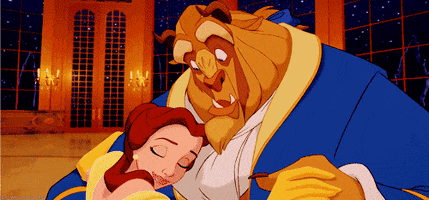
A belíssima história de amor entre uma mulher e uma criatura que parece um búfalo é um conto de fadas que existe há um bom tempo: foi publicada em 1740, escrita por Gabrielle-Suzanne Barbot de Villeneuve. Após a morte de Gabrielle, outra escritora francesa, Jeanne-Marie Leprince de Beaumont, reescreveu o conto de fadas. Mas a história na verdade tem mais de 4000 anos!

The wonderful love story between a woman and a bull-like creature is a fairy tale that has been around for quite a while: it was published in 1740, written by Gabrielle-Suzanne Barbot de Villeneuve. After Gabrielle died, another French writer, Jeanne-Marie Leprince de Beaumont, rewrote the fairy tale.  But the story actually originated more then 4000 years ago!
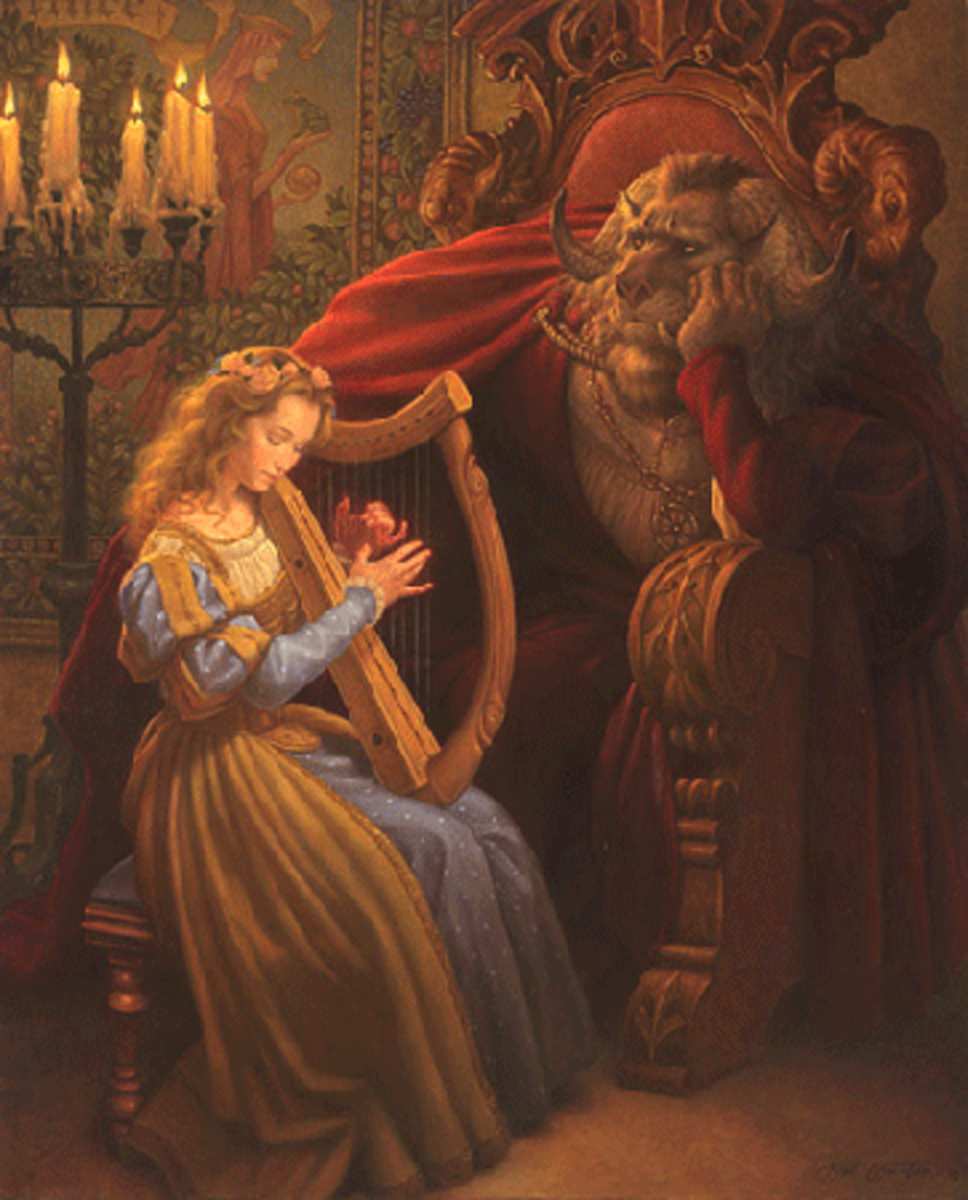
Originalmente, a Bela e a Fera era bem semelhante a outros contos de fada, pelo menos em relação à história. Bela era a filha mais nova de um comerciante viúvo. Ela tinha duas irmãs muito preocupadas com a aparência e três irmãos que viviam se metendo em confusões. Quando seu pai recebe a notícia de que um de seus navios perdidos foi encontrado, a família toda, que estava há alguns meses vivendo na pobreza, fica em polvorosa. As irmãs querem que o pai lhes traga vestidos chiques com o dinheiro da venda dos produtos do navio. Bela quer apenas uma rosa.

In its genesis, Beauty and the Beast was very similar to other fairy tales, at least in its history. Belle was the youngest daughter of a widow sea merchant. She had two vain sisters and three troublemaker brothers. When her father recovers one of his ships after living some months in poverty, the whole family gets excited. The sisters want the father to bring fancy dresses to them, but Belle wants only a rose.
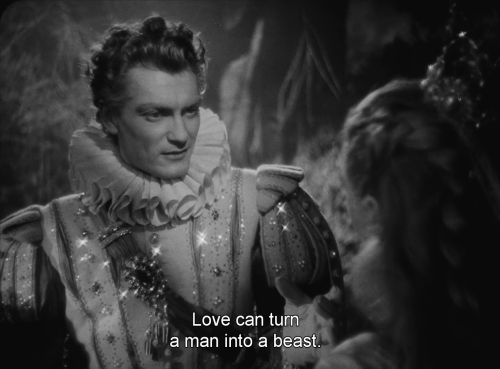
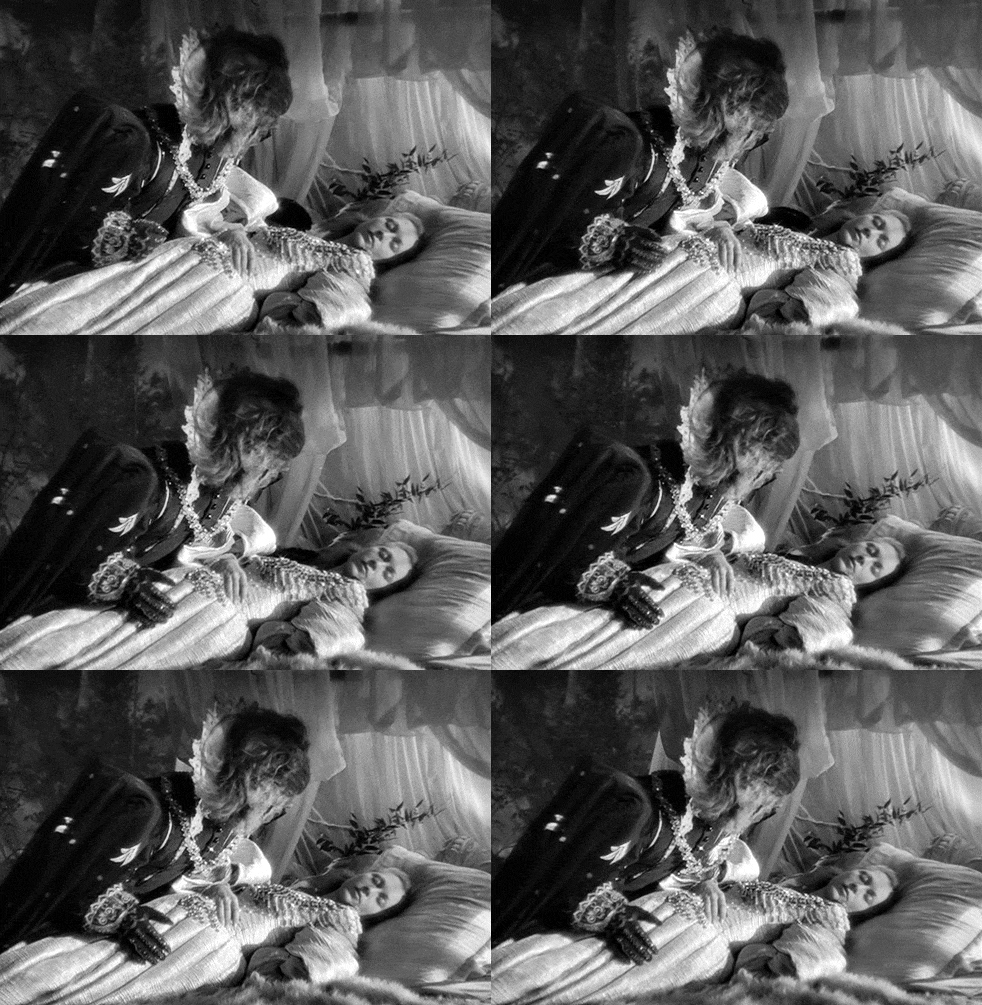
Voltando da negociação malsucedida no porto, o pai de Bela entra no território da Fera e é pego. A Fera deixa o pai da Bela visitar a família uma última vez, mas ele não volta ao cativeiro: a Bela toma o lugar do pai e parte para o castelo da Fera. A versão francesa de 1946 segue este roteiro. Nela, Bela é interpretada por Josette Day e a Fera por Jean Marais.

Coming back from an ill-fated negotiation at the harbor, Belle's father enters the Beast's territory and is imprisoned. The Beast lets Belle's father see his family for the last time, but he doesn't come back: Belle goes to the Beast's castle in her father's place. The 1946 French movie follows this storyline. Belle is pyayed by gorgeous Josette Day, and the Beast by Jean Marais.
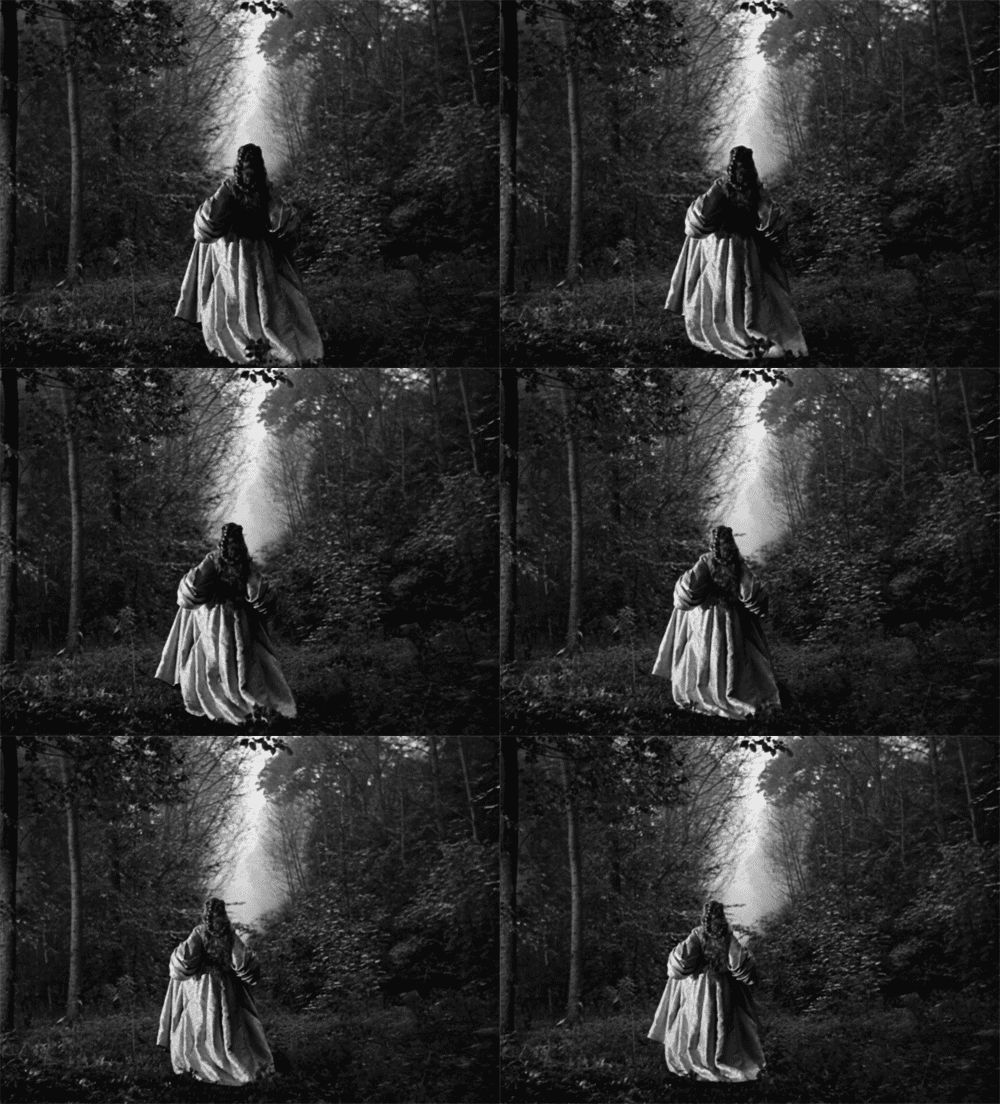
A versão de 1946 pode surpreender quem não está acostumado a ver clássicos e pensa que todos os filmes antigos são primitivos e chatos. Na verdade, a versão francesa é simplesmente mágica, e faz a mágica sem efeitos especiais computadorizados. Ainda por cima, é um filme feito logo após a Segunda Guerra Mundial, conflito do qual a França saiu muito abalada. De certa maneira, este é o tipo de filme que a França precisava na época: um filme que nos faz acreditar em mágica novamente.

The 1946 version may surprise the ones who are not used to old movies and expect it to be dull and primitive. Actually, the French version is nothing but magical, and does it without CGI and when France had just left World War II with lots of scars. In a sense, it was the kind of comfort movie France needed then: a movie that makes you believe in magic again.
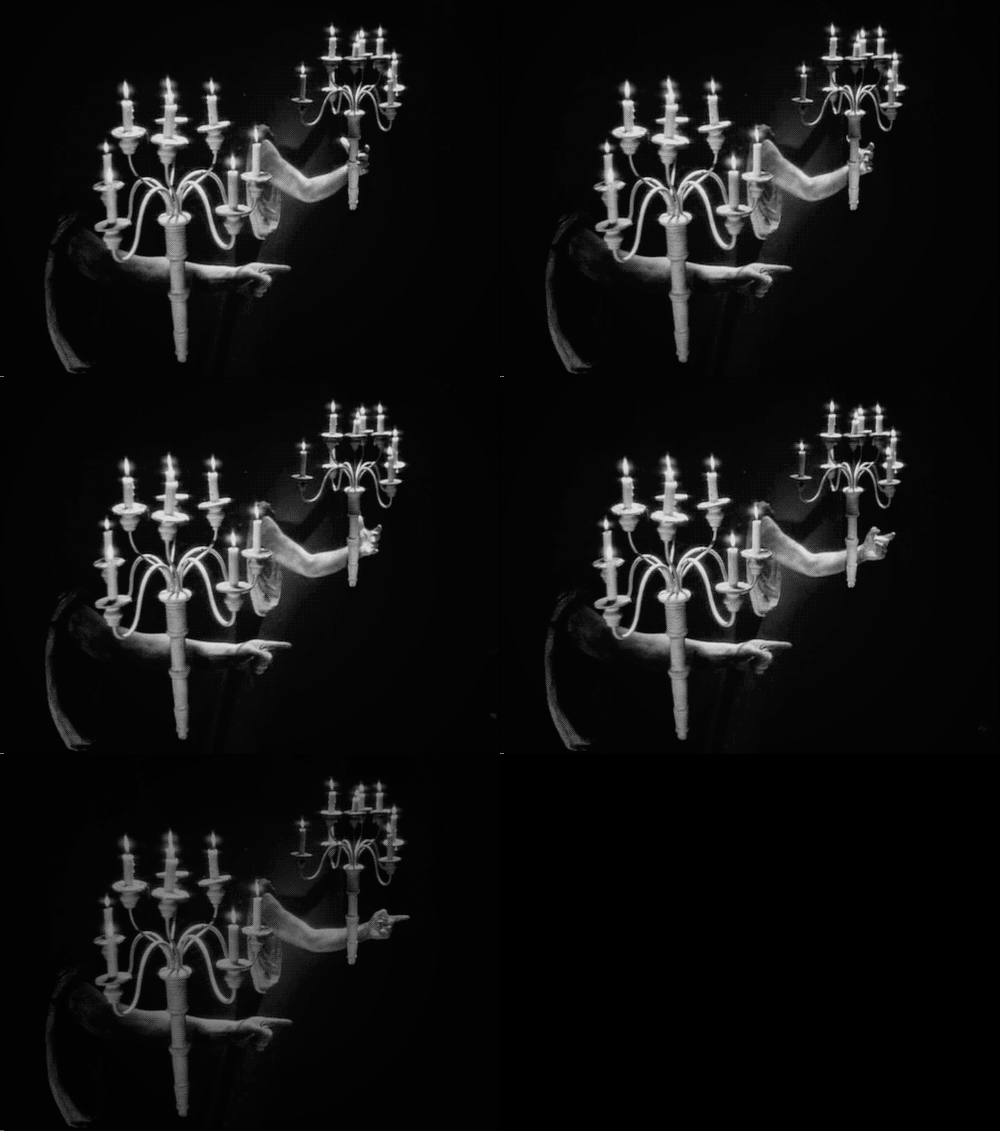
Meu truque favorito no filme de Jean Cocteau são os braços humanos que seguram objetos como velas e espelhos dentro do castelo da Fera. Foi asism que ele conseguiu mostrar os serviçais amaldiçoados no castelo. E isso não é tudo: a iluminação também confere um toque mágico. À luz de velas, Josette Day é etérea, angelical. Esse efeito não poderia ser obtido apenas com a luz em um filme a cores.

My favorite trick in Jean Cocteau's film is his idea of having moving arms holding the objects like candles and mirrors inside the Beast's castle. It was through this trick that he could transport to the screen the cursed maids, butlers and cooks. And this is not all: the lightning also adds to the magic. By candlelight, Josette Day looks ethereal, and such an effect couldn't be achieved in a color film.
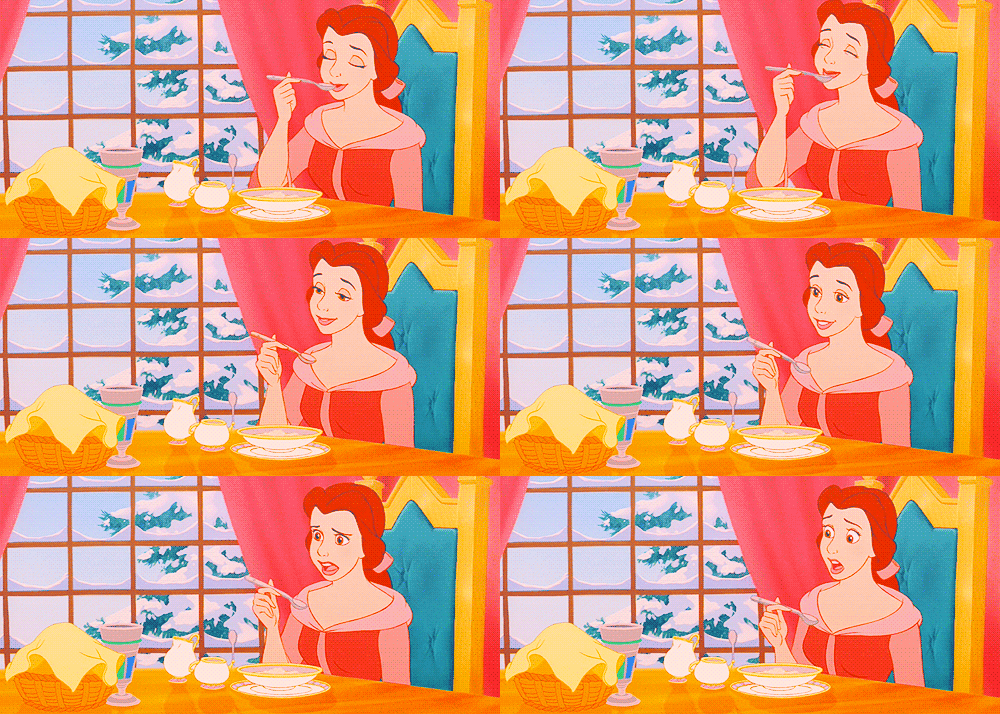
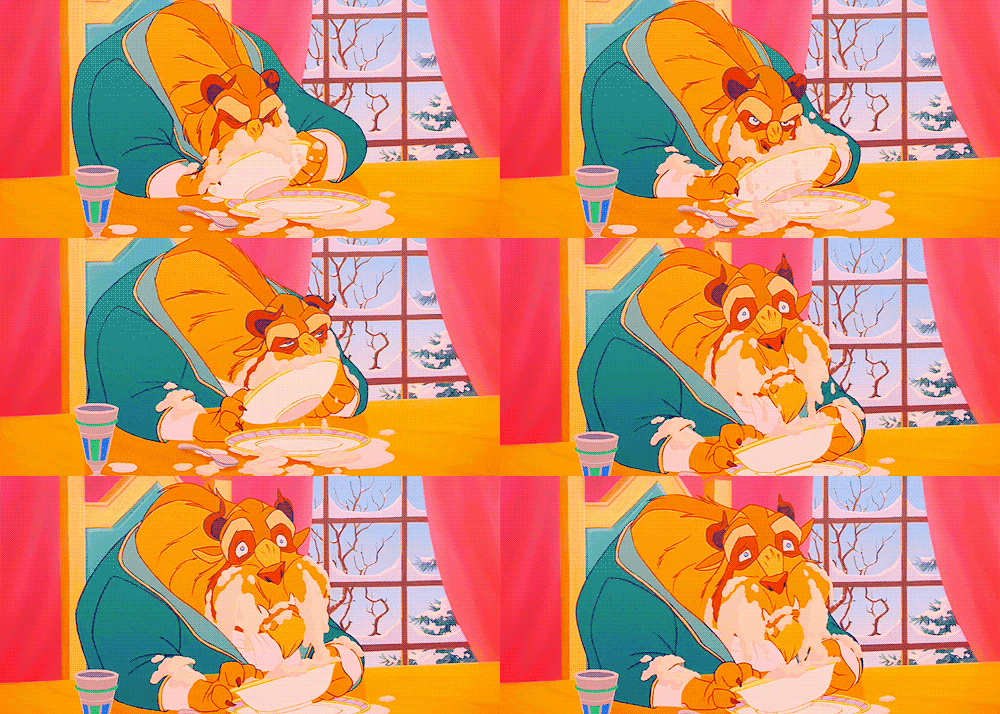
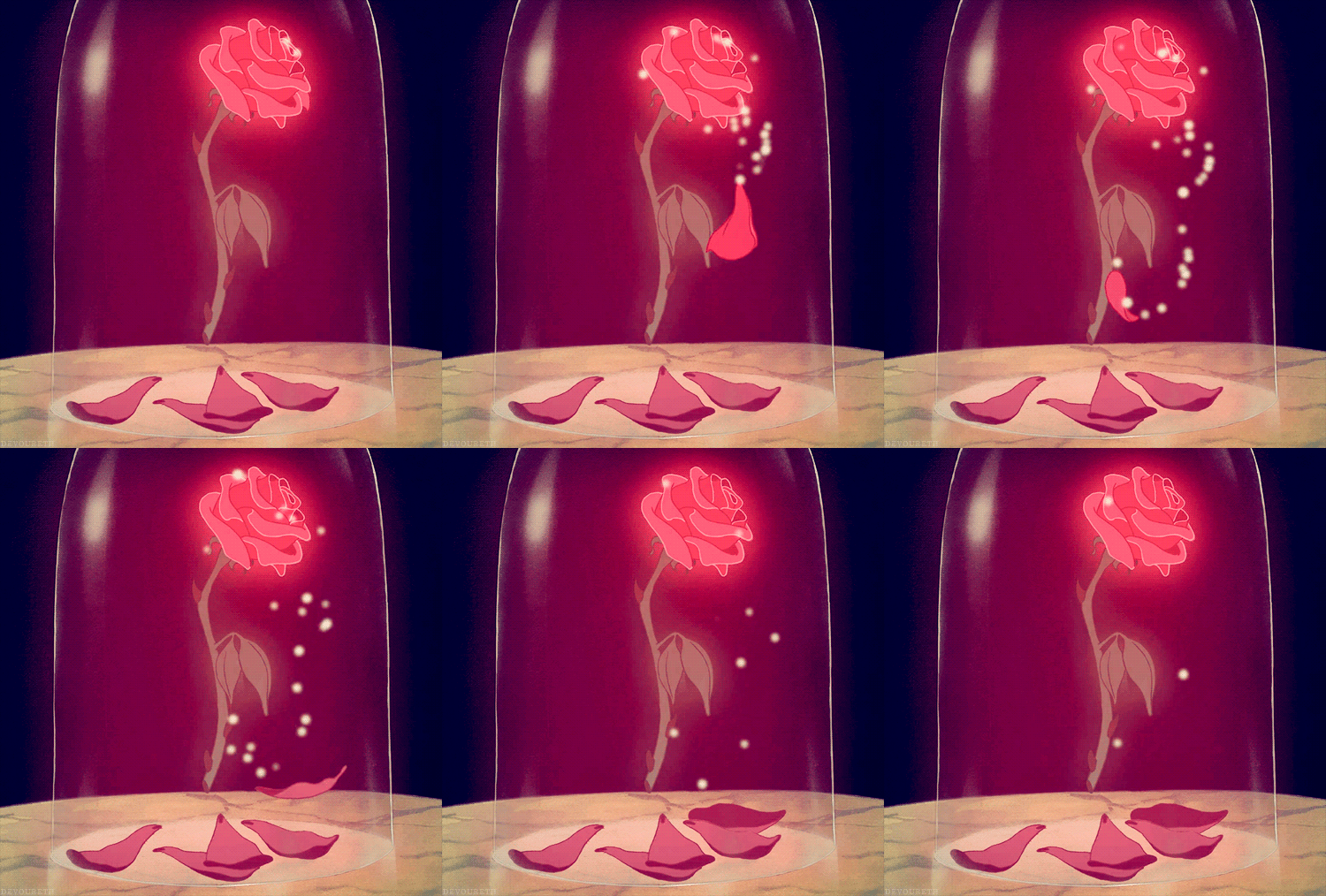
Não, o pai da Bela não era um inventor. Ela não era filha única, nem uma leitora voraz (ou seja, ela não era como eu). Ela não era paquerada pelo insistente e vaidoso Gaston, o homem com grandes músculos e cérebro de ervilha. Tudo isso é o toque Disney. Mas estas mudanças na história, junto com a animação de qualidade, obviamente, fizeram o filme ser indicado ao Oscar de Melhor Filme em 1992. É interessante notar que a animação tem diversas conexões com o cinema clássico.

No, Belle's father wasn't an inventor. She wasn't a single child who was also a bookworm (she wasn't me, after all). She wasn't courted by Gaston, a man with great muscles and a pea-sized brain. All this is Disney exclusivity. But those changes in the story, along with the great animation, of course, made the animated feature be nominated for the Best Picture Oscar in 1992. Interestingly, the animation has many connections to classic films.


A versão de 1946 inspirou o estilo de um episódio de 'Teatro dos Contos de Fada". Neste episódio, dirigido por Roger Vadim, a Bela é interpretada por Susan Sarandon e a Fera por Klaus Kinski. Será que já houve escalação de elenco melhor do que esta?

The 1946 version inspired the look of an episode of “Shelley Duvall's Faerie Tale Theatre”. In this episode, directed by Roger Vadim, Belle is played by Susan Sarandon, and the Beast by Klaus Kinski. Has there ever been a better casting than this?
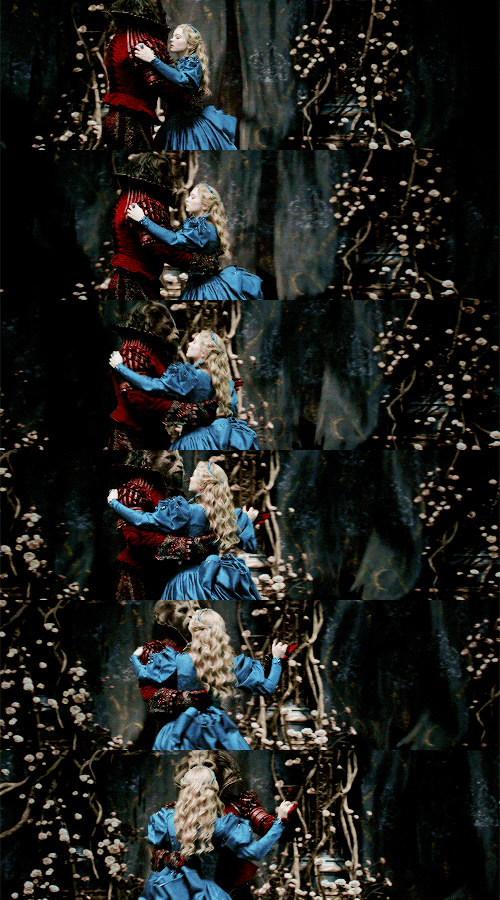
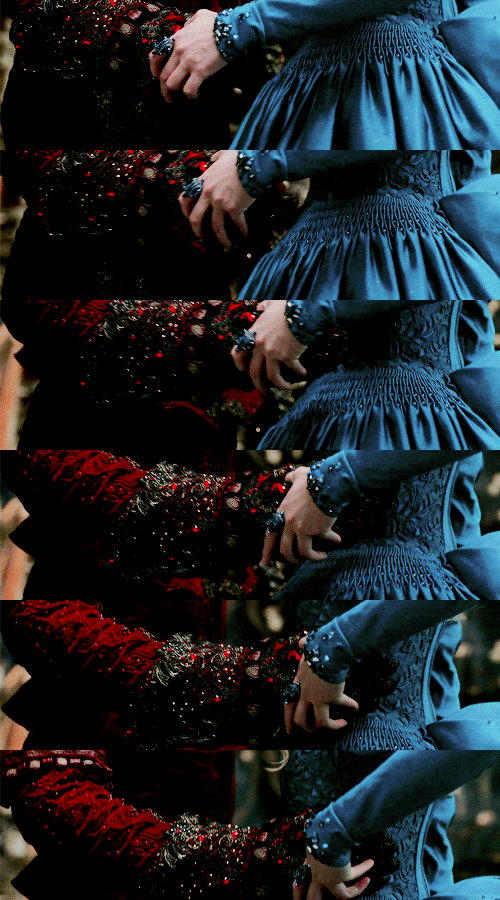
Houve uma versão em 2014, novamente feita na França, com Léa Seydoux e Vincent Cassel nos papéis principais. O filme pode ser visualmente deslumbrante, mas falta algo – talvez tenha sido a narrativa confusa, que avança e retrocede no tempo sem aviso, ou talvez seja a falta de química do casal. De toda forma, o filme é uma festa para os olhos e ao mesmo tempo uma cura para a insônia. Bem, pelo menos nesta versão a Bela e a Fera têm roupas lindas e diferentes do usual para o grande baile:

There was a 2014 version, again made in France, with Léa Seydoux and Vincent Cassel in the lead roles. While it is visually breathtaking, the film lacks something – maybe it is the confused narrative, that goes back and forward in time without warning, or maybe it is the lack of chemistry between the couple. Anyway, it is a feast for the eyes but at the same time a cure for insomnia. Well, at least in this version Belle and the Beast have different and gorgeous clothes for their dance:
A primeira adaptação para o cinema foi feita pela Pathé-Freres em 1899. Outras versões se seguiram, ainda no cinema mudo, tanto na França quanto na Inglaterra, mas há pouquíssimas informações sobre elas. O que se sabe é que existe uma cópia – ou possivelmente um fragmento – da versão de 1913 na Cinemateca Francesa. É uma pensa que não foi feita nenhuma versão da história na Hollywood do cinema mudo!

The first film adaptation of the story to the cinema was made by Pathé-Freres in 1899. Many more versions were made in the silent era, both in France and the UK, but information about these movies is scarce. A copy – or rather a fragment – of the 1913 version certainly exists in the French Cinémathèque, though. It’s a pity that no version of the tale was adapted to the screen in silent-era Hollywood!

Na TV foram feitas também diversas adaptações, entre filmes e episódios, entre os quais está um de “Shirley Temple’s Storybook” de 1958. Séries de TV também se inspiraram na história, incluindo uma versão modernizada estrelada por Linda Hamilton e Ron Perlman que durou três temporadas, de 1987 a 1990.

On TV there were several versions as well, considering TV movies and episodes such as one from “Shirley Temple’s Storybook” in 1958. TV series were also inspired by the tale, including a modernized version with Linda Hamilton and Ron Perlman, that lasted three seasons, from 1987 to 1990.
Qualquer que seja a versão e sua opinião sobre a história – afinal, qual a moral do conto de fadas (as aparências não importam ou o amor cura tudo?) – o cinema sempre conseguiu levar para as telas a magia que nos faz continuar acreditando no conto de fadas.

Whatever the version, and whatever is your reading of the story – which could exactly be the lesson we learned with Beauty and the Beast (appearances don’t matter / love cures everything?) – the film world never failed to translate the magic that makes us believe in fairy tales.

Wednesday, January 4, 2017

Resoluções cinematográficas 2016 – Resultados

2016 film resolutions - Results

Se as resoluções cinematográficas de 2015 só foram completadas nos primeiros dias de 2016, as de 2016 foram cumpridas a tempo – ainda que aos 45 do segundo tempo. Sim, deixei mais uma vez a maioria dos filmes para ver em dezembro, e precisei correr para terminar a lista no dia 31. Mas tive gratas surpresas, com filmes proféticos, ainda atuais e alguns que já entraram na minha lista de favoritos de todos os tempos. Vamos a um resumo de cada um deles:

The 2015 film resolutions were only completed in the first days of 2016, but the ones from 2016 were completed in time – in the last minute, to be fair. Yes, once again I left most films to be seen in December, and I had to hurry to end the list on the 31st. But I had good surprises, with prophetical films, some very modern ones, and the ones that already entered my list of all-time favorites. Let's discover a little bit about them:

The Doll (1919): Este adorável filme com Ossi Oswalda, dirigido por Ernst Lubitsch, conta a história de um homem rico e mimado que decide se casar com uma boneca para parar de ser importunado por pretendentes. O problema é que a boneca que ele escolhe é na verdade feita de carne e osso. Difícil de entender? Leia a crítica completa AQUI.

Die Puppe (1919): This lovely film with Ossi Oswalda, directed by Ernst Lubitsch, tells the story of a rich and spoiled young man who decides to marry a doll to stop being harassed by women. The issue is that the doll he chooses is actually made of flesh and bone. Sounds complicated? Read the review HERE.
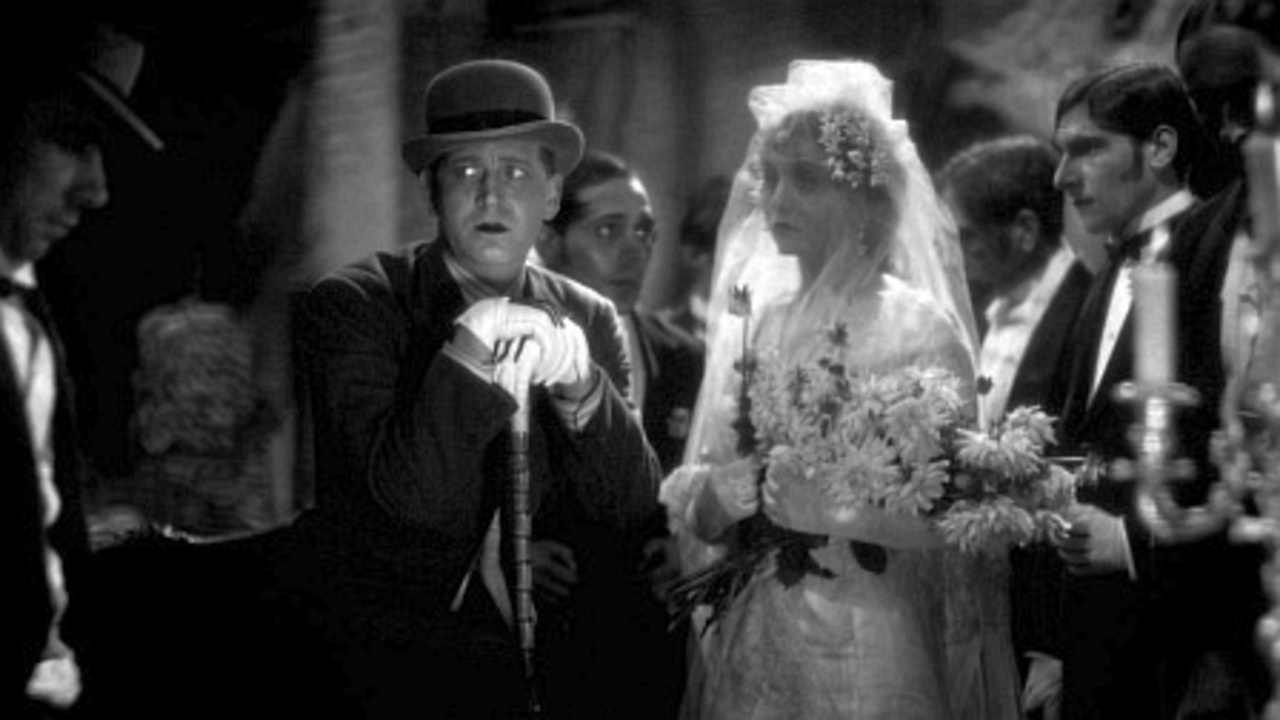
A ópera dos pobres (1931): Drama, musical e um pouquinho de comédia se misturam para contar a história de Mackie Navalha (Rudolf Forster), um bandido comum que se casa com a filha do dono de uma rede de mendicância em Londres.

The Threepenny opera (1931): Drama, musical and a little bit of comedy are put together to tell the story of Mackie Messer (Rudolf Forster), a common criminal who marries the daughter of an owner of a begging business in London.
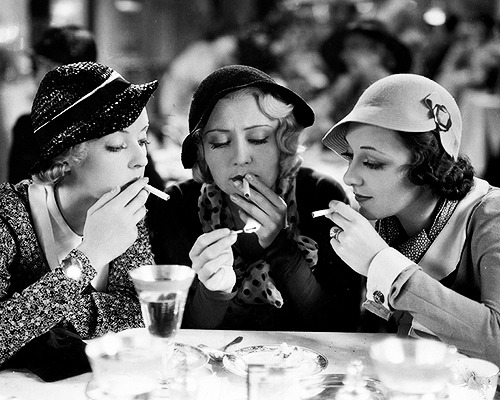
Três… Ainda é Bom (1932): Ann Dvorak está aqui quase – quase – tão boa quanto em “Scarface”. Acima de tudo, este pre-Code curtinho é uma lição para as mulheres que pensam em buscar a felicidade for a do casamento. Crítica completa AQUI.

Three on a Match (1932): Ann Dvorak is here almost – almost – as good as she was in “Scarface”. Above all, this short pre-Code is a cautionary tale about women who think about seeking happiness outside the sacred institution of marriage. Full review HERE.
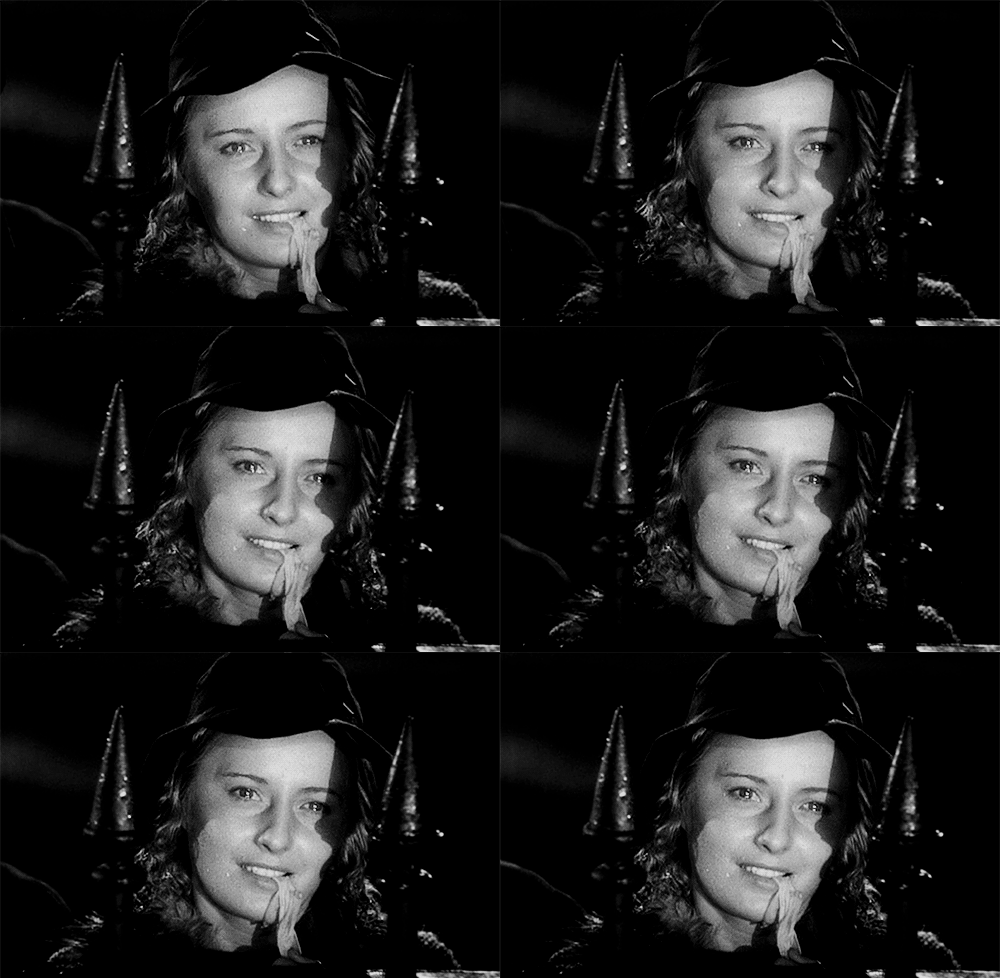
Stella Dallas, Mãe Redentora (1937): Barbara Stanwyck prova que uma mãe é capaz de fazer tudo, tudo mesmo, para ver sua filha feliz – mesmo que a filha não agradeça à mãe pelos sacrifícios. Veja com lencinhos ao alcance.

Stella Dallas (1937): Barbara Stanwyck proves thst a mother can do anything, anything at all, to see her daughter happy – even if the daughter doesn't appreciate the sacrifices her mother makes. Watch it with tissues near you.
A Bela e a Fera (1946): Na versão de Jean Cocteau, Bela (Josette Day) tem até irmãs malvadas e um proto-Gaston, mas o destaque fica por conta do mágico e quase assustador castelo da Fera (Jean Marais). Um filme esteticamente perfeito. 

La Belle et La Bête (1946): In Jean Cocteau's version, Belle (Josete Day) has even evil sisters and a proto-Gaston after her, but pay attention to the magic and nearly scaring Beast's (Jean Marais) castle. It's an aesthetically perfect movie.
Neste Mundo e no Outro (1946): Às vezes o mensageiro da morte erra, e não leva quem deveria. Mas e quando o amor entra em cena antes que o erro seja consertado? Leia a crítica desta maravilhosa película, uma das melhores que vi em 2016, AQUI.

A Matter of Life and Death (1946): Sometimes the grim reaper makes a mistake, and the one about to be dead ends up living. But hat if love blossoms before the mistake is erased? Read the review of this wonderful film, one of the best I've seen in 2016, HERE.
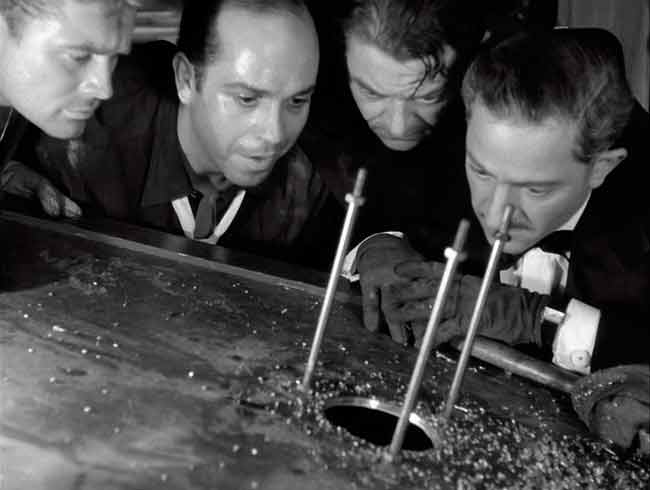
Rififi (1955): O grande filme de crime francês foi dirigido por Jules Dassin, que também atua como Cesare, com um orçamento minúsculo. Você já deve imaginar que a moral do filme é que o crime não compensa, mas mesmo assim ficará boquiaberto com a tensa e longa sequência de roubo, durante a qual nenhum ruído é ouvido na tela.

Rififi (1955): The great French heist film was directed by Jules Dassin, who also plays Cesare, with a tiny budget. You must already imagine that the moral of the story is that crime does not pay, but you'll still be speechless with the tense and long heist sequence – totally silent 20 minutes.
Galante e Sanguinário(1957): Um western tenso, de luta contra o relógio à exemplo de “Matar ou Morrer” (1952). Glenn Ford, em um papel diferente do habitual, e Van Heflin são bandido e mocinho, um esperando para ser libertado por sua gangue, outro em busca de uma recompensa.

3:10 to Yuma (1957): A tense western, about a race against time just like in “High Noon” (1952). Glenn Ford, playing againsy type, and Van Heflin are outlaw and good guy, one waiting to be rescued by his gang, the other working to collect a reward.
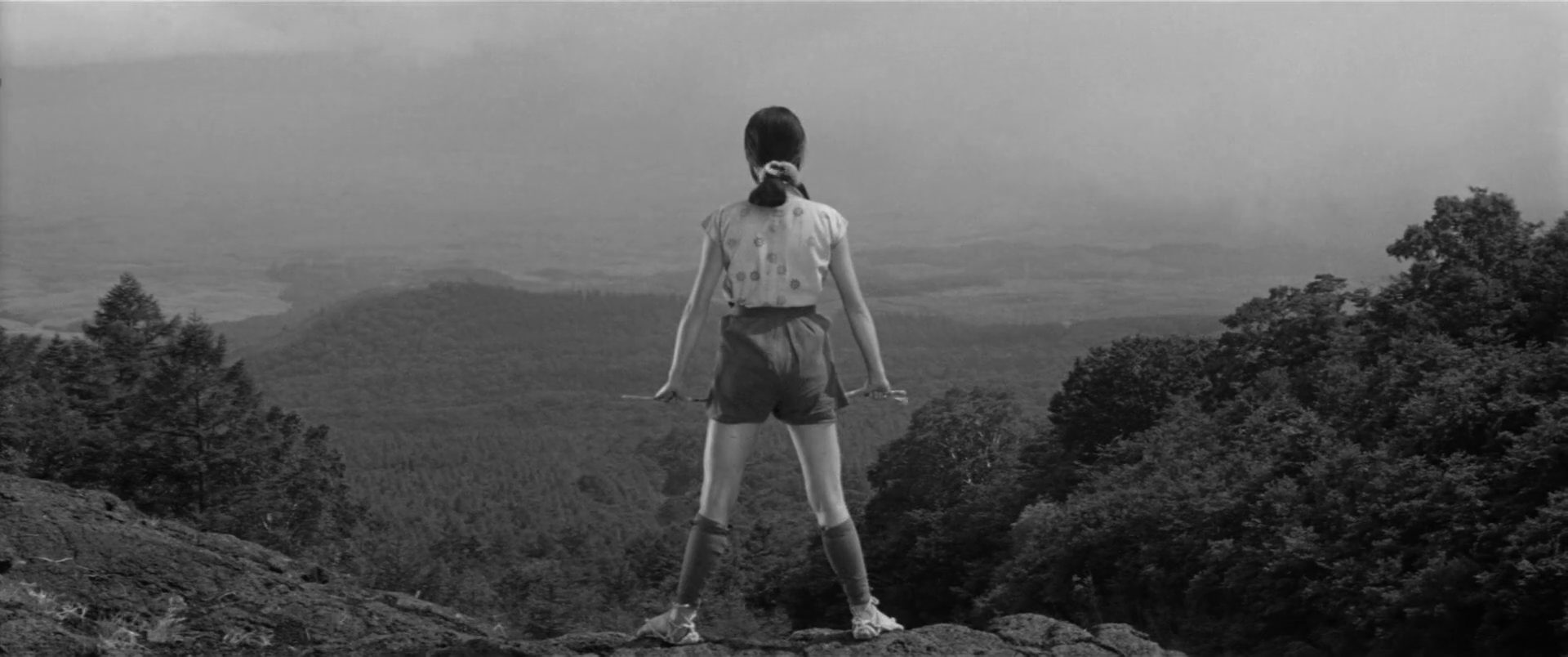
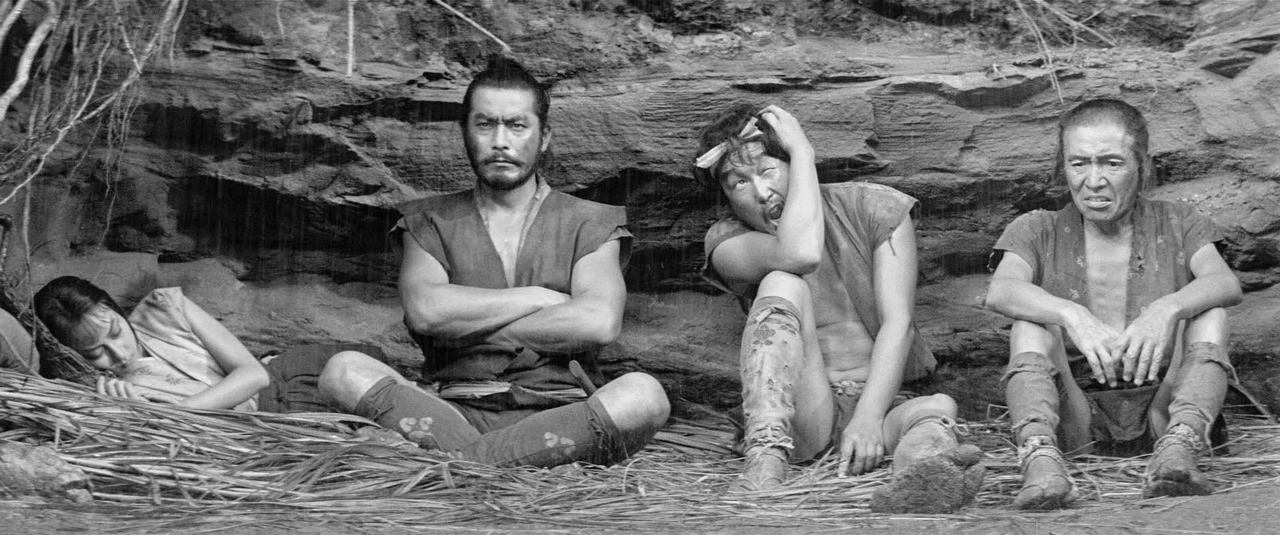
A Fortaleza Escondida (1958): O filme que pode ter retirado “Rashomon” (1950) da condição de meu filme favorito de Kurosawa. Dois covardes se juntam a um general (Toshiro Mifune) para resgatar uma princesa e levá-la em segurança até as terras de um clã aliado. Parece familiar? Sim, este filme influenciou – e muito – George Lucas ao criar “Star Wars” (1977).

The Hidden Fortress (1958): The film that may have taken “Rashomon” (1950) away from the top of my favorite Kurosawa's film list. Two cowards and a general (Toshiro Mifune) go to rescue a princess and tke her safely until an alied clan's territory. Does it sound familiar? Yes, this film was a big – huge – influence to George when he created Star Wars (1977).
Sob o Domínio do Mal (1962): Lutas políticas, fraudes, lavagem cerebral, trauma. 55 anos depois, os temas de “Sob o Domínio do Mal” estão mais atuais do que nunca. Frank Sinatra estrela como o ex-combatente que descobre que seu antigo chefe foi hipnotizado e está sendo usado para eleger seu padrasto presidente. Isso soa familiar, não?

The Manchurian Candidate (1962): Poilitical disputes, brain washing, trauma. 55 years later, the themes in “The Manchurian Candidate” are more modern than ever. Frank Sinatra stars as the former soldier who finds out that his old boss was hipnotized and is being used to help elect his stepfather president. This sounds familar, doesn't it?
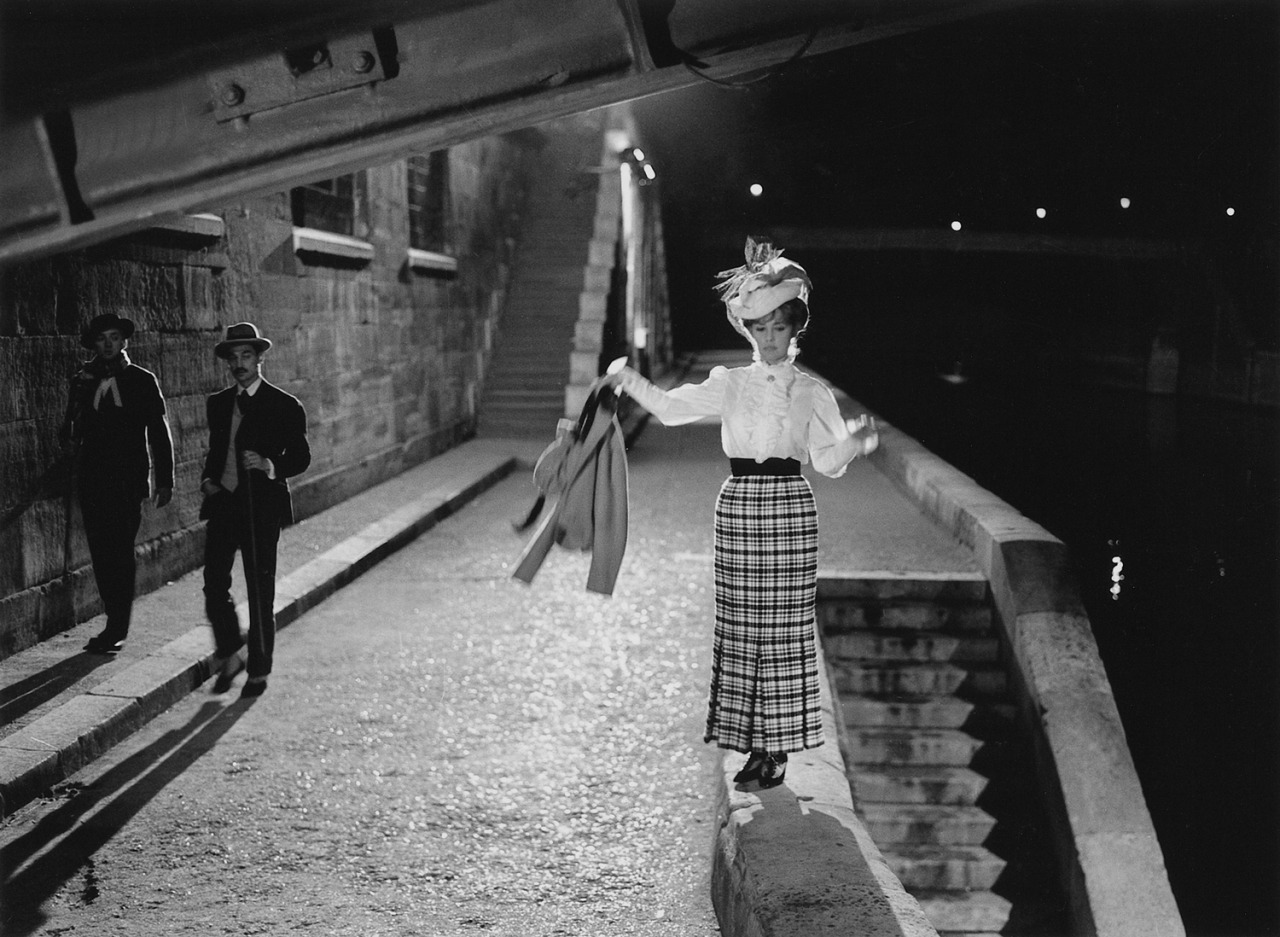
Jules e Jim: Uma mulher para Dois (1962): Jules (Oskar Werner) e Jim (Henri Serre) são melhores amigos de nacionalidades diferentes às vésperas da Primeira Guerra Mundial. Como se isso não bastasse, eles conhecem Catherine (Jeanne Moreau), uma mulher livre e contestadora que mexerá com a cabeça e o coração de ambos.

Jules et Jim (1962): Jules (Oskar Werner) and Jim (Henri Serre) are best friends from different countries and the First World War is about to begin. As if  it was not enough, they meet Catherine (Jeanne Moreau), a free and outspoken woman who will enter both their minds and hearts.
THX 1138 (1971): A ficção científica pode, às vezes, nos dar uma percepção do futuro ou mesmo do presente que deixam um gosto amargo na boca. O futuro monocromático e hiper-controlado mostrado em THX 1138 é horrível de ser visto, e a busca do personagem principal por liberdade é inspiradora, em especial no momento em que vivemos.

THX 1138 (1971): Science fiction can, sometimes, give us a bitter perception of the future or even the present. The one-color, über-controlled future shown in THX 1138 is difficult to be seen, and the main character's search for liberty is inspiring, especially considering the moment we live in.

Thursday, January 28, 2016

Resoluções cinematográficas 2016

As resoluções cinematográficas de 2015 foram cumpridas com sucesso total! Assim sendo, como eu finalmente encontrei um tipo de resolução de Ano Novo que consigo cumprir, farei em 2016 uma nova listinha de clássicos que nunca vi, mas verei até 31 de dezembro. São eles:

The Doll / Die Puppe (1919)
A ópera dos pobres / The Threepenny opera (1931)
Três… Ainda é Bom / Three on a Match (1933)
Stella Dallas (1937)
A Bela e a Fera / La Belle et La Bête (1946)
Neste Mundo e no Outro / A Matter of Life and Death (1946)
Rififi (1955)
Galante e Sanguinário / 3:10 to Yuma (1957)
A Fortaleza Escondida / The Hidden Fortress (1958)
Sob o Domínio do Mal / The Manchurian Candidate (1962)
Jules e Jim (1962)
THX 1138 (1971)


Escolhi apenas 12 filmes, e não 15 como fiz ano passado, porque confesso que tive que me apressar para ver todos antes do final do ano. Doze parece ser o número ideal para a lista. Também pretendo melhorar meu espanhol através de filmes, o que representa mais um desafio cinematográfico. Agora, vamos começar a cumprir a resolução?

Tuesday, November 13, 2012

A Bela, a Fera e o silêncio

The Beauty, the Beast and the silence


Tendo a honra de ser a única animação a ser indicada ao Oscar de Melhor Filme, “A Bela e a Fera” tornou-se uma obra-prima dentro do universo criado pelos Estúdios Disney desde o dia em que estreou, há exatos 21 anos. A história surgiu 250 anos antes, em 1740, saindo da imaginação de Gabrielle-Suzanne Barbot, também conhecida por Madame Villeneuve. Assim como a maioria dos contos de fada, “A Bela e a Fera” teve várias versões, inclusive uma escrita por um mestre do gênero, o também francês Charles Perrault.

“Beauty and the Beast” has the honor to be the only animation film to be ever nominated for a Best Picture Oscar. Since the day it premiered, exactly 21 years ago, it became a classic inside the Disney Studios universe. The story, however, appeared 250 years before, in 1740, coming from the imagination of Gabrielle-Suzanne Barbot, also known as Madame Villeneuve. Like só many fairy tales, “Beauty and the Beast” was adapted to the screen several times. One of these versions was even written by fairy-tale master Charles Perrault! 
Uma das mais famosas versões surgiu em 1946, pelas mãos do francês Jean Cocteau. Uma série com ares modernos surgiu na televisão em 1987, com a Bela interpretada por Linda Hamilton e transformada em advogada, e a Fera vivendo no esgoto e ganhando vida através do ator Ron Perlman. A versão da Disney, que vinha sendo planejada já há algum tempo, faturou dois Oscars em 1992, de Trilha Sonora e Melhor Canção Original. Ela também deu origem a alguns especiais para a TV no final da década de 1990, focando mais em Bela. Em 2012 uma nova série baseada no conto estreou e muitas outras produções, não apenas no cinema, já usaram como base esse conto de fadas.

One of the most famous versions was released in 1946 and directed by French artist Jean Cocteau. One TV series with a modern premiered on TV in 1987. In it, Belle was a lawyer played by Linda Hamilton and the Beast lived in the sewers and was played by Ron Perlman. The Disney version, in development for some time, won two Oscars in 1992: Best Musical Score and Original Song. The animation was also the origin of some TV specials that aired in the 1990s and focused in Belle. In 2012 another TV series based on the story premiered and many other artistic works, not only movies, were based in this fairy tale.
Considerando que, por exemplo, Cinderela já havia sido adaptada para o cinema em 1914 com Mary Pickford e antes ainda em 1899 pelas mãos de Georges Méliès, “A Bela e A Fera” foi um conto que bem que poderia ter sido adaptado muito antes em Hollywood e com certeza uma versão muda da história teria sido sensacional. Mas quem interpretaria as personagens?

Considering that, for instance, Cinderella was adapted to the screen in 1914 with Mary Pickford nad even before in 1899 by Georges Méliès, “Beauty and the Beast” could have been adapted into a Hollywood movie in the silent era in a sensational way. But who could play the characters?

A Bela: Como eu não conseguia me decidir, pedi ajuda aos leitores do blog que, por 14 votos a seis, escalaram Lillian Gish (1893-1993) para ser a Bela, uma amante de livros muito corajosa. Com sua beleza e fragilidade, Lillian era capaz de esconder a coragem que havia dentro dela, mas estava sempre pronta para usá-la para o bem de suas personagens.

Belle: Since I couldn't make up my mind, I asked my readers for help. They voted in a poll between Mary Pickford and Lillian Gish, and Lillian won with 14 votes against 6. Lillian Gish (1893-1993) is the perfect choice to play a very brave female hero who loves books. With her beauty and fragility, Lillian could hide the courage inside her, but she was always ready to use it to her character's sake.
A Fera: Quem além de Lon Chaney (1883-1930) poderia ser a Fera? Só o Homem de Mil Faces seria capaz de se transformar em uma criatura peluda e assustadora. Considerando que a Fera tem uma triste marca no passado que a deixou com a aparência de monstro, Lon destaca-se ainda mais como o cara certo para o papel.

Beast: Who eles besides Lon Chaney (1883-1930) could be the Beast? Only the Man of a Thousand Faces was able to become a hairy and scary creature. If you consider that the Beast has a sad past and a horrible event let him with the appearance of a monster, you know that Lon is indeed the right person for the role.
Gaston: O sofisticado rapaz apaixonado por bela deveria ser um galã e John Gilbert (1897-1936) mostra-se perfeito para o papel, considerando que ele até se apaixonou por Lillian Gish na vida real, sem ser correspondido. Não sei se Gilbert seria um bom vilão, mas um embate entre ele e Chaney seria épico!

Gaston: The fancy guy who is in love iwth Belle should be a swoon-worthy leading man. John Gilbert (1897-1936) is perfect for the role, because he was even in love iwth Lillian Gish in real life but his love was unrequited. I'm not sure if Gilbert would be a good villain, but a fight between him and Lon Chaney would be epic! 
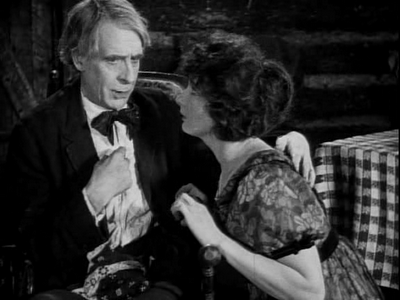
Maurice (o pai da Bela): Depois de mutia reflexão, escolhi Spottiswoode Aitken (1886-1933) para ser o pai de Bela, e não apenas porque ele tem um nome interessante. Um de seus trabalhos mais famosos é como o rei da Babilônia em “Intolerância” (1916), filme que também tinha Lillian Gish no elenco. 

Maurice (Belle's father): After a lot of thought, I chose Spottiswoode Aitken (1886-1933) ot play Belle's father, and not only because he had an interesting name. One of his most famous roles was as the king of Babylon in “Intolerance” (1916), a film in which Gish also appeared.
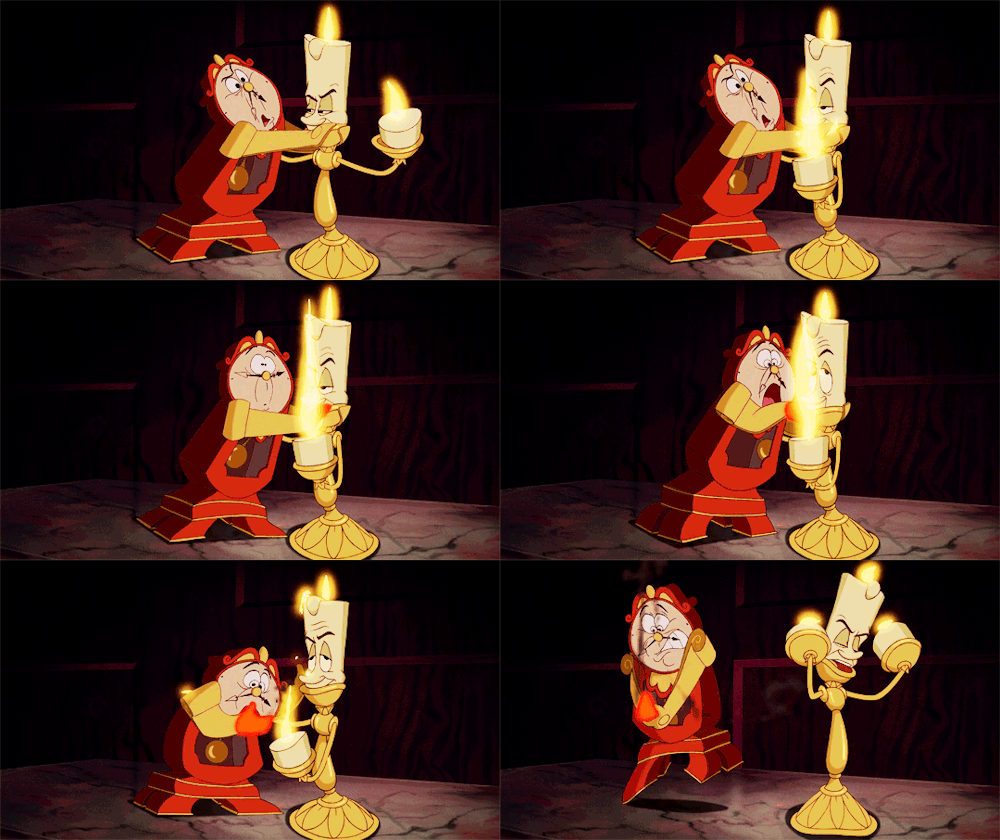
Os objetos do castelo da Fera: Mesmo nos primórdios do cinema mudo, lá pela década de 1900, os cineastas já eram capazes de animar objetos através de efeitos especiais. Animar adoráveis xícaras, bules, relógios e armários não seria difícil, mas aqui eles certamente não seriam objetos cantantes. Nem falantes.

The objects in the Beast's castle: Even when the first movies were being made, in the 1900s, moviemakers were already able to animated objects through special effects. It wouldn't be difficult to animated lovely cups, teapots, clocks and closets, but in this version they certainly wouldn't be singing – nor talking – objects.
Os cenários dos filmes mudos nunca deixam a desejar e com certeza o castelo da Fera seria uma visão sensacional! Com a trilha sonora certa, seria um espetáculo dos primórdios do cinema! E vocês, que filme gostariam de ver transformado em película muda?

The sets in silent films are always a feast for the eyes and there is no doubt that the Beast's castle would be stunning! With the right soundtrck, it'd be a spectacle of early filmmaking! Is there any other movie you would like to see as a silent version?
Related Posts Plugin for WordPress, Blogger...