} Crítica Retrô: Michael Curtiz

Tradutor / Translator / Traductor / Übersetzer / Traduttore / Traducteur / 翻訳者 / переводчик

Showing posts with label Michael Curtiz. Show all posts

Monday, August 25, 2025

O Rebelde Orgulhoso (1958) / The Proud Rebel (1958)


Quando falamos sobre Alan Ladd, eu penso em filme noir, obviamente, porque ele fez alguns filmes do gênero, como “Capitulou Sorrindo” (1942). Mas eu principalmente penso em faroestes, pois ele foi o protagonista de “Os Brutos Também Amam” (1953), entre outros. Cinco anos após este filme icônico, Ladd e seu filho foram novamente para o Velho Oeste em “O Rebelde Orgulhoso”.

When we talk about Alan Ladd, I think of film noir, of course, as he starred in some films of the genre, like “The Glass Key” (1942). But I mainly think about westerns, as he was the lead of “Shane” (1953), among others. Five years after this iconic movie, Ladd took his son as an acting partner and left to the Old West once again in “The Proud Rebel”.

A época não é especificada, mas a ação se passa não muito tempo após a Guerra de Secessão (1861-1865). Vindo do Sul, John Chandler (Alan Ladd) ruma para o norte até Aberdeen em busca de um médico que desse um diagnóstico preciso do que tem de errado com seu filho David (David Ladd). O garoto parou de falar dois anos antes, depois de um grande trauma. O doutor Enos Davis (Cecil Kellaway) indica outro médico em Minnesota que talvez possa ajudá-los. Mas antes eles viverão uma aventura.

Time is not specified, but it’s not long after the American Civil War (1861-1865). Coming from the South, John Chandler (Alan Ladd) goes north to Aberdeen to find a doctor that can give a precise diagnosis of what is wrong with his son David (David Ladd). The boy stopped talking two years before, after suffering a massive shock. Dr Enos Davis (Cecil Kellaway) refers them to another doctor in Minnesota who can, maybe, help them. But first they’ll live an adventure.

Por causa de suas origens, Chandler é importunado por uma dupla de arruaceiros, os Burleigh, que tentam roubar seu cachorro, Lance. Eles começam uma briga e Chandler é injustamente acusado de beber e perturbar a ordem. Ele é condenado por um juiz a 30 dias na cadeia ou uma fiança de 30 dólares. Linnett Moore (Olivia de Havilland), uma mulher cujo caminho se cruzou com o dos Chandler, oferece para pagar a dívida em troca de Chandler trabalhar na fazenda dela. 

Because of his origins, Chandler is bothered by a duo of troublemakers, the Burleighs, who try to steal his dog, Lance. They get into a fight and Chandler is wrongly accused of drinking and disturbing the order. He is convicted by a judge to 30 days in jail or 30 dollars for bail. Linnett Moore (Olivia de Havilland), a woman whose path crossed with the Chandlers’, offers to pay the bail in exchange for Chandler working in her farm.

Linnett costumava cuidar de uma fazenda de 80 hectares com seu pai e seu irmão, mas desde que os dois homens morreram ela está sozinha na iniciativa. Ela planta cevada e tem alguns cavalos e vacas. Os Burleigh, seus vizinhos, têm um imenso rebanho de ovelhas que invadem sua terra, para depois serem mandadas de volta por Chandler, David e Lance, promovido a cão pastor.

Linnett used to take care of an 80-acre farm with her father and brother, but since the two men died she’s alone in the endeavor. She mainly grows barley and has some horses and cows. The Burleighs, her neighbors, have a huge flock of sheep which invade her land, only to be sent back by Chandler, David and Lance, now promoted to sheepdog.

Há algumas tomadas inspiradas neste faroeste em Technicolor, seja com Chandler arando a terra contra um pôr-do-sol brilhante ou ele e Linnett conversando e apenas suas sombras sobre o rio aparecendo na tela. Há até mesmo uma cena filmada de baixo para cima, com o teto do bar no enquadramento, para capturar os movimentos do cachorro! Enquanto isso, cores sóbrias fazem parte do figurino da solteirona Linnett - as roupas de Olivia foram feitas pela ganhadora do Oscar Mary Wills. 

There are some inspired shots in this western in Technicolor, be it with Chandler plowing the land against a bright sunset or he and Linnett talking and only their shadows on the river appearing on the screen. There is even a scene shot from below, with the bar ceiling in frame, to capture the moves of the dog! Meanwhile, sober colors make up the wardrobe for spinster Linnett - Olivia’s outfits were made by Oscar winner Mary Wills.

A crescente animosidade entre o Norte e o Sul, mesmo depois que a guerra terminou, é um tema que pode ser encontrado em diversos faroestes. Começando com o faroeste de 1918 “The Scarlet Drop” de John Ford, centenas de exemplos poderiam ser citados, mas eu tenho certeza de que qualquer cinéfilo já se deparou com alguns deles enquanto via filmes a trabalho ou lazer. 

The ongoing animosity between North and South, even after the war was over, is a theme that can be found in several westerns. Starting with John Ford’s 1918 western “The Scarlet Drop” from 1918, hundreds of examples could be cited here, but I’m sure that any film fan has encountered quite a few of them while watching movies for work or for fun.

David Ladd está muito bem como o personagem que é seu xará. Usando uma forma rudimentar de língua de sinais, ele consegue se comunicar mas não escapa do bullying. David tinha 11 anos quando “O Rebelde Orgulhoso” foi feito e por sua performance ele recebeu um Globo de Ouro de “Melhor Novato”. Ele continuou atuando e produzindo, inclusive se tornando executivo produtor sênior na MGM nos anos 90.

David Ladd is extremely good as a character who is his namesake. Using a rudimentary form of sign language, he is able to communicate but can’t escape the bullies. David was 11 when “The Proud Rebel” was made and for his performance he received a Golden Globe award for “Best Newcomer”. He kept on acting and producer, until he became a senior production executive at MGM in the 1990s.

Lance, o cobiçado cão pastor, é interpretado por King, um cão pastor que ganhou prêmios. Além dos Burleigh tentando roubá-lo, Lance também é desejado por um homem chamado Bates, que oferece a pequena fortuna de 200 dólares pelo cão - que Chandler recusa, afinal, o cão é companheiro fiel de David. Ter um animal de estimação traz benefícios de saúde para todas as pessoas, especialmente crianças com deficiências, sejam elas temporárias ou permanentes

Lance, the much-coveted sheepdog, is played by King, an award-winning sheepdog. Besides the Burleighs trying to steal him, Lance is also desired by a man called Bates, who offers a small fortune of 200 dollars for the dog - which Chandler refuses, after all, it’s David’s faithful companion. Having a pet brings health benefits to all people, especially children with disabilities, both temporary and permanent.

O grande Michael Curtiz dirigiu “O Rebelde Orgulhoso”. Ele conseguiu fazer um faroeste e um filme para toda a família. Curtiz se envolveu com o projeto quando seu vizinho em Malibu, o produtor Samuel Goldwyn Jr, foi até ele durante as férias para discutir o filme. Alan Ladd havia trabalhado com Curtiz como assistente no filme de 1935 “Capitão Blood” e eles se reconectaram após uma série de filmes indiferentes na carreira do ator. “O Rebelde Orgulhoso” foi um sucesso e continua sendo diversão para todos os públicos.

The great Michael Curtiz directed “The Proud Rebel”. Here he managed to do a western AND a family movie. Curtiz became associated with the project when his next-door neighbor in Malibu, producer Samuel Goldwyn Jr, approached him while on vacation to discuss the movie. Alan Ladd had worked under Curtiz as a grip in the 1935 “Captain Blood” and they reconnected after a series of indifferent films in the actor’s career. “The Proud Rebel” was a hit and remains entertaining for all audiences.

This is my contribution to the 2025 Legends of Western Cinema Week.

Sunday, June 12, 2022

A Arca de Noé (1928) / Noah’s Ark (1928)


Às vezes temos uma grata surpresa com um filme ou alguns filmes. Isso acontece quando um filme épico, cuja narrativa é ambientada no passado, mostra paralelos com o presente. Este é o caso do magnífico “Os Dez Mandamentos” de DeMille de 1923 - melhor que o remake sonoro de 1956, na minha opinião. Nele, há a história de Moisés seguida por uma história sobre os perigos de não se seguir os Dez Mandamentos neste mundo moderno e louco. Outro filme mudo que é um épico religioso mas faz comparações com o presente é “A Arca de Noé” (1928).  

Sometimes we’re pleasantly surprised by a movie or a couple of movies. This happens to me when an epic film, whose story is set in the past, shows parallels to the present. This is the case of DeMille’s magnificent “The Ten Commandments” from 1923 - better than the 1956 sound remake, in my opinion. In it, there is the Moses story followed by a story about the dangers of not following the Ten Commandments even in this modern, crazy world. Another silent movie that is a religious epic but draws comparisons with the present is “Noah’s Ark” (1928).

Nos primeiros minutos de projeção, as cartelas de texto, retiradas diretamente da Bíblia, nos contam sobre a construção da Torre de Babel e a adoração do Bezerro de Ouro. Corta para os tempos modernos, e as pessoas ainda estão adorando o dinheiro em bolsas de valores - lembre-se, este filme foi feito um ano antes da quebra da bolsa de Wall Street em 1929. Mas a história moderna que veremos começa antes, em 1914.

In the first minutes of projection, the title cards, taken directly from the Bible, tell us about the building of the Tower of Babel and the worship of the Golden Calf. Cut to modern times, and people are still worshipping money in stock markets - remember, this movie was made one year before the 1929 crash of Wall Street. But the modern story we’re following starts earlier, in 1914.

Um grupo de pessoas muito diferentes está viajando no Expresso do Oriente. Um pastor (Paul McAllister) está lendo a Bíblia na viagem e chama a atenção das pessoas ao seu redor. Todos zombam dele, dizendo que Deus não existe. De repente, um raio atinge e destrói uma ponte, causando um acidente com o trem. Muitos descrentes morrem no local, mas o norte-americano Travis (George O’Brien) e seu amigo Al (Guinn Williams) sobrevivem e ajudam uma garota alemã chamada Marie (Dolores Costello) a encontrar abrigo numa taverna.

A group of very different people is travelling aboard the Orient Express. A Minister (Paul McAllister) is reading the Bible while travelling and calls the attention of people around him. Everybody mocks him, saying there is no God. Suddenly, a thunder strikes and destroys a bridge, causing an accident with the train. Many non-believers die on the spot, but the American Travis (George O’Brien) and his friend Al (Guinn Williams) survive and help a German girl named Marie (Dolores Costello) to reach shelter in a tavern.

A guerra é declarada naquela noite, e Marie tem de fugir do local por ser alemã. Durante algum tempo, Al, Travis e Marie vivem felizes em Paris, intocados pela guerra. Quando os EUA declaram guerra, Al decide se alistar e Travis o segue, mesmo não querendo lutar contra os alemães por causa de Marie. Marie, que é artista, se junta a um grupo para entreter as tropas. Adivinha quem mais está neste grupo? Myrna Loy!  

War is declared that night, and Marie has to flee the place because she’s German. For a while, Al, Travis and Marie live happily in Paris, untouched by the war. When the United States declares war, Al decides to enlist and Travis follows him, even though he didn’t want to fight the Germans because of Marie. When the two boys are gone, Marie, who is an artist, joins a group to entertain the troops. Guess who else is there in the group? Myrna Loy!

E quando a arca de Noé entra na história, você deve estar se perguntando. Com quase 60 minutos de projeção, quando os personagens estão em uma situação muito difícil, nosso velho amigo pastor conta a velha história e diz que a guerra, assim como o dilúvio, veio para exterminar o ódio e o mal no mundo - se ele soubesse que uma guerra ainda pior estava para acontecer! A história bíblica então se desenrola em frente aos nossos olhos, com os mesmos atores da história principal interpretando os papéis, por exemplo: Paul McAllister como Noé, George O’Brien como Japheth, filho de Noé, e Dolores Costello como Miriam, criada de Noé e apaixonada por Japheth.

And when does Noah’s Ark enter the story, you might be asking. At almost the 60 minute mark, when the characters are in a very difficult situation, our old friend the Minister tells the ages-old story and says that the war, like the flood, came to end hate and wickedness in the world - if only he knew a worse war was coming! The Biblical story then unfolds in front of our eyes, with the same actors from the main story playing the parts, for instance: Paul McAllister as Noah, George O’Brien as Japheth, Noah’s son, and Dolores Costello as Miriam, Noah’s handmaid in love with Japheth.

“A Arca de Noé” é um destes curiosos filmes parcialmente falados que estrearam pouco depois de “O Cantor de Jazz” (1927). Há efeitos sonoros, canções e até mesmo alguns diálogos no filme. Como você deve imaginar, isso acontece porque o filme foi planejado como uma produção silenciosa, mas o cinema falado surgiu e houve uma mudança de planos. Com 135 minutos em sua estreia, “A Arca de Noé” sofreu diversos cortes, com muitas sequências com diálogos que não funcionavam bem sendo cortadas, e agora a única versão disponível tem 105 minutos de duração.

“Noah’s Ark” is one of those odd part-talkies released a little while after “The Jazz Singer” (1927). There are sound effects, songs and even some spoken dialogue in the film. As you might have imagined, this happens because the movie was planned to be a silent production, but sound came and the plans changed. Running 135 minutes in its release, “Noah’s Ark” suffered several cuts, with many talking sequences that didn’t work well being cut, and now the only version available is 105 minutes long.

As estrelas deste filme parcialmente falado tiveram experiências variadas com o cinema sonoro. Dolores Costello fez apenas alguns filmes falados, porque ela se casou com John Barrymore no mesmo ano em que “A Arca de Noé” foi feito. Eles se divorciaram em 1935, quando Dolores voltou para o cinema para fazer mais nove filmes antes de se aposentar definitivamente. George O’Brien, mais conhecido hoje como o protagonista de “Aurora” (1927), teve uma longa carreira na era sonora, se aposentando apenas em 1964.

The stars of this part-talkie had varied experiences with sound films. Dolores Costello made only a handful of them, because she got married to John Barrymore the same year “Noah’s Ark” was made. They divorced in 1935, when Dolores went back to cinema to make nine more movies before retiring for good. George O’Brien, better known today as the lead of “Sunrise” (1927), had a long career in the sound era, retiring only in 1964.

Noah Beery, que interpreta dois papéis vilanescos, trabalhava no cinema desde 1913 e fez uma boa transição para o falado, trabalhando em todo tipo de filme até sua morte em 1946. Paul McAllister teve em “A Arca de Noé” seu melhor papel, e trabalhou quase sempre sem receber crédito na era sonora. Louise Fazenda, que tem um pequeno papel neste filme, trabalhou também nos filmes falados, mas não com o mesmo sucesso que teve no cinema mudo. Dito isto, podemos afirmar que a pessoa mais bem-sucedida nos filmes sonoros que também esteve neste filme foi Myrna Loy, que tem duas falas aqui mas que se tornou uma das mais amadas estrelas na década seguinte.

Noah Beery, who plays two villainous roles, had been working in movies since 1913 and transitioned well to talkies, working in all kinds of movies until his death in 1946. Paul McAllister had in “Noah’s Ark” his best role, and worked almost always uncredited in the sound era. Lousie Fazenda, who has a small role in this movie, worked in the sound era as well, but not with the same success she had in silents. That being said, we can affirm that the most successful person in the sound era who was also in this movie was Myrna Loy, who has a couple of lines here but went on to become one of the most beloved actresses of the following decade.

Noah Beery

Assim como a maioria dos épicos da Era de Ouro de Hollywood, “A Arca de Noé” foi muito caro. Na parte da história bíblica, há grandes multidões de pecadores, cenários imensos e até um grande livro escrito com fogo. Obviamente, a sequência do dilúvio é o ápice, e também a parte mais comentada do filme. Várias fontes dizem que três figurantes se afogaram filmando a cena, um teve que amputar a perna e quase uma dúzia quebrou costelas e sofreu outros traumas. A quantidade de água utilizada foi cerca da mesma quantidade de uma piscina olímpica.

Like most epic films from the Golden Age of Hollywood, “Noah’s Ark” was very expensive. In the Biblical story part, there are big crowds of sinners, huge sets and even a massive book written with fire. Of course, the flood sequence is the highlight, and also the most talked about part of the movie. Various sources say that three extras drowned while filming the scene, one had to have his leg amputated and almost a dozen suffered broken ribs and other injuries. The amount of water used is said to be the same of an Olympic-sized swimming pool.

Há uma sequência silenciosa muito poderosa com o exército norte-americano marchando através de Paris. Marie assiste o desfile e podemos sentir seu desconforto, afinal, aqueles homens estavam indo matar o povo dela. Travis, animado no começo, olha em volta e vê um soldado sem uma perna e mulheres em luto pela perda de seus filhos e maridos na guerra. Quando ele vê Al, Travis decide se juntar também ao exército, deixando para trás Marie de coração partido. Ao se juntar ao desfile, Travis pergunta “Para onde vamos?” e recebe como resposta “Quem sabe ou se importa?”.  

There is a very powerful silent sequence featuring the North American army marching through Paris. Marie watches the parade and we can feel her discomfort, after all, those men are about to kill her people. Travis, excited at first, looks around and sees a soldier without a leg and women mourning the loss of their sons and husbands in the war. When he sees Al, Travis decides to join the army as well, leaving behind a broken-hearted Marie. As Travis joins the parade, he asks “Where to?” and receives as an answer “Who knows or cares?”.

Além do desastre criado por Deus, o grande dilúvio, “A Arca de Noé” fala de desastres criados pelo homem que são igualmente prejudiciais. Obviamente, a guerra é o maior desastre feito pelo homem, mas há também a adoração de falsos deuses. Quando o filme compara o dilúvio divino com a guerra, ele cria um precedente muito perigoso: ele chama a guerra de vontade de Deus, praticamente inocentando os líderes mundiais que começaram a guerra ou mesmo dizendo que eles estavam seguindo as ordens de Deus. Este é um discurso extremamente nocivo que o filme infelizmente apoia.

Besides the God-made disaster of the great flood, “Noah’s Ark” talks about man-made disasters that are as harmful. Of course, the war is the biggest man-made disaster, but there is also the worshipping of fake gods. When the movie compares the divine flood with the war, it creates a very dangerous precedent: it calls the war a will of God, practically saying that the world leaders who started the war were innocent or were simply following God’s orders. This is an extremely dangerous discourse that the film unfortunately backs up.

“A Arca de Noé” foi o primeiro trabalho de Darryl F. Zanuck como produtor e, tendo apenas 26 anos de idade, ele prometeu “fazer o maior filme já feito”. Seu grande filme foi um fracasso de bilheteria e também não agradou aos críticos. Entretanto, não é um filme ruim. Considerada a primeira produção notável dirigida por Michael Curtiz em Hollywood, “A Arca de Noé” é uma surpresa agradável que mistura - embora com resultados estranhos - o passado e o presente de uma maneira quase única.

“Noah’s Ark” was Darryl F. Zanuck’s first assignment as a producer and, being only 26 years old, he promised to “make the greatest picture ever made”. His great film was a box-office failure and didn’t please the critics either. However, it’s not a bad film. Considered to be the first notable production directed in Hollywood by Michael Curtiz, “Noah’s Ark” is a pleasant surprise that mixes - although with odd results - the past and the present in an almost unique way.

This is my contribution to the Second Disaster blogathon, hosted by Dubsism and Pale Writer.    

Saturday, January 12, 2019

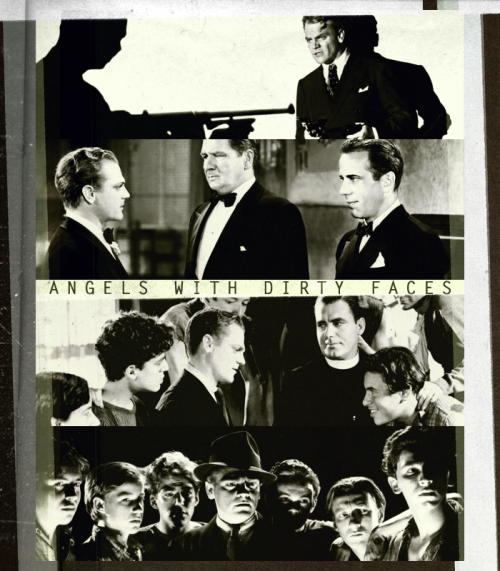
Anjos de Cara Suja (1938) / Angels with Dirty Faces (1938)


Nós começamos a moldar nosso futuro ainda na juventude. Os amigos Jerry e Rocky aprendem essa lição do jeito mais difícil. Depois de roubarem canetas da carga de um trem, apenas Rocky é pego, e ele pede que Jerry fique calado e simplesmente siga em frente, para não ser condenado. Rocky é enviado para um centro de detenção para delinquentes juvenis e Jerry segue em frente. Como a prisão não regenera ninguém – algo que já vimos em “O Fugitivo” – Rocky passa a cometer crimes mais sérios e fica preso mais e mais tempo. Logo se passam 15 anos.

It's from a young age that we start molding our future. Friends Jerry and Rocky learn this the hard way. After robbing fountain pens from a train, only Rocky gets caught, and he tells Jerry to not tell anything and just move on with his life. Rocky is sent to a juvenile delinquents' detention center, and Jerry moves on. Since the detention doesn't help anyone – hey, we've seen this in “I am a Fugitive from a Chain Gang” – Rocky only graduates to more serious crimes and longer times in jail. Soon, 15 years have passed.


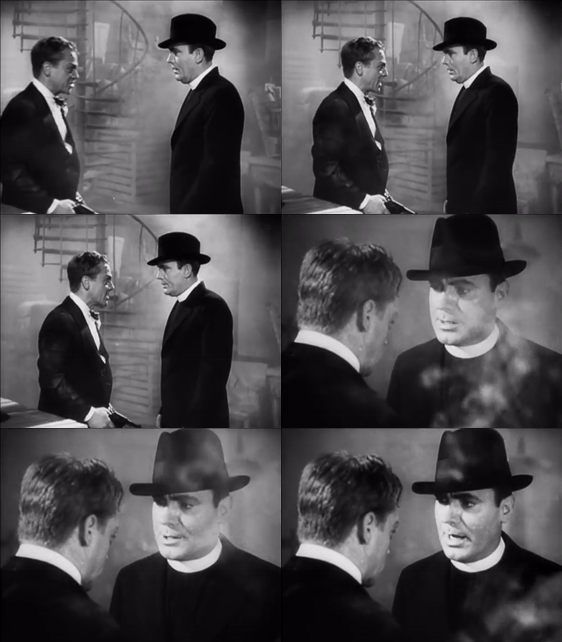
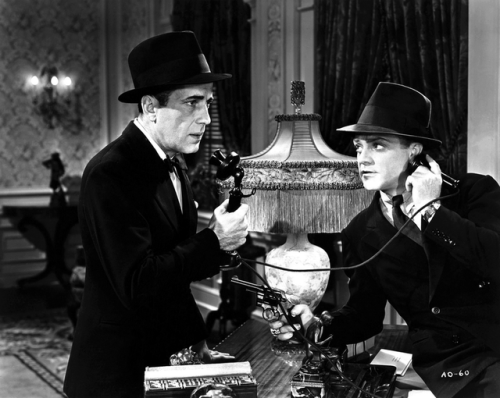
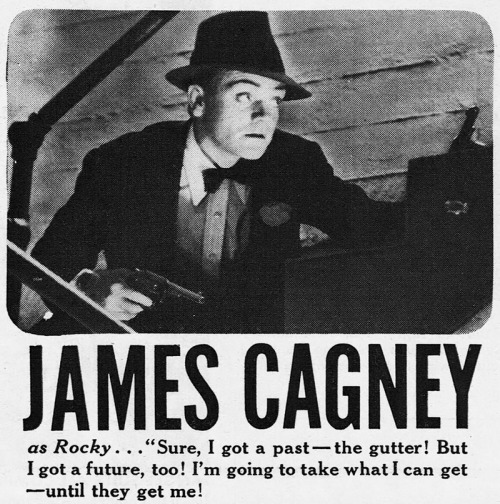
Rocky Sullivan (James Cagney) está finalmente livre depois de 15 anos preso. A primeira coisa que ele faz depois de sair da prisão é procurar pelo amigo Jerry (Pat O’Brien), que realmente se regenerou e agora é padre na igreja do bairro em que os dois cresceram. Rocky, entretanto, não saiu do mundo do crime, pois tem uma “parceria” com seu advogado James Frazier (Humphrey Bogart).

Rocky Sullivan (James Cagney) is finally free after 15 years. His first step once out of prison is to look for his friend Jerry (Pat O'Brien) who got truly reformed and is now a priest at their local church on the neighborhood they grew up in. Rocky, however, is not out of the crime world, as he has a “partnership” with his lawyer James Frazier (Humphrey Bogart).


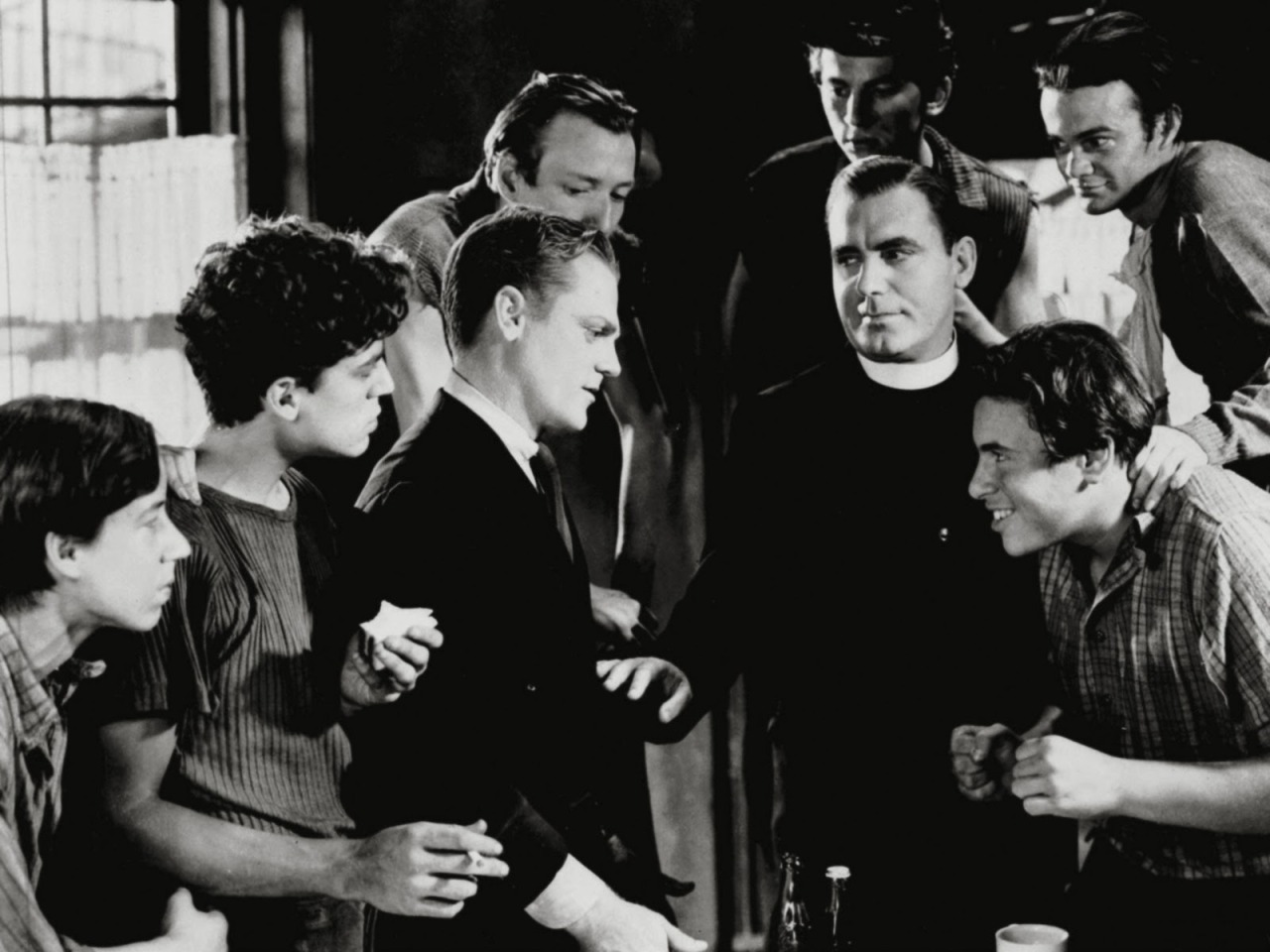
O carisma de Rocky conquista a nova geração de delinquentes juvenis, um grupo de garotos sem futuro comandados por Soapy (Billy Halop). Rocky consegue convencer os meninos a praticar esportes no ginásio do padre Jerry e ao mesmo tempo ele dá aos meninos dinheiro roubado em troca de um favor. Vendo a influência que Rocky tem nas crianças, o padre Jerry começa uma cruzada contra os gângsteres da cidade – incluindo Rocky.

Rocky's charisma attracts the next generation of juvenile delinquents, a group of “dead end” kids commanded by Soapy (Billy Halop). Rocky is able to convince the kids to practice sports in Father Jerry's gym and at the same time also gives the kids stolen money in exchange of a favor. Seeing his bad influence in the kids, Father Jerry starts a crusade against the mobsters of the town – Rocky included.


Quando alguém tenta acabar com a máfia, tudo o que se encontra é corrupção por todo lado, inclusive entre aqueles que deveriam manter a lei e a ordem. O padre Jerry então percebe que os gângsteres controlam a cidade, e este poder paralelo é forte porque eles pagam e, mais comumente, ameaçam a polícia. Esta é uma descoberta que pode ser feita por muitas pessoas que buscam justiça ainda hoje.

When someone tries to dismantle the mob, all they can find is corruption, everywhere, even coming from the ones who should obey the law and keep the order. Father Jerry then realizes that the gangsters are the ones who control the town, and their parallel power is stronger because they bribe and, more often, intimidate the police. This is a realization that could be made by many people seeking justice even today.


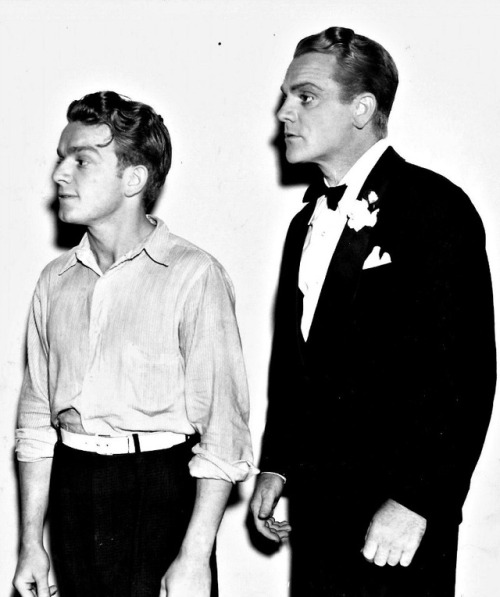
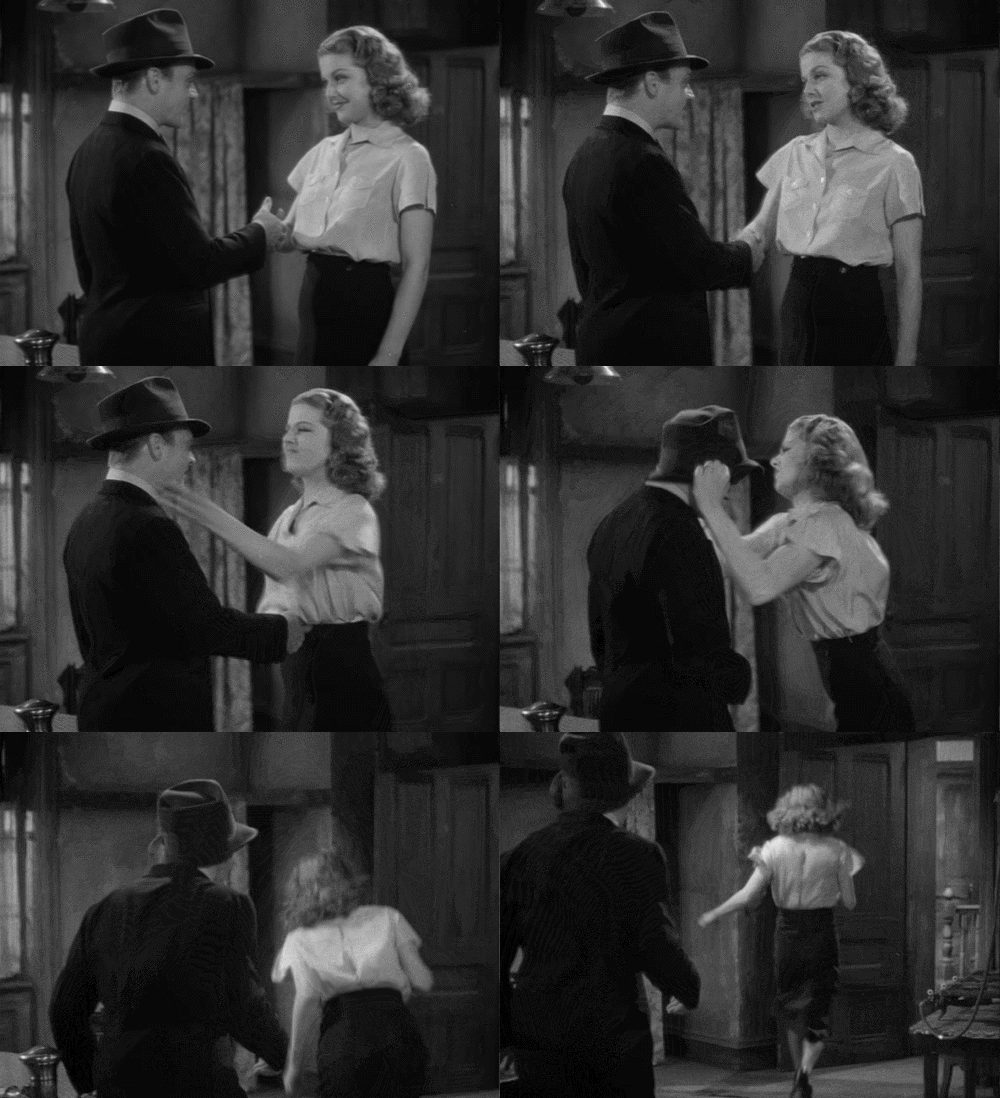
O ator que interpreta o jovem Rocky, Frankie Burke, tem incrível semelhança física e vocal com James Cagney – experimente fechar os olhos e você perceberá que as vozes de ambos são quase iguais. Outro membro do elenco que merece sua atenção é Ann Sheridan, que interpreta Laury Martin, o interesse amoroso de Rocky – embora ele esteja mais interessado no crime do que em romance. Ann me lembrou de uma Rita Hayworth jovem, pré femme fatale, e é uma pena que Ann seja pouco lembrada – Cagney se referiu a ela como “uma garota muito bacana, Annie”.

The actor who plays the young Rocky, Frankie Burke, has remarkable physical and vocal similarities with James Cagney – I mean, close your eyes and you'll realize their voices are almost equal. Another player to take notice is Ann Sheridan, who plays Laury Martin, Rocky’s love interest – although he is more interested in crime than in love. Ann reminded me of a young, pre-femme fatale Rita Hayworth, and it’s a shame Ann is so little remembered – Cagney called her “a mighty nice gal, Annie”.
Frankie and Jimmy
Jimmy and Annie
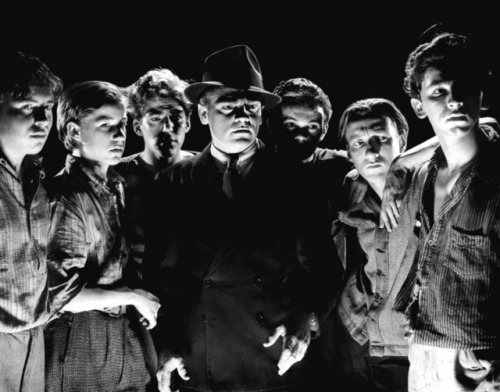
Os garotos do grupo chamado de “Dead End Kids” eram um grupo de jovens que estrelaram a peça “Dead End” e a adaptação dela para o cinema em 1937. Estes jovens rapazes vinham realmente das vizinhanças barra-pesada de Nova York – assim como Cagney – e frequentemente faziam bagunça no set de filmagem – mas não com Cagney, que se mostrou mais durão que eles. O sexteto original fez três filmes, e com o tempo e com muitas formações diferentes, o grupo sobreviveu com outras séries de filmes e sob os nomes de Little Little Tough Guys,  East Side Kids e Bowery Boys. Com o passar do tempo, alguns dos meninos seguiram carreira solo e outros abandonaram o cinema.

The “dead end kids” were a group of young boys who starred in a play called “Dead End” and in the film adaptation of the same name in 1937. Those young boys were really from the New York tough neighborhoods – just like Cagney – and often caused trouble on the set – but not with Cagney, who proved to be tougher than them. The original sextet did three movies together, and with time and with several formations, the group went on with film series such as Little Tough Guys, the East Side Kids and the Bowery Boys. In this time, some boys went solo and others retired from the screen.


Em sua autobiografia “Cagney by Cagney”, James Cagney chama seu amigo e colega de cena Pat O'Brien de “inesquecível em mais de um sentido”, descrevendo como Pat estava sempre alegre, otimista e cheio de energia para trabalhar. No livro Cagney também diz que o roteiro era meia-boca, e ele e O'Brien tinham de improvisar, pois os roteiristas judeus não sabiam nada sobre os rituais da Igreja Católica. Além disso, Cagney diz que se inspirou em um criminoso que conheceu na juventude para compor o personagem Rocky, copiando seus maneirismos e até a maneira hoje icônica de cumprimentar.

In his autobiography “Cagney by Cagney”, James Cagney calls his friend and co-star Pat O’Brien “remarkable in more than one way”, describing how Pat was always cheerful, optimistic and full of energy to work. In the book Cagney also says that the script was kind of bad, which led to him and O’Brien improvising as the Jewish writers knew nothing about the rituals of the Catholic Church. Furthermore, Cagney says that he modeled Rocky over a fellow he used to know in his youth in New York, a pimp who greeted people the way Cagney does in the picture.


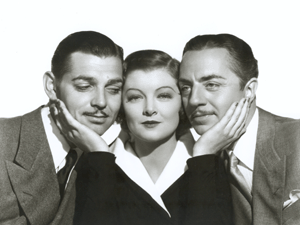
Outro filme em que dois amigos de infância seguem caminhos muito diferentes é “Vencido pela Lei”, de 1934. Neste filme, Blackie Gallagher (Clark Gable) se torna um gângster, e seu amigo de infância Jim Wade (William Powell) se torna advogado. Eles se apaixonam pela mesma mulher, Eleanor, interpretada por Myrna Loy. Em “Anjos de Cara Suja”, o que aproxima os amigos e mais tarde os afasta é a maneira como eles tratam os meninos delinquentes.
 
Another film in which two childhood friends follow very different paths in life is “Manhattan Melodrama”, from 1934. On this film, Blackie Gallagher (Clark Gable) turns into a gangster, and his childhood friend Jim Wade (William Powell) becomes an attorney. They fall in love for the same woman, Eleanor, played by Myrna Loy. In “Angels with Dirty Faces”, what makes the friends closer and later push them apart is how they handle the dead end boys.

“Anjos de Cara Suja” termina com uma dúvida que ainda é debatida entre os fãs de cinema clássico – eu particularmente acredito que Rocky só fingiu estar com medo para satisfazer seu amigo. Além disso, o filme trouxe uma das performances mais icônicas e imitadas de Cagney. De acordo com a Wikipedia, este foi o nono filme com maior bilheteria em 1938. De acordo com o site Ultimate Movie Rankings, ele foi o quinto. Não importa a posição no ranking, “Anjos de Cara Suja” foi um filme popular que permaneceu na memória do público e, ao ser assistido hoje, ainda se mostra interessante.

Angels with Dirty Faces” ends with a doubt that is still debated by classic film fans – I particularly believe Rocky only pretended to be scared to satisfy his friend. Moreover, the movie brought one of the most iconic and mimicked Cagney performances. According to Wikipedia, it was the 9th highest grossing film of 1938. According to the website Ultimate Movie Ranings, it was the fifth. No matter the position in the ranking, “Angel with Dirty Faces” was a popular film that remained in the public's memory for decades and is still interesting when watched today.

This is my contribution to the Made in 1938 blogathon, hosted by Robin and Crystal at Pop Culture Reverie and In the Good Old Days of Classic Hollywood.


Related Posts Plugin for WordPress, Blogger...