} Crítica Retrô: Neil Simon

Tradutor / Translator / Traductor / Übersetzer / Traduttore / Traducteur / 翻訳者 / переводчик

Showing posts with label Neil Simon. Show all posts

Saturday, February 22, 2020

Assassinato por Morte (1976) / Murder by Death (1976)


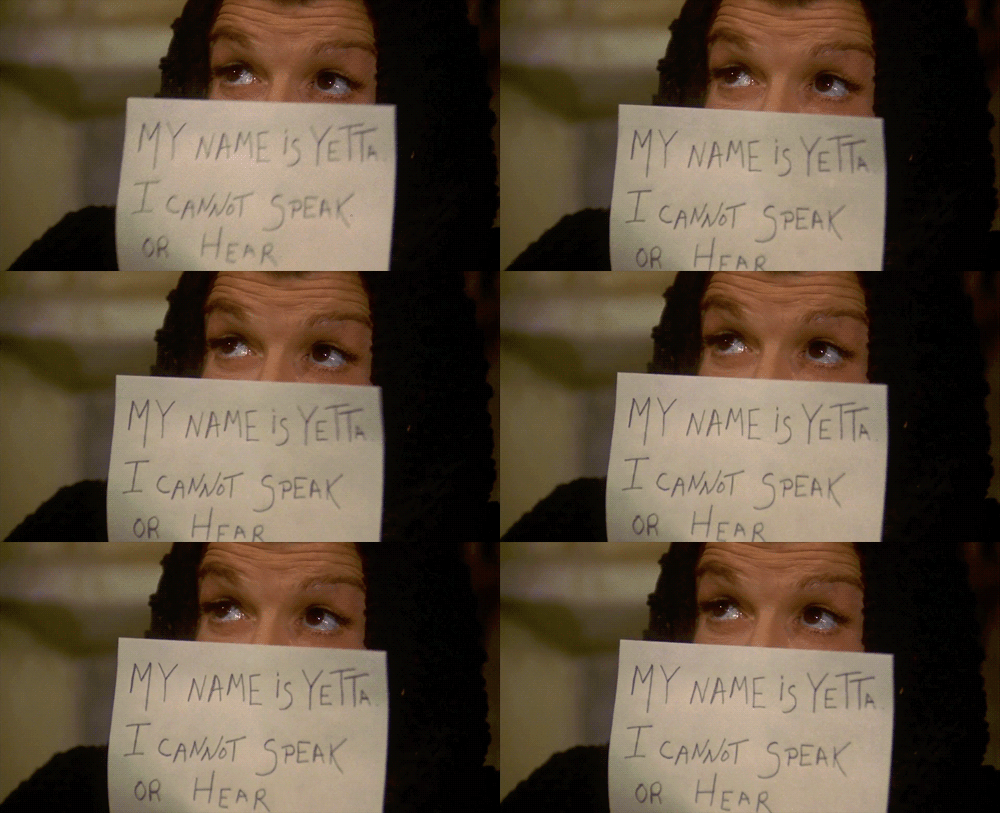
Sempre que um crime é cometido em filmes de mistério, nós costumamos suspeitar do mordomo. Em “Assassinato por Morte”, uma deliciosa comédia de mistério, esta ideia é subvertida desde o início, porque o mordomo, Jamesir Bensonmum (Alec Guinness), é cego. E a nova cozinheira, Yetta (Nancy Walker), também não é suspeita, porque ela não pode ouvir ou falar. Ah, e eu disse que se trata de suspeitos de um crime que ainda não foi cometido?

Whenever a crime occurs in a whodunit film, we're taken to suspect the butler. In “Murder by Death”, a delightful whodunit comedy, this idea is subverted since the beginning, because the butler, Jamesir Bensonmum (Alec Guinness), is blind. And the new cook, Yetta (Nancy Walker), is not a suspect either, because she can't hear or speak. Oh, and have I said that we're talking about suspects of a crime that hasn't yet occurred?
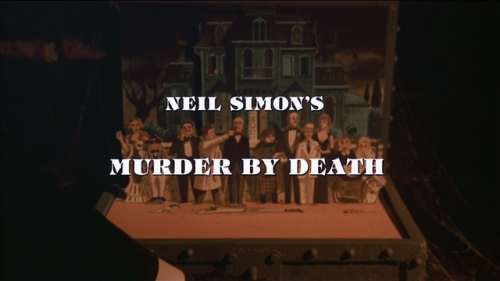

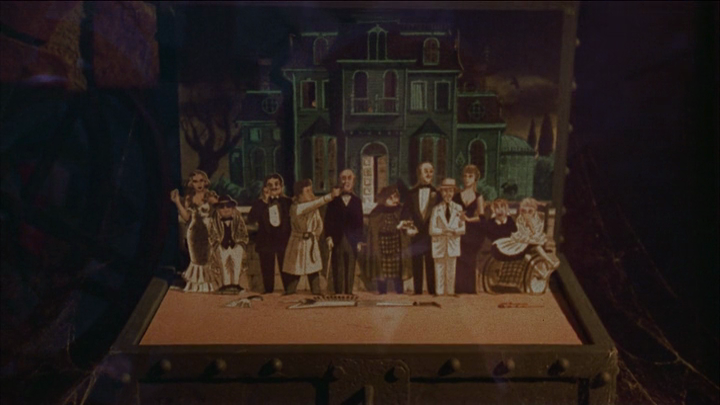
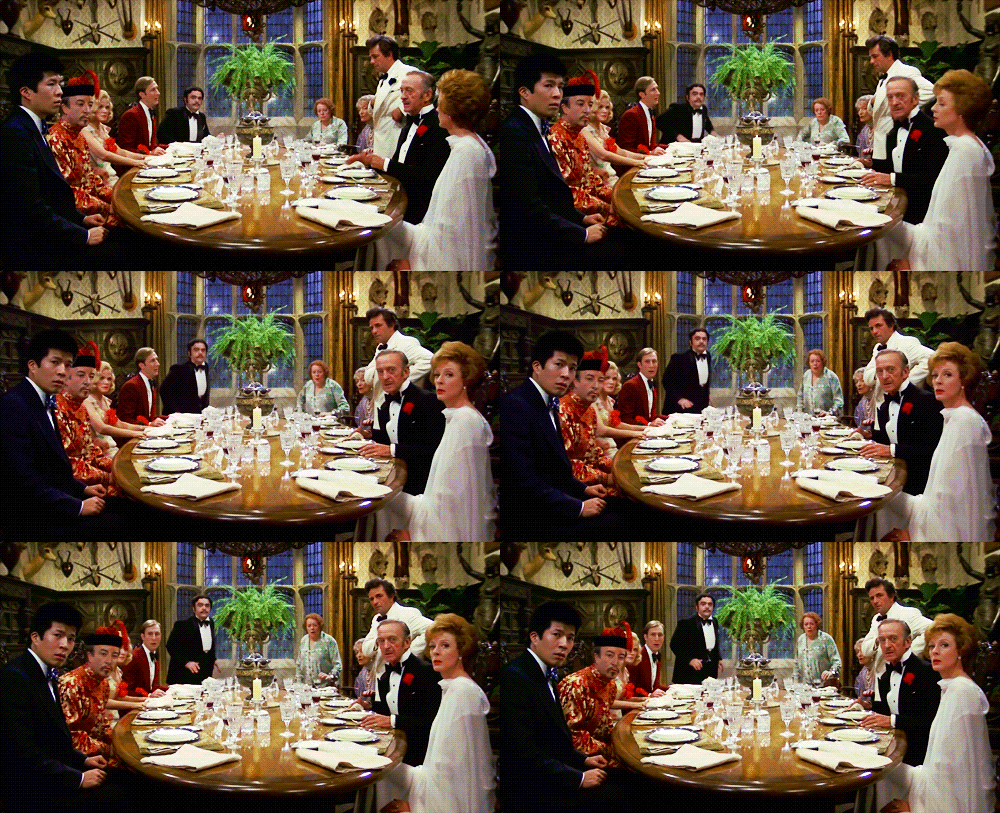
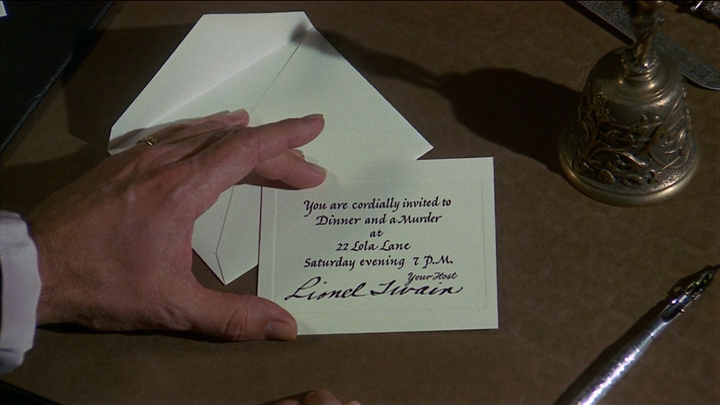
O maluco Sr Twain convida os maiores detetives do mundo para um “jantar e assassinato”. Seus convidados são Dick (David Niven), Dora Charleston (Maggie Smith) e seu cãozinho terrier, Sam Diamond (Peter Falk) e sua secretária, Sidney Wang (Peter Sellers) e seu filho adotivo, Milo Perrier (James Coco) e seu motorista, e Jessica Marbles (Elsa Lanchester) e sua enfermeira.

The twisted Mr Twain invites the world's top detectives for “dinner and murder”. His guests are Dick (David Niven), Dora Charleston (Maggie Smith) and their pet terrier, Sam Diamond (Peter Falk) and his secretary, Sidney Wang (Peter Sellers) and his adopted son, Milo Perrier (James Coco) and his chauffeur, and Jessica Marbles (Elsa Lanchester) and her nurse.

Se você gosta de histórias de detetive tanto quanto eu, já deve ter percebido que os personagens têm nomes parecidos com os de detetives famosos: Dick e Dora Charleston são um tributo a Nick e Nora Charles – interpretados por William Powell e Myrna Loy na série de filmes “The Thin Man” -, Sam Diamond é uma homenagem ao Sam Spade de Dashiell Hammett, Sidney Wand faz menção a Charlie Chan, Milo Perrier é uma alusão ao Hercule Poirot de Agatha Christie, e a Sra Marbles também vem da obra de Christie, da Sra Marple. Fãs de cinema clássico ouvirão algumas frases famosas, e também um grito familiar: o toque da campainha é o grito de Fay Wray em “King Kong” (1933).

If you love detective stories as much as I do, you must have realized that the characters are named after famous fictional detectives: Dick and Dora Charleston are a tribute to Nick and Nora Charles – played by William Powell and Myrna Loy in the “Thin Man” movie series -, Sam Diamond refers to Dashiell Hammett's Sam Spade, Sidney Wang is a nod to Charlie Chan, Milo Perrier is an allusion to Agatha Christie's Hercule Poirot, and Mrs Marbles also comes from Christie's work, but from Mrs Marple. Classic film fans will hear a few famous quotes, as well as a familiar scream: the “ring” of the doorbell is Fay Wray’s scream from “King Kong” (1933).


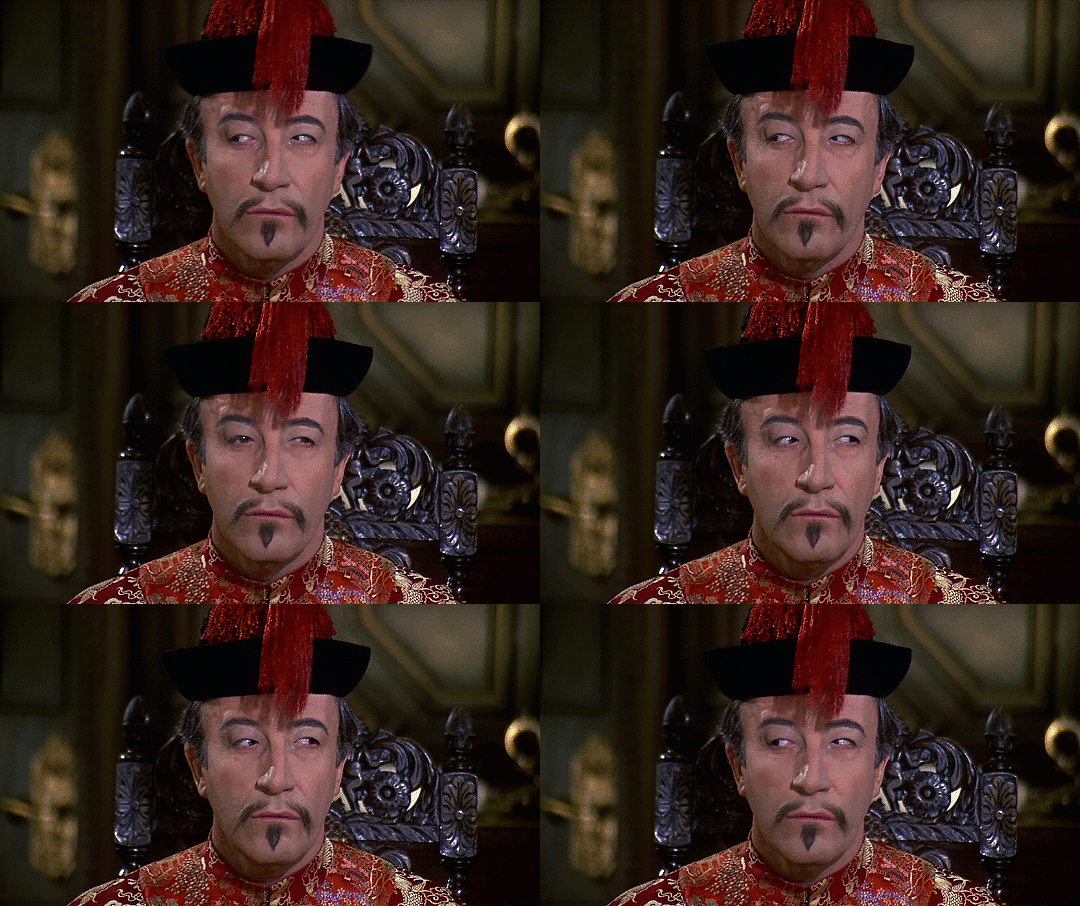
A performance de Peter Sellers como um homem asiático, completada com quimono, pode gerar algum debate. Ele estava fazendo yellow-face? Ou talvez ele estivesse criticando a prática do yellow-face – porque todos os atores que interpretaram Charlie Chan eram brancos, e o mais famoso deles, Warner Oland, era, de todas as nacionalidades possíveis, sueco? O que sabemos é que Sidney Wang é um personagem visto sob uma lente positiva, sendo inteligente e criativo. Uma piada constante é que ele fala inglês errado, algo que enfurece o anfitrião Lionel Twain (ninguém menos que Truman Capote) – mas Wang pode ser entendido com perfeição! No final das contas, a performance de Sellers pode ser um pouco embaraçosa, mas não o suficiente para “cancelar” o filme inteiro.

Peter Sellers's turn as an Asian man complete with kimono may raise some debate. Was he doing yellow-face? Or maybe he was mocking the practice of yellow-face – because all actors that played Charlie Chan were white, and the most famous of them, Warner Oland, was, of all nationalities, Swedish? What we know is that Sidney Wang is a character portrayed on a positive light, as intelligent and resourceful. A running joke is that he speaks broken English, something that infuriates the host Lionel Twain (no other than Truman Capote) – but Wang can be understood perfectly! In the end, Sellers’s performance is a bit cringe-worthy here and there, but not enough to “cancel” the whole film.

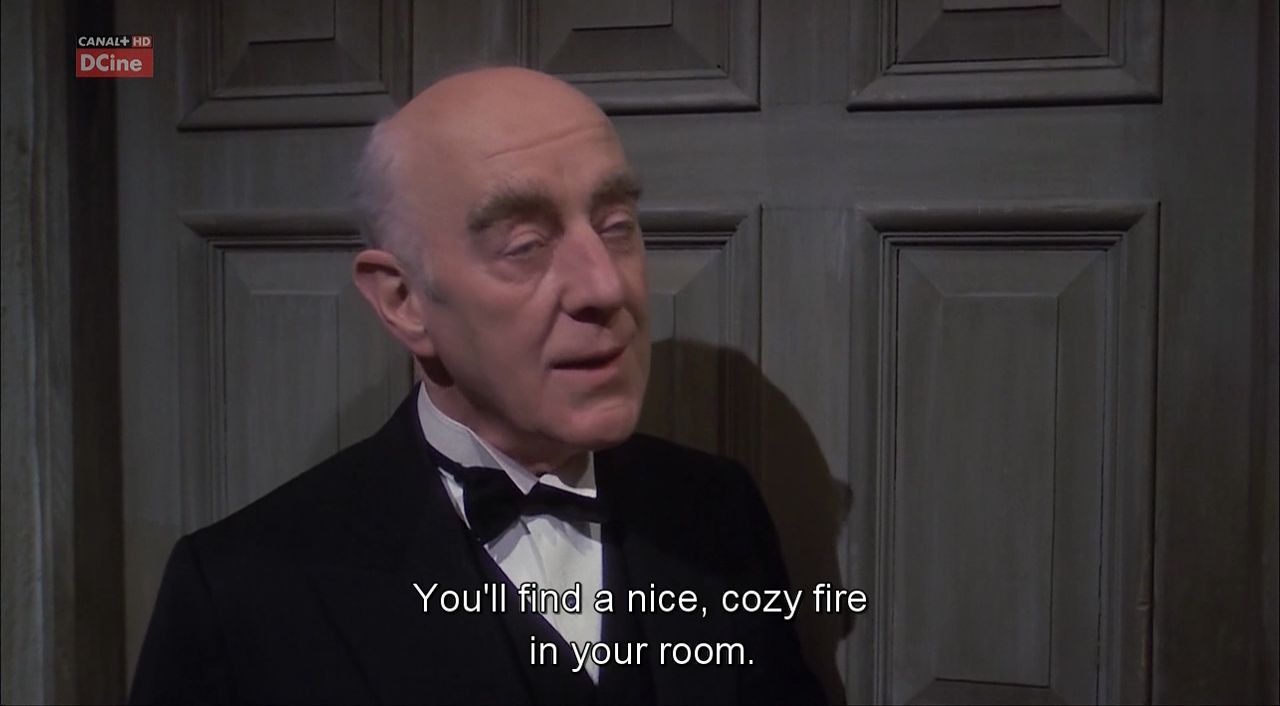
E aqui está outra questão: o personagem Bensonmum está zombando de pessoas com deficiência? Eu não acho. O personagem funciona graças ao absurdo que é alguém contratar um cego para ser mordomo – e Wang responde que isso é uma jogada esperta porque o mordomo jamais saberá quanto ele ganha. Muitas das falas mais engraçadas de Bensonmum não têm a ver com sua cegueira, e gags fáceis porém estúpidas são evitadas.

And here’s another question: is the character Bensonmum making fun of people with disabilities? I don’t think so. This character works thanks to the absurdity of someone hiring a blind man as a butler – and Wang answers that this is clever because the butler won’t know how much he gets paid. Many of Bensonmum’s funniest lines have nothing to do with him being blind, and easy but stupid gags are avoided.

Um Peter Falk vesgo faz sua melhor imitação de Humphrey Bogart como Sam Diamond, enquanto sua esperta companheira Tess Skeffington é interpretada por Eileen Brennan. Enquanto isso, o motorista de Milo Perrier, Marcel (James Cromwell), parece mais esperto que seu patrão glutão. Nesse sentido – e também considerando Bensonmum e Yetta – os ajudantes roubam a cena em “Assassinato por Morte”, e são geralmente mais engraçados do que os detetives.

A cross-eyed Peter Falk tries his best Humphrey Bogart impression as Sam Diamond, while his clever girl Tess Skeffington is played by Eileen Brennan. Meanwhile, Milo Perrier's chauffeur Marcel (James Cromwell) seems smarter than his glutton boss. In this sense – and also considering Bensonmum and Yetta – the helpers steal the scene in “Murder by Death”, and are often funnier than the detectives.
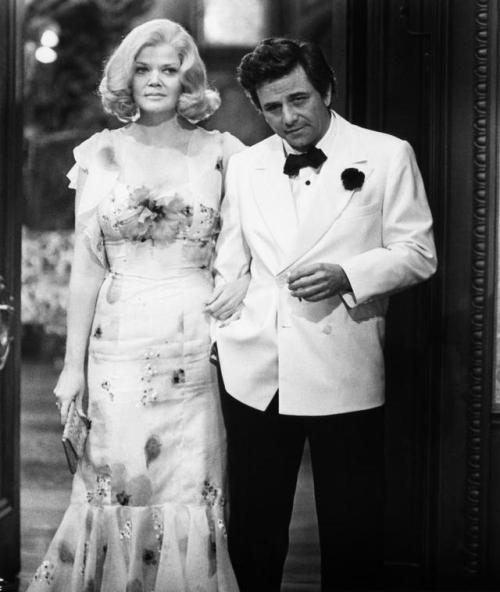

Considerando o elenco, “Assassinato por Morte” pode ser colocado entre os filmes all-star que eram mais comuns na Era de Ouro de Hollywood – sendo “Grande Hotel” (1932) e “Jantar às Oito” (1933) os filmes mais famosos desta categoria. Duas outras estrelas deveriam estar no elenco: Myrna Loy foi a primeira opção para Dora Charleston, e Katharine Hepburn faria a personagem Abigail Christian, uma paródia de Agatha Christie. As duas desistiram, por isso Maggie Smith foi escolhida para ser Dora e a personagem Abigail foi eliminada e a Sra Marbles foi criada em seu lugar.

Considering the cast, “Murder by Death” can be put among the all-star films that were more common during the Golden Age of Hollywood – being “Grand Hotel” (1932) and “Dinner at Eight” (1933) the most famous all-star movies. Two more stars were supposed to appear: Myrna Loy was the first choice for Dora Charleston, and Katharine Hepburn was supposed to be a parody of Agatha Christie called Abigail Christian. Both dropped, and thus Maggie Smith was cast as Dora and the character of Abigail was erased and Mrs Marbles was created instead.
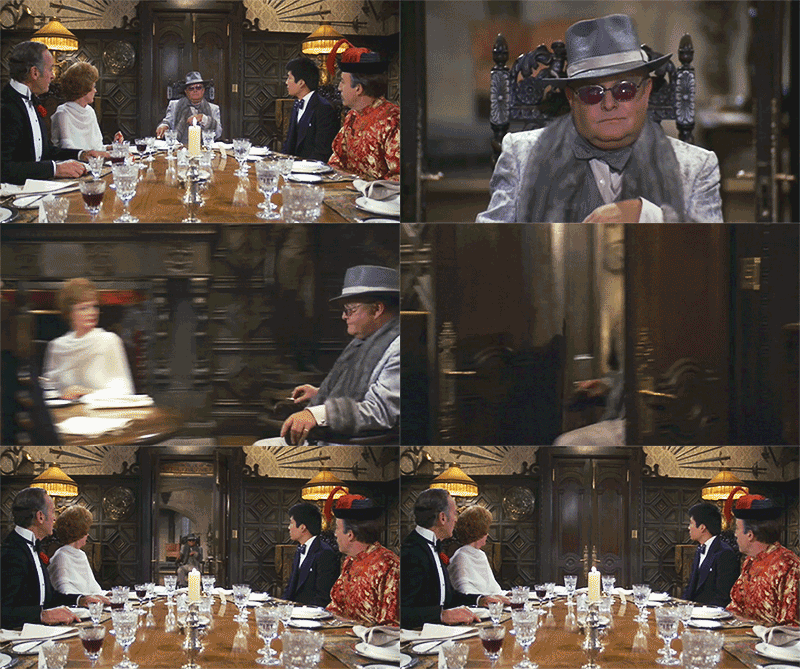

Neil Simon escreveu “Assassinato por Morte” diretamente para o cinema, ao contrário de sucessos anteriores, como “Descalços no Parque” (1967) e “Um Estranho Casal” (1968), que foram concebidos como peças e depois adaptados para o cinema. Desde a primeira leitura o elenco amou o roteiro, e o clima durante as gravações era ótimo – mesmo que às vezes um ataque de riso arruinasse uma tomada. Bem, nós compreendemos as risadas incontroláveis.

Neil Simon wrote “Murder by Death” directly for the cinema, unlike his earlier successes, as “Barefoot in the Park” (1967) and “The Odd Couple” (1968), that were conceived as plays and then adapted to movie. Since the first table read the cast loved the screenplay, and  the mood during filming was great – even though sometimes the cast laughed so much that a shot was ruined. Well, we can understand the uncontrollable laughter.


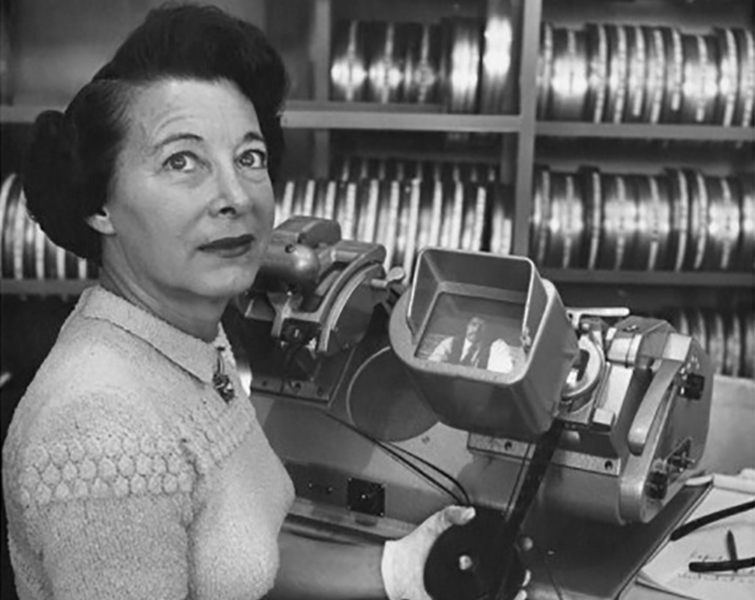
Creditada como “supervisora de edição” temos Margaret Booth, uma editora fantástica que trabalhou em alguns dos maiores clássicos, como “O Grande Motim” (1935), “A Dama das Camélias” (1936), “O Mágico de Oz” (1939) e “Ben-Hur” (1959). Ela começou em Hollywood em 1921, foi também produtora e redatora, e viveu até os 104 anos.

Credited as “supervising film editor” we have Margaret Booth, a legendary editor that has worked in some of the biggest classic films, including “Mutiny on the Bounty” (1935), “Camille” (1936), “The Wizard of Oz” (1939) and “Ben-Hur” (1959). She started in Hollywood in 1921, was also a producer and writer, and lived to be 104.

“Assassinato por Morte” certamente influenciou “Os Sete Suspeitos” (1985), um filme de mistério baseado em um jogo. Eileen Brennan está em ambos os filmes. O final de “Assassinato por Morte” me lembrou de “Charada” (1963), mas com mais reviravoltas. Depois destes filmes, o cinema se cansou de mistérios, e agora eles são bem mais raros (embora os recentes “Assassinato no Expresso do Oriente” (2017) e “Entre Facas e Segredos” (2019) possam assinalar uma voltas do gênero) – o que é uma pena porque, além de serem divertidos, estes filmes sempre podem terminar com a revelação de que o mordomo é o culpado.

“Murder by Death” certainly influenced “Clue” (1985), a film based on a game that is also a whodunit. Eileen Brennan stars in both. The ending of “Murder by Death” reminded me of “Charade” (1963), but with more plot twists. After those films, cinema got a bit tired of whodunits, and now they’re much rarer (although the recent “Murder on the Orient Express” (2017) and “Knives Out” (2019) may signal a genre comeback)  – which is a shame because, besides being entertaining, these films can always end with the reveal that the butler did it.

This is my contribution to the Butlers and Maids blogathon, hosted by Patricia and Rich at Caftan Woman and Wide Screen World.


Sunday, October 14, 2018

O legado de “Um Estranho Casal” / The lasting legacy of “The Odd Couple”


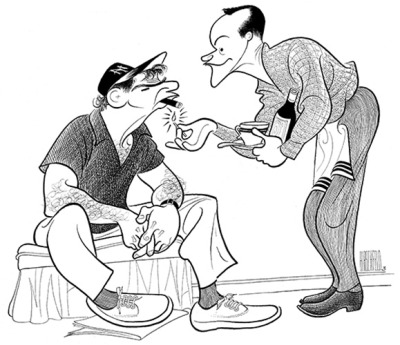
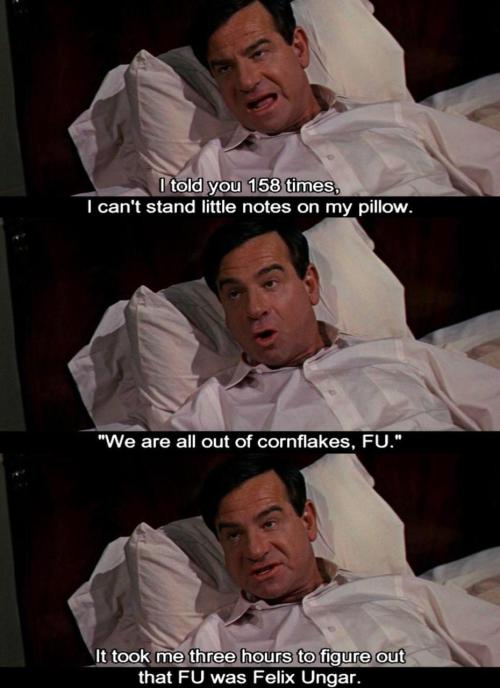
“Você é um Felix ou um Oscar?” Para algumas pessoas, esta questão não tem significado. Mas, para milhões de pessoas que conhecem a obra de Neil Simon, ela significa muito. Responder se você é Oscar ou Felix é como responder se sua personalidade é Tipo A ou Tipo B – diz tudo sobre você. Sim, é uma maneira reducionista de classificar as pessoas – em apenas dois grupos – mas se havia alguém capaz de criar personagens que representam todo tipo de gente, este alguém era Neil Simon.

Are you a Felix or an Oscar?” For some people, this question means nothing. But, for millions of people familiar with Neil Simon's work, it means everything. Answering if you are Oscar or Felix is like answering if you have Type A or Type B personality – it says all that is needed to know about you. Yes, it is a reductive way to classify people - in only two groups - but if there was someone who could create characters to represent all kinds of people, it was Neil Simon.
 
The Odd Couple by Al Hirschfeld
A peça “Um Estranho Casal” estreou em 1965. A inspiração para a peça é controversa. O jornal The Washington Post cita o divórcio do roteirista de TV Adam Bernstein, enquanto Mel Brooks alega que foi o seu primeiro divórcio que inspirou Neil Simon a escrever a peça. De qualquer maneira, aqui está a primeira informação importante sobre a peça: ela trata da vida após o divórcio – uma prática que só se tornou socialmente aceitável poucas décadas atrás.

The play “The Odd Couple” premiered in 1965. The inspiration for the play is controversial, however. The Washington Post cites the divorce of TV writer Adam Bernstein, while Mel Brooks alleges that it was his first divorce that inspired Neil Simon to write the play. Anyway, here it is the first important thing about the play: it was about life after divorce – a practice that only became socially accepted a few decades ago.
 
Neil Simon
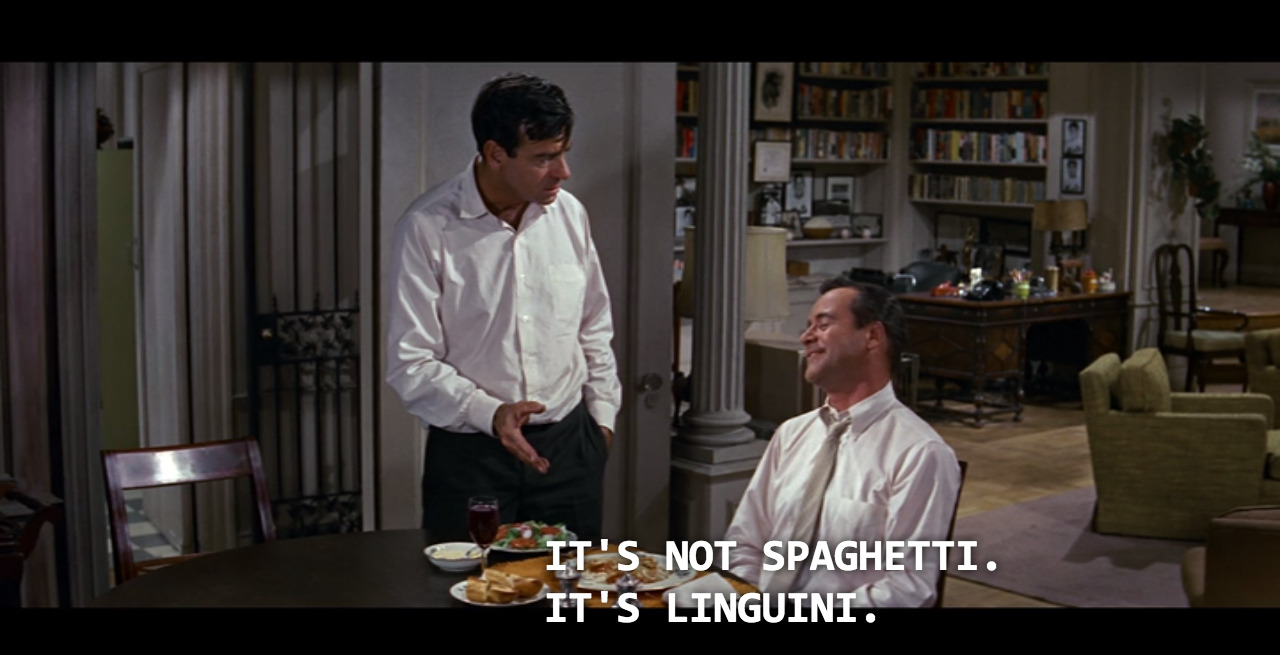
A história é incrivelmente simples: Felix Ungar, um jornalista, tem de sair de casa durante o processo de divórcio e sua única opção é ficar no apartamento do amigo Oscar Madison, um jornalista esportivo divorciado. O problema é que Felix e Oscar são completamente diferentes. Para Felix, o copo sempre está meio vazio, e há sempre algo que precisa ser limpo. Para Oscar, o copo está meio cheio, e não há problema em viver em meio a um pouco de caos.

The plot is incredibly simple: Felix Ungar, a newswriter, gets thrown out of his house by his wife and his only option is to go live with his friend Oscar Madison, a divorced sportswriter. The problem is that Felix and Oscar have completely different approaches to life. For Felix, the glass is always half empty, and there is also something to be cleaned. For Oscar, the glass is half full and there is no problem about living among some chaos.
 
Art Carney and Walter Matthau on Broadway
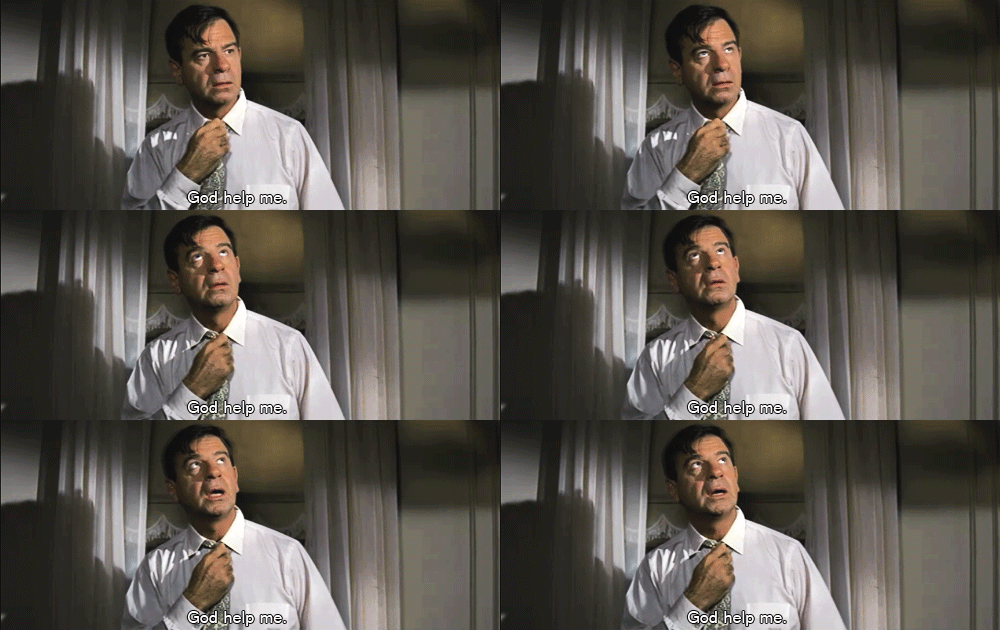
A peça ganhou quatro prêmios Tony, e os direitos de adaptação foram comprados pela Paramount. Neil Simon escreveu o roteiro, Walter Matthau voltou a interpretar Oscar após ganhar um Tony por sua performance, e Jack Lemmon veio interpretar Felix – que era feito por Art Carney no teatro. O filme foi dirigido por Gene Sacks, enquanto a peça foi dirigida por Mike Nichols.

The play won four Tonys, and its adaptation rights were bought by Paramount. Simon adapted the play into an screenplay, Walter Matthau reprised his Tony-winning role as Oscar and Jack Lemmon was brought to play Felix – it was Art Carney who originally played the character on the stage. The film was directed by Gene Sacks – while the play was directed by Mike Nichols.


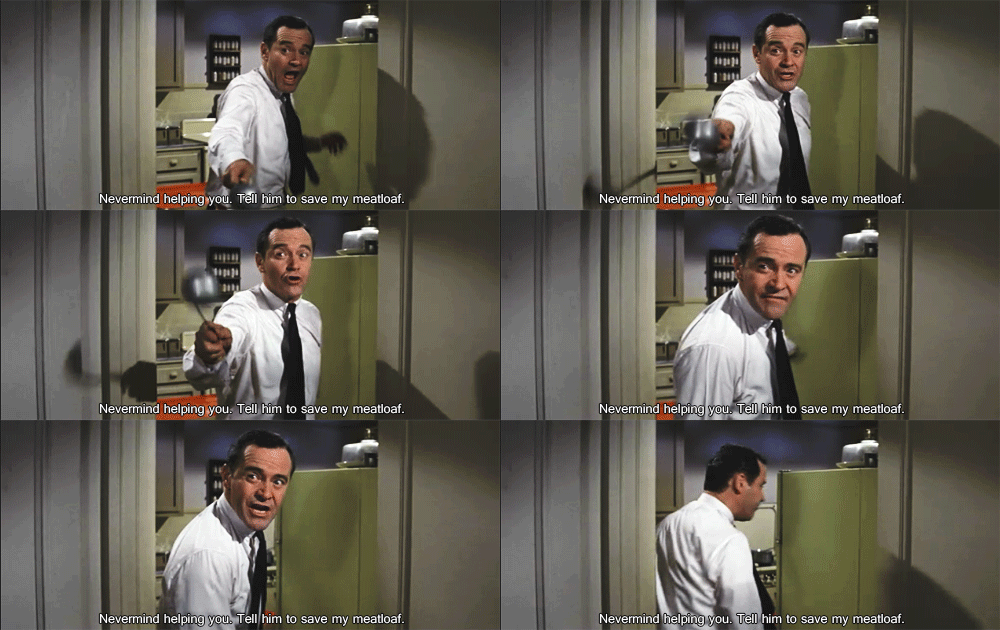
A adição de Jack Lemmon foi maravilhosa. Felix é meu personagem favorito em “Um Estranho Casal”, e ele é a estrela das cenas que se passam fora do apartamento – cenas estas que foram escritas exclusivamente para o filme. Felix é neurótico e maluco por limpeza, e seu comportamento enlouquece Oscar. Seja durante um jogo de pôquer entre amigos ou durante um encontro com as irmãs Pigeon, Felix mostra que não se esqueceu da esposa, e que sua obsessão com limpeza pode ser uma tentativa de colocar as coisas em ordem em sua vida novamente.

The addition of Jack Lemmon was a marvelous one. Felix is my favorite of “The Odd Couple”, and he is the star of the scenes outside the apartment – scenes that were written exclusively for the film. Felix  is neurotic and crazy about tidiness, and his behavior drives Oscar insane. May it be during poker nights with their mutual friends or during a double date with the peculiar Pigeon sisters, Felix shows that he hasn't forgotten his wife, and his cleaning obsession may be a way of trying to put things back together in his life.


A próxima parada de “Um Estranho Casal” era a televisão, com Tony Randall como Felix e Jack Klugman como Oscar. Esta versão durou cinco temporadas, e só na última Neil Simon expressou aprovação frente a adaptação. Em 1982, a sitcom foi refeita, com Ron Glass como Felix e Demond Wilson como Oscar. E, finalmente, em 2015, houve uma nova versão para a TV, com Thomas Lennon como Felix e Matthew Perry como Oscar.

“The Odd Couple” was headed next for television, with Tony Randall as Felix and Jack Klugman as Oscar. This iteration lasted five seasons, and only by the last one Neil Simon expressed approval of the adaptation. In 1982, the sitcom was remade, with Ron Glass as Felix and Demond Wilson as Oscar. And, finally, in 2015 there was a new TV version, with Thomas Lennon as Felix and Matthew Perry as Oscar.
 
1970s
1980s
2010s
Quando a sitcom de 1975 acabou, a coisa mais psicodélica e típica dos anos 70 aconteceu: uma adaptação animada de “Um Estranho Casal”. Em “The Oddball Couple”, o arrumadinho Spiffy, um gato, e o bagunceiro Fleabag, um cão, dividem a casa, o carro e o escritório – eles dividem tudo tão perfeitamente que estas coisas todas são metade arrumadas e metade bagunçadas. Obviamente, eles não eram divorciados, apenas colegas de quarto. A série teve 16 episódios de meia hora cada.

As the 1975 sitcom ended, the most psychedelic and 1970s thing possible happened: a CARTOON adaptation of “The Odd Couple”. In “The Oddball Couple”, the orderly Spiffy, a cat, and the messy Fleabag, a dog, share a house, a car and an office – they share those things so perfectly that exactly half of each of these is neat, and half is messy. Of course, they were not divorced, only roommates. The cartoon had 16 half-hour episodes.


Neil Simon também fez algo para as garotas. Em 1985, ele escreveu “The Female Odd Couple”, que tinha basicamente a mesma história, mas com a ordeira Florence Ungar e a desleixada Olive Madison. Na Broadway, Florence foi interpretada por Sally Struthers e Olive por Rita Moreno. As irmãs Pigeon foram substituídas pelos irmãos Costazuela, e um deles foi interpretado por Tony Shalhoub, em sua estreia na Broadway. A peça encerrou após 295 performances e foi remontada algumas vezes.

Neil Simon also had something for the girls in store. In 1985, he wrote “The Female Odd Couple”, which had basically the same plot, but now starring tidy Florence Ungar and sloppy Olive Madison. On Broadway, Florence was played by Sally Struthers and Olive by Rita Moreno. The Pigeon sisters were  replaced by the Costazuela brothers, and one of them was played by Tony Shalhoub in his Broadway debut. The play closed after 295 performances and was revived a few times.


Não há dúvida de que a versão com Lemmon e Matthau é a definitiva, e a mais amada pelos fãs. É por isso que foi feita uma sequência, trinta anos após a estreia do filme original, e o roteiro foi escrito pelo próprio Neil Simon – diz-se que o autor trabalhou neste roteiro por dez anos.

There is no doubt that the Lemmon / Matthau version is the definitive one, and the most cherished by the fans of the story. That's why they even made a sequel, thirty years after the original premiered, and the screenplay was written by Neil Simon himself – who is said to have worked ten years on this sequel idea.


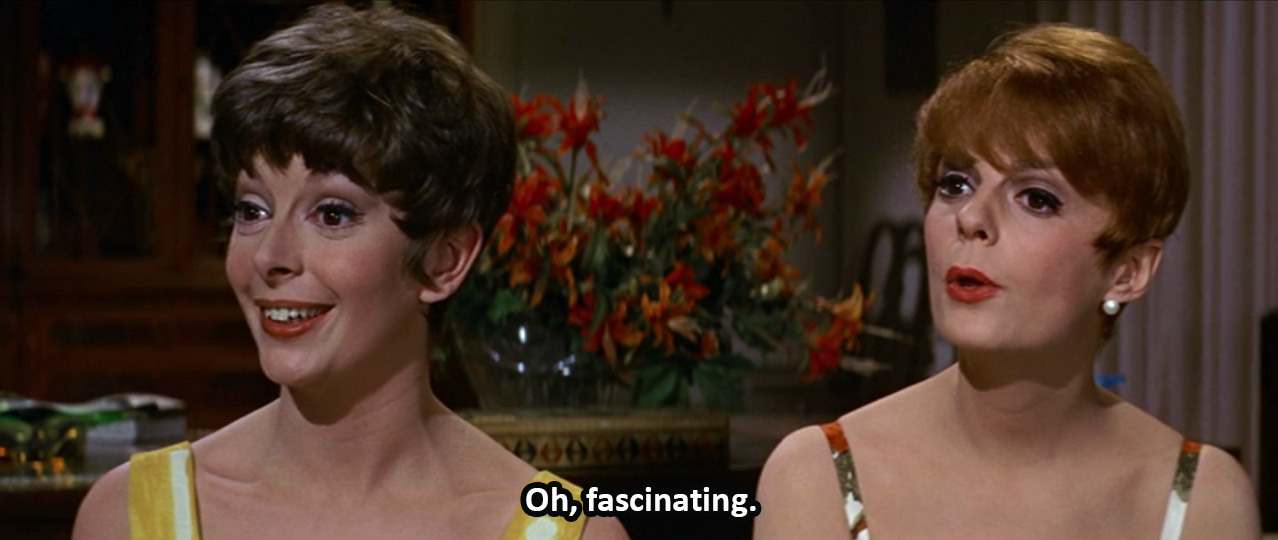
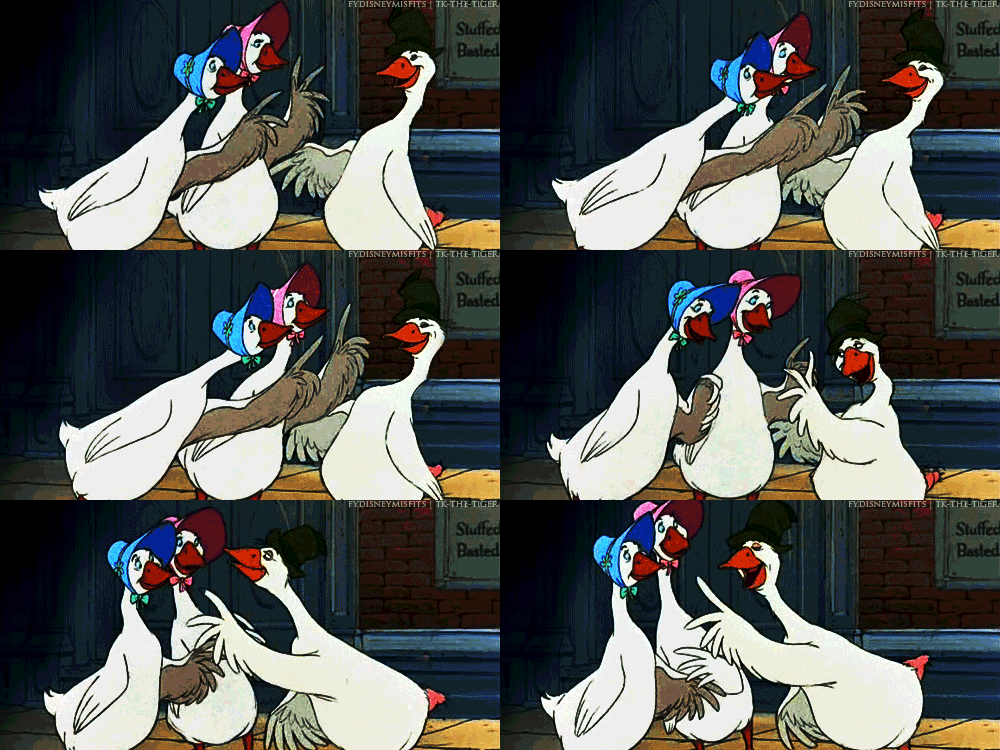
Duas queridas do público são as irmãs Pigeon. No filme de 1968 elas são interpretadas por Monica Evans (Cecily) e Carole Shelley (Gwendolyn), ambas vindas da montagem original da Broadway. Elas voltaram a trabalhar juntas na sitcom de “Um Estranho Casal” em 1970 e depois dublaram ambas personagens animadas em “Aristogatas” (1970) – as irmãs gansas Abigail e Amelia – e em “Robin Hood” (1973) – com Monica fazendo Maid Marian e Carole Lady Cluck.

Two favorites of the public are the Pigeon sisters. In the 1968 movie they are played by Monica Evans (Cecily) and Carole Shelley (Gwendolyn), both coming from the original Broadway production. They worked together again in the sitcom “The Odd  Couple” in 1970 and then voicing animated characters in “The Aristocats” (1970) – the geese sisters Abigail and Amelia – and in “Robin Hood” (1973) – with Monica Evans voicing Maid Marian and Carole Shelley voicing Lady Cluck.


É interessante notar que Neil Simon escolheu chamar os amigos que vivem juntos de “casal”. Assim como um casal, eles dividem o mesmo teto. E, como um casal, Felix e Oscar discutem, brigam, discordam, mas também aprendem um com o outro, e mudam um ao outro. É por isso que a história ainda nos toca: todos nós temos um pouco de Felix e de Oscar dentro de nós.

It's interesting to notice how Neil Simon chose to call the two friends who live together a “couple”. Like a couple, they do live under the same roof. And, like a couple, Felix and Oscar argue, fight, disagree, but they also learn with each other, and change each other. That's why we the story still resonates with us: we all have a little of both Felix and Oscar in us.

This is my contribution to the Neil Simon blogathon, hosted by Paddy and Rick at Caftan Woman and Wide Screen World.


Monday, November 13, 2017

Descalços no Parque / Barefoot in the Park (1967)

Recém-casados. Desde a era do cinema mudo, muitos filmes já trataram de jovens casais apaixonados, prestes a começar a vida a dois. Buster Keaton fez, por exemplo, muitos curtas-metragens nos quais ele precisava se adaptar à nova vida – podemos citar dois deles: “Uma Semana” (1920) e “A Parentela da Esposa” (1922). Buster não foi o único a mostrar o lad0 divertido do casamento. Quarenta anos depois, os casais tinham o mesmo problema que os personagens de Buster – incompatibilidade.

Newlyweds. Since the silent era many, many films were made about young couples in love, about to start their life together. Buster Keaton had,  for instance, many short films in which he had to adapt to his new life – we can mention two of them: “One Week” (1920) and “My Wife’s Relations” (1922). Buster wasn’t the only one to show the fun side of the newlyweds’ life. Forty years later, couples had the same problem as Buster’s characters – incompatibility.
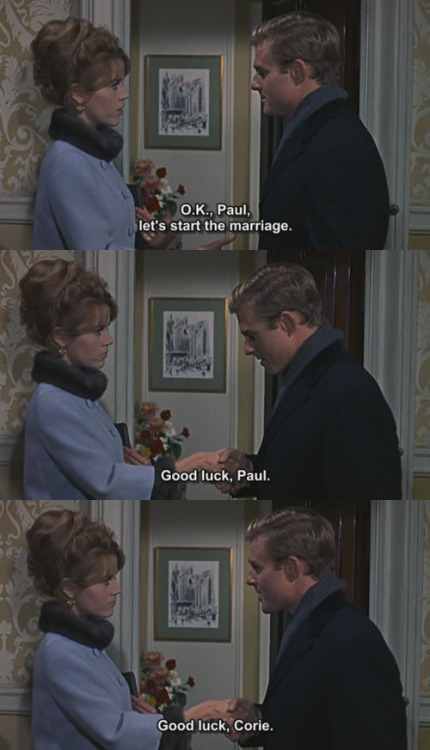
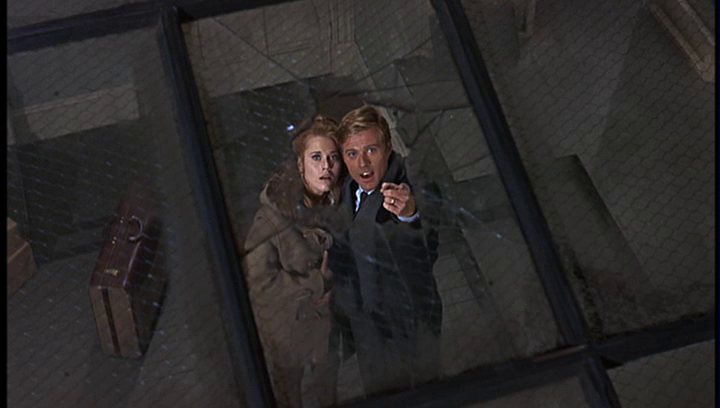
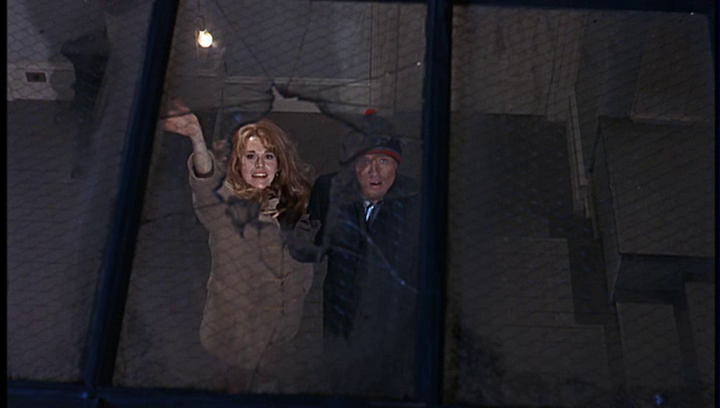
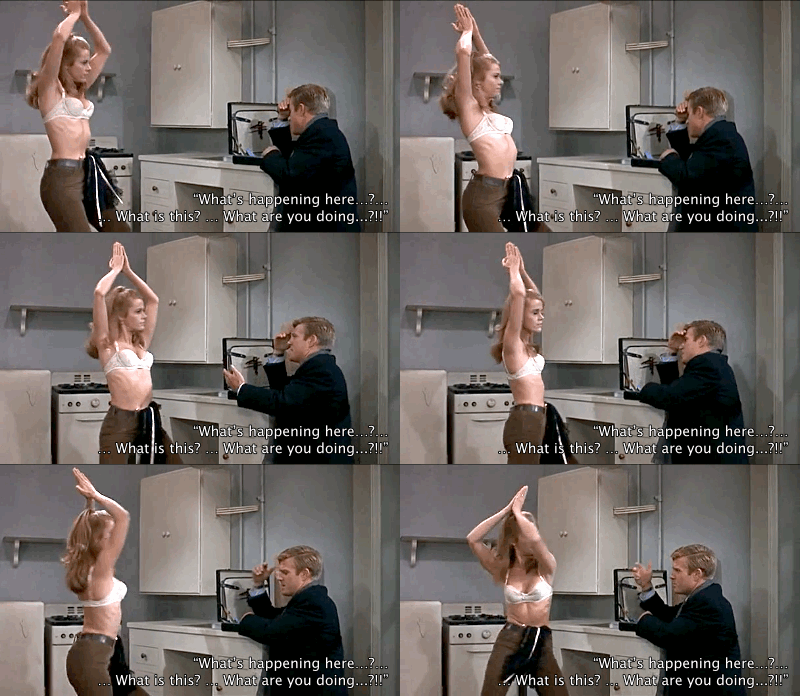
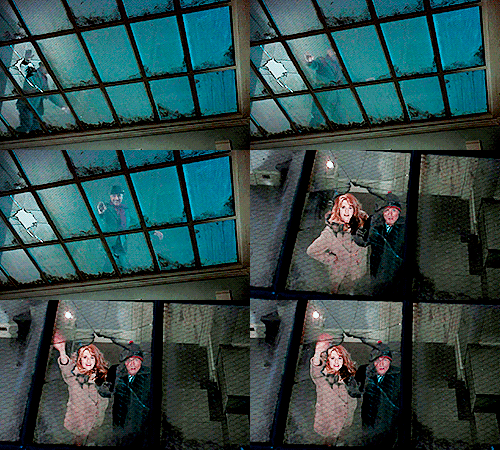
Corie (Jane Fonda) e Paul (Robert Redford) voltaram da lua de mel e se mudaram para seu novo apartamento em Nova York. Como você deve imaginar, este é o melhor lugar pelo qual o jovem casal pode pagar, então não é um apartamento muito espaçoso. Ele se localiza no último andar de um prédio sem escadas. E, ah, há um buraco na claraboia, algo perfeito para dias de verão, porém terrível para noites de inverno.

Corie (Jane Fonda) and Paul (Robert Redford) have just resumed their honeymoon and moved to their own apartment in New York City. As you may imagine, this is the best place the young couple can afford, so it’s not very big. It’s also on the last floor of a building that has no stairs. And, oh, there is a hole in the ceiling, perfect for sunny days but horrible in snowy nights.
Entretanto, este não é o maior problema deles. Parece que o amor os cegou e apenas agora eles veem como são diferentes. Paul é um advogado sério, que se preocupa com a carreira em primeiro lugar. Corie é uma dona de casa de espírito livre, que não vê problemas em socializar com vizinhos estranhos. Paul quer uma casa arrumada e uma carreira brilhante, enquanto Corie quer ter o marido ao seu lado e se divertir.

But this is not their biggest problem. It looks like love has blinded the young couple and only now they could see how different they are. Paul is a serious lawyer, who worries about his work more than anything else. Corie is a free-spirited housewife, who doesn’t care about mingling with weird neighbors. Paul wants a tidy home and a brilliant career, while Corie wants to have her husband next to her and to have fun.
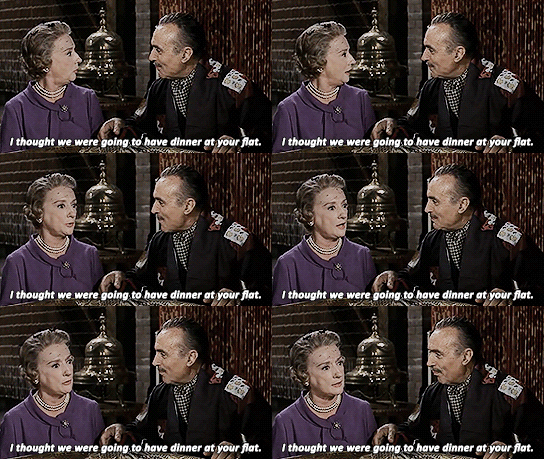
É comum que se diga que, quando você se casa com alguém, também se casa com a família desta pessoa. E, seguindo este raciocínio, quando você se muda para uma nova casa ou prédio você também acaba criando uma relação com seus vizinhos. E isto tudo nos leva a dois incríveis coadjuvantes: Ethel (Mildred Natwick), a mãe de Corie, e Victor Velasco (Charles Boyer), um vizinho excêntrico. Na sequência mais divertida do filme, Corie, Paul, Ethel e Victor saem para jantar.

It’s often said that when you marry someone, you also marry this person’s family. And, following the reasoning, when you move to a new house or building you end up creating a relationship with your neighbors. And this takes us to two amazing supporting characters: Ethel (Mildred Natwick), Corie’s mother, and Victor Velasco (Charles Boyer), an eccentric neighbor. In the funniest sequence of the movie, Corie, Paul, Ethel and Victor go out to dine.
Não posso elogiar suficientemente a noite louca que os quarto experimentam. Haverá ao menos um momento em que você vai chorar de rir – talvez por causa da comida estranha, talvez por causa das loucuras de Velasco. “Descalços no Parque” acabará lhe ensinando a comer knichi do jeito certo, a dançar a dança folclórica albanesa “Shama Shama” ou por que beber muito uzo lhe impedirá de fechar a mão.

I can’t say enough good things about the zany night out the four of them have. There will be at least a moment when you’ll laugh until you cry – maybe because of the weird food, or because of Velasco’s shenanigans. “Barefoot in the Park” will end up teaching you how to eat knichi properly, how to dance the Albanian folk song “Shama Shama” or why drinking too much uzo will prevent you from making a fist.
É interessante notar como, mesmo sendo baseado em uma peça de teatro, “Descalços no Parque” não parece ‘teatral’. Há poucos cenários, mas a sensação geral é de que o filme não fica confinado por causa disso. Isso acontece porque Neil Simon, o autor da peça, escreveu também o roteiro do filme. Simon não era novato no mundo do cinema e da TV – ele trabalhava desde 1948 em filmes e séries para a televisão.

It’s interesting how, even though the film is based on a stage play, “Barefoot in the Park” doesn’t look ‘staged’. There may be few settings, but the overall feeling of the movie is not something confined. This happens especially because Neil Simon, the play writer, was also responsible for the screenplay. Simon was no newcomer in the film and TV world – he had been working in TV movies and series since 1948.
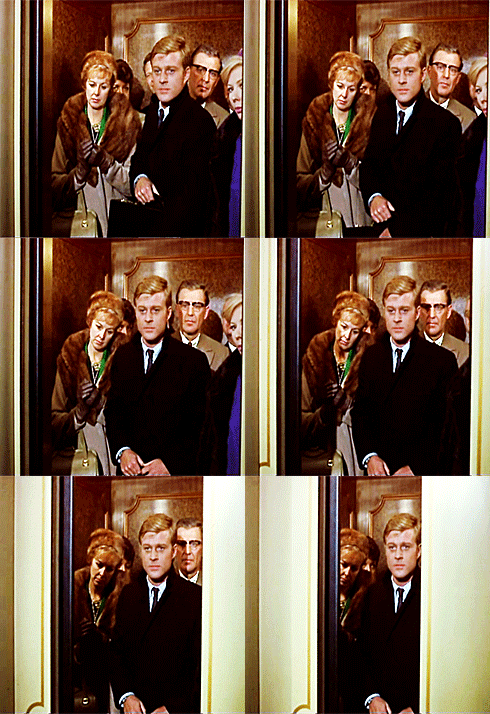
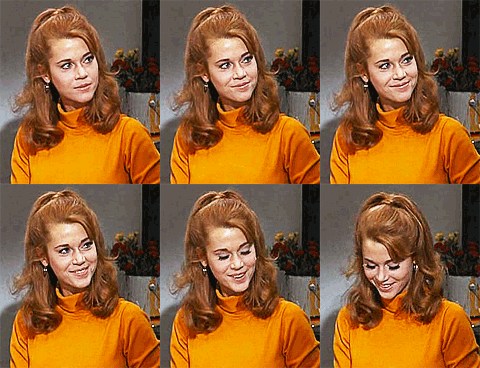
Descalços no Parque” foi o terceiro de cinco filmes – até agora – em que Jane Fonda e Robert Redford contracenaram. Eles curiosamente começaram suas carreiras no cinema com o mesmo filme, “Até os Fortes Vacilam” (1960), mas Fonda era a estrela e Redford apenas um figurante. Começando com “Caçada Humana”, de 1966, Fonda e Redford se tornaram bons amigos, em especial porque têm o mesmo posicionamento político. Foi delicioso vê-los como um casal jovem e apaixonado em “Descalços no Parque”, e foi ótimo descobrir que eles se juntaram para uma nova empreitada...

Barefoot in the Park” was the third of five – so far – films Jane Fonda and Robert Redford made together. They actually made their screen debuts in the same movie, “Tall Story” (1960), but Fonda had a starring role and Redford was only an extra. Starting with 1966’s “The Chase”, Fonda and Redford became good friends, in special because of their similar political views. It was delightful to see them as a young and passionate couple in “Barefoot in the Park”, and it was great when they reteamed… 

This is my contribution to the Then and Now (Now and Then) blogathon, hosted by Realweegiemidget (and Thoughts All Sorts).

Related Posts Plugin for WordPress, Blogger...