} Crítica Retrô: Marlene Dietrich

Tradutor / Translator / Traductor / Übersetzer / Traduttore / Traducteur / 翻訳者 / переводчик

Showing posts with label Marlene Dietrich. Show all posts

Thursday, August 21, 2025

Kismet (1944)


“Ainda haverá muitas oportunidades para ver este filme”. Conforme eu me tornava uma grande fã de cinema clássico na adolescência, eu também tinha que equilibrar meus estudos e o tempo com minha família. Eu disse essa frase com frequência, para muitos filmes. Agora sou uma adulta, formada e trabalhando, e a frase voltou, com uma nova perspectiva: sou eu a única que pode criar as oportunidades para ver os filmes que eu recusei anteriormente. Eu me lembro de dizer que haveria outras oportunidades para assistir a “Kismet”, uma produção cheia de ostentação estrelada por Marlene Dietrich. E agora chegou a hora de finalmente assistir e escrever sobre este filme.

“There will be plenty of opportunities to watch this movie”. As I was becoming a huge classic film fan in my teen years, I was also balancing my studies and time with my family. I said this quote often, for many movies. Now I’m an adult, graduated and working, and this came back to me, with a new perspective: I’m the only one who can make the opportunities to watch the movies I’ve let go before. I remember saying this to “Kismet”, a lavish production starring Marlene Dietrich. And now time has come for me to finally watch and review the movie.

No “coração exótico da romântica e fantástica Bagdá”, nossa história é contada. Somos apresentados a Hafiz (Ronald Colman), que durante o dia é o Rei dos Pedintes e durante a noite circula disfarçado como o Príncipe de Hassir e tem encontros furtivos com a Rainha Jamilla (Marlene Dietrich). Ele também socializa com o Califa (James Craig), que durante a noite se disfarça de Filho do Jardineiro Real e corteja a filha de Hafiz, Marsinah (Joy Page).

In “the exotic heart of romantic, fantastic Baghdad”, our story unfolds. We’re introduced to Hafiz (Ronald Colman), who by day is the King of Beggars and by night goes around disguised as the Prince of Hassir and has furtive encounters with Queen Jamilla (Marlene Dietrich). He also socializes with the Caliph (James Craig), who is by night disguised as the Gardener’s Son and courts Hafiz’s daughter, Marsinah (Joy Page).

O Califa quer fazer algumas reformas, o que desagrada ao Grão-Vizir (Edward Arnold), que quer assassinar o Califa. Enquanto isso, Hafiz se disfarça mais uma vez para dar à sua filha exatamente o que ele prometeu quando ela era uma menina: um Príncipe com quem se casar.

The Caliph wants to make some reforms, something that displeases the Grand Vizier (Edward Arnold), who wants the Caliph murdered. Meanwhile, Hafiz disguises once again to give his daughter exactly what he promised her when she was growing up: a Prince as a husband.

Podemos aprender muito com o cinema. Com “Kismet” aprendi sobre o governo na antiga Bagdá. O Califa era o governante de toda a Arábia, um sucessor político e religioso direto de Maomé, enquanto o Vizir era um alto funcionário administrativo nos impérios muçulmanos. 

With film we can learn a lot. With “Kismet” I learned about the government in ancient Baghdad. The Caliph was the ruler of all of Arabia, as a direct political and religious successor of Mohammad, while the Vizier was a high administrative officer in Muslim empires. 

“Kismet” tem tudo que você poderia esperar de um épico da MGM: cenários grandiosos, multidões, figurino colorido, danças exóticas, sapatos de ponta fina, camelos e elefantes. Tem Marlene Dietrich dançando com as pernas pintadas de dourado. Não é de surpreender que o filme tenha sido indicado ao Oscar nas categorias Melhor Fotografia para Filme em Cores e Melhor Direção de Arte - Decoração de Interiores para Filme em Cores. 

“Kismet” has everything you can expect from a MGM epic: grand sets, crowds, colorful costumes, exotic dances, pointy shoes, camels and elephants. There is Marlene Dietrich dancing with her legs painted golden. It’s no surprise that the movie was nominated for Oscars in the categories Best Cinematography, Color and Best Art Direction - Interior Decoration, Color.

Ronald Colman fez seu primeiro filme em 1917 e ganharia o Oscar de Melhor Ator em 1947 pelo pouco celebrado “Fatalidade”. Seu amigo Jack Benny pegou a estatueta emprestada e ela foi roubada, fato que foi explorado no programa de rádio de Benny. Marlene Dietrich estreou no cinema na Alemanha em 1923 e seu segundo filme, “May by the Wayside”, foi coincidentemente dirigido por William Dieterle. Dietrich já tinha mais de quarenta anos quando “Kismet” foi feito, e durante as filmagens ela encontrou um recurso para parecer jovem: um body cor da pele que ia do pescoço à virilha. 

Ronald Colman made his first movie in 1917 and would win the Best Actor Oscar in 1947 for the underseen “A Double Life”. His friend Jack Benny borrowed the statue and it was robbed, something that was explored in Benny’s radio show. Marlene Dietrich debuted in cinema in Germany in 1923 and her second film ever, “Man by the Wayside”, was coincidentally directed by William Dieterle. Dietrich was already past forty when “Kismet” was made, and during filming she came up with a resource to look young: wearing a flesh-colored body stocking from neck to crotch.

Como o conselheiro do Califa, Agha, temos Harry Davenport. Nascido em 1866 e parte da famosa família de atores - sua irmã era Fanny e sua filha a atriz que virou diretora Dorothy Davenport - , Harry começou a atuar no teatro aos seis anos e fez mais de 160 filmes, incluindo “E o Vento Levou…” (1939). Ele foi chamado por Bette Davis de “o maior ator coadjuvante de todos os tempos”.

As the Caliph’s adviser Agha we have Harry Davenport. Born in 1866 and part of the famous acting family - his sister was Fanny and his daughter the actress-turned-director Dorothy Davenport -, Harry started at the theater aged six and made more than 160 films, including “Gone with the Wind” (1939). He was called by Bette Davis “the greatest character actor of all time”.

As origens do filme datam de 1911, quando o espetáculo Kismet de Edward Knoblock estreou na Broadway. A primeira adaptação para o cinema foi curiosamente um curta-metragem feito na Inglaterra em 1914. Ele foi levado para as telas de Hollywood como um filme mudo em 1920 e novamente em 1931, ambos estrelando Otis Skinner e a versão de 1930 com Loretta Young como Marsinah - esta versão está perdida, com apenas a trilha sonora tendo sobrevivido. 

The origins of the movie date back to 1911, when the show Kismet by Edward Knoblock opened on Broadway. The first adaptation to film was curiously a short made in England in 1914. It was translated to the Hollywood screen as a silent film in 1920 and again in 1931, both starring Otis Skinner and the 1930 version with Loretta Young as Marsinah - this version is lost, only the soundtrack survives.

“Kismet” foi dirigido por William Dieterle, e foi seu primeiro filme em Technicolor. Nascido em 1893 - mais novo que Ronald Colman - ele fez mais de 60 filmes como ator na sua Alemanha natal, entre eles a versão de 1926 de “Fausto”. Ele estreou como diretor em 1923, no já mencionado filme com Dietrich, e também dirigiu o “Kismet” mudo de 1931.

“Kismet” was directed by William Dieterle, and it was his first Technicolor movie. Born in 1893 - younger than Ronald Colman - he appeared in over 60 films in his native German, among them the 1926 version of “Faust”. He debuted as a director in 1923, in the aforementioned film with Dietrich, and also directed the lost 1931 “Kismet”.

Eu associava “Kismet” com a música “Stranger in Paradise”, que não está em lugar nenhum neste filme. Mas há uma explicação para minha associação: é a música mais famosa no remake musical de 1955. Mas este filme é assunto para outra vez, afinal, há muitas oportunidades.

I associated “Kismet” with the song “Stranger in Paradise”, which is nowhere in this movie. But there is an explanation for my association: it’s the most famous song in the musical remake from 1955. But this film is a subject for another time, after all, there are plenty of opportunities.

Sunday, August 9, 2020

Pavor nos Bastidores (1950) / Stage Fright (1950)

Primeiro, vemos nossos protagonistas fugindo da polícia. Seria ele mais um dos “homens errados” de Hitchcock, um cara sendo perseguido por causa de um crime que ele não cometeu? Talvez. Talvez não. No mundo de Hitchcock, nada é o que parece e, embora seja considerado um filme menor na filmografia do diretor, “Pavor nos Bastidores” merece ser analisado.

We first see our leads as hey are running away from the police. Is he another of Hitchcock's “wrong men”, a guy being pursued because of a crime he didn't commit? Maybe. Maybe not. In Hitchcock’s world, nothing is what it seems, and although it’s considered a lesser entry in the director’s filmography, “Stage Fright” is a film worth analyzing.

Num flashback, vemos como a atriz Charlotte (Marlene Dietrich) foi atrás do amante Jonathan (Richard Rodd) logo após matar acidentalmente o marido durante uma discussão. Ele a aconselha a ir para o teatro onde ela trabalha e agir como se nada tivesse acontecido até que alguém encontre o corpo. Mas, para ela fazer isso, ela não pode estar usando um vestido branco manchado de sangue.

In a flashback, we see how the actress Charlotte (Marlene Dietric) went to see her lover Jonathan (Richard Todd) after accidentaly killing her husband during a heated argument. He advises her to go the theater where she works and act as nothing happened until someone finds the body. But, for her to do that, she can't be wearing a white dress stained with blood.

Jonathan vai ao apartamento dela para pegar um vestido limpo. Lá, ele tenta fazer com que o lugar pareça ter sido invadido por um ladrão que também matou o marido de Charlotte, mas o plano de Joanathan falha quando a empregada Nelle (Kay Walsh) chega, encontra o corpo e vê Jonathan saindo depressa. Depois que Charlotte deixa a casa de Jonathan, a polícia chega – porque Nellie o reconheceu – e ele foge deles, levando consigo o vestido manchado de sangue.

Jonathan goes to her apartment to get a clean dress. There, he tries to make it appear like the place was invaded by a thief who then killed Charlotte's husband, but Jonathan's plan fails quickly as the maid Nellie (Kay Walsh) arrives, finds the body and sees Jonathan leaving in a hurry. After Charlotte leaves Jonathan's place, the police arrive – as Nellie has recognized him – and he runs away from them, taking the blood stained dress with him.

Jonathan então vai até a Real Academia de Arte Dramática para pedir ajuda à sua velha amiga Eve (Jane Wyman). Fica claro que ela está apaixonada por ele, e naturalmente ela o ajuda a fugir. Estamos agora de volta ao começo, com ambos no carro. Eve leva Jonathan para a casa do pai dela. Ele, o Comandante Gill (Alastair Sim) rapidamente percebe que o vestido foi manchado propositalmente de sangue – não foi apenas resultado de sangue espirrando por todos os lados. Charlotte pode estar querendo incriminar Jonathan.

Jonathan then goes to the Royal Academy of Dramatic Art to ask his old friend Eve (Jane Wyman) for help. It's crystal clear that she is in love with him, so she naturally helps him escape. We're now back to the beginning, with the two in the car. Eve takes Jonathan to her father's house. He, Commodore Gill (Alastair Sim), quickly notices that the stain in the dress was deliberately put there – it was not just blood splashing all over. Charlotte might have wanted to incriminate Jonathan.

Enxerida e apaixonada, Eve decide confrontar Charlotte. Para isso, ela bola um plano ela dirá a Nellie, a empregada, que ela é uma repórter escrevendo uma matéria sobre o caso e convencerá Nellie a deixá-la tomar seu lugar como empregada de Charlotte. Nellie aceita a ideia – e um pouco de dinheiro – mas as coisas se dificultarão porque Eve acabou de fazer amizade com o detetive do caso, Wilfred Smith (Michael Wilding), e ele sabe tudo sobre ela, como bom detetive que é.

Nosy and in love, Eve decides to confront Charlotte. For this, she develops a plan: she'll tell Nellie, the maid, that she is a reporter writing a story about the case and will convince Nellie to let her take her place as Charlotte's maid. Nellie accepts the idea – and some money – but things will be made difficult because Eve has just made an acquaintance with the detective of the case, Wilfred Smith (Michael Wilding), and he knows everything about her, as any good detective would do.

O figurino de Marlene Dietrich foi feito por Christian Dior, que não recebeu créditos no filme. Quando ela chega ao apartamento de Jonathan, seu vestido é branco e tem uma chamativa mancha de sangue, e Jonathan pega um vestido quase idêntico, porém preto, para ela se trocar. É uma escolha óbvia que mostra o lado sombrio dos dois personagens. Uma troca de roupa semelhante porém mais sutil aconteceria em “Psicose” (1960), com Marion Crane mudando a cor de seus sutiãs, também de branco para preto, para mostrar que ela mudou de ideia e decidiu ficar com os 40 mil dólares que estava transportando.

Marlene Dietrich's outfits were provided by Christian Dior, uncredited. When she arrives at Jonathan's place, her dress is white and has a prominent blood stain, and Jonathan gets a nearly identical black dress for her to change. It's an obivous choice to show the real darkness of both characters. A similar but more subtle wardrobe change would be found in Hitchcock's “Psycho” (1960), with Marion Crane changing the color of her bras, also from white to black, to show the change of heart of the character when she decides to keep the 40,000 dollars she was transporting.

A cena com Eve tentando se disfarçar é muito engraçada. Em seu quarto, ela muda o penteado, as roupas, coloca um chapei e óculos de lentes grossas. Mas ela não passa no teste principal: a mãe de Eve ainda é capaz de reconhecê-la! Ao se dar conta de que Charlotte nunca a viu, Eve não se disfarça, apenas se apresenta como Doris, prima de Nellie. Se você assistiu a alguns filmes de Hitchcock, já deve ter percebido que eles têm um lado cômico. Os personagens mais engraçados de “Pavor nos Bastidores” são os pais de Eve, interpretados por Alastair Sim, mais conhecido por “Um Conto de Natal” (1951), e Sybil Thorndike, uma conhecida atriz de cinema e teatro.

The scene with Eve trying a disguise is very funny. In her bedroom, she changes her hair, her clothes, puts on a hat and thick glasses. But she doesn't pass the main test: Eve's mother still can recognize her! Realizing that Charlotte has never seen her, Eve goes as she is, only presents herself as Doris, Nellie's cousin. If you have watched a few of Hitchcock's movies, you might have seen that they had a humorous side. The funniest characters in “Stage Fright” are Eve's parents, played by Alastair Sim, from “A Christmas' Carol” (1951) fame, and Sybil Thorndike, a celebrated stage and film actress.

Uma novata em um papel pequeno chama nossa atenção: ela é Patricia Hitchcock, filha de Alfred Hitchcock e Alma Reville. Patricia, em sua estreia no cinema, interpreta Chubby Bannister, atriz e amiga de Eve. Ela já havia feito algumas peças em Nova York e estava enão estudando na Real Academia de Arte Dramática. Patricia aparece apenas na segunda metade do filme, mas foi dublê de Jane Wyman em algumas sequências dirigindo. Algumas pessoas, como o crítico de cinema Stephen Whitty, chegam mesmo a chamar Wyman de uma “Patricia glamourizada”.

A newcomer playing a small part calls our attention: she’s Patricia Hitchcock, Alfred Hitchcock’s and Alma Reville’s daughter. Patricia, in her film debut, plays Chubby Bannister, an actress and Eve’s friend. She had already made a couple of plays in New York and was by then actually studying at the Royal Academy of Dramatic Art. Patricia only appears by the second half of the film, but served as a stand-in for Jane Wyman in some driving sequences. Some people like film critic Stephen Whitty even go as far as calling Wyman a glamourized Patricia.

O roteiro foi escrito por Alma Reville e Whitfield Cook, autor de uma peça na qual Patricia atutou. Segundo Patrick McGilligan, autor do livro “Alfred Hitchcock: A Life in Darkness and Light”, Alma e Whitfield passaram alguns meses trabalhando juntos em 1947 e tiveram um caso neste período, de acordo com os diários de Whitfield. Nenhuma outra fonte sustenta esta ideia, e a dupla trabalhou em dois roteiros adaptados para Hitchcock:   “Pacto Sinistro” (1951) e este “Pavor nos Bastidores”, baseado em um romance publicado de forma seriada numa revista. “Pavor nos Bastidores” foi o último filme em que Alma foi creditada.

The screenplay was written by Alma Reville and Whitfield Cook, who was the author of a play in which Patricia Hitchcock appeared on stage. According to Patrick McGilligan, author of the book “Alfred Hitchcock: A Life in Darkness and Light”, Alma and Whitfield spent some months working together in 1947 and had an affair in this period, based on Whitfield’s diaries. No other sources support this claim, and the duo worked in two adapted screenplays for Hitchcock: “Strangers on a Train” (1951) and this “Stage Fright”, based on a novel originally published serialized in a magazine. “Stage Fright” was the last time Alma Reville was credited for her work in a film.

Hitch and Alma

Hitchcock disse que “Pavor nos Bastidores” deu a ele a chance de explorar criticamente o trabalho do ator. Por isso, é interessante que, para Eve, atuar seja fingir ser outra pessoa – e ainda mais interessante é o fato de encontrarmos essa análise num filme feito por um diretor que dizia que “atores são como gado”. Há várias evidências de Hitchcock usando essa frase desde 1940, e quando Patricia se tornou atriz ele até disse que “Pat é o mais adorável gado que eu já vi”. Para François Truffaut, Hitchcock deu mais de uma explicação sobre a frase, mas ela permanece uma controvérsia no mundo hitchcockiano.

Hitchcock said that “Stage Fright” gave him the chance to explore critically the acting craft. So, it’s interesting that, for Eve, acting is pretending to be someone else – and even more interesting that we can find this in a film made by a director who told that “actors are cattle”. There is a lot of evidence from Hitchcock using this quote as early as 1940, and when Patricia became an actress he even said that “Pat is the nicest cattle I’ve ever seen”. For François Truffaut, Hitchcock gave more than one explanation for the quote, but it still remains a controversy in the Hitchcockian world. 

O comandante Gill analisa a situação objetivamente: Eve está tratando tudo como se fosse uma peça de teatro. “Tudo parece uma peça de teatro quando você está apaixonada pelos palcos”, ele diz. Na “Alfred Hitchcock Encycloped”, Stephen Whitty comenta que “Pavor nos Bastidores” é um dos muitos filmes de Hitchcock com sequências crucias em teatros, e chega à mórbida conclusão de que, para o diretor”, “a vida é um espetáculo, mas a maioria de nós somos espectadores simples que ficaram com os piores lugares”.

Commodore Gill analyzes the situation objectively: Eve is treating it like a play. “Everything looks like a play when you're stage struck”, he says. At the “Alfred Hitchcock Encycloped”, Stephen Whitty notices that “Stage Fright” is one of many Hitchcock films with crucial sequences happening in theaters, and reaches the morbid conclusion that, for the director, “life is a show, but most of us are simply ticketholders stuck in the cheap seats”. 

Vindo depois de quarto fracassos de bilheteria consecutivos – e a lista inclui o hoje cultuado “Festim Diabólico” (1948) – “Pavor nos Bastidores” foi chamado por Stephen Whitty de “um intervalo” na filmografia de Hitchcock. Em “Pavor nos Bastidores”, ele teve grandes atores coadjuvantes, filmou uma bela cena perto do final com destaque para os olhos de Jane Wyman e Richard Todd e também enganou o público ao quebrar uma regra crucial e subentendida dos flashbacks. Felizmente, o público perdoou Hitchcock por essa traição e, após “Pavor nos Bastidores”, ele faria alguns de seus melhores filmes.

Coming after four consecutive box-office disasters – and the list includes the now cult “Rope” (1948) – “Stage Fright” was called by Stephen Whitty as an “intermission” in Hitchcock’s body of work. In “Stage Fright”, he managed to have great supporting actors, he shot a beautiful scene near the end with Wyman’s and Todd’s eyes highlighted and he also deceived his audience by breaking a crucial unwritten rule on flashbacks. Fortunately, the public forgave Hitchcock for this deception, and, after “Stage Fright”, he’d make some of his best movies.

This is my contribution to the 4th Alfred Hitchcock blogathon, hosted by Maddy at Maddy Loves Her Classic Films.

Sunday, July 5, 2020

O Amor Nasceu do Ódio (1937) / Knight Without Armour (1937)

Não é nem um pouco surpreendente assistir a um filme norte-americano ou britânico feito durante a Guerra Fria criticando a União Soviética e a Revolução Russa. Mas ver um filme com o mesmo tema feito antes da Segunda Guerra Mundial é uma experiência interessante. “O Amor Nasceu do Ódio”, uma produção britânica de 1937, mostra, quase 30 anos antes de “Doutor Jivago”, o sofrimento da nobreza com a chegada da revolução – e ainda tenta adicionar romance na trama!

It's not surprising at all to see an American or British movie made during the Cold War criticizing the Sovietic Union and the Russian Revolution. But seeing a pre-World War II film with the same theme is quite an interesting experience. “Knight Without Armour”, a British production from 1937, shows almost 30 years before “Doctor Zhivago” the suffering of the noble classes when the revolution came – and it also tries to wave romance into the plot!


O correspondente estrangeiro A.J. Fothergill (Robert Donat) tinha 48 horas para deixar a Rússia – sim, Rússia, porque a história começa em 1917, quando ainda havia um Czar. Felizmente, um amigo lhe apresenta outra opção: ele pode deixar a barba crescer, adotar uma nova identidade e se tornar espião! Fothergill aceita esta adorável oferta e começa a espionar alguns revolucionários. O desdobramento das coisas não sai como esperado e ele se torna um prisioneiro político.

Foreign correspondent A.J. Fothergill (Robert Donat) has 48 hours to leave Russia – yes, Russia, because the story begins in 1913, when there was still a Tsar. Luckily, a friend presents him with an option: he can grow a beard, adopt a new identity and become a spy! Fothergill accepts this lovely offer and starts spying on a few naughty revolutionaries. Things don't go so well and he becomes a political prisoner.

Enquanto isso, a condessa Alexandra Vladinoff (Marlene Dietrich) está de boa. Tão de boa que ela está descansando no jardim enquanto seus empregados leem jornais que os convocam a se unir à revolução. Quando a revolução acontece, os empregados vão embora e a mansão dela é invadida por uma multidão raivosa que ela enfrenta usando apenas uma camisola branca, parecendo uma deusa flutuante. A multidão saqueia a mansão e espera para decidir o que farão com Alexandra. Quem poderá salvá-la?

Meanwhile, Countess Alexandra Vladinoff (Marlene Dietrich) is chill. So chill that she is chilling in the garden while her servants read newspapers calling them to join the revolution. When the revolution is successful, her servants leave and her mansion is invaded by an angry crowd that she faces wearing only a white nightgown, looking like a floating goddess. The crowd loots her mansion and waits to decide what they'll do to her. Who will save Alexandra?

Se você respondeu Fothergill, você acertou. Depois de passar anos preso na Sibéria, ele e outros prisioneiros são libertados pelos revolucionários. O único inconveniente é que eles acham que Fothergill se chama Peter Ouronov e também é revolucionário. Agora como parte de uma missão oficial – e sem barba – Fothergill vai para a mansão Vladinoff para encontrar Alexandra e acompanhá-la até Petrogrado.

If you answered Fothergill, you're right. After spending years in a prison in Siberia, he and the other prisoners are freed by the revolutionaries. The only inconvenient is that they think his name is Peter Ouronov and he is a revolutionary as well. Now part of an official mission – and without a beard – Fothergill goes to the Vladinoff mansion to meet Alexandra and accompany her to Petrograd.

Infelizmente, não há mais trens para Petrogrado, e Fothergill tem de deixar Alexandra para trás pois o Exército Branco – os Mencheviques – se aproximam. Não nos esqueçamos de que Fothergill havia se tornado sem querer um membro do Exército Vermelho, ou Bolchevique. Claro, antes de partir Fothergill e Alexandra já haviam recitado poemas um para o outro e estavam apaixonados.

Unfortunately, there are no trains to Petrograd anymore, and Fothergill has to leave Alexandra behind as the White Army – the Mensheviks – comes near. Let's not forget that Fothergill had unwillingly become a member of the Red, or Bolshevik Army. Of course, before parting Fothergill and Alexandra have already recited poems to each other and are in love.

“O Amor Nasceu do Ódio” foi produzido por Alexander Korda – que há 20 anos já fazia filmes em sua terra natal, a então Áustria-Hungria. Ele chegou à Inglaterra no começo dos anos 30 após um breve período em Hollywood, e em 1942 se tornaria o primeiro produtor de cinema a ser nomeado cavaleiro. Embora às vezes ele também dirigisse filmes, Korda não dirigiu “O Amor Nasceu do Ódio”, pois quem o fez foi o belga Jacques Feyder.

“Knight Without Armour” was produced by Alexander Korda – who had been making films for 20 years in his native Austria-Hungary. He had arrived in England in the early 1930s after a brief period in Hollywood, and in 1942 he'd become the first film producer to be knighted. Although he sometimes also sat behind the director's chair, Korda didn't direct “Knight Without Armour”, as Belgian Jacques Feyder did it.

Alexander Korda

É estranho ver Marlene Dietrich como uma donzela em perigo. Em “O Amor Nasceu do Ódio”, ela precisa ser resgatada várias vezes por Robert Donat, cujo personagem pensa rápido e sempre se livra das dificuldades usando sua perspicácia – seus atos heroicos são críveis, mas sua relação com Marlene não é muito. Dietrich está lá apenas para parecer fabulosa com cílios enormes, mesmo depois de passar a noite escondida na floresta, sem nunca se mostrar resoluta ou sedutora. Sua Alexandra é o oposto da sua Lola-Lola de “O Anjo Azul” (1930).

It's weird to see Marlene Dietrich as a damsel in distress. In “Knight Without Armour” she needs to be rescued again and again by Robert Donat, whose character thinks quickly and always gets out of difficulties with his wit – his heroic acts are believable, but his relationship with Marlene isn't so much. Dietrich is only there looking fabulous with huge eyelashes, even after spending the night hidden in the forest, never being resolute or seductive. Her Alexandra is the opposite of her Lola-Lola from “The Blue Angel” (1930).

Robert Donat foi um dos principais cavalheiros ingleses do cinema clássico. Ele comumente interpretava personagens educados e com senso de justiça, às vezes ajudando quem precisava, como neste filme e também em “A Morada da Sexta Felicidade”, seu último filme. Entretanto, foi ele que precisou da ajuda de Marlene Dietrich no set de “O Amor Nasceu do Ódio”. De acordo com Robert Osborne, quando um ataque de asma o afastou do trabalho, Dietrich não deixou que Robert fosse demitido e cuidou dele até ele se recuperar.

Robert Donat was one of the quintessential English gentlemen of classic film. He usually played polite characters that could be a moral compass, sometimes helping others in need, like in this film and also in “The Inn of the Sixth Happiness”, his last film. However, he was the one who needed help from Dietrich on the set of “Knigh Without Armour”. According to Robert Osborne, when a bout of asthma prevented him to work, Dietrich didn't let anyone fire Donat and also nursed him back to health.

A grande roteirista Frances Marion foi responsável pela adaptação do livro para as telas, mas alguns problemas existem no produto final. O terceiro ato basicamente desperdiça a oportunidade de ter mais um perigo e suspense, e o principal problema que eu vejo na história é que Fothergill muda de lado muitas vezes, entretanto nunca deixa claro que era um inglês que se meteu numa grande confusão.

The great screenwriter Frances Marion was responsible to adapt the novel to the screen, but some issues arise in the final film. The third acts basically wastes an opportunity to have another thrill and danger, and the main problem I have with the story is that Fothergill changes sides many times, but never leaves it clear that he was an English man caught in the middle of a huge mess.

Jack Cardiff é creditado como operador de câmera em “O Amor Nasceu do Ódio”. Cardiff se tornaria um dos mais respeitados e admirados diretores de fotografia do cinema britânico, em especial por seu trabalho com Powell e Pressburger. Há um momento inspirado neste filme, quando Marlene está primeiramente fora do foco, mas dá um passo e entra em foco parecendo um ser mágico. Também devemos mencionar a presença de Miklós Rózsa, em sua estreia como compositor. 

Jack Cardiff is credited as camera operator in “Knight Without Armour”. Cardiff would go on to become one of the most respected and admired cinematographers of British cinema, in special for his work in Powell and Pressburger movies. There is a particular inspired moment in this film, when Marlene is at first out of focus, but she steps ahead and enters focus looking like a fierce magical being. It's also worth mentioning the presence of Miklós Rózsa, who debuted as a composer in this film.

“O Amor Nasceu do Ódio” é um filme que para entre o romance e a propaganda – para se ter uma ideia, o grande salvador é a Cruz Vermelha Americana. A maioria dos jornalistas norte-americanos, obviamente, elogiaram o filme, e o público também gostou. Mesmo assim, o sucesso não foi suficiente para compensar os gastos com o orçamento deste épico falho.

“Knight Without Armour” is a film stuck midway between romance and propaganda – mind you, the ultimate savior in the film is the American Red Cross. Most American journalists, of course, praised the film, and the public liked it as well. Nevertheless, the success wasn't enough to recover the expenses made in the massive budget for this flawed epic.

This is my contribution to the Robert Donat blogathon, hosted by Maddy at Maddy Loves Her Classic Films.

Friday, October 30, 2015

Atire a Primeira Pedra / Destry Rides Again (1939)

Arrisco-me dizendo que 1939 foi o ano mais importante para o século XX. Em 1939 começou a Segunda Guerra Mundial, conflito que marcaria a história da humanidade. Em 1939 a Guerra Civil Espanhola terminou. Em 1939 Batman fez sua primeira aparição nos quadrinhos. E em 1939 os westerns ressuscitaram – e não somente eles, também alguns dos “venenos de bilheteria”, as personas non gratas de Hollywood. Marlene Dietrich foi uma delas.
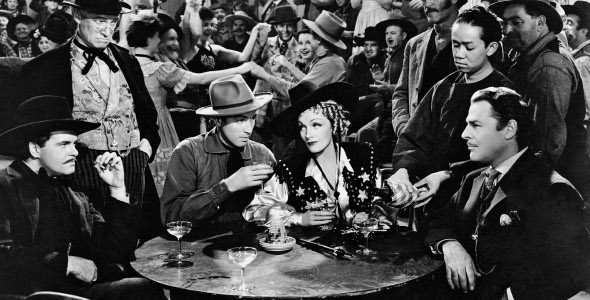
Em “Atire a Primeira Pedra / Destry Rides Again”, temos todos os elementos que povoam um gênero cinematográfico e o imaginário sobre o Velho Oeste. Saloon? Temos. Muita bebida? Temos. Xerifes? Temos. Jogos de pôquer? Temos. Bêbados e músicos malucos? Temos. Tiroteio? Temos. Pegue seu chapéu e não se esqueça das esporas: o western está mais vivo do que nunca.
Após o xerife Keogh (Joe King) ser assassinado a mando do inescrupuloso Kent (Brian Donlevy), dono do saloon, o prefeito aponta Washington Dimsdale (Charles Winninger), um músico bêbado, como novo xerife. Mas Washington é mais esperto do que parece e, para moralizar a cidade, chama Tom Destry Jr. (James Stewart), filho do homem que “limpou Tombstone”.
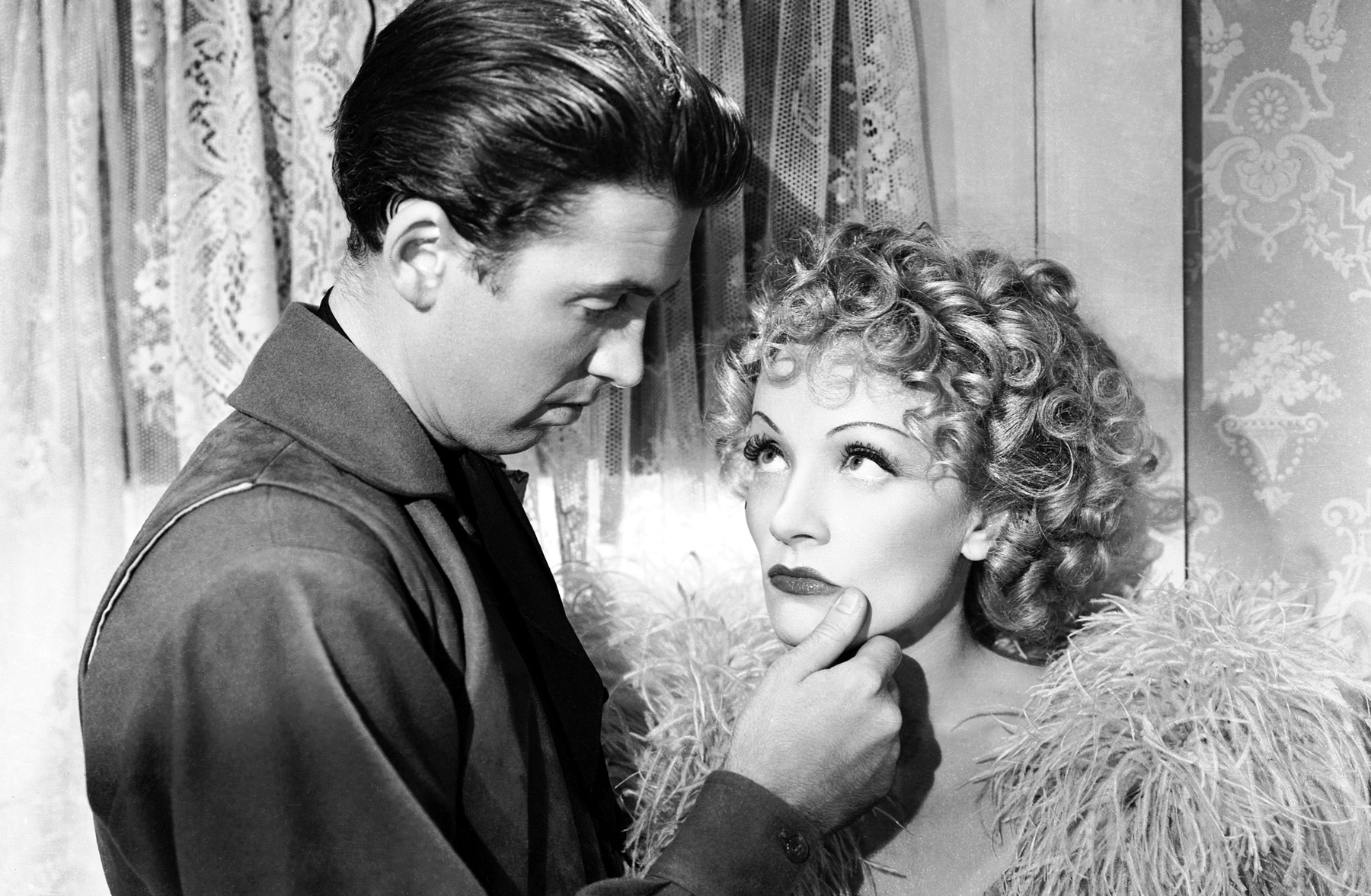
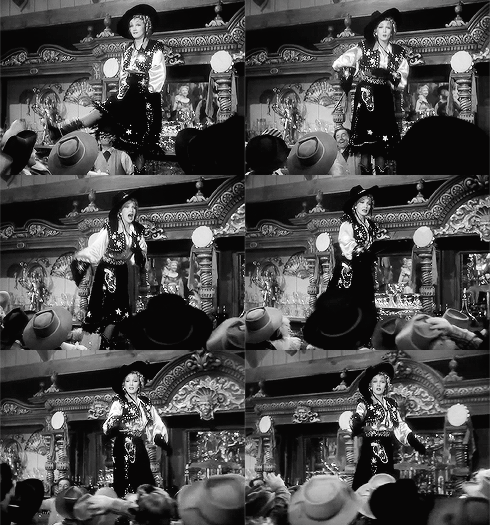
Mas Destry não parece nem um pouco perigoso: alto, sorridente, cavalheiro, tem como hobby fazer pequenas esculturas de madeira e, para completar, não carrega consigo uma arma. Por isso ele se torna motivo de escárnio para a dançarina Frenchy (Marlene Dietrich). Conseguirá Destry, sem usar violência, provar que o xerife Keogh foi assassinado e colocar os criminosos na cadeia?
São responsáveis pelo humor do filme Mischa Auer, como o ciumento vagabundo Boris, e Charles Winninger, excelente ator que em 1953 protagonizaria o belo e esquecido filme de John Ford “O Sol Brilha na Imensidão / The Sun Shines Bright”.
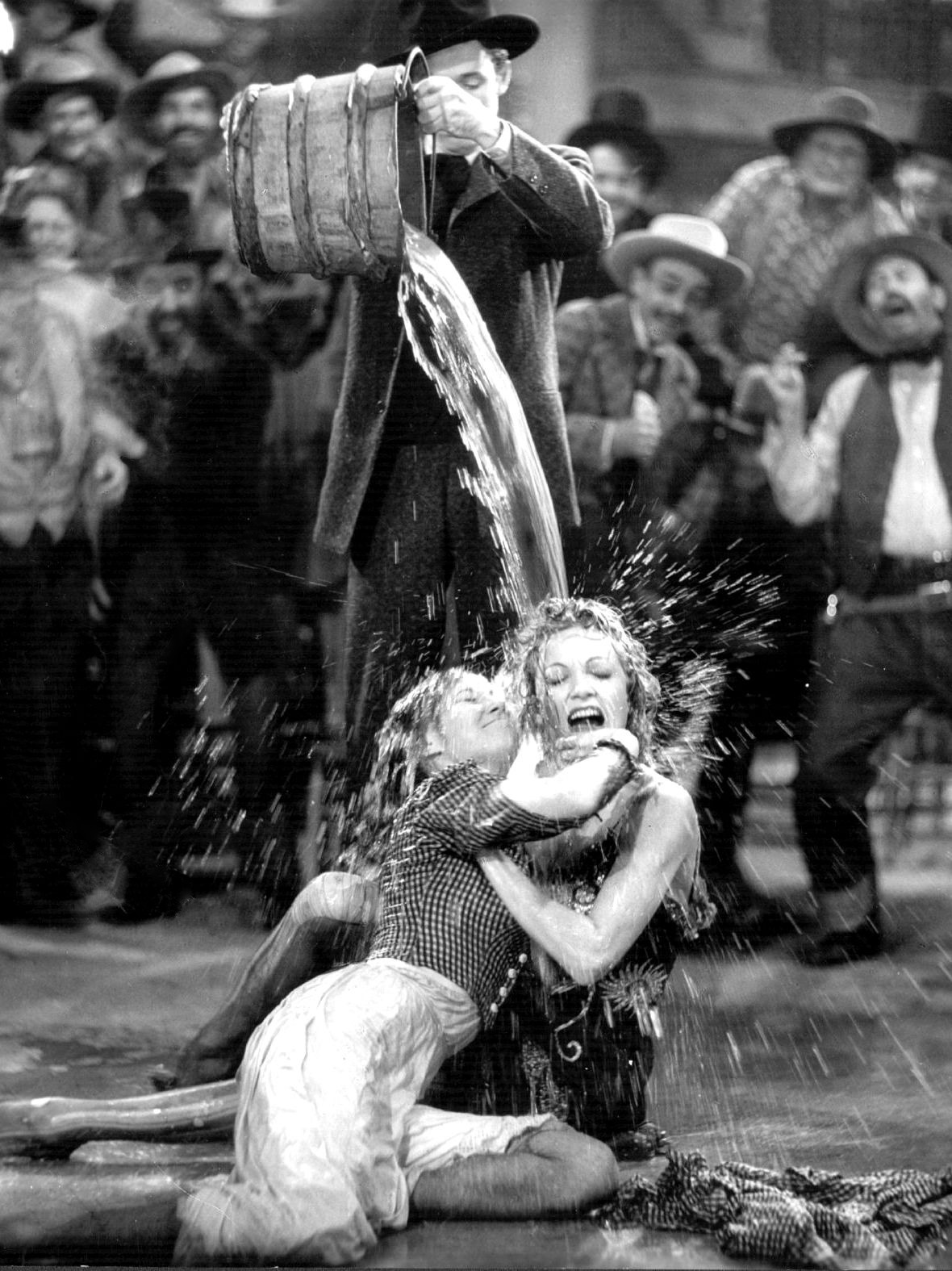
Em 1939, a carreira de James Stewart se consolidava. É neste ano que ele interpreta seu melhor e mais visceral papel (porém não o mais famoso) em “A Mulher faz o Homem / Mr Smith Goes to Washington”. Stewart só ficou com o papel de Destry porque Gary Cooper pediu um salário alto demais e foi dispensado pela produção. Com Marlene Dietrich, ele protagoniza uma das melhores brigas de saloon de todos os tempos (deixando para trás John Wayne e Randolph Scott em “Indomável / The Spoilers”, de 1942).
Em 1938, um infeliz proprietário de cinema chamado Harry Brandt escreveu um artigo listando os “venenos de bilheteria”, atores e atrizes que recebiam altos salários em seus estúdios, mas cujos filmes não eram sucesso de bilheteria. Na lista negra estavam Dietrich, Katharine Hepburn, Joan Crawford, Mae West, Greta Garbo, Kay Francis e Fred Astaire. O artigo teve grande impacto no meio cinematográfico, e 1938 foi um ano de vacas magras e poucas oportunidades para os artistas citados.
Quase todos os venenos de bilheteria deram a volta por cima. Em 1939, Garbo fez “Ninotchka” e Crawford fez “As Mulheres / The Women”. Em 1940, Hepburn voltou triunfante com “Núpcias de Escândalo / The Philadelphia Story” e Mae West se juntou a W.C. Fields para “Minha Dengosa / My Little Chickadee”. Fred Astaire voltou a dançar, nos anos seguintes, com Eleanor Powell, Rita Hayworth e Cyd Charisse.
Marlene Dietrich, após negar uma oferta do Terceiro Reich para voltar para a Alemanha e se tornar “estrela nazista”, foi convencida a participar de “Atire a Primeira Pedra / Destry Rides Again” por dois dos homens mais importantes de sua vida: Josef Von Sternberg e Erich Maria Remarque. Remarque inclusive argumentou que participar de um western faria com que o público americano simpatizasse com Marlene, e assim ela poderia combater os nazistas.
Marlene havia deixado a Paramount depois de ser chamada de veneno de bilheteria. Em 1939, a Universal Pictures já havia passado por sua fase áurea com Drácula, Frankenstein e derivados. O estúdio sobreviva com Deanna Durbin e filmes de baixo orçamento, e vez ou outra recebia algum astro “emprestado” de outro estúdio. A mistura de humor e ação do filme foi certeira, e “Atire a Primeira Pedra / Destry Rides Again” foi muito elogiado.
Divertido, 100% western, com um final coerente para o romance sub-explorado de Destry e Frenchy (que espelharia o romance real acontecendo entre Stewart e Dietrich), este filme é uma pérola do prolífico e seguro diretor George Marshall.

This is my contribution to the Universal Pictures Blogathon, hosted by Constance and Diana Metzinger at Silver Scenes.

Tuesday, February 3, 2015

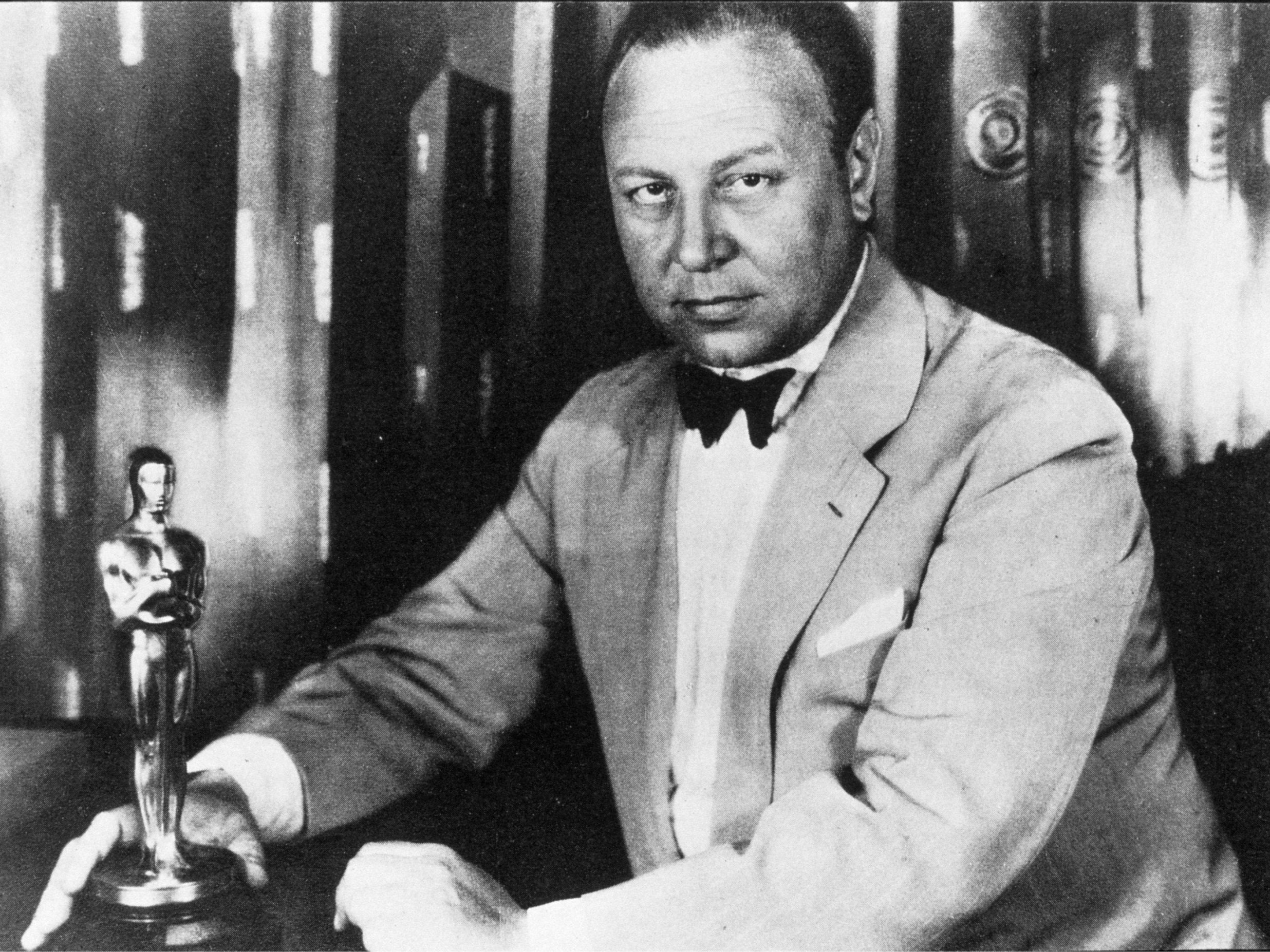
Um perfil de Emil Jannings

A profile of Emil Jannings

Hoje Emil Jannings é mais lembrado por ter sido o primeiro ganhador do Oscar de Melhor Ator, em 1929. Mas Jannings foi um homem de muitas honras: contracenou com Pola Negri, Marlene Dietrich, Conrad Veidt e Lya De Putti. Foi dirigido por Josef von Sternberg, Ernst Lubitsch, Paul Leni, King Vidor e F. W. Murnau. Chegou a ser considerado o melhor intérprete do mundo. Sua queda foi vertiginosa e muito triste por ter se ligado à pior política do século XX. Mas os verdadeiros fãs do bom cinema saberão apreciar o talento deste homem inconfundível. 

Today Emil Jannings is better remembered as the first winner of the Best Actor Oscar, in 1929. But Jannings was a man of many honors: he worked alongside Pola Negri, Marlene Dietrich, Conrad Veidt and Lya De Putti. He was directed by Josef von Sternberg, Ernst Lubitsch, Paul Leni, King Vidor and F.W. Murnau. He was even considered the best actor of the world. But his fall was huge and sad because he chose the side of the worst force of the 20th century. But the true fans of good cinema will know how to talk about the talents of this remarkable man.

Começamos destruindo um mito: Jannings não era alemão. Theodor Friedrich Emil Janenz nasceu na Suíça em 1884. Pouco encontrei sobre sua infância e juventude, a não ser a informação de que seu pai era americano. Aos 30 anos, em 1914, estreou no cinema e em 1918 já estava com Pola Negri e Ernst Lubitsch trabalhando em “Olhos da Múmia”, em que interpreta um árabe vingativo. Sua carreira oscilou entre papéis de vítima e de vilão.

We start by destroying a myth: Jannings wasn’t German. Theodor Friedrich Emil Janenz was born in Switzerland in 1884. I could not find much about his early years, except the fact that his father was American. At age 30, in 1914, hem ade his film debut and in 1918 he was already with Pola Negri and Ernst Lubitsch working on “The Eyes of the Mummy”, in which he plays a vindictive Arab man. His career alternated roles as a villain and a victim.

Fausto, 1926

Com “A Última Gargalhada” (1924), F. W. Murnau provou que o bom cinema não dispensava apenas diálogos, mas toda e qualquer palavra. Porque os únicos escritos em quase 90 minutos de projeção são o título do filme, o nome do diretor e do ator principal. É um filme psicodélico e cheio de significado, que parte da simples figura de um porteiro de hotel cuja profissão, única glória e alegria, lhe é tirada.

With “The Last Laugh” (1924), F.W. Murnau proved that good cinema didn’t need dialogues nor any written world. Because the only words in almost 90 minutes are the title of the film and the names of the director ando f the main actor. This is a psychodelic movie full of meaning, that brings the journey of a hotel clerk whose profession, his only glory and joy, is taken from him.    

A biógrafa de Rin Tin Tin (porque, sim, o astro canino tinha uma biógrafa) afirma que foi Rin Tin Tin o ganhador do primeiro Oscar de Melhor Ator, em 1929. A maioria dos votos era do cachorro mais popular das telas. Entretanto, receando que, se o prêmio recém-criado fosse entregue a um astro de quatro patas, o Oscar nunca seria levado a sério, a Academia entregou o troféu ao segundo colocado, este humano: Emil Jannings. Para Rin Tin Tin sobrou a honra de morrer no colo de Jean Harlow (quem não iria querer morrer naquele colo?).

Rin Tin Tin’s biographer (because, yes, the dog star had a biographer) claims that Rin Tin Tin was the winner of the Best Actor Oscar, in 1929. Most votes were for the most popular dog on the screen. However, feeling that, if the brand new award was given to a four-legged star, the Oscar would never be taken seriously, the Academy gave the award to the second place, a human: Emil Jannings. For Rin Tin Tin the glory that was left was to die on Jean Harlow’s lap (and who wouldn’t want to that on that lap?).  

Mas Jannings mereceu o Oscar. Posso ser parcial ao falar isso, porque “A Última Ordem / The Last Command” (1928) é um dos meus filmes mudos favoritos, mas a atuação de Jannings é ESPETACULAR. Uma imagem vale mais que mil palavras, e nem três trilhões de artigos como este seriam suficientes para descrever o real valor deste filme e da atuação de seu protagonista. Um ex-guarda do czar, agora radicado em Hollywood, tem a oportunidade de reviver seu passado ao trabalhar como extra em um filme sobre a Rússia.

But Jannings deserved the award. I may be biased to say that, because “The Last Command” (1928) is one of my favorite silente movies, but Jannings’s performance in SPECTACULAR. An image is worth more than a thousand words, but not even three trillions of articles like this one would be enough to describe the real value of this film and its lead’s performance. A former Czarist guard, now in Hollywood, has the chance to relive his past while working as an extra in a film about Russia.

Entretanto, Jannings não ganhou o Oscar apenas por sua atuação primorosa em “A Última Ordem”. No primeiro ano do prêmio, a Academia permitiu que a indicação fosse feita considerando o trabalho do ator / atriz em múltiplos filmes do ano anterior. E aqui entra uma curiosidade triste: Jannings é o único ator já indicado ao Oscar cujo filme que lhe valeu a indicação (e a vitória) está perdido: “Tortura da Carne / The Way of All Flesh” (1927). Mas há quem dê esperanças de existir uma cópia dele por aí.

However, Jannings didn’t win the Oscar only for his great performance in “The Last Command”. In the first year of the award, the Academy allowed the nomination to be made considering the perfomer’s work in multiple films from the previous year. And here comes a sad curiosity: Jannings is the only actor nominated for an Oscar whose nominated film is lost: “The Way of All Flesh” (1927). But there are those who give us hope that a copy still exists somewhere.

Falando em filmes perdidos, Jannings também foi a estrela de “O Patriota” (1928), dirigido por King Vidor e só pelo trailer que sobrou dá para perceber que era maravilhoso. Tomara que seja encontrada alguma cópia dele nos porões de algum lugar do mundo!

Since we’re talking about lost movies, Jannings was also the star of “The Patriot” (1928), directed by King Vidor and whose trailer is enough to let us know that it was great. We can only hope that a copy of it is found in a basement somewhere!

A era do cinema mudo acabava e Jannings já colecionava glórias e elogios. Ainda viria seu filme mais famoso, e sua ainda mais famosa derrocada. Com a chegada do som em Hollywood, ele voltou para a Alemanha. Ele e Von Sternberg, diretor de “A Última Ordem”, se reuniram para mais uma obra-prima: “O Anjo Azul”, de 1930, em que Jannings interpreta o professor Rath, que se apaixona pela cantora Lola Lola (Marlene Dietrich), uma femme fatale primitiva.

The silent movie era was ending and Jannings already collected glories and compliments. His most famous film was yet to come, and his even more famous downfall. With sound coming to Hollywood, he went back to Germany. He and Vn Sternberg, the director of “The Last Command”, reunited for another masterpiece: “The Blue Angel”, from 1930, in which Jannings plays professor Rath, who falls in love with the singer Lola Lola (Marlene Dietrich), a primitive femme fatale.  

O Anjo Azul” foi proibido quando os nazistas chegaram ao poderem 1933. Marlene Dietrich sairia definitivamente da Alemanha. Josef von Sternberg, nascido na Áustria, também não mais pisaria em solo alemão. E aqui Jannings cometeu seu grande erro: seguiu trabalhando para o cinema de propaganda nazista, tendo a seu lado, por exemplo, a ex-esposa de Fritz Lang, Thea von Harbou.

“The Blue Angel” was banned when the Nazis came to power in 1933. Marlen Dietrich would once and for all leave Germany. Josef von Sternberg, born in Austria, also would never again set foot in German soil. And here Jannings made his big mistake: kept working for Nazi propaganda films, having alongside him, for instance, Fritz Lang’s ex, The von Harbou.

Emil Jannings morreu em 2 de janeiro de 1950. Nunca conseguiu se livrar da mácula que foi ter trabalhado para o Terceiro Reich. Entretanto, seus filmes estão aí (os que sobraram) para provar que o talento de Emil Jannings foi muito maior que seu maior erro.

Emil Jannings died on January 2nd, 1950. He would never see himself free of the mark gained when he worked for the Third Reich. Nevertheless, his films are there (some of them) to prove that Emil Jannings’s talento was bigger than his biggest mistake.

This is my first contribution to the 31 Days of Oscar Blogathon, hosted by mighty trio Aurora, Kellee and Paula at Once Upon a Screen, Outspoken & Freckled and Paula’s Cinema Club.
Related Posts Plugin for WordPress, Blogger...