} Crítica Retrô

Tradutor / Translator / Traductor / Übersetzer / Traduttore / Traducteur / 翻訳者 / переводчик

Sunday, April 15, 2018

Papai Noel Conquista os Marcianos (1964) e outras vezes em que o cinema foi a Marte


Santa Claus Conquers the Martians (1964) and other film trips to Mars


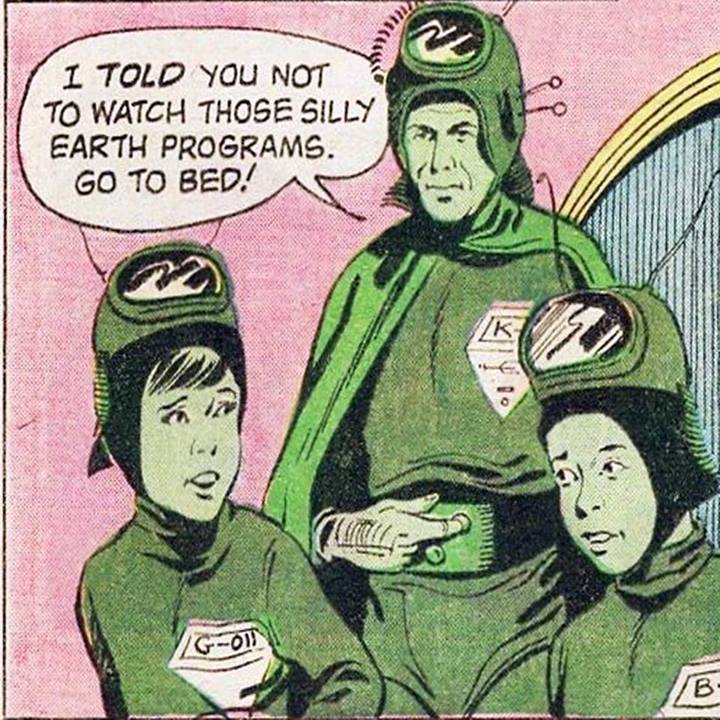
Um repórter da TV, falando diretamente da oficina do Papai Noel no Polo Norte, onde os ajudantes de Noel acabam de mostrar um boneco de um marciano, diz: “Se há [pessoas em Marte] eu espero que elas tenham alguém lá como você, Noel, para levar alegria e felicidade para todas as crianças marcianas”. Corte para os marcianos. Eles são exatamente como os bonecos e não, eles não têm um Papai Noel, mas têm a capacidade de ver os programas de TV da Terra. E, de acordo com um velho sábio, é a ausência de um Papai Noel – e a ausência de uma infância – que causa a tristeza nas crianças marcianas. Por isso, um grupo de marcianos decide vir à Terra para sequestrar o Papai Noel.

A TV reporter, speaking from Santa’s workshop at the North Pole, where the helpers just presented a Martian doll, says: “If there are [people on Mars] I hope they have someone like you up there, Santa, to bring joy and good cheer to all the Martian children”. Cut to the Martians. They are exactly as the doll predicted, and no, they not have a Santa Claus, but they are able to watch TV programs from Earth. And, according to a wise old man, it’s this lack of a Santa Claus – and the extended lack of a childhood – that is leaving Martian kids sad. So a group of Martians decide to come to Earth and kidnap Santa Claus.
É assim que tem início um marco do cinema ruim. Entre atores cobertos de maquiagem verde horrível, crianças sem expressão, piadas sem graça e o próprio Papai Noel, uma coisa salva “Papai Noel Conquista os Marcianos”: Marte. Não, o cenário não é bonito nem sequer bem elaborado, mas é algo que me fez pensar: por que o cinema é tão fascinado por Marte?

This is how a pinnacle of awful filmmaking unfolds. Among actors wearing horrible green make-up, children giving awful performances, unfunny jokes and Santa Claus himself, one thing kind of saves “Santa Claus Conquers the Martians”: Mars. No, the set is not gorgeous or even elaborate, but it is something that made me think: why is the film world so fascinated with Mars?
A resposta é simples: porque somos fascinados pelo desconhecido. E desde que Marte continue inexplorado, não há limite para a imaginação, e filmes no planeta vermelho podem ter praticamente qualquer coisa – até pílulas como refeição, homens verdes maus e um sistema que permite que os marcianos vejam programas de TV da Terra (por que eles não faziam seus próprios programas de TV?).

The answer is simple: because we are fascinated by the unknown. And as long as it remains unknown, there is no limit to imagination, and films set on Mars can have literally anything – even people who eat pills as meals, evil green men and some kind of system that allows Martians to watch TV shows made on Earth (why didn’t Martians make their own TV shows?).
O primeiro cineasta a ir a Marte, surpreendentemente, não foi Georges Méliès, mas Thomas Edison. Em 1910, Edison produziu “A Trip to Mars”, na qual um homem se torna astronauta após descobrir o pó da ‘gravidade reversa’, e em Marte ele encontra marcianos enormes que podem congelar os terráqueos com um simples sopro. Não há limites entre a ficção científica e o horror puro neste filme de cinco minutos.

The first filmmaker to go to Mars, surprisingly, wasn’t Georges Méliès, but Thomas Edison. In 1910, he produced “A Trip to Mars”, in which a man becomes an astronaut thanks to the discovery of the powder of ‘reverse gravity’ and finds out that Martians are HUGE and can freeze Earth people with only a blow. There is no boundary between science fiction and pure horror in this five-minute film.
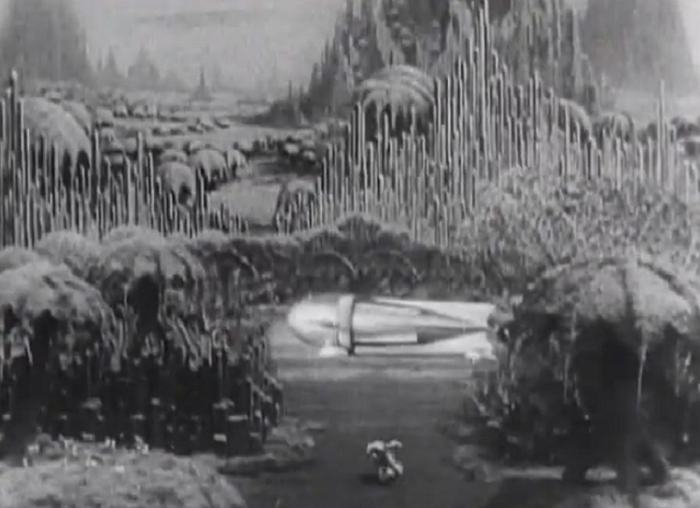
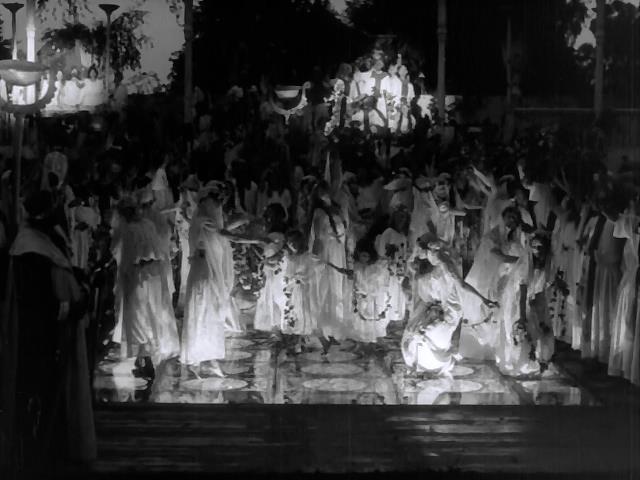
Em 1918, um grupo muito criativo de dinamarqueses fez o filme “Viagem a Marte” (ou “Himmelskibet”). Nele, um grupo de cientistas liderados por Avanti Planetaros (Gunnar Tolnaes) desafia todos os céticos e chegam a Marte em seis meses – que é, de fato, o tempo que uma viagem ao planeta vermelho demoraria hoje!

In 1918, a group of very creative Danish people made a film called “A Trip to Mars” (aka “Himmelskibet”). In it, a group of scientists led by Avanti Planetaros (Gunnar Tolnaes) challenges all naysayers and reach Mars in six months – what is, indeed, the time a trip to the Red Planet would take today!
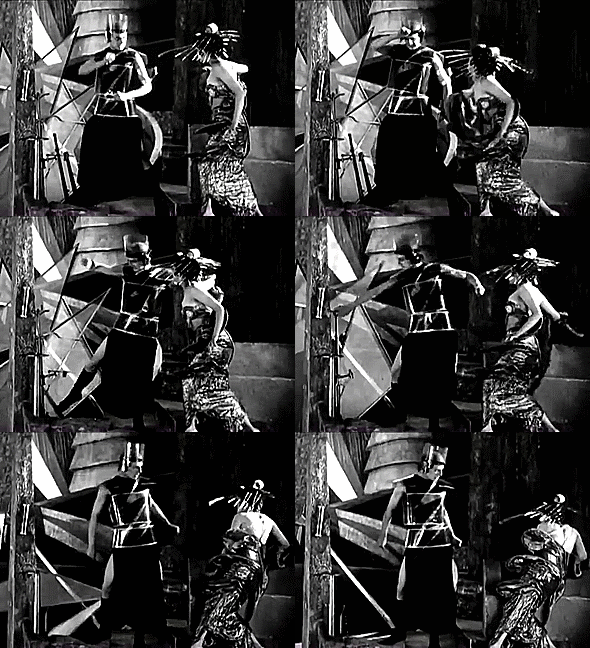
Mas nada poderia prepará-los para o que encontram lá: uma sociedade evoluída, na qual todas as pessoas são vegetarianas e pacifistas, e a guerra e o sofrimento foram abolidos. O líder deles é um homem sábio e ninguém teme a morte. Os marcianos contam que eram como as pessoas da Terra, mas aprenderam a viver em paz. A mesma paz não é compartilhada com o cinema soviético, como podemos ver em “Aelita, Rainha de Marte”, de 1924.

But nothing could prepare them for what they find there: an evolved society, where all people are vegetarians and pacifists, and all war and suffering has been abolished. Their leader is a wise man and nobody fears death. The Martians tell them that they were once like people on Earth, but they learned to live better and in peace. The same peace is not shared with the Soviet cinema, as we can see in the 1924 production “Aelita, Queen of Mars”.
Himmelskibet
Himmelskibet
Aelita
Com a chegada do som, Marte se tornou sinônimo de filme B. Dos anos 30 aos 70, quase todos os filmes sobre expedições a Marte eram seriados ou produções de baixo orçamento. “Fantasias de 1980”, de1930, é um dos mais estranhos de todos. Ele conta a história de um homem chamado J-21 (John Garrick), que, para impressionar a mulher que ama e ganhar o direito de se casar com ela, vai a Marte com um amigo e com um homem que foi morto em 1930 e ressuscitado pela ciência em 1980 (interpretado por El Brendel). Em Marte, eles descobrem uma sociedade em que todos têm um irmão gêmeo (um gêmeo bom e um mau), mas os marcianos são agradáveis, usam pouca roupa, o cenário é lindo e a líder é a rainha Loo Loo (Joyzelle Joyner). Para ser sincera, eu gostaria de visitar esta versão de Marte.

When sound came, Mars became a synonym of cheap movie. From the 1930s until the 1970s, almost all films about expeditions to Mars were serials or low-budget productions. “Just Imagine”, from 1930, is one of the weirdest of them all. Set in the 1980s, it tells the story of a man called J-21 (John Garrick), who, in order to impress his sweetheart and be allowed to marry her, goes to Mars with a friend and a man who was killed in 1930 and resurrected by science in 1980 (played by El Brendel). On Mars, they find a society in which everybody has a twin (one evil and one good), but the Martian people are welcoming, wear few clothes, the set is exquisite and their leader is queen Loo Loo (Joyzelle Joyner). To be sincere, I’d like to visit this version of Mars.

Buster Crabbe, como Flash Gordon, pode ter ido a Marte no seriado de 1938, mas os anos 50 foram a década que trouxe real interesse em viagens espaciais, tanto em filmes quanto em desenhos. Estudos traçam a origem da ideia de que alienígenas são ‘homenzinhos verdes’ até uma lenda contada no século XII, mas foi com as histórias de ficção científica dos anos 1940 e 50 que a ideia se popularizou. Por isso conhecemos Marvin o Marciano em 1948, e ele apareceu em outros desenhos nas décadas seguintes, incluindo o famoso curta “Duck Dodgers in the 24 ½th Century”, de 1953.

Buster-Crabbe-as-Flash-Gordon may have been to Mars in the 1938 serial, but the 1950s were the decade that brought real interest in space travelling, both on feature film and animation. Studies trace the idea of aliens being ‘little green men’ back to a legend told in the 12th century, but it was with science fiction stories from the 1940s and 50s that the idea became popular. No wonder we got Marvin the Martian in 1948, and he appeared in other cartoons the following decades, including the famous “Duck Dodgers in the 24 ½th  Century”, from 1953.

Marvin, 1948: nice skirt
Marvin, 2012: more relatable
Quem mais, além de Pernalonga, já foi a Marte? Ou melhor, quem ainda não foi a Marte? Tom e Jery já foram. Abbott e Costello também. Como vimos, Papai Noel também. Matt Damon esteve lá recentemente – e poderia ter ficado por lá. O que todos esses filmes sobre Marte têm a nos ensinar, não importa quão ridículos ou estúpidos eles sejam?

Who else, besides Bugs Bunny, has been to Mars? I mean, who hasn’t been to Mars? Tom and Jerry have. Abbott and Costello have. As we just saw, Santa Claus had. Matt Damon had been there recently – and he could have been left there. What all those films about Mars teach us, no matter how campy or stupid they are?
Eles nos ensinam que nós amamos o desconhecido e as muitas possibilidades que vêm com ele, mas só até certo ponto. Quando chegam a Marte, todos os personagens, em especial nos filmes mais antigos, encontram seres vivos semelhantes ao homem. Os marcianos podem falar outra língua, usar roupas engraçadas, ser maiores que nós, mas eles sempre se parecem conosco na ficção. Até Marvin tem um cachorro de estimação, o K-9! Explorar pode ser excitante, desde que estejamos no controle. Hoje sabemos que, se há vida em Marte, ela não se parece em nada com os humanos da Terra. Então, talvez, seja mais interessante para nós nos conformarmos com rostos familiares em planetas estranhos – talvez, nesta situação, a ficção científica será mais emocionante que a realidade.

They teach that we love the unknown and its many possibilities, but until a certain point. Once on Mars, almost all characters, especially in older films, find human-like life. Martians may speak a different language, dress funny, be bigger than us, but they always looked like us in fiction. Even Marvin has a dog, K-9, as a pet! Exploring is exciting, as long as we are in control. Today, we know that, if there is life on Mars, it’s nothing like humans on Earth. So, maybe, it’s more interesting for us to conform to familiar faces in strange planets – maybe, in this case, science fiction will be more exciting than reality.

This is my contribution to the Outer Space on Film blogathon, hosted by Debbie from Moon in Gemini.

Friday, April 13, 2018

O Chaplin que Ninguém Viu (1983) / Unknown Chaplin (1983)

Às vezes somos enganados por nossas inferências, e quando vemos dados reais, temos uma surpresa. Deixe-me explicar. Vivien Leigh foi uma atriz esplêndida, uma das melhores de todos os tempos, não? Então nós somos levados a pensar que seu conjunto da obra foi grande e memorável, mas na realidade ela fez apenas 18 filmes. Obviamente, foram quase todos filmes de alta qualidade, mas 18 é um número muito pequeno. Nós poderíamos fazer um festival, durando uma semana, com todos os filmes dela! 

Sometimes we are misguided by our inferences, and when we see real data, we get surprised. Let me explain. Vivien Leigh was a wonderful actress, one of the best ever, right? So we think her body of work was extensive and remarkable, but in reality she only made 18 films. Of course, these are films from the highest quality, but 18 is a surprisingly short number anyway. We could fit her whole filmography into an one-week film festival!
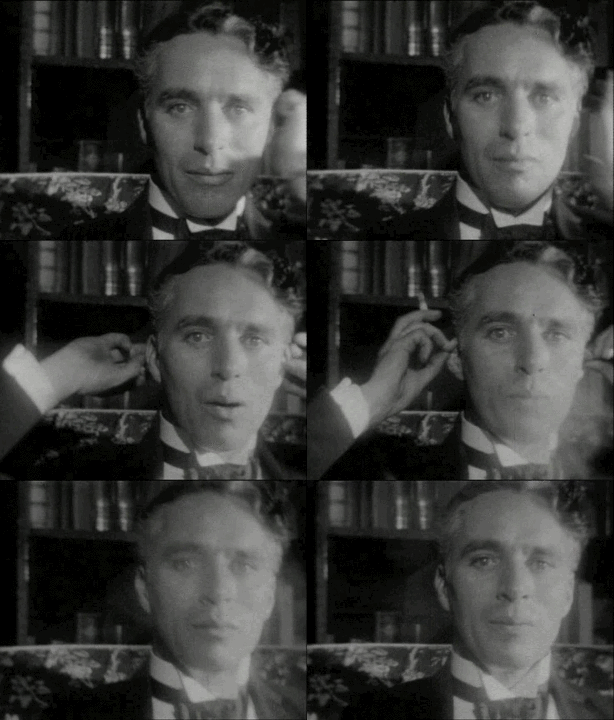
O mesmo não pode ser feito com outras estrelas de cinema. Falemos de Charles Chaplin agora. De acordo com o IMDb, ele fez 87 filmes – sendo ‘ele mesmo’ em apenas um deles – e dirigiu 71 destes filmes. Bastante, não? Mas você acreditaria se eu dissesse que ainda há filmes de Chaplin esperando para serem redescobertos? Ou, pelo menos, havia filmes esperando para serem redescobertos quando Chaplin faleceu, no dia de Natal de 1977. E o documentário “O Chaplin que Ninguém Viu” foi o responsável por finalmente levar estes filmes à luz em 1983.

The same can’t be done with other film stars. Take Charles Chaplin now. According to IMDb, he appeared in 87 films - only one being a cameo - and directed 71 of these films. Quite a lot, right? But would you believe if I told you that there are still Chaplin movies waiting to be discovered? Or at least, there were films waiting to be discovered when he died, on Christmas Day, 1977. And the documentary “Unknown Chaplin” was responsible for finally shining a light on these works in 1983.
Narrado pelo inconfundível James Mason, o documentário é dividido em três episódios, e eles foram originalmente exibidos na Inglaterra em janeiro de 1983. Somados, os episódios perfazem 153 minutos, mais de duas horas e meia, de material quase 100% inédito. Estes fragmentos seriam como “cadernos de esboços de um grande artista”, como define Mason. Então, vamos ver que tesouros o documentário nos traz.

Narrated by the unmistakable James Mason, the documentary has three episodes, and they were originally broadcast in England in January 1983. They make up 153 minutes, more than two and a half hours, of almost 100% unseen Chaplin material. These little bits of film would be like “sketchbooks from a great artist”, as Mason says. So, let’s see the treasures this documentary had for us.

Part 1 - My Happiest Years


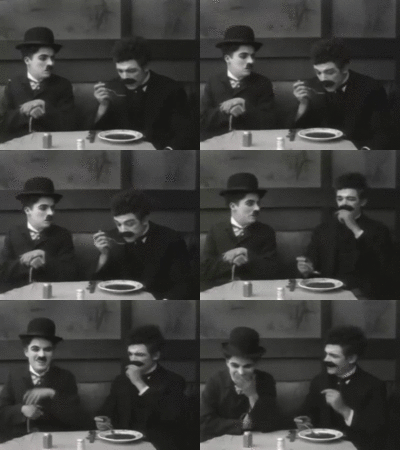
Nesta primeira parte, vemos filmagens de teste dos filmes de Chaplin na Mutual Company, feitos entre 1916 e 1917. Chaplin fez 12 curtas-metragens em 16 meses e mais tarde chamou este período na Mutual de “seus anos mais felizes”.

In this first part, we see rushes of Chaplin’s films by Mutual Company, made between 1916 and 1917. Chaplin did 12 two-reelers in 16 months, and later recalled his time at Mutual as “his happiest years”.
Aos ver estes testes descobrimos que Chaplin improvisava com frequência, ensaiava com as câmeras rodando e ajustava o ritmo com cada tomada – e às vezes ele demorava centenas de tomadas para conseguir a velocidade e o ritmo perfeitos. E, ao contrário de Mack Sennett, ele sempre queria ter uma explicação lógica para o pandemônio na tela.

By watching the rushes we find out that Chaplin improvised a lot, rehearsed while the cameras were rolling and adjusted the pace with each take – and sometimes he took hundreds of takes to find out just the perfect timing. In this phase Chaplin relies a lot on props to make the public laugh. And, unlike Mack Sennett, he always wanted to have a logical explanation for his pandemonium.
Algumas cenas foram descartadas, a exemplo de uma muito perigosa, envolvendo um machado e uma tomada reversa em “Carlitos no Estúdio” (1916), e também a primeira e última cena em que o personagem Carlitos usa óculos.

Some scenes were discarded, like a very dangerous one involving an axe and a reverse shot in “Behind the Screen” (1916), and also the first and only time the Tramp character wore glasses.
Nós também ficamos por dentro do incrível processo criativo por trás de “O Imigrante” (1917), provavelmente o melhor curta-metragem de Chaplin. Foi um filme criado conforme era filmado, com mudanças constantes na história e truques de câmera sagazes.

We also get to know the amazing creative process behind “The Immigrant” (1917), probably Chaplin’s best short film. It was a movie created in the moment, with constant changes in the plot and wise camera tricks.
Desde esta primeira fase, vemos que Chaplin preferia trabalhar com pessoas que não tinham experiência com atuação, o que tornava suas performances mais espontâneas e verdadeiras.

Since this first phase, we can see Chaplin’s preference to work with people who didn’t have an acting background, something that made their performances seem more spontaneous and natural.

Part 2 - The Great Director


Como o narrador menciona, seus filmes da Mutual tinham de contar suas próprias histórias, pois não havia colaboradores sobreviventes do período para contá-las. Da fase seguinte, que começa com um contrato de distribuição assinado com a First National em 1918, entretanto, ainda havia testemunhas oculares vivas em 1983. Nós vemos entrevistas com amigos, assistentes e, claro, com as estrelas Jackie Coogan, Lita Grey e Georgia Hale.

As the narrator mentions, his Mutual films and rushes had to tell their own backstage stories, since there were no surviving collaborators from this phase. From the following phase, starting with a First National distribution contract signed in 1918, however, there were living eyewitnesses in 1983. We see interviews with friends, assistants and, of course, with the stars Jackie Coogan, Lita Grey and Georgia Hale.
Jackie Coogan
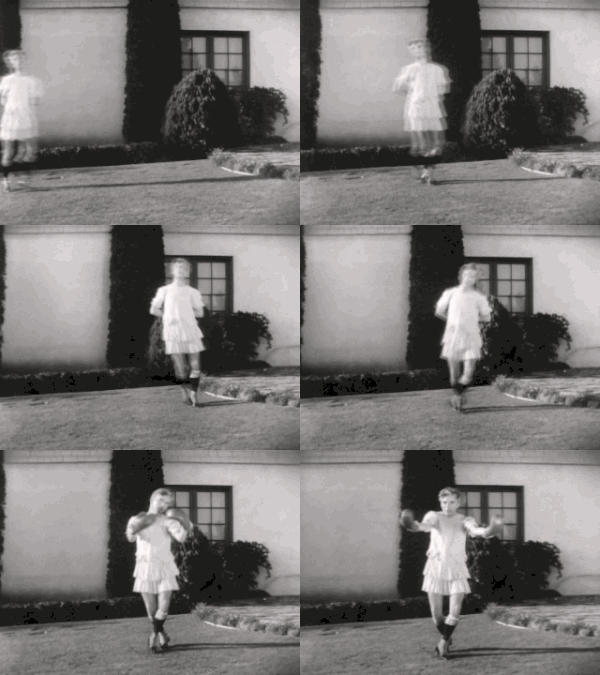
E tem mais: um registro fascinante de um cinegrafista amador no set de “Luzes da Cidade” (1931) mostra Chaplin tentando descobrir como a vendedora de flores cega, interpretada por Virginia Cherrill, poderia confundir seu personagem Carlitos com um milionário.

And there is more: a fascinating amateur movie from the set of “City Lights” (1931) shows Chaplin trying to figure out how the blind flower girl played by Virginia Cherrill would mistake his Tramp character for a millionaire.
Esta segunda parte foca nos maiores sucessos de Chaplin: “O Garoto” (1921), “Em Busca do Ouro” (1925) e “Luzes da Cidade”. Nós também temos a oportunidade única de ver o final de “Luzes da Cidade” gravado com Georgia Hale no papel principal, e a sensação é de que estamos verdadeiramente vendo um tesouro da história sétima arte. Eu considero a performance de Virginia superior, mas ver o que poderia ter sido não tem preço.

This second part focuses on Chaplin’s biggest successes: “The Kid” (1921), “The Gold Rush” (1925) and “City Lights”. We also have the unique chance to see the ending of “City Lights” shot with Georgia Hale in the girl’s role, and we feel like we truly are in front of a treasure from film history. I think Virginia’s performance is the best, but seeing what could have been is priceless.

Part 3 - Hidden Treasures 


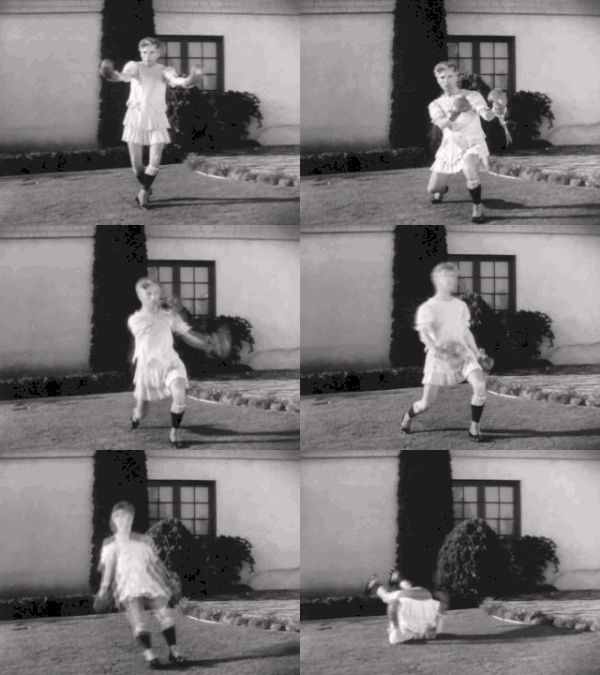
Tudo vai bem por enquanto, mas chegou a hora do verdadeiro espetáculo. O que mais se pode esperar de um episódio que começa com um filme caseiro de Douglas Fairbanks de 1929 no qual Chaplin originou a ideia para o balé com o globo terrestre que ele faria 11 anos depois em “O Grande Ditador”?

Things were nice so far, but they were about to become amazing. What else can we expect from an episode that starts with a 1929 Douglas Fairbanks home movie in which Chaplin originated the idea for the globe ballet he would do 11 years later in “The Great Dictator”?
Em meio aos filmes caseiros feitos por diversão sempre que um visitante ilustre ia até o set, encontramos um chamado “How to Make Movies”, feito em 1918, quando Chaplin se mudou para Hollywood, construiu seu próprio estúdio e se tornou um diretor independente. As cenas deliciosas e muito elaboradas mostram Chaplin ganhando seu estúdio de um gênio da lâmpada, e os verdadeiros funcionários do estúdio interpretam suas funções para a câmera – com um toque de humor.

Among home movies, little films made for fun whenever illustrious visitors came to the set and other rarities, we find a film called “How to Make Movies”, made for fun in 1918, when Chaplin moved to Hollywood, built his own studio and became an independent director. The delightful and elaborate scenes we see show Chaplin earning his studio from a Genie in the Lamp, and the real studio employees are playing their functions to the camera – with a humorous twist.
Com Chaplin, as gags poderiam ser descartadas, mas nunca abandonadas. Elas seriam usadas novamente anos depois, modificadas e melhoras. Você se lembra da sequência das pulgas circenses em “Luzes da Ribalta” (1952)? Bem, isso já havia sido tentado antes, em uma sequência mostrada pela primeira vez no documentário, mais de 60 anos depois de ter sido filmada. A pequena sequência de “The Professor”, que nunca foi finalizado, pode ser agora algo que os maiores fãs de Chaplin já conhecem, mas em “O Chaplin Que Ninguém Viu” as cenas eram inéditas – uma descoberta.

With Chaplin, the gags could be discarded, but never abandoned. They would be used again years later, modified and improved. Do you remember the flea circus sequence from “Limelight” (1952)? Well, it had been tried before, in a segment that was shown for the first time in the documentary, more than 60 years after it was shot. The little sequence from the unreleased “The Professor” may now be a familiar one for die-hard Chaplin fans, but in “Unknown Chaplin” it was something brand new – a discovery.

“O Chaplin que Ninguém Viu” é uma delícia para qualquer fã de Chaplin – que, aliás, tinha a claquete marcada com “Chas Chaplin” na época da Mutual. Aqueles que já viram mais filmes de sua obra serão os que tirarão mais proveito do documentário e, como eu, podem inclusive mudar de opinião sobre uma ou outra coisa ao desligar a TV.

“Unknown Chaplin” is a delight for any Chaplin fan – who, by the way, had his clapperboards marked with “Chas Chaplin” in his Mutual years. The ones who have already watched many Chaplin films will be the ones who will enjoy the documentary the most, and, like me, they may even have some opinions changed when they turn off the TV.

This is my contribution to the Charlie Chaplin blogathon, hosted by Little Bits of Classics and Christina Wehner.


 “All images from Chaplin films made from 1918 onwards, Copyright © Roy Export S.A.S. Charles Chaplin and the Little Tramp are trademarks and/or service marks of Bubbles Inc. S.A. and/or Roy Export”

Saturday, April 7, 2018

A Floresta Petrificada (1936) / The Petrified Forest (1936)

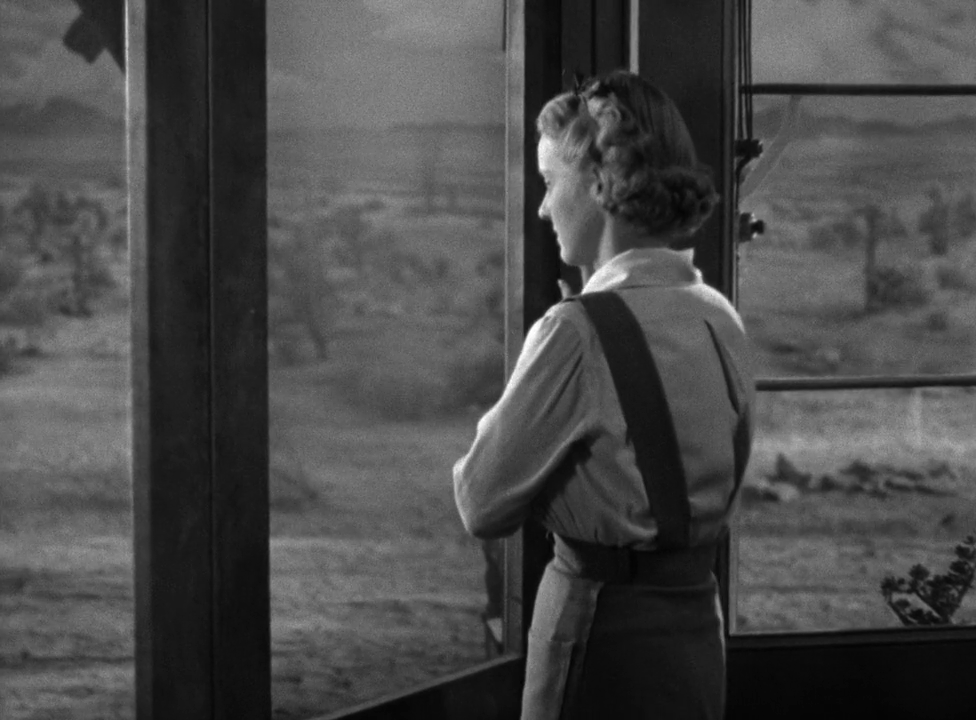
Quantos filmes interessantes começam em um posto de gasoline / restaurante? Vejamos: “Beija-me, Idiota” (1964) é o primeiro que me vem à mente. Também há “Fuga do Passado” (1947) e muitos outros filmes noir. Mas em quantos ótimos filmes a ação acontece quase totalmente em um posto de gasolina que está literalmente no meio do nada? “A Floresta Petrificada”, que se passa em um posto na desértica Black Mesa, Arizona, é o único filme que me vem à mente.

How many interesting movies start in a gas station / restaurant? Let’s see: “Kiss Me, Stupid” (1964) is the first I think about. Also “Out of the Past” (1947) and some other noir films. But how many great films are basically fully set in a gas station literally out of nowhere? “The Petrified Forest”, set in a gas station in the desert place of Black Mesa, Arizona, is the only one that comes to my mind. 
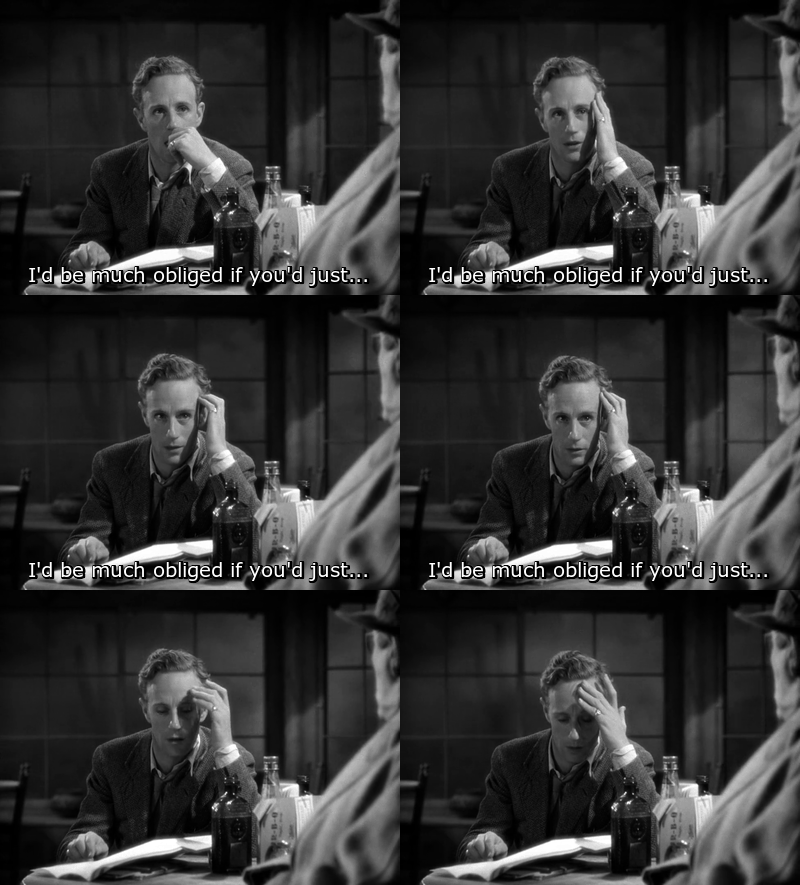
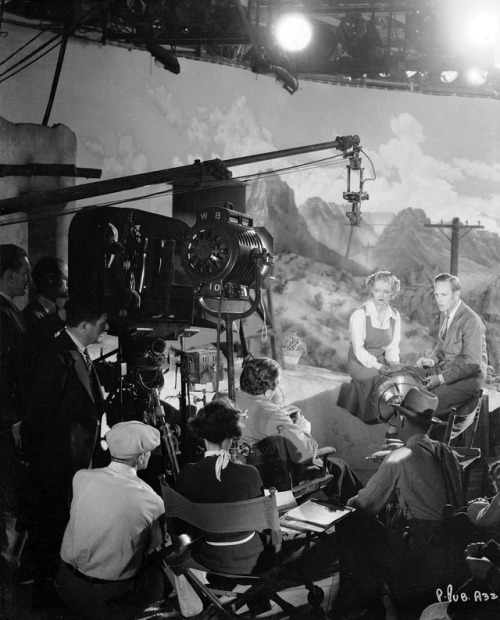
Tudo começa com a chegada de um estranho: Alan Squier (Leslie Howard, tão magro e pálido que se parece com Stan Laurel). Squier é um escritor charmoso que está cruzando os EUA após se divorciar, e ele logo conquista a garçonete do restaurante, a ingênua e sonhadora Gabrielle (Bette Davis).

Everything starts with the arrival of an odd man: Alan Squier (Leslie Howard, so slim and pale that he looks like Stan Laurel). Squier is a charming writer crossing the country after a divorce, and he instantly conquers the restaurant’s waitress, naïve dreamer Gabrielle Maple (Bette Davis).
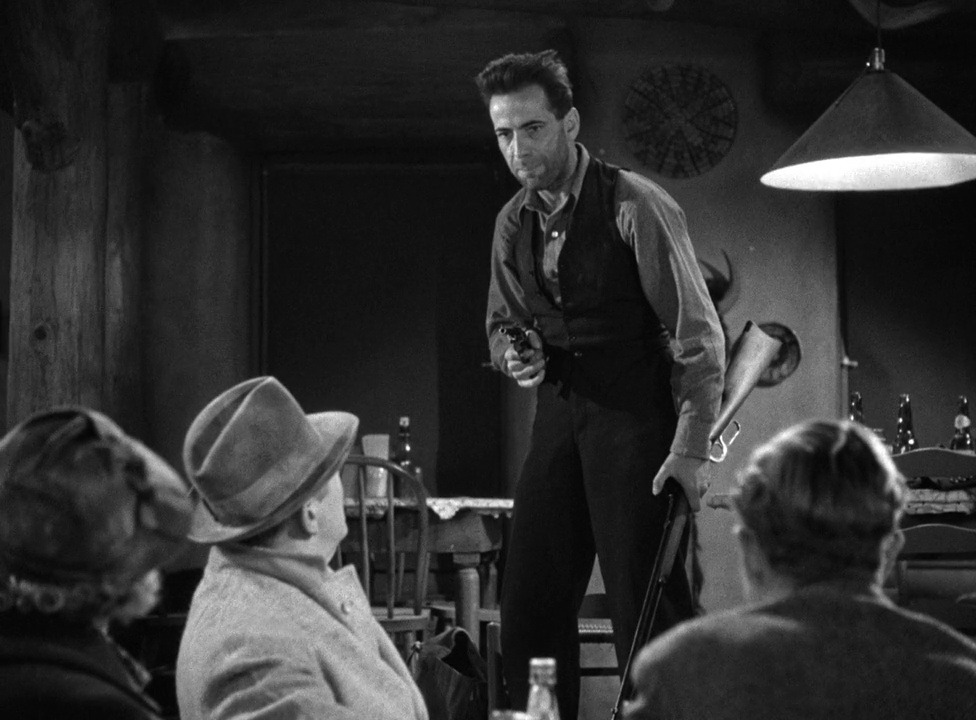
Mas chega a hora de dizer adeus. Alan pega uma carona com o casal Chisholm (Genevieve Tobin e Paul Harvey) e o motorista deles. Quando eles estão na estrada, escutam no rádio a descrição da aparência do gângster fugitivo Duke Mantee (Humphrey Bogart) e qual carro ele e seus comparsas estão usando para a fuga. Na curva seguinte o casal Chisholm tem uma surpresa: é o próprio Duke Mantee que os para e rouba o carro.

But time has come to say goodbye. Alan gets a lift from the Chisholms (Genevieve Tobin and Paul Harvey) and their driver. When they are on the road the radio describes how runaway gangster Duke Mantee (Humphrey Bogart) looks like and which car he and his mates are using. On the next curve the Chisholms have a surprise: it’s Duke Mantee himself, who stops them and steals their car.
Enquanto o casal tenta consertar o carro de Duke para continuarem com a viagem, Alan, muito nervosa, volta para o restaurant, sabendo que Duke está prestes a encontrar Gabrielle. Duke chega lá. E Alan também. Agora, temos Gabrielle, Alan, o funcionário do posto Boze (Dick Foran) e o avô de Gabrielle (o divertido Charley Grapewin) são reféns de Duke e seus capangas. Com todos no restaurante, eles só podem ter conversas profundas sobre a vida, amor, dinheiro e dúvidas existenciais. E, sim, o casal Chisholm e o motorista também acabam sendo feitos reféns.

While the Chisholms try to fix Duke’s broken car to go on with their trip, a very nervous Alan walks back to the restaurant, knowing that Duke is about to hit the place. Duke does that. And so does Alan. Now, we have Gabrielle, Alan, the gas station employee Boze (Dick Foran) and Gabrielle’s grandfather (a very funny Charley Grapewin) held hostage by Duke and his evil crew. With all in the restaurant, they can only have deep conversations about life, love, money and existential doubts. And, yes, the Chisholms and the driver eventually arrive there, too.
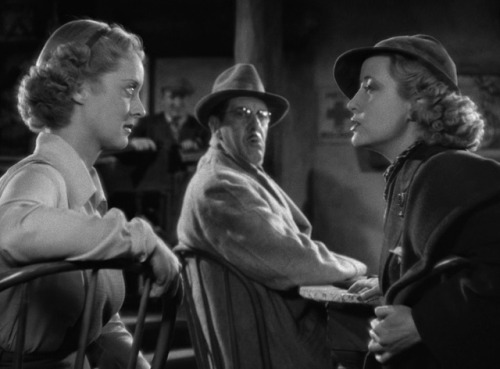
A principal tarefa de Bette Davis em “A Floresta Petrificada” é ser adorável. Gabrielle é uma garota sensível que deseja visitar sua cidade natal na França e adora ler poesia. Alan é um par perfeito para ela. Como Alan, Leslie Howard tem de dizer coisas bonitas e intelectuais que também sejam provocativas para nós, espectadores. E Genevieve Tobin tem um monólogo FANTÁSTICO.

Bette Davis’s main job in ‘The Petrified Forest” is to be adorable. Gabrielle is a sensitive girl who wants to visit her birthplace in France and loves to read poetry. Alan is a perfect match for her – even though Boze is insistent about seducing her. As Alan, Leslie Howard has to say beautiful, intellectual things that are provocative for us, viewers. Oh, and Genevieve Tobin has a FANTASTIC monologue.
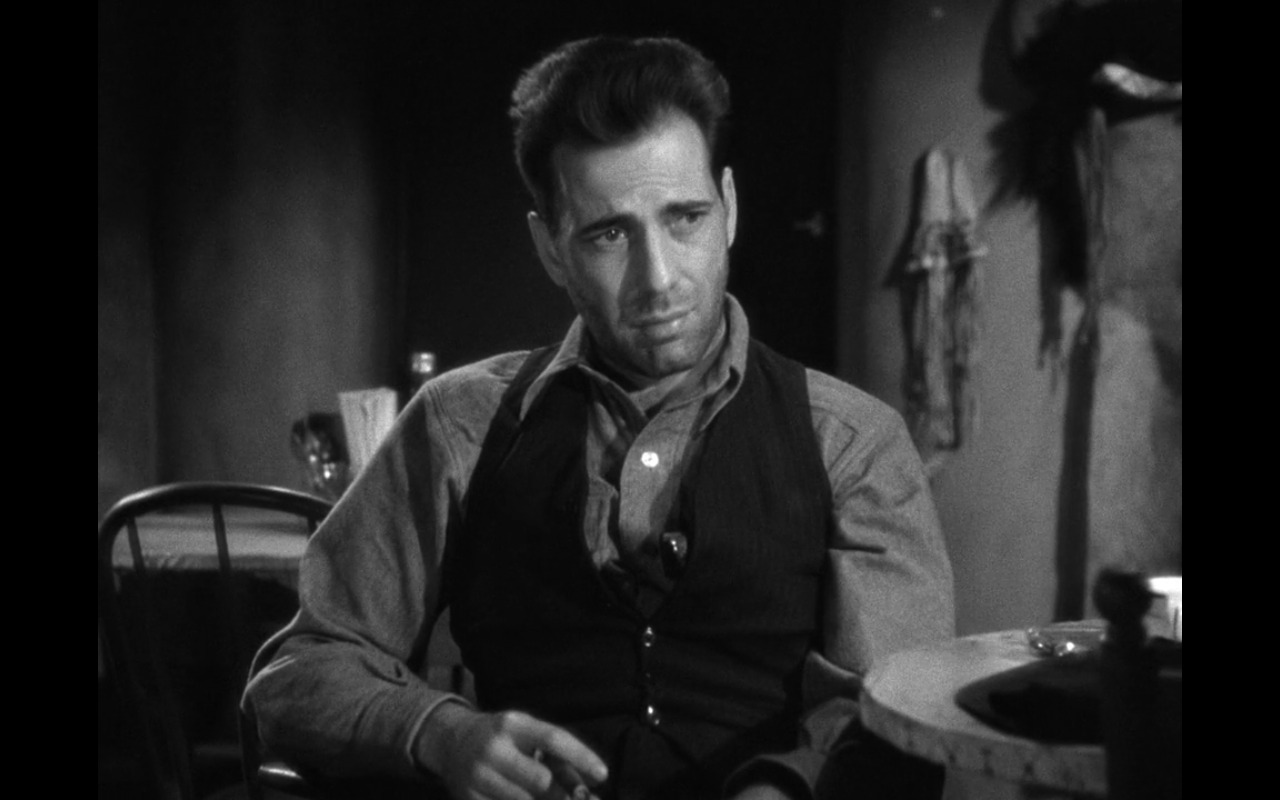
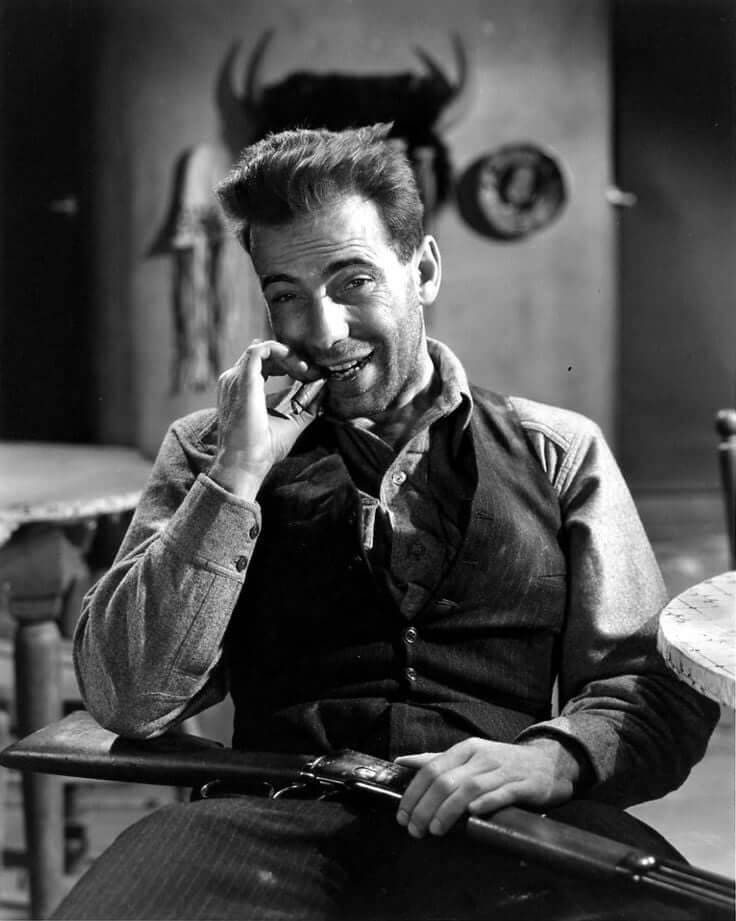
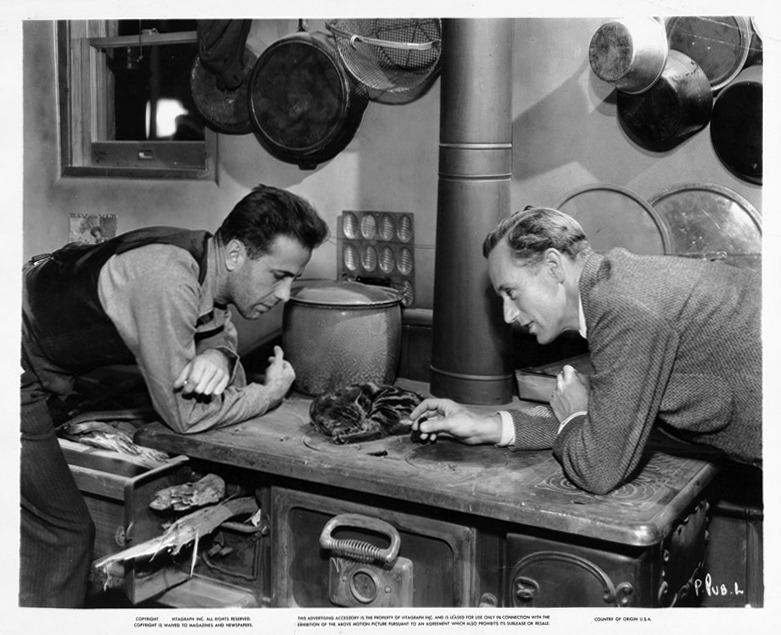
Humphrey Bogart interpreta um gângster barra-pesada com um minúsculo coração de manteiga. Na primeira fase de sua carreira, que vai de 1930 a 1941, ele foi mal aproveitado pela Warner Bros, que lhe dava só pequenos papéis – seu nome é só o quarto nos créditos deste filme – e papéis de vilão – no ano seguinte ele interpretaria um membro da Ku Klux Klan. É interessante notar, em Duke Mantee, este momento em particular, quando a câmera – por causa de uma tomada precisa planejada pelo diretor Archie Mayo – captura a alma do personagem:

Humphrey Bogart plays a heavy gangster with a tiny soft spot in his heart. In the first phase of his career, that goes from 1930 to 1941, he was mostly “undercast” by Warner Bros, who gave him small roles – he’s the fourth billed here – and roles of villains – he would play a Ku Klux Klan member in a 1937 movie. It’s interesting to notice, about Duke Mantee, this moment in particular, when the camera –because of a precisely planned shot by director Archie Mayo – captures the character’s soul:
“A Floresta Petrificada” foi primeiro apresentada como peça, com Howard, Davis e Bogart nos três papéis principais. Quando o estúdio Warner adquiriu os direitos da peça, os executivos planejaram dar o papel de Duke para Edward G. Robinson, mas Leslie insistiu em contracenar com Bogart. Por causa deste apoio, Bogart foi para sempre grato para com Howard, e inclusive deu o nome de Leslie à sua filha. E Bogart teve a chance de interpretar Duke Mantee mais uma vez em 1955, em uma adaptação para a TV, com Lauren Bacall como Gabrielle e Henry Fonda como Alan.

“The Petrified Forest” was first presented as a play, with Howard, Davis and Bogart in the three main roles. When it acquired the play rights, Warner planned to cast Edward G. Robinson for the role of Duke, but Leslie Howard insisted on working with Bogart. Because of this support, Bogart was forever grateful to Howard, and even named his daughter Leslie after him. And Bogart had the chance to play Duke Mantee once more in 1955, in a TV adaptation, with Lauren Bacall as Gabrielle and Henry Fonda as Alan.       
Sem dar spoilers, posso dizer que o filme pega um caminho muito incomum por causa do amor de Alan por Gabrielle. E, se você imaginou que um filme de 1936 traria uma lição moral machista e antiquada sobre as razões para a vida de um homem ou uma mulher, eu digo: você está muito enganado! Agora basta apenas conferir este excelente filme.

Without spoiling it, I can say that the film goes through a very unusual path thanks to Alan’s love for Gabrielle. And, if you presumed that a 1936 movie would bring a sexist, old-fashioned moral lesson about the reason behind a man’s or a woman’s existence, I must say: boy, you are wrong! Now go on and watch this wonderful movie.

This is my contribution to the Third Annual Bette Davis blogathon, hosted by Crystal at In the Good Old Days of Classic Hollywood.

Monday, April 2, 2018

Romance em Alto Mar (1948) / Romance on the High Seas (1948)

70 anos atrás, uma jovem encantadora cuja vida seria marcada por tragédias apareceu pela primeira vez nas telas do cinema. Ela havia sonhado em ser uma dançarina, mas um acidente grave interrompeu seu sonho. Durante a recuperação, ela fez aulas de canto e sua vida tomou um novo caminho. Em 1948 esta garota – chamada Doris Day – entrou para a indústria na qual teria mais sucesso e reconhecimento com o filme “Romance em Alto Mar”.

70 years ago, a young and lovely woman whose life was marked by tragedy appeared for the first time on the silver screen. She had dreamed of being a dancer, but a serious accident cut her dream short. While recovering, she took singing lessons and her life took a new path. In 1948 this girl – named Doris Day – entered the business that would give her the most success and recognition with the film “Romance on the High Seas”.
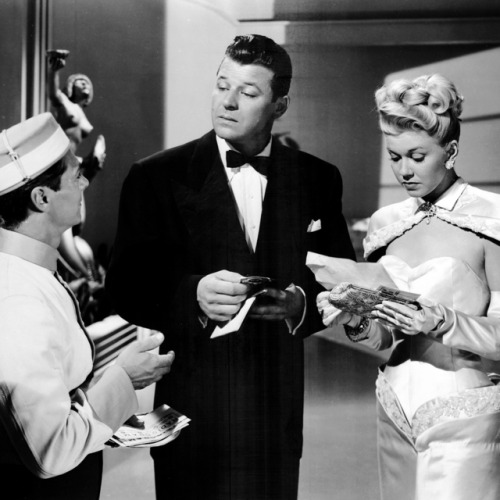
Elvira (Janis Paige) e Michael Kent (Don DeFore) são casados, mas não confiam um no outro. Eles nunca confiaram, nem mesmo antes do casamento. Um deles sempre pensa que o outro está flertando ou sendo infiel. No terceiro aniversário de casamento deles, Elvira tenta mais uma vez planejar uma viagem – algo que já foi planejado e cancelado nos dois anos anteriores por causa dos compromissos de Michael – e reserva uma cabine em um cruzeiro pela América do Sul. Na agência de viagens ela encontra a cantora de cabaré Georgia Garrett (Doris Day), que adora planejar viagens, mas nunca tem dinheiro suficiente para de fato fazê-las.

Elvira (Janis Paige) and Michael Kent (Don DeFore) are married, but they don't trust each other. They have never trusted each other, not even on their wedding day. One always thinks the other is flirting with someone else and being unfaithful. On their third wedding anniversary, Elvira tries to plan a trip once again – something that had been planned and cancelled due to Michael's commitments in two previous years – and books a cabin in a cruise to South America. At the travel agency she meets the cabaret singer Georgia Garrett (Doris Day), who loves to plan trips, but never has the money to actually go.
Com a viagem correndo perigo mais uma vez, Elvira cria um plano: ela deixará que Georgia vá no cruzeiro sob a identidade de senhora Kent, e a própria Elvira vai ficar em Nova York e vigiar o marido. Mas Michael também está preocupado, e decide mandar um detetive, Peter Virgil (Jack Carson), seguir sua esposa no cruzeiro. Obviamente, Virgil nunca viu a senhora Kent antes...

With the trip on jeopardy once more, Elvira elaborates a plan: she will let Georgia go on the cruise under the name of Mrs Kent, and Elvira herself will stay in New York and follow her husband. But Michael is also worried, and decides to send a detective, Peter Virgil (Jack Carson), to follow his wife on the cruise. Obviously, Virgil has never seen Mrs Kent before…
Doris Day já é adorável normalmente, mas neste filme ela está super adorável. Dodo tinha apenas 26 anos quando fez “Romance em Alto Mar” – a mesma idade de Janis Paige, que certamente parece mais madura e séria – e tem as bochechas cobertas de sardas. Sua personagem, Georgia, é divertida, charmosa e tem ótimas tiradas.

Doris Day is usually adorable, but in this film she is extra adorable. Dodo was only 26 when she made “Romance on the High Seas” – the same age as Janis Paige, who certainly looks more mature and serious – and has her cheeks covered in freckles. Her character, Georgia, is funny, charming and street-wise.
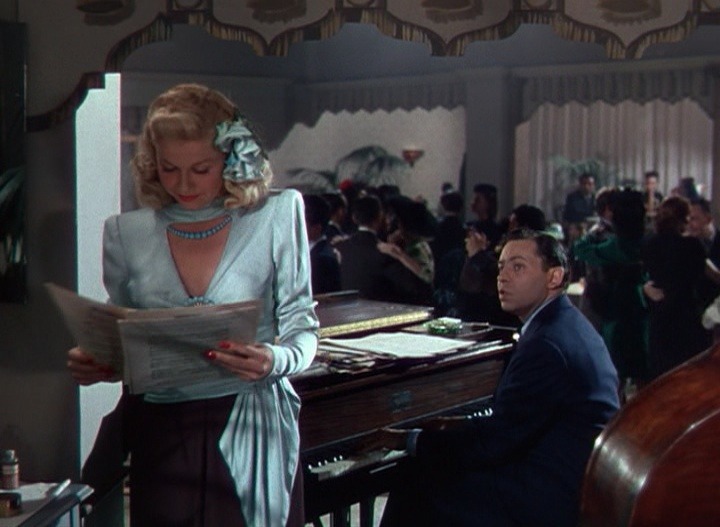
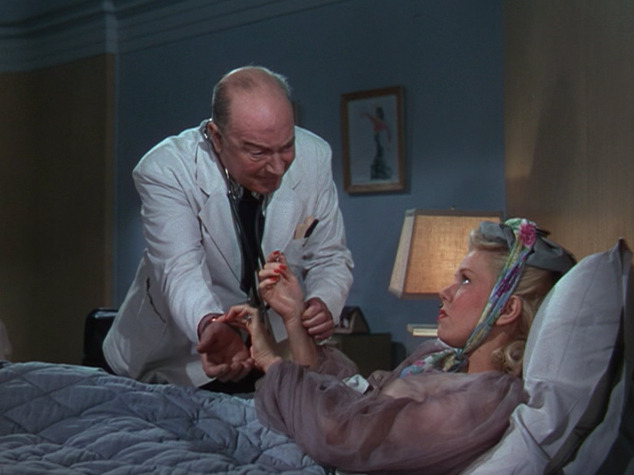
Os coadjuvantes são particularmente maravilhosos. S.Z. Sakall interpreta Lazlo Lazlo, tio de Elvira que adora paquerar mulheres jovens e rememorar o passado. Oscar Levant é Oscar Farrar, o pianista de cabaré que quer se casar com Georgia, e que vai causar problemas no cruzeiro. Uma sequência hilária acontece quando Eric Blore aparece interpretando um médico desastrado que provavelmente está bem pior do que qualquer um de seus pacientes. Grady Sutton como um operador de rádio no navio e John Berkes como um bêbado em Trinidad também farão você dar boas risadas.

The supporting cast is a particular treat. S.Z. Sakall plays Lazlo Lazlo, Elvira's uncle who loves to hit on girls and reminisce the past. Oscar Levant is Oscar Farrar, the pianist at the cabaret who wants to marry Georgia, and who will make things difficult at the cruise. A hilarious moment happens when Eric Blore appears playing a ship doctor that is clumsy and may be much sicker than his patient. Grady Sutton as a ship radio operator and John Berkes as a drunken man in Trinidad also give us a good laugh.
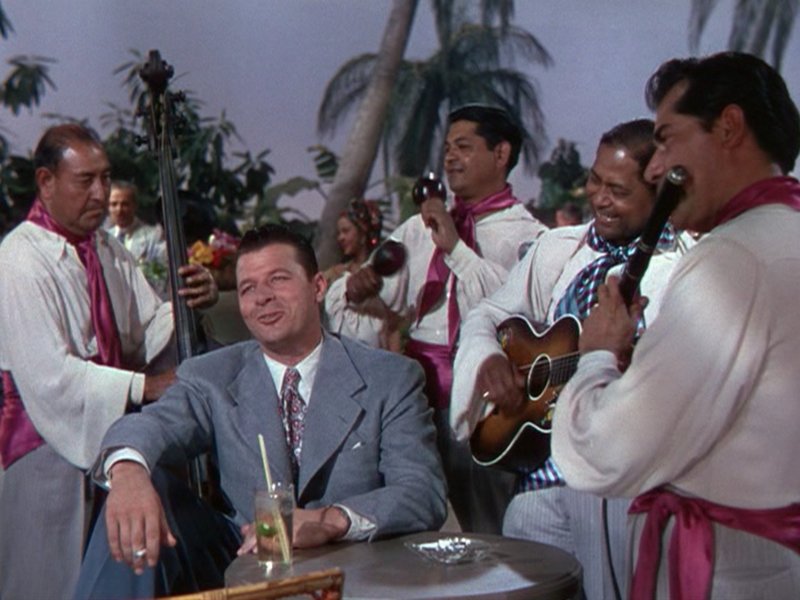
O cruzeiro tem paradas em Cuba, Trinidad e Rio de Janeiro. A maneira como o comércio é retratado em Cuba não é nem um pouco lisonjeiro, e causa alguma vergonha alheia. Em Trinidad, o Calypso é obviamente a atração principal. E no Rio há, claro, um baile de Carnaval! Pelo menos não há ninguém falando espanhol – uma garota é até vista falando português em uma cabine telefônica!

The cruise stops in Cuba, Trinidad and Rio de Janeiro. The way sales in Cuba are shown is not something flattering at all, and makes us uncomfortable watching. In Trinidad, the Calypso is obviously the main attraction. And in Rio of course there is a Carnival ball! Bonus points because no one speaks Spanish – a girl is even seen speaking Portuguese in a telephone booth!
Os personagens se hospedam no Hotel Atlântico. Embora tal hotel de fato exista e seja localizado na famosa praia de Copacabana, não h        á indícios na imprensa de que qualquer cena tenha sido filmada no Brasil. É bem mais provável que imagens de arquivo tenham sido usadas para o voo panorâmico pelo Rio de Janeiro, enquanto os atores ficaram bem longe da cidade maravilhosa.

The characters go to the Hotel Atlântico. Although this hotel exists and until today it is located at the famous Copacabana beach, there are no notes in the newspapers in magazines about shooting the film in Brazil. It’s quite obvious that archive footage was used for the panoramic view of the city, and the actors remained far away from our beaches and beauties.
Romance em Alto Mar” é um filme delicioso, embora previsível. E a trama sequer foi criada em Hollywood: ela se originou em um filme argentino de 1947, chamado “Mulher Infiel”, com Libertad Lamarque. Sim, meus amigos, “Romance em Alto Mar” é um remake!

Romance on the High Seas” is a delightful movie, although predictable. And the plot wasn’t created in Hollywood, since it originated with the Argentinian film “Romance Musical”, from 1947, starring Libertad Lamarque. Yes, my friend, “Romance on the High Seas” is a remake!
Original
Remake
Delicioso é a melhor palavra para descrever tanto “Romance em Alto Mar” quanto a estrela que o filme revelou. O mundo foi rapidamente conquistado pelo sorriso, charme e talento de Doris Day – e é adorável ver como tudo começou.

Delightful is the best word to describe both “Romance on the High Seas” and the star it helped reveal. The world was quickly conquered by Doris Day’s smile, charm and talent – and it’s lovely to see where it all started.

This is my contribution to The Second Doris Day Blogathon, hosted by Michaela at Love Letters to Old Hollywood.
Related Posts Plugin for WordPress, Blogger...