} Crítica Retrô

Tradutor / Translator / Traductor / Übersetzer / Traduttore / Traducteur / 翻訳者 / переводчик

Saturday, August 25, 2018

Esposas e Amantes (1963) / Wives and Lovers (1963)


Ah, os anos 60! A época da revolução sexual, da segunda onda do feminismo, da extinção do ridículo Código Hays... e Hollywood tinha de lidar com todos eles. De repente, temas mais polêmicos poderiam ser retratados em filmes... não, eles deveriam aparecer, porque a sociedade queria vê-los no cinema e porque eles faziam parte da realidade. De repente, um infiel não tinha de sofrer e ser condenado... e até uma comédia poderia ser feita com o tema infidelidade.

Oh, the 1960s! Time of the sexual revolution, of the second wave of feminism, of the end of the ridiculous Hays Code... And Hollywod had to deal with them all. Suddenly, more risky themes could appear in movies... no, they should appear, because society wanted them and because they mirrored the reality. Suddenly, a cheater didn't have to suffer and be condemned... and even a comedy could be made about cheating.


No começo, William ‘Bill’ Austin (Van Johnson) é um aspirante a escritor, que atualmente escreve um livro de receitas. Sua esposa Bertie (Janet Leigh) é quem traz dinheiro para casa, e ela trabalha em um consultório de dentista. Eles têm uma filha, uma peculiar garotinha de sete anos e ¾ de idade, Julie (Claire Wilcox). O ego masculino e frágil de Bill está machucado porque sua esposa trabalha fora e ele não, mas logo uma grande mudança acontece: a agente literária de Bill, Lucinda Ford (Martha Hyer) vende os direitos do romance de Bill para um clube de leitura e para uma peça.

At first, William 'Bill' Austin (Van Johnson) is a struggling writer, currently writing a cookbook. His wife Bertie (Janet Leigh) is the breadwinner of the house, and she works in a dentist's office. They have a daughter, the quirky seven and ¾ year-old Julie (Claire Wilcox). Bill's fragile male ego was hurt because his wife was working and he wasn't, until a big change happens: Bill's literary agent Lucinda Ford (Martha Hyer) sells Bill's novel's rights for a book club and a play.


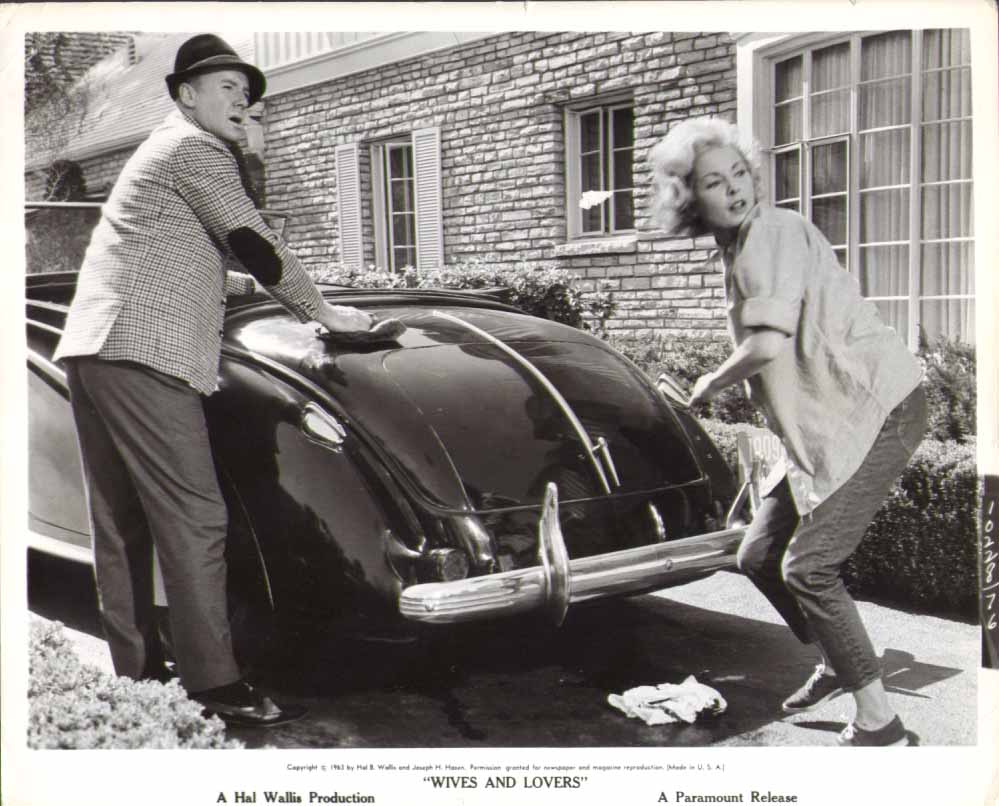
A vida da família muda completamente. Bill insiste para que eles se mudem do pequeno apartamento em Nova York para uma casa elegante em Connecticut. Lá eles conhecem os enxeridos vizinhos Fran (Shelley Winters) e Wylie (Ray Walston). Fran é divorciada – seu ex-marido é ator – e Wylie é um designer de interiores que vive na casa dos fundos de Fran. Eles são incríveis!

Their life changes completely. Per Bill's insistence, they move from a small New York apartment to a fancy house in Connecticut. There they meet nosy neighbors Fran (Shelley Winters) and Wylie (Ray Walston). Fran is divorced – her ex-husband is an actor – and Wylie is an interior decorator who lives in the smaller house on the back of Fran's home. They're a riot!
 
Nouveau riches
Bill começa a sair com Lucinda para aparecer em eventos sociais, deixando sua família de lado. Mas coisas só dão errado de fato quando Bill e Bertie oferecem um jantar em casa e convidam Fran, Wylie, Lucinda e o ator Gar Aldrich (Jeremy Slate), a estrela da peça que Bill está escrevendo. Quando Lucinda começa a paquerar Bill, Gar, que já havia namorado Lucinda, passa a paquerar Bertie.

Bill starts to go out with Lucinda to social gatherings, leaving his family behind. But things go really wrong when Bill and Bertie host a dinner party in their house, and the guests are Fran, Wylie, Lucinda and actor Gar Aldrich (Jeremy Slate), the star of the play Bill is writing. As Lucinda starts flirting with Bill, Gar, who used to date Lucinda, flirts with Bertie.


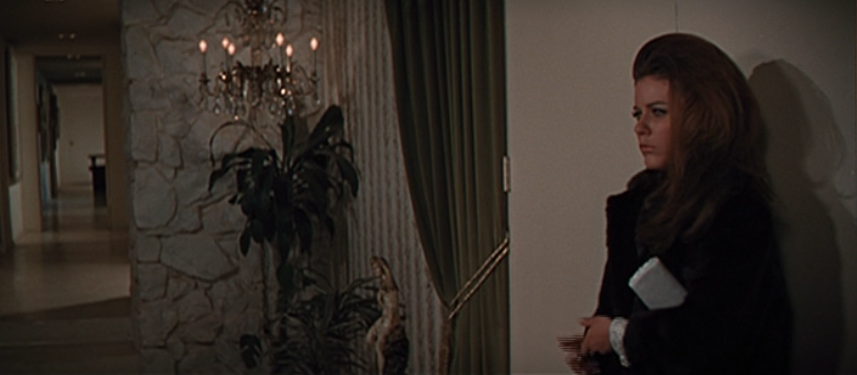
Era óbvio que o novo estilo de vida prejudicaria o casal. É possível ver isso em uma poderosa metáfora visual: depois de receber a notícia de que os direitos do romance haviam sido vendidos, Bill imediatamente compra para Bertie o casaco chique que Lucinda estava usando. Bertie é deixada na cozinha, e coloca um avental por cima do casaco chique – a nova vida e a velha vida entram em confronto em uma imagem.

It was obvious that the new lifestyle would harm the Austins. You can see this in a powerful visual metaphor: after receiving the news that his novel's rights were sold, Bill buys Bertie the fancy coat Lucinda is wearing and goes out to celebrate. Bertie is left in the kitchen, and puts an apron over the fancy coat – it's the old life and the new life clashing in one image.


Todos os atores estão muito bem em cena. “Esposas e Amantes” é uma comédia romântica sobre sexo, como aquelas estreladas por Doris Day e Rock Hudson, e temos algumas gags divertidas, como o aparelho de som sofisticado de Bill, que ele não consegue ligar, mas todos os outros conseguem.  Também gostei de quando Wylie fabricou um móvel antigo artificialmente. Julie é provavelmente a fonte da maioria das piadas. Suas perguntas de criança são engraçadas, mas para mim o mais engraçado é seu hábito de só comer se os alimentos não estiverem tocando uns aos outros – isto é, ela come um sanduíche só se os ingredientes vierem em pratos separados.

Everybody delivers very good performances. “Wives and Lovers” is a sex comedy, like the ones with Doris Day and Rock Hudson, and we have some funny gags, like Bill's fancy sound stereo that he apparently can't turn on, but almost everybody else can. I also enjoyed when Wylie fabricated an antique piece of furniture artificially. Julie is probably the source of the most jokes. Her childish questions are funny, but for me the funniest thing is her habit of only eating when her food is not touching each other on the plate – that means, she eats a sandwich only if the ingredients come in separate plates.
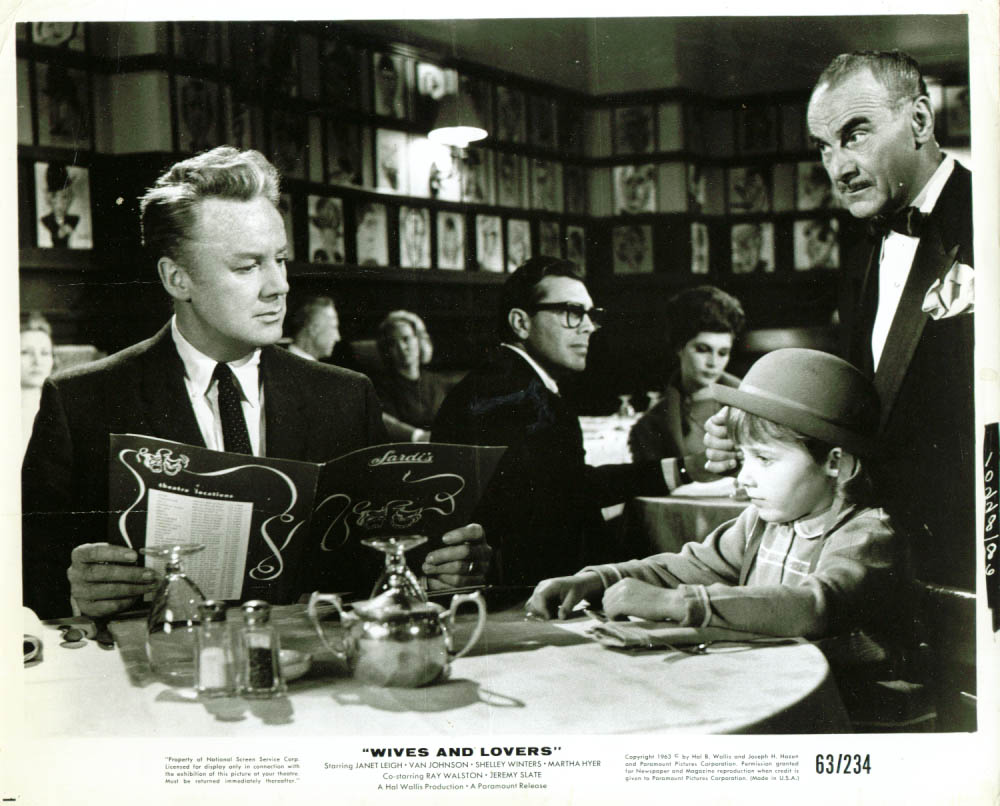

Van Johnson é um charme como Bill. Janet Leigh brilha como Bertie. É interessante notar que ela menciona que a sociedade queria que ela se sentisse como “pão mofado”, como uma mulher que não podia mais ser desejada – e Leigh tinha apenas 36 anos quando o filme foi feito! De fato, o interesse de Gar é um obstáculo na relação do casal Austin, mas também é uma oportunidade para Bertie perceber que ela é uma mulher linda e desejável. Aliás, a química de Leigh e Johnson não é surpresa: eles eram bons amigos, e foi o próprio Van Johnson que sugeriu a Jeanette Helen Morrison o nome artístico de Janet Leigh em 1947, quando ela fazia com ele seu primeiro filme, “Reconcilização”.

Van Johnson is charming as Bill. Janet Leigh shines as Bertie. It's interesting to notice that she mentions that society wanted her to feel like if she was “like molded bread”, like a woman that couldn't be desired anymore – and Leigh was only 36 when the film was made! Indeed, Gar's courtship is an obstacle in the Austin's relationship, but it is also an opportunity for Bertie to realize that she is a gorgeous, desirable woman. By the way, the chemistry between Leigh and Johnson is no surprise, since they were god friends, and it was Johnson himself who suggested for Jeanette Helen Morrison the screen name Janet Leigh in 1947, when she was making her first film, “The Romance of Rosy Ridge”.
 
1947
1963
“Esposas e Amantes” é cheia de altos e baixos. Eu gostei do fato de que tanto o marido quanto a esposa são tentados a trair, por isso não há julgamento, falso moralismo ou outras bobagens. Eu não gostei do fato de que alguns personagens masculinos, em especial Wylie, têm de ser rudes e tratar as mulheres mal para serem levados a sério por elas. Eu realmente detestei alguns momentos sexistas, como esta horrível “piada” dita por Shelley Winters: “Estuprada e desmembrada. Por que não se pode ter um sem o outro?”

“Wives and Lovers” is a series of hits and misses. I liked the fact that both the husband and wife are tempted to cheat, so there is no judgment, fake morals or other bullshit. I disliked the fact that some male characters, in special Wylie, had to be rude and mistreat women in order to be taken seriously by then. I completely disliked some sexist moments like the horrible joke uttered by Shelley Winters: “Raped and dismembered. Why can't you have one without the other?”
 
Director John Rich with Johson, Slate and Leigh
Você deve conhecer a música “Wives and Lovers”, que foi gravada pela primeira vez no mesmo ano em que o filme estreou. A música de Burt Bacharach e Hal David foi, na verdade, inspirada pelo filme! Foi uma “exploitation song”, uma canção composta para ajudar na divulgação do filme, mas sem fazer parte de sua trilha sonora. Hoje, a música é bem mais conhecida que o filme, mas eu não acredito que sua letra expresse a mesma complexidade das relações como o filme faz.

You may be familiar with the song “Wives and Lovers”, that came out the same year the film did. The song by Burth Bacharach and Hal David was actually inspired by the movie! It was an exploitation song, a song composed to help promote a film, but not appearing on it. Today, the song is much better known if compared to the film, but yet I don't think the lyrics express the same complexity of relationships as the movie does.


“Esposas e Amantes” deveria ser mais conhecido. Porque todos precisam de uma amiga como a personagem de Shelley Winters. Porque a ausência de julgamento moral em um filme dos anos 60 é algo raro. Porque é melhor que outras comédias românticas sobre sexo da época – estou falando da terrível “Amor Daquele Jeito”, também de 1963, que desperdiça Paul Newman e Joanne Woodward. Porque o trailer de “Esposas e Amantes” nos engana e promete bem mais conteúdo sexual do que realmente entrega. E porque todos precisamos dar risada de vez em quando.

“Wives and Lovers” should be better known. Because everybody needs a friend like Shelley Winter's character. Because no moral judgment in a 1960s movie is something rare. Because it is better than other sex comedies of the time – I'm thinking about the awful “A New Kind of Love”, also from 1963, a film that wastes Paul Newman and Joanne Woodward. Because the trailer for “Wives and Lovers” is deceiving and promises a sexual feast that doesn't happen. And because we all need a laugh once in a while.

This is my contribution to the Second Van Johnson blogathon, hosted by Michaela at Love Letters to Old Hollywood.

Thursday, August 23, 2018

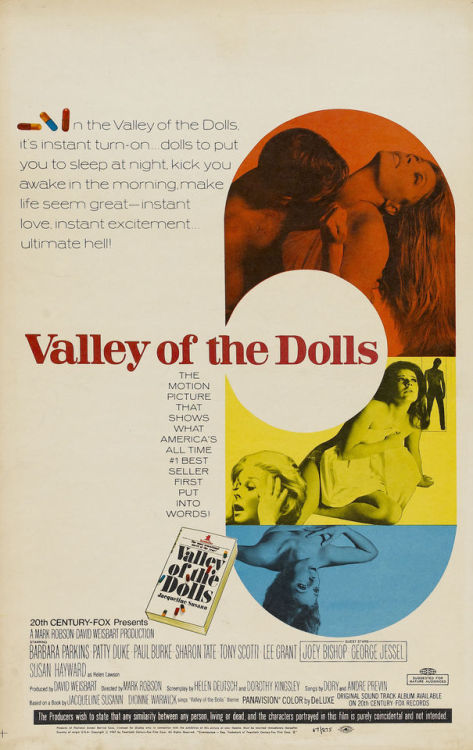
O Vale das Bonecas (1967) / Valley of the Dolls (1967)


Sempre que um livro é best-seller, seus direitos de adaptação são rapidamente comprados por Hollywood. Isso aconteceu com “O Vale das Bonecas”, um romance que vendeu 10 milhões de cópias em seu lançamento - até hoje, considerando os relançamentos e traduções, 31 milhões de cópias do livro já foram vendidas ao redor do mundo. Por isso, eu peguei a cópia da minha mãe e a li, e depois vi o filme para comparar.
Whenever a book is a bestseller, its adaptation rights are quickly snatched by Hollywood. This happened with “Valley of the Dolls”, a novel that sold 10 million copies when it was first released - until now, considering all the reprints and translations, 31 million copies of the book were sold around the world. So, I grabbed my mom’s copy and read it, and then watched the movie in order to compare both.


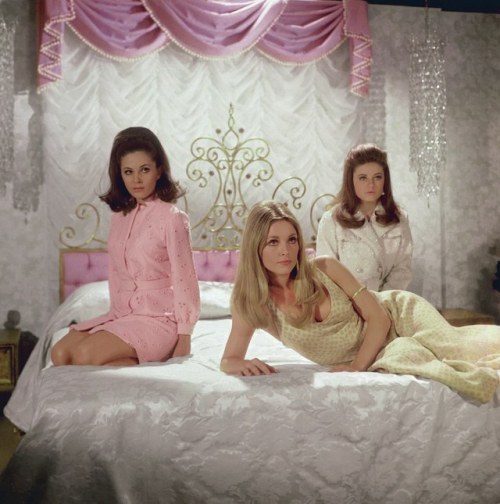
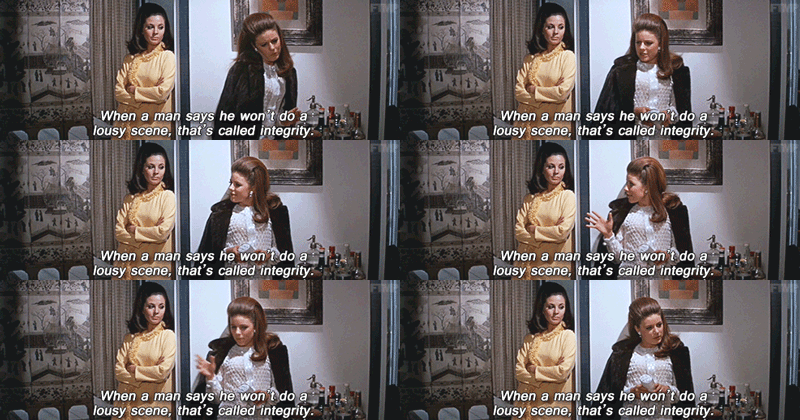
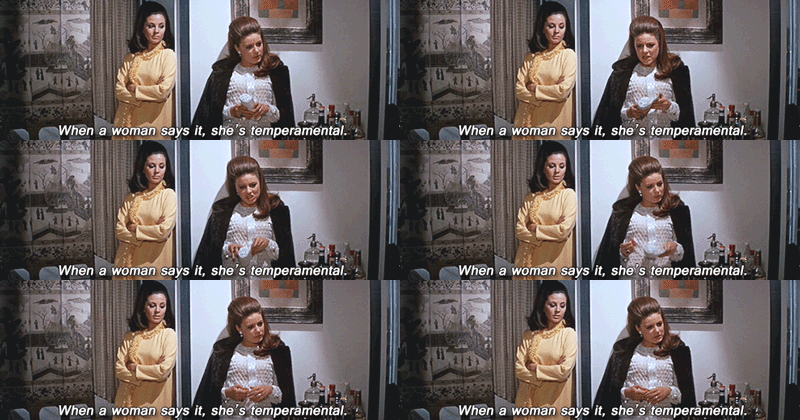
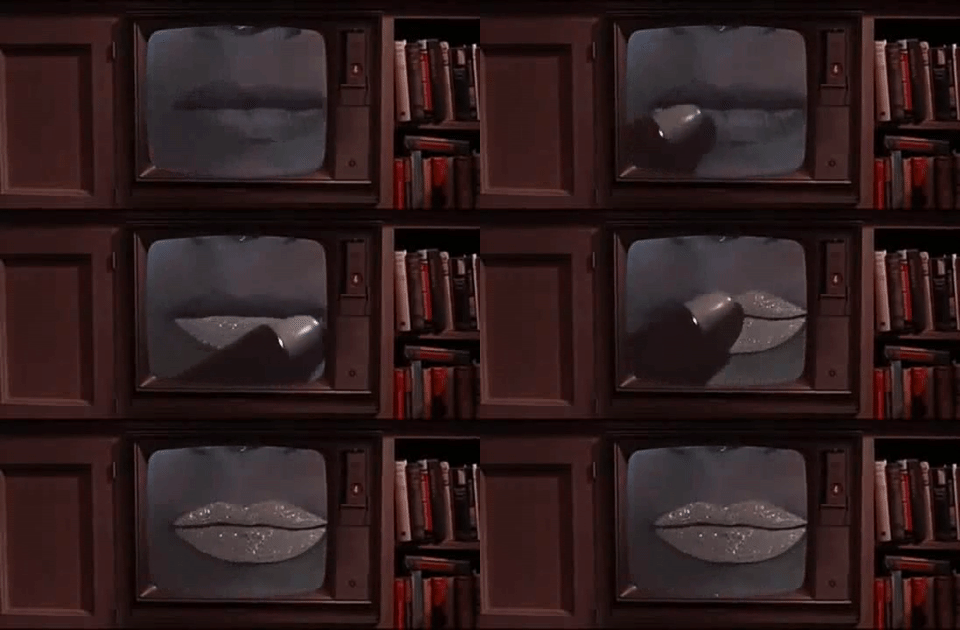
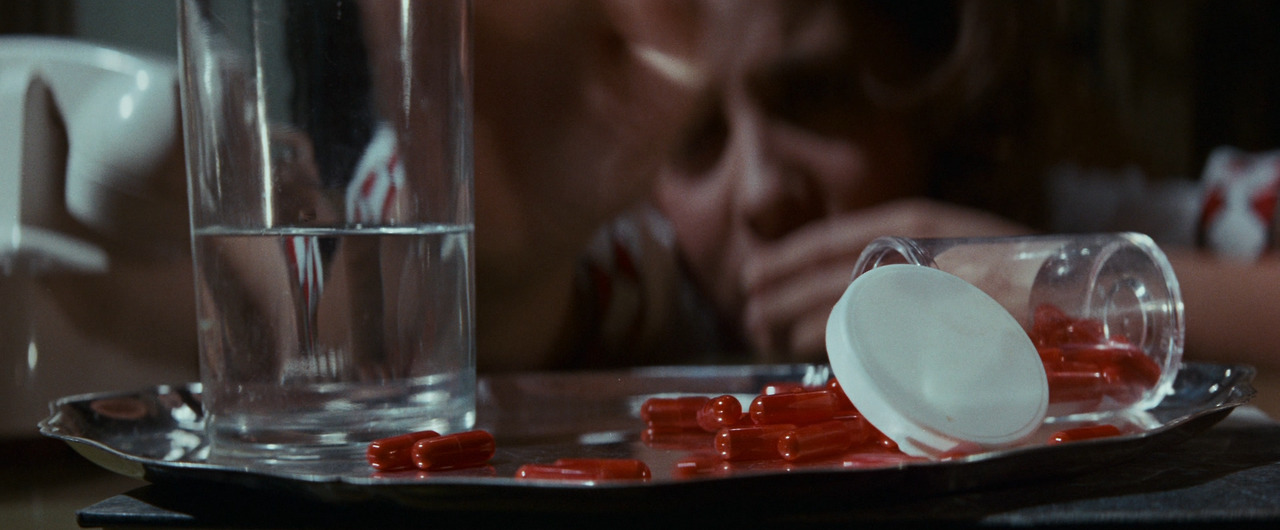
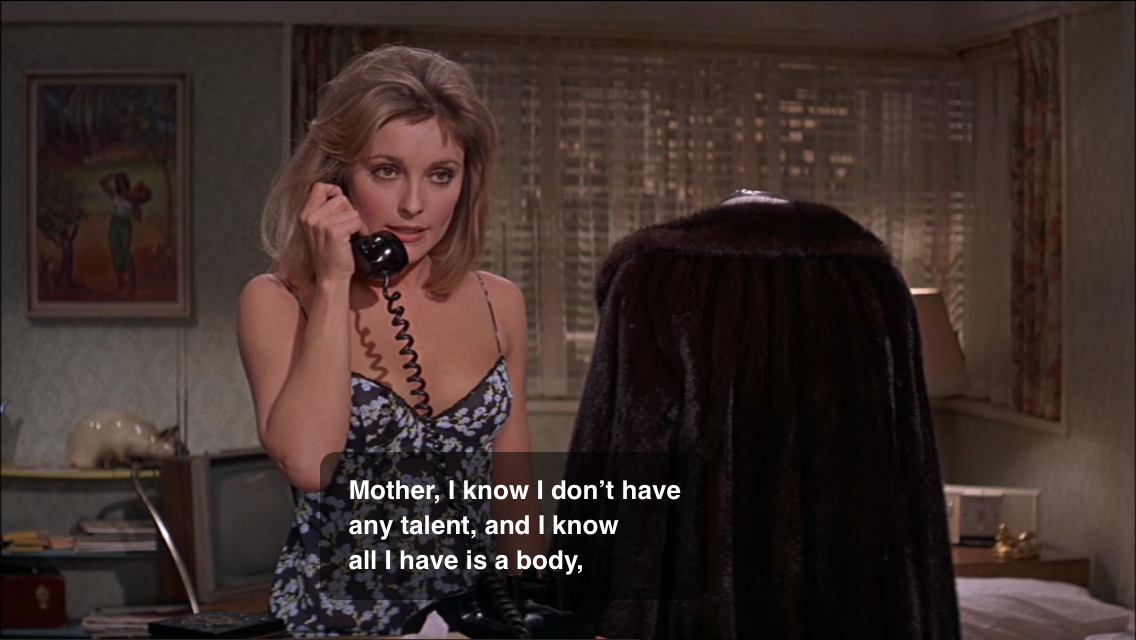
No começo, temos Anne Welles (Barbara Parkins), que acabou de chegar à Nova York para trabalhar para um agente de talentos, Neely O’Hara (Patty Duke), uma garota-prodígio vinda de uma família do show business, e Jennifer North (Sharon Tate), uma garota com um corpo estonteante e um grande coração. Anne se apaixona pelo mulherengo Lyon Burke (Paul Burke), Neely faz estrondoso sucesso e Jennifer se apaixona pelo cantor Tony Polar (Tony Scotti), cuja irmã e agente, Miriam (Lee Grant), desaprova o romance. Neely é quem enfrenta mais problemas, pois, como grande estrela, fica viciada em remédios - pílulas que ela chama de “bonecas”. Cedo ou tarde, todas as garotas têm problemas com estas pílulas.

In the beginning, we have Anne Welles (Barbara Parkins), who just arrived in New York to work for a talent agent, Neely O’Hara (Patty Duke), a prodigy girl from a show business family, and Jennifer North (Sharon Tate), a girl with a gorgeous body and a big heart. Anne falls in love with ladies’ man Lyon Burke (Paul Burke), Neely has a big break and Jennifer falls in love with singer Tony Polar (Tony Scotti), whose sister and agent, Miriam (Lee Grant), disapproves the relationship. Neely has the toughest battles to face, because, as a big star, she starts taking pills - that she calls dolls - for everything: sleeping, waking up, losing weight, having energy and so on. Eventually, all the girls have a little trouble with pills.


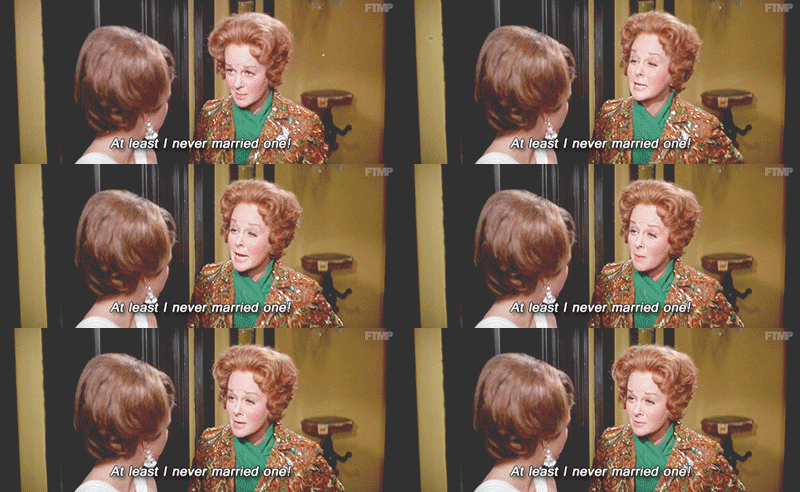
Tudo acontece muito rápido no filme. Por exemplo: Anne conhece a diva do teatro Helen Lawson (Susan Hayward) nos primeiros dez minutos. Isso só acontece após umas 100 páginas no livro. E Anne conhece Neely no teatro, enquanto no livro elas são vizinhas de apartamento em NY. Anne ajuda muito Neely no livro, e Neely costuma mostrar seu lado mais juvenil quando conversa a sós com Anne.

Everything happens too quickly in the movie. For instance: Anne meets theater diva Helen Lawson (Susan Hayward) in the first ten minutes. This only happens after about 100 pages in the book. Also, Anne meets Neely at the theater, and in the book they’re actually neighbors, living in the same building in NY. Anne helps Neely a lot in the book, and Neely often shows her childish side when she is alone chatting with Anne.


Uma coisa boa, entretanto, é a ausência de Allen Cooper, primeiro namorado de Anne no livro. Allen é um milionário machista que diz que Anne se casará com ele, mesmo quando ela protesta e diz que não o ama. Ele simplesmente afirma que ela vai se casar com ele, e que ela sairá do emprego, e que ela será mãe de seus filhos. Allen era um embuste.

A good thing, however, is the absence of Allen Cooper, Anne’s first boyfriend in the book. Allen is a sexist millionaire who says Anne will marry him, even if she often protests and says she doesn’t love him. He simply says she will marry him, and will leave her job, and will have his kids. Allen was a disgusting guy.


No livro, Anne se torna amiga de Helen Lawson, que viu na garota a única pessoa em que poderia confiar. Isso dura pouco, mas é importante porque dá início à amizade entre Anne e Jennifer. Como o filme foca em casais e comportamento autodestrutivo, eu senti falta da amizade entre as três protagonistas.

In the book, Anne became friends with Helen Lawson, who saw in the girl the only person she could trust. This lasted little time, but it was important because it was the beginning of the friendship between Anne and Jennifer. Since the movie focused on couples and self-destructive behavior, I missed the friendship between the three female leads.


O livro começa em 1945 e termina 20 anos depois. O filme não menciona nenhum período de tempo, mas a moda, os cabelos e os objetos da todos dos anos 60. Há mais mudanças, mas estas são as principais que podem ser mencionadas sem que eu dê spoilers.

The book starts in 1945 and ends 20 years later. The movie has no time period mentioned, but the fashion, hairstyles and props are all from the 1960s. There are more changes, but these are the main ones that can be mentioned without giving spoilers.


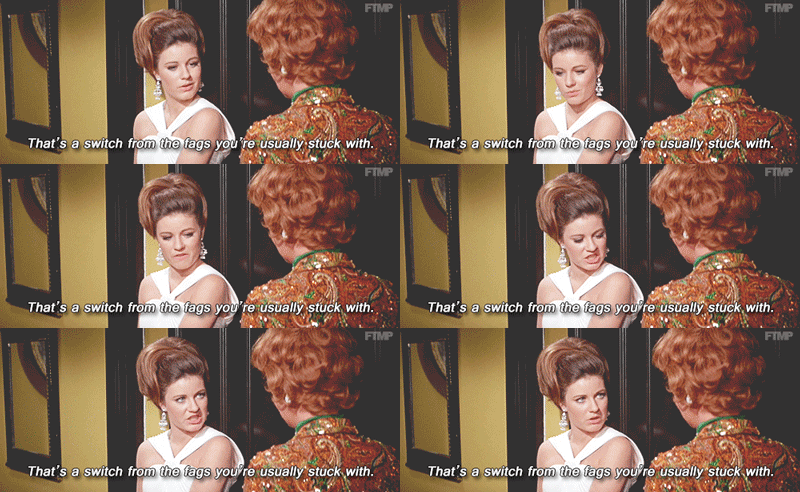
O passado e o primeiro casamento de Jennifer - que foi apenas por dinheiro - não são mostrados no filme, embora algumas coisas polêmicas sejam mencionadas, como aborto e “bichas”. O Código Hays estava agonizando, mas ainda não estava morto.

Jennifer’s background and first marriage - for money only - were not shown in the movie, although some risky things are mentioned, like abortion and “queers” and “fags”. The Production Code was agonizing, but not yet dead.


Eu não gostei de como Anne menciona que “pertence” ao homem que ama. Este é um conceito antiquado presente tanto no livro quanto no filme - e BEM MAIS no livro. Isto e as “bichas” mencionadas pejorativamente são as piores coisas no livro, e mostram uma visão retrógrada da autora Jacqueline Susann.

I didn’t like how Anne said she “belonged” to the man she loved. It was an old-fashioned concept that was present both in the movie and the book - A LOT more in the book. This and the “fags” mentioned in a bad way are the worse things in the book, presenting author Jacqueline Susann’s retrograde vision.


Não há dúvida de que Neely é a estrela do filme e Patty Duke, a melhor em cena. Sua narrativa sobre sua passagem por um sanatório é horrorizaste - considerando que uma das outras pessoas lá havia sido internada porque era homossexual. Paul Burke não tem o que é preciso para ser o Lyon Burke descrito no livro - um homem que enfeitiça todas as mulheres que o veem. Acredito que Robert Redford teria sido uma escolha muito melhor.

There is no doubt that Neely is the star of the movie and Patty Duke, the best actress in scene. Her account of her time in the sanitarium is horrifying - considering that one of the other people there was institutionalized because she was a homosexual. Paul Burke doesn’t have what it takes to be the Lyon Burke described in the book - a man that bewitches all women that look at him. I believe Robert Redford would have been a much better choice.


A trilha sonora foi composta por John Williams, que mais tarde teria uma longa e brilhante parceria com Steven Spielberg. Aqui o diretor é o abusivo Mark Robson, que havia dirigido, uma década antes, o bem-sucedido e polêmico “A Caldeira do Diabo” (1957), e era uma escolha óbvia para a adaptação de “O Vale das Bonecas” - mesmo considerando que o filme seria melhor com Douglas Sirk na direção.

The soundtrack was composed by John Williams, who would later have a long and brilliant partnership with Steven Spielberg. Here the director is the abusive Mark Robson, who had directed, one decade earlier, the successful and polemic “Peyton Place” (1957), and was an obvious choice for the adaptation of “Valley of the Dolls” - even though it’d have been better as a Douglas Sirk movie.


Eu vejo problemas tanto no livro quanto no filme. Em muitos momentos no livro, eu pude apontar erros de tradução e adivinhar qual era a palavra original que causou o erro. A autora Jacqueline Susann odiou o filme, e muitos críticos concordaram com ela. Mesmo assim, “O Vale das Bonecas” foi l maior sucesso de bilheteria da Fox naquele ano. Tanto o livro quanto o filme não são tão ruins quanto se fala por aí, mas também não são obras-primas. Eles são agradáveis de se ler e de se ver - e provavelmente a melhor parte é tentar adivinhar qual celebridade real inspirou cada personagem.

I see problems in both the book and the movie. In many moments in the book, I could point translation mistakes and guess which were the original terms that originated the mistakes. Author Jacqueline Susann hated the finished film, an opinion shared by many critics. Nevertheless, “Valley of the Dolls” was Fox’s top money-making film of the year. Both the novel and the film are not as bad their fame, but they’re not masterpieces either. They are fun to read and write - and probably the funniest part is guessing which real-life celebrity inspired each character.

This is my contribution to the Lovely Lee Grant blogathon, hosted by Gill at Realweegiemidget Reviews and Chris at Angelman's Place.


Tuesday, August 14, 2018

Grande Hotel (1932) / Grand Hotel (1932)

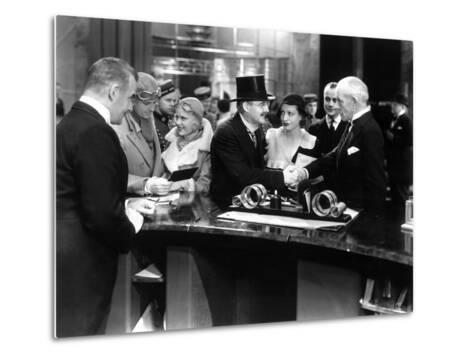
“Grande Hotel” não precisa de propaganda – nem o filme nem o local. O Grande Hotel é o hotel mais caro da Alemanha, como diz o personagem de Lionel Barrymore. “Grande Hotel”, o filme, é uma aula magna sobre o star system, e tem a estranha honra de ser o único filme a ser indicado apenas à categoria de Melhor Filme no Oscar e ganhá-la.

“Grand Hotel” doesn't need marketing – neither the film nor the place. The Grand Hotel is the most expensive one in Germany, as Lionel Barrymore's character says. “Grand Hotel”, the movie, is basically Star System 101, and has the odd glory to be the only film to receive a single Oscar nomination – for Best Picture – and win it, the most prestigious category.


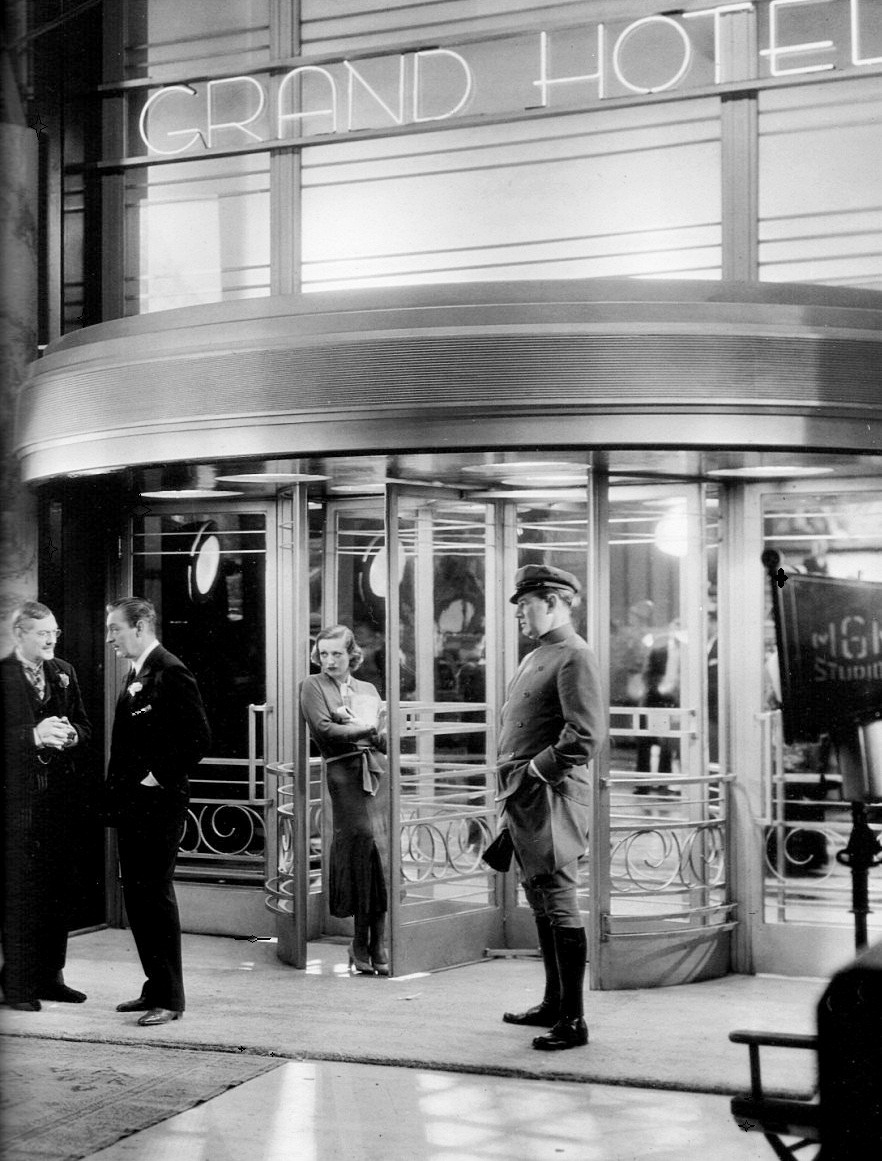
“Grande Hotel” é realmente grandioso devido à soma de suas partes – que merecem ser analisadas individualmente. Devemos começar com o visual do hotel: o estilo art déco é fantástico, e os ângulos de câmera escolhidos para mostrá-lo são de tirar o fôlego – especialmente quando estamos nos andares superiores e vemos a recepção do hotel de cima. Por trás desta façanha visual estão o diretor de fotografia William H. Daniels e, em especial, o diretor de arte Cedric Gibbons.

“Grand Hotel” is really grand because of the sum of its parts – and they are worth analyzing individually. We must start by the overall hotel look: the art déco style is amazing, and the shots used to showcase it are breathtaking – in special when we see the hotel lobby from above. The ones responsible for this impressive look are cinematographer William H. Daniels and, in special, art director Cedric Gibbons.


Os personagens nos são apresentados em uma sequência frenética, cheia de idas e vindas, passando de um para outro, conforme eles conversam ao telefone. A editora responsável por juntar todas as conversas é a legendária Blanche Sewell da MGM – se você fez o curso “Mad About Musicals” do TCM, você já está familiarizado com ela.

The characters are first presented to us in a frantic sequence, going back and forth, from one to the other, as they talk on the phone. The editor responsible for putting all the conversations together was the legendary MGM editor Blanche Sewell – if you took the Mad About Musicals TCM Course, you are familiar with her.


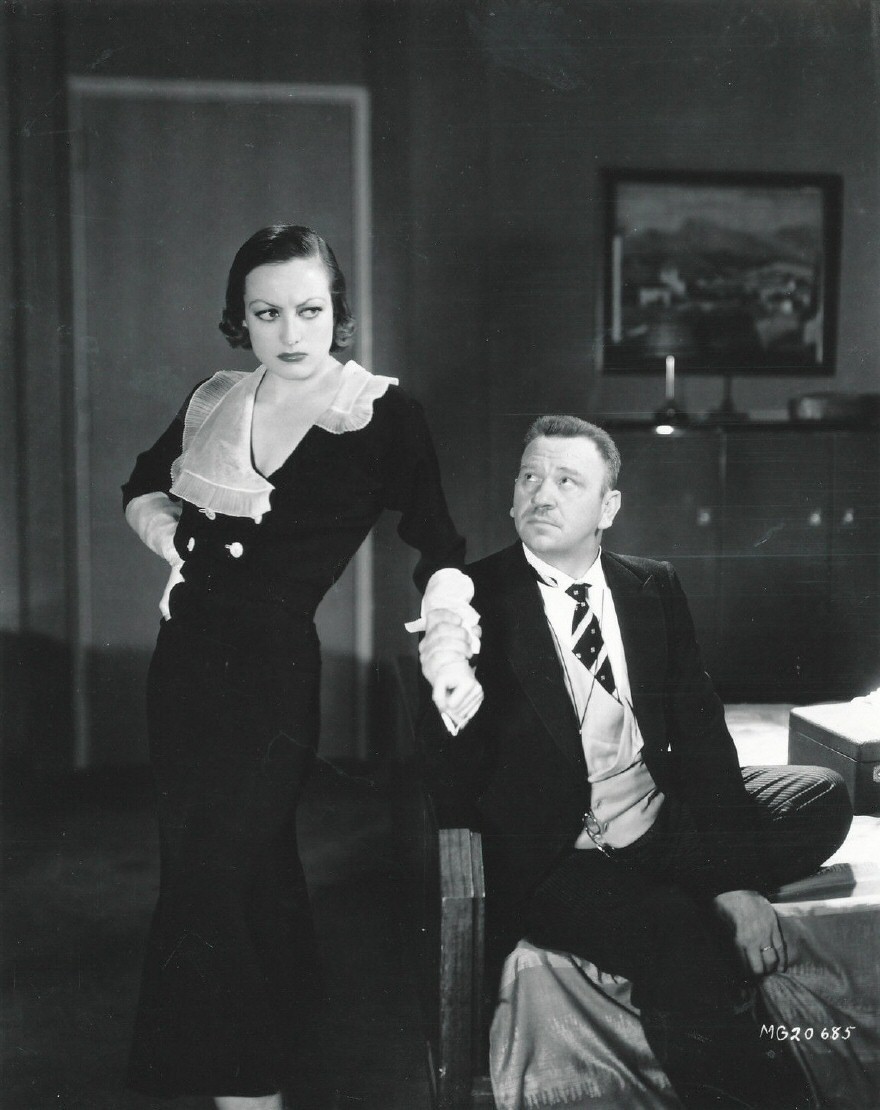
O personagem mais simpático é o simplório e pobre Otto Kringelein (Lionel Barrymore), o funcionário de uma fábrica que tem pouco tempo de vida, e decide passar suas últimas semanas no Grande Hotel. Como bônus, ele vê que seu antigo patrão, Preysing (Wallace Beery), também está hospedado lá, e decide lhe dizer na cara todas as verdades inconvenientes que ele tinha vontade de falar.

The nicest character is the simple and poor Otto Kringelein (Lionel Barrymore), a factory worker who learns he has little time to live, and decides to spend this time at the Grand Hotel. As a bonus, he sees his former employer, Preysing (Wallace Beery) there, and decides to say everything he always wanted to him – like in a bucket list.


Preysing está lá para assinar uma importante fusão de empresas, e para isso ele precisa de uma estenografa – para trabalhar para ele e também para lhe proporcionar algum “divertimento”. Ele contrata a senhorita Flaemmchen (Joan Crawford), uma moça jovem e pobre que logo atrai a atenção do Barão Felix Von Geigern (John Barrymore), um vigarista que está mais interessado na rica e deprimida bailarina Grusinskaya (Greta Garbo) – prova viva de que dinheiro e fama não trazem felicidade.

Preysing is there to sign an important merger, and for this he needs a stenographer – to both work for him and to be a pleasure toy. He hires Miss Flaemmchen (Joan Crawford), a young and penniless lady who quickly attracts the attention of the Baron Felix von Geigern (John Barrymore), a crook more interested in the rich and miserable ballerina Grusinskaya (Greta Garbo) – the living proof that fame and money don't bring happiness.


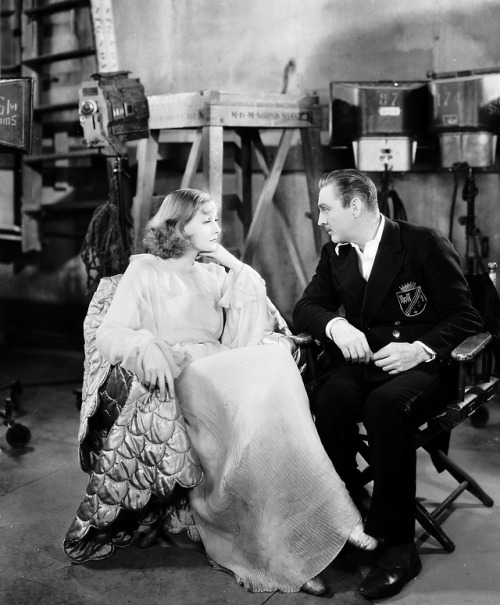
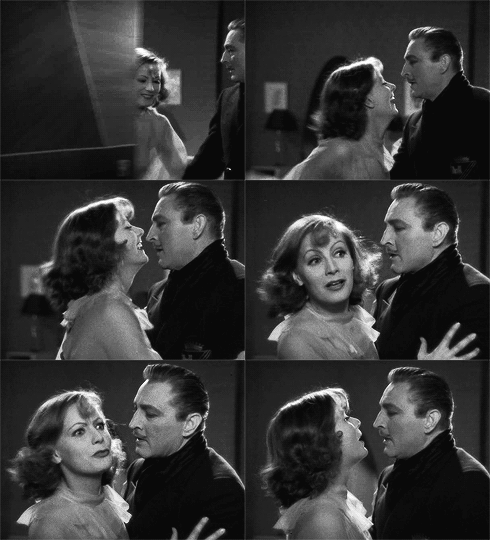
O Barão quer roubar o colar de pérolas de Grusinskaya, e quando ele finalmente consegue, ele a encontra mais triste que nunca. Pensando em voz alta, ela fala em suicídio, e o Barão intercede. O que acontece a seguir? Eles se apaixonam. Ver Greta Garbo e John Barrymore juntos na tela, interpretando um casal tão apaixonado, é uma das mais maravilhosas experiências que um cinéfilo pode vir a ter. A performance de Garbo, num primeiro momento, não parece natural, mas quando Grusinskaya se apaixona pelo Barão, ela exala uma excitação jovial, tão infantil e ao mesmo tempo tão verdadeira.

The Baron wants to steal Grusinskaya’s pearl necklace, and when he finally does it, he finds her sadder than ever. She talks about suicide to herself, and the Baron stops her. What happens next? They fall in love. Seeing Greta Garbo and John Barrymore together on the screen, playing a couple so in love, is one of the most wonderful experiences a film buff can have. Garbo’s acting is not natural at first, but when Grusinskaya falls for the Baron she exudes a youthful excitement, so silly and yet so true.


No hotel também está o doutor Otternschlag (Lewis Stone), um homem amargo que foi médico na guerra e tem uma cicatriz por causa disso – e a cicatriz foi inclusive contaminada com difteria após a guerra, o que levou o doutor Otternschlag a ficar dois anos internado, em quarentena. No hotel há também um jovem casal em lua de mel, os Hoffmans. Eles chegam no final do filme e, de fato, Mary Carlisle, que interpreta a senhora Hoffman, foi a última do elenco a fazer o check-out: ela faleceu recentemente, aos 104 anos.

At the hotel there is also Doctor Otternschlag (Lewis Stone), a bitter man who was a war doctor and has a wound to prove it – a wound that was even contaminated with diphtheria after the war, what cost Doctor Otternschlag two years institutionalized, away from society. There is also a young couple on honeymoon, the Hoffmans. They arrive by the end of the movie and, indeed, Mary Carlisle, who plays Mrs. Hoffman, was the last one of the cast to make a check-out: she just passed away recently, at 104.
 
Mary Carlisle is next to Lionel Barrymore
Otto Kringelein é meu personagem favorito. Ele é a personificação da palavra “puro”. Ele se sente feliz e sortudo pela primeira vez na vida – ele está VIVENDO pela primeira vez na vida. Kringelein gosta muito de Flaemmchen e do Barão, e é adorável ver os dois irmãos Barrymore contracenando e adicionando um pouco de amor fraternal às performances. Ah, e Kringelein também gosta muito de Louisiana Flips – um drink esquisito com rum, licor, suco de laranja, xarope de frutas vermelhas e um ovo cru... eca.

Otto Kringelein is my favorite character. He is the real definition of pure. He is feeling happy and lucky for the first time in his life – he is LIVING for the first time of his life. Kringelein is very fond of Flaemmchen and the Baron, and it’s lovely to see the two Barrymore brothers acting together and letting a little of their brotherly love be translated to the screen. Oh, and Kringelein really like Louisiana Flips – a weird drink with rum, liquor, orange juice, raspberry syrup and a raw egg… ew.


No final, Kringelein diz que “há um Grande Hotel em todos os lugares do mundo”. De fato, os temas do filme são universais – e não há dúvidas de que o tema principal é dinheiro. Para ganhar dinheiro, as pessoas fazem qualquer coisa – até mesmo renunciam às qualidades que as tornam humanas. Não importa a idade ou classe social, todos nós estamos fadados a ser escravos do dinheiro – e isso era mais que verdadeiro se considerarmos que a peça “Grande Hotel” foi escrita durante a República de Weimar. Quanto da condição escravizante do dinheiro mudou desde então? Veja esta obra-prima e tire suas próprias conclusões.

In the end, Kringelein says that “there is a Grand Hotel everywhere in the world”. Indeed, the themes of the movie are universal – and there is no doubt that the main theme is money. In order to get money, people do anything – even renouncing to what makes us humans. No matter the social class or the age, we all are doomed to be slaves to the money – and this was more than true considering that the play “Grand Hotel” was written during the Weimar Republic. How much has the enslaving condition of money changed since then? Watch this true masterpiece and take your own conclusion.

This is my contribution to the Fourth Annual Barrymore Trilogy blogathon, hosted by Crystal at In the Good Old Days of Classic Hollywood.
Friday, August 3, 2018

As Oito Vítimas (1949) / Kind Hearts and Coronets (1949)


Um ator interpretando mais de um personagem na mesma peça é algo comum no teatro. Também é comum no cinema, desde a era muda. Obviamente, com o tempo tudo pôde ficar mais interessante, e em vez de apenas dois papéis, um ator podia interpretar três – como Peter Sellers em “Doutor Fantástico”, de 1964 – ou mais papéis. Minha pesquisa descobriu que o ator que interpretou a maior quantidade de papéis em um só filme foi Michael Palin em “Monty Python em Busca do Cálice Sagrado” (1975) – ele interpretou DOZE personagens (embora possamos dizer que Buster Keaton interpretando todos na cena do concerto em “The Play House”, de 1921, perfaça mais que 12 personagens). Alec Guinness não ficou com o recorde no livro do Guinness (hahaha), mas ele fez proeza semelhante à de Palin 26 anos antes.

An actor playing more than one role in the same play is something common in theater. It is also common in film, since the silent era. Of course, with time things could become more interesting, and instead of the standard two roles, one actor could play three – like Peter Sellers in “Doctor Strangelove”, from 1964 – or more roles. My research found that the actor that played the most roles in a single film was Michael Palin in “Monty Python and the Holy Grail” (1975) - he played TWELVE characters (although it can be said that Buster Keaton playing everyone in the music hall scene from 1921's “The Play House” outnumbers 12). Alec Guinness didn't get the Guinness Book record (see what I did?), but he preceded Palin's prowess by 26 years.


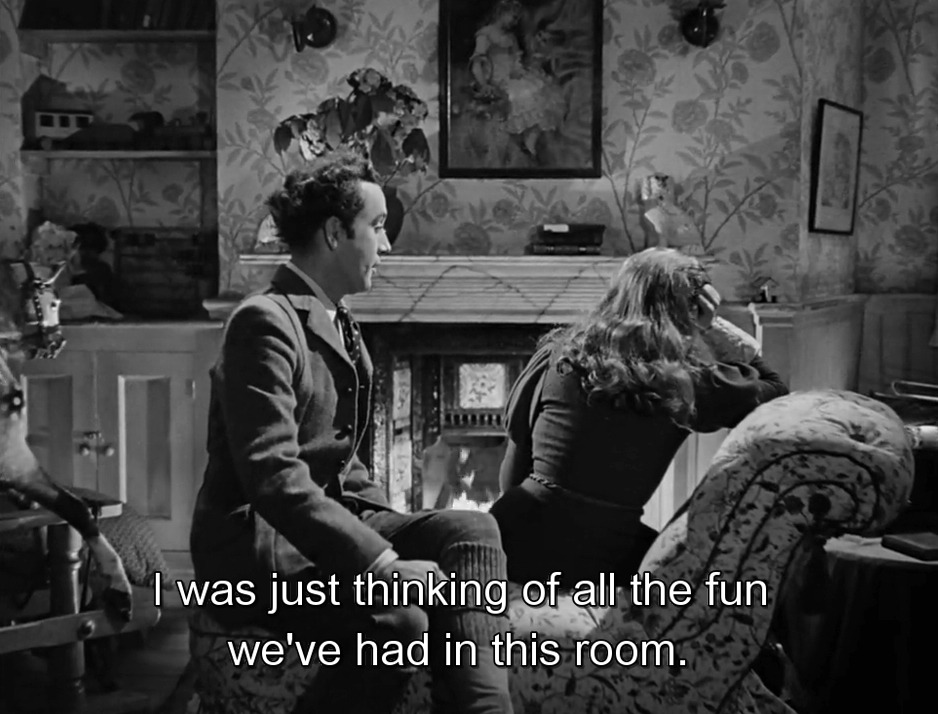
Na cadeia, na noite anterior à sua execução, Louis (Dennis Price) conta sua história. Começa o flashback. Louis é filho de um cantor italiano e de uma nobre inglesa que fugiu para se casar. O pai de Louis morreu quando ele nasceu, e a família da mãe a rejeitou. Ela criou Louis com dificuldade, mas sempre o lembrando de que ele era um duque. Também rejeitado pela família D’Ascoyne, Louis começa a trabalhar numa loja de tecidos e sofre quando sua mãe morre e também quando a moça de quem ele gosta, Sibella (Joan Greenwood), o rejeita.

In the jail, the night before being executed, Louis (Dennis Price) tells his story. Enters the flashback. Louis is the son of an Italian singer and an English noblewoman who eloped and left her family. His father died when he was born, and his mother's family wouldn't accept her back. She raised Louis with difficulty, but she always reminded him that he was a Duke by birth. Also rejected by the D'Ascoyne family, Louis goes to work as a draper and suffers when his mother dies and also when the girl he loves, Sibella (Joan Greenwood), rejects him.


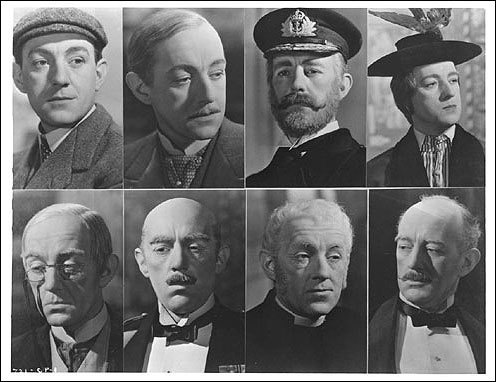
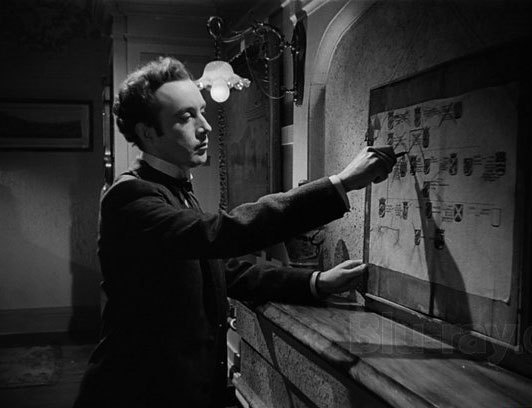
É aí que ele se lembra de algo que Mamãe disse uma vez: se 12 pessoas da família D’Ascoyne morressem, ele seria o herdeiro. Então Louis começa a ler o obituário diariamente na esperança de que essas pessoas tenham morrido – até que ele decide terminar o trabalho sozinho e matar os últimos oito membros da família D’Ascoyne – todos interpretados por Alec Guinness.

Then he remembers something Mama once said: if some 12 people from the D'Ascoyne family dropped dead, he would be the heir. So Louis starts reading the obituary daily in the hope to see those people dead – until he decides to finish the job himself and kill the last eight D'Ascoynes – all played by Alec Guinness.


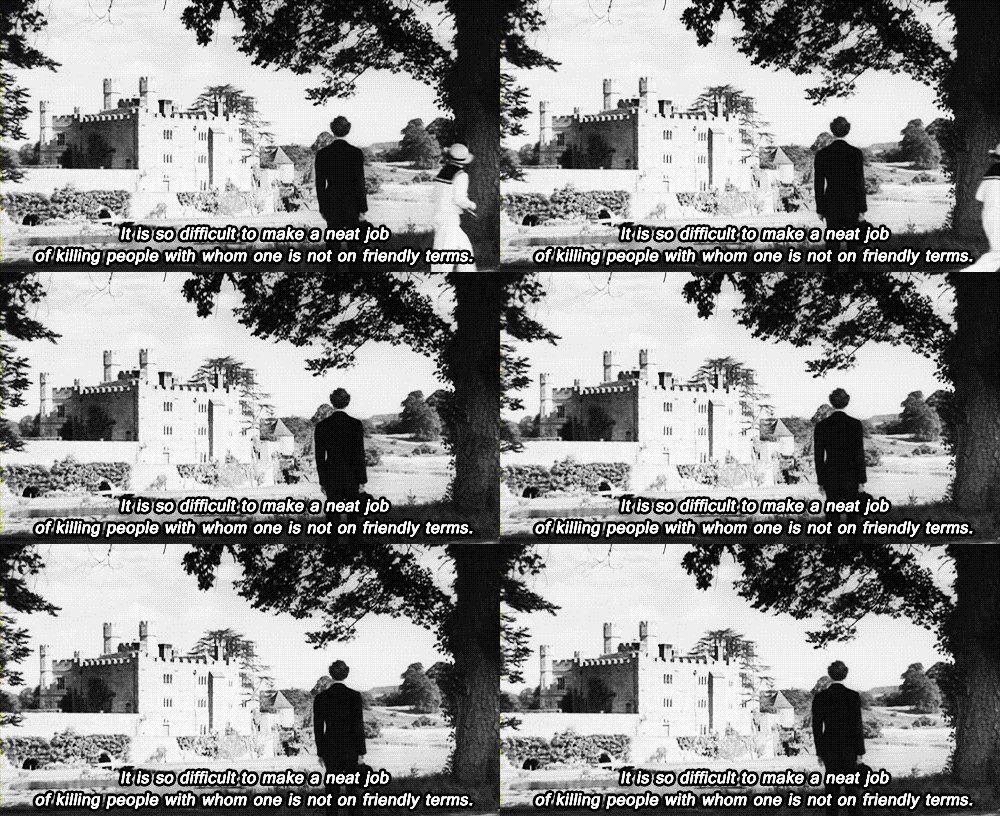
O primeiro encontro e a primeira morte são fruto do acaso, e dali em diante Louis começa a planejar sua vingança. Seus planos mudam um pouco quando ele se interessa por Edith (Valeria Hobson), viúva de uma das vítimas. É ela que diz a frase que dá o título original do filme em inglês.

The first meeting and killing is by chance, and from then on Louis starts plotting his revenge. His plans change a bit, of course, when he becomes interested in Edith (Valerie Hobson), the widow of one of his victims. She is the one to quote the original film title.


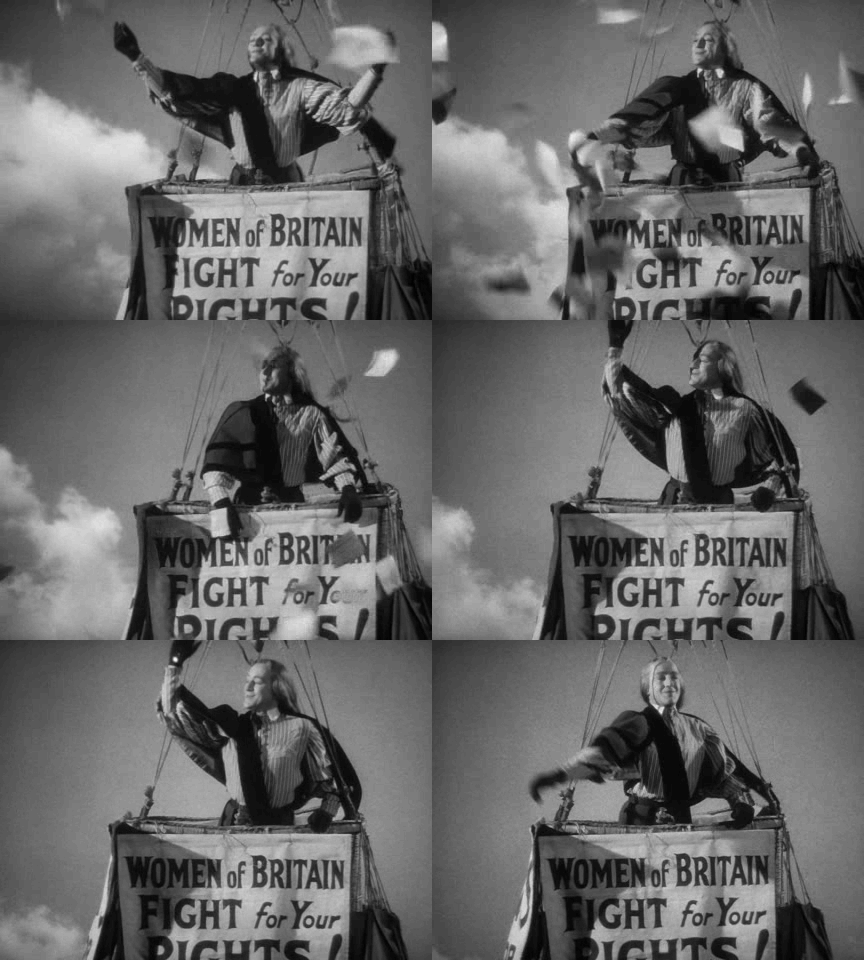
“As Oito Vítimas” prova o que nós já sabemos: que Alec Guinness é um ator muito, muito bom. E não é que ele se parece um pouco com Lon Chaney quando está caracterizado como o fotógrafo de 24 anos – que parece ter bem mais do que 24 anos? Também é divertido ver Guinness interpretando uma mulher, Agatha D’Ascoyne, uma sufragista em uma sequência breve e sem falas.

“Kind Hearts and Coronets” proves what we already know: that Alec Guinness is a very, very good actor. And doesn't he look a bit like Lon Chaney when he plays the 24-year-old photographer – who looks WAY older than 24? It's also fun to see Guinness as a woman, Agatha D'Ascoyne, a suffragette in a very brief sequence without lines.


Logo antes de fazer este filme, Alec Guinness interpretou Fagin em “Oliver Twist” (1948), um papel que também exigiu transformação física com maquiagem e perucas. Obviamente, isso foi muito pouco se comparado com as oito caracterizações de “As Oito Vítimas”. Originalmente, Guinness ia interpretar apenas três membros da família D’Ascoyne, mas ele insistiu em interpretar todos os oito – desafiando pessoas da indústria do cinema que não acreditavam que Alec poderia ser uma grande estrela de cinema.

Right before making this film, Alec Guinness played Fagin in “Oliver Twist” (1948), a role for which he also underwent physical transformation with make-up and wigs. Of course, this was very little next to the eight characterizations in “Kind Hearts and Coronets”. Originally, Guinness was going to play three members of the D’Ascoyne family, but he insisted on playing all eight – thus defying the people in the film industry who though Alec couldn’t become a big film star…


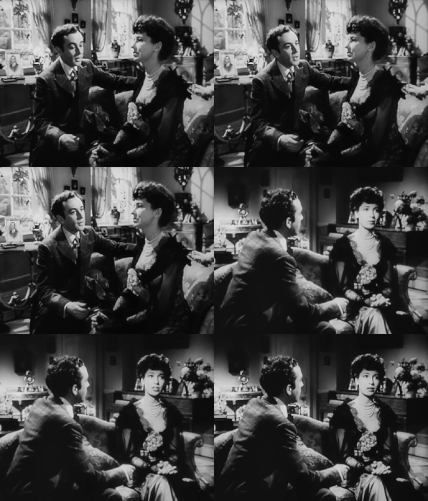
Quando Louis se oferece para se casar com Edith, depois de respeitado o período de luto, temos uma interessante composição de cena: entre Edith e Louis, conversando, há a cadeira do falecido marido, nunca mais usada após a morte dele – é a presença invisível atravancando os planos de Louis. Mas um diálogo posterior revela que Louis na verdade ama Sibella, com quem ele ainda se encontra, mesmo ela sendo casada.

When Louis offers himself to marry Edith, after the grief period is over, we have an interesting disposal of the props: between Edith and Louis, as they talk, there is the late husband's chair, never used again after his passing – it’s the invisible presence working against Louis’s plans. But a later dialogue reveals that Louis really loves Sibella, who he's still seeing, even though she is married.


O filme foi produzido por Michael Balcon – fundador dos estúdios Balcon-Saville-Fredman e Gainsborough Pictures, estúdios onde Hitchcock trabalhou na era muda, e também avô de Daniel Day-Lewis – e dirigido por Robert Hamer. Hamer também adaptou o livro para a tela, e ficou muito animado por poder fazer um filme diferente de todos que já haviam sido feitos na Inglaterra. Balcon mais tarde disse que “As Oito Vítimas” era seu filme favorito feito nos estúdios Ealing, e aquele que resistiria ao teste do tempo – como de fato aconteceu.

The film was produced by Michael Balcon – founder of the Balcon-Saville-Freedman studios and Gainsborough Pictures, where Hitchcock worked in the silent era, and also Daniel Day-Lewis's grandfather – and directed by Robert Hamer. Hamer also adapted the novel to the screen, and was more than excited to be able to make a film unlike any other ever made in England. Balcon later said that “Kind Hearts and Coronets” was his favorite film made at Ealing studios, and the one that would certainly stand the test of time – as it did.


“As Oito Vítimas” se passa durante a era Eduardiana, o que significa que você verá muitos figurinos maravilhosos – eu até prefiro a moda da Era Eduardiana à da Era Vitoriana, simplesmente porque eu imagino que os vestidos da década de 1910 são mais confortáveis. Sibella e Edith usam lindos vestidos – mesmo sendo de classes sociais diferentes, não vejo muita diferença no figurino das duas, talvez apenas nos acessórios.

“Kind Hearts and Coronets” is set during the Edwardian era, which means that you'll see many wonderful outfits – I actually prefer the Edwardian fashion to the Victorian fashion, simply because I imagine the 1910’s dresses to be more comfortable. Sibella and Edith both wear beautiful dresses - even though they are from different classes, I don’t see much difference between their outfits, maybe only between their accessories.


SPOILERS!

Sagaz, charmoso e surpreendente – porque Louis NÃO foi condenado à morte por causa dos assassinatos! – “As Oito Vítimas” sofreu com a idiotice do Código Hays. Como o Código exigia que todos os crimes fossem punidos – algo MUITO LONGE da realidade – uma cena teve de ser adicionada ao final de “As Oito Vítimas” quando o filme estreou nos EUA, tirando o brilhantismo de seu roteiro. Felizmente, o cinema se livrou desta bobagem e hoje nós podemos, e devemos, apreciar “As Oito Vítimas” em toda sua glória britânica original e

Witty, charming and surprising – because Louis was NOT condemned to be killed because of the murders! – “Kind Hearts and Coronets” suffered with the Production Code’s idiocy. Because the Code demanded all crimes in film to be punished – something FAR AWAY from the truth – a scene had to be added to the ending of “Kind Hearts and Coronets” when it was released in the US – destroying the brilliant screenplay. Thankfully, cinema got rid of this nonsense and now we can, and must, appreciate “Kind Hearts and Coronets” in all its original unapologetic British glory.

P.S.: Depois de escrever o post, fiquei sabendo de algumas façanhas ainda maiores alcançadas no cinema mudo: em 1916, o ator Marcel Perez interpretou DEZESSEIS personagens no curta-metragem "A Busy Night", que ele mesmo dirigiu, e em 1929 Lupino Lane interpretou VINTE E QUATRO personagens e dirigiu "Only Me"!

P.S.: After writing this post, I got to know about even bigger prowesses accomplished in silent cinema: in 1916, actor Marcel Perez played SIXTEEN character in the short film "A Busy Night", directed by himself, and in 1929 Lupino Lane played TWENTY-FOUR characters and directed the aptly titled "Only Me"!

This is my contribution to the Rule Britannia Film Blogathon, hosted by Terence at A Shroud of Thoughts.

Related Posts Plugin for WordPress, Blogger...