Tradutor / Translator / Traductor / Übersetzer / Traduttore / Traducteur / 翻訳者 / переводчик
Monday, January 30, 2023
Minha Morena Linda (1947) / My Favorite Brunette (1947)
Bob Hope foi um
dos artistas mais populares do século XX. Em seus 100 anos de vida, ele fez
quase 100 filmes, muitas vezes interpretando a si mesmo. Ele também teve
destaque levando entretenimento às tropas norte-americanas em guerras, o que
garantiu a ele o título de veterano honorário - foi a única pessoa a receber
esta honraria. Ver Hope em ação é sempre uma delícia, e um de seus filmes mais
facilmente disponíveis é “Minha Morena Linda” (1947), que é o assunto de nosso
post de hoje.
Bob Hope was one of the
most popular entertainers of the 20th century. In his 100 years of life, he
appeared in almost 100 movies, many times as himself. He was also a pro at
entertaining the US troops in wars, which made him become an honorary US veteran
- the only person to receive this honor. Seeing Hope in action is always
entertaining, and one of his most easily available movies is “My Favorite
Brunette” (1947), which is the subject of today’s post.
Encontramos
Ronnie Jackson (Bob Hope) pela primeira vez quando ele está prestes a ser
executado na prisão de San Quentin. Um grupo de repórteres chega para
entrevistá-lo e animá-lo, dizendo que ele é um cara durão, e ele decide contar
sua história num flashback com narração voiceover. Ele costumava trabalhar como
fotógrafo de bebês, mas sonhava em se tornar um detetive durão - igualzinho a
Humphrey Bogart, em suas próprias palavras.
We first meet Ronnie
Jackson (Bob Hope) when he’s about to be executed in the San Quentin prison. A
group of reporters come over to interview him and cheer him up, saying he’s a
tough guy, and he decides to tell his story in a flashback with voiceover
narration. He used to be a baby photographer, but dreamed about becoming a
hard-boiled detective - just like Humphrey Bogart, in his own words.
Um amigo detetive
não aceita que Ronnie seja seu sócio, mas deixa que ele atenda ligações
telefônicas em seu escritório na sua ausência. É em um desses momentos que
entra Carlotta Montay (Dorothy Lamour), uma mulher rica que quer contratar um
detetive para encontrar seu marido, que está desaparecido. Ronnie segue
Carlotta até uma mansão onde ele descobre que as coisas são um pouco mais
complicadas do que pareciam. Lá ele é apresentado a diversos tipos, como o
mordomo Kismet (Peter Lorre), e inicia sua investigação.
A detective friend doesn’t
accept Ronnie as a partner, but lets him enter his office to take phone calls
when he’s away. It’s in one of these moments that enters Carlotta Montay
(Dorothy Lamour), a rich woman who wants to hire a detective to find her missing
husband. Ronnie follows Carlotta to a mansion where he realizes things are a
bit more complicated than they first seemed. There he is introduced to several
characters, like the butler Kismet (Peter Lorre), and initiates his
investigation.
Como muitos
outros detetives famosos, Ronnie tem uma geringonça especial para fazer seu
trabalho: uma câmera de fechadura que ele mesmo inventou. E ele tem muitos
inimigos em sua cola, incluindo Kismet - Peter Lorre num papel que exigia dele
nada além de parecer sinistro, algo em que ele é muito bom, como foi possível
ver em “M - O vampiro de Dusseldorf” (1931), de Fritz Lang - e o nem tão
ameaçador Willie, interpretado por Lon Chaney Jr.
Like many other famous
detectives, Ronnie has a special gadget to do his work: a keyhole camera he
invented himself. And he has many enemies after him, including Kismet - Peter
Lorre in a role that demanded from him nothing more than looking sinister,
something he’s very good at, as we could see in Fritz Lang’s “M” (1931) - and
the not-so-threatening Willie, played by Lon Chaney Jr.
Apenas um ano após o termo “filme
noir” ser usado pela primeira vez pelos franceses, Hollywood já estava fazendo
paródia do gênero. Claro, eles ainda estavam classificando estes filmes como “filmes
de detetives durões”, mas são paródias claras. Duas coisas que o filme noir tem
em comum com “minha Morena Linda” são os já mencionados flashback e narração em
voiceover, mas podemos adicionar à lista: o detetive - uma participação
especial bem bolada -, o mistério complexo e a femme fatale que não é tão “fatale”
assim aqui.
Only one year after the
term “film noir” was used by the first time the French, Hollywood was already making
fun of the genre. Of course, they were still labeling these pictures as
“hard-boiled detective films”, but they are parodies anyway. Two things film
noir has in common with “My Favorite Brunette” are the aforementioned flashback
structure and voiceover narration, but we can add to the list: the detective -
a very wise cameo -, the convoluted mystery and the femme fatale that is not so
“fatale” in here.
Conta-se que Bob
Hope conheceu Dorothy Lamour em 1932, quando ela era cantor num bar de hotel de
Nova York. Com Lamour e Bing Crosby - que Bob também conheceu em 1932 - Bob
Hope fez a famosa série de filmes “Road to...”. Nessas comédias, havia
elementos de outros gêneros e Hope em geral não ficava com a garota no final:
ela preferia ficar com o mais charmoso da dupla, ou seja, Crosby. Hope tentou
inverter essa situação em seus filmes solo, como em “Minha Morena Linda”.
Como ele mesmo, Bob Hope fez cerca de mil aparições
na TV e no cinema - isso sem contar no rádio, onde ele também era figurinha
carimbada. Ele também apresentou os Oscars 18 vezes. Hope fez uma aparição no
Show dos Muppets e participou de alguns especiais dos Muppets rodados na
Inglaterra, terra natal de Hope. Diversos clipes de “Minha Morena Linda” foram
usados em um episódio da série Muppets Babies.
As himself, Bob Hope counts
about a thousand appearances on TV and film - not counting radio, where he was
a pro as well. He also hosted the Oscars 18 times. Hope appeared at The Muppet
Show and guest starred in some Muppets specials shot in England, Hope’s
motherland. Several clips of “My Favorite Brunette” were used in a Muppets
Babies episode.
Com muita ação e humor, “Minha
Morena Linda” é uma paródia sólida e divertida dos filmes de detetives durões
que eram populares na década de 1940. É um filme em domínio público, o que o
faz ser facilmente encontrado numa simples busca no YouTube. É um filme que
começa e termina com boas risadas - algo que Bob Hope era mestre em entregar
para o público.
With a lot of action and
humor, “My Favorite Brunette” is a solid and entertaining parody of the
hard-boiled detective movies that were popular in the 1940s. It’s a film on the
public domain, which makes it pop up several times in a simple YouTube search,
and a film that starts and ends with good laughs - something Bob Hope was a
master at.
This is my contribution to
The Great Muppet Guest Star Caper blogathon, hosted by Gill and Rebecca from RealWeegieMidgtet Reviews and Taking Up Room.
Friday, January 27, 2023
Verdens Undergang (1916) / The End of the World (1916)
Vamos começar pelo fim do mundo. Nós, como um grupo
de humanos, sempre abominamos o fim. Também
pensamos muito em situações que significariam o fim para grandes grupos de
pessoas ao mesmo tempo, seja ou não no mesmo lugar. Obras de ficção sobre o fim
do mundo são muito numerosas para uma só lista, mesmo se considerarmos apenas o
cinema como veículo para essas obras.
Desde a aurora do cinema, o comecinho da sétima arte, o fim do mundo foi
filmado – como nos dois filmes sobre Pompéia que estrearam em 1913. Estamos
agora três anos no futuro, e não na Itália, mas na Dinamarca, para analisar
outro filme sobre o “fim do mundo” – que, aliás, foi o título que o filme
recebeu nos EUA.
Let’s start with the end of the world. We, as a group of humans, always dreaded the end. We also have put a lot of thought into situations that would mean the end for large groups of people at the same time, whether it was or wasn’t at the same place. Fictional works about the end of the world are too numerous to list, even in the film realm. Since the dawn of cinema, the very beginning of the seventh art, the end of the world was there being filmed - like in the two films about Pompeii released in 1913. We go three years in the future, and not in Italy, but in Denmark, to analyze another movie about the end of the world - by the way, this was the title it received in the US.
Tudo
começa como um dia normal numa cidade mineradora. O gerente da mina, West (Carl
Lauritzen), tem duas filhas, Dina (Ebba Thomsen) e Edith (Johanne
Fritz-Petersen), que gostam de se divertir tanto quanto qualquer moça. Numa
festa dançante local, Dina conhece Frank Stoll (Olaf Fønss), o dono da mina local, que promete a ela
riquezas e belezas numa vida na capital. Curiosa, Dina foge para se casar com
ele.
Everything starts as a
normal day in a mining town. The mine manager West (Carl Lauritzen) has two
daughters, Dina (Ebba Thomsen) and Edith (Johanne Fritz-Petersen), who like to
have fun as any normal young women do. At a local dancing party, Dina meets
Frank Stoll (Olaf Fønss), the owner of the local mine, who showers her with
promises of a beautiful life in the capital. Tempted, Dina agrees to elope.
Corta para
alguns anos no future. Stoll é bem-sucedido e fiel a Dina, embora ela pareça um
pouco entediada com a vida de casada. O primo de Stoll, Professor Paul Wisemann
(K. Zimmerman), um cientista, descobre um novo cometa que vai entrar na
atmosfera da Terra. As notícias sobre o cometa causam frisson na bolsa de
valores, onde Stoll trabalha, e Stoll decide que os negócios exigem uma viagem
de volta à cidade mineradora onde ele e Diana se conheceram, onde um velho pretendente
dela ainda está com raiva de Stoll por ter “roubado sua garota”.
Cut to a few years later.
Stoll is successful and faithful to Dina, although she seems a bit bored with
married life. Stoll’s cousin, Professor Paul Wisemann (K. Zimmerman),
scientist, discovers a new comet that is supposed to enter Earth’s atmosphere.
The news about the comet cause mayhem in the stock market, where Stoll works,
and Stoll decides that business demands him back at the mining town where he
and Dina met, where a former sweetheart of hers is still bitter about Stoll
“stealing his girl”.
Provocante,
Stoll dá uma festa para celebrar a passagem do cometa e o “novo mundo” que virá
com ele. Do lado de fora, trabalhadores decidem agir como Robin Hood em sua
última noite na Terra – roubando dos ricos para dar aos pobres. Stoll também
fez um bunker para ele e Dina na mina. E então o cometa passa. A ambição de
Stoll dará frutos?
Provocative, Stoll throws a
party to celebrate the passage of the comet and the “new world” that will come
with it. Outside, workers decide to act like Robin Hood on their last night on
Earth - stealing the rich to give the poor. Stoll has also made a bunker for
him and Dina in the mine. And then the comet comes. Will Stoll’s greed pay off?
Incêndios,
eliminação de gases tóxicos, nível dos oceanos aumentando: consequência do
cometa em “Verdens Undergang), mas também consequências do atual aquecimento
global. Parece que o fim do mundo é mais pacífico quando ele acontece aos
poucos e não de uma vez, e pessoas não se abalam a não ser quando a tragédia acontece
de repente. Somos tão falhos em relação a isso que precisamos de uma adolescente
como Greta Thunberg para nos alertar e lutar por nós, porque decidimos nos
sentar e ver o mundo queimando lentamente em vez de agir pensando a longo
prazo.
Fires, elimination of toxic
gas, ocean levels on the rise: consequences of the comet in “The End of the
World”, but also consequences of the ongoing global warming. It looks like the
end of the world is more peaceful when it happens slowly and not all at once,
and people aren’t alarmed unless the tragedy strikes suddenly and at once. We
are so messed up that we need a teenager like Greta Thunberg to alarm us and
fight for us, because we decided to sit down and see the world burning slowly
instead of acting thinking on the long run.
Os cientistas
decidem manter em segredo a notícia sobre o perigo do cometa, para não alarmar
o público, mas o Professor Wisemann conta tudo para seu primo Stoll, e Stoll
conta para o diretor do jornal Times. A ideia de Stoll é acalmar as pessoas
para que as cotações da bolsa de valores voltem ao normal e ele enriqueça. Cientistas
debatendo se uma descoberta é perigosa demais para ser publicada não é nada
novo nem uma coisa do passado, pois vimos algo parecido com os primeiros
alertas sobre a pandemia de Covid-19. É um debate que ainda não foi decidido, e
sempre deve ser levantado por todas as partes interessadas – em geral, isso
inclui todo mundo.
The scientists decide to
keep the news of the comet’s danger secret, to not alarm the public, but
Professor Wisemann tells his cousin Stoll, and Stoll tells the editor of the
Times newspaper. Stoll’s idea is to calm people down so the stock market gets
back to normal and he becomes richer. Scientists debating if a discovery is too
dangerous to be made public is nothing new nor a past thing, as we saw something
like this with the first warnings about the Covid-19 pandemic. It’s a debate
not yet settled, and always in need to be discussed by all interested parties -
which usually includes everyone.
Para um filme que
tem apenas 77 minutos de duração, “Verdens Undergang” toma um bom tempo para
introduzir os personagens e construir a trama antes do aparecimento do cometa.
O filme também usa sombras e truques de luz de maneira excelente nas cenas
dentro da mina / bunker. Os efeitos especiais são também muito bons, e eu
adoraria saber se as cenas de Edith andando por uma cidade destruída foram
gravadas em estúdio ou em alguma locação próxima.
For a movie that is only 77
minutes long, “The End of the World” takes a fine time to introduce the
characters and build the plot before the comet appears. The movie also uses
shadows and lighting in a great way in the scenes inside the mine / bunker. The
special effects are very good as well, and I’d love to know if the scenes of
Edith walking around a destroyed town were shot in studio or in a nearby
location.
O diretor August
Blom, de acordo com o IMDb, é mais conhecido por este filme, mas em 15 anos –
de 1910 a 1925 – ele dirigiu 111 títulos, o que faz dele o mais prolífico
diretor de cinema dinamarquês. Nascido em 1869, Blom iniciou sua carreira como
ator no teatro e também no cinema. Outro de seus êxitos foi “Atlantis” (1913),
um sucesso de bilheteria que também foi o primeiro filme de vários rolos da
Dinamarca. Um ano após fazer “Verdens Undergang”, Blom se casou com uma das
atrizes principais, Johanne Fritz-Petersen, com quem ficou até o final da vida.
Depois de se aposentar como diretor, Blom foi gerente de um cinema de 1934 até
1947, quando faleceu.
Director August Blom,
according to IMDb, is better known by this picture, but in 15 years - from 1910
to 1925 - he directed 111 titles, which makes him the most prolific Danish film
director ever. Born in 1869, Blom
started his career as an actor in theater and on film. Another of his successes
was “Atlantis” (1913), a box-office hit that was also the first multi-reel
feature from Denmark. One year after making “The End of the World”, Blom married
one of the main actresses, Johanne Fritz-Petersen, with whom he stayed until
the end of his life. After retiring from directing, Blom managed a movie
theater from 1934 to 1947, when he died.
Devo confessar que
não faço ideia de como “Verdens Undergang” foi parar na minha lista de filmes
para ver, mas fico feliz que isso tenha acontecido. Eu entendo que um filme
sobre o fim do mundo seria muito popular durante a Primeira Guerra Mundial – e apenas
seis anos após a passagem do Cometa Halley – mas não podia imaginar que ele
seria tão atual para nossos tempos de aquecimento global. Esta é a mágica dos
filmes: eles conversam conosco, não importa quando tenham sido feitos.
I must confess I have no
idea how “The End of the World” ended up on my watchlist, but I’m glad it
happened. I understand that a
film about the end of the world would be very popular during World War I – and only
six years after the passage of the Halley’s comet – but I couldn’t imagine it
could be so modern for our times of global warming. That’s the magic of movies:
they speak to us, no matter how old they are.
Wednesday, January 4, 2023
Resoluções Cinematográficas 2023 / 12 classics for 2023
Depois de um intervalo de cinco
anos, elas voltaram: minhas resoluções de Ano Novo, consistindo em assistir a
12 clássicos que ainda não vi. Este ano, além de preencher alguns buracos
relativos aos meus conhecimentos sobre cinema, eu decidi duas coisas.
After a five-year hiatus, they are
back: my New Year’s Resolutions to watch 12 classics I haven’t already checked.
This year, besides diminishing the gap of my film knowledge, I decided two
other things.
A primeira é que vou escolher filmes
que podem não ser clássicos “obrigatórios”, mas que mesmo assim estão ao meu
redor em DVDs que não vi ou em gravações. É uma chance d tirar títulos da minha
watchlist... para dar lugar a mais filmes! E, escrevendo sobre um deles todo
mês, evito um problema que sempre acontecia: eu chegava em dezembro com vários
dos 12 clássicos ainda por assisitir.
The first one is that I’ll choose
films that may not be “mandatory” classics, but nevertheless are around me on
DVDs I haven’t touched or DVR recordings. It’s a chance to get things of my
watchlist… to have more room for more films! And, by doing one every month, I
don’t have the problem that always happened: I arrived in December with still
several of my 12 classics to watch.
A segunda coisa é, já disse, que vou
escrever sobre um filme da lista por mês aqui no blog. Conforme minha carreira
como crítica de cinema evoluiu, passei a escrever menos neste blog, focando
mais nos filmes que estreavam e escrevendo para outros sites. Mas o Crítica
Retrô é o começo de tudo, e meu amor pelos clássicos não mudou. Esses artigos
são também uma maneira de sacudir as coisas neste blog, pois venho escrevendo
aqui principalmente para blogathons.
The second one is that, as I said,
I’ll review one film from the list every month here on the blog. As my career
as a film critic evolved, I’ve written less on this blog, focusing more on
films that are premiering now and writing for other websites. But Crítica Retrô
is the beginning of everything, and my love for classics hasn’t changed. These
reviews are also a way to shake things up on this blog, as I’ve been writing here
mainly for blogathons.
Então aqui estão: os meus 12 clássicos
para 2023:
So here they are: my 12 classics for
2023:
The End of the World / Verdens Undergang (1916)
O Mosqueteiro / The Three Must-Get-Theres (1922)
Vozes do Coração / Torch Singer (1933)
Como
Gosteis / As You Like It (1936)
Seu Último Refúgio / High Sierra (1941)
Uma Aventura em Paris / Reunion in France (1942)
Os Contos de Hoffmann / Tales of Hoffmann(1951)
O
Almoço sobre a Relva / Picnic on the Grass (1959)
Por
que deu a louca no Sr R? / Where Does Herr R. Run Amok? (1970)
Friday, December 30, 2022
Lost in Translation: odd classic film titles in Portuguese - screwball comedy edition
Here we are again, at yet another edition
of the beloved - at least by me - series “Lost in Translation”. This time we
talk about one of the most cherished film genres, that produced movies that
made people laugh and forget their troubles. Many screwball masterpieces were
also a box-office failure when they were first exhibited, but they stood the
test of time and are now considered some of the best movies ever made by
critics, filmmakers and cinephiles.
One curious tidbit is that there is
no direct translation of “screwball comedy” in Portuguese. We either refer to
the original term or try an approximation - I usually say “zany” or “wacky”
comedies whe talking about screwball. Now let’s see some fun titles in
Brazilian Portuguese:
“Bombshell” (1933) received the
title “Mademoiselle Dynamite” (“Mademoiselle Dinamite”)
“The Thin Man” (1934) is here “The
Accused’s Supper” (“A Ceia dos Acusados”)
“Mr Deeds Goes to Town” (1936) got
the title “The Dashing Mr Deeds” (“O Galante Mr Deeds”)
“My Man Godfrey” (1936) became “Irene,
the Stubborn” (“Irene, a Teimosa”)
“Libeled Lady” (1936) is here “Married
to my Fiancée” (“Casado com Minha Noiva”)
“Easy Living” (1937) received the
title “Lucky Girl” (“Garota de Sorte”)
“The Awful Truth” (1937) is known as
“Cupid is a Stubborn Brat” (“Cupido é Moleque Teimoso”)
“Bringing Up Baby” (1938) received
the title “Mischievous” (“Levada da Breca” is a hard-to-translate slang)
“You Can’t Take It with You” (1938)
was translated as “From the World You Take Nothing” (“Do Mundo Nada se Leva”)
“The Philadelphia Story” (1940) got
the title “Wedding of Scandal” (“Núpcias de Escândalo”)
“His Girl Friday” (1940) is known as
“Fasting of Love” (“Jejum de Amor”)
“The Lady Eve” (1941) became “The
Three Nights of Eve” (“As Três Noites de Eva”)
“Sullivan’s Travels” (1941) received
the title “Human Contrasts” (“Contrastes Humanos”)
“The Palm Beach Story” (1942) is
known as “A Real Woman” (“Mulher de Verdade”)
“The Man who Came to Dinner” (1942)
received the title “Satan Dines with Us” (“Satã Janta Conosco”)
“The More the Merrier” (1943) is
here “Original Sin” (“Original Pecado”)
“Arsenic and Old Lace” (1944) became
“This World is a Loony House” (“Este Mundo é um Hospício”)
“Christmas in Connecticut” (1945)
got the title “Indiscretion” (“Indiscrição”)
Saturday, December 10, 2022
Édipo Rei: A Tragédia de um Rei (1968) / Oedipus the King (1968)
A literatura grega
clássica prova ser, continuamente, uma excelente fonte de histórias para o
cinema. O exemplo em questão: “Édipo Rei” de Sófocles foi adaptada muitas vezes
para as telonas, começando em 1910. Em 1967 uma versão foi feita pelo famoso
diretor Pier Paolo Pasolini, mas hoje falaremos de uma versão que estreou no
ano seguinte, com um elenco fantástico que incluiu Orson Welles e Christopher
Plummer.
Classical Greek literature
is proven to be, again and again, an excellent source for stories for movies.
The example here: “Oedipus Rex” by Sophocles has been adapted many times for
the big screen, starting as early as 1910. In 1967 a version was made by the
famous filmmaker Pier Paolo Pasolini, but today we’ll talk about a version
released the following year, with a fantastic cast that included Orson Welles
and Christopher Plummer.
A história é conhecida, mas vamos
recapitular: com metade de seu peito nu, Édipo (Plummer) é um rei belo e
benevolente. Há uma
praga em curso e um assassino solto. O deus Apolo diz
que a praga não desaparecerá enquanto o assassino não for pego. Édipo ofende um
vidente (Welles) que faz terríveis previsões sobre a vida de Édipo. E elas se
tornam realidade: Édipo descobre que a mulher com quem ele é casado, Jocasta (Lili
Palmer), é na verdade sua mãe, e que foi responsável pela morte de seu pai.
The story is well-known, but let’s
recapitulate: with half of his chest bare, Oedipus (Plummer) is a handsome and
benevolent king. There is a plague going on and a killer on the loose. The god
Apollo says that the plague won’t go away until the killer is caught. Oedipus
offends a seer (Welles) who makes terrible predictions about Oedipus’ life. And
they do come true: Oedipus finds out that the woman he’s married to, Jocasta
(Lilli Palmer), is actually his mother, and that he was responsible for his
father’s death.
Muitos deuses gregos são
mencionados, mas Apolo é o mais importante na narrativa. Apolo é o deus da profecia
e dos oráculos, da música e da poesia, do arco e flecha, da cura, das pragas e
doenças e também protetor da juventude – um deus realmente muito poderoso. É
muito propício que ele seja o deus de destaque em “Édipo Rei”, pois se trata da
história de um jovem rei lidando com uma profecia tremendamente sombria.
There are several Greek
gods mentioned, but Apollo is the main one in the narrative. Apollo is the god
of prophecy and oracles, music and poetry, archery, healing, plague and
disease and also the protector of the youth – a pretty powerful god, for sure.
It’s very fitting that he’s the outstanding god in “Oedipus the King”, as it is
the story of a young king dealing with a tremendously dark prophecy.
Christopher Plummer domina cada
cena em que aparece em “Édipo Rei”. Nós normalmente não pensamos que o Capitão
Von Trapp de “A Noviça Rebelde” (1965) é um grande ator, mas Plummer certamente
era excelente. Plummer teve por quase uma década o recorde de mais velho
ganhador do Oscar por atuação, pois aos 82 ele ganhou o prêmio de Melhor Ator
Coadjuvante por “Toda Forma de Amor” (2010) – ele apenas perdeu o recorde em
2021 quando Anthony Hopkins ganhou o Oscar por “Meu Pai”.
Christopher Plummer
dominates every single scene he’s in in “Oedipus the King”. We don’t usually
think about Captain Von Trapp from “The Sound of Music” (1965) as a great
actor, but Plummer certainly was excellent. Plummer held for nearly a decade
the record for oldest acting Oscar winner, as he was 82 when he won the Best
Supporting Actor Oscar for “Beginners” (2010) – he only lost that record in
2021 when Anthony Hopkins won for “The Father”.
Nesta versão, a adaptação de uma
peça de centenas de anos foi um esforço conjunto do director Philip Saville e
do produtor Michael Luke. A linguagem nos diálogos é pomposa e pode ser a causa
de uma demora para entrarmos no clima do filme. É um filme teatral no seu âmago,
pois foi o primeiro filme feito pelo director Saville, que era um ator
dramático.
In this version, the adaptation of the
centuries-old play to a screenplay was a joint effort by director Philip
Saville and producer Michael Luke. The language in the dialogs is pompous and
it may be the cause of us taking a while to enter the mood of the film. It’s a
theatrical film in its core, as it was also the first film made by director
Saville, who was a trained dramatic actor.
A maior parte do filme acontece
em um anfiteatro e foi filmado em locação na Grécia. O local escolhido para as
filmagens foi depois transformado em sítio arqueológico. Boa parte da equipe foi
de profissionais gregos, como o diretor de arte Yannis Migadis e os
departamentos inteiros de arte, câmera e som.
Most of the film happens in
an amphitheater and was shot on location in Greece. The place chosen for the
shooting was later transformed into an archaeological site. A good part of the
cast were local Greek professionals, such as art director Yannis Migadis
and the whole art, camera and sound departments.
Não há nada muito especial em “Édipo Rei”. O filme se beneficiaria de mais Orson Welles –
embora não haja necessidade narrativa para mais cenas com o personagem. Pode
ser um filme raro – não estreou nos cinemas nos EUA e na Europa, e apenas se
tornou disponível quando foi exibido na TV – mas é uma adaptação fiel da peça. Sófocles ficaria orgulhoso.
There’s nothing very special in “Oedipus the
King”. The film could have benefitted from more Orson Welles – even though
there is no narrative need for more scenes with his character. It might be a
rare film – it was not theatrically released in the US and Europe, and only
became available when it was shown on TV – but it is a faithful adaptation of
the play. Sophocles would be proud.
This is my contribution to
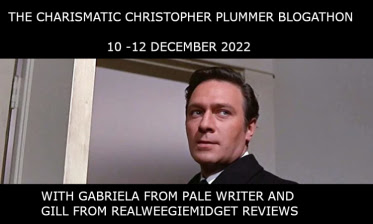
the Charismatic Christopher Plummer blogathon, hosted by RealWeegieMidgetReviews and Pale Writer.
Friday, November 25, 2022
Lost in Translation: odd classic film titles in Portuguese – film noir edition
Noirvember has arrived and with it the
urge to watch foggy detective stories or films with iconic femme fatales. That’s
why we bring for you today another post in the “Lost in Translation” series.
This time, with good news: “Lost in Translation” was nominated for Best Classic
Movie Series in the latest Classic Movie Blog Association Awards. We didn’t
win, but it’s truly an honor to be nominated. Now, let’s go on with the list –
remembering that titles that do not appear here were translated verbatim:
“Double Indemnity” (1944) became “Blood
Pact” (“Pacto de Sangue”)
“Murder, my Sweet” (1944) is here “See
You, Darling” (“Até a Vista, Querida”)
“Detour” (1945) is known as “Destiny’s
Curve” (“Curva do Destino”)
“My Name is Julia Ross” (1945) was
called here “Tragical Alibi” (“Trágico Álibi”)
“The Big Sleep” (1946) was translated
as “On the Verge of the Abism” (“À Beira do Abismo”)
“Out of the Past” (1947) is here “Fugue
from the Past” (“Fuga do Passado”)
“Criss Cross” (1949) received the
title “Meanness” (“Baixeza”)
“Caught” (1949) is here “Prisoner
Heart” (“Coração Prisioneiro”)
The historical noir “Reign of Terror”(also known as “The Black Book”, 1949) was called here “The Shadow of the
Guillotine” (“A Sombra da Guilhotina”)
“The Asphalt Jungle” (1950) is known
as “The Secret of the Jewels” (“O Segredo das Joias”)
“In a Lonely Place” (1950) was
translated as “In the Silence of the Night” (“No Silêncio da Noite”)
“Sunset Boulevard” (1950) became “Dawn
of the Gods” (“Crepúsculo dos Deuses”)
“The Big Heat” (1953) received the
title “The Corrupts” (“Os Corruptos”)
“Kiss Me Deadly” (1955) is here “Death
in a Kiss” (“A Morten um Beijo”)
“The Big Combo” (1955) received the
title “Crime Empire” (“Império do Crime”)
Stanley Kubrick’s “The Killing” (1956)
is here “The Great Coup” (“O Grande Golpe”)
“Sweet Smell of Success” (1957) is
known as “The Inebriation of Success” (“A Embriaguez do Sucesso”)
“Touch of Evil” (1958) is here “The Mark
of Wickdness” (“A Marca da Maldade”)


_01.jpg)
_NRFPT_01.jpg)


.jpg)