} Crítica Retrô

Tradutor / Translator / Traductor / Übersetzer / Traduttore / Traducteur / 翻訳者 / переводчик

Saturday, October 8, 2016

Vidas em Fuga / The Fugitive Kind (1960)

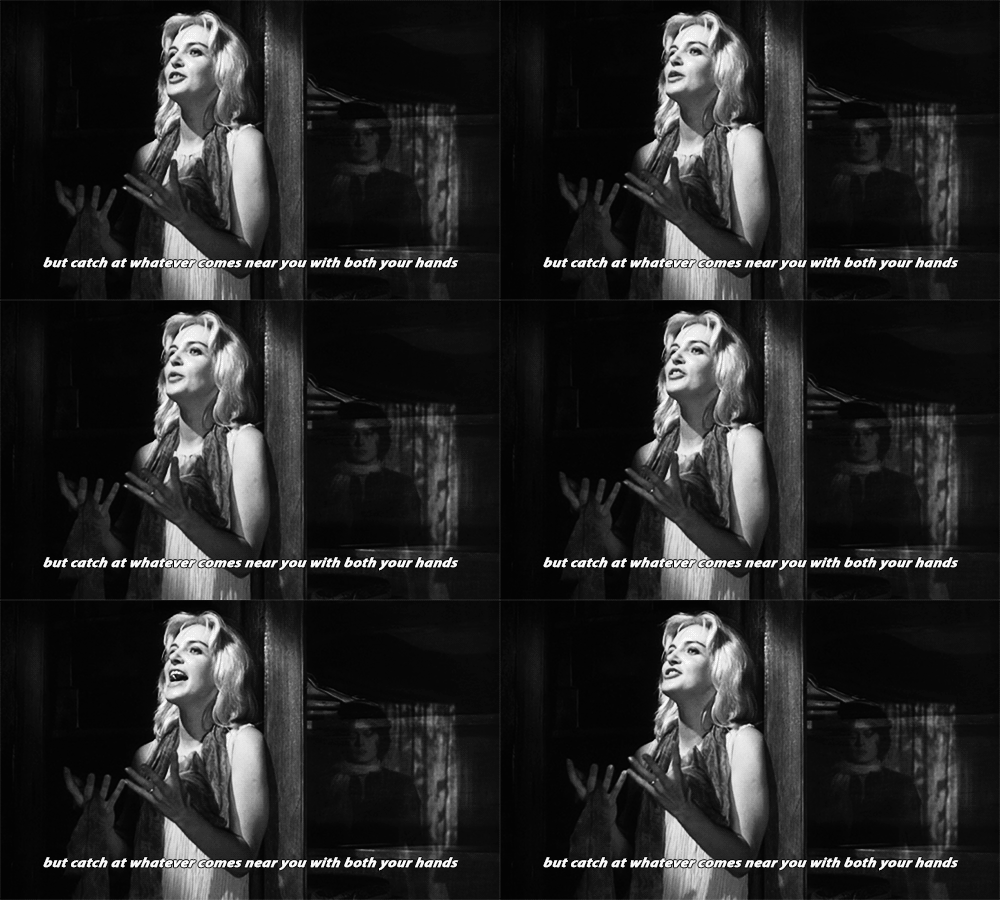
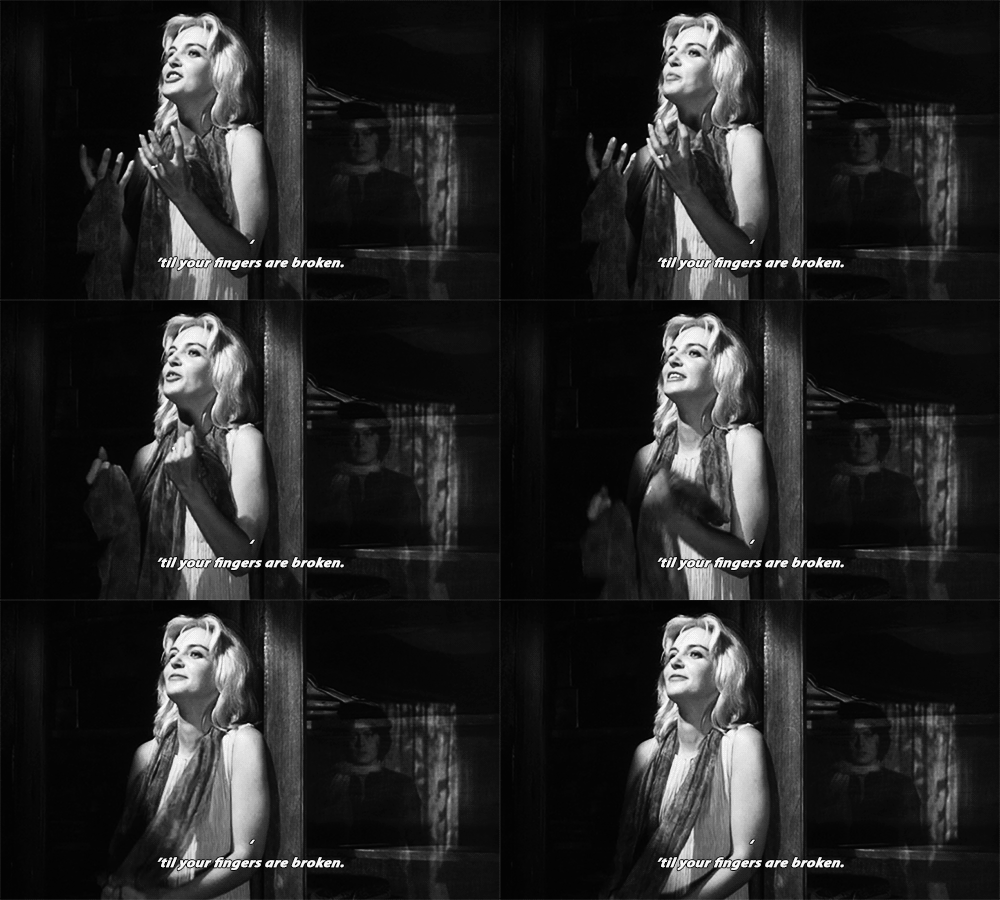
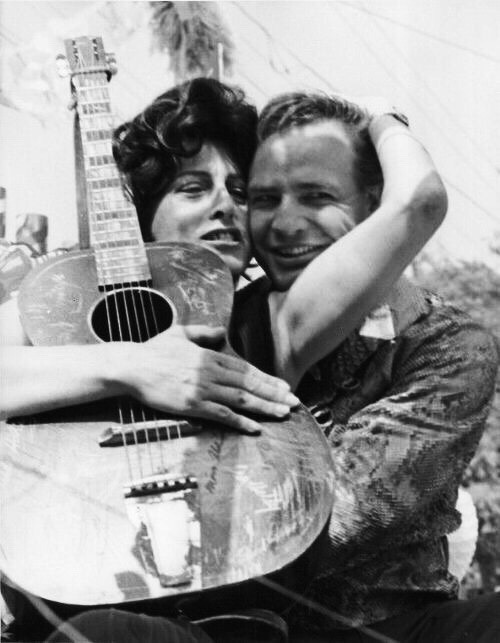
Um duelo de gigantes: não há maneira melhor de definir o encontro de duas lendas do cinema, Anna Magnani e Marlon Brando. Ela, uma das maiores, talvez a maior, atriz do cinema italiano. Ele, um ator igualmente poderoso e icônico. Juntos, eles se contrastam, se completam, e formam um estranho e eletrizante casal.

A battle of giants: there is no better expression to describe the occasion when two film legends, Anna Magnani and Marlon Brando, met. She was one of the greatest – maybe THE greatest – actresses from Italy. He was an equally powerful and iconic actor. Together, they contrast, they complete each other, and make a stange and thrilling couple.
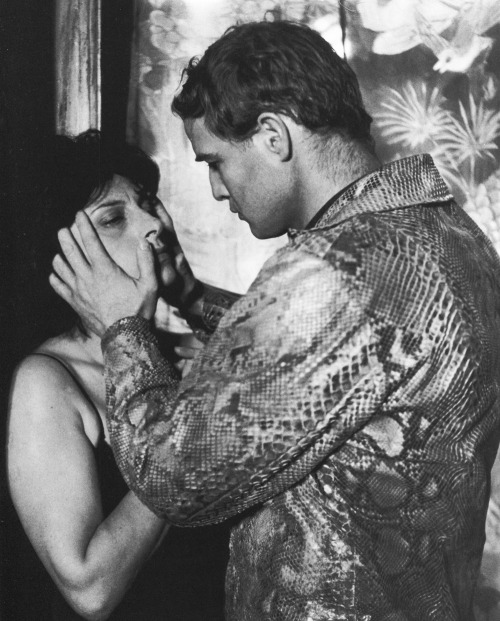
Valentine ‘Val’ Xavier (Marlon Brando) é um músico que acaba de completar 30 anos e quer ficar longe de problemas. Ele foge de New Orleans para não ser preso, e se emprega como vendedor em uma pequena loja de uma pequena cidade. A dona da loja é Lady Torrance (Anna Magnani), e surge uma tensão sexual entre eles.

Valentine 'Val' Xavier (Marlon Brando) is a musician who just turned 30 and wants to stay away from troubel. He flees New Orleans in order to escape prison and gets a job as a clerk in a small store in a small town. The store is owned by Lady Torrance (Anna Magnani) and a sexual tension sparkles between them.
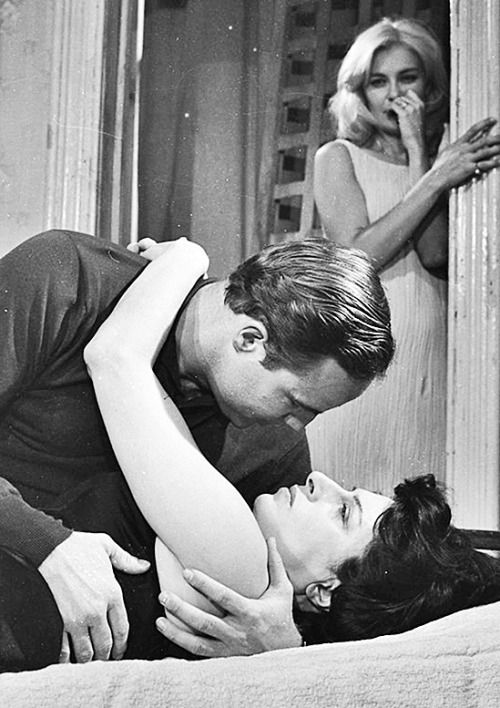
Mas há muitos problemas. Primeiro: Lady Torrance é casada, e seu marido atualmente agoniza no andar de cima da loja. Segundo: Val tem não uma, mas duas mulheres de olho nele desde que ele chegou à nova cidade: a desmiolada e perdida Carol Cutrere (Joanne Woodward) e a dona de casa Vee Talbot (Maureen Stapleton).

But there are many problems in the way. First: Lady Torrance is married, and her husband currently agonizes in an apartment above the store. Second: Val doesn't have one, but two women observing him since he arrived to the new town: the lost rebel Carol Cutrere (Joanne Woodward) and the housewife Vee Talbot (Maureen Stapleton).
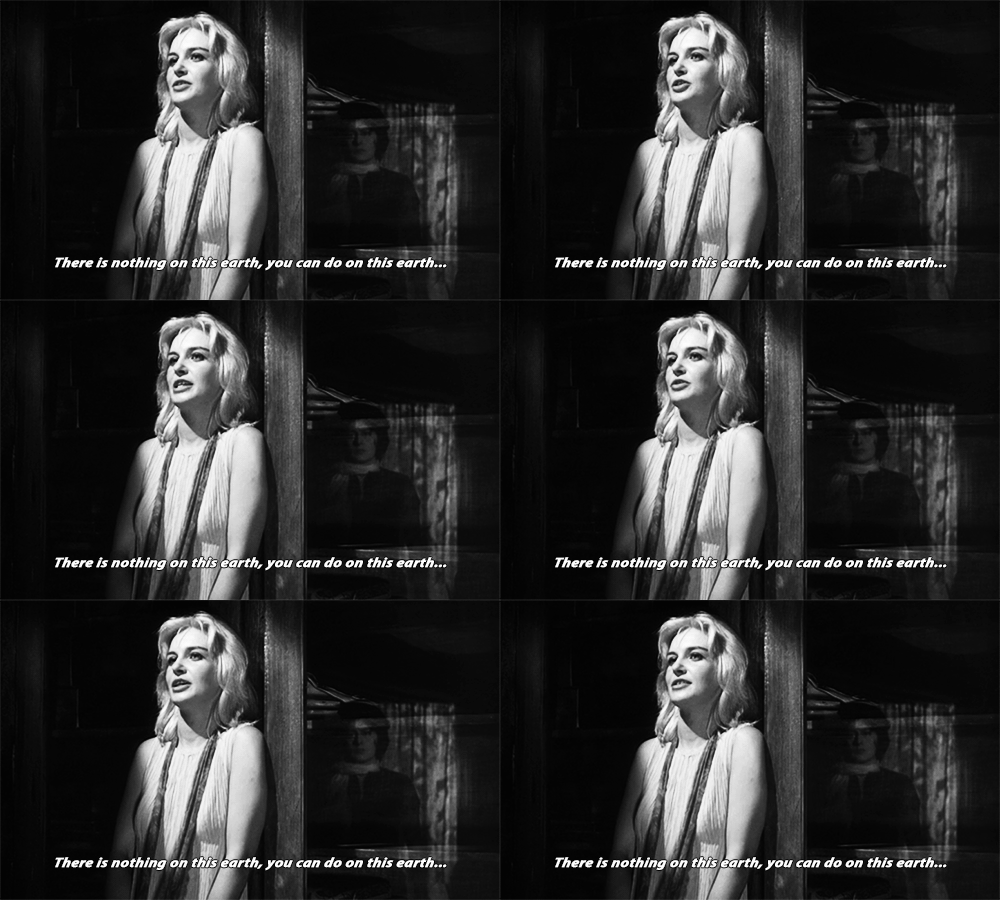
Não é um filme romântico. Não é uma história de amor melosa e fofa. É drama puro, protagonizado por dois dos maiores atores dramáticos da história e com coadjuvantes igualmente talentosos. Lady Torrance é uma mulher triste, amarga, sofrida. Carol Cutrere é a moça de família rica que decide se rebelar e viver com uma... hippie. Carol é super-sexualizada, atrevida, espontânea e livre. Vee Talbot não é um interesse amoroso, mas é uma personagem importante e sensível.

This is not a romantic film. This is not a cute, sweety love story. It is pure drama, leaded by two of the best dramatic actors in history and with equally talented supporting actors. Lady Torrance is a sad, bitter suffering woman. Carol Cutrere is the girl from a rich family who rebels and lives as a hippie. Carol is overly-sexualized, sassy, spontaneous and free. Vee Talbot is not a love interest, but she is an important and sensitive character.
“Vidas em Fuga” teve sua origem em uma peça de Tennessee Williams, que em sua primeira versão se chamava “Batalha de Anjos” e não teve grande público em 1940. Anos mais tarde, já um renomado dramaturgo, Williams reescreveu a peça, agora com o título “A Descida de Orfeu”, exatamente pensando em Anna Magnani e Marlon Brando nos papéis principais. Ambos se recusaram a protagonizar a peça nos palcos, mas aceitaram a oferta para as telas.

“The Fugitive Kind” was originated by a Tennessee Williams play first called “Battle of Angels”. This first version didn't have enough attendance in 1940 to keep running. Years later, when he was alredy a well-known playwriter, Williams rewrote the play, now under the title “Orpheus Descending”, exatcly thinking about Anna Magnani and Marlon Brando for the lead roles. Both refused to be involved in the stage production, but accepted the offer to star the version on the screen.
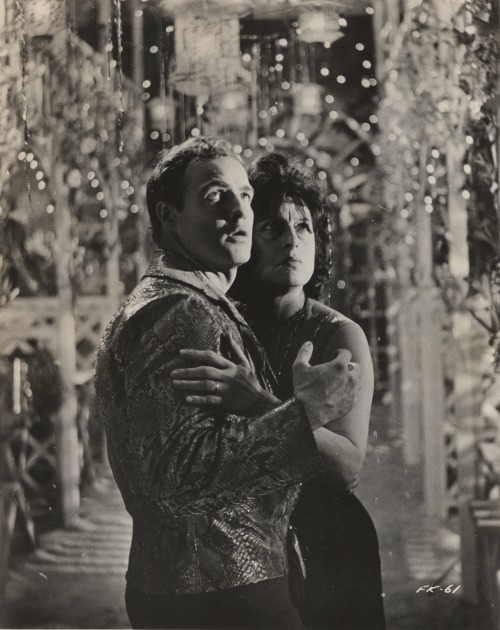
Era o projeto mais pessoal de Tennessee Williams, e aquele que só foi devidamente reconhecido após a morte do autor. A peça foi um fracasso na reestreia de 1957, o filme de 1960 foi um fracasso de bilheteria e a revista Films in Review o chamou de “uma desgraça para a cultura americana”. Marlon Brando, que havia recebido um milhão de dólares para interpretar Val, batendo um recorde salarial, viu ali o começo de uma má fase na carreira que só acabaria com Vito Corleone.

It was the most personal Tennessee Williams project, and one that only was recognized as a great piece after the author had died. The play was a failure in the 1957 re-opening, the 1960 film was a box-office failure and the magazine Film in Review called it “a disgrace to US culture”. Marlon Brando, who had received a million dollars to play Val, an unprecedent salary at the time, saw there the beginning of a bad phase in his career that would only end with Vito Corleone.
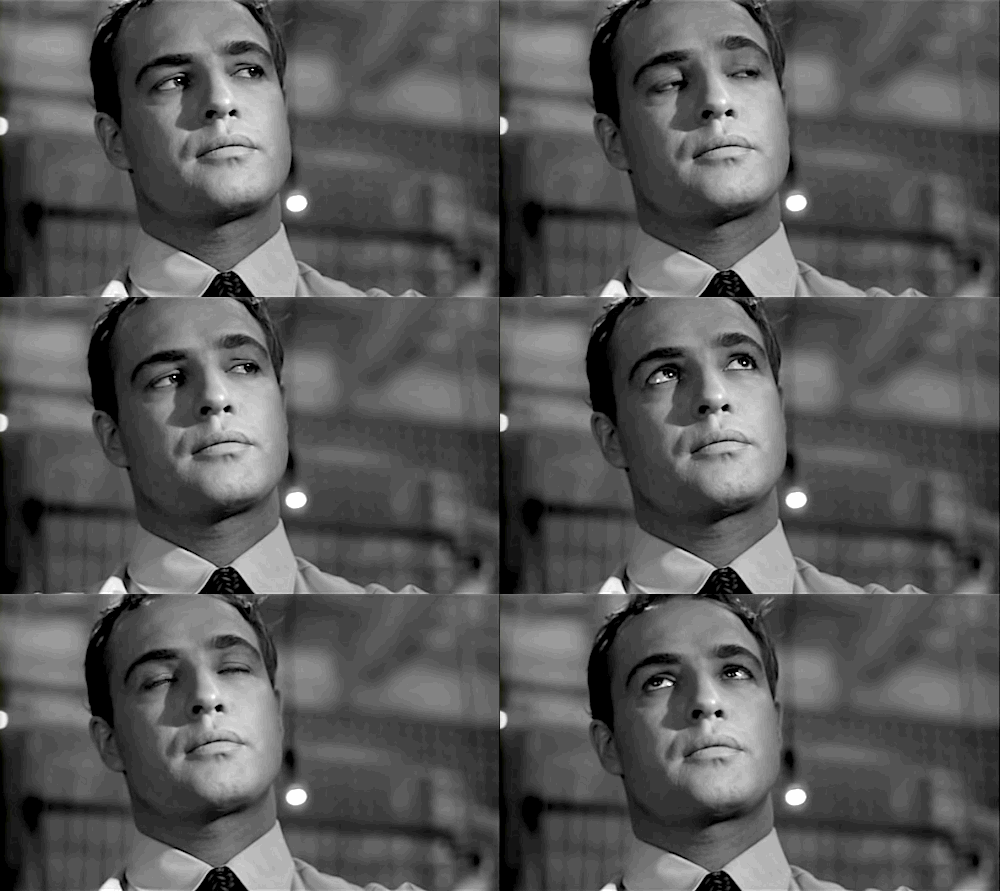
E Brando também não ficou feliz por a história pertencer, mesmo em momentos que não devia, a Anna Magnani. Magnani domina a tela, é o centro das atenções e consegue, de algum modo, domar até mesmo Marlon Brando, o indomável. Tennessee Williams sempre escreveu peças com grandes personagens femininas: “Um Bonde Chamado Desejo”, “A Rosa Tatuada”, “Gata em Teto de Zinco Quente”, “De Repente, no Último Verão”. Não poderia ser diferente com “A Descida de Orfeu” e sua adaptação para o cinema.

And Brando also got mad because the story belonged, even when it wasn't supposed to, to Anna Magnani. Magnani dominates the screen, is the focus of all attention and somehow is able to tame Marlon Brando, the wild one. Tennessee Williams always wrote plays with powerful female characters: “A Streetcar Named Desire”, “The Rose Tattoo”, “Cat in a Hot Tin Roof”, “Suddenly, Last Summer”. It couldn't be different with “Orpheus Descending” and its film adaptation.
Ao mesmo tempo, é difícil pensar em Sidney Lumet como um diretor de grandes atrizes. Seus filmes mais conhecidos, como “Doze Homens e uma Sentença” (1957), “Um Dia de Cão” (1975) e “Equus” (1977), são todos muito masculinos em seu tema e com fortes atuações de atores. Mas há também outros trabalhos, talvez menos conhecidos, de Lumet com atrizes fantásticas, incluindo Katharine Hepburn em “Longa Jornada Noite Adentro” (1962), o elenco principal com foco feminino em “O Grupo” (1966) e a força visível de Anne Bancroft aliada à força apenas sugerida de Garbo em “Fala, Greta Garbo!” (1984).

At the same time, it's difficult to think about Sidney Lumet as a director working with great actresses. His best known movies, such as “12 Angry Men” (1957), “Dog Day Afternoon” (1977) and “Equus” (1977), have all very male themes and strong performances by actors. But there are also other works, perhaps less known, that Lumet did with fantastic actresses, including Katharine Hepburn in “Long Day's Journey into Night” (1962), the female-focused main cast in “The Group” (1966) and Anne Bancroft's visible strenght sewed together with Garbo's suggested strenght in “Garbo Talks!” (1984).
Marlon Brando, Sidney Lumet
Não foi uma filmagem fácil, a de “Vidas em Fuga”: os modos de trabalho de Brando, Magnani e Lumet eram conflitantes. Brando fez inimizades nos sets de vários de seus filmes, e não foi diferente aqui com Magnani e Woodward. Mas toda essa animosidade adiciona ao filme e é traduzida na tela com perfeição por um diretor sempre comprometido com o realismo, mesmo que este se tornasse doloroso.

The shooting of “The Fugitive Kind” wasn't easy: the way Brando, Magnani and Lumet worked were different and contrasting. Brando made enemies while shooting several of his films, and it also happened here with Magnani and Woodward. But all this animosity adds to the movie, and is translated to the screen with perfection by a director always committed to realism, even if at times it became painful.

This is my contribution to the Sidney Lumet blogathon, hosted by SeanMunger.com 

Sunday, October 2, 2016

The Doll (1919) / Die Puppe (1919)

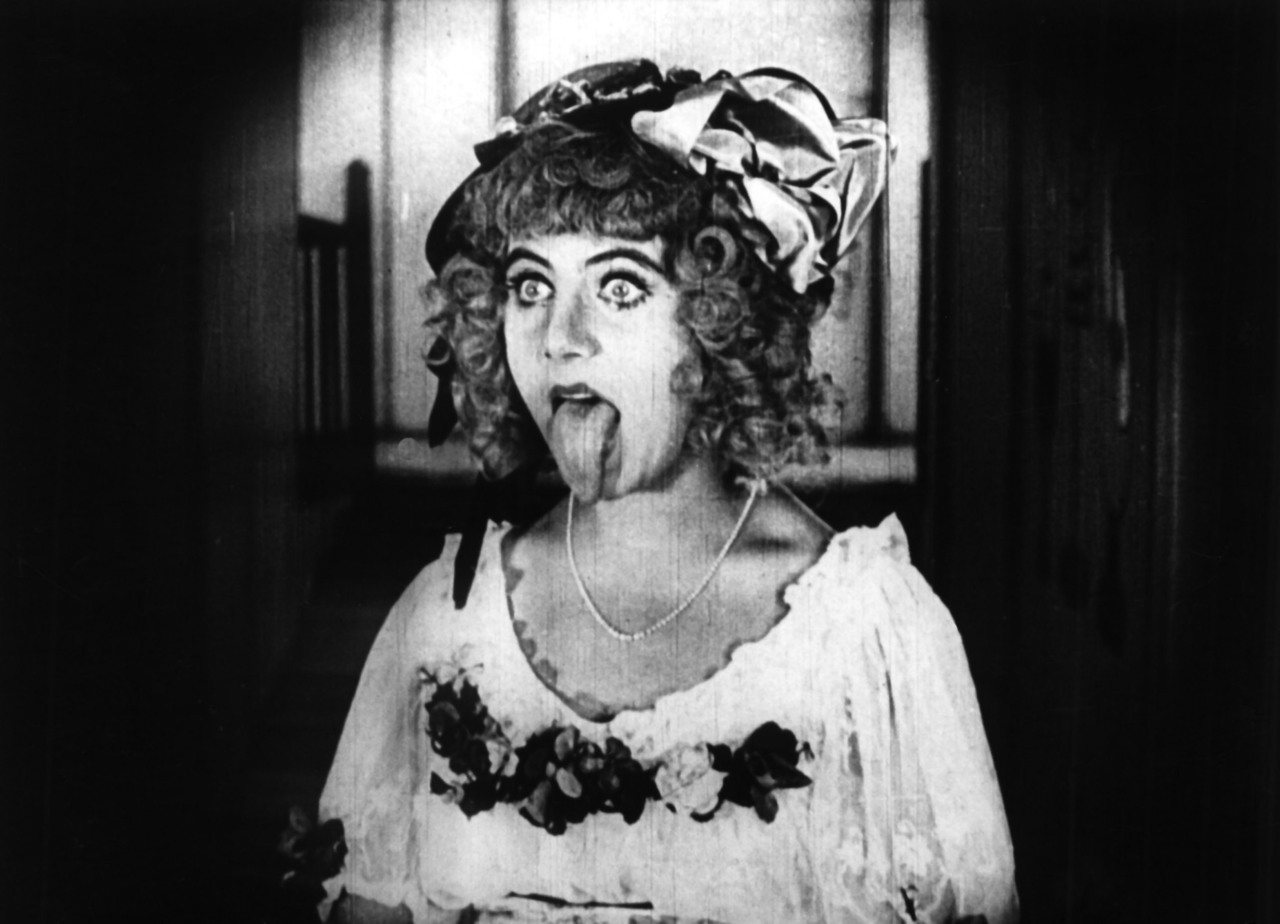
Você sabe que está prestes a ver um filme muito bom quando a primeira imagem após os créditos é do diretor Ernst Lubitsch, tirando objetos cênicos em miniatura de dentro de uma caixa. Não era o primeiro filme de Lubitsch, que atuava desde 1912 e dirigia desde 1914. Mas é o filme que nos faz parar e exclamar: “aí está um gênio”!

You know you are about to see a very good movie when the first image after the credits shows you director Ernst Lubitsch taking miniature scenic objects out of a box. It wasn’t Lubitsch’s first movie: he acted since 1912 and directed since 1914. But it is a movie that makes us stop and shout: “here it is a genius”!
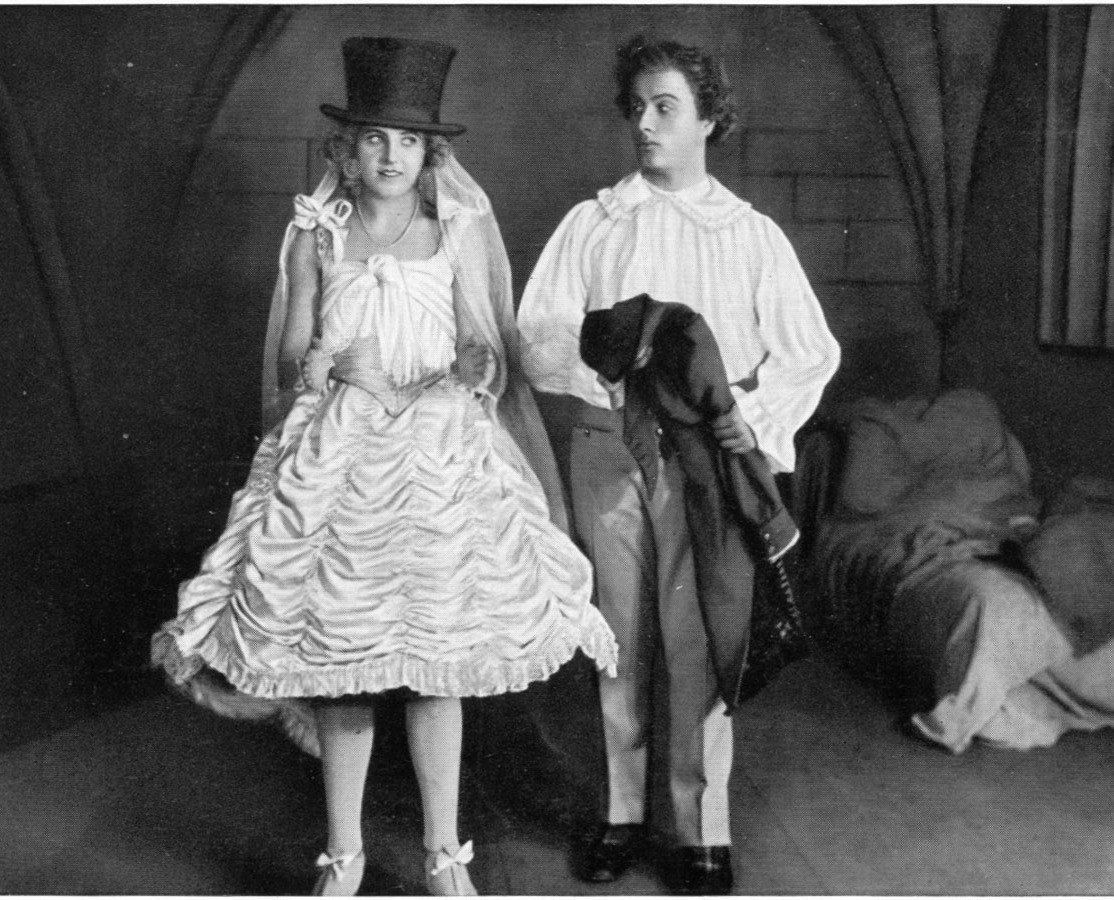
O rico, velho e doente Barão von Chanterelle (Max Kronert) quer arranjar um casamento para seu sobrinho, com o objetivo de perpetuar a linhagem nobre. Mas o tal sobrinho, Lancelot (Hermann Thimig) é um mimadinho que não quer se casar.

The rich, old and ill Baron Von Chanterelle (Max Kronert) wants his nephew to get marriage so the noble lineage won’t die. But said nephew, Lancelot (Hermann Thimig) is a cry-baby who doesn’t think of marriage at all.
Lancelot
Depois de distrair as dezenas de pretendentes que corriam atrás dele, Lancelot busca refúgio em um monastério. Os religiosos de lá estão passando por “dificuldades”, e por isso decidem convencer o hóspede a se casar e a dar o dinheiro do dote para o monastério. E eles até arrumam um jeito de Lancelot sair satisfeito do casamento: ele se casa com uma boneca, enganando a todos!

When he is able to distract dozens of young maidens who were chasing him, Lancelot goes to a monastery to hide. The monks there have been through “difficulties”, and then they decide to convince the guest to marry and give the dowry to the monastery. And they even find a way to make Lancelot happy with the marriage: he weds a doll and fool them all! 
Em um anúncio para “solteiros, viúvos e misóginos”, Hilarius Gilermund (Victor Janson), o mundialmente famoso criador de bonecas, diz que consegue fazer uma boneca quase humana, que se mexe conforme alguns botões são acionados. E a mais nova criação de Hilarius é uma boneca inspirada em sua filha, Ossi (Ossi Oswalda).

In an add for “bachelors, widowers and misogynists”, Hilarius Gilermund (Victor Janson), the world-famous dollmaker, says that he can make a human-like doll, who also moves when some buttons are pushed. And Hilarius’s newest creation is a doll inspired by his daughter, Ossi (Ossi Oswalda).
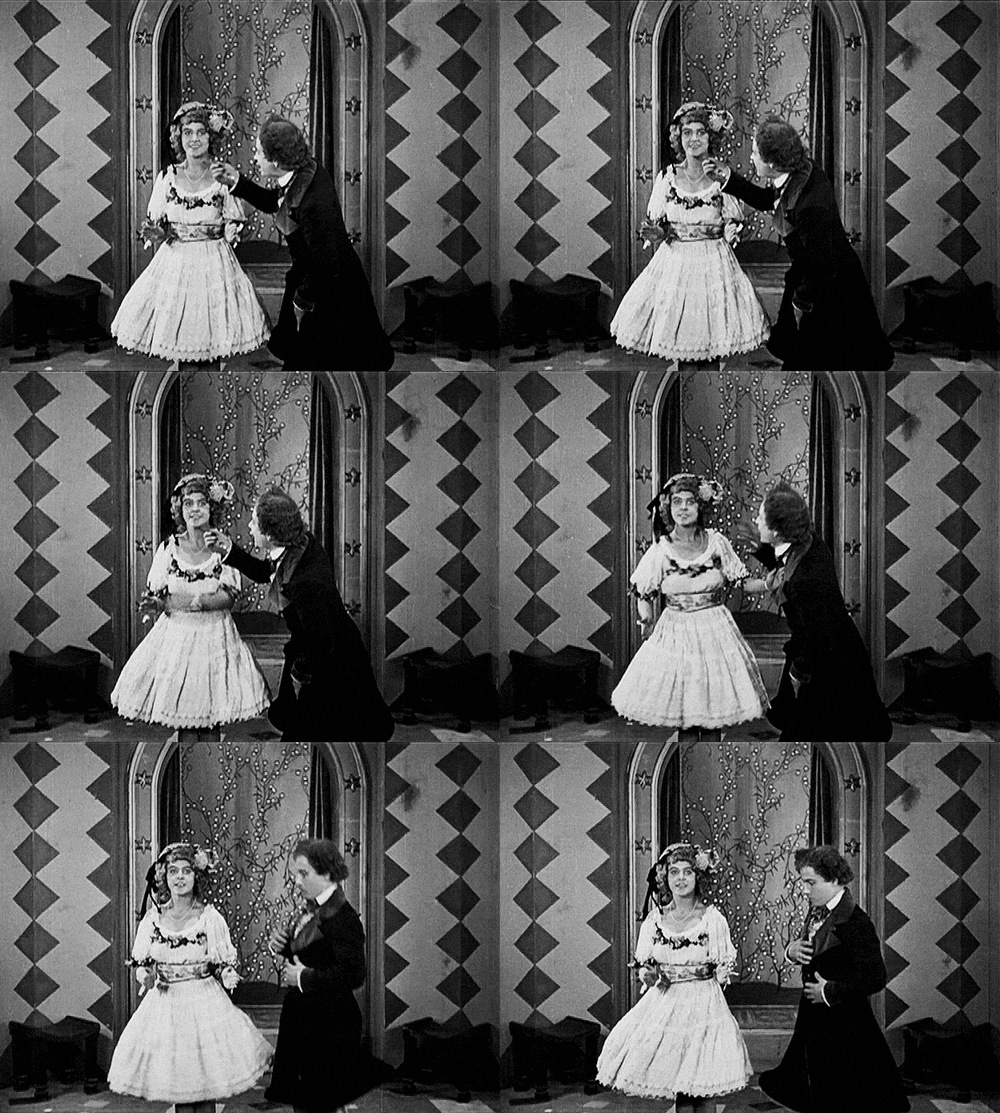
Enquanto Lancelot chega à loja para comprar a noiva boneca, o jovem e atrevido ajudante de Hilarius acaba quebrando a boneca Ossi. Para que ele não fique em apuros, a Ossi de carne e osso promete posar como a boneca até que a boneca seja consertada. Mas o problema é que Lancelot escolhe justamente Ossi para ser sua esposa. Ele pensa estar levando para casa uma boneca de “caráter sólido”, mas é a moça que embarca em sua carruagem.

While Lancelot goes to the store to buy his fiancée doll, Hilarius’s young and daring helper breaks Ossi the doll. To prevent him from having troubles, real Ossi promises to pretend to be the doll until the doll is fixed. But the big trouble comes when Lancelot chooses exactly Ossi to be his wife. He thinks he is taking home a doll of “solid character”, but it is the girl the one who goes in his carriage. 
Há um ar de conto de fadas no filme. O cenário da primeira cena é, literalmente, montado na nossa frente, e algo mágico e infantil começa. Muito antes de a Disney desconstruir os contos de fada, já tínhamos uma espécie de príncipe bobão, uma heroína corajosa, um sol sorridente e cavalos que cruzam as pernas e perdem o rabo.

There is a fairy tale touch to this film. The set of the first scene is, literally, built in front of us, and something magic and child-like begins. Many decades before Disney deconstructed fairy tales, we already had a silly prince, a bold heroine, a smiling sun and horses that cross their legs and lose their tails.
Há espaço, claro, para problematização. Poderíamos nos perguntar se Lancelot não queria se casar simplesmente porque não queria, ou seria ele homossexual? Afinal, os religiosos olham para Ossi com luxúria? Poderíamos fazer estas perguntas, olhando com olhos de 2016, mas perderíamos a graça do filme, divertidíssimo se visto com olhos de 1919.

There is room, of course, to find problems. We could ask ourselves if Lancelot didn’t want to get married because he simply didn’t want it, or if maybe it was because he was a closeted homosexual? And, do the monks or don’t they look to Ossi with luxury? We could ask those questions, looking with eyes of 2016, but the questions would destroy the fun, and the film is hilarious if watched with eyes of 1919.
Ossi Oswalda era chamada de “a Mary Pickford alemã”. E aqui vemos perfeitamente o porquê do apelido: fofa, determinada, adorável, divertida, Ossi tinha apenas 22 anos quando “The Doll” foi filmado. Ela está muito longe de ser uma vamp, uma sofredora ou uma donzela em apuros. Ossi, como boneca ou como garota, é uma protagonista maravilhosa, que sem dúvida se diverte com seu jogo de faz de conta.

Ossi Oswalda was called “the German Mary Pickford”. And here we see why this nickname: cute, courageous, adorable, funny, Ossi was only 22 when “The Doll” was made. She is far from being a vamp, a suffering girl or a damsel in distress. Ossi, as a doll or as a girl, is a fabulous leading lady, and without a doubt she has fun with her make-believe. 
A história é simples, mas a maioria das piadas se baseia na ironia. Assim, um dos personagens mais divertidos é o jovem aprendiz (Gerhard Ritterband), que tem frases ótimas e exagera em suas reações dramáticas. Temos algumas críticas pontuais e divertidas ao clero, com a exploração da piada constante de que os monges pregam e recomendam pobreza, mas vivem com luxo e sempre cometem o pecado da gula. Tal tema foi muito explorado em filmes e, em especial, livros de países cuja maioria da população é católica.

The plot is simple, but most of the jokes are ironic. That’s why one of the funniest characters is the young helper (Gerhard Ritterband), who has great ‘quotes’ and exaggerated dramatic reactions. There is also criticism against the clergy, and the constant gag involves the monks advocating the poverty vow, but at the same time overeating. This situation was already explored in several films and, in special, books from mainly Catholic countries.
Hilarius e seu ajudante / Hilarius and his helper
Raramente pensamos em Lubitsch como um diretor que teve uma musa ou uma grande colaboradora, a exemplo do que aconteceu com Gish e Griffith, Katharine Hepburn e George Cukor ou Bette Davis e William Wyler. De fato, em seu período hollywoodiano ele não teve atores constantes, mas em seu período alemão é Ossi Oswalda a colaboradora que personifica, perfeitamente, o charme das primeiras obras-primas de Lubitsch.

We rarely think about Lubitsch as a director who had a muse or top collaborator, like Griffith had Gish, George Cukor had Katharine Hepburn or William Wyler had Bette Davis. Indeed, in his Hollywood years he didn’t have constant collaborators, but in his German years it is Ossi Oswalda the one performer who personifies, perfectly, the charm we find in Lubitsch’s early masterpieces.

This is my contribution to the Dual Roles blogathon, hosted by Ruth and Christina at Silver Screenings and Christina Wehner.com 

Saturday, September 24, 2016

Cantinflas (2014)

Ele chegou a ser o comediante mais importante e amado do mundo mas, se não tivesse passado brevemente por Hollywood, é provável que a fama de Mario Moreno, ou Cantinflas, hoje se restringisse aos países de língua espanhola. E são as negociações para contratar Cantinflas para seu grande filme norte-americano, “A Volta ao Mundo em 80 Dias” (1956), que dão início à cinebiografia do ídolo mexicano.

He was once the most important and beloved comedian in the world but, if he hadn’t worked briefly in Hollywood, it’s probable that Mario Moreno, or Cantinflas, would be known today only in Spanish-speaking countries. And the negotiations to hire Cantinflas to his biggest Hollywood movie, “Around the World in 80 Days” are the starting point for his biopic.
Michael Todd (interpretado por Michael Imperioli) é um produtor de teatro que tem a ideia de fazer o maior e mais fascinante filme do mundo, que contará com um ingrediente secreto: sua adaptação da história de Júlio Verne para os cinemas contará com participações especiais de astros do mundo inteiro! Ele APENAS precisa convencer a United Artists a financiá-lo e distribuir o filme! E isso é uma tarefa complicada ao extremo: se há uma coisa que Hollywood nunca gostou de fazer, mas sempre deveria ter feito, é arriscar.
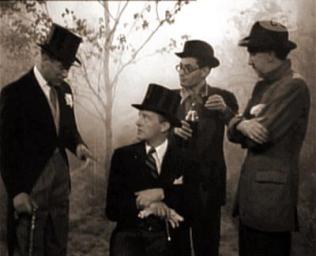
Michael Todd (portrayed by Micheal Imperioli) is a theater producer who has the plan to make the greatest, biggest film in the world, and a film with a secret ingredient. He wants his adaptation of Jules Verne’s story to have cameos of films stars from all over the world! He ONLY has to convince United Artists to finance and distribute it! And this is an extremely complicated task: if there is one think Hollywood never liked doing, but should have always done, it is taking risks.
Michael Todd diz, ao ouvir pela primeira vez sobre Mario Moreno: “tá, ponha ele no primeiro burro voador para LA.” Afinal, “Ele é a pessoa mais amada no México, Espanha e resto da América Latina.”. Mas como Cantinflas conseguiu tanto prestígio?

Michael Todd says, hearing of Mario Moreno for the first time: “Yeah, get him in the next flying donkey to LA”. After all, “He is the most beloved person in Mexico, Spain and all of Latin America”. But how exactly Cantinflas became so?
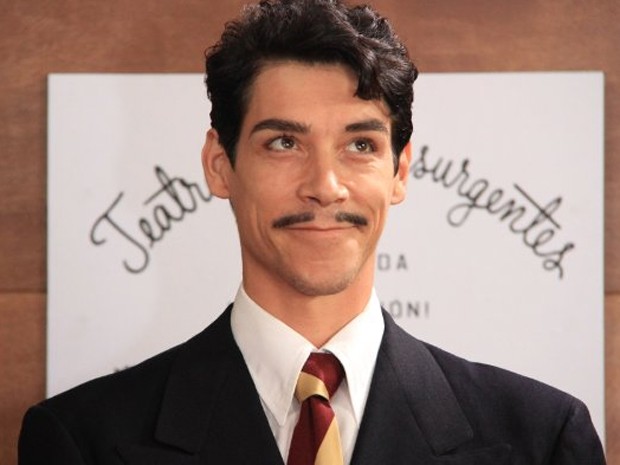
À luta de Michael Todd são costuradas cenas da trajetória artística de Mario Moreno (Oscar Jaenada), o homem que tentou ser boxeador e toureiro, mas que nasceu para ser palhaço. A história avança e retrocede no tempo, entre o México dos anos 1930 e 1940 e Los Angeles em 1955 – até que os destinos de Michael Todd e Mario Moreno se cruzam.

To Michael Todd’s effort we add scenes from Mario Moreno’s (Oscar Jaenada) artistic path: he tried to be a boxer and a bullfighter, but he was born to be a clown. The story goes back and forth in time, between Mexico in the 1930s and Los Angeles in 1955 – until Mario’s and Michael’s fates cross.
Precisamos saber que há uma diferença entre Mario Moreno, a pessoa, e Cantinflas, a personagem. Da mesma maneira e com os mesmos materiais que Chaplin criou seu vagabundo, Mario criou Cantinflas: com roupas simples, um colete (chamado comicamente de “La gabardina”) pendurado em um só ombro, um chapéu, um bigode e um cigarro. Cantinflas e Chaplin de fato se conheceram, mas Chaplin nada teve a ver com a contratação de Cantinflas para “A Volta ao Mundo em 80 Dias”, como mostra a cinebiografia.

We need to know there are differences between Mario Moreno, the person, and Cantinflas, the persona. In the same way and with the same ingredients that Chaplin created his Tramp character, Mario created Cantinflas: with simple clothes, a vest (comically called “la gabardina”) hanging in only one shoulder, a hat, a moustache and a cigarette. Cantinflas and Chaplin actually met, but Chaplin had nothing to do with hiring Cantinflas for “Around the World in 80 Days”, like the biopic shows us.
“Cantinflas”, o filme, é um prato cheio para quem gosta de cinema clássico, com as muitas menções desde os minutos iniciais. É um pouco frustrante ver que os escolhidos para interpretar, ainda que brevemente e às vezes sem falas, astros de Hollywood como Elizabeth Taylor e Marlon Brando não se parecem com os atores. E um erro dolorido: em 1956 Mary Pickford de fato deixou o comando da United Artists, mas de maneira alguma deixou o estúdio nas mãos de Douglas Fairbanks e Charles Chaplin – afinal, Fairbanks estava morto há mais de 15 anos e Chaplin, radicado na Europa. Inserir a figura de Chaplin na cinebiografia, aliás, é a grande manobra emocional feita com o público.

“Cantinflas”, the film, is a great piece for anyone who likes classic film, with lots of mentions to films and stars of the time since the beginning. It is a little frustrating when you realize that the actors chosen to play Hollywood stars like Elizabeth Taylor and Marlon Brando – in a cameo with no lines – look nothing like the people being portrayed. And a painful mistake: in 1956 Mary Pickford really had left a leading position at United Artists, but by no means she left the studio in the hands of both Douglas Fairbanks and Charles Chaplin – after all, Fairbanks died more than 15 years before that and Chaplin was living in Europe.
Todos os clichês do show business estão ali: a pobreza do começo de carreira, a trupe mambembe, o envolvimento com a filha do primeiro patrão e a demissão, o sucesso em uma cidade grande, o astro já estabelecido que menospreza o novato, a felicidade e infelicidade no casamento, a infidelidade, o fundo do poço e a redenção. Outros traços comuns na trajetória de grandes estrelas que não podiam faltar na cinebiografia de Cantinflas foram o desdém da elite e acolhimento inicial rápido por parte do povo, e a luta pela liberdade criativa e o direito de improvisar no teatro e no cinema.

All the show clichés in show business are there: the poverty in the beginning of his career, the carnival, the time he got caught with his boss’s daughter and was fired, the success in a big city, the well-known star who treats the newcomer badly, the happiness and unhappiness in married life, the unfaithfulness, hitting the bottom and the redemption. Some other common steps in a big star’s career: Cantinflas also suffered with the disdain of the rich ones, was well received quickly by the poorer ones, and also fought for creative freedom and his right to improvise in both theater and film.
O filme atingiu seus objetivos principais: atraiu um grande público (mais de um milhão e meio de espectadores só no México), foi uma ode à nostalgia e foi escolhido como o representante mexicano para o Oscar de Melhor Filme Estrangeiro em 2015. Houve polêmica com a escolha do ator espanhol Oscar Jaenada para interpretar Cantinflas, mas sua performance foi muito elogiada e é um dos pontos altos do filme.

The film reached its main goals: it attracted a lot of moviegoers (more than 1.5 million in Mexico alone), was an ode to nostalgia and was chosen as the Mexican representative for the Best Film in a Foreign Language Oscar in 2015. There was a negative buzz when Spanish actor Oscar Jaenada was chosen to play Cantinflas, but his performance received praise and is one of the best things in the movie.
Há relatos que colocam Mario Moreno e Cantinflas como duas personalidades completamente opostas: o personagem era querido e simpático, enquanto seu criador era antipático na vida real. O personagem se tornou lendário e deu origem ao verbo “cantinflear”, ou seja, falar muito até confundir o interlocutor. Mario pode não ter sido um grande exemplo, mas o legado Cantinflas vive, e o comediante ainda é um orgulho para a América Latina.

There are stories that put Mario Moreno and Cantinflas as two completely opposite personalities: the character was beloved and humble, while his creator was unsympathetic in real life. The character became a legend and was the origin of the verb “cantinflear” in Spanish, that is, to talk too much in order to confuse who you’re talking to. Mario may not have been the best example to follow, but Cantinflas’s legacy lives on, and the comedian is still the pride of Latin America.

This post is part of the Hispanic Heritage Month celebration. Follow the hashtag #DePelicula to find more content.

Friday, September 16, 2016

A morte no Nilo / Death on the Nile (1978)


Ler Agatha Christie é quase uma tradição familiar. Minha avó gosta muito dela, e minha mãe tem uma respeitável coleção (foto acima). E é natural que eu tenha herdado estes livros. Tenho predileção pelas histórias que foram adaptadas para o cinema, e foi uma surpresa quando encontrei o livro “A Morte no Nilo” ainda lacrado, sem ser lido desde sua publicação, em 1984 – e tendo na capa o elenco do filme de 1978, com um brilhante elenco. Coube a mim ser a primeira a ler o livro.

Reading Agatha Christie is kind of a familiar tradition. My grandma likes her a lot, and my mother owns a respectable collection (picture above). And it is natural that I inherited those books. I usually prefer the stories that were adapted to the screen, and I had a surprise when I found “Death in the Nile” still with the plastic cover on: nobody read the book since it was published and bought in 1984. Moreover, there was on the cover a picture of the all-star cast of the 1978 adaptation. I knew I had to be the first to read it.

#AgathaChristieBookshelf
 
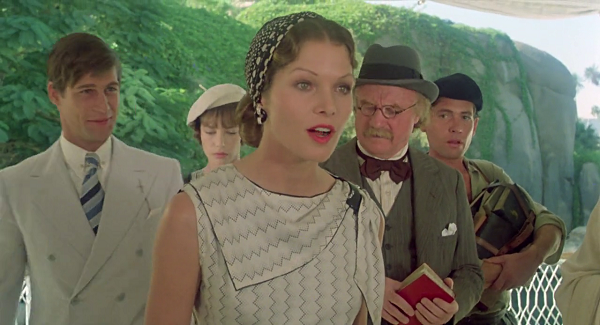
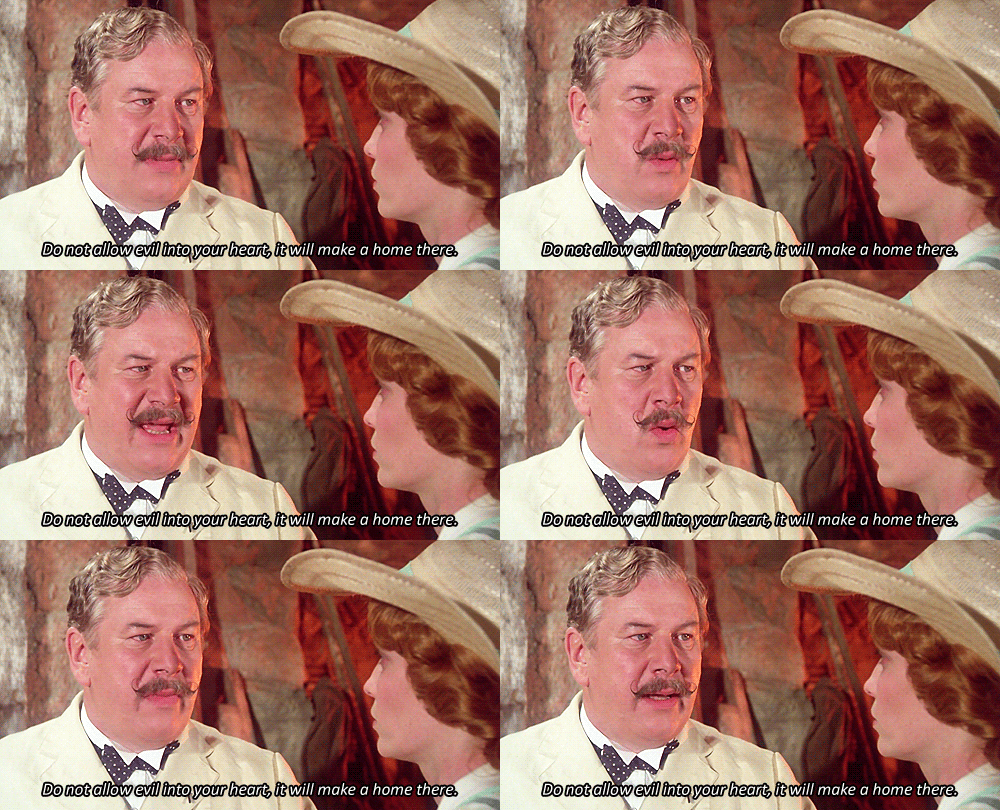
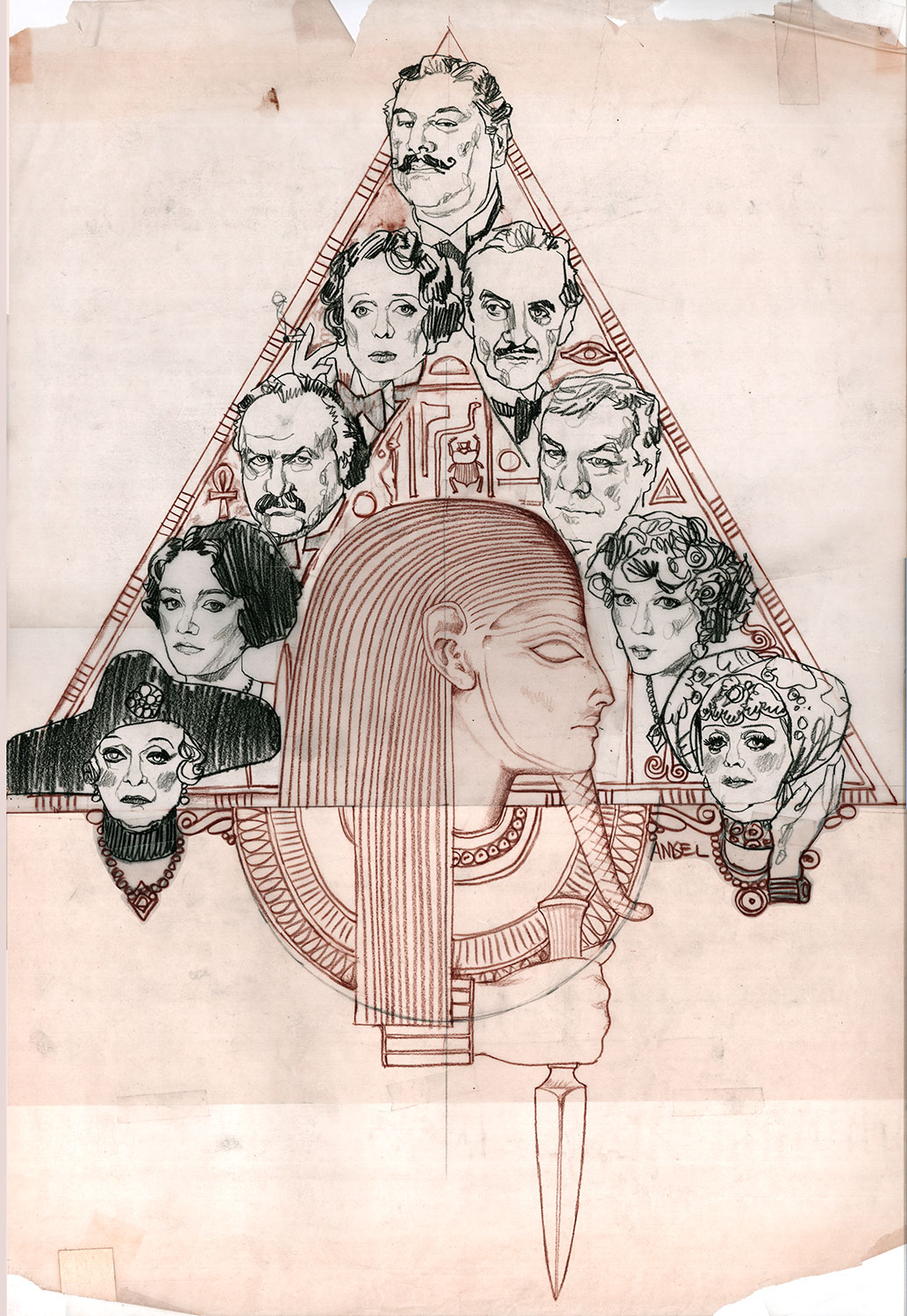
É a história do assassinato de uma moça muito rica, Linnet Ridgeway (Luise Chiles), em sua lua de mel, a bordo de um navio no Egito. Todos os passageiros são suspeitos, seja por causa do dinheiro de Linnet, ou pelo fato de ela ter se casado com o ex-noivo da melhor amiga, Jacqueline de Bellefort (Mia Farrow). Mas não há problema: a bordo está também o detetive belga Hercule Poirot (Peter Ustinov), que não deixará o caso sem solução.

It is the story of the murder of a very rich girl, Linnet Ridgeway (Luise Chiles), in her honeymoon, aboard a ship in Egypt. All the passengers are suspects, considering Linnet’s fortune or the fact that she had just married the former fiancée of her best friend, Jacqueline de Bellefort (Mia Farrow). But there are no troubles: on the ship we also have the Belgian detective Hercule Poirot (Peter Ustinov), and he won’t leave the case without a solution.
Sempre haverá decepção quanto a adaptações de livros de mistério para o cinema. Quando você já teve contato com a obra, já irá consumir o filme sabendo o final – salvo os raros casos em que a história é modificada. A comparação é inevitável, mas felizmente temos pontos positivos tanto no livro quanto no filme em questão.

There will always be disappointment when mystery books are adapted to the screen. When you had already read the book, you’ll see the film knowing “who did it” – not considering the rare cases in which the storyline is changed. We can’t avoid the comparison, but fortunately we have positive points for book and movie here.
Agatha Christie sempre cria uma galeria memorável de personagens, e nem todos têm o merecido destaque em pouco mais de duas horas de filme. E alguns personagens ainda foram cortados, como o patinho feio Cornelia Robson, o arqueólogo Richetti, a senhora Allerton e seu filho Tim. O mesmo acontece em outro filme com grande elenco adaptado de um romance de Christie, “Assassinato no Expresso do Oriente”, feito em 1974.

Agath Christie always creates a memorable gallery of characters, and not all of them have the screen time they deserve in the 135-minute film. And some characters were cut during the book to film transition, including ugly duckling Cornelia Robson, Signor Richetti the archaeologist, Mrs Allerton and her son Tim. The same thing happens in another all-star adaptation of a Christie novel, “Murder on the Orient Express”, made in 1974.
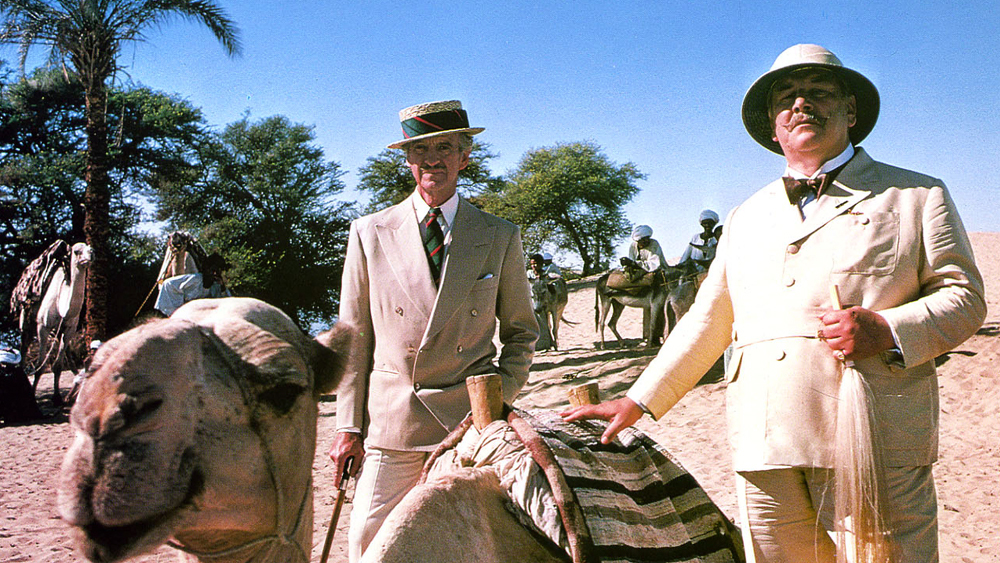
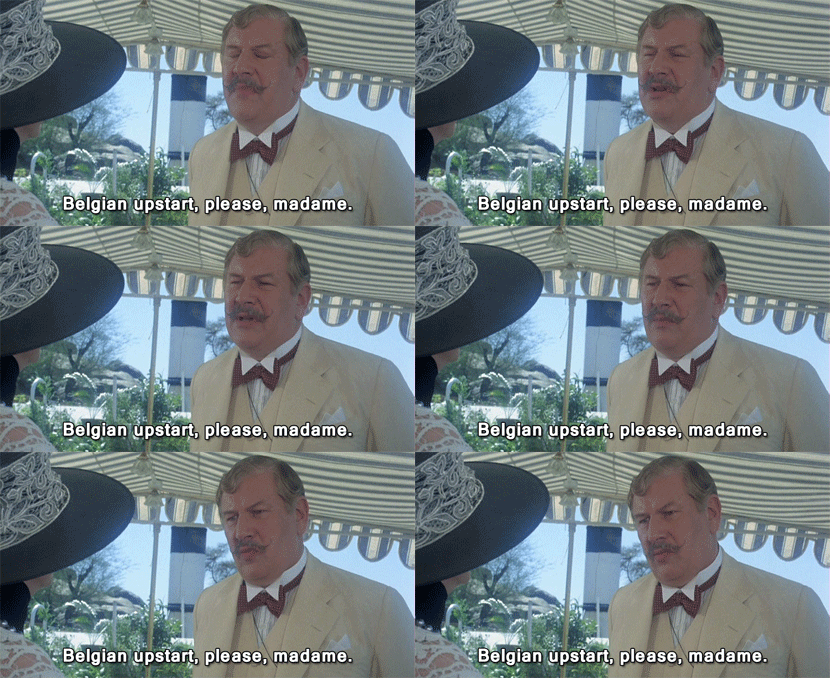
É impagável a “dança conceitual” entre a excêntrica e bêbada senhora Salome Otterbourne (Angela Lansbury) e o Colonel Race (David Niven). Ustinov, em sua primeira de seis vezes como Poirot, é excelente. Suas cenas com David Niven nos dão vontade de ver mais da dupla Poirot e Colonel Race.

We have a priceless dance with the eccentric and drunk Mrs Salome Otterbourne (Angela Lansbury) and Colonel Race (David Niven) Ustinov, in his first of six times as Poirot, is excellent. His scenes with David Niven make us wish to see more of the Poirot – Colonel Race partnership.
#SquadGoals
O papel do guia do navio Karnak (interpretado por I.S. Johare) é ingrato e desconfortável. Ele é construído em cima de preconceitos: o guia usa um turbante, tenta ser agradável a qualquer custo e tem um sotaque engraçado.

The role of the guide of the ship Karnak (played by I.S. Johare) is uncomfortable to be seen. He is built on prejudices and stereotypes: the guide wears a thick turban, tries to please all the passengers and has a laugh-inducing English accent.

É muito interessante como são mostrados os motivos que cada passageiro tinha para matar Linnet: Poirot narra a “reconstituição hipotética” e a cena se passa na tela, o que nos dá a oportunidade de ter diversos pontos de vista e probabilidades. Mas talvez já houvesse indícios muito fortes desde o início que apontavam para o culpado...

I found especially interesting the scenes with the “hypothetical reconstruction” of the crime: Poirot narrates all the reasons each passenger had to kill Linnet, and the scene appears on the screen, giving us the chance to see several points of view, different perspectives and analyze the odds. But maybe there were, in the very beginning of the film, things pointing out to the guilty person…
SPOILERS!!!
Jacqueline parece desequilibrada desde o começo no filme. Há até uma metáfora (que eu enxerguei, pelo menos) quando ela e Simon se beijam num carro em movimento, o carro sai da estrada, mas volta logo depois. Eles se desencontrarão na vida, mas voltarão a se juntar logo depois – e se juntam para matar.

Jacqueline looks disturbed since the beginning of the movie. There is even a metaphor (at least, I interpreted the scene this way): when Jacqueline and Simon kiss in a moving car, the car leaves the road and enters the field, but re-enters the road a few seconds later. They will be separated briefly in life, but they will get together again later – and they’ll get together to kill.
FIM DOS SPOILERS
END OF SPOILERS
A fotografia do filme é maravilhosa, e isso só é possível porque ele foi de fato gravado no Egito. Claro que isso significou desconforto para os atores, que enfrentavam dias de mais de 40 graus Celsius. Bette Davis, que tem um papel relativamente pequeno, reclamou de ter de ir ao local de filmagem, dizendo que “antigamente eles construíam o Nilo no estúdio”!

The cinematography is wonderful, thanks to the film really being shot on location in Egypt. Of course it meant discomfort to the cast, who faced temperatures higher than 100 degrees Fahrenheit. Bette Davis, who has a relatively small role, complained about going to shoot on location, saying that “In the older days, they’d have built the Nile for you”!
Além das belas paisagens, os cenários e figurinos são deslumbrantes, e podem até desviar a atenção da ação principal – o mesmo acontece em “Assassinato num Dia de Sol” (1982), a empreitada seguinte de Ustinov como Poirot.

Besides the breathtaking Egyptian nature, the sets and costumes are gorgeous, and they can even take your focus off from the main action – the same happens with “Evil Under the Sun” (1982), the following work of Ustinov as Poirot.
“A Morte no Nilo” é bonito e astuto, em especial para quem ainda não conhece a obra. Veja o filme, sim, e depois faça um favor a si mesmo e corra atrás do livro. E depois, se tiver coragem, vá fazer uma viagem de barco pelo Nilo.

“Death on the Nile” is visually beautiful and very clever, in special to the ones who haven’t read the book. Watch the movie, and then do yourself a favor and go read the book. And, if you still have courage, it’s time to travel the Nile on a boat!

This is my contribution to the Agatha Christie Blogathon, hosted by Christina and Domi at Christina Wehner and Little Bits of Classics.

Monday, September 12, 2016

Give Us the Moon (1944)

Quem gosta de cinema sempre fica ansioso com as novas estreias, as premiações e as novidades que surgem todos os dias dentro e fora de Hollywood. Pra quem gosta de cinema clássico, isso é um pouco diferente, já que nossos ídolos encerraram a carreira há décadas e nunca teremos a emoção de ver a estreia um novo filme com nossos artistas favoritos. Mas isso não impede que estejamos descobrindo novos filmes e estrelas o tempo todo.

Anyone who likes movies is constantly anxious about the new films hitting the theaters, the awards ceremonies and the news that arise everyday inside and outside Hollywood. But if you like classic film, this relationship is a bit different, because our idols stopped working decades ago and we’ll never feel the emotion of going to the opening night of a film starring our favorite stars. However, this doesn’t prevent us from discovering new movies and stars all the time.
E é através de blogs que eu descubro a maioria dos meus novos ídolos. Foi a Virginie do blog The Wonderful World of Cinema que me indicou este filme. Ou melhor, foi ela que me fez prestar mais atenção na atriz Margaret Lockwood, paquistanesa de nascimento, cidadã britânica, mais conhecida por protagonizar “A Dama Oculta”, filme de Hitchcock de 1938, mas também uma estrela que merece muito mais destaque.

It is through blogging that I dircover most of my new idols. It was Virginie from the blog The Wonderful World of Cinema who recommended me this movie. And more: she was the one who made me pay more attention to Margaret Lockwood. Margaret was born in (now Pakistan), is best known for starring in “The Lady Vanishes”, a Hitchcock film from 1938, but she is a performer who deserves more recognition.
Se comédia nonsense lhe faz lembrar os irmãos Marx, é porque você não conhece “Give Us the Moon”. A trama soa estranha quando recontada: Peter (Peter Graves) não quer trabalhar duro como o pai, dono do Hotel Eisenhower. Peter é também mulherengo, e recebe um bilhete marcando um encontro no restaurante Silver Samovar, assinado por uma moça chamada Nina.

If nonsense comedy reminds you of the Marx brothers, it's because you haven't watched “Give Us the Moon”. The plot is strange when recounted: Peter (Peter Graves) doesn't want ot work as hard as his father, the owner of the Hotel Eisenhower. Peter is also a womanizer, and he receives a note setting a date at the Silver Samovar restaurant. The note is signed by a lady called Nina.
Lá ele encontra orquestra, Ochi Chernye e vários imigrantes russos, entre eles  Nina (Margaret Lockwood), uma moça excêntrica que faz parte de uma sociedade secreta chamada Elefantes Brancos. Os Elefantes Brancos têm apenas um propósito na vida: contemplar o mundo, fazer planos e jamais executá-los. A maior desonra para um Elefante Branco é conseguir um emprego. É o grupo perfeito para Peter, obviamente.

There he finds an orchestra, listens to Ochi Chernye and meets several Russian imigrants. Among them is Nina (Margaret Lockwood), an eccentric woman who is part of a secret society called “The White Elephants”. The White Elephants have one purpose in life: contemplate the world, make plans and never execute them. The greatest dishonor for a White Elephant is to get a job. It is, obviously, the perfect group for Peter.
Um dia, para forçar o filho a amadurecer, o pai de Peter sai em viagem e o deixa tomando conta do hotel. E é assim que o Hotel Eisenhower parece entrar em uma fase de prosperidade, mas que é só aparente: os novos hóspedes que lotam o hotel nada mais são que os desocupados (e sem dinheiro) Elefantes Brancos.

One day, in order to make his son grow up, Peter's father goes on a long trip and leaves him to take care of the hotel. And then the Hotel Eisenhower starts a phase of apparent prosperity: the hotel is full of guests, but they are the jobless (and pennyless) White Elephants.

É uma comédia frenética, amalucada, uma screwball inglesa. Os diálogos são ainda mais rápidos que em “Jejum de Amor” (1940), e tenho certeza de que é preciso ver o filme muitas e muitas vezes até conseguir pegar todas as piadas.

It is a zany comedy, a screwball made in England. The dialogs are fired more quickly than in “His Girl Friday” (1940), and I'm sure that I'll need to watch the film several times in order to catch all the jokes.
O elenco é ótimo. Margaret, adorável, e Peter Graves falam absurdamente rápido e formam um belo casal, não importa se estão no restaurante ou deitados no feno. A simpática e precoce irmã de Nina, Heidi, lhe parece familiar? Pois deveria: ele é interpretada por Jean Simmons, em seu segundo filme. Outro destaque é Sascha (Vic Oliver), um inventivo e exagerado membro dos Elefantes Brancos, que sempre faz drama perguntando: “me, a Pudushikin?” quando ele precisa fazer algo contra a sua vontade.

The cast is superb. Margaret, lovely, and Peter Graves both talk sooooo quickly and form a beutiful couple, wheter in the restaurant or lying on the haystack. Does the charming and precocius Heidi, Nina's little sister, look familiar to you? Well, she should?: she is played by Jean Simmons, in her secnd film. Another important player is Sascha (Vic Oliver), an inventive and exaggerated member of the White Elephants who is also a drama king when he asks “me, a Pudushikin?” whenever he has to do something against his will.
Divertidíssimo e maluco, “Give Us the Moon” é uma pérola escondida do cinema, que merece ser mais conhecida e apreciada. É um dos meus novos filmes favoritos, e aquele que me ensinou uma importante frase de efeito: “All elephants are my brothers!”

Very funny and crazy, “Give Us the Moon” is a hidden pearl in film history, and one that deserves to be known and enjoyed. Itis one of my new favorite movies, and the one that has taught me an important punchline: “All elephants are my brothers!”

This is my contribution to the Margaret Lockwood Centennial Blogathon, hosted by Terence at A Shroud of Thoughts.
Related Posts Plugin for WordPress, Blogger...